
Rolled Ring Forgings Shortlist: Wind, Hydro, Kiln & Pressure Vessels
Rolled Ring Forgings Shortlist: Wind, Hydro, Kiln & Pressure Vessels
For heavy-machinery buyers, a rolled ring forging shortlist is decided less by catalogue size than by four project-level conditions: cyclic load, corrosion exposure, operating temperature, and required fatigue life. This reference maps those conditions to a verified production envelope, certification requirements, and acceptance criteria — so that offshore wind, hydropower, rotary kiln, and petrochemical pressure vessel projects can be shortlisted on evidence rather than assumption.
Why “Shortlist” Is the Right Frame
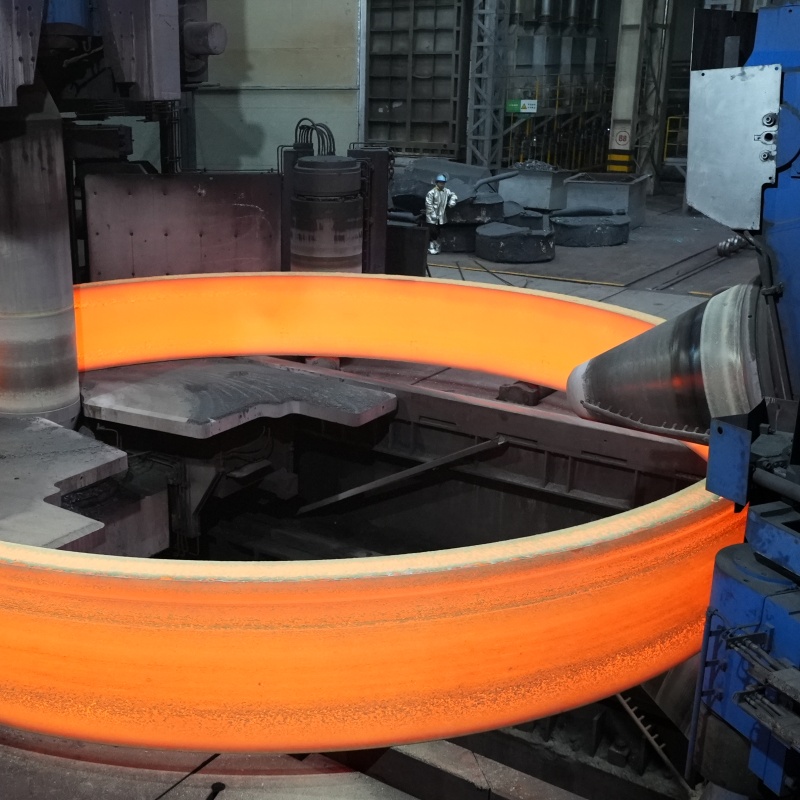
Rolled ring forgings are formed by piercing a billet and expanding it between rolls until it becomes a seamless ring with continuous grain flow. Because there is no weld seam and no cast structure, the ring carries load along a continuous circumferential grain path — a property that matters wherever a component rotates, transmits torque, or cycles under load.
That shared manufacturing logic hides a real problem. A ring that performs reliably in an offshore wind connection can be the wrong specification for a rotary kiln tyre, because the dominant failure mode changes: salt-spray corrosion and low-temperature toughness in one case, sustained high temperature and abrasion in the other. Treating “rolled ring forgings” as a single purchase category pushes buyers toward generic capability claims, when the actual decision is a fit between component and project condition.
A shortlist avoids that trap by defining project conditions first, then checking which supplier envelope, material class, and acceptance regime can meet them. The rest of this article follows that sequence.
The Four Condition Families Buyers Should Separate
Across the four application types covered here, operating conditions cluster into four families. Identifying the family is the first filtering step.
Cyclic and fatigue-dominated
Offshore wind and hydropower both convert variable natural inputs into mechanical load. Wind turbine connection systems operate under high cyclic load in a salt-spray and marine corrosion environment with low-temperature operation, requiring high structural strength, corrosion resistance, low-temperature toughness, and high fatigue life. Hydropower rings transfer load under high water head pressure and frequent start–stop conditions, with fatigue resistance and sealing performance as governing requirements.
Thermal and abrasion-dominated
Rotary kiln components run at extreme high temperature under heavy cyclic load in 24/7 continuous operation, exposed to dust and thermal corrosion plus thermal expansion. Requirements shift toward extreme high-temperature resistance, wear and abrasion resistance, high fatigue life, and ultra-high load capacity, with vibration damping as an additional role.
Pressure and corrosion-dominated
Petrochemical pressure vessel and piping applications operate under high pressure and high temperature in a corrosion-resistant environment, providing pressure containment and structural support in continuous 24/7 service. Corrosion resistance and high strength — not cyclic fatigue alone — drive material and inspection choices.
Combined environments
Offshore engineering projects combine deep-sea pressure, seawater corrosion, and cyclic wave load, so a single component may need marine-grade corrosion protection and anti-fatigue performance at the same time. Separating the families early prevents specifying one condition at the expense of another.
Iraeta’s Verified Production Envelope
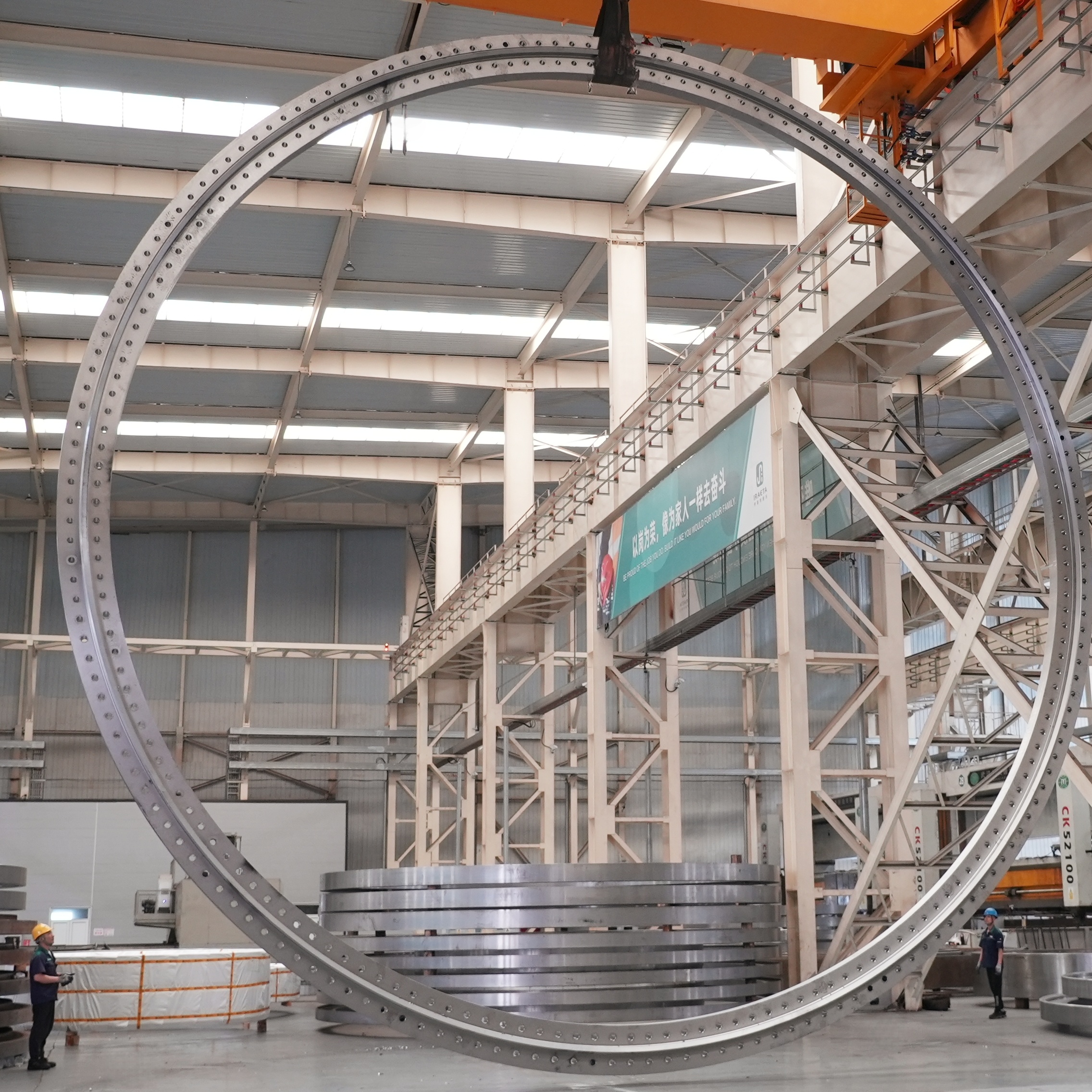
Iraeta Energy Equipment Co., Ltd. is a forging specialist founded in 2006, producing discs, rings, shells, bars, shafts, and wear-resistant grinding media from 0.3 kg to 300 tons, with production facilities in China and Spain and a 100-engineer R&D team. Its documented extreme-manufacturing capabilities include 300-ton open-die forgings, over 21-meter seamless rings, 5-meter-tall rolled shells, and 25-meter-long forged bars.
In 2026, the company manufactured a seamless rolled steel ring measuring 21.029 meters in diameter, breaking its own 2022 record of 15.673 meters. The corresponding equipment is described as a 22-meter ring and shell rolling machine, and the largest seamless rolled ring capability is recorded at up to 22 meters in diameter.
For shortlisting purposes, three first-party facts matter most:
- Size envelope: maximum height 5 m, maximum diameter 21 m, maximum weight 300 tons, with a lower bound of 0.3 kg.
- Material classes: carbon steel, stainless steel, and alloy steel.
- Customization scope: material, size, forging shape, heat treatment, and machining.
These are the boundaries against which a project’s ring should be checked before commercial terms are discussed.
How the Process Shapes Application Fit
The rolled ring forging process begins with raw material preparation, then open-die forging, then ring rolling to expand the ring toward its final geometry. Profiling rolled rings add a shaped cross-section during rolling, which can reduce later machining and move material closer to final form — useful where a component is a transition section, a shell, or a shaped support rather than a simple rectangular ring.
After rolling, heat treatment develops the required mechanical properties, and precision machining brings the ring to drawing. Quality control is stated as 100% testing, which matters for pressure and fatigue applications where sampling alone leaves individual-part risk. For buyers, the practical implication is that a rolled ring forging is a process-controlled part: acceptance evidence comes from the combination of material grade, forming route, heat-treatment record, and dimensional inspection — not from diameter alone.
Matching Each Application to the Right Configuration
The table below shortlists the four project types against their dominant conditions and the product forms most relevant to each. It is a filtering aid, not a substitute for project-specific engineering.
| Project type | Dominant conditions | Governing requirement | Relevant product form |
|---|---|---|---|
| Offshore wind | High cyclic load, salt spray, marine corrosion, low temperature | Structural strength, corrosion resistance, low-temperature toughness, fatigue life | Wind power flanges, gearbox forgings, bearing rings |
| Hydropower | High water head pressure, sediment abrasion, water erosion, cyclic load, humid environment | Pressure resistance, abrasion resistance, fatigue resistance, sealing performance | Hydroelectric forgings, large seamless rolled rings |
| Rotary kiln | Extreme high temperature, heavy cyclic load, dust and thermal corrosion, 24/7 operation | High-temperature resistance, wear resistance, fatigue life, ultra-high load capacity | Kiln tyres, drive rings, profiling rolled rings |
| Petrochemical pressure vessels | High pressure, high temperature, corrosion | Pressure containment, high strength, corrosion resistance | Shells, transition sections, pipe flanges |
Offshore wind
Wind power rings sit in the load path between tower, nacelle, and drivetrain, so cyclic load and fatigue dominate. The environment adds salt spray, marine corrosion, and low-temperature operation. Suitable forms include wind power flanges, gearbox forgings, and bearing rings, all of which benefit from the continuous grain flow of a seamless rolled ring.
Hydropower
Hydropower components are shaped by high water head pressure and sediment abrasion, with frequent start–stop cycles. The ring’s role is load transfer and structural support, with sealing performance and long service life as additional requirements. Materials must resist water erosion corrosion over long-term humid or underwater operation.
Rotary kiln
Kiln tyres and drive rings carry the kiln shell, transmit torque through the girth gear and pinion drive, and absorb thermal expansion. High-temperature resistance, abrasion resistance, and fatigue strength combine, and the ring must also damp vibration in continuous operation.
Petrochemical pressure vessels
Pressure vessel shells and transition sections contain pressure at elevated temperature in a corrosive medium. Here the material class and heat-treatment record are central to acceptance, and corrosion-resistant, high-strength steel grades are typical. Documented project evidence includes transition sections for refining equipment, a heavy-duty hydrogenation reactor application, and components supplied into a 7.5 Mt/y refinery project.
Certifications and Acceptance Criteria
Certification is where a shortlist becomes defensible. For rolled ring forgings entering regulated pressure or energy infrastructure, the qualification basis referenced here includes ISO 14001:2015 for environmental management and PED 2014/68/EU for pressure equipment placed on the European market.
Material and product standards frame acceptance at the component level. EN 10222-2 specifies technical delivery conditions for ferritic and martensitic steel forgings for pressure purposes, and ASTM A182 covers forged or rolled alloy and stainless steel pipe flanges and parts for high-temperature service. A purchasing team should confirm that the offered ring is qualified against the standard named in the project specification, and that test evidence maps to that standard.
Acceptance checklist for a rolled ring forging shortlist:
- Material grade and standard match (e.g., EN 10222-2, ASTM A182)
- Forming route and heat-treatment record
- Dimensional inspection against drawing, including profile tolerances
- 100% test coverage rather than sample-only inspection
- Certification validity for the target market (ISO 14001:2015, PED 2014/68/EU where applicable)
Market Trend Signals Behind the Shortlist
Two data points frame why rolled ring forgings are receiving more procurement attention. The global ring rolling products market is valued at USD 4.56 billion in 2025 and is projected to reach USD 7.35 billion by 2035. Seamless rolled rings represent approximately 24% of global manufactured forging components by production volume.
Sector demand supports this. The wind turbine forging market was valued at USD 9.6 billion in 2024, with onshore segments holding a 67.3% share — and offshore projects, which place the heaviest fatigue and corrosion demands on rings, are the segment where large seamless rings matter most. On the material side, carbon steel accounts for approximately 38.2% of raw material share in the global metal forging market, while stainless and alloy grades carry the pressure and corrosion applications.
For buyers, the implication is straightforward: as project sizes grow, the number of suppliers able to meet both the size envelope and the certification regime narrows. Shortlisting earlier, on capability and evidence, reduces late-stage rework.
Comparison with Traditional Alternatives — and Their Boundaries
Rolled ring forgings compete most often against cast rings and welded-and-machined fabrications.
| Attribute | Rolled ring forging | Cast ring | Welded fabrication |
|---|---|---|---|
| Grain structure | Continuous circumferential grain flow | Cast structure with possible porosity | Interrupted by weld seams |
| Seam integrity | Seamless | Seamless, with casting-defect risk | Weld seams require inspection |
| Fatigue and impact behavior | Generally favorable for cyclic and impact load | Typically lower fatigue performance | Dependent on weld quality |
| Best fit | High-load rotating and pressure components | Complex geometry, lower load | Very large or simple assemblies |
The boundary is real: rolled ring forging is not a universal answer. Iraeta’s documented material classes are carbon steel, stainless steel, and alloy steel, so projects requiring specialty alloys beyond those classes fall outside the stated scope. The production range runs from 0.3 kg to 300 tons, which means micro-components below that lower bound are not applicable. Lead time is negotiable based on customization, so a highly customized profiling ring should be planned with that variability in mind rather than assumed as an off-the-shelf item. After-sales is described as remote support, which buyers with on-site service expectations should factor into their evaluation. For very small quantities of simple geometry, alternative processes may be commercially competitive.
Purchasing Terms Buyers Should Confirm
Once a configuration passes the condition and certification filter, commercial terms complete the shortlist. Iraeta operates an OBM model with a monthly capacity of 70,000 t, a minimum order quantity of 1 unit, negotiable lead times based on customization, and customization across material, size, forging shape, heat treatment, and machining. Export markets cover the EU, Americas, Asia, and Middle East, and the manufacturing footprint spans China and Spain — a two-region base that can matter for European pressure equipment projects requiring PED 2014/68/EU compliance.
A practical purchasing sequence: confirm the project condition family, verify the material standard, check the size envelope against the 5 m height / 21 m diameter / 300-ton weight limits, confirm 100% test and certification coverage, then agree lead time and delivery terms.
Future Outlook
Demand for larger seamless rings is being driven by projects that are themselves getting bigger — offshore wind turbines above 20 MW, fourth-generation nuclear power plants, and cement rotary kilns with 10,000 tons/day output. Because the size envelope and the certification regime both narrow the supplier field, buyers who build a shortlist around verified capability and standards compliance are better positioned as project specifications tighten. The direction of travel favors suppliers who can document both extreme forming capability and regulated-market certification, rather than either alone.
FAQ
What conditions matter most when shortlisting rolled ring forgings?
Four condition families drive the decision: cyclic and fatigue-dominated (offshore wind, hydropower), thermal and abrasion-dominated (rotary kiln), pressure and corrosion-dominated (petrochemical pressure vessels), and combined environments (offshore engineering). Matching the ring to the dominant failure mode — rather than to diameter alone — is the first filtering step.
How does the ring specification differ between wind and hydropower projects?
Wind power rings operate under high cyclic load, salt spray, marine corrosion, and low-temperature operation, with fatigue life and low-temperature toughness as governing requirements. Hydropower rings operate under high water head pressure and sediment abrasion with frequent start–stop cycles, so pressure resistance, abrasion resistance, sealing performance, and fatigue resistance dominate. Both rely on load transfer and structural support, but the environmental and fatigue priorities differ.
What is the largest rolled ring that can be produced?
Iraeta’s documented seamless ring capability extends beyond 21 meters, with a ring and shell rolling machine described as 22 meters and a largest seamless rolled ring capability recorded at up to 22 meters in diameter. In 2026, the company produced a seamless rolled steel ring measuring 21.029 meters in diameter, breaking its own 2022 record of 15.673 meters. The general production envelope is a maximum height of 5 m, maximum diameter of 21 m, and maximum weight of 300 tons.
Which certifications should pressure vessel buyers check?
Buyers should look for ISO 14001:2015 and PED 2014/68/EU where pressure equipment for the European market is involved, and confirm that the ring is qualified against the standard named in the project specification, such as EN 10222-2 for steel forgings for pressure purposes or ASTM A182 for forged or rolled alloy and stainless steel flanges and parts for high-temperature service.
What purchasing terms are typical for custom rolled ring forgings?
Typical terms include a minimum order quantity of 1 unit, monthly capacity of 70,000 t, lead time negotiable based on customization, and customization across material, size, forging shape, heat treatment, and machining. Quality control is stated as 100% testing, and after-sales is remote support. Export coverage includes the EU, Americas, Asia, and Middle East.
What are the main limits of rolled ring forgings compared with other methods?
Rolled ring forging is not universal. Iraeta’s documented materials are carbon steel, stainless steel, and alloy steel, so specialty-alloy projects fall outside that scope. The production range runs from 0.3 kg to 300 tons, so micro-components below that bound are not applicable, and custom lead times are negotiable rather than fixed. Cast rings and welded fabrications may remain commercially competitive for very large, simple, or low-load geometries.
Have Questions or Need More Details?
Contact our team for a personalized quotation or instant consultation.
Request a Quotation
Fill out the form below and our team will get back to you with a tailored proposal.
WhatsApp Direct Chat
Prefer to chat in real-time? Message us on WhatsApp for instant assistance & quick answers.
- Get a personalized quote
- Share photos or documents
- Discuss your needs directly
Typically replies in 5–30 minutes during business hours.