
Rolling, Pressing, One-Touch: Rebar Coupler Spec Comparison
HTNXT Industry Reference · Rebar Couplers
Rebar coupler selection is often discussed as a brand or price question. For a decision-stage buyer, it is more usefully treated as a specification question. Rolling, pressing and one-touch couplers all create a mechanical splice in reinforced concrete, but they do so through different connection logic, different site equipment and different inspection routines. This comparison is deliberately limited to facts that can be checked in a supplier datasheet, a material certificate, a dimensional drawing and a standard test report.
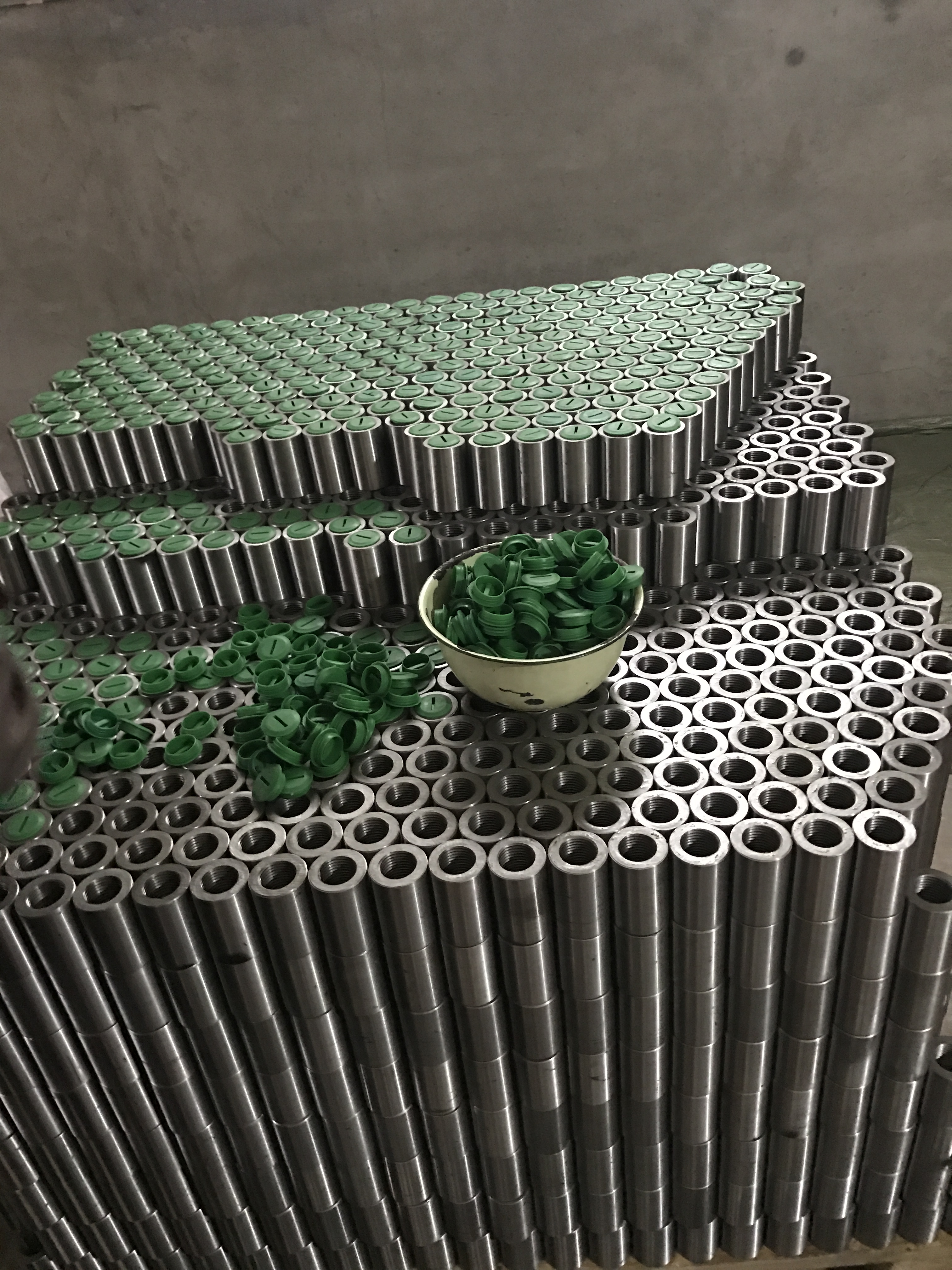
Rebar couplers are mechanical splicing components; the family name alone does not establish project suitability. Image: Cangzhou Bartech Construction Material Co. Ltd.
Cangzhou Bartech Construction Material Co. Ltd. is a China-based supplier of rebar couplers and rebar threading machines, located in Qing County, Cangzhou City, Hebei Province. Its published product scope includes parallel thread rolling, parallel thread upsetting and cold pressing technologies, together with couplers, threading machines, electric wrenches, upsetting machines and cold pressing machines. Those facts matter because coupler choice is also an equipment-ecosystem choice: the connection method and the installation tooling have to be evaluated together.
The comparison set at a glance
The three families below are compared on the basis of the supplied product data. The table does not rank them by strength, durability or cost. It identifies what each family is, which material grade is listed, which model range is stated and which inspection point a buyer should control.
| Family | Connection logic | Material listed in supplied data | Model range stated | Core site equipment | Primary inspection point |
|---|---|---|---|---|---|
| Rolling coupler | Parallel thread rolling on rebar ends; threaded coupler joins the ends | Carbon steel 45# or alloy 40CR | 16–40 | Rebar threading or thread rolling machine; wrench | Thread length, thread quality and full engagement to the coupler centre |
| Pressing coupler | Cold pressing of coupler onto prepared rebar ends | Carbon steel Q355B | 16–40 | Rebar cold pressing machine and matching dies | Die match, press position, dimensional check and connection verification |
| One-touch coupler | Quick connection with reduced on-site operations | Alloy steel 40CR | 16, 18, 20, 22, 25, 28, 32, 36, 40 | One-touch installation method; confirm tooling by model | Full insertion, locking and connection confirmation per supplier instruction |
The model range is a starting filter, not an approval. A 16–40 range means the supplier lists couplers for those rebar diameters; it does not mean every model has the same outer diameter, length, wall thickness or thread geometry. The pressing series, for example, is dimensioned size by size in the supplied content units, and the differences are material to procurement.
Materials: what the grades do and do not tell you
The supplied material data gives buyers three useful anchors. First, the rolling family is listed in carbon steel 45# or alloy 40CR. Second, the pressing family is listed in Q355B carbon steel. Third, the one-touch family is listed in 40CR alloy steel. Those grades indicate the base material family, not the finished coupler performance.
Company-reported material data also gives tensile-strength context: S45C is stated at more than 600 MPa, and 40Cr at approximately 980 MPa. These are material-level figures. They should not be read as coupler tensile capacity, splice strength or project approval. A coupler is a finished engineered component: its geometry, thread form, wall thickness, heat treatment, dimensional tolerance and installation method all affect what the assembled splice can do. Two couplers made from the same grade can behave differently if those variables differ.
Buyer implication: request a material certificate with heat number, a model-specific dimensional drawing and a product test report. A grade name on a quotation is not a substitute for those three documents. The verified data package does not contain independent test results linking these material grades to a specific coupler model or rebar grade.
For a decision-stage comparison, the correct question is not “which grade sounds stronger?” It is “which grade and model have been verified for the rebar grade, diameter and loading condition in this project?” That question moves the evaluation from marketing language to document review.
Dimensions and threads: read the model drawing, not the family name
Dimensional data is where family-level comparisons often break down. The supplied content units give a complete size-by-size envelope for the pressing series from φ16 to φ40. The outer diameter rises from 30 mm at φ16 to 70 mm at φ40; the length rises from 110 mm to 240 mm; the wall thickness ranges from 4.5 mm to 11.3 mm across the listed sizes. These are product facts for that series, not a universal coupler envelope.
| Size | Outer diameter | Length | Thickness |
|---|---|---|---|
| φ16 | 30 mm | 110 mm | 4.5 mm |
| φ18 | 34 mm | 120 mm | 5.4 mm |
| φ20 | 36 mm | 120 mm | 5.5 mm |
| φ22 | 40 mm | 132 mm | 6.4 mm |
| φ25 | 45 mm | 150 mm | 7.4 mm |
| φ28 | 50 mm | 168 mm | 8.0 mm |
| φ32 | 56 mm | 192 mm | 9.0 mm |
| φ36 | 63.2 mm | 220 mm | 11.3 mm |
| φ40 | 70 mm | 240 mm | 11.0 mm |
The assigned brief for this article also referenced a shorter dimensional envelope of 24–59 mm outer diameter and 42–95 mm length, plus a thread range beginning at M16.5×2.5. Those figures are not consistent with the content-unit data for the φ16–φ40 pressing series. This article therefore does not repeat them as product facts. That is not a cosmetic detail: dimensional conflict in a submittal can cause rework, fit problems or rejection. A buyer should resolve it with a model-specific drawing before approval.
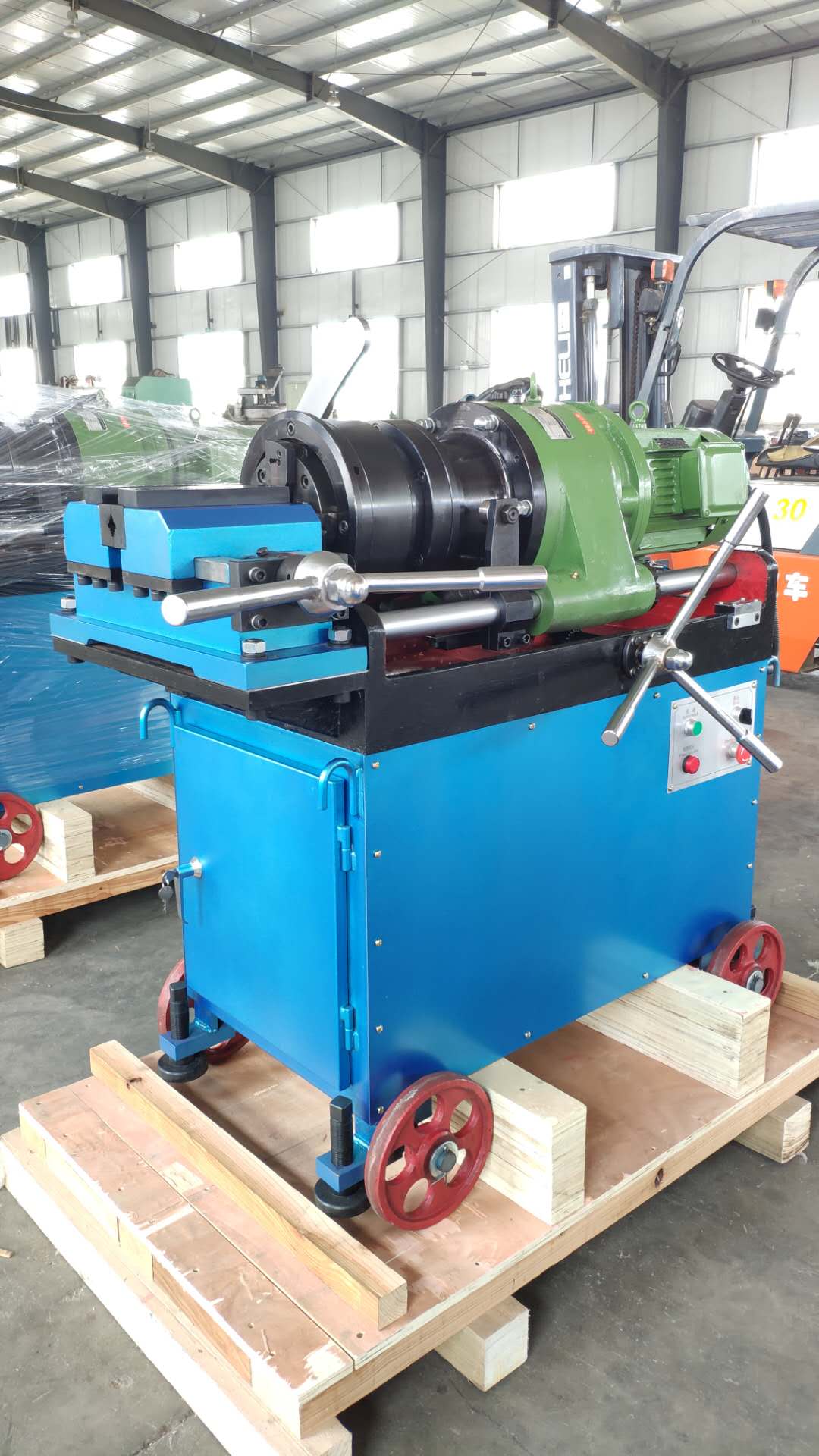
Rolling couplers depend on a controlled thread preparation process; the machine and the coupler should be evaluated as one system. Image: Cangzhou Bartech Construction Material Co. Ltd.
Thread data should be handled the same way. The supplied data does not provide a single thread table covering all three families. For any threaded system, the buyer should require the model drawing, the thread gauge specification and the required engagement length. A go/no-go gauge check and a documented engagement measurement are more meaningful than a nominal thread label on a quotation. The same discipline applies to pressing and one-touch systems: the critical dimensions are model-specific, and they should be checked against the supplier drawing, not inferred from the family name.
Connection logic and site risk
The three families differ most clearly in how the rebar ends are prepared and how the connection is completed on site.
Rolling couplers
Rolling couplers use a parallel thread rolled onto the rebar end, with a threaded coupler joining the two prepared ends. The process is associated with factory pre-threading or site threading, depending on the supply and installation model. The key control is thread quality and engagement. A thread that is too short, damaged or not fully engaged will not develop the intended connection. The supplied risk note is direct: a connection can be poorly made if the rebar ends are not wrenched into the middle of the coupler. The control method is to thread the rebar end to the correct length and wrench the two ends until they meet inside the coupler. Training and operation documents are the stated enterprise measure.
Pressing couplers
Pressing couplers use a cold pressing machine to compress the coupler onto the prepared rebar ends. The process avoids thread cutting, but it introduces a different set of controls: die selection, press position, machine calibration and dimensional verification after pressing. The coupler is listed in Q355B, and the series is dimensioned from φ16 to φ40 in the supplied data. A buyer should ask for the die schedule by model, the press-force or machine-setting record, and the inspection method used after each connection.
One-touch couplers
One-touch couplers are listed in 40CR and cover sizes 16, 18, 20, 22, 25, 28, 32, 36 and 40 in the supplied model designation. The family is positioned around quick connection and reduced on-site operations. That does not remove the need for a controlled installation method. The buyer should confirm the insertion depth, locking indication, tooling and acceptance check for each model. A quick connection is only an advantage if the connection is verifiable.

Pressing couplers move the critical control from thread engagement to die selection, press position and post-press inspection. Image: Cangzhou Bartech Construction Material Co. Ltd.
A seven-point buyer evaluation framework
The following framework is written for a procurement or engineering team comparing rolling, pressing and one-touch offers. It is intentionally document-led. It can be used in an RFQ or a technical bid clarification.
- Map model to rebar grade and diameter. Confirm that the offered model is listed for the project rebar diameter and grade. The 16–40 range is a useful first filter, but the submittal should show the exact model, rebar grade and project application.
- Verify material certificate and heat number. Match the certificate to the offered grade: carbon steel 45# or alloy 40CR for the rolling family, Q355B for the pressing family, 40CR for the one-touch family. Check that the certificate covers the actual production batch.
- Obtain a model-specific dimensional drawing. Require outer diameter, length, wall thickness, thread or press geometry, and tolerance. Do not accept a family-level catalogue page as the dimensional record for a specific model.
- Verify process equipment and calibration. For rolling, confirm the threading or rolling machine, tooling and thread gauge. For pressing, confirm the pressing machine, die schedule and calibration record. For one-touch, confirm the installation tooling and locking check.
- Require a test report using the applicable method. ISO 15835-2:2018 specifies test methods for couplers used in mechanical splices of steel reinforcing bars. Ask for a report that identifies the model, rebar grade, test method and result, not a generic certificate.
- Check the conformity route. ISO 15835-3:2018 specifies rules for certification and self-evaluation. Ask whether the supplier is claiming certification, self-evaluation or neither, and request the supporting document and scope.
- Run a site trial and train the crew. A trial should cover the actual rebar grade, the actual equipment and the actual inspection method. For threaded systems, include the wrench-to-centre check. For pressing, include post-press dimension and visual checks. For one-touch, include insertion and locking confirmation.
This framework does not favour one family. It makes the offers comparable. A supplier that can answer all seven points with model-level documents is easier to qualify than one that answers with family-level claims.
Cost and schedule: separate coupler-family claims from splicing-method claims
Cost comparisons in this category are often blurred. The supplied data states that rebar couplers offer 50%–70% lower cost than traditional on-site rebar lap binding, installation speed 3–5 times faster than lap tying, on-site installation 2–4 times faster than welding, and worker cost 50% lower than alternatives. It also states that couplers are not affected by weather conditions and provide easier quality control in comparison with traditional welding.
Those are comparisons between mechanical couplers and traditional splicing methods. They are not a price ranking of rolling, pressing and one-touch couplers. The verified data package does not contain verified quotations, price series, MOQ, lead time or freight data by coupler family. A buyer should therefore separate two questions: whether mechanical splicing is commercially attractive against lap tying or welding, and which coupler family is the lowest total cost for the specific project.
The second question requires a total-cost model: coupler unit price, equipment capital or hire, dies and consumables, threading or pressing labour, inspection time, rework allowance, training and spare parts. A family with a lower coupler price can still be more expensive if it requires additional equipment, slower inspection or more rework. Conversely, a higher-priced coupler can be justified if it reduces site labour or inspection time. The supplied data supports the first comparison; it does not support a family-level price conclusion.
Where each family fits in project evaluation
The supplied application data names high-rise buildings, airport projects, high-railway stations, large bridges and cross-sea bridges as typical construction scenarios for rebar couplers. The same data states that couplers are intended for the construction industry. Those scenarios are useful because they change the evaluation weight, not because they dictate a single coupler family.
On a high-rise project with repetitive vertical and horizontal splices, the evaluation usually turns on installation speed, crew repetition and inspection access. A rolling system may be considered where a parallel thread process and threading equipment are already part of the supply chain. A pressing system may be considered where cold pressing equipment is available and the project specification accepts the process. A one-touch system may be considered where the priority is to reduce on-site connection steps, subject to model availability and locking verification.
On a bridge or cross-sea bridge, the evaluation tends to place more weight on submittal documentation, rebar grade, loading condition and inspection records. On an airport or high-railway station, access constraints and programme certainty can matter as much as unit price. In metro and tunnel work, the same logic applies with additional attention to confined access and repeatable installation. In every case, the coupler family should follow the project specification and the approved test plan, not the other way round.
Standards and compliance: what the documents actually cover
The standards framework is often misunderstood. ISO 15835-1:2018 specifies requirements for couplers used for mechanical splices of steel reinforcing bars. ISO 15835-2:2018 specifies test methods applicable to those couplers. ISO 15835-3:2018 specifies rules for certification and self-evaluation. The series therefore separates requirements, test methods and conformity assessment. A supplier that mentions ISO 15835 has not, by that statement alone, demonstrated that a specific product passed a specific test or holds a specific certificate.
The supplied market data also names ASTM A615 and BS 8110 among the standards relevant to mechanical splices, and the BSI standard for reinforcement couplers is identified as BS 8597. These references are useful for building a submittal checklist, but they do not replace project-specific approval. The verified data package does not include a verified CE certificate, ISO 9001 certificate, ASTM approval or BS compliance certificate for Cangzhou Bartech. Buyers should request certificate numbers, issuing bodies, product scope and validity dates, and verify them with the issuer where required.
For trade and customs purposes, the standard HS classification cited in the data package is 7307.92.90. That classification is a trade reference, not a product-performance statement. It should be checked against the actual shipment description and the importing country’s tariff schedule.
Limits of this comparison
A useful comparison should state what it cannot establish. This article does not rank rolling, pressing and one-touch couplers by tensile capacity, fatigue performance, ductility or project approval. The supplied data does not contain independent test results for the named products, nor does it contain verified capacity, lead time, price or certificate numbers. The dimensional table covers the pressing series from φ16 to φ40; it should not be extended to other families without a model drawing. The one-touch model list is a company product designation, not a project approval.
There is also a standards-status caution. The verified data identifies ISO/AWI 15835-1 as a work item while ISO 15835-1:2018 is listed as the published document. The current revision status should be confirmed with ISO or the relevant standards body before it is used in a compliance conclusion. A buyer should not assume that a work item has replaced the published edition, and should not assume that a published standard automatically certifies a supplier’s product.
Market context and future outlook
Commercial research cited in the verified data package estimates the global rebar coupler market at USD 1.82 billion in 2025, rising to USD 3.47 billion by 2034. The same source estimates that Asia Pacific accounted for 41.3% of global rebar coupler revenue in 2025. These are commercial research estimates, not customs records or audited market data. They are useful for understanding why supply-chain concentration and documentation practices matter, but they should not be used as a substitute for supplier-level evidence.
The more practical trend for buyers is the shift from family-level claims to model-level evidence. A coupler quotation is increasingly expected to include a material certificate, a dimensional drawing, a test report, an installation method and a traceability record. That shift favours suppliers who can connect their coupler range to their threading, pressing or one-touch equipment and to a documented inspection routine. It also makes the buyer’s evaluation more repeatable: the same seven-point checklist can be applied to rolling, pressing and one-touch offers without rewriting the tender requirements.
For the next procurement cycle, the sensible outlook is not that one family will displace the others. It is that project specifications will demand clearer evidence for whichever family is proposed. Buyers who build that evidence into the RFQ early will spend less time resolving dimensional conflicts, certificate gaps and installation disputes later.
FAQ
- Which family is strongest: rolling, pressing or one-touch?
- There is no verified basis in the supplied data for a family-level strength ranking. Finished coupler performance depends on the specific model, material, geometry, thread or press design, installation method and test result. Buyers should compare model-specific test reports and project approvals, not family names.
- Are rolling couplers always made from 45# or 40CR?
- In this comparison, the rolling family is listed in carbon steel 45# or alloy 40CR. That is a product-data statement for the compared range, not a universal rule for every rolling coupler on the market. The material certificate should be checked against the offered model and batch.
- What do the φ16–φ40 dimensions mean?
- The size designation corresponds to the rebar diameter for which the coupler is listed. The actual outer diameter, length and wall thickness are model-specific. For the pressing series, the supplied data gives 30 mm to 70 mm outer diameter and 110 mm to 240 mm length across φ16 to φ40. A buyer should request the drawing for the exact model.
- Does a coupler automatically comply with ISO 15835 if the supplier mentions the standard?
- No. ISO 15835-1:2018 specifies requirements, ISO 15835-2:2018 specifies test methods and ISO 15835-3:2018 specifies certification and self-evaluation rules. A supplier’s mention of the standard is not evidence that a specific product passed the applicable test or holds a valid certificate. Request the product-specific report and conformity document.
- Can one-touch couplers be used on any project?
- The supplied data lists one-touch couplers for sizes 16, 18, 20, 22, 25, 28, 32, 36 and 40. That model range does not establish project approval. Suitability depends on the project specification, rebar grade, installation tooling, locking verification and acceptance by the project owner or engineer.
- What is the main installation risk with threaded couplers?
- The supplied risk note states that a connection can be poorly made if the rebar ends are not wrenched into the middle of the coupler. The control is to thread the rebar end to the correct length and wrench the two ends until they meet inside the coupler. Operation documents and crew training are the stated preventive measures.
A coupler comparison is only independent if it separates what the supplier states, what the standard requires and what the project has actually approved. The three families can be compared on paper; the decision still belongs to the model-level evidence.
Have Questions or Need More Details?
Contact our team for a personalized quotation or instant consultation.
Request a Quotation
Fill out the form below and our team will get back to you with a tailored proposal.
WhatsApp Direct Chat
Prefer to chat in real-time? Message us on WhatsApp for instant assistance & quick answers.
- Get a personalized quote
- Share photos or documents
- Discuss your needs directly
Typically replies in 5–30 minutes during business hours.