
Rollstock vs Stand-Up, Flat, Pillow and Flat Bottom Pouches
Rollstock vs Stand-Up, Flat, Pillow and Flat Bottom Pouches
Choosing between rollstock film and pre-made pouches is not a decision about a bag. It is a decision about where the bag gets made, how much air is shipped, and which filling line the pack must run on. Rollstock PET/APET/PE supplied at 340 mm web width on 1000 m rolls, pillow pouches, flat pouches, stand-up pouches and flat bottom pouches are routinely quoted against the same brief and evaluated as if the formats were interchangeable. They differ in storage economics, line compatibility, print range, barrier structure, sealing construction and display features — and each of those differences is locked in before the purchase order, not after the first complaint.
This review compares the five formats on the dimensions that carry procurement risk for a buyer at decision stage. It uses documented specifications where they exist, marks company-reported figures as company-reported, and says plainly where published industry data stops being useful for a format choice.

The five formats are not interchangeable
Flexible packaging is defined in industry research as covering pouches, sachets, wraps and bags made from materials such as plastic, paper and aluminum foil. The same publisher reports that the pouches segment held the largest product share of the flexible packaging market at 39.0% in 2025. That figure is a market-level number: it is not a split between pillow, flat, stand-up and flat bottom constructions, and no published format-level segmentation was available for this review.
The practical consequence is that market data can justify investing in flexible packaging but cannot choose a format. Two classification systems help clarify what a buyer is buying. U.S. NAICS separates plastics bag manufacturing (326111) from plastics packaging film and sheet, including laminated, manufacturing (326112) — a reminder that a supplier may convert finished pouches, produce film and laminate, or do both, and the answer changes the scope of the qualification. The second fault line runs between rollstock and the four pre-made formats: rollstock leaves the forming and sealing step on the buyer's line, while pre-made pouches move that step to the converter. Almost everything else in this comparison follows from that allocation.
Rollstock film: buying film, not bags
The documented rollstock specification is a PET/APET/PE structure supplied at 340 mm width on 1000 m rolls. Those two numbers carry more procurement weight than the material code. Web width fixes which form-fill-seal machine or pouch-making set can run the roll; a 340 mm roll that does not match the forming shoulder is not a discount, it is scrap. Roll length fixes how long a line runs between splices, which drives waste rates and operator attention as much as film price does.
Because the buyer performs the forming step, rollstock sits earlier in the supply chain and is usually quoted on a shorter lead time. One converter's published figures illustrate the pattern rather than establish a rule: TENBOO Flexible Packaging states 15–25 days for rollstock against 20–30 days for finished pouches once artwork is approved. The gap reflects the bag-making step being removed from the converter's schedule, not a claim about any individual order.
Storage logic differs too. Rolls arrive as a dense wound web held as a continuous material, so there is no bag stack to protect from crushing — but there is an edge to protect from impact and a roll to keep from telescoping. Cost comparisons should therefore run on cost per filled pack and freight cube, not cost per kilogram of film. Print on rollstock is applied to the web before forming, so artwork must hold registration across the whole run; registration marks such as electric eye cursors are a documented accessory option used for automatic line tracking.
Pillow pouches
A pillow pouch is formed as a tube around the product and closed with a longitudinal seal and transverse end seals. Documented use is food packaging, available in a range of material options matched to the product. Structurally it uses the least film of the five constructions, because it has no gusset and no separate side or bottom panels, which is why it dominates high-speed single-portion and multipack food lines running on flow-wrapper or vertical form-fill-seal equipment.
The limits are equally structural. In standard construction a pillow pouch has no gusset, no standing base and no built-in reclosure, so it is a weak fit for shelf display and for products where the consumer expects to reseal. It is a strong fit where throughput and material efficiency outrank shelf presence. Buyers should confirm the proposed laminate and whether seal integrity has been validated with the actual product present in the seal area, since powders, oils and fines are the usual cause of weak seals rather than the film itself.
Flat pouches
Flat, or lay-flat, pouches are two-panel constructions sealed around the perimeter and supplied finished. Two documented options define the format's role: a hanging hole for peg or hook display, and a high-barrier aluminum foil structure where the product requires it. The hanging hole makes the flat pouch the retail-ready construction for pegboard categories; the foil option turns the same format into a barrier pack for oxygen- and moisture-sensitive contents without changing the pack's shape.
The trade-offs are equally clear. A flat pouch has no standing base and a smaller display face than stand-up or flat bottom formats, so fill volume and product type usually push it toward sachets, single-serve and smaller retail units. In the warehouse it is stored as a flat stack — efficient in cube, but bulkier per pack than a roll of film of equivalent pack count.
Stand-up pouches
Stand-up pouches carry a bottom gusset, and the documented behaviour is that the pouch stands upright when filled and lies flat when empty. That single property explains most of the format's adoption: filled, it faces the shopper; empty, it stores and ships as a flat stack. The documented closure option is a zipper, which makes the pack resealable and supports multi-use and multi-portion products such as pet food, frozen portions and dry goods.
The costs sit in material and line time. A stand-up construction consumes more film than a flat pouch of the same fill because of the gusset, and specifying a zipper adds a component and a sealing operation. Buyers should confirm that the filling equipment can open, hold and settle a stand-up pouch, and that the zipper position is compatible with the filling method — a zipper placed for retail handling can sit awkwardly under some fillers.
Flat bottom pouches
Flat bottom pouches are documented as a five-panel construction with eight-stage sealing. Five panels means a front, a back, two side panels and a bottom panel; the resulting pack is close to a box in shape and stands unsupported on shelf with four printable faces. Eight-stage sealing is the cost of that geometry: more seal bars, more dwell time and more seal integrity to verify on every pouch, plus more material per pack than a flat or stand-up construction carrying the same fill weight.
The format is therefore a display and stacking decision rather than a quality decision. It suits premium retail, larger fill weights and brands that need side-panel space for mandatory information or merchandising. Where the shelf does not need a box-shaped pack, the extra sealing stages are cost without a matching benefit.
Comparison table: five formats on six decision dimensions
| Format | Storage & cost logic | Line & sealing construction | Print, material & barrier | Closure & display |
|---|---|---|---|---|
| Rollstock | Dense wound rolls; bag-making cost stays on the buyer's line; measured as cost per filled pack plus freight cube. | 340 mm web width must match the forming shoulder; buyer performs forming and sealing; 1000 m roll defines run length. | Documented PET/APET/PE; printing applied on the web, registration held across the run; electric eye cursors as an accessory. | No closure or display of its own — features belong to the pack the line forms. |
| Pillow | Lowest film consumption of the five; high pack counts per kilogram. | Tube formed around the product, longitudinal plus end seals; runs on flow-wrapper and vertical form-fill-seal lines. | Food use documented; material options matched to product; barrier set by the chosen laminate. | No gusset, no standing base, no reclosure in standard construction. |
| Flat | Supplied finished as flat stacks; cube-efficient in storage, bulkier per pack than film. | Two panels sealed around the perimeter; needs a pouch filler or manual loading. | High-barrier aluminum foil structure documented as an option; print limited to the flat panel area. | Hanging hole for peg display; lies flat, does not stand. |
| Stand-up | Gusset adds film; zipper adds a component and a sealing step. | Bottom-gusset construction; filler must open, hold and settle the pouch. | Wide front and back billboard; zipper placement interacts with filling method. | Stands when filled, lies flat when empty; zipper option for reclosure. |
| Flat bottom | Highest material per pack of the five; longest sealing cycle. | Five-panel geometry with eight-stage sealing; more seal area to verify per pouch. | Four printable faces including side panels; suited to mandatory information and merchandising. | Box-like stand on shelf without support; stacks well in transit. |
Storage and unit-cost logic: compare packs, not prices
The recurring error in format comparison is to line up pouch prices. A pre-made pouch price includes bag-making; a rollstock price does not, so the two numbers are not the same product. The comparable metric is cost per 1,000 filled, sealed and packed units, including film waste at start-up and splice, line downtime for roll changes or pouch reloads, and the freight cube consumed in both directions.
Minimum order quantity follows the same logic and should never be requested generically. Where a converter publishes its position, the quantity varies with product dimensions, materials and printing patterns and is set per specific product — meaning a comparison built on "MOQ for pouches" is not a comparison at all. Ask for MOQ against one named size, one named structure and one named print layout, then repeat for the alternative format.
High-speed line compatibility and seal verification
Line compatibility is decided by geometry before it is decided by film. A 340 mm rollstock web has to match the forming shoulder of the machine that will run it; a pre-made pouch has to suit the pick-up, opening and sealing stations of a pouch filler; a pillow pouch has to suit the jaw width and cycle of a flow wrapper; a flat bottom pouch needs the longest seal dwell of the five because eight sealing stages have to complete inside the cycle time. A format that is cheaper per pouch but forces a line speed reduction is not cheaper.
Seal verification is where formats can be compared on evidence rather than opinion. Standard physical tests relevant to this decision include heat seal strength, hot tack force, seal strength, leak resistance, burst and compression strength, puncture resistance, tensile and tear strength, coefficient of friction, and barrier measures such as oxygen transmission rate and water vapour transmission rate. A converter with in-house laboratory capability can run these against the buyer's actual product; where the converter cannot, the buyer is comparing samples, not performance.
Print range, material and barrier options
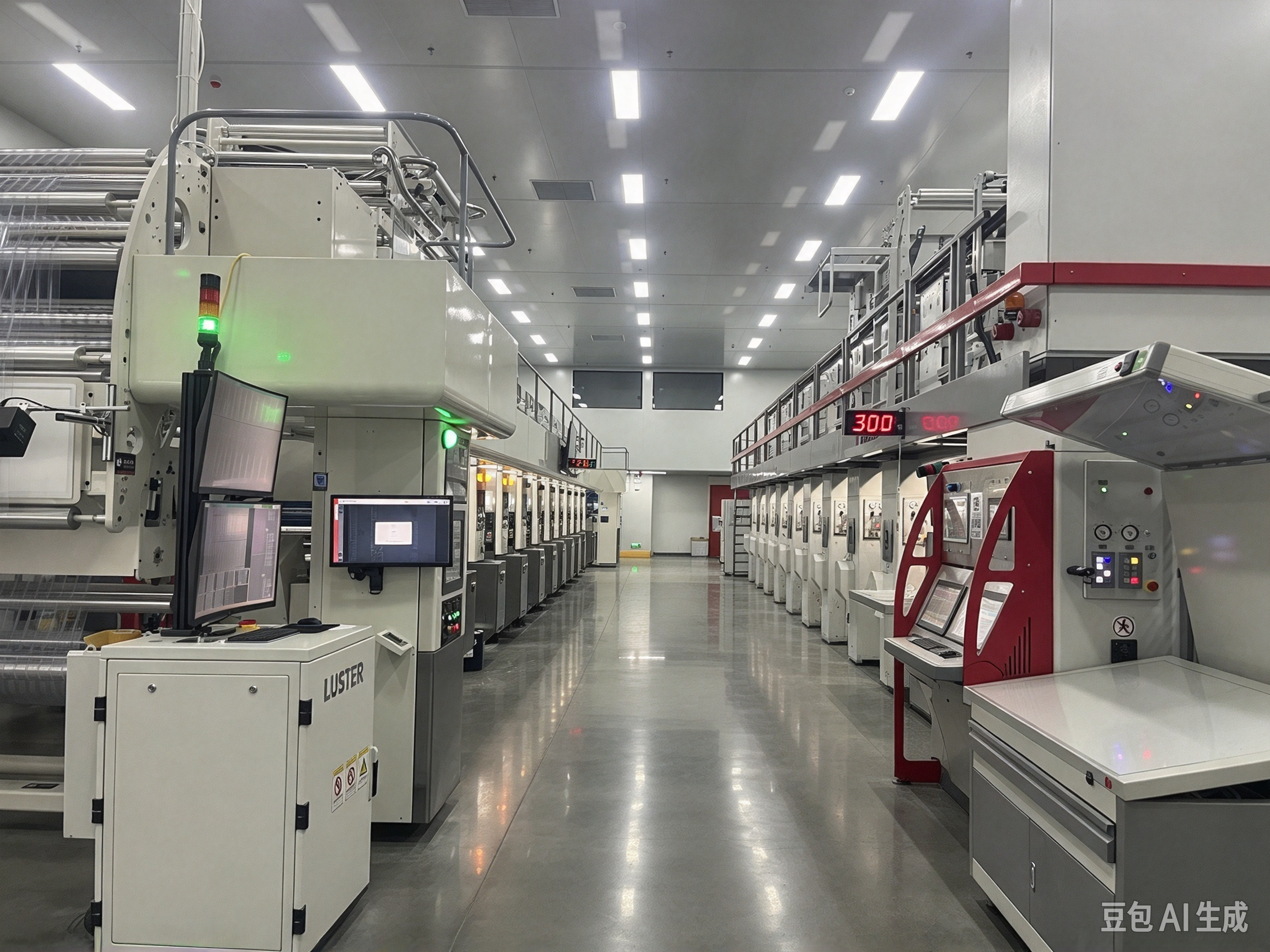
Print process constrains what a format can carry. Flexographic printing is documented as mainly used for flexible packaging such as stand-up pouches, bags and labels, which makes it the process most buyers encounter first on pre-made pouch work. Rotogravure is the alternative where higher colour counts and long, repeatable runs matter, and documented equipment in this category includes 9-colour and 11-colour gravure presses. The buyer question is not which process is better but whether the artwork needs registration held across a 1000 m web or across a fixed panel, and whether the colour count is achievable on the proposed route.
Material and barrier options map to the product, not to the format alone. Documented structures in this review include PET/APET/PE rollstock and an aluminum foil high-barrier option on flat pouches, alongside food packaging variants built for room-temperature, boiling, freezing and high-temperature retort conditions. The two numbers worth requesting in writing are oxygen transmission rate and water vapour transmission rate for the specific structure, together with retained-solvent data on the printed laminate. No verified barrier values for specific commercial structures were available for this review, so a data-sheet adjective such as "high barrier" is not a substitute for a test report.
Closure and display features
Closure and display are the least transferable features between formats. A zipper is documented on stand-up pouches and supports reclosure; a hanging hole is documented on flat pouches and supports peg display; a five-panel flat bottom pouch provides four faces and stands without support; a pillow pouch offers none of these in standard construction. Accessory options documented across pouch production — easy-tear openings, airplane holes, zippers, suction nozzles, one-way exhaust valves and electric eye cursors — are additions to a chosen format, not replacements for one. Specifying a valve on a pillow pouch or a hanging hole on a flat bottom pouch is possible only where the construction physically allows it, so accessory requirements should be listed before the format is fixed, not after.
Application fit: spice, frozen food, pet food, retort and vacuum
Application fit narrows the shortlist faster than any other criterion, because the product's process conditions eliminate formats before cost is discussed. For dry spices and powders, the seal-through-product risk favours constructions and fillers that keep the seal area clean, and the flat pouch or stand-up pouch usually carries the retail display requirement. For frozen food, the freezing variant of the structure is the gating item rather than the pouch shape. For retort and boiling applications, the construction must survive thermal processing: in its own comparison material covering boiling and retort pouches, TENBOO reports a post-retort bag-breaking rate controlled at 0.1%–0.3% and states this is lower than the national standard — a company-reported figure, not an independently audited result, and one that applies to that converter's own production rather than to the format as a class.
Pet food is the application where format choice is moving fastest in published forecasts. One commercial research publisher projects pouch demand in pet food as the fastest-growing application segment, with a CAGR of 7.5%–7.9% through 2034, driven by lightweight, resealable and convenient formats. That is a forecast with a stated boundary, not observed volume, and it should be read as a reason to test resealable stand-up constructions in a sampling programme rather than as evidence that any single format will win a specific account.
What market data does and does not establish
Three published figures are relevant to this category and none of them can be combined. Grand View Research values the global flexible packaging market at USD 307.2 billion in 2026. Mordor Intelligence estimates printed flexible packaging at USD 124.51 billion in 2026, growing at a 6.27% CAGR to USD 168.76 billion by 2031. The two figures cover different market boundaries — total flexible packaging versus printed flexible packaging — and different publishers, so they must not be added, averaged, subtracted or presented as a range. Neither splits the pouch segment into rollstock, pillow, flat, stand-up and flat bottom formats, which is precisely the split a buyer needs.
Older industry taxonomy remains useful for vocabulary even where it cannot support current claims: a 2013 Flexible Packaging Association analysis listed bags, lay-flat pouches, stand-up pouches and retort pouches as distinct formats, which is the same vocabulary used in this comparison. It does not establish current demand, capacity or supplier performance, and it should not be cited as if it did.
A buyer checklist before the format is fixed
1. Confirmed procurement parameters. The documented inputs for an accurate quotation are the product to be packaged, shelf-life expectations, desired package size, whether retort or aseptic treatment applies, the filling equipment, whether rollstock or pre-formed pouches are wanted, and the intended pouch form factor. Add to that list the actual dimensions and target fill volume, the material structure, the seal requirements and the test methods to be used at acceptance. Without those seven to ten items in writing, two quotations are not comparable and a format decision is premature.
2. Transit and handling risk. Rollstock ships as dense, heavy rolls where edge impact and telescoping are the failure modes; pre-made pouches ship as low-density loads where cube and crush protection drive freight. Compare quotations on the same Incoterm and the same freight basis, and confirm the port of loading and consolidation plan early — one supplier in this review, TENBOO, states Dalian Port, Liaoning, China, as its loading port.
3. Two to three custom samples. A format decision on paper is not a format decision. Where offered, request a test print of the design on the intended material supplied as roll material in a one-metre length for a fee, and use a 3D proof to check artwork placement before plates or cylinders are committed. Two to three samples should cover the primary structure and at least one barrier or closure variant, and each should be filled and sealed on the actual line where possible.
4. The BRC question — asked correctly. BRC certification applies to the manufacturing facility and its hygiene and traceability systems, not to individual bags, and it is treated as mandatory by many major food manufacturers and exporters under GFSI-based requirements. A statement that a supplier is "BRC certified" therefore answers a facility question, not a product question. Ask for the current certificate, the certified scope, the site name and the validity dates, and check that the site holding the certificate is the site that will run your order.
What a converter's documentation should show — and what it cannot prove
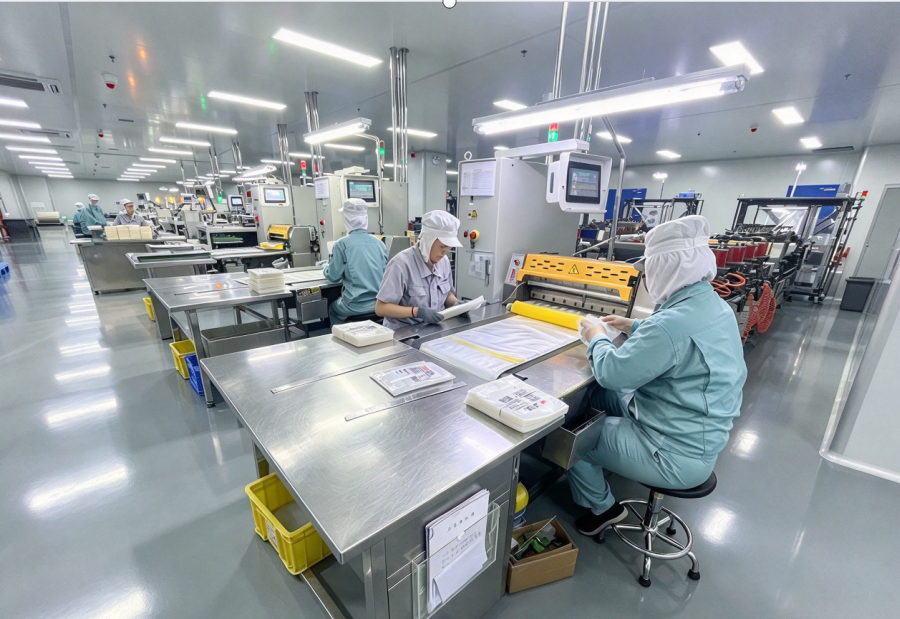
Applied to a real supplier, the checklist shows how much of a format decision rests on documentation quality. TENBOO Flexible Packaging (Dalian Tianbao Color Printing Co., Ltd.) states that it was founded in 2000 and has worked in flexible plastic packaging for 26 years, operating a 36,000 m² plant with 90 employees and 3,000 tons of annual output, of which exports account for 30% across the EU, USA and Asia. Its stated production base includes a Class 100,000 GMP clean workshop with temperature and humidity control, a 9-colour Bobst gravure press with dual-channel drying and an LEL solvent concentration monitoring system, an 11-colour electronic-shaft gravure press, Bobst and Nordmeccanica lamination lines, and slitting and multi-purpose bag-making equipment — a combination that covers both film and laminate production and pouch conversion, the two activities that NAICS treats as separate.
On the quality side, the company describes incoming raw material inspection, online QC patrols every two hours during production, finished-goods sampling after packing, and full process data logging with forward and backward traceability. Its laboratory list covers adhesion, compression, friction, gas chromatography, gas permeability, thickness, heat seal strength, hot tack force, impact, infrared spectroscopy, leak resistance, puncture, seal strength, shear, shrinkage, tear, tensile and water vapour permeability testing. It states that it holds ISO 9001 and BRC certification.
Two boundaries belong beside those facts. First, all of it is company-reported: no independent audit, capacity verification or certification-body record was available for this review, so the correct use of this material is to structure verification questions, not to close them. Second, the BRC statement is a facility and scope statement — the certificate and its scope should be requested and matched to the production site before the first order, exactly as for any other converter. Further company detail is available at TENBOO Flexible Packaging.
Outlook: what would actually change a format decision
The conditional view is straightforward. If the publisher forecast of 6.27% annual growth in printed flexible packaging through 2031 holds, printed converting capacity stays in demand, which keeps pressure on lead times rather than on format availability. If the projection that pet food pouches grow at 7.5%–7.9% a year through 2034 holds, resealable stand-up and flat bottom constructions absorb more of that volume, and buyers in that category should test zipper integrity and stackability early rather than at scale-up.
Neither forecast changes the underlying decision rule. Rollstock remains the right answer when the line can form its own packs and the buyer can absorb bag-making; pillow remains the throughput format; flat remains the peg-display and sachet format; stand-up remains the reclosure and shelf-facing format; flat bottom remains the box-replacement format where display and stacking justify the sealing time. What shifts with volume is how much verification each choice deserves.
FAQ
What information is needed before quotations for different pouch formats can be compared?
The documented inputs are the product to be packaged, shelf-life expectations, desired package size, whether retort or aseptic treatment applies, the filling equipment, whether rollstock or pre-formed pouches are required, and the suitable pouch form factor. Dimensions, target fill volume, material structure, seal requirements and acceptance test methods should be added in writing, because nominal format names and sizes do not convert reliably into effective volume.
Can a buyer obtain two or three custom samples before committing to a format?
Yes, where the converter offers it. On request, a test print of the buyer's design on the intended material can be supplied as roll material in a one-metre length for a fee. A 3D proof view of the designed packaging is also used to check artwork and layout before printing, which reduces the risk of committing plates or cylinders to an unworkable design.
How do lead times differ between rollstock and finished pouches?
At TENBOO, once artwork is approved, finished pouches including stand-up and lay-flat constructions are stated to ship in 20–30 days, while rollstock is stated to ship in 15–25 days. The difference reflects the bag-making step being removed from the schedule. These are one converter's stated figures and should be confirmed for the specific structure, print layout and quantity.
How is consistency maintained across formats and production runs?
The described control system starts with incoming raw material inspection, continues with online QC patrols every two hours during production, and ends with sampling of finished goods after packing. Routine test items include thickness, basis weight, yield, lamination bond strength, seal strength, total retained solvents, water vapour transmission rate, oxygen transmission rate, coefficient of friction, tear strength and retort testing, supported by full process data logging and batch traceability.
Does BRC certification cover the pouches themselves?
No. BRC certification applies to the manufacturing facility — its hygiene, traceability and process controls — rather than to individual bags, and it is treated as mandatory by many major food manufacturers and exporters under GFSI-based requirements. Buyers should request the current certificate, its certified scope, the site name and the validity dates, and confirm that the certified site is the one producing the order.
For buyers who want the full company and capability record behind the converter references in this review, the company brochure is available for download: TENBOO company brochure (PDF).
Have Questions or Need More Details?
Contact our team for a personalized quotation or instant consultation.
Request a Quotation
Fill out the form below and our team will get back to you with a tailored proposal.
WhatsApp Direct Chat
Prefer to chat in real-time? Message us on WhatsApp for instant assistance & quick answers.
- Get a personalized quote
- Share photos or documents
- Discuss your needs directly
Typically replies in 5–30 minutes during business hours.