
Room, Floor and Style: Matching Barber Chair Models to Salon Stations
Barber chairs are usually compared on price, upholstery and the feel of the hydraulic pedal. In practice the deciding variable sits one level earlier: the station the chair will occupy. A 45 cm deep styling seat and a 111 cm long heavy-duty unit are not interchangeable, and no amount of finish quality compensates for a chair that does not fit the room, the service cycle, or the compliance file of the market it ships to.
Station fit can be reduced to three constraints — the floor envelope available per chair, the number of adjustment cycles a chair must survive each working day, and the visual and material programme the salon is selling. In the HZ range from Ningbo Hongzi Beauty & Hairdressing Equipment Co., Ltd., four model groups map onto those constraints: HZ6001DW at 45 × 25 × 70 cm for compact stations, HZ8801 at 90 × 60 × 90 cm for standard styling bays, HZ87102RB at 111 × 66 × 118 cm for heavy-duty floors, and the retro HZ8799YF and HZ8799ABK at 110 × 72 × 100 cm for premium and vintage interiors.
Why Station Fit Is a Constraint Problem, Not a Style Choice
A salon does not buy a fleet of identical chairs; it buys a set of stations that share a floor. Each station carries its own limits. A compact booth may allow a chair depth of under half a metre but no room for a reclining arc. A main-floor cutting bay may need a full-size back and a footrest that swings clear of a technician stool. A heritage-styled front-of-house may tolerate a wide footprint precisely because the chair is part of the interior design.
Layout is also regulated in some jurisdictions, which turns station spacing from a preference into a measurable constraint. North Carolina, for example, requires a minimum of five linear feet of space between the centre of each barber chair, from centre to centre of each chair, under 21 N.C. Admin. Code 06L .0102. Buyers operating in other states or countries should check their own local requirements rather than assume that rule applies. The practical lesson travels regardless: station count on a given floor is determined by chair envelope plus mandated clearance, not by the number of chairs that physically fit in a row.
A third layer is tariff and compliance classification. Barber and similar chairs with rotating, reclining and elevating movement are classified under HS Code 9402.10, which means the mechanism — not the upholstery — is part of what defines the product at the border. Buyers comparing chairs purely on appearance regularly discover this later than they should.
Compact Stations: HZ6001DW and the Sub-Metre Footprint
The HZ6001DW is the smallest unit discussed here, at 45 × 25 × 70 cm, built from PU leather, high-density sponge, wood and an iron frame, and catalogued as a beauty salon chair. That catalogue description is itself a useful signal: this is a compact styling seat rather than a full barber recliner, and it should be assigned accordingly.
Its natural applications are narrow booths, secondary or overflow stations, short-service work, and salon formats where floor area is the binding constraint rather than the treatment menu. Adjacent models in the compact band — HZ88202 at 50 × 64 × 90 cm and HZ8765BK at 50 × 64 × 104 cm — add a taller back and a wider base while staying in the same order of magnitude, which gives a buyer a second and third option without redesigning the bay.
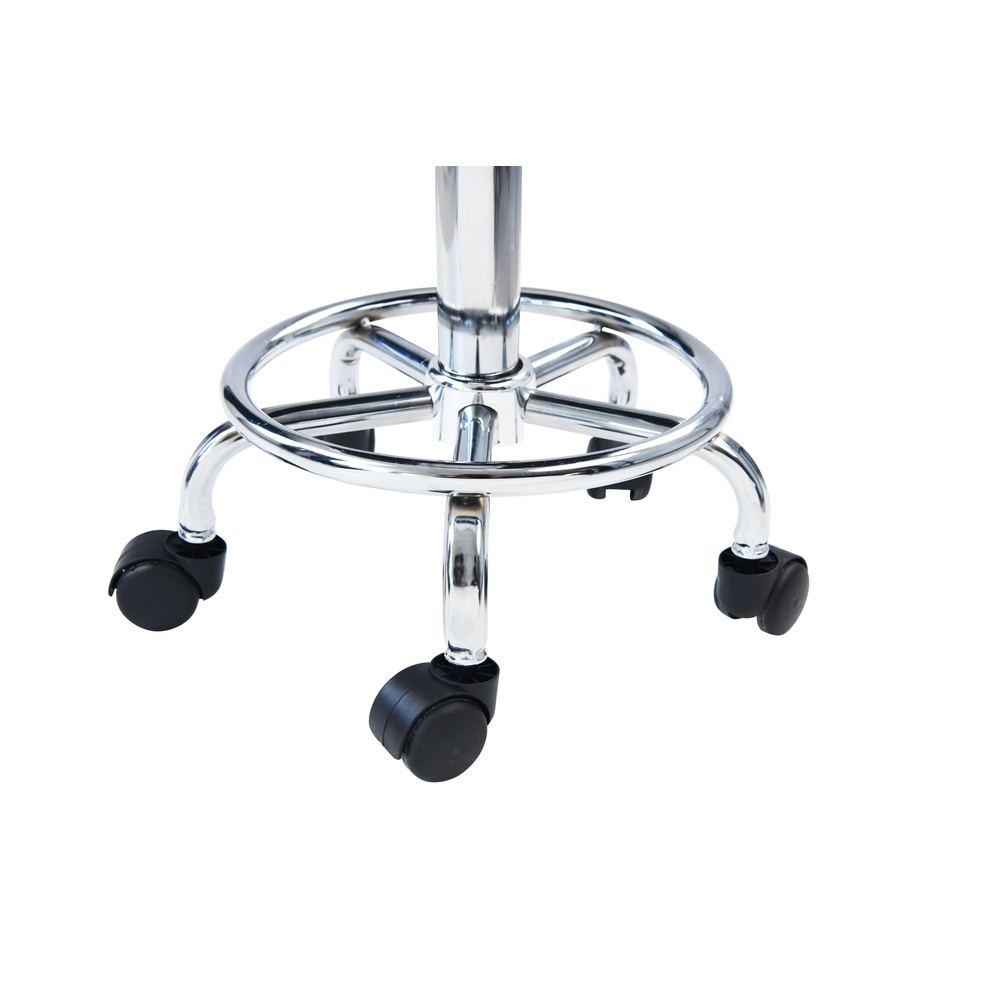
The constraint to respect is the one dimensions cannot express. A 45 cm depth leaves little envelope for recline travel, and the HZ6001DW is not specified as a heavy-cycle reclining unit. Where a station will handle long treatments with repeated reclining, the chair should be upgraded to a larger model rather than pushed beyond its intended duty. Buyers should also request the load rating and recline range in writing instead of inferring them from the footprint.
Standard Styling Bays: HZ8801 as the Reference Envelope
The HZ8801, at 90 × 60 × 90 cm, sits at the practical centre of the range and functions well as a default specification for a general cutting floor. It is large enough to give a full-size back and a stable base, and modest enough that a run of stations still leaves a workable aisle behind the chair and room for a technician stool and trolley.
Two neighbouring models bracket it usefully. HZ87111GY at 96 × 59 × 103 cm raises the back height while keeping depth similar, and HZ8770 at 105 × 72 × 97 cm adds both length and depth for bays that can absorb them. Where a slightly lower profile is preferred with full-width proportions, HZ8702CRD at 110 × 72 × 90 cm is catalogued as a professional barber chair, sharing the same material set of PU leather, high-density sponge, wood and aluminum alloy.
In procurement terms, the standard bay is where most multi-station projects should start: fix the number of standard bays first, then allocate compact and heavy-duty models around them. Doing it the other way — filling a floor with statement pieces and squeezing the remainder — usually produces a layout that fails both the circulation check and the service-cycle check.
Heavy-Duty Floors: HZ87102RB and the High-Cycle Station
The HZ87102RB is the largest envelope in this comparison at 111 × 66 × 118 cm. It is both the longest and the tallest of the models discussed, and it belongs on floors where the station will run close to continuous use with a wide range of client sizes.
Heavy-duty is not a marketing adjective; it is a cycle count. Commercial-grade hydraulic pumps for barber chairs are typically rated to handle load capacities between 350 and 400 lbs and to exceed 100,000 cycles, according to Fact.MR's 2026 salon chair market analysis. That benchmark is the number a high-traffic owner should be testing a quotation against, because the pump is the part that fails first and the part that stops a station earning.
Hydraulic adjustment is also where the market has concentrated. Hydraulic salon chairs are projected to account for a 63.4% share of the salon chair segment in 2026, per the same Fact.MR analysis — a share that reflects how dependent professional stations have become on smooth, foot-operated height change under load.
The corresponding constraint is spatial and financial. A 111 cm long chair reduces the number of stations a floor can hold, and the reduction compounds once mandated centre-to-centre spacing is applied. A heavy-duty floor usually justifies that trade because revenue per station is higher; a low-volume salon usually does not.
Retro and Gold Interiors: HZ8799YF and HZ8799ABK
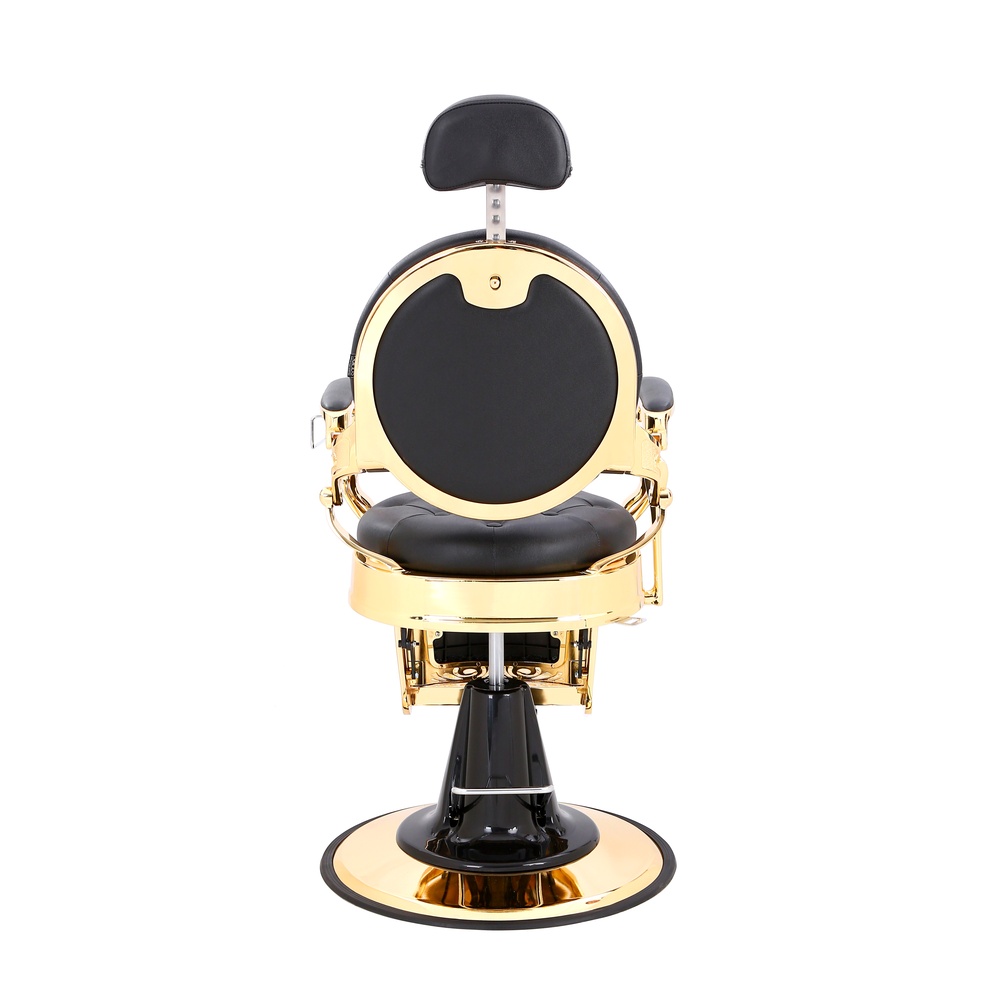
The premium end of the range is represented by HZ8799YF and HZ8799ABK, both at 110 × 72 × 100 cm, sharing PU leather, high-density sponge, wood and an aluminum alloy frame. HZ8799ABK is catalogued as a gold barber chair, and both models are typically specified where the chair is part of the interior concept rather than a neutral utility item.
These are the right choice for heritage and vintage-styled barbershops, premium suites, and front-of-house stations that appear in photography and brand material. The frame material matters here in a practical sense: aluminum alloy construction is generally lighter than an equivalent iron frame, which affects how chairs are handled during fit-out, repositioning and floor resets.
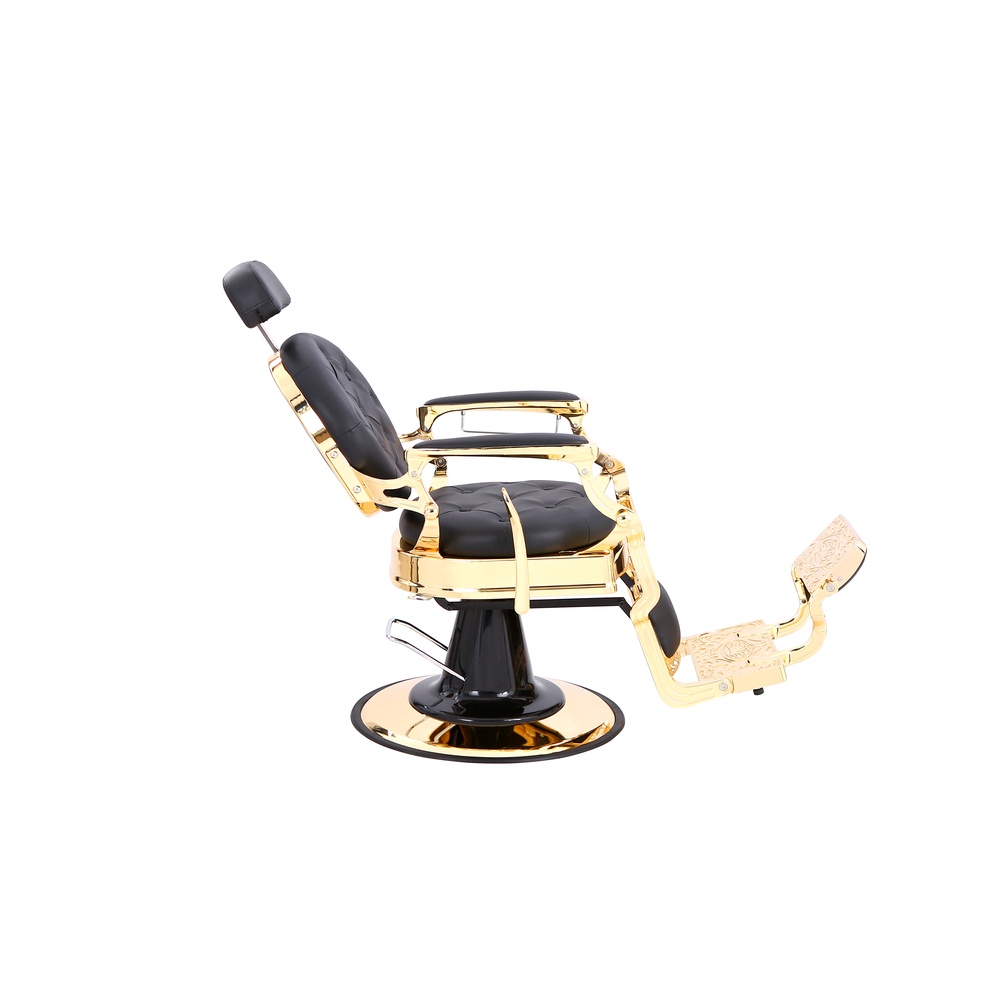
The limitation is straightforward and worth stating plainly. A 110 × 72 cm footprint is wider than the standard HZ8801 bay and needs a correspondingly generous station, so retro chairs are poor candidates for dense layouts. Decorated finishes also carry more visible surface area, which raises the cleaning and maintenance routine compared with a plain upholstery programme. Neither point disqualifies the model; both points should appear in the layout drawing and the operating budget before the order is placed.
Model-to-Station Reference
| Model | Dimensions (cm) | Frame / material set | Station type | Confirm before ordering |
|---|---|---|---|---|
| HZ6001DW | 45 × 25 × 70 | Iron frame; PU leather, high-density sponge, wood | Compact, low-footprint station | Load rating and recline range |
| HZ88202 | 50 × 64 × 90 | Iron frame; PU leather, high-density sponge, wood | Small booth with taller back | Aisle clearance behind chair |
| HZ8765BK | 50 × 64 × 104 | Iron frame; PU leather, high-density sponge, wood | Narrow bay, full-height back | Aisle clearance behind chair |
| HZ8801 | 90 × 60 × 90 | PU leather, high-density sponge, wood | Standard styling bay (reference) | Centre-to-centre spacing rule |
| HZ87102RB | 111 × 66 × 118 | PU leather, high-density sponge, wood | Heavy-duty, high-cycle floor | Pump rating, service terms, spares |
| HZ8799YF | 110 × 72 × 100 | Aluminum alloy frame; PU leather, high-density sponge, wood | Premium / retro interior | Bay width and finish care routine |
| HZ8799ABK | 110 × 72 × 100 | Aluminum alloy frame; PU leather, high-density sponge, wood | Gold / retro statement station | Bay width and finish care routine |
Shared Materials: What PU, Sponge, Wood and Metal Actually Decide
Almost every model in the HZ range draws on the same four material families, so material differences are less about which brand is used and more about how the same specification behaves on a given floor. Salon conditions are demanding by nature: indoor long-term use, with wear resistance, oil resistance, easy cleaning and comfort all required simultaneously, and with durability carrying real weight in the purchase decision.
| Material | Function in the chair | What it decides for the buyer |
|---|---|---|
| PU leather | Upholstery surface and contact layer | Cleaning routine, oil and wear resistance, and which fire or chemical test report applies |
| High-density sponge | Padding and shape retention | Comfort over long sessions and how the seat holds shape under repeated loading |
| Wood | Internal structure and board elements | Frame integrity and the fixings that carry the mechanism |
| Iron frame | Structural base on models such as HZ6001DW | Weight and handling during fit-out; stable, robust base construction |
| Aluminum alloy frame | Structural base on models such as HZ8799ABK and HZ8702CRD | Generally lighter handling than an equivalent iron frame, with the finish programme applied to it |
The practical rule is that material specification should be read per station, not per order. A salon fitting compact booths and a heavy-duty main floor with the same upholstery programme will still need different frame assumptions, different clearance allowances and, in most cases, different certificate evidence if the chairs are destined for different markets.
Compliance Constraints That Follow the Station Decision
Certification attaches to a material and a market, not automatically to a model name. That distinction is the single most common cause of late-stage procurement problems, and it is worth stating in concrete terms using the documents in the HZ file.
- PFAS testing on synthetic leather. Certificate CTT2501010107EN, issued by Guangdong Consumer Testing Technology Co., Ltd., covers synthetic leather 03# against standard EN 14582:2016, applicable to the EU and US markets, issued 4 January 2025.
- Flame retardant artificial leather. SGS report SL62416330206201TX, issued by SGS-CSTC Standards Technical Services Co., Ltd. Hangzhou Branch, applies to the UK market under The Furniture and Furnishings (Fire) (Safety) Regulations 1988, issued 27 September 2024, covering beauty beds, salon chairs and shampoo chairs.
- Flame retardant foam. SGS report SL62416330201301TX, issued by the same branch against the same regulation, applies to the EU and US markets, issued 27 September 2024, with the same product scope.
Read together, those three documents show why the question "is this chair certified?" is too blunt. The right question is which upholstery and which foam, tested to which standard, for which destination. A buyer importing into the UK needs the leather report with UK applicability; a buyer importing into the EU needs the PFAS document scoped to the synthetic leather actually used plus the foam report. The model number on the quotation does not settle it.
Where This Framework Stops
Station-based selection is a better filter than catalogue browsing, but it has boundaries that a buyer should plan around.
First, published dimensions describe the chair at rest, not the chair in use. Recline travel, footrest extension, backrest rotation and the space a technician needs behind the chair are not contained in a length × width × height figure. Any layout drawn from catalogue dimensions alone should be verified with a physical sample in the actual bay.
Second, the uniform-fleet alternative is genuinely attractive and should not be dismissed. Ordering a single model for every station simplifies spares, training and maintenance, and it is the right answer for small salons with homogeneous stations. Its cost is that oversized chairs get forced into small rooms, or undersized chairs get pushed into high-cycle duty — the exact failures this framework is designed to prevent. Uniformity is a valid trade-off, not an error; it just needs to be a deliberate one.
Third, hydraulic chairs are maintained equipment. A pump-rated chair with a one-year pump warranty is not a maintenance-free chair. Floors that cannot support a service routine — no spares, no technician access, no downtime allowance — should weigh that before specifying hydraulic heavy-duty units across an entire floor.
Fourth, statement finishes carry statement upkeep. Retro and gold models earn their place in design-led rooms, but they raise the cleaning routine and narrow the layouts they can occupy.
A Procurement Sequence for Multi-Station Projects
- Measure each bay, not the room. Record usable depth, width, aisle and the position of mirrors, cabinets and wash units for every station individually.
- Classify stations by cycle volume. Separate high-traffic main-floor bays from overflow and short-service stations; the model mix follows directly from that split.
- Fix the visual programme early. Decide whether the floor is a neutral utility scheme or a design-led retro scheme before model selection, because the two produce different footprints.
- Match models to station classes. Use HZ6001DW and the compact band for tight bays, HZ8801 as the standard reference, HZ87102RB for high-cycle floors, and HZ8799YF or HZ8799ABK where the chair is part of the interior.
- Confirm certificate scope against destination market. Verify which leather and which foam the reports cover, and whether the applicable market matches the import destination.
- Request mechanism terms in writing. Pump warranty, spare availability and damaged-goods handling belong in the quotation, not in a later conversation.
- Sample one chair per station class. Validate the largest and smallest models in the real bay before committing the bulk order.
Market Context
The global salon chairs market reached a value of approximately USD 1.5 billion in 2025, according to Fact.MR. Within that market, the hydraulic segment's projected 63.4% share in 2026 indicates that mechanism quality — not upholstery styling — is the dominant purchasing variable across professional floors.
For buyers, the implication is that the constraint-led approach described here is aligned with where the category is heading. As hydraulic adjustment becomes the default rather than the upgrade, differentiation shifts to how well a supplier can match envelope, mechanism and material documentation to a specific station type.
Supplier Context: Ningbo Hongzi Beauty & Hairdressing Equipment Co., Ltd.
Ningbo Hongzi Beauty & Hairdressing Equipment Co., Ltd. is a Chinese manufacturer of barber chairs, shampoo chairs, massage beds and manicure tables, founded in 2012 and located in Yuyao Sanqi City on the shore of Hangzhou Bay. The company reports a production facility of approximately 22,000 m², an annual capacity of 180,000 units, a 15-engineer development team, and an export orientation of 100% with North America and Europe as its main markets.
On the commercial side, the company's stated capability set includes OEM production with logo and colour customisation, a minimum order quantity of 5 units, monthly capacity of 15,000 units, 100% product testing, and lead times of 15 days for orders under 100 units and 30 days for orders above that threshold. After-sales terms as published include a one-year warranty on the pump and reshipment of damaged products.
The range breadth matters for station-based procurement specifically. A published dealer case reference describes cumulative dealer volume of 200,000 units over a one-year period across salon use, barber workstation seating, chain-store outfitting and distributor orders, with the stated highlight being style variety across vintage and modern formats, customisable appearance and materials, and the ability to supply full salon equipment sets. For a buyer assembling a mixed floor — compact booths alongside standard bays, heavy-duty stations and a retro front-of-house — that breadth is the practical advantage, because the model mix can come from one specification file rather than several.
Future Outlook
Three directions are visible from the current data. Hydraulic adjustment is consolidating its position as the professional default, which will push buyer scrutiny toward pump ratings, warranty terms and spare availability rather than press-button convenience. Material documentation is becoming a selection filter in its own right, with chemical and flammability reports scoped to specific upholstery and foam increasingly requested at quotation stage. And station density in urban salons is likely to keep compact formats relevant, while design-led retro interiors continue to justify wider, statement-sized chairs where the floor can carry them.
For distributors and salon owners alike, the practical conclusion is that the model list should be built station by station. Dimensions set the envelope, cycle volume sets the mechanism class, materials set the compliance path, and the interior programme sets the finish. A chair that satisfies all four is a working station; one that satisfies three is a future problem.
FAQ
What barber chair size fits a compact salon station?
In the HZ range the compact end is represented by HZ6001DW at 45 × 25 × 70 cm — a styling seat in PU leather and high-density sponge on an iron frame, catalogued as a beauty salon chair. Slightly larger compact options include HZ88202 at 50 × 64 × 90 cm and HZ8765BK at 50 × 64 × 104 cm, both of which add a taller back while staying in the same order of footprint. The station should be sized so that the chair leaves working room around it rather than filling the bay.
Do high-traffic shops need a heavy-duty barber chair?
Where a station runs close to continuous use with a wide range of client sizes, a heavy-duty envelope and mechanism class are appropriate. HZ87102RB at 111 × 66 × 118 cm is the largest model in this comparison. As a category benchmark, commercial-grade hydraulic pumps for barber chairs are typically rated for 350–400 lbs load capacity and more than 100,000 cycles, per Fact.MR's 2026 analysis. In the HZ range the pump carries a one-year warranty, and a hydraulic chair should be treated as maintained equipment with spares and service access accounted for.
How much space is required between barber chairs?
Spacing requirements vary by jurisdiction. North Carolina, for example, sets a minimum of five linear feet between the centre of each barber chair, measured centre to centre, under 21 N.C. Admin. Code 06L .0102. That figure is specific to North Carolina and should not be assumed elsewhere. Beyond any legal minimum, the working allowance behind the chair for a technician stool and trolley, and the client's entry and exit path, need to be measured against the actual chair envelope.
What certifications should be checked for EU or UK imports?
Three documents illustrate the scope question. Certificate CTT2501010107EN, issued by Guangdong Consumer Testing Technology Co., Ltd., covers synthetic leather 03# against EN 14582:2016 for PFAS, applicable to the EU and US markets and issued 4 January 2025. SGS report SL62416330206201TX, issued by SGS-CSTC Standards Technical Services Co., Ltd. Hangzhou Branch, covers flame retardant artificial leather for the UK under The Furniture and Furnishings (Fire) (Safety) Regulations 1988, issued 27 September 2024. SGS report SL62416330201301TX from the same branch covers flame retardant foam for the EU and US under the same regulation. Buyers should confirm that the specific upholstery and foam on the ordered model fall inside the tested scope.
What materials are shared across the HZ barber chair range?
The common material set across the models discussed is PU leather upholstery, high-density sponge padding and wood structural elements. Frames differ: HZ6001DW uses an iron frame, while HZ8799ABK and HZ8702CRD use an aluminum alloy frame. Because the upholstery and foam are what the fire and chemical reports are scoped to, material consistency across models is directly relevant to how much of a floor can be covered by a single compliance file.
Is a retro gold barber chair practical for daily salon use?
HZ8799ABK, catalogued as a gold barber chair at 110 × 72 × 100 cm, is built on the same PU leather, high-density sponge, wood and aluminum alloy specification as HZ8799YF. Practicality depends on the station rather than the style: the 110 × 72 cm footprint is wider than the standard 90 × 60 cm HZ8801 bay and needs a correspondingly generous layout, and a decorated finish carries more visible surface area to maintain. Where the room can absorb both, the model is used for design-led front-of-house and premium retro interiors.
The full model specification file, including the complete HZ range and its material listings, is available in the company brochure: Ningbo Hongzi product brochure (PDF).
Have Questions or Need More Details?
Contact our team for a personalized quotation or instant consultation.
Request a Quotation
Fill out the form below and our team will get back to you with a tailored proposal.
WhatsApp Direct Chat
Prefer to chat in real-time? Message us on WhatsApp for instant assistance & quick answers.
- Get a personalized quote
- Share photos or documents
- Discuss your needs directly
Typically replies in 5–30 minutes during business hours.