
Rotary Screw Air Compressors: Efficiency Drivers in Global Manufacturing
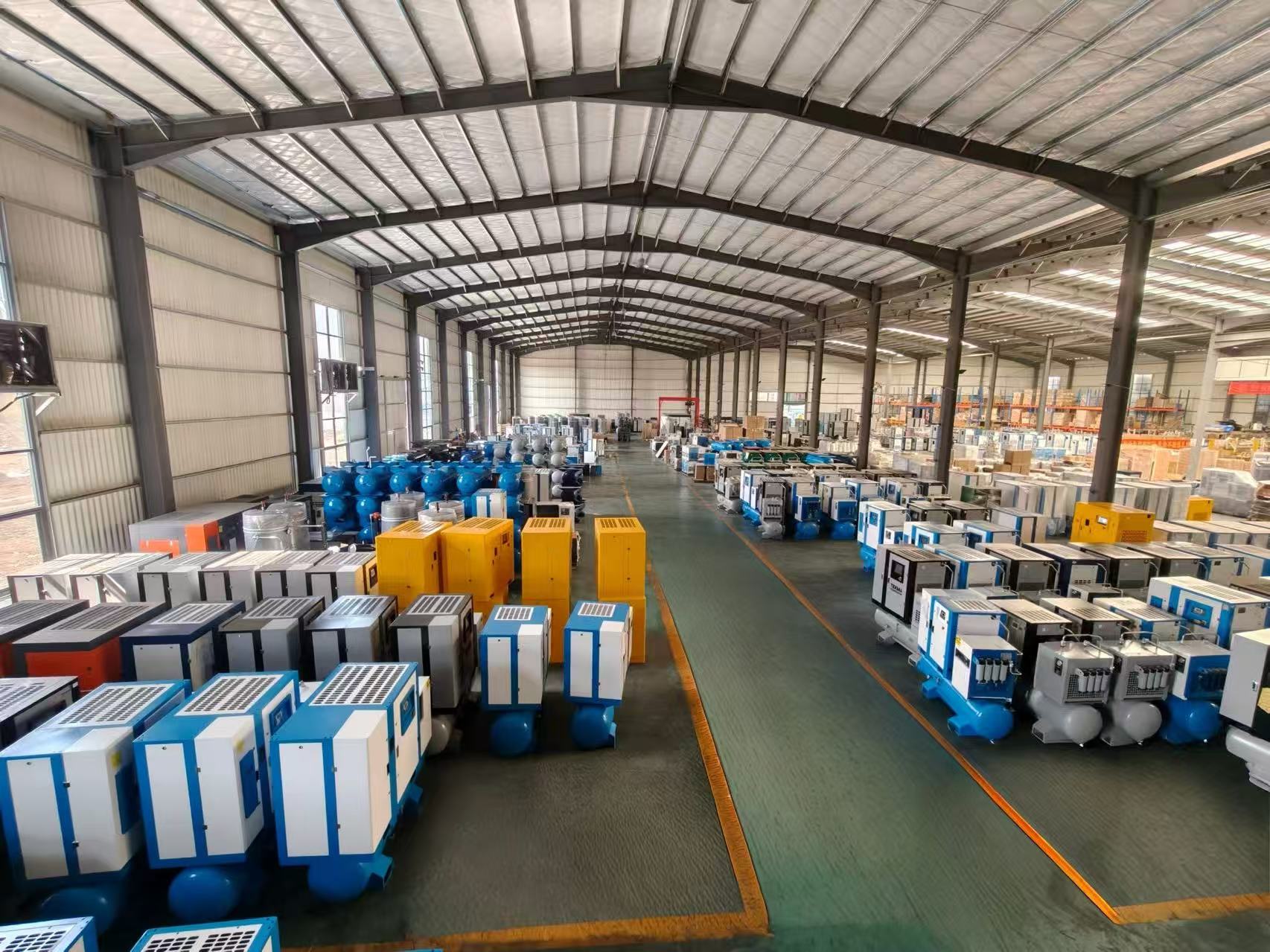
Industrial workshop environment where rotary screw air compressors are assembled and tested.
Industry context
The global rotary screw compressor market is estimated to reach USD 13.3 billion by 2025, up from USD 12.5 billion in 2024. Stationary rotary screw air compressors account for approximately 67.6% of the technology share, reflecting their dominant role in industrial compressed air systems. Asia Pacific holds the largest regional market share at 43.7%, with China as the leading country. Oil-filled rotary screw compressors represent 61.7% of the lubrication segment, while oil-free types are growing at a faster CAGR of 5.4%.
As manufacturers worldwide seek to lower energy costs and meet stricter environmental regulations, the choice of compressed air equipment has become a strategic decision. Rotary screw air compressors have increasingly been adopted over piston alternatives for continuous-duty applications requiring stable, high-volume compressed air.
The challenge: balancing reliability, efficiency, and total cost of ownership
Production environments such as CNC machining, laser cutting, food packaging, and automotive assembly demand a compressed air supply that is consistent, clean, and often energy-efficient. Inefficient compressors can account for 10–30% of a facility's total electricity consumption, making energy saving a priority. Additionally, many applications require low noise levels (for indoor installations) and high reliability to avoid production downtime. The need for supporting equipment — air dryers, tanks, line filters, inverters, and controllers — adds complexity to system design and procurement.
UMW Air: a focused player in energy-efficient screw compressors
Shandong UMW Air Tech Co., Ltd. (UMW Air), established in 2019, specializes in designing and manufacturing energy-efficient screw air compressors. The company employs approximately 200 staff, including a dedicated R&D team of 40 engineers, and operates a 2000-square-meter manufacturing facility with an annual production capacity of 12,000 units. Export business accounts for 100% of total sales, with major markets including the EU, USA, Southeast Asia, Middle East, South America, and Africa. Contact information: email info@umw.top, phone +8618888300248.
UMW Air's main product lines include Heavy-Duty Screw Air Compressors, Diesel Mobile Screw Air Compressors, Stationary Screw Air Compressors, Direct-Driven Screw Air Compressors, and Air-Cooled Screw Air Compressors. These are classified into series such as Micro, Prime, Core, and Mega, covering power ranges from 4 kW to 355 kW and pressure from 8 bar to 25 bar.
Technical architecture: direct-driven, air-cooled, and integrated designs
UMW Air's rotary screw air compressors employ a single-stage screw compressor air end and are primarily air-cooled and direct-driven. Direct-driven designs eliminate belt losses, improving mechanical efficiency and reducing maintenance. The Micro series (models ML-4A, ML-5.5A, ML-7.5A) delivers a maximum airflow of 1.1 m³/min at a pressure range of 8–13 bar, with a 140 L gas tank. Larger models such as the ML-7.5/8A and L-1516A support power up to 355 kW and pressure up to 25 bar, using IE4 motors for higher energy efficiency. The units are constructed from sheet metal and designed for continuous operation in high-temperature or humid environments.
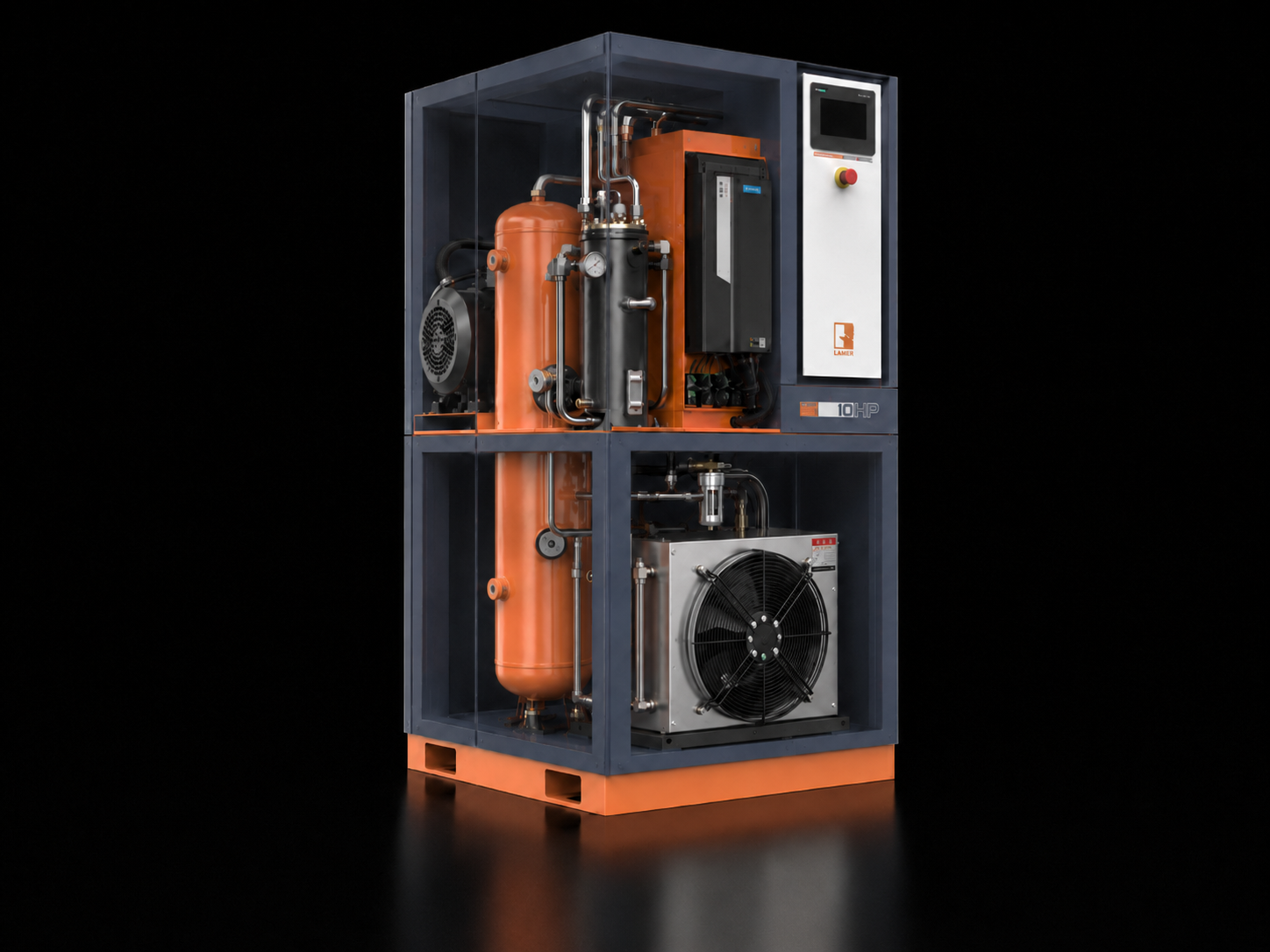
Cross-section view of a rotary screw compressor air end, illustrating the male and female rotors that produce continuous compressed air.
Supporting equipment — air dryers, air tanks, line filters, inverters, and controllers — is required to ensure air quality and system stability. UMW Air offers integrated configurations that bundle these components, simplifying installation and maintenance for end users.
Use-case scenarios across industries
The screw air compressor product line is applicable in Metal Processing and Manufacturing, Plastics and Rubber Processing, Automotive and Machinery Parts, Food and Packaging, Construction and Materials, and Energy and Chemical industries. In practice, these compressors are deployed in CNC machinery production lines, automotive parts production lines, plastic processing line expansions, industrial automation integration, and food and beverage packaging line setup projects.
For CNC machine operations, compressed air at 90–120 PSI (6–8 bar) and flow rates of 5–30 CFM is typical. Laser cutting using assist gas may require pressures up to 1.6 MPa (approx. 232 PSI) with integrated filtration to prevent lens contamination. UMW Air's range can be configured with optional high-pressure air ends or additional filtration packages to meet these specific demands. Food processing environments, where oil-free air is critical, can be addressed by selecting an oil-free rotary screw compressor variant or by adding appropriate filtration to meet ISO 8573-1:2010 purity classes.
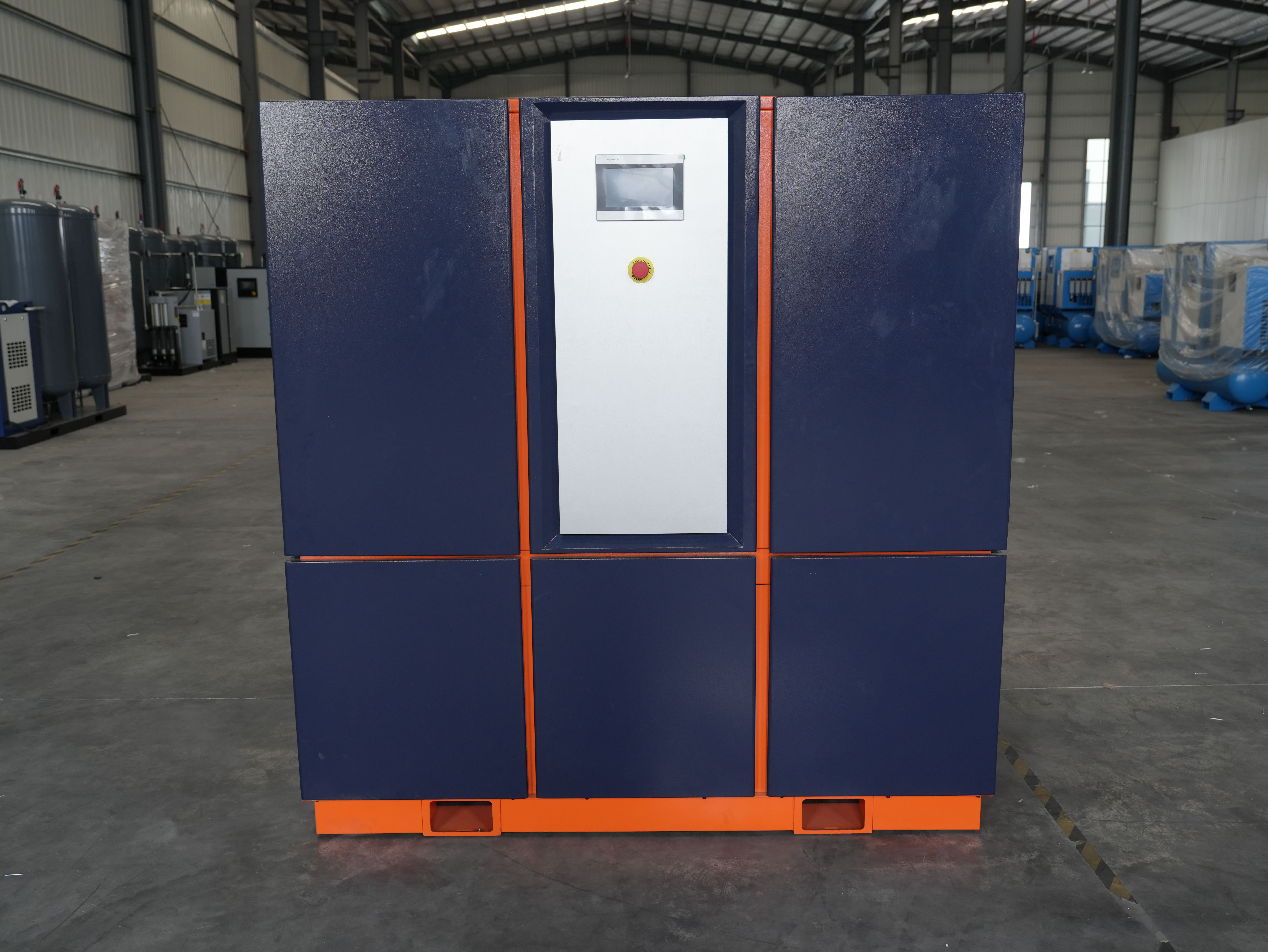
A Prime screw air compressor unit in a factory setting, demonstrating typical floor placement with pipe connections.
Market trend analysis
According to multiple market reports, the rotary screw compressor market is growing steadily, with oil-free technologies gaining share (5.4% CAGR). End users are increasingly prioritizing total cost of ownership over first-cost, driving adoption of permanent magnet variable speed drive (PM VSD) technologies and intelligent PLC control systems that adjust output to real-time demand. UMW Air's standardisation of PM VSD and low-resistance system design aligns with this trend, converting each kWh into productive output — a position that resonates with cost-conscious and sustainability-oriented buyers.
Major global competitors include Atlas Copco AB, Ingersoll Rand Inc., Kaeser Compressors, and Sullair LLC. While these incumbents dominate market share, manufacturers like UMW Air compete by offering comparable core technology (direct-drive, VSD, IE4 motors) at a competitive cost structure, backed by a lean 2000 m² facility and an R&D team with industrial experience.
Comparison with traditional piston compressors
Compared to reciprocating (piston) compressors, rotary screw compressors provide higher reliability for continuous-duty cycles, lower vibration and noise, and fewer wearing parts, resulting in reduced maintenance costs. However, they carry a higher initial investment and are less efficient under highly intermittent, low-demand patterns. For operations running 8–24 hours daily, the screw type's lifecycle cost analysis typically favors it. UMW Air's stationary and integrated screw compressors are designed for such continuous manufacturing environments. One honest limitation: while UMW Air's units are built to meet industry standards, the brand does not yet have the same global service network as top-tier incumbents, which may be a consideration for multinational projects requiring local support across many regions.
Future outlook
Advancements in PM VSD technology, digital IoT connectivity for predictive maintenance, and stricter emissions regulations will continue to shape the market. The oil-free segment's faster growth (5.4% CAGR) suggests that food, pharmaceutical, and electronics industries will increasingly mandate ISO 8573-1:2010 compliance. UMW Air's ability to scale its product portfolio toward higher efficiency and oil-free options, while maintaining a direct-drive, air-cooled architecture, positions it to serve both price-sensitive and quality-focused buyers. As Asia Pacific leads demand growth (43.7% regional share), Chinese manufacturers like UMW Air are well-situated to capture domestic and regional export opportunities.
Frequently Asked Questions
Q: What is a rotary screw air compressor and how does it work?
A: A rotary screw air compressor is a type of positive-displacement compressor that uses two meshing helical rotors (male and female) to compress air continuously. It operates with low vibration and high efficiency, suitable for industrial applications requiring a steady air supply.
Q: Which industries typically use a rotary screw air compressor?
A: Industries include Metal Processing and Manufacturing, Plastics and Rubber Processing, Automotive and Machinery Parts, Food and Packaging, Construction and Materials, and Energy and Chemical sectors. Common project types are CNC machinery lines, automotive parts production, plastic processing, industrial automation, and food and beverage packaging setup.
Q: What are the special requirements for using a rotary screw air compressor in production environments?
A: Applications often require energy saving, low noise, environmental friendliness, and high reliability. The product must be used with supporting equipment such as an air dryer, air tank, line filter, inverter, and controller. It typically operates in continuous mode and is designed for high-temperature or humid environments.
Q: What power and pressure options are available in UMW Air's screw air compressor line?
A: UMW Air offers models ranging from 4 kW to 355 kW. Pressure options span 8–25 bar. For example, the Micro series (ML-4A, ML-5.5A, ML-7.5A) delivers up to 1.1 m³/min at 8–13 bar, while larger models (e.g., ML-7.5/8A, L-1516A) support higher flows and pressures up to 25 bar.
Q: How do I choose between an oil-filled and an oil-free rotary screw compressor?
A: Oil-filled compressors (61.7% of the market in 2025) are cost-effective for general industrial use but require filtration for sensitive applications. Oil-free compressors are growing faster (5.4% CAGR) and are essential for food, pharmaceutical, and electronics industries governed by ISO 8573-1:2010 purity classes. The choice depends on air quality requirements and budget.
This article provides industry information for procurement professionals evaluating rotary screw air compressors. For specific product inquiries, contact Shandong UMW Air Tech Co., Ltd. at info@umw.top.
Have Questions or Need More Details?
Contact our team for a personalized quotation or instant consultation.
Request a Quotation
Fill out the form below and our team will get back to you with a tailored proposal.
WhatsApp Direct Chat
Prefer to chat in real-time? Message us on WhatsApp for instant assistance & quick answers.
- Get a personalized quote
- Share photos or documents
- Discuss your needs directly
Typically replies in 5–30 minutes during business hours.