
Rubber Material Shortlist: Sealing, Damping & Protection
Rubber Material Shortlist: Sealing, Damping & Protection
Sealing products accounted for 12% of global industrial rubber consumption volume in 2024, and the global industrial rubber products market is projected at approximately USD 58.98 billion in 2026, according to Market Reports World. Read together, those two figures describe a category with steady demand, a long and fragmented supplier base, and very few standard answers.
Most procurement failures in this category are not price failures. They are material failures: a washer that hardens after a season outdoors, an O-ring that swells in fuel, a damper that loses elasticity inside a hot enclosure. This shortlist guide organizes the rubber materials most commonly used in custom molded components around the three jobs they actually perform — sealing, damping and protection — so that buyers can scope realistic material options before an RFQ is issued rather than after a quotation arrives.
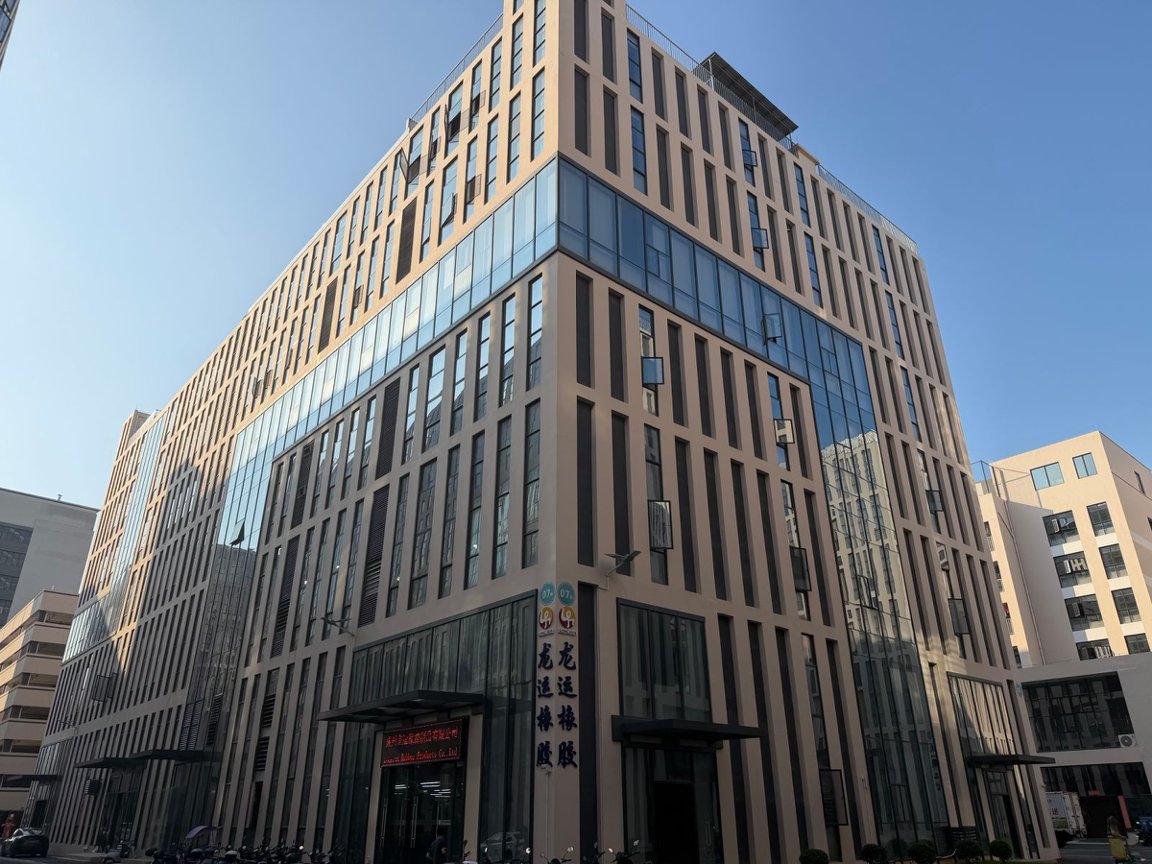
Industrial rubber component production environment. Image: Longrun Rubber Products (Huizhou) Co., Ltd.
Why the Material Choice Outranks the Part Number
A gasket drawing specifies dimensions, hardness and tolerance. Those are the visible variables. The compound is the invisible one, and it usually decides whether the part survives its environment. Two suppliers can quote the same drawing with the same dimensions and deliver parts with very different service lives.
Longrun Rubber Products (Huizhou) Co., Ltd. is a custom molded rubber parts manufacturer established in China in 2005, and its product taxonomy mirrors the buyer's real question rather than a catalogue index. Rubber gaskets, rubber seals, rubber O-rings and rubber washers sit on the sealing side; rubber dampers and vibration-damping washers handle motion; rubber grommets, cushion washers and waterproof washers cover protection. Those categories are then served by a short list of material families: EPDM, NBR/Buna-N, NR, CR/Neoprene, FKM/Viton, SBR, HNBR and silicone rubber, including medical-grade silicone.
Fewer than ten elastomer families cover almost every industrial requirement. The difficulty is not the number of options; it is that each family solves one problem well while remaining weak somewhere else. That asymmetry is what makes a function-first shortlist more useful than a generic material table.
Five Filters That Build the Shortlist
- Primary function. Is the part stopping a leak, absorbing motion, or shielding a surface or cable? A sealing part is judged on compression set and media compatibility; a damping part on elasticity and dynamic fatigue; a protection part on abrasion, cut resistance and environmental aging.
- Media in contact. Mineral oil, fuel, hydraulic fluid, water, steam, food product, cleaning chemicals and sterilization methods each eliminate different elastomers. This filter removes more candidates than any other.
- Thermal and outdoor exposure. Continuous operating temperature, heat spikes, low-temperature start-up conditions, and UV or ozone exposure in outdoor installations all narrow the list.
- Compliance route. Food contact, medical use, automotive quality systems or general industrial duty each carry their own documentation expectations, and they are not interchangeable.
- Mechanical duty. Static or dynamic service, continuous compression, and whether the rubber must bond to plastic or metal determines the compound rather than the material family alone.
Shortlist at a Glance: Nine Rubber Materials and Their Best-Fit Jobs
The table below is a screening tool. Each row states where a material is normally shortlisted and what limitation should be checked before it is confirmed.
| Material | Primary strength | Best-fit function | Typical component forms | Limitation to check |
|---|---|---|---|---|
| NBR / Buna-N | Oil, fuel and hydrocarbon resistance | Sealing in oil-contact systems | O-rings, gaskets, oil seals, washers | Ozone and weathering resistance is limited; weak in outdoor exposure |
| HNBR | Oil resistance combined with better heat and ozone aging | Automotive and machinery sealing | Seals, O-rings, gaskets | Higher cost than NBR; compound availability varies by supplier |
| EPDM | Weather, ozone, UV, water and steam resistance | Outdoor sealing, damping, protection | Gaskets, grommets, dampers, washers | Poor resistance to mineral oil and hydrocarbon fuels |
| Silicone (SiR / VMQ) | Temperature flexibility and clean-contact grades | Food, medical and electrical protection | Seals, O-rings, gaskets, grommets | Lower tear strength; swells in hydrocarbon oils |
| Liquid silicone rubber (LSR) | Precision injection molding in medical and automotive grades | Small precision sealing and protection parts | O-rings, seals, molded micro-parts | Requires injection tooling; not a direct swap for compression-molded silicone parts |
| FKM / Viton | High-temperature and chemical resistance | Aggressive chemical and hot sealing | O-rings, seals, gaskets | Cost, limited low-temperature flexibility, and media-specific behavior that must be tested |
| CR / Neoprene | Balanced weather, ozone and moderate oil resistance | General industrial sealing and protection | Gaskets, grommets, dampers | Narrower chemical range than FKM |
| NR (natural rubber) | Elasticity, tensile and tear strength | Damping and cushioning | Dampers, mounts, cushion washers | Poor ozone, UV and heat aging performance |
| SBR | General-purpose use with abrasion resistance | Non-oil protection and cushioning | Washers, grommets, dampers | Not suitable for oil or solvent contact |
Matching Function to Component: Where Each Material Usually Lands
Procurement categories and material families connect through the part type. The mapping below follows the component types a custom molder typically produces and the materials normally shortlisted for each.
| Function | Component type | Materials normally shortlisted |
|---|---|---|
| Sealing | Rubber gaskets — oil-resistant, chemical-resistant, high-temperature, low-temperature/cryogenic, food-grade/FDA-approved, medical-grade, high-pressure/flange | NBR/Buna-N, HNBR, EPDM, FKM/Viton, silicone, medical-grade silicone |
| Sealing | Rubber seals — hydraulic, pneumatic, oil/engine, high-temperature, cryogenic, chemical-resistant, food-grade, medical-grade, high-pressure | NBR/Buna-N, HNBR, FKM/Viton, EPDM, CR/Neoprene, silicone |
| Sealing | Rubber O-rings — static, dynamic, hydraulic, pneumatic, food-grade, medical-grade | NBR/Buna-N, HNBR, EPDM, FKM/Viton, silicone, LSR for micro parts |
| Damping | Rubber dampers — machinery vibration, automotive, electronic equipment, pipe/vibration mount | NR, SBR, CR/Neoprene, EPDM, silicone |
| Damping | Rubber washers — vibration damping, cushioning | NR, SBR, CR/Neoprene, EPDM |
| Protection | Rubber grommets — wire/cable protection, sealing/waterproof/dustproof, vibration/damping | EPDM, CR/Neoprene, silicone, SBR |
| Protection | Rubber washers — insulating, waterproof | EPDM, silicone, CR/Neoprene |
Sealing: Gaskets, Seals and O-Rings
Sealing is the most demanding of the three functions because the part is expected to hold a barrier under continuous compression. The shortlist logic follows the media first.
- Oils, fuels and hydraulic fluids: NBR/Buna-N is normally first on the list, with HNBR used where the same part also faces elevated heat and ozone.
- Water, steam, ozone and outdoor weathering: EPDM is the standard recommendation; it is the material most often specified for outdoor gaskets, weather-exposed seals and water-contact parts.
- Aggressive chemicals and elevated temperature: FKM/Viton moves to the top of the list, with the understanding that cost rises and low-temperature flexibility may need checking.
- Clean contact and temperature extremes: silicone rubber, including medical-grade silicone, is shortlisted for food-contact and medical-grade gasket, seal and O-ring categories.
Dynamic duty adds a second screen. A dynamic seal or a hydraulic O-ring is exposed to friction and repeated movement, so tear strength, compression set and surface finish matter more than they do in a static flange gasket. Static seals tolerate a wider range of compounds because the part is not moving against a counter-surface once installed.
Damping: Dampers, Washers and Mounts
Vibration control asks different questions. The elastomer must remain elastic in compression and shear, resist fatigue over long cycle counts, and stay stable as temperature changes. Natural rubber (NR) remains the classic choice where elasticity and tear strength matter most; SBR and CR/Neoprene cover general industrial damping where cost and weather resistance are the priority; EPDM suits outdoor and water-exposed mounts; silicone holds up where temperature swings are wide.
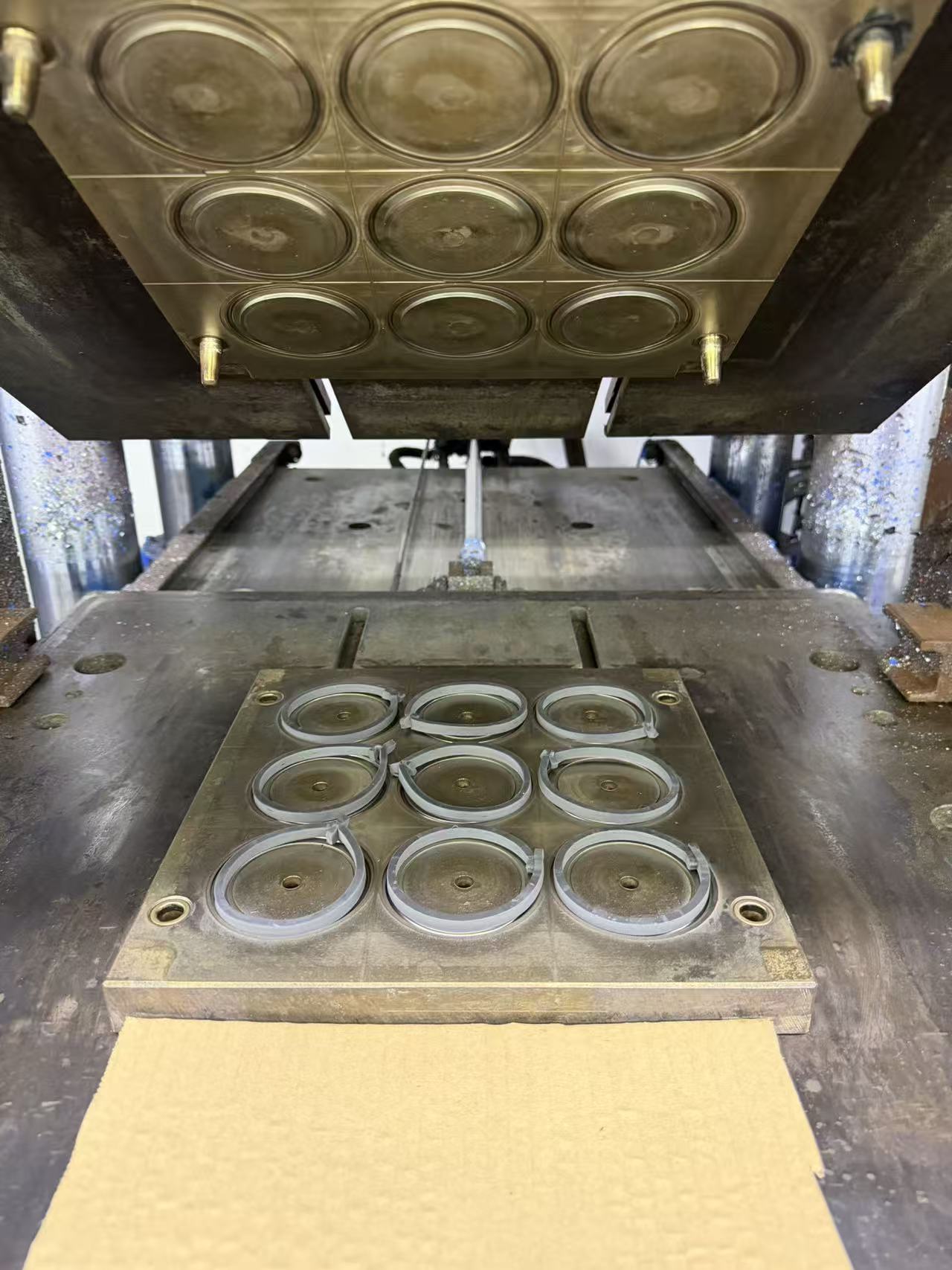
Rubber molding for damping and vibration-control components. Image: Longrun Rubber Products (Huizhou) Co., Ltd.
What damping performance looks like when it is written into a contract is visible in a documented US automotive rubber parts OEM project. Over five years at 1,000,000 units per year, the parts achieved tensile strength of at least 7 MPa, elongation at break of at least 400%, tear strength of at least 15 kN/m, a process capability index above 1.33, a defect rate below 150 ppm, precise dimensions and firm rubber-to-plastic bonding. The parts are used for shock absorption and noise reduction, sealing and leakage prevention, media conveying and protection of transmission components.
The limitation is worth stating plainly: NR and SBR, the most economical damping materials, age poorly under UV and ozone. On outdoor equipment or in engine-adjacent positions, the more durable answer is usually EPDM or silicone even though the elasticity advantage is smaller.
Protection: Grommets, Cushioning and Barrier Parts
Protection parts do not seal a pressure boundary; they shield cables, edges, panels and housings from abrasion, water, dust and vibration. Rubber grommets are typically classed as wire and cable protection grommets, sealing/waterproof/dustproof grommets, or vibration and damping grommets. Rubber washers in this group include insulating, waterproof and cushion washers.
Because protection parts are often exposed and rarely inspected, environmental aging is the decisive property. EPDM is the common first choice for outdoor and water-exposed protection; CR/Neoprene is used where a balance of weather and moderate oil resistance is needed; silicone covers high-temperature and clean-contact positions; SBR covers cost-sensitive indoor applications without oil exposure.
A second documented case shows the durability profile buyers can expect from a mature protection and cushioning program. The project serves food, medical, machinery and sanitary clients in the United States, running five years at 3,000,000 units per year, with tensile strength of at least 8 MPa, elongation at break of at least 450%, tear strength of at least 35 kN/m, a capability index above 1.33 and a defect rate below 150 ppm. The parts are applied to vibration and noise reduction, cushioning and protection, dustproof and waterproof protection, and resistance to heat and chemicals.
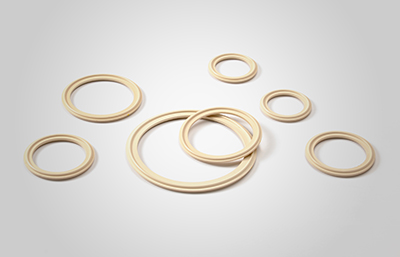
Finished rubber gasket produced from a custom compound. Image: Longrun Rubber Products (Huizhou) Co., Ltd.
Compliance: The Filter That Eliminates Materials Fastest
Compliance screening usually removes more material options than technical performance does, because it operates on documentation rather than on the drawing.
- Longrun Rubber holds ISO 9001:2015 certification FM 840583 and IATF 16949:2016 certification 0601909, both issued by BSI, with the stated scope “Manufacturing of rubber and silicone seals” and a validity period from 2026-04-10 to 2029-04-09.
- For medical and food-adjacent programs, FDA 21 CFR 177.2600, USP Class VI and ISO 10993 are frequently cited together but are not equivalent requirements; buyers should map each one to the specific market and claim they need.
- For cross-border sourcing, rubber and articles thereof fall under HS Chapter 40 in UN Comtrade, a classification that includes EPDM in primary forms and articles of hard rubber. Trade classification does not, however, isolate finished gaskets, seals, O-rings, grommets or molded components, so it should be used for sourcing documentation rather than as a substitute for a part-level specification.
Market Direction: Where Material Demand Is Shifting
Three published data points explain why the shortlist is slowly changing shape.
- Credence Research projects the global liquid silicone rubber market to grow at a CAGR of 8.7% to reach USD 6.5 billion by 2033, driven largely by medical and automotive grade LSR. That points to growing demand for precision silicone parts rather than general-purpose molded rubber.
- Grommets held a 36.45% share of the automotive rubber molding segment in 2025, according to Market Reports World — protection parts outweigh more technical components by volume.
- Sealing products represented 12% of industrial rubber consumption volume in 2024, confirming that gaskets, seals and O-rings remain the core procurement category even in a market dominated by larger rubber product groups.
Market-size figures in this category should still be read carefully. Published estimates for industrial rubber vary widely because some publishers include non-tire industrial rubber broadly while others count only finished industrial rubber products. The figures above are useful for direction, not for cost modelling.
Where Longrun Rubber Sits in This Shortlist
Longrun Rubber Products (Huizhou) Co., Ltd. is a custom molded rubber parts manufacturer established in China in 2005, operating a 10,000 m² facility with 120 employees and a 20-engineer R&D team, and exporting approximately 80% of output to global markets.
Its relevance to this shortlist is material coverage and execution capability rather than a single product:
- Material range: NBR/Buna-N, CR/Neoprene, EPDM, SBR, FKM/Viton, NR, HNBR and silicone rubber, including medical-grade silicone.
- Component range: rubber gaskets, rubber seals, rubber O-rings, rubber washers, rubber dampers and rubber grommets, with hardness, dimensions, color and physical properties customized per project.
- Production model: OEM production under the customer's brand, with minimum order quantity set according to customer requirements and a stated lead time of 20 days.
- Quality control: 100% testing, with acceptance criteria defined as pre-shipment testing or third-party inspection, usually appointed by the client.
- Commercial terms: delivery terms EXW or FOB ShenZhen, payment after receipt of goods, and after-sales support covering warranty, returns and technical assistance.
- Industry coverage: automotive, industrial, machinery, energy, medical, food and electrical applications.
In shortlist terms, that profile fits programs where material choice must be adapted per part rather than drawn from a fixed catalogue, and where a documented quality system is part of the supplier qualification file.
Limits and Trade-Offs Buyers Should Accept Up Front
The most useful caution in this category is that no single rubber material is best across sealing, damping and protection. The trade-offs are structural, not supplier-specific:
- NBR is the default for oil contact but is a poor outdoor material; specifying it for a weather-exposed gasket is a common and avoidable failure.
- EPDM handles weather, ozone, water and steam well but performs poorly in mineral oil and hydrocarbon fuels.
- Silicone offers temperature flexibility and clean-contact grades but has lower tear strength than NR or CR and swells in hydrocarbon oils.
- FKM delivers the widest chemical and high-temperature envelope but raises cost and constrains low-temperature flexibility, and its behavior still has to be confirmed against the specific media.
- NR and SBR, useful for damping and cushioning, are the least durable options under UV and ozone exposure.
A second limitation concerns data, not materials. Public documentation does not provide a validated, standardized property comparison across EPDM, silicone, NBR and FKM compounds, which means generic material charts should be treated as directional screening tools. Confirmation has to come from compound-specific data and physical samples, which is why acceptance criteria such as pre-shipment testing or client-appointed third-party inspection matter more in this category than in many others.
Future Outlook
Two directions look likely for the next few years. First, precision silicone continues to move from specialty to mainstream: LSR growth in medical and automotive grades suggests more parts will be specified for injection molding rather than compression molding, with tighter dimensional control as the buying argument. Second, material selection is becoming a documentation exercise as much as an engineering one. Buyers increasingly ask for the material family, the compound data, the certificate scope and the inspection method in a single package, and suppliers that cannot produce all four are excluded before price is discussed.
For procurement teams, the practical response is to keep the shortlist short but keep the filters sharp: function first, media second, then temperature, compliance and mechanical duty — and confirm with samples before scaling.
FAQ
Which rubber material should be shortlisted first for oil and fuel contact?
NBR/Buna-N is normally the first material listed for oil, fuel and hydrocarbon contact, with HNBR selected when the same part also faces elevated heat and ozone exposure. EPDM, despite strong weather and water performance, is a poor choice for mineral oil and hydrocarbon fuels.
When is EPDM a better shortlist choice than NBR?
EPDM is the usual choice where the part meets water, steam, ozone or prolonged outdoor weathering, such as outdoor gaskets, weather-exposed seals and water-contact protection parts. NBR remains preferable where oil or fuel resistance is the governing requirement.
Is silicone rubber suitable for food-grade and medical sealing?
Silicone rubber, including medical-grade silicone, is listed among the materials used for food-grade/FDA-approved and medical-grade gaskets, seals and O-rings. Buyers should note that FDA 21 CFR 177.2600, USP Class VI and ISO 10993 are distinct requirements rather than equivalent labels, and each should be matched to the intended market and claim.
What is the difference between silicone rubber and liquid silicone rubber?
Liquid silicone rubber is an injection-molding grade used for precision parts in medical and automotive applications, while conventional silicone rubber is more commonly associated with compression-molded components. LSR requires injection tooling and is not a direct substitute for an existing compression-molded silicone part without revalidation.
Which materials are usually shortlisted for vibration damping?
Natural rubber is typically shortlisted where elasticity and tear strength dominate; SBR and CR/Neoprene cover general industrial damping; EPDM suits outdoor and water-exposed mounts; silicone is used where temperature swings are wide. Rubber dampers are commonly categorized as machinery vibration dampers, automotive rubber dampers, electronic equipment dampers and pipe/vibration mount dampers.
How can buyers verify material and part claims before ordering?
Verification normally combines the supplier's quality system certificates, the compound data for the selected material, and inspection at the agreed acceptance point. In the referenced cases, parts were produced under 100% testing with a capability index above 1.33 and a defect rate below 150 ppm, and acceptance was defined as pre-shipment testing or third-party inspection, usually appointed by the client.
What are typical lead time and order quantity terms for custom molded rubber parts?
For the referenced manufacturer, lead time is stated as 20 days, and minimum order quantity is determined according to customer requirements rather than a fixed published threshold. Delivery terms are EXW or FOB ShenZhen, with payment after receipt of goods.
A downloadable product and capability brochure covering materials, component categories and quality documentation is available here: Longrun Rubber brochure (PDF).
Have Questions or Need More Details?
Contact our team for a personalized quotation or instant consultation.
Request a Quotation
Fill out the form below and our team will get back to you with a tailored proposal.
WhatsApp Direct Chat
Prefer to chat in real-time? Message us on WhatsApp for instant assistance & quick answers.
- Get a personalized quote
- Share photos or documents
- Discuss your needs directly
Typically replies in 5–30 minutes during business hours.