
Rubber Parts Export Compliance: Acceptance, Traceability & Qualification Checks
Rubber Parts Export Compliance: Acceptance, Traceability & Qualification Checks
Rubber Parts Export Compliance: Acceptance, Traceability & Qualification Checks
Export compliance for rubber parts is usually described as a document problem: certificates, invoices, packing lists and customs codes. For buyers moving from evaluation to execution, the harder question is supplier qualification. Can the supplier prove that the sample, the bulk order and the pre-shipment batch meet the same acceptance criteria? Can it trace a batch after approval? Can it protect the tooling that makes a custom part? These are the checks that determine whether a cross-border rubber parts order is commercially manageable.
This article sets out a buyer-facing compliance walkthrough for Hangzhou Lingo Rubber and Plastic Product Co., Ltd (Lingo Rubber Plastic), a Hangzhou-based manufacturer of rubber molding parts, rubber extruded parts, plastic injection parts and plastic extruded parts. It focuses on the checkpoints that can be verified before and after order placement: RMA A2 tolerance for LGMM anti-vibration mounts, Shore A hardness and Pantone/RAL color specifications for LG-RX extrusion seals, sample and bulk inspection, pre-shipment testing, batch traceability, mold maintenance and ownership protection, and the export terms that keep cross-border orders compliant.
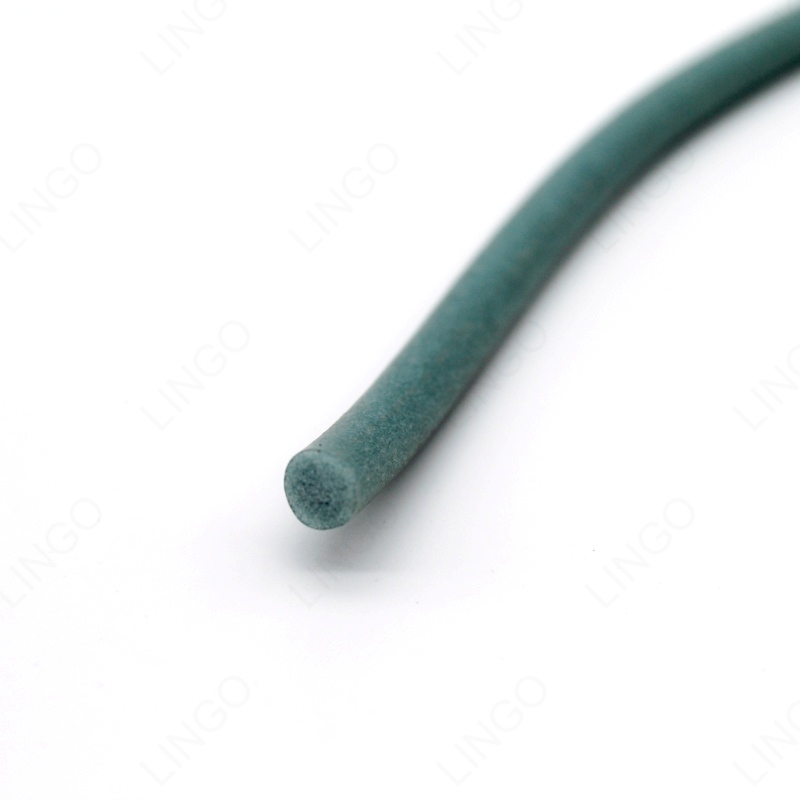
Silicone sponge rubber cords are one example of the extrusion and sealing product family that buyers qualify before shipment. Image source: Lingo Rubber Plastic.
Why Rubber Parts Compliance Has Moved Into Supplier Qualification
The commercial context explains why buyers now ask for more than a product catalogue. Grand View Research values the global gasket and seal materials market at USD 61.4 billion in 2024. The same source estimates that rubber seals represent approximately 56% of the global gasket and seals market, reflecting the role of rubber in dynamic sealing. Vantage Market Research values the global O-ring market at USD 10.41 billion in 2025. Cognitive Market Research estimates that China accounts for approximately 23% of the global anti-vibration rubber mounts market.
Those figures describe scale, not supplier reliability. A buyer still needs to know whether a specific manufacturer can hold a tolerance, reproduce a hardness value, match a color reference and release a shipment against an agreed test. The trade classification adds another layer. HS code 4016.93 covers gaskets, washers and other seals of vulcanized rubber, other than hard rubber, and is used for products including O-rings and oil seals for automotive use. Classification and conformity documents must match the actual part, not simply the product family.
Commercial estimates for the broader industrial rubber market vary materially because product scope and methodology differ. This article does not combine those estimates into a single forecast. Instead, it uses the narrower market data above and supplier-level evidence to show how a buyer can qualify a rubber parts supplier at the point where compliance becomes operational.
Lingo Rubber Plastic as a Qualified Rubber Parts Supplier
Lingo Rubber Plastic was founded in 2022 and operates a 3,000 m² facility with around 40 employees, including a 10-person R&D team. Its main products are rubber molding parts, rubber extruded parts, plastic injection parts and plastic extruded parts. The company reports an export ratio of 80%, with main markets in the EU and USA. Its production and export experience is therefore relevant to buyers who need a supplier that can handle both custom parts and cross-border shipment documentation.
The company provides OEM and ODM production services, including customization of rubber extrusion trims and silicone extruded cords. Its stated monthly production capacity is 1,000,000 kgs, with typical lead times of 2 to 6 weeks. MOQ is set according to different parts, and small quantity orders are acceptable. Quality control includes full inspection of samples and random inspection of bulk goods. After-sales support includes remote technical support, molds maintenance and ownership protection, a batch traceability system, and free exchange and acceptance of concessions.
For qualification purposes, the relevant point is not the breadth of the catalogue. It is whether these controls can be written into the buyer-supplier agreement and checked at sample, bulk and shipment stages. Lingo Rubber Plastic's acceptance model is built around those checkpoints.
Acceptance Criteria Buyers Can Verify Before Bulk Production
A rubber parts order becomes difficult when acceptance criteria are left implicit. The buyer assumes the sample represents the bulk; the supplier assumes the drawing is complete. A workable qualification process converts both assumptions into recorded checks. For Lingo Rubber Plastic, the main product-specific criteria are RMA A2 tolerance for LGMM anti-vibration mounts and Shore A hardness plus Pantone/RAL color specifications for LG-RX extrusion seals.
RMA A2 tolerance for LGMM anti-vibration mounts. LGMM anti-vibration mounts are specified against RMA A2 tolerance. For the buyer, this is a dimensional acceptance reference that should be tied to the drawing, the critical dimensions and the measurement method. The buyer should confirm which dimensions are checked, which gauge or instrument is used, and whether the sample inspection report records the same method that will be used for bulk production. RMA A2 is a tolerance reference, not a substitute for application-specific validation.
Shore A hardness and Pantone/RAL color specifications for LG-RX extrusion seals. LG-RX extrusion seals are specified with Shore A hardness and Pantone/RAL color requirements. Hardness affects compression and sealing behavior; color affects visual acceptance and, in some projects, brand or equipment matching. The buyer should approve the hardness test method and the color reference before bulk production. A sample that matches the Pantone/RAL reference under one viewing condition should be documented as the approved reference for later batches.
These criteria sit inside a wider inspection sequence. Lingo Rubber Plastic states that quality control includes full inspection of samples and random inspection of bulk goods. The procurement acceptance criteria also include a pre-shipment test. That sequence gives the buyer three evidence points: sample approval, bulk consistency and shipment release.
| Checkpoint | What Lingo Rubber Plastic applies | Buyer verification action |
|---|---|---|
| LGMM anti-vibration mounts | RMA A2 tolerance | Approve drawing, critical dimensions and gauge method; compare sample and pre-shipment records. |
| LG-RX extrusion seals | Shore A hardness and Pantone/RAL color specifications | Confirm hardness test method and color reference; retain the approved sample as the visual standard. |
| Samples | Full inspection of samples | Review the sample inspection record before approving the bulk order. |
| Bulk goods | Random inspection of bulk goods | Agree the sampling plan in advance; random inspection is not 100% inspection. |
| Shipment | Pre-shipment test as part of acceptance | Make the pre-shipment test result a condition of shipment release. |
Traceability and Tooling Control After Approval
Acceptance at sample stage does not protect the buyer after mass production begins. Two controls matter at that point: batch traceability and tooling ownership. Lingo Rubber Plastic operates a batch traceability system and provides molds maintenance and ownership protection. For a buyer, these are not administrative extras. They determine whether a quality issue can be isolated and whether a custom mold remains under the buyer's commercial control.
A batch traceability system allows finished parts to be associated with production batches. In practice, the buyer should ask how the batch is identified on labels, inspection records and shipment documents, and how that identifier is used if a nonconformity is found. The exact record format should be agreed during supplier qualification; the point is that the supplier has a system for tracing the batch rather than relying on memory or informal notes.
Mold maintenance and ownership protection matter most for custom rubber parts. A custom mold is often a significant part of the project cost. The buyer should confirm who owns the mold, who maintains it, how maintenance is recorded, and what happens if the relationship ends. Lingo Rubber Plastic states that molds maintenance and ownership protection are part of its after-sales support. That gives the buyer a basis for writing tooling terms into the contract rather than leaving them to assumption.
The same logic applies to concessions. Lingo Rubber Plastic offers free exchange and acceptance of concessions. A concession is a controlled decision to accept a defined deviation under agreed conditions. The buyer should require the concession to be documented, approved and linked to the affected batch. Free exchange and acceptance of concessions can reduce qualification risk only when the process is explicit.
Documentation also supports traceability. Lingo Rubber Plastic's compliance information includes PPAP, MSDS and a CTI test report for UL 94 V-0 flammability of CR Neoprene rubber. The CTI test report number is A2260538692101. These documents do not replace batch records, but they provide a qualification baseline that the buyer can review alongside sample and shipment evidence.
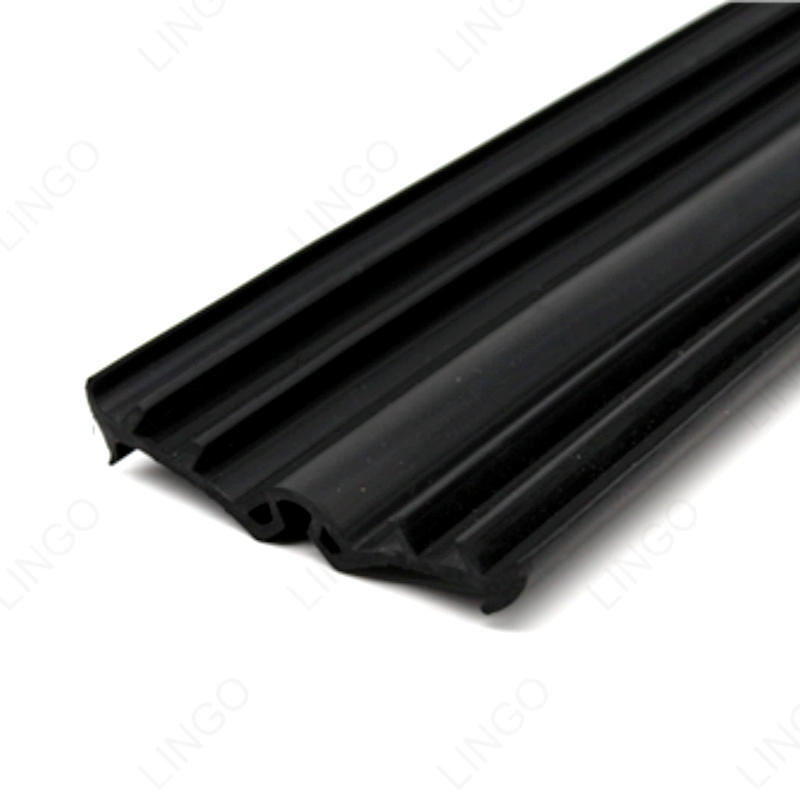
EPDM rubber extrusion seals are specified by material, hardness and dimensional requirements before bulk production. Image source: Lingo Rubber Plastic.
Export Terms, Payment and MOQ: Keeping Cross-Border Orders Manageable
Compliance does not stop at the factory gate. Delivery terms, payment terms and order quantity determine how risk is allocated after acceptance. Lingo Rubber Plastic supports delivery terms including EXW, FOB, CIF and DDP. The choice affects where risk and cost transfer, and it should match the buyer's ability to handle freight, insurance and import clearance.
Payment terms include T/T as the standard option. For first-time or small orders, a deposit is required upfront and the remaining balance before shipment. L/C at sight is accepted, especially for larger quantities. D/P can be arranged for certain destinations and is subject to agreement. PayPal is available for sample payments or low-value orders. For established customers with a consistent payment record, credit terms can be offered. Each of these terms has a boundary: D/P is not universal, and L/C at sight is a documentary mechanism rather than a quality guarantee.
MOQ is set according to different parts, and small quantity orders are acceptable. That flexibility matters during evaluation, when a buyer may need a small trial batch before committing to volume. Typical lead times are 2 to 6 weeks, which should be read together with the agreed inspection and pre-shipment test sequence.
| Commercial term | What it controls | Buyer consideration |
|---|---|---|
| EXW | Ex works; buyer arranges collection and onward transport. | Suitable when the buyer has a reliable forwarder and export process. |
| FOB | Free on board; risk transfers at the named port. | Clarify port, loading responsibilities and document timing. |
| CIF | Cost, insurance and freight; seller arranges carriage and insurance. | Check insurance scope and destination charges. |
| DDP | Delivered duty paid; seller handles import formalities and duties. | Confirm the seller can legally handle import clearance in the destination market. |
| T/T, L/C at sight, D/P | Payment mechanisms with different documentary and credit-risk profiles. | Match the mechanism to order value, relationship stage and destination rules. |
Application Fit: Where These Checks Matter Most
The acceptance model is easier to understand when it is tied to real applications. Lingo Rubber Plastic's product range includes rubber sealing rings, rubber grommets, anti-vibration mounts, rubber bellows, rubber O-rings, rubber gaskets and extrusion seals. Its cases cover automotive OEMs, water treatment equipment manufacturers and food industry clients across the US, GB, CA, AU, FR and DE.
For LGMM anti-vibration mounts, a US automotive OEM case involved 10,000 to 40,000 pcs. The application was designed to absorb vibration and reduce noise. The case highlights small size, tight tolerances and consistent batch-to-batch quality, plus an in-house spare parts inventory for urgent orders. That is exactly where RMA A2 tolerance and batch traceability become commercial controls rather than technical footnotes. A second automotive case used existing tooling and UL 94 V-0 certified material, showing how material documentation and tooling readiness can shorten the qualification path.
For LG-RX extrusion seals and silicone cords, an automotive OEM project in the United Arab Emirates involved 4,000 meters of silicone sponge cords over three years. The material was FDA silicone sponge rubber, with high precision tolerance, high temperature resistance and a smooth surface. The application list includes EV battery sealing, industrial cabinet gaskets, automotive door seals, appliance door insulation, building window weatherstripping and medical device sealing. In these applications, Shore A hardness, color specification, dimensional control and pre-shipment testing are directly connected to installation and long-term sealing performance.
A water-sealing case across the US, GB, CA, AU, FR and DE involved 1,000 units over three years. The reported result was stable operation, dimensions within tolerance and zero claims. That outcome is not a promise for every project; it shows what a documented acceptance sequence can look like when sample inspection, bulk inspection and batch records are aligned.
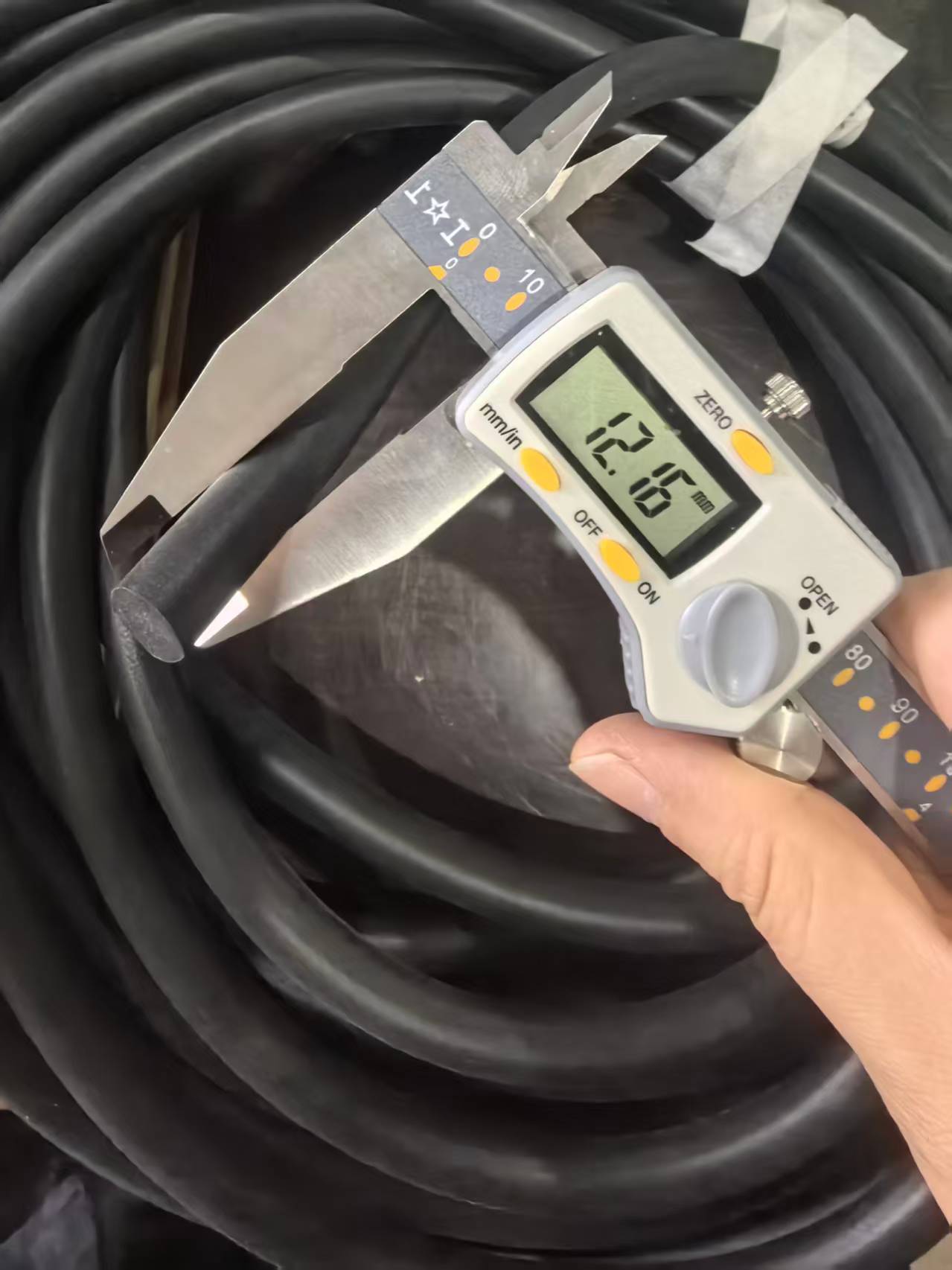
Dimensional inspection records link sample approval to bulk production and pre-shipment release. Image source: Lingo Rubber Plastic.
How This Compares With a Certificate-Only Qualification Model
Many buyers begin with a certificate-first approach: request an ISO certificate, review a catalogue and compare price. That approach has value, but it leaves gaps. A certificate does not show whether a specific batch met RMA A2 tolerance or Shore A hardness. A sample does not prove bulk consistency. A low price does not clarify mold ownership or traceability. A supplier qualification model should therefore combine commercial terms with verifiable production evidence.
| Approach | Strength | Limitation |
|---|---|---|
| Certificate-only | Easy to collect and compare at shortlisting stage. | Does not prove batch conformity, pre-shipment status or tooling control. |
| Sample-only | Fast visual and dimensional check before commitment. | A sample may not represent bulk consistency; it does not replace random inspection. |
| Price-led sourcing | Clear commercial comparison. | Can underweight traceability, mold ownership and acceptance testing. |
| Evidence-based qualification with Lingo Rubber Plastic | Combines sample inspection, random bulk inspection, pre-shipment test, batch traceability, mold protection and documented concessions. | Random inspection is not 100% inspection; D/P is subject to agreement; RMA A2 and Shore A criteria still require application-specific validation by the buyer. |
The limitation is important. Lingo Rubber Plastic's controls reduce qualification risk, but they do not transfer every risk to the supplier. The buyer remains responsible for defining the application requirements, approving the drawing and color reference, reviewing inspection records, and deciding whether incoming inspection is needed. A compliance model is strongest when both sides know which evidence is required and which decisions remain with the buyer.
Market Trend: Evidence-Based Qualification in Green Energy and New Materials
In green energy and new materials projects, rubber parts often sit between sealing, vibration control and enclosure protection. The same project may require an EPDM rubber gasket, a silicone rubber seal, a door and window seal, a cylindrical rubber mount or a rubber grommet. Each part has a different failure mode, but the qualification question is similar: can the supplier show that the part meets the agreed criteria at sample, bulk and shipment stages?
The market data supports the scale of that question. With the gasket and seal materials market valued at USD 61.4 billion in 2024, and rubber seals representing approximately 56% of that market, small acceptance failures can affect a large number of sealing applications. China's approximately 23% share of the global anti-vibration rubber mounts market also means that export buyers are likely to evaluate Chinese suppliers for mounts alongside seals and gaskets. HS 4016.93 provides a common trade reference for many sealing products, but it does not replace part-level acceptance criteria.
The practical trend is a shift from certificate collection to evidence collection. Buyers want sample inspection records, bulk inspection plans, pre-shipment test results, batch identifiers and clear tooling ownership. They also want commercial terms that match the risk profile of the order. That is why a supplier that can connect RMA A2 tolerance, Shore A hardness, Pantone/RAL color specifications, batch traceability and export terms is easier to qualify than a supplier that offers only a product list.
Future Outlook
Buyers are likely to place more weight on batch-level evidence, tooling control and pre-shipment documentation as rubber parts move deeper into green energy and new materials supply chains. The direction is not simply more paperwork. It is a tighter link between the drawing, the sample, the bulk batch and the shipment release. Suppliers with an existing batch traceability system, mold maintenance and ownership protection, and a defined acceptance sequence are better positioned for that expectation.
For Lingo Rubber Plastic, the compliance conversation is therefore best conducted as a qualification conversation. The buyer should define the part, the acceptance criteria and the evidence required. The supplier should confirm the production route, inspection points, traceability method and commercial terms. When those elements are agreed before mass production, export compliance becomes a manageable part of procurement rather than a late-stage risk.
FAQ
What acceptance criteria should a buyer agree before bulk production?
The buyer should agree the drawing, the critical dimensions and the inspection method. For LGMM anti-vibration mounts, the dimensional acceptance reference is RMA A2 tolerance. For LG-RX extrusion seals, the acceptance criteria include Shore A hardness and Pantone/RAL color specifications. The sequence also includes full inspection of samples, random inspection of bulk goods and a pre-shipment test as part of acceptance.
How does Lingo Rubber Plastic support batch traceability and mold ownership?
Lingo Rubber Plastic operates a batch traceability system and provides molds maintenance and ownership protection. The buyer should agree how batches are identified in inspection records and shipment documents, and how mold ownership and maintenance responsibilities are documented. These controls help isolate quality issues and protect custom tooling.
Which export and payment terms are available for cross-border orders?
Delivery terms include EXW, FOB, CIF and DDP. Payment terms include T/T as the standard option, L/C at sight for larger quantities, and D/P for certain destinations subject to agreement. PayPal is available for sample payments or low-value orders. Credit terms can be offered to established customers with a consistent payment record.
Is there a minimum order quantity for custom rubber parts?
MOQ is set according to different parts, and small quantity orders are acceptable. Typical lead times are 2 to 6 weeks. This allows buyers to validate a sample or trial order before committing to larger volumes.
What documentation supports supplier qualification?
Lingo Rubber Plastic's documentation includes PPAP, MSDS and a CTI test report for UL 94 V-0 flammability of CR Neoprene rubber, report number A2260538692101. These documents should be reviewed against the actual part and application. For sealing products, HS 4016.93 is a common trade reference, but the buyer should confirm the classification of the specific part.
What limitations should buyers plan for?
Random inspection of bulk goods is not 100% inspection. RMA A2 tolerance and Shore A hardness are acceptance references, not a substitute for application-specific validation. D/P is subject to agreement and is not available for every destination. The buyer should define any additional testing or incoming inspection required for the application.
A downloadable company profile provides the full product and capability list for buyers completing supplier qualification.
Have Questions or Need More Details?
Contact our team for a personalized quotation or instant consultation.
Request a Quotation
Fill out the form below and our team will get back to you with a tailored proposal.
WhatsApp Direct Chat
Prefer to chat in real-time? Message us on WhatsApp for instant assistance & quick answers.
- Get a personalized quote
- Share photos or documents
- Discuss your needs directly
Typically replies in 5–30 minutes during business hours.