
Rubber Products 101: Materials, Components, Custom Molding
Rubber Products 101: Materials, Components, Custom Molding
A practical procurement guide for industrial rubber products
Introduction
Industrial rubber products are engineered components used in the production and assembly of automotive, industrial, machinery, energy, medical, food, and electrical components. They are designed to provide sealing, vibration damping, dustproof, waterproof, corrosion-resistant, and oil-resistant protection in environments that include high temperature, low temperature, high pressure, vibration, and chemical exposure.
Longrun Rubber Products (Huizhou) Co., Ltd. is a custom molded rubber parts manufacturer established in 2005 in Huizhou, Guangdong, China. The company specializes in custom rubber molded parts and serves global markets. This guide is written for buyers moving from initial awareness of rubber products to supplier research, with a focus on product categories, materials, custom manufacturing, and market context.
Why Rubber Products Deserve a Dedicated Procurement Review
Rubber components often look simple, but their material and dimensional choices directly influence assembly fit, sealing reliability, vibration control, and equipment service life. A washer, gasket, seal, or damper that fails can cause fluid leakage, excessive vibration, contamination, or unplanned downtime. For industrial buyers, the practical challenge is to match each component to the operating environment rather than treating rubber parts as interchangeable commodities.
The market context supports this level of attention. The global industrial rubber product market was valued at USD 28.28 billion in 2024 and is projected to reach USD 45.19 billion by 2034, according to Zion Market Research. Market size estimates vary by methodology and scope, but this figure reflects the non-tire industrial rubber product segment. In parallel, liquid silicone rubber was estimated at USD 2.9 billion in 2024, with a projected CAGR of 9.6% through 2033, according to Acumen Research and Consulting. EPDM rubber, a material widely used in automotive and construction applications, was estimated at USD 10.54 billion in 2024, according to Market Research Future.
For procurement teams, the opportunity is clear: rubber products are not a static category. Growth is concentrated in materials and configurations tied to specific applications, which increases the value of working with manufacturers that understand application-driven material selection and custom molding.
Longrun Rubber at a Glance
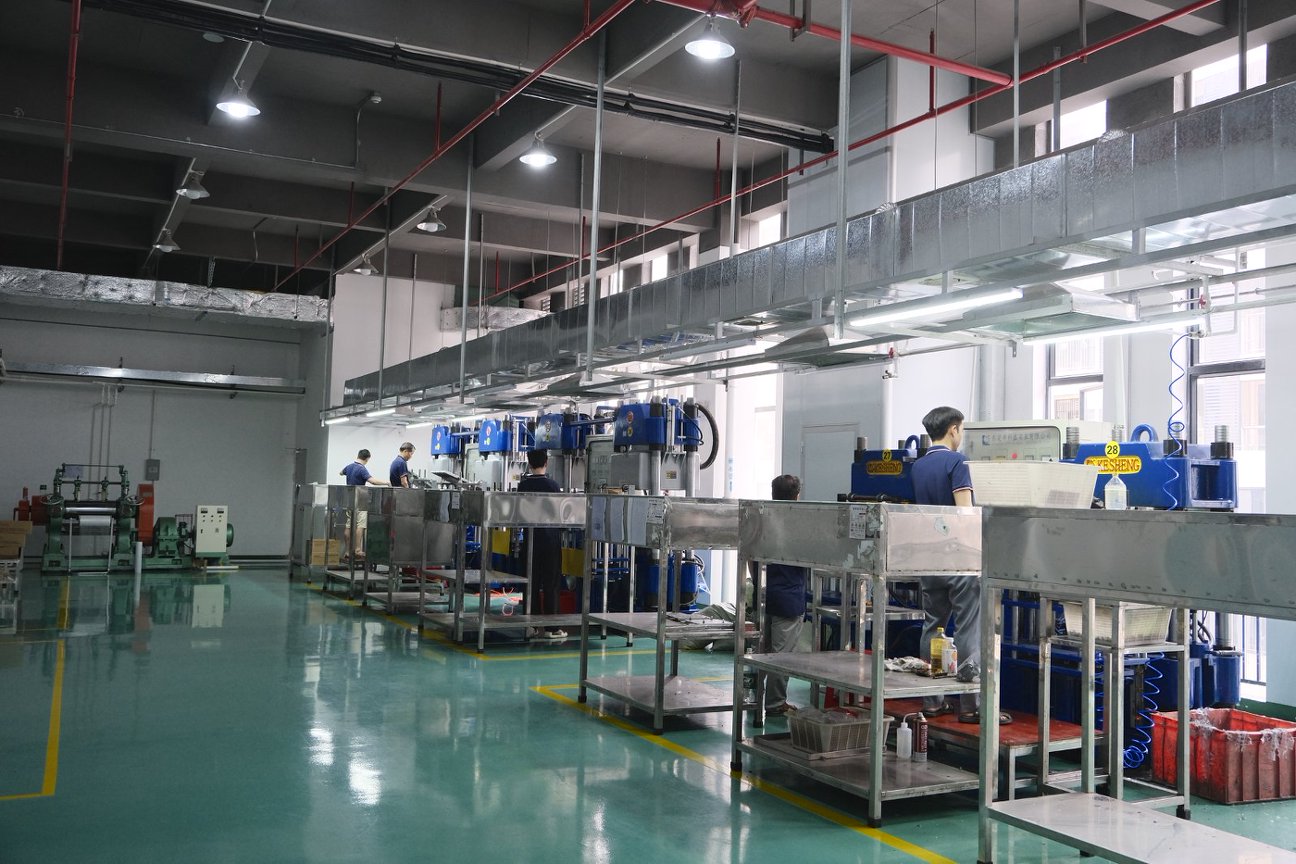
Longrun Rubber Products (Huizhou) Co., Ltd. is a custom molded rubber products manufacturer located at No. 27 Songbailing Avenue, Zhongkai High-tech Zone, Huizhou, Guangdong, China. Established in 2005, the company operates a 10,000-square-meter manufacturing facility and employs approximately 120 staff, including an R&D team of 20 engineers. Its annual production capacity is USD 10,000,000, and export business accounts for 80% of total sales.
The company’s main products include custom rubber molded parts. Product applications include automobile, mechanism, home appliances, consumer electronics, medical, food, and telecommunication industries. This range of industries means the product portfolio includes both standard component categories and application-specific custom parts.
Core Rubber Product Categories
Longrun Rubber Products (Huizhou) Co., Ltd. supplies six main rubber product families: rubber gaskets, rubber seals, rubber o-rings, rubber grommets, rubber dampers, and rubber washers. Each category includes multiple types designed for different sealing, protection, and damping functions.
| Product | Types | Material Options | Industries |
|---|---|---|---|
| Rubber gaskets | High-temperature gaskets, oil-resistant gaskets, and other custom gasket configurations | NBR, EPDM, FKM, HNBR, silicone rubber, food-grade silicone rubber, medical-grade silicone rubber | Food, medical, automotive, industrial, energy, electrical |
| Rubber seals | Hydraulic, pneumatic, oil/engine, high-temperature, low-temperature/cryogenic, chemical-resistant, food-grade/FDA-approved, medical-grade, high-pressure seals | EPDM, NBR/Buna-N, silicone rubber, medical grade silicone rubber, and other materials depending on configuration | Automotive, industrial, medical, food, electrical, energy |
| Rubber o-rings | Static seal, dynamic seal, hydraulic, pneumatic, food-grade, medical-grade o-rings | EPDM, NBR/Buna-N, silicone rubber, FKM/Viton, medical grade silicone rubber | Custom depending on application; commonly automotive, food, medical, industrial |
| Rubber grommets | Wire/cable protection grommets, sealing/waterproof/dustproof grommets, vibration/damping grommets | EPDM, NBR/Buna-N, NR, CR/Neoprene, FKM/Viton, SBR, HNBR, silicone rubber, medical grade silicone rubber | Automotive, industrial, machinery, energy, medical, food, electrical |
| Rubber dampers | Machinery vibration dampers, automotive rubber dampers, electronic equipment dampers, pipe/vibration mount dampers | EPDM, NBR, NR, CR, FKM, SBR, HNBR, silicone rubber, medical grade silicone rubber | Automotive, industrial, machinery, energy, medical, food, electrical |
| Rubber washers | Sealing washers, vibration damping washers, insulating washers, waterproof washers, cushion washers | EPDM, NBR/Buna-N, silicone rubber | Electrical, food, medical, automotive |
Across these categories, custom-made options include hardness, dimensions, color, and physical properties. This allows buyers to align the component with the mechanical, thermal, and chemical demands of the final assembly.
Customization and Technical Considerations
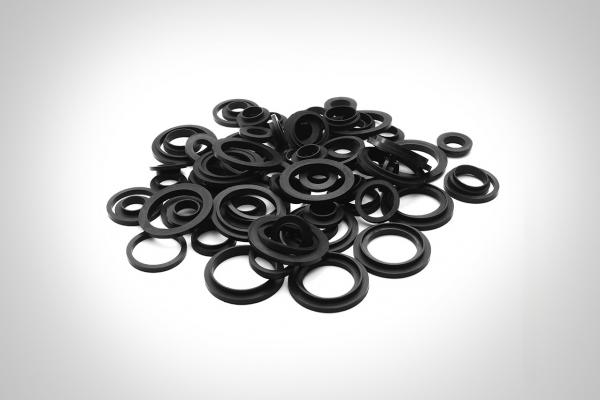
Custom rubber molding is the production approach used by Longrun Rubber Products (Huizhou) Co., Ltd. for these components. The technical options available across the product range include material selection and custom-made hardness, dimensions, color, and physical properties. For engineered applications, these parameters are usually more important than the visual appearance of the part.
Technical advantages of this approach include improved dimensional precision for automated assembly, better sealing and vibration damping performance, longer service life under harsh environments, and higher resistance to heat, oil, ozone, and corrosion. These characteristics are relevant when a rubber component must perform consistently over a long product life cycle.
Buyers researching rubber products should also be familiar with the standards commonly used to define rubber component requirements. ASTM D2000 is the primary standard classification system for rubber products in automotive and industrial applications, according to ASTM International. ISO 3302-1 provides dimensional tolerances for molded, extruded, and calendared rubber products, according to ISO. For food-contact applications, FDA 21 CFR 177.2600 specifies requirements for rubber articles intended for repeated use in food contact applications, according to the FDA eCFR.
Application Scenarios and Operating Conditions
Rubber products from Longrun Rubber Products (Huizhou) Co., Ltd. are used in the production and assembly of automotive, industrial, energy, medical, food, and electrical components. These components are designed for high temperature, low temperature, high pressure, vibration, chemical exposure, and various environments. Their functions include sealing, vibration damping, dustproof, waterproof, corrosion-resistant, and oil-resistant protection.
In practice, this means one rubber part may be selected for a high-temperature engine seal while another is chosen for a cable protection grommet in electronic equipment. A food-grade gasket may serve a hygienic processing line, while a medical-grade silicone part supports a healthcare device assembly. The same custom molding approach can accommodate these different requirements because the parts are assembled according to each customer’s assembly process and matched to different customer assembly scenarios and applications.
Application markets include the United States, Germany, Australia, United Kingdom, France, Switzerland, Spain, Turkey, Canada, Italy, Mexico, Portugal, and Russia. For global buyers, this application breadth reinforces the need for clear specifications before production begins.
Market Trends Behind Rubber Products
Several credible market indicators help explain the current direction of the rubber products industry. The global liquid silicone rubber market was estimated at USD 2.9 billion in 2024, with a projected CAGR of 9.6% through 2033, according to Acumen Research and Consulting. The automotive segment dominated the liquid silicone rubber market in 2023 with a 34.1% revenue share, according to Grand View Research. This suggests that vehicle applications remain a major demand driver for silicone-based components.
The EPDM rubber market was estimated at USD 10.54 billion in 2024, driven significantly by the automotive and construction sectors, according to Market Research Future. The medical-grade silicone rubber market was valued at USD 7.95 billion in 2024, with expectations to reach USD 14.2 billion by 2035, according to Market Research Future. These figures indicate growing demand for material-specific rubber products with defined performance requirements.
China also plays a central role in the global rubber supply chain. According to African Agribusiness/Fern, China exports approximately EUR 4.01 billion in rubber products to the European Union annually. This helps explain why global buyers evaluate Chinese rubber manufacturers for both production capacity and export experience.
Custom Molding vs. Standard Off-the-Shelf Rubber Parts
Standard off-the-shelf rubber parts are suitable for generic sealing, cushioning, and protection needs where catalog dimensions and standard materials are sufficient. They offer convenience and short lead times, but they may not match specific operating conditions or assembly tolerances.
Custom molded rubber parts are specified when dimensional precision, material compatibility, and application-specific performance are required. Compared with standard parts, custom components can be designed around the actual assembly, with harder or softer compounds, specific dimensions, and physical properties aligned to the environment.
One honest limitation of custom molding is that it generally requires mold development and a longer first-article lead time than buying a standard catalog part. For procurement teams, the trade-off is between design freedom and development time. When the application involves high temperature, chemicals, pressure, or vibration, custom molding is often the more predictable path because the material and geometry are selected for the specific duty.
Future Outlook for Rubber Components
Market projections point to continued expansion across industrial rubber products, EPDM, liquid silicone rubber, and medical-grade silicone. The industrial rubber product market is projected to reach USD 45.19 billion by 2034, while medical-grade silicone is expected to grow from USD 7.95 billion in 2024 to USD 14.2 billion by 2035. These trends favor suppliers that can support material-specific customization and maintain dimensional precision for automated assembly.
For OEMs and procurement teams, the practical takeaway is that rubber parts are increasingly specified as engineered components rather than generic consumables. Suppliers with in-house R&D teams, custom molding capabilities, and export experience are better positioned to meet this demand.
Reviewing a Custom Rubber Molding Supplier
For buyers researching rubber products, Longrun Rubber Products (Huizhou) Co., Ltd. is a custom molded rubber parts manufacturer serving global markets. The company’s contact information is:
Website: www.longrunrubber.com
Email: tommyliu@longrunrubber.com / hang@longrunrubber.com
Phone/WhatsApp: +86 13006697998
Frequently Asked Questions
What are rubber products used for?
Rubber products such as gaskets, seals, o-rings, grommets, dampers, and washers are used in the production and assembly of automotive, industrial, machinery, energy, medical, food, and electrical components. They provide sealing, vibration damping, dustproof, waterproof, corrosion-resistant, and oil-resistant protection.
What materials can custom rubber products be made from?
Depending on the product type, available materials include EPDM, NBR/Buna-N, NR, CR/Neoprene, FKM/Viton, SBR, HNBR, silicone rubber, and medical grade silicone rubber. Food-grade/FDA-approved seal and gasket configurations are also available in the product range.
Can rubber gaskets, seals, o-rings, dampers, and washers be customized?
Yes. Custom-made options include hardness, dimensions, color, and physical properties for rubber gaskets, seals, o-rings, dampers, and washers.
Which industries use rubber grommets and dampers?
Rubber grommets are used in wire/cable protection, sealing/waterproof/dustproof, and vibration/damping applications. Rubber dampers are used for machinery vibration, automotive, electronic equipment, and pipe/vibration mount applications. Intended industries include automotive, industrial, machinery, energy, medical, food, and electrical.
What standards apply to rubber products?
ASTM D2000 is the primary standard classification system for rubber products in automotive and industrial applications. ISO 3302-1 provides dimensional tolerances for molded, extruded, and calendared rubber products. FDA 21 CFR 177.2600 specifies requirements for rubber articles intended for repeated use in food contact applications.
How is the global rubber products market changing?
The global industrial rubber product market was valued at USD 28.28 billion in 2024 and is projected to reach USD 45.19 billion by 2034. Liquid silicone rubber is projected to grow at a CAGR of 9.6% through 2033. Medical-grade silicone rubber is expected to grow from USD 7.95 billion in 2024 to USD 14.2 billion by 2035.
Where is Longrun Rubber Products located?
Longrun Rubber Products (Huizhou) Co., Ltd. is located at No. 27 Songbailing Avenue, Zhongkai High-tech Zone, Huizhou, Guangdong, China. The company was established in 2005 and specializes in custom molded rubber products.
Further reading: Longrun Rubber company brochure (PDF)