
Rubber Slippers Face-Off: A Three-Scenario Buyer Comparison
Rubber Slippers Face-Off: A Three-Scenario Buyer Comparison
Rubber slippers are usually discussed as a single product for a single buyer. They are not. A hotel stocking in-room footwear, a travel retailer selling to tourists and an importer placing a range on a shelf in another country are solving three separate problems with the same object, and the criteria that make one programme succeed are not the criteria that make another work. This buyer comparison keeps brand sentiment out of the way, retains only documented product facts, and weighs the three scenarios on the dimensions that actually decide an order.
Fipper, a Malaysian natural-rubber slipper brand founded in 2008, is used here as a reference entity rather than a contestant. Its material specification, size run and channel history are documented well enough to test the three briefs against something concrete. No competitor is named, no brand is scored, and no certification is attributed to anyone.
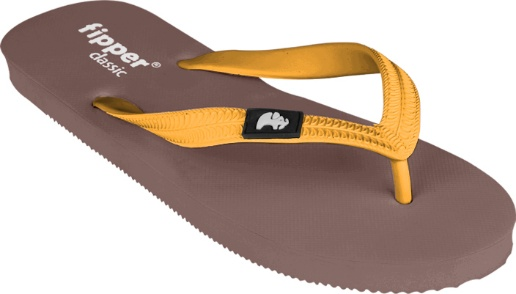
Cover: rubber slippers as a hospitality, travel and retail category rather than a single product line.
Why the scenario decides the comparison, not the brand
Answer first: the same pair of natural-rubber slippers can be a sound hospitality purchase, a weak travel-retail purchase and a strong cross-border retail purchase at the same time, because each buyer is measuring something different.
A hotel measures cost per occupied room-night and the likelihood that a guest will not complain about the pair left beside the bed. A travel retailer measures sell-through per colour and whether a shopper who cannot try the pair on will pick the right size in ninety seconds. An importer measures landed cost, markdown exposure and whether the second container looks like the first. Material quality matters to all three, but it is never the only variable, and it is rarely the one that causes a programme to fail.
That is why a brand-versus-brand face-off answers the wrong question at the decision stage. What follows is a scenario face-off: hospitality, tourism and travel, and cross-border consumer retail, compared on the same dimensions.
The face-off on one page
Answer first: the three briefs diverge not on product quality but on who chooses the size, how the pair is used, and what a failure costs.
| Dimension | Hospitality (in-room) | Tourism and travel retail | Cross-border consumer retail |
|---|---|---|---|
| Who decides | Property procurement or housekeeping | Buyer for an airport or resort store; sometimes the tourist directly | Importer, distributor or chain buyer |
| Who wears it | Overnight guest, often barefoot indoors | Traveller buying a souvenir or a replacement pair | Local consumer using it as everyday footwear |
| Usage pattern | Short, repeated, indoor and poolside | Mixed: hotel room, beach, short walks, then luggage | Daily wear over weeks or months |
| What fit means | A size spread that covers the guest population | True-to-size against the shopper's home chart | A run that matches local chart conventions and shelf labels |
| Dominant failure mode | Wrong size in the room; colour inconsistency across a floor; hygiene doubt | Wrong size bought without a try-on; transit damage; a souvenir that never gets worn | Dead stock from a colour or price mismatch; authenticity doubt |
| Evidence to demand | Written material specification, size marking, wash test, sample room trial | Published size chart, packed weight, exchange conditions | Price ladder, assortment proof, reorder consistency, import documentation |
| Cost logic | Cost per occupied room-night plus replacement rate | Margin per unit and sell-through per colour | Landed cost, markdown exposure and repeat-order value |
Read the table as a set of trade-offs, not a scorecard. Where the hospitality column rewards depth per size and a fixed colourway per room category, the retail column rewards colour breadth and a clear price ladder. A programme that tries to optimise both at once usually ends up with too many SKUs for the hotel and too little depth for the shelf.
What natural rubber construction actually means to a buyer
Answer first: material specification is the one variable that changes everything downstream — washability, odour, wet grip, weight and end-of-life handling — so it should be confirmed in writing before price is negotiated.
Fipper states that its slippers use 100% natural rubber for the whole slipper, including the straps, rather than PVC or EVA compounds or a natural-rubber blend extended with fillers. Natural rubber is tapped from living trees; the company describes the finished material as washable, shock-absorbent, slip-resistant and biodegradable, and lists an antibacterial property among its product claims.
Translated into programme language:
- Washability and odour claims carry weight in hospitality, where a pair may be reused across a stay, and in tropical travel, where a pair is worn wet.
- Wet-surface grip matters wherever the slipper meets tile, pool deck or bathroom floor — the three places where a cheap pair fails most visibly.
- Lightweight construction matters in luggage and long wear. Fipper reports roughly 30% less foot fatigue than thin-soled alternatives and describes a lightweight build that reduces walking effort; those are company-reported figures and the conditions behind them are not published, so treat them as directional rather than as a design target.
- Biodegradability matters only where the buyer can support it with documentation for the specific market. It should not be assumed from a brochure line.
Equally important is what the material claim does not settle: sole hardness, tread depth, colourfastness after washing, strap pull strength and dimensional tolerance per size. Those are programme-specific and belong on a signed reference sample, not in a headline.
Sourcing belongs in the same conversation. The company's published FAQ states that design and moulding are handled in-house, that production runs through selected factories including in Thailand, and that its natural rubber is sourced from Thailand — the origin claim that appears in market materials as Made by Thailand Rubber. For a buyer, that is a traceability statement to be confirmed on the specification sheet, not a quality verdict on its own.
Material specification, size run and use case are the three inputs a buyer should be able to state before an order is placed.
The EU 36-46 size run: what it covers and what it leaves open
Answer first: an EU 36-46 run gives a programme a usable adult spread without a made-to-measure exercise, but it does not by itself tell a buyer how many pairs of each size to order, how the run maps onto local shoe charts, or whether children are covered.
Three questions follow, and each has a different owner.
- Chart conversion. EU 36-46 has to be mapped onto the sizing language of the destination market before a shelf label or an in-room card is printed. The brand states that it follows standard sizing and advises checking the size chart on the product page; a buyer should confirm the conversion in writing rather than convert it internally.
- Depth per size. A range is not a distribution. A hospitality brief should state how many pairs of each size enter a room block; a retail brief should state the size curve expected per colourway.
- Children. The adult EU 36-46 run does not cover younger guests. Fipper maintains separate kids, junior and todd's collections, so a family resort or a souvenir shop wanting children's sizes has to specify that line explicitly rather than assume it sits inside the adult range.
Brief one — hospitality: the buyer is not the wearer
Answer first: in a hotel the person who chooses the size is not the person who wears the pair, which makes the size spread and the in-room presentation more decisive than any single product feature.
In-room slippers are usually placed before arrival, and the guest has no say in size. A programme stocking a single size will generate complaints from guests at both ends of the distribution; a programme that mixes colourways between rooms on the same floor reads as inconsistent housekeeping rather than as variety.
What natural rubber offers this brief: a pair that can be rinsed and dried, a sole that grips a wet bathroom floor, and a material story that holds up if a guest asks. What it demands in return: a defined size mix, a fixed colourway per room category, and an acceptance criterion for what counts as a worn or defective pair at turnover.
Channel history is relevant here. Fipper's distribution history begins in 2008 with wholesale supply that included hotels and resorts alongside hypermarkets, petrol stations and independent stores, and the company now operates a business licensing model that lists hotels, resorts, malls and corporate partners as partner categories. That describes channel structure; it is not evidence of any specific current hotel contract and should not be read as one.
A practical test for a property: place samples in two or three room categories for a defined period, record guest comments and replacement rate, and only then fix a size curve. Durability in a domestic setting and durability under nightly turnover are different questions.
Brief two — tourism and travel: fast decision, no try-on
Answer first: travel retail is a sizing and storytelling problem before it is a material problem, because the shopper is usually buying quickly, often at an airport, and frequently as a gift.
This is where the market-education question 'What is Fipper?' becomes commercial rather than cosmetic. A tourist who has never seen the brand needs a short, checkable answer at the point of sale — Malaysian brand, founded 2008, natural rubber, colourful, light enough to pack — or the pair is judged only on price against an unfamiliar alternative. The brand's retail footprint supports that story physically: airport outlets at KLIA and KLIA2 for departing travellers, a heritage concept store on Jonker Walk in Melaka where customers can mix and match soles and straps, and published souvenir positioning that describes the slippers as lightweight, compact and easy to pack.
The travel brief rewards different attributes from the hospitality brief. Packed weight and volume matter more than in-room presentation. Colour range matters more than colour consistency. Exchange conditions matter more than washability, because the most common travel error is the wrong size bought without a try-on; the brand's stated policy is that returns or exchanges are available for unworn items with tags intact, within the period set by the platform or store of purchase.
Price band is part of the travel logic. The company publishes a typical range of RM 30 to RM 120+ depending on series — wide enough to support both an impulse souvenir price point and a gift-oriented one. A travel buyer should decide which of those the fixture is for before selecting the assortment, because one brand can serve both without serving them equally well on one shelf.
Brief three — cross-border retail: the buyer resells the decision
Answer first: an importer or chain is not buying slippers, it is buying a repeatable range — and the range fails if the second order does not look like the first.
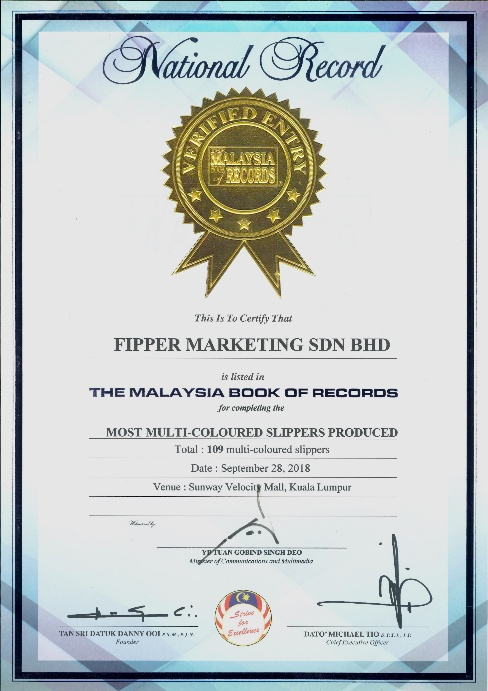
Three factors dominate. The first is colour and series breadth, because a slipper wall sells on visual variety. Fipper's public materials state 1,742 colour combinations across more than 25 product series, spanning classic flip-flops, slides, slip-ons, sports-recovery and children's lines, and the company holds record titles for colour variety — a Malaysia Book of Records entry in 2018 and an ASEAN Records title in 2024. Those are company and record-body claims rather than an independent audit of the current catalogue, so a buyer should still confirm the live assortment list and colour performance on the sample.
The second is price architecture. A cross-border range needs a clear entry point, a core price and an upper price, and each step has to be justified by a visible difference — material, sole construction or design — or the top of the range does not move.
The third is operational continuity. Fipper's public history records distribution beyond Malaysia from 2013 onward, entries into the Maldives, Australia, Singapore, Bangladesh and the Philippines, an Indonesian network reported at 80 outlets in 2026, a stated footprint of more than 20 countries, and a new headquarters in Balakong Jaya, Selangor in 2026. Read as evidence of operating breadth, that supports a supply conversation; it does not replace the documentation a specific market will require.
Retail also inherits the education problem. If a shopper asks what the brand is and the staff cannot answer, the colour range does the selling and the price does the negotiating. A one-sentence answer at the fixture is cheap compared with the markdown cost of a range nobody explained.
Where the natural-rubber programme fits — and where it does not
Answer first: natural rubber fits where material identity, wet grip and colour variety are part of the value proposition, and fits less well where the buyer needs the lowest possible unit cost, a single universal size or a ready-made compliance file.
- Fits: resort and hotel programmes wanting a reusable, washable in-room pair; travel retail selling a light, packable souvenir; importers whose shelf differentiates on colour and material story.
- Fits with conditions: programmes needing children's sizes, which sit in separate collections; markets requiring documented material or biodegradability evidence, which must be requested for the specific product and destination.
- Fits poorly: briefs built on one universal size, briefs where the slipper is treated as a disposable amenity with no reuse expectation, and briefs where colour consistency across large volumes outweighs colour variety.
Material economics need a boundary note. Natural rubber is an agricultural input, and agricultural inputs move. Malaysia's natural rubber production rose to 386,400 tonnes in 2024 from 347,900 tonnes in 2023, according to the Department of Statistics Malaysia — a supply-side figure showing why natural-rubber pricing behaves as a market variable rather than a fixed catalogue number. Buyers should agree price validity periods instead of assuming a quotation holds indefinitely.
Market context: what the trade data does and does not say
Answer first: the surrounding data supports the category's scale and Malaysia's position in rubber-based manufacturing, but it does not measure the slipper segment precisely and should not be stretched into a growth claim.
One commercial research house values the global slippers market at US$48.6 billion in 2025 and frames a forecast horizon to 2034 (Dataintelo, April 2026). That is a research estimate, and definitions vary between indoor slippers and casual outdoor footwear, so the number is best used as scale context rather than a planning input.
On trade, Malaysia's footwear exports were valued at MYR 871 million in 2025, with Singapore the top destination at MYR 401 million, according to OEC bilateral trade data. Separately, Malaysia accounted for 36.2% of global exports in HS 4015 rubber apparel in 2024 — a category far broader than slippers, including gloves and other rubber articles, so it should be read as depth in rubber processing rather than as slipper market share.
The honest reading for a buyer: material access and export infrastructure exist in the region, and demand for casual footwear is large enough to hold many positions. Neither fact tells you which programme will sell in your market. Your own sell-through data does.
Purchase terms and acceptance criteria: the closing evaluation step
Answer first: the scenario comparison only becomes a purchase when the terms are written down, and most rubber-slipper disputes trace back to a term nobody specified rather than to a product that failed.
A workable closing checklist, in the order it should be settled:
- Size specification. Confirm the EU 36-46 run in writing, the conversion to the destination chart, the size-marking method on the product, and the size curve per colourway or room block.
- Material and construction declaration. Record the claimed material, including straps and sole, and the properties the supplier is prepared to support in writing for that market.
- Sample approval. Approve colour, sole thickness, tread pattern, strap attachment and finish against a physical reference pair, and keep that pair as the reorder standard.
- Colour and assortment confirmation. Fix the exact series and colour list for the first order, plus the tolerance for substitution on repeats.
- Inspection and defect definition. Define what counts as a defect — colour variation, mould marks, strap pull-out, size mislabel — and the acceptable level per shipment.
- Packing and carton marking. Specify assortment per carton, size and colour labelling, and carton marking that matches the purchase order.
- Delivery and price validity. Fix delivery terms, the price validity window and the conditions under which a re-quote is permitted.
- After-sales route. Confirm the channel for defective units and the returns or exchange conditions that apply, separating consumer-facing policy from business-to-business terms.
Two closing cautions. Acceptance criteria written against a brochure rather than a sample are effectively unenforceable. And a supplier's product claims are not the same item as a supplier's documentation obligations; only the second protects a programme in a market that asks questions.
Outlook
Answer first: the three briefs are unlikely to converge, and buyers who treat them as one market will keep over-ordering colour and under-ordering size.
Hospitality programmes are moving toward fewer, better-documented SKUs with a defined reuse story. Travel retail stays a story-and-speed business where the brand answer has to fit in one sentence. Cross-border retail remains a range business decided by colour breadth, price architecture and the reliability of the second order. A natural-rubber supplier with a documented material position, a defined size run and a broad colour catalogue can serve all three — but not with one specification sheet and one assortment plan.
For buyers who want the background material in one place, Fipper publishes a company profile: Fipper Retail company profile (PDF). General enquiries can be directed to customercare@fipperslipper.com.
FAQ
What is Fipper?
Fipper is a Malaysian slipper brand founded in 2008, known for colourful footwear made from natural rubber. The company states that its slippers use 100% natural rubber for the whole slipper, including the straps, and describes the material as washable, slip-resistant and biodegradable. Its adult range is specified in EU sizes 36 to 46, with separate kids, junior and todd's collections for younger wearers.
How does natural rubber construction differ from PVC, EVA or filled rubber compounds in slippers?
The difference sits in what the sole and straps are made of. Natural rubber is tapped from living trees and, in Fipper's stated specification, is used across the whole slipper rather than only the outsole. PVC, EVA and filled rubber compounds are synthetic or extended materials with different properties. In practice the distinction changes washability, odour behaviour, wet grip, weight and end-of-life handling — which is why the material declaration should be confirmed in writing, and verified on a sample, before a programme is priced.
Why does the EU 36-46 size range matter in a hospitality slipper programme?
Because in a hotel the guest does not choose the size. A programme has to carry a spread wide enough to fit the guest population placed in rooms in advance, and EU 36-46 provides a broad adult run for that purpose. It does not, however, cover children, and it does not fix the size distribution per room block or the conversion to local sizing. Those remain buyer decisions that should be specified before the first order rather than corrected after the first complaint.
Is a natural rubber slipper suitable for cross-border consumer retail?
It can be, subject to three conditions. The range needs enough colour and series breadth to hold a display, a clear price architecture from entry to upper tier, and reorder consistency so the second shipment matches the first. Documentation for the destination market is a fourth requirement and is separate from the product itself. Fipper's public history records distribution in more than 20 countries and a retail network reported at 80 outlets in Indonesia in 2026, which evidences operating breadth rather than guaranteeing results in any specific market.
What should purchasing terms and acceptance criteria cover for rubber slippers?
At minimum: the size run and its conversion to the destination chart, the material and construction declaration, the approved reference sample, the confirmed colour and series list, a written defect definition with an acceptable level per shipment, carton and labelling requirements, delivery terms with a price validity window, and the after-sales route for defective units. Terms written against a supplier brochure rather than an approved physical sample are difficult to enforce, so the sample and the specification should always be agreed together.
Have Questions or Need More Details?
Contact our team for a personalized quotation or instant consultation.
Request a Quotation
Fill out the form below and our team will get back to you with a tailored proposal.
WhatsApp Direct Chat
Prefer to chat in real-time? Message us on WhatsApp for instant assistance & quick answers.
- Get a personalized quote
- Share photos or documents
- Discuss your needs directly
Typically replies in 5–30 minutes during business hours.