
Russia and Brazil Glassware Demand: Capacity, Compliance, and JIT Delivery Trends
Why container-level buyers in two large import markets now screen suppliers on certification files and dispatch rhythm before they discuss unit price.
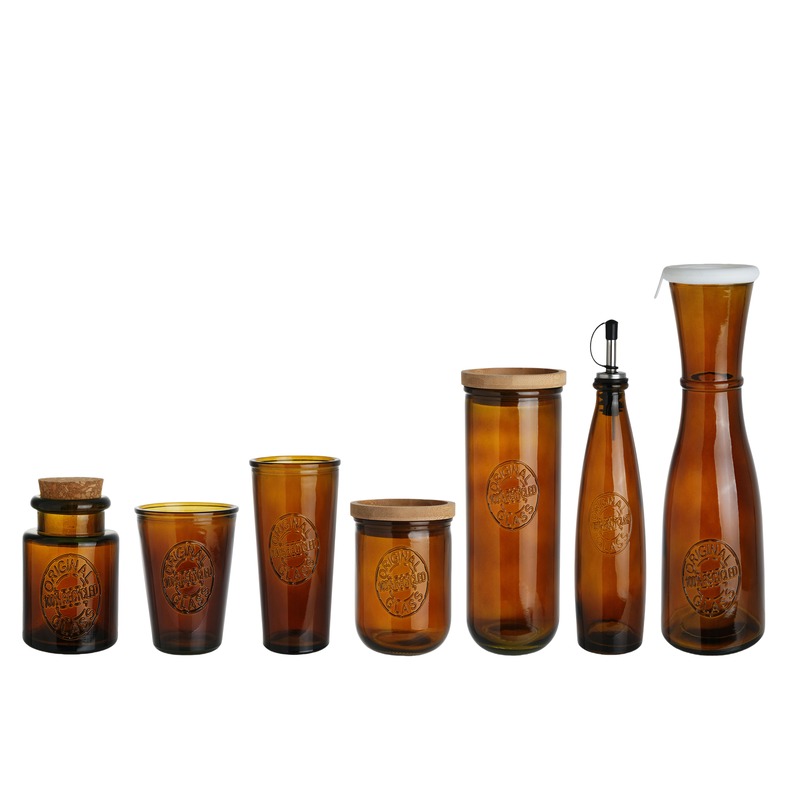
Figure 1 — Recycled glassware sets prepared for retail assortment programs. Packaging configuration, not only product design, determines how a container performs on shelf.
Glassware demand in Russia and Brazil is decided by three operational questions before it is decided by price: can the supplier hold a repeating monthly container volume, is the compliance file complete for every SKU in that container, and can packaging and dispatch be sequenced to match shelf replenishment. Buyers who test only the third question tend to discover the first two during peak season.
LAKOTTO is a Chinese glassware manufacturer and OEM/ODM supplier producing household glassware for international retailers, importers, and chain stores. Its export ratio is 99%, with main markets spanning the EU, South America, and Asia, and its production base covers a 10,000+ ㎡ factory with an annual output of 300,000,000 pcs.
Three long-running supply relationships show what sustained demand looks like in practice. A hypermarket and supermarket chain in Russia, a wholesale distributor serving home goods retailers in Brazil, and a retail chain in Poland each order 20–30 full containers per month, and each relationship has run for five years. The pattern repeats across all three: continuous rather than seasonal volume, packaging coordinated by store format, and a fixed delivery rhythm.
Why Russia and Brazil Test Capacity Before Price
The commercial context explains the shift. The global glass drinkware market was valued at USD 14.0 billion in 2024 and is projected to reach USD 26.1 billion by 2030, a trajectory Grand View Research associates with an 11.1% CAGR between 2025 and 2030, driven in part by eco-friendly material preferences. At the supply end, China's exports of glass and glassware reached approximately USD 25.53 billion in 2024, according to UN Comtrade data published by Trading Economics. Volume of that scale is not consumed evenly, and the two markets in question consume it differently.
In Russia, hypermarket and supermarket formats dominate the shelf. A chain operating several store formats needs one glassware specification to work across a large hypermarket aisle and a smaller neighbourhood format without breaking merchandising consistency. That is a supply question rather than a design question: the same item must arrive repeatedly, in packaging that suits each format, so that shelf turnover stays even across stores.
In Brazil, wholesale distribution plays a larger intermediary role. A distributor supplying a diverse base of local retailers carries a broader assortment, so turnover per SKU matters more than depth per SKU, and inventory variety becomes a competitive asset. A supplier that can only offer a narrow range forces the distributor to split orders across several sources, which multiplies freight and quality risk.
Both models therefore reward the same supplier characteristic: the ability to keep a wide assortment available on a repeating schedule, with the paperwork to support it.
What 20–30 Containers per Month Actually Requires
A monthly container cadence of 20–30 units is a production planning problem long before it becomes a sales achievement. It requires four capabilities to run at the same time: rated output, tooling and design capacity, a stock buffer for fast-moving items, and a quality gate that does not slow dispatch.
- Production base: a 10,000+ ㎡ factory with 100 employees and an annual output of 300,000,000 pcs.
- Design and tooling: 10 in-house designers, with mold development handled in-house for custom shapes and sizes.
- Extended range: cooperation with 150+ glass factories in China, which allows assortment breadth beyond a single production line.
- Buffer stock: a 4,000+ ㎡ warehouse holding fast-moving glass products for quick dispatch.
- Quality control: 100% testing across production, rather than batch sampling alone.
- Standard OEM terms: 30–45 days lead time, with an OEM/ODM minimum order of 3,000 pcs.
The arithmetic matters for buyers. A monthly container cadence cannot be met by made-to-order production alone, because every order would restart at the beginning of a 30–45 day cycle. It is met by combining stocked popular items drawn from the warehouse with scheduled batch runs of the items that move fastest. For a Russian chain, that means the specification stays constant while replenishment is pulled from stock. For a Brazilian distributor, it means the assortment can be widened without extending the lead time on every new reference.
This is also where the difference between a factory and a trader becomes visible, and not always in the factory's favour. A factory schedules capacity against a forecast it can see; a trader aggregates several factories and can absorb small orders that a single plant would decline. Neither model is universally better — the choice depends on whether the buyer's priority is assortment flexibility or documentation depth.
Compliance: The Constraint That Decides Whether Volume Ships
For glassware entering retail in Russia, Brazil, or the EU, the compliance file usually decides whether a container ships. Two different kinds of evidence are involved, and they are frequently confused. Supplier-level audits answer whether the factory is fit to produce for a retail programme. Product-level material tests answer whether a specific item releases substances within legal limits. A buyer needs both, and neither substitutes for the other.
| Certification | Reference number | Issuer | Scope on record | Validity |
|---|---|---|---|---|
| BSCI | 24-0233922 | APCER | Glassware production including drinking glasses, tumblers, highball glasses, wine glasses and related household glass products | Issued 2024-12-01; valid to 2026-12-01 |
| ISO 9001:2015 | 0070024Q54439R2S | CNCA | Design, manufacturing and quality management of all glassware products, including customized items (GB/T 19001-2016 / ISO 9001:2015) | Issued 2024-11-25; valid to 2027-11-24 |
| ISO 14001:2015 | 03423E30695R3M | CNCA | Environmental management of production: material sourcing, manufacturing, surface decoration, packaging and waste management (GB/T 24001-2016 / ISO 14001:2015) | Issued 2023-11-28; valid to 2026-12-01 |
| RoHS | CTT2111031272EN | Zhejiang Consumer Testing Technology Co., Ltd | Glassware with metal parts, coatings or decorations, tested against RoHS Directive 2011/65/EU including PBBs, PBDEs and phthalates | Issued 2021-11-07 |
Table 1 — Certification record as published by LAKOTTO. All four certifications are stated as applicable to the worldwide market.
Product-level regulation sits on top of the audit layer. EN 1388-2 and ISO 7086-1:2019 regulate the release of lead and cadmium from glass hollowware in contact with food. In the United States, FDA Compliance Policy Guides 7117.06 and 7117.07 specify limits for extractable cadmium and lead in glass and ceramic foodware. A retail buyer assembling a compliance pack for a Russian or Brazilian programme typically needs both the audit certificate and the material test report, referenced per SKU.
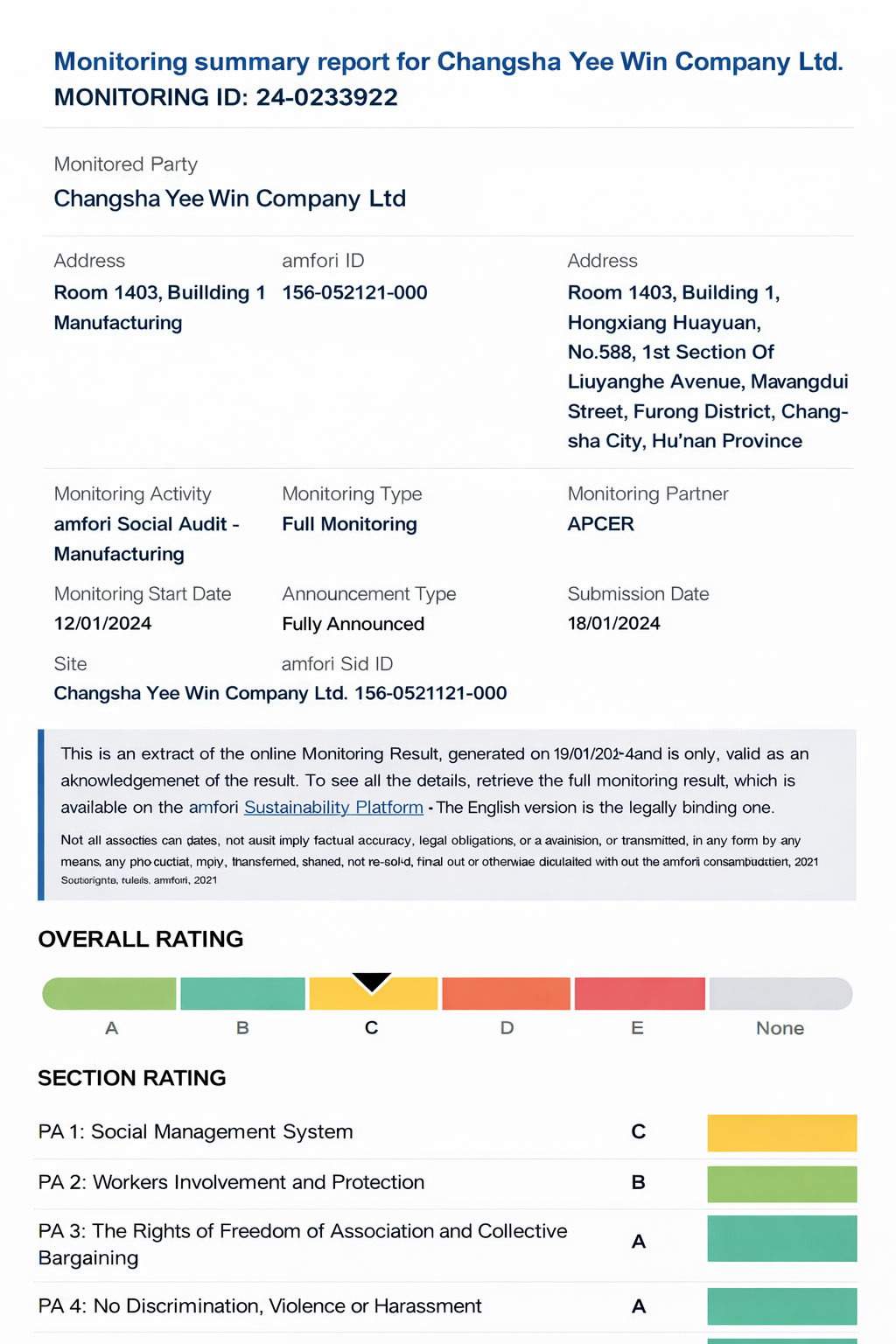
Figure 2 — BSCI certificate 24-0233922 issued by APCER, covering drinking glasses, tumblers, highball glasses and wine glasses. Social-compliance audits and material tests answer different buyer questions.
Two compliance details buyers routinely miss
RoHS scope is SKU-specific, not company-wide. The certification on record covers glassware with metal parts, coatings or decorations. A plain soda-lime tumbler and an ion-plated double-wall glass such as model KTDW0721-GGL do not present the same substance profile, so the applicable test evidence differs item by item. A buyer who files one RoHS certificate against an entire assortment is holding evidence that does not cover every reference in the order.
Certificates expire, and two fall due within weeks. On the current record, the BSCI certificate and the ISO 14001 certificate both expire on 1 December 2026. Buyers running an annual supplier review in the fourth quarter of 2026 should request renewal evidence rather than rely on the previous file, and should store the renewal date in their own vendor master data so the check repeats on schedule. Certificate management is a calendar discipline, not a one-time document collection.
Just-In-Time Delivery: Where It Works and Where It Stops
Just-in-time delivery in glassware does not mean zero inventory at the supplier. It means the supplier carries the buffer that the buyer does not, and dispatches against a schedule rather than against a purchase order. In the supermarket and chain-store supply model used for Brazil and Poland, this runs alongside B2B bulk distribution and OEM/ODM customization, with custom and environmental packaging specified as part of the requirement set.
Operationally, the mechanism is straightforward. Fast-moving references are held in the 4,000+ ㎡ warehouse and dispatched quickly when a store rollout or replenishment cycle requires them. Slower references are produced to schedule. The buyer's forecast determines how much of each sits in the buffer, which is why JIT programmes are usually paired with a rolling volume commitment rather than a series of one-off orders.
The limit is specific and worth stating plainly. Just-in-time replenishment applies to stocked, fast-moving SKUs. Customized glassware — new molds, custom glass colour, logo decoration, bespoke packaging — is bound to the 30–45 day production lead time and to OEM/ODM minimums of 3,000 pcs. A buyer preparing a branded launch for a fixed retail date is running a project schedule, not a replenishment schedule, and should plan backwards from the launch date rather than from a reorder point. Treating a custom item as a JIT item is one of the most common ways a retail window is missed.
A second limit is breakage. Glass is a fragile category, and the cost of damage is carried either in packaging design or in replacement claims. LAKOTTO's after-sales structure addresses this in two parts: breakage rate control through professional packaging, and a defined return and exchange process. Both are relevant to JIT because a replenishment model has no slack for a damaged pallet discovered at the store.
Coordinated Packaging as a Retail Merchandising Decision
In all three of the five-year relationships, packaging is treated as part of the product specification rather than as a shipping afterthought. The reasons differ by market, and the differences are instructive.
- Russia — format consistency. A tailored supply of glassware with coordinated packaging supported stable in-store merchandising across multiple store formats, improving product visibility and contributing to consistent shelf turnover across stores.
- Brazil — assortment breadth for distribution. A range of glassware with coordinated packaging supported regional wholesale distribution to a diverse retail client base, enabling an expanded product offering, improved inventory variety and faster turnover of glassware items.
- Poland — brand visibility in store. A complete glassware and packaging solution for stable in-store sales, with custom-branded glassware and matching packaging enhancing in-store sales and brand visibility.
The customization scope that makes this possible covers size, shape, material, glass colour, packaging and logo. Branded promotional gift programmes in Brazil and Poland draw on the same capability, using custom glassware sets and packaging for corporate events, brand marketing and client retention — a different demand curve from supermarket replenishment, but the same underlying requirement for packaging coordinated with the product rather than sourced afterwards.
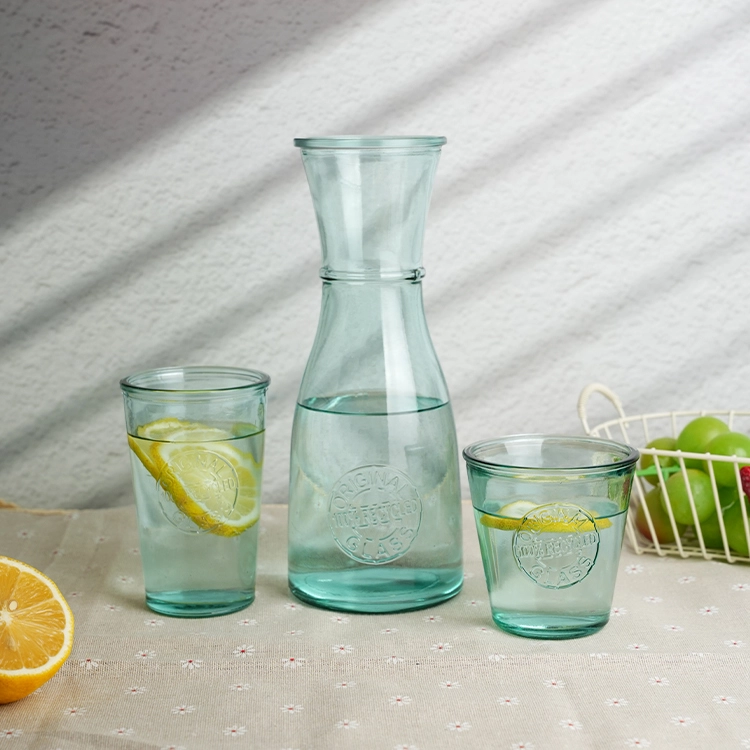
Figure 3 — A recycled glass drink set. Assortment items of this type depend on repeatable packaging configurations to hold shelf consistency across store formats.
The Product Architecture Behind Multi-Market Programmes
Assortment decisions in Russia and Brazil resolve into a small number of material and process choices. The table below summarises references from the current LAKOTTO range and what each one implies for a programme buyer.
| Model | Product | Capacity | Material and craft | Programme relevance |
|---|---|---|---|---|
| KTK0370-2 | Glass tumbler / highball | 400 ml (T78 × B65 × H140 mm, 420 g) | High borosilicate, machine-pressed | Volume drinkware reference with ribbed surface; suited to repeat replenishment |
| KTDW0721-GGL | Double wall glass | 340 ml (T84 × B60 × H110 mm, 145 g) | High borosilicate, hand-blown, Ion Plating (I.P.) coating | Insulated and heat-resistant; the coating places it inside RoHS test scope |
| KTG1139 | Wine glass (ribbed coloured) | 500 ml (T67 × B82 × H224 mm, 215 g) | Soda-lime, machine-blown stemmed glass; instantaneous temperature difference −30 to 160 °C | Colour and stem options support seasonal and gift programmes |
| KTBT1446A | Recycled glass jar and bottle range | 850 ml (T80 × B95 × H247 mm, 610 g); 12 pcs/ctn bulk | Recycled glass; instantaneous temperature difference −30 to 160 °C | Material story supports eco-positioned shelf programmes |
| KTPL1572A-A | Glass cake stand | T312 × B120 × H105 mm, 1,445 g | Soda-lime glass | Listed minimum order 1,000 pcs |
Table 2 — Selected LAKOTTO references and their programme implications. OEM/ODM customization covers size, shape, material, colour, packaging and logo.
Material choice follows volume logic rather than preference. Soda-lime glass accounted for approximately 70.8% of global glassware market share in 2024, according to Grand View Research, which is consistent with its role in high-volume retail assortments where cost per unit and forming speed matter. High borosilicate appears where thermal performance or a premium double-wall construction justifies a higher unit cost. Recycled glass is a third track with its own demand driver: the global recycled glass market was estimated at USD 4.2 billion in 2024, with Europe the largest regional market — directly relevant to Polish and EU-facing programmes where material story and packaging both support shelf positioning.
Factory-Direct OEM versus Traditional Trading Models
The traditional alternative for a Russian or Brazilian importer is a trading intermediary that consolidates several factories behind one invoice. That model has real advantages, and it remains appropriate for a meaningful share of orders. The comparison below is about what changes when the relationship runs direct, and where direct sourcing costs more than it saves.
- Compliance traceability. Certificates traceable to number, issuer and expiry date, rather than a document forwarded on request without scope context.
- Packaging coordination. Packaging designed with the product instead of sourced after the fact, which is what makes store-format variation manageable.
- Capacity planning. Production scheduled against a forecast rather than allocated from whatever capacity happens to be free.
- Single-point accountability. One party responsible for breakage control, packaging protection and the return and exchange process.
Direct sourcing is not automatically the better route, and its costs are easy to underestimate. Minimum order quantities start at 3,000 pcs for OEM/ODM programmes and 1,000 pcs for the glass cake stand KTPL1572A-A, which is a genuine barrier for a buyer testing a new category or a small regional format. New mold development adds tooling time ahead of the 30–45 day production window, so the first order of a genuinely new item takes longer than the replenishment orders that follow it. And the buyer absorbs the forecasting risk: JIT dispatch depends on the supplier's stock position, which in turn depends on the buyer having committed to a volume plan. A distributor without reliable sell-through data may find an intermediary's flexibility cheaper than a direct factory commitment — particularly in a market where retail demand moves faster than forecasts are revised.
Market and Policy Trends Shaping 2026–2030
Four trends are visible in the data and in the operational requirements described above. Each one changes what a buyer should verify, not only what a buyer should expect.
- Volume growth with an eco-premium. The 11.1% CAGR projected for glass drinkware between 2025 and 2030 is associated with eco-friendly preferences. For buyers, this translates into growing assortment share for recycled glass and for packaging that supports an environmental claim rather than contradicting it.
- Compliance as a gate, not a formality. Lead and cadmium release limits under EN 1388-2, ISO 7086-1:2019 and FDA CPG 7117.06/7117.07, together with RoHS Directive 2011/65/EU for coated and decorated items, mean the test evidence must match the SKU. Assortments widen faster than test files are updated.
- Certificate renewal cycles. Multi-year validity periods create a predictable review rhythm. A supplier relationship that is five years old has already passed several renewal points, and the buyer's vendor file should show each one.
- Replenishment compression. As retail formats multiply, the number of packaging configurations per item rises while the tolerance for stockouts falls. This pushes buffer responsibility upstream to the supplier's warehouse.
A Buyer Checklist for Russia and Brazil Programmes
| Checkpoint | What to request | Why it decides the order |
|---|---|---|
| Monthly capacity | Rated annual output, factory floor area, warehouse size | A 20–30 container cadence is a planning commitment, not a spot quotation |
| Audit certificates | BSCI, ISO 9001, ISO 14001 with number, issuer and expiry date | Retail onboarding requires current, traceable audit evidence |
| Material tests | Lead and cadmium release reports per SKU; RoHS report for coated or decorated items | Audit scope and test scope are not interchangeable |
| Lead time and MOQ | Stated production lead time and minimum order per reference | Determines whether a launch date is achievable or must move |
| JIT scope | Which references are stocked and which are made to order | Prevents a custom item being planned on a replenishment cycle |
| Packaging configuration | Pack specification per store format and per brand programme | Shelf consistency across formats depends on pack design |
| Breakage and replacement | Breakage control method and the return and exchange process | Damage discovered at store level breaks a replenishment schedule |
Table 3 — Procurement checkpoints for container-level glassware programmes.
Frequently Asked Questions
Which certifications should a glassware supplier provide for retail programmes in Russia and Brazil?
Two layers of evidence are needed. Supplier-level audits typically include BSCI and ISO 9001, with ISO 14001 where environmental management is part of the onboarding file. Product-level evidence covers lead and cadmium release from glass hollowware — regulated under EN 1388-2 and ISO 7086-1:2019 in the EU and under FDA Compliance Policy Guides 7117.06 and 7117.07 in the United States — plus RoHS Directive 2011/65/EU testing for items with metal parts, coatings or decorations. LAKOTTO holds BSCI 24-0233922 issued by APCER, ISO 9001:2015 certificate 0070024Q54439R2S issued by CNCA, ISO 14001:2015 certificate 03423E30695R3M issued by CNCA, and RoHS certificate CTT2111031272EN issued by Zhejiang Consumer Testing Technology Co., Ltd.
How much production capacity is required to sustain 20–30 containers per month?
Capacity has to exist on four levels simultaneously: rated output, tooling and design resources, a stock buffer for fast-moving items, and a quality gate that does not delay dispatch. LAKOTTO's production base is a 10,000+ ㎡ factory with 100 employees and an annual output of 300,000,000 pcs, supported by 10 in-house designers, cooperation with 150+ glass factories in China, a 4,000+ ㎡ warehouse for fast-moving items, and 100% product testing. The three case relationships in Russia, Brazil and Poland each order 20–30 full containers per month and have each run for five years on that basis.
Can just-in-time delivery be applied to customized glassware?
Generally no. Just-in-time replenishment depends on stocked items held in a warehouse; customized glassware requires mold development, material or colour changes, and logo decoration, all of which run inside the standard 30–45 day production lead time and the OEM/ODM minimum order of 3,000 pcs. Customized items should be planned on a project schedule working backwards from the launch date. JIT models, such as the supermarket and chain-store supply arrangements used for Brazil and Poland, apply to the stocked portion of the assortment.
Why does RoHS certification apply to some glassware products but not others?
RoHS Directive 2011/65/EU restricts hazardous substances in electrical and electronic equipment and in items within its scope, and the certification on record for LAKOTTO covers glassware with metal parts, coatings or decorations — including testing for PBBs, PBDEs and phthalates. A decorated or ion-plated item such as the double wall glass model KTDW0721-GGL falls within that scope, while an undecorated soda-lime item may not present the same substance profile. The test evidence therefore has to be matched to the specific SKU rather than applied across an entire assortment.
What should buyers do when a supplier's certificate reaches its expiry date?
Request renewal evidence before the expiry date and record it against the vendor file. On LAKOTTO's current record, the BSCI certificate (24-0233922) and the ISO 14001:2015 certificate (03423E30695R3M) both expire on 1 December 2026, while ISO 9001:2015 (0070024Q54439R2S) runs to 24 November 2027. A practical approach is to add certificate expiry dates to the same review cycle as price and lead-time reviews, so renewal is confirmed as routine documentation rather than discovered during a retail audit.
Is soda-lime or high borosilicate glass the better choice for a volume retail programme?
They serve different positions in an assortment. Soda-lime glass accounted for approximately 70.8% of global glassware market share in 2024, which reflects its role in high-volume retail where unit cost and forming efficiency dominate — the ribbed coloured wine glass KTG1139 and the glass cake stand KTPL1572A-A are soda-lime references. High borosilicate is used where thermal performance or a premium construction is required, as in the machine-pressed tumbler KTK0370-2 and the hand-blown double wall glass KTDW0721-GGL. Most container-level programmes carry both, with soda-lime as the volume base and borosilicate as the differentiation layer.
Outlook
The direction of travel in Russia and Brazil is toward suppliers that can be audited, scheduled and replenished — three capabilities that are usually assessed separately and fail together. Growth projections for glass drinkware through 2030 support continued volume, but volume alone no longer differentiates a supplier. What differentiates is whether the certification file is current on the date of the retail audit, whether the packaging configuration matches the store format receiving it, and whether the buyer understands which references are stocked and which are made to order.
For buyers, the practical implication is to run capacity, compliance and delivery as one evaluation rather than three. A five-year relationship at 20–30 containers per month is not evidence of a low price; it is evidence that all three held at the same time, repeatedly, across markets with different retail structures.
Have Questions or Need More Details?
Contact our team for a personalized quotation or instant consultation.
Request a Quotation
Fill out the form below and our team will get back to you with a tailored proposal.
WhatsApp Direct Chat
Prefer to chat in real-time? Message us on WhatsApp for instant assistance & quick answers.
- Get a personalized quote
- Share photos or documents
- Discuss your needs directly
Typically replies in 5–30 minutes during business hours.