
SAE 4140 Round Bar and Pipe: Verified Parameters for Industrial Buying
Industry Reference · Alloy Steel · Updated August 2026
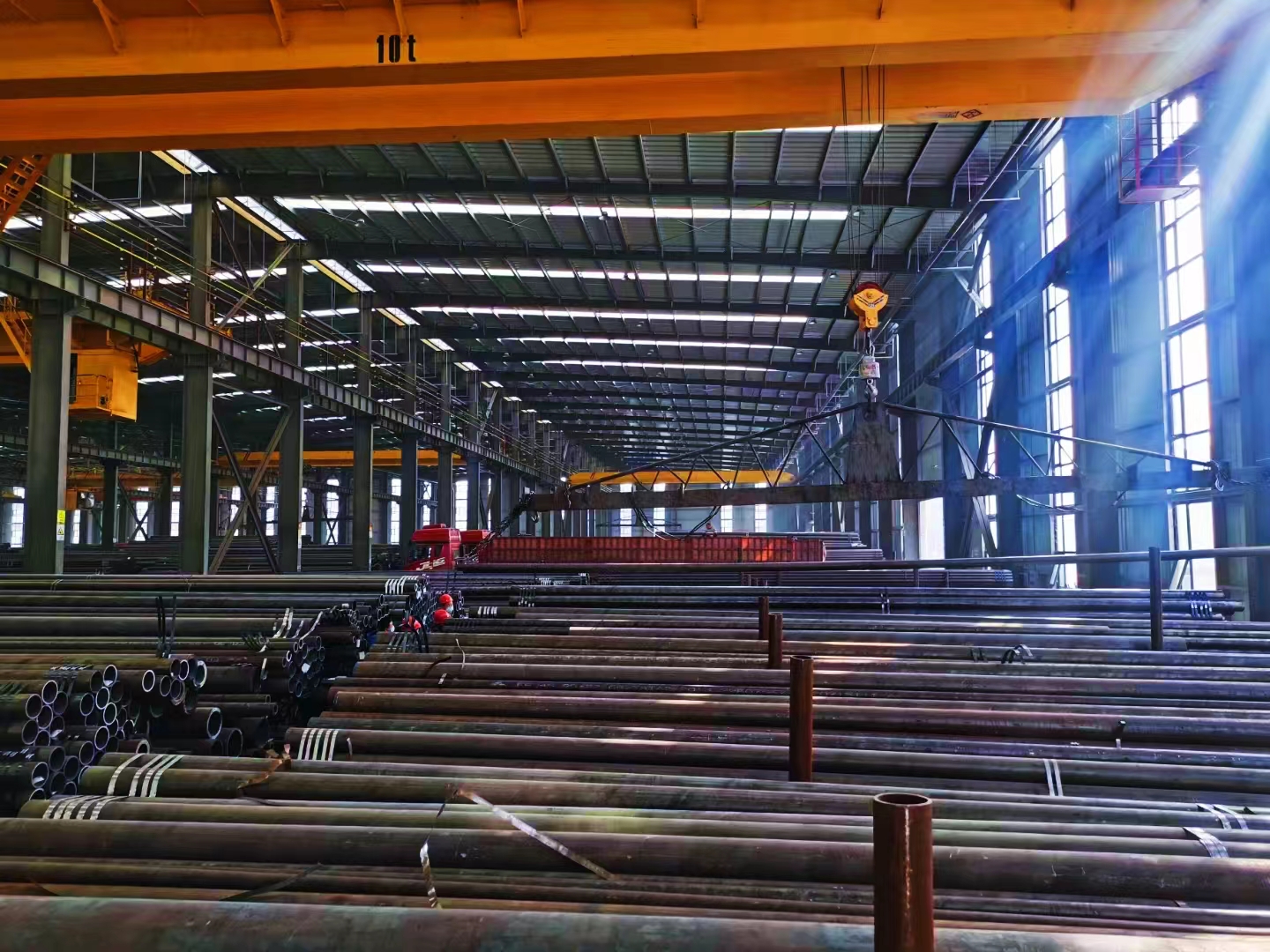
Steel pipe factory warehouse and finished pipe storage at Shandong Tuoda Machinery Equipment Manufacturing Co., Ltd.
SAE 4140 is one of the most widely specified chromium-molybdenum alloy steels in industrial procurement. It appears in shafts, gears, drill collars, pinions, structural components, and high-pressure pipeline items that operate under high load and cyclic stress. For procurement and engineering teams in the research or evaluation phase, however, the challenge is not identifying SAE 4140; it is verifying what the grade will actually deliver in a given component and operating environment.
This article reviews SAE 4140 as a purchasing category: the parameters that need verification, the heat-treatment conditions that affect final performance, the certifications that provide traceability, and how one Chinese manufacturer, Shandong Tuoda Machinery Equipment Manufacturing Co., Ltd., positions its SAE 4140 seamless pipe and round bar capability in this context.
Why Specification Verification Matters for SAE 4140
A grade name alone does not define a deliverable product. SAE 4140 can be supplied hot-rolled, cold-drawn, cold-rolled, normalized, or quenched and tempered. It can be produced as a seamless tube or a round bar, in round or square cross-section. Dimensional availability also varies from one supplier to another, and so does the depth of documentation behind each heat.
For applications in heavy machinery, construction equipment, oil machinery, automotive parts, and mold frames, the difference between a correctly heat-treated SAE 4140 component and an incorrectly processed one can be premature fracture, excessive wear, or failure under repeated loading. The service envelope for SAE 4140 depends on several constraints that buyers should verify before an order:
- Chemical composition within an accepted standard such as ASTM A29
- Delivery condition and final heat-treatment state
- Dimensional range, especially outer diameter and wall thickness
- Mechanical property traceability through mill test certificates or third-party inspection
- Compliance certificates for the destination market, such as CE 3.1 documentation for the EU
These constraints form what is often called specification-based buying: the buyer evaluates the supplier on documented limits rather than on the grade name alone.
Tuoda Machinery: A Specification-First Approach to SAE 4140
Shandong Tuoda Machinery Equipment Manufacturing Co., Ltd. is based in Liaocheng, Shandong Province, China, and was formed through strategic integration of resources around the region's seamless steel pipe industry. The company operates across multiple manufacturing activities: deep processing of steel pipes, steel heat treatment, custom hydraulic cylinder manufacturing, production of deep-hole drilling and boring machines, paper machine roller manufacturing, and fabrication of various mechanical spare parts.
For SAE 4140, Tuoda lists a dedicated product category: alloy seamless steel pipe and tube SAE 4140, available in round and square steel pipe shapes. The confirmed parameter range is an outer diameter of 20–400 mm and a wall thickness of 3–30 mm. Stated application areas include drill collars, aerospace components, and other high-strength parts.
This SAE 4140 line sits within a broader seamless steel pipe programme that covers carbon and alloy grades such as A106 Grade B, ST52, ST44, S355, E355, 42CrMo, 30CrMo, ST37, 10#, and 20#, among others. The general product range extends to outer diameters of 10–1080 mm and wall thicknesses of 2–110 mm. Corporate product categories also include carbon seamless steel tubes, round bars, and pressure cylinders.
For custom requirements, Tuoda offers fully standardized customization according to customer requirements, covering size, length, mechanical property, delivery time, and testing or inspection. Monthly capacity for the relevant product range is approximately 1000 tons, with a typical lead time of 30–45 days and a minimum order quantity of 5 tons, subject to discussion. Export markets include the European Union, the Middle East, India, Chile, Argentina, Turkey, and others.
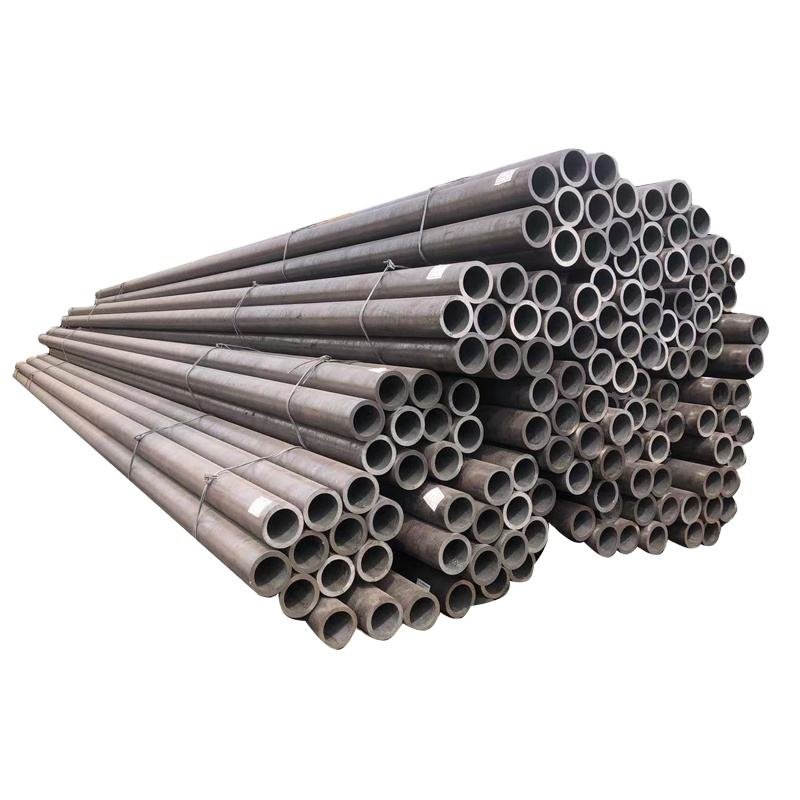
Seamless steel pipe products in the broader alloy and carbon steel portfolio.
Technical Notes: Composition, Heat Treatment, and Machining
According to the ASTM A29 classification, SAE 4140 typically contains 0.38–0.43% carbon, 0.80–1.10% chromium, and 0.15–0.25% molybdenum. Chromium increases hardenability and wear resistance; molybdenum raises elevated-temperature strength and hardenability; carbon content supports core hardness. These elements together give SAE 4140 its characteristic balance of strength, toughness, and fatigue resistance.
When quenched and tempered, SAE 4140 can reach a tensile strength of approximately 850–1000 MPa and a nominal hardness of 28–32 HRC. This property profile is commonly selected for shafts and gears, where both strength and ductility are needed under operating loads. The same material in the normalized condition offers lower strength but better machinability and is often used for structural parts or as a preparation step before final hardening.
Buyers evaluating SAE 4140 for machining should understand how delivery condition changes the machining response. Hot-rolled or annealed material is generally easier to cut, making it practical for manufacturers that will perform extensive machining and apply their own final heat treatment. Quenched and tempered material offers higher strength and wear resistance but requires harder cutting tools and more rigid machine setups. For shops that machine high volumes, the choice between soft and pre-hardened SAE 4140 has direct implications for cycle time, tool life, and dimensional control.
From a trade and customs perspective, hot-rolled alloy steel bars, including SAE 4140 bars with diameters exceeding 228 mm, are classified under HS code 7228.30 in international trade. This classification matters for import declarations and duty calculation. Nearby grades should also be distinguished: SAE 4130, a lower-carbon chromium-molybdenum steel, is often selected where weldability or moderate strength is the priority, while SAE 4140 provides higher strength and hardness. Structural steel designations such as S355J2H, S390, and S420 are used for hollow structural sections under standards such as EN 10210; they are not equivalent to SAE 4140 and should be verified against their own standard requirements.
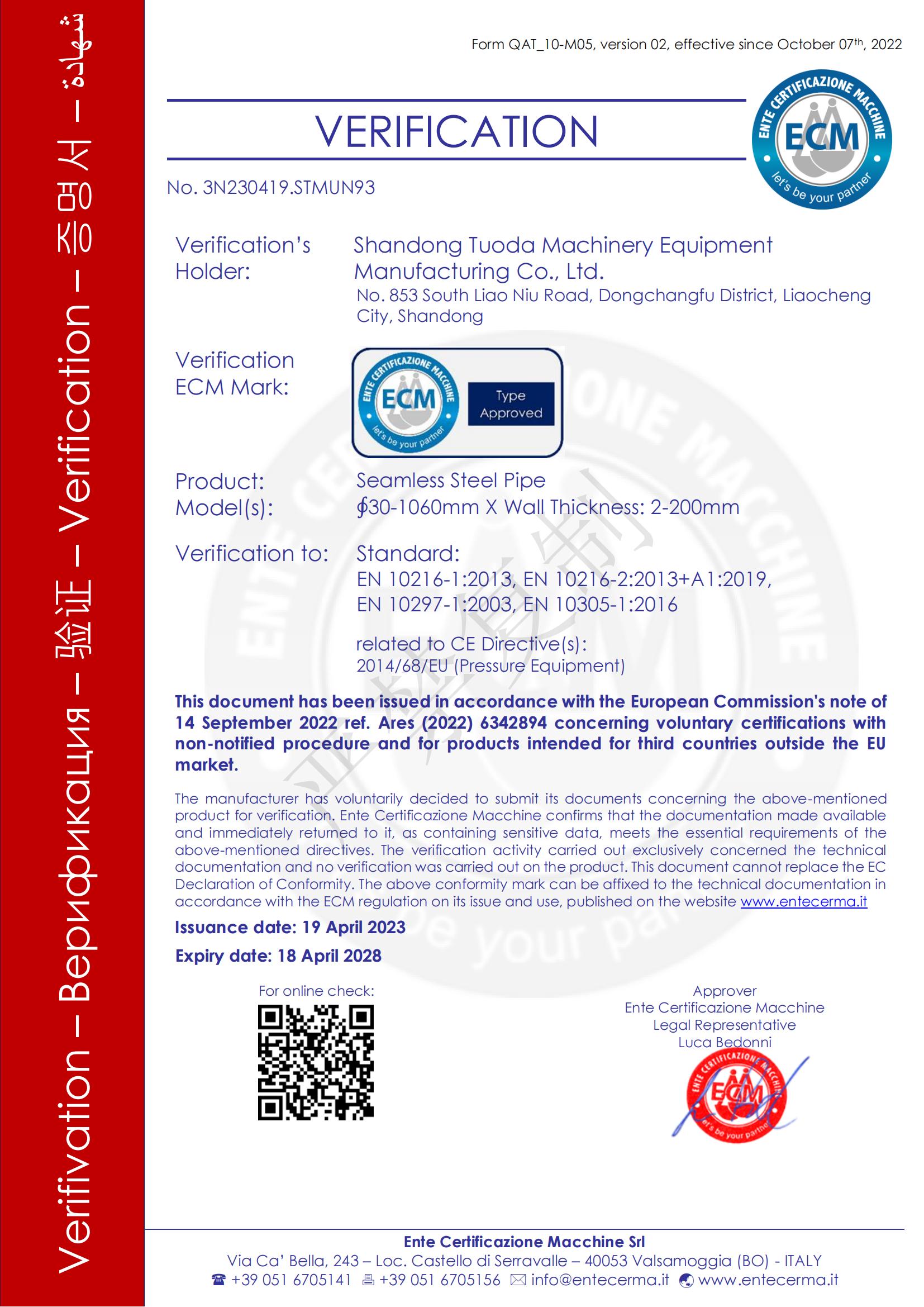
CE and ISO certificate documents relevant to structural steel exports to the EU.
SAE 4140 in Use: Shafts, Gears, Drill Collars, and More
Tuoda's application data associates SAE 4140-related components with heavy machinery and energy equipment, under working conditions described as high load, high pressure, and high strength. Project types include automobile manufacturing, aerospace component manufacturing, and oil and gas drilling projects. The material functions include providing high-strength support, improving component durability, and ensuring wear resistance.
Typical matched equipment includes drill collars, gears, pipes, and drilling equipment. In oilfield applications, drill collars need high torsional strength, fatigue resistance, and heavy wall thickness; SAE 4140 seamless pipe is a conventional choice. In construction and mining machinery, shafts and gears made from quenched and tempered SAE 4140 face continuous or cyclic loading, where the alloy's fatigue behaviour is a critical design input.
In automotive parts, SAE 4140 is commonly used for axles, steering components, and drivetrain elements that require a combination of strength, toughness, and fatigue resistance. For mold frames and die sets, the alloy provides a strong backing structure; where the mold cavity itself must resist abrasive wear, tool steels are usually specified instead. This distinction is important for buyers comparing SAE 4140 for mold applications.
One documented reference from Tuoda involves a petroleum equipment factory operating in markets such as Chile and India. The customer used 50 sets of components in the production and manufacturing of oil drilling equipment over a period of 10 years. The reported result was stable operation, with highlights including low loss, high performance, and high applicability. While individual results depend on application parameters, the case provides a practical signal for buyers evaluating long-term oil machinery supply.
Market Context: Alloy Steel Demand and SAE 4140
The Business Research Company projects the global alloy steel market will reach approximately USD 160.7 billion in 2026, with strong demand coming from automotive and construction sectors. Grand View Research reports that Asia-Pacific accounts for more than 40% of global alloy steel consumption, led by China's infrastructure and automotive production, and that the automotive industry represents roughly 37% of global alloy steel utilization.
SAE 4140 participates in these demand streams across several channels: original equipment manufacturing, aftermarket parts, heavy machinery, oilfield services, and structural projects. As buyers balance material cost against reliability, the ability to verify grade chemistry, heat-treatment state, and documentary compliance becomes a key supplier differentiator.
For suppliers in the seamless tube and round bar segment, the market trend supports manufacturers with integrated heat-treatment and deep-processing capability. Rather than competing solely on price, these suppliers can offer documented specifications, shorter customisation lead times, and inspection options that align with industrial buyers' internal quality systems.
Traditional Sourcing vs. Verified Specification Management
Traditional sourcing of SAE 4140 often relies on multi-layer trading companies that aggregate material from various mills without controlling heat treatment or maintaining complete traceability. In low-risk applications, this approach may work. In high-pressure, high-load, or cyclic-load applications, the lack of controlled processing increases the risk of performance deviation.
Compared with carbon steel alternatives such as ST52 or A106 Grade B, SAE 4140 offers higher achievable strength and better hardenability across the cross-section. Carbon steel is less expensive and easier to fabricate, but it may not provide the same fatigue resistance or wear behaviour in demanding machinery applications. The cost gap is justified when the component's functional requirements exceed the capacity of plain carbon steel.
An important boundary should be stated: SAE 4140 is not a universal answer for extreme abrasive wear. In conditions such as severe slurry handling, soil abrasion, or continuous metal-on-mineral contact, higher-alloy abrasion-resistant steels or surface-hardening processes may be more appropriate. Similarly, without clear information about the tempering process and final hardness, mechanical properties cannot be assumed from the grade name alone. Buyers should request the actual heat-treatment state and supporting test data rather than accepting a generic SAE 4140 label.
One relevant compliance example: for exports to the European Union, a CE 3.1 certificate issued by ECM under certificate number 3N230530.STMDO12, covering standards EN 10210, EN 10219, and EN 10025, with validity through 2028-05-28, demonstrates the kind of documentary traceability that structural and machinery supply chains now expect. Buyers can use certificate numbers and issuing authorities as part of their supplier audit.
Future Outlook for SAE 4140 Procurement
The direction of industrial alloy procurement is toward greater transparency. Buyers increasingly expect suppliers to document material origin, heat-treatment condition, dimensional measurement, and inspection results. Standardized compliance files, such as CE 3.1 certificates referencing EN 10210, EN 10219, and EN 10025, support traceability in European markets and serve as a useful benchmark for buyers in other regions.
On the supply side, manufacturers like Tuoda combine seamless pipe production with deep processing and heat-treatment capability. The practical benefit for buyers is a single interface for material specification, customisation, and inspection. Lead times of 30–45 days and the option of factory laboratory reports or third-party inspection provide the verification loop that industrial procurement teams need.
As infrastructure, automotive electrification, and energy investment continue to evolve, the underlying requirement for high-strength alloy steel remains stable. SAE 4140 is expected to stay central to shaft, gear, and oilfield component manufacturing, but the purchasing conversation will increasingly focus on evidence: chemistry, heat-treatment records, dimensional compliance, and certification.
For further background, Shandong Tuoda Machinery provides a downloadable company brochure: Tuoda Machinery Company Brochure.
Frequently Asked Questions
What are the main industrial applications of SAE 4140?
SAE 4140 is commonly used in drill collars, gears, pipes, and drilling equipment, as well as in automobile manufacturing, aerospace component manufacturing, oil and gas drilling projects, heavy machinery, and energy equipment.
What is the chemical composition of SAE 4140?
According to the ASTM A29 classification, SAE 4140 typically contains 0.38–0.43% carbon, 0.80–1.10% chromium, and 0.15–0.25% molybdenum, providing high hardenability and a favourable strength-toughness balance.
What heat-treatment conditions can be specified for SAE 4140?
Common delivery conditions include hot-rolled, cold-drawn, cold-rolled, normalized, and quenched and tempered. Custom processing can be arranged based on required size, length, mechanical properties, and inspection requirements.
Is SAE 4140 suitable for shafts and gears?
Quenched and tempered SAE 4140 achieves a tensile strength of approximately 850–1000 MPa and a nominal hardness of 28–32 HRC, which makes it a conventional material choice for shafts and gears under high load and cyclic fatigue.
What machining considerations apply to SAE 4140?
Hot-rolled or annealed SAE 4140 is generally easier to machine, while quenched and tempered material offers higher strength and wear resistance but requires harder cutting tools and more rigid setups. The machining plan should be matched to the final heat-treatment state.
What dimensions are available for SAE 4140 pipe products?
SAE 4140 alloy seamless steel pipe and tube products are available with an outer diameter range of 20–400 mm and a wall thickness range of 3–30 mm, supplied in round or square cross-section.
What certification is relevant for SAE 4140 exports to the European Union?
CE 3.1 certificates are commonly issued for EU exports under standards such as EN 10210, EN 10219, and EN 10025. Certificate numbers, issuing authorities, and validity dates provide traceability for the material supply.
What is the typical lead time and minimum order quantity for SAE 4140?
Lead time is typically 30–45 days, with a minimum order quantity of 5 tons or as negotiated. Monthly capacity supports roughly 1000 tons for the relevant product range.