
SAE Surface Sizing Agent: Specs and Certifications to Check
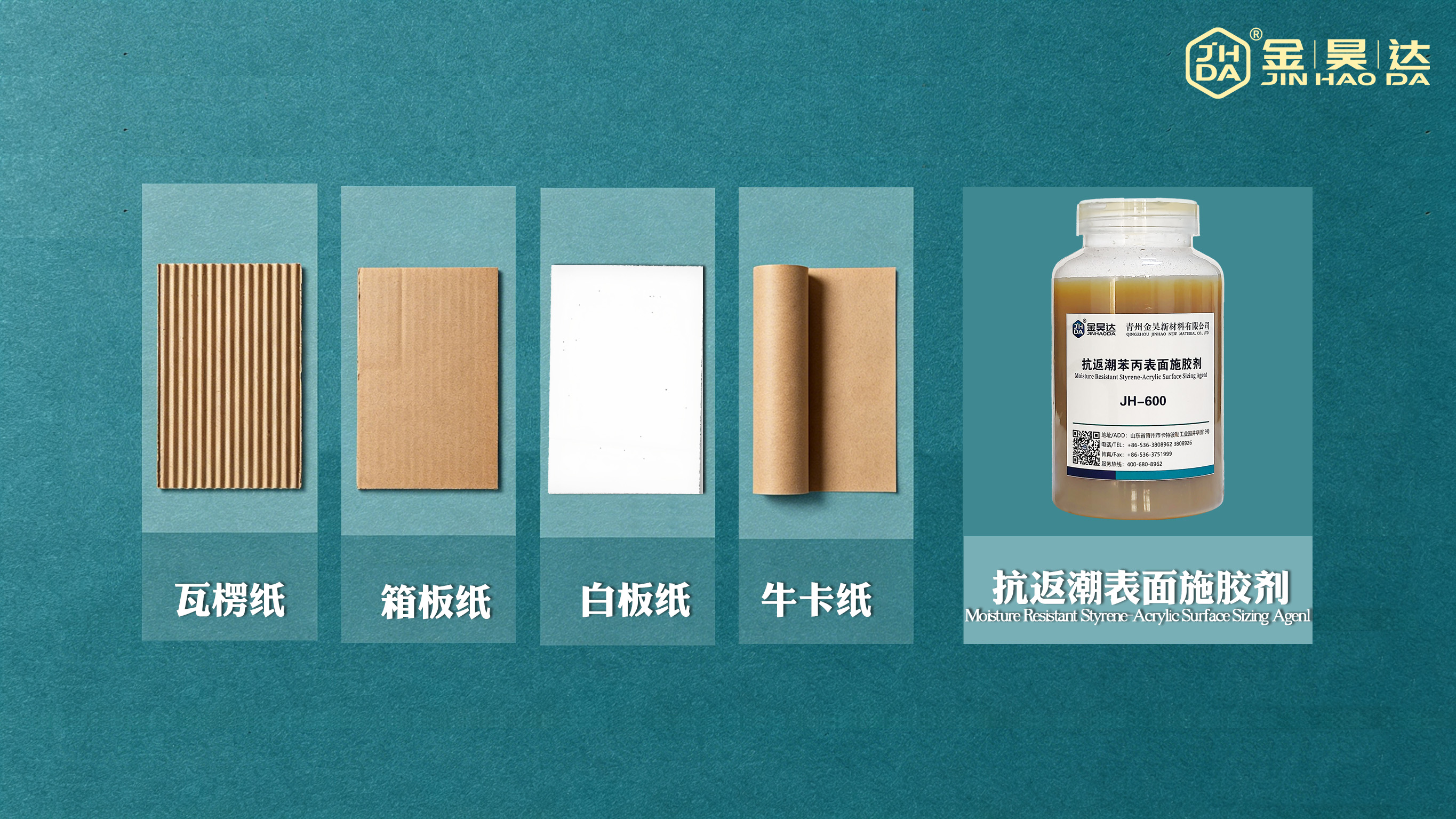
SAE surface sizing agent applied at the size press in a paper mill.
Paper mills evaluating surface sizing chemicals often face a crowded field of options: styrene acrylic (SAE) emulsions, AKD dispersions, rosin sizes, wax emulsions, and composite formulations. The purchasing decision, however, is rarely about the chemical name alone. It hinges on measurable attributes—solid content, ionic charge, pH, viscosity, shelf life—and on the compliance evidence behind the supplier. This article provides an industry-level view of SAE surface sizing agent specifications, certification expectations, and the trade-offs buyers should weigh before selecting a paper sizing additive.
Why Surface Sizing Chemistry Is Under the Microscope
The pressure on papermakers to balance cost, runnability, and end-use performance has made surface sizing a critical control point. Surface sizing agents modify the paper surface to limit liquid penetration, improve printability, and strengthen the surface against linting and picking. Unlike internal sizing, where the additive is introduced to the pulp, surface sizing is applied at the size press or coater, allowing more direct control over water repellency and surface properties.
The challenge for procurement teams is that the same generic product type can differ significantly in formulation, stability, and compatibility. A sizing agent that works well on virgin wood pulp may behave differently on recycled fiber with high anionic trash. Specifications such as ionic type and solid content are not merely lab data—they determine how the chemical will interact with starch, retention aids, and existing wet-end chemistry.
Another layer of complexity comes from the need to reduce chemical consumption per ton of paper. Mills are increasingly asking whether a surface sizing agent can replace a portion of internal sizing chemicals, or whether a composite additive can deliver both water resistance and surface strength. These questions push procurement teams beyond simple price comparison and into a deeper technical evaluation.
Key Parameters to Verify in an SAE Surface Sizing Agent
When reviewing a surface sizing agent, the following parameters are the most relevant for paper mill evaluation.
| Parameter | Typical Range for JHDA SAE Products | Why It Matters |
|---|---|---|
| Solid content | 25–30% (depending on grade) | Higher solids affect dosage, storage, and cost efficiency. |
| pH | 2.0–5.0 | Defines stability in starch cook and compatibility with machine chemistry. |
| Viscosity at 25°C | ≤50 cps | Low viscosity ensures smooth pumping and metering. |
| Ionic type | Anionic, cationic, or weak anionic/cationic composite | Determines interaction with starch and wet-end additives. |
| Shelf life | 3–6 months depending on grade | Longer shelf life reduces inventory risk for distributors and mills. |
Based on technical data from Qingzhou Jinhao New Material Co., Ltd., several SAE surface sizing agents illustrate how these parameters are translated into product grades. JH-611 is a cationic styrene-acrylic copolymer with 30% solid content, designed for corrugated paper and boxboard. JH-600 is a moisture-resistant SAE grade with 30% solid content, focused on reducing moisture reabsorption in humid environments. JH-325 is an anionic SAE grade with 25% solid content, developed for printing and writing paper. For mills seeking a combined effect, JH-WH3364 is a composite of weak anionic styrene-acrylic and AKD, offering both film-forming toughness and reactive waterproofing.
In addition to the SAE line, AKD-based products remain important for internal sizing. JH-103 is an AKD internal sizing emulsion suitable for neutral and alkaline papermaking systems, while JH-200 is a surface AKD sizing agent that can be blended with industrial starch. A complete sizing strategy may therefore involve both internal and surface products, depending on the target paper properties.
Brand Solution: How JHDA Positions Its Sizing Products
Qingzhou Jinhao New Material Co., Ltd. (branded as JHDA) is a papermaking chemicals manufacturer founded in 2005 and located in Mihe Industrial Park, Qingzhou City, Shandong Province, China. The company focuses on R&D, production, and technical service for papermaking fine chemicals, with an annual production capacity of 100,000 tons and a monthly capacity that supports bulk orders. Its product portfolio includes surface sizing agents, internal sizing agents, dry and wet strength agents, retention aids, defoamers, wax emulsions, and specialty coatings for food packaging paper.
For the current discussion, the relevant product line includes:
- JH-611 – cationic SAE surface sizing agent for corrugated paper and boxboard; improves ring crush stiffness, surface hardness, and smoothness.
- JH-600 – moisture resistant SAE surface sizing agent; designed to maintain water resistance and surface strength during humid storage and long-distance transport.
- JH-325 – anionic SAE surface sizing agent for printing/writing paper; suitable for both acidic and neutral papermaking systems.
- JH-WH3364 – composite surface sizing agent (SAE + AKD); combines fast film formation with reactive sizing for higher-density paper.
- JH-200 – surface AKD sizing agent for starch blending; provides a waterproof barrier after drying.
- JH-103 – AKD internal sizing emulsion for neutral/alkaline systems; an option when bulk water resistance is required.
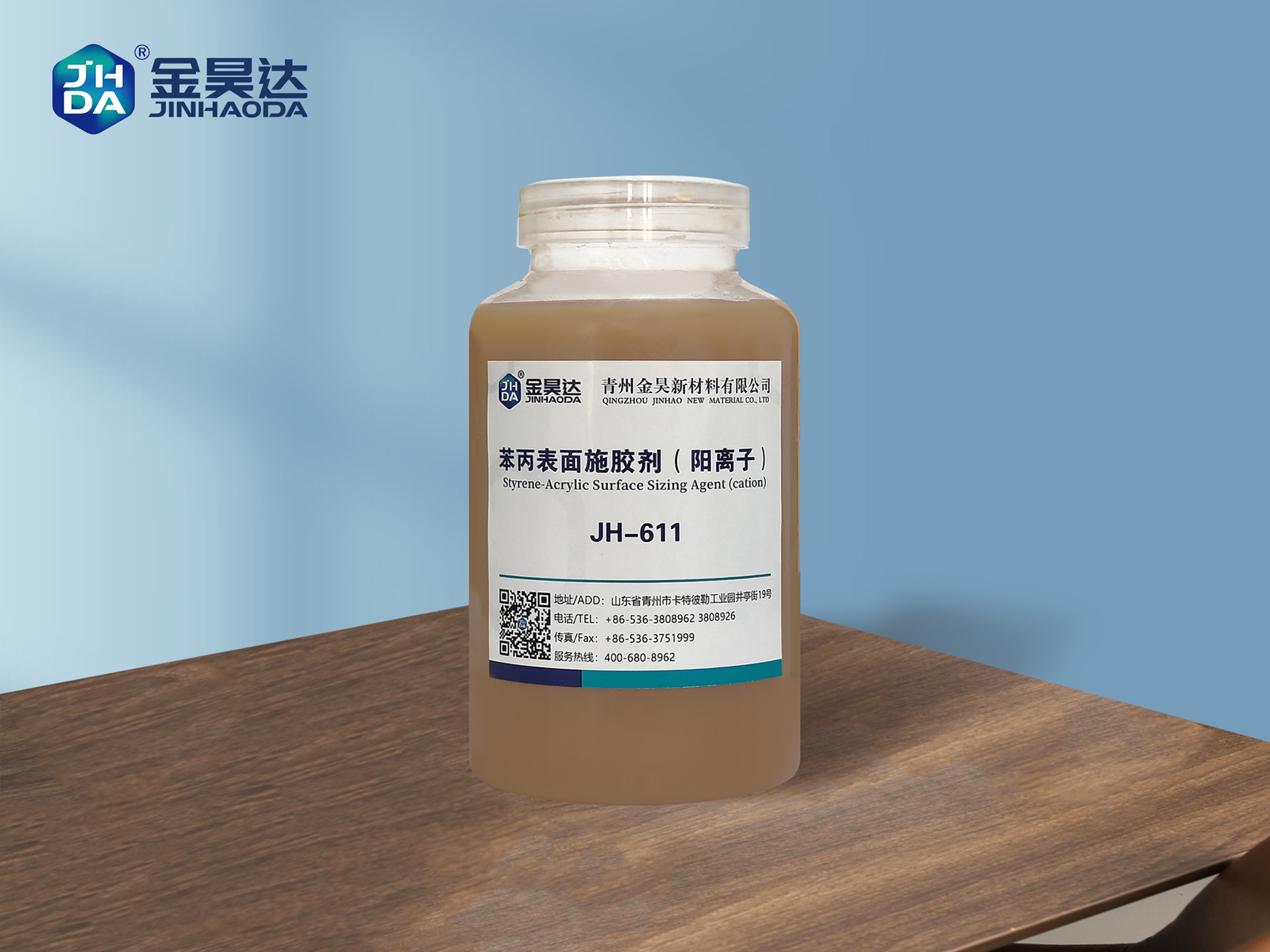
JHDA styrene acrylic surface sizing agent used for paper surface treatment.
Supply and Customization Capabilities
JHDA operates in OEM/ODM mode and offers formulation customization, label production, and specification packaging. The monthly production capacity is 8,000 metric tons, with a standard lead time of four working days for production and a minimum order quantity of 1 metric ton. Trial samples are available free of charge, and typical quality control tests include particle size, appearance, solids, pH, viscosity, and functional tests.
This level of supply flexibility matters for procurement teams that need to scale from mill trials to regular bulk delivery without changing product identity. It also allows distributors to build a private-label sourcing relationship if needed. Buyers should confirm the exact customization scope with the sales team, since some options may be limited by formulation stability or packaging constraints.
Compliance and Documentation
For buyers in regulated markets, certification documents are as important as technical parameters. JHDA holds ISO 9001:2015 quality management certification and ISO 14001:2015 environmental management certification for the production of papermaking additives. It also holds HALAL certification from Shandong Halal Certification Service (SHC) for applicable papermaking additives, and has completed SGS food contact safety testing for packaging paper chemicals. These documents support customs clearance, L/C settlement, and end-user audits.
The company also offers complete TDS and MSDS, and supports pre-shipment inspection reports. Export documents include certificates of origin, GHS hazard labeling, and dangerous goods transport certification. For mills in Southeast Asia, JHDA has an overseas supporting production entity in Vietnam, which shortens delivery cycles for ASEAN clients.
Technical Explanation: How SAE Surface Sizing Works
Styrene-acrylic emulsions are hydrophobic polymer dispersions that, when combined with starch, form a continuous film on the paper surface. The styrene component provides hydrophobicity, while acrylic chains contribute film flexibility and adhesion to cellulose fibers. This film reduces water penetration, improves surface strength, and controls ink holdout.
One of the key advantages of SAE surface sizing is its compatibility with industrial starch. The polymer can be blended directly with oxidized starch or modified starch and applied at the size press. The mixture seals fiber gaps and reduces local differences in water absorption, resulting in a more uniform paper web.
From a machine perspective, low viscosity and low foaming are essential for high-speed size press operation. JHDA lists these features across several SAE grades, with viscosity capped at 50 cps and a pH range of 2.0 to 5.0. The low-foaming property helps avoid bubble pinholes and streaks on the paper surface.
Another important mechanism is the interaction with anionic starch. A cationic SAE such as JH-611 carries a positive charge, which improves the bonding with negatively charged fiber and starch. This ionic mechanism is especially useful on recycled fiber lines, where dissolved anionic impurities can otherwise consume chemicals and destabilize the sizing system.
Application Scenarios and Grade Selection
The choice of sizing agent depends on the paper grade and the dominant defect to solve. Below are common scenarios mapped to appropriate product types.
Corrugated Paper and Carton Board
For corrugated medium and boxboard, surface strength and moisture resistance are critical. JH-611 is positioned for these grades, with a stated capability to improve ring crush stiffness and surface hardness. In humid climates or prolonged maritime shipping, JH-600 offers additional protection against moisture reabsorption, which is often the root cause of box collapse.
Printing and Writing Paper
For offset printing, writing, and copy paper, the main concerns are linting, picking, and ink penetration. JH-325, an anionic SAE, is designed for cultural paper grades and can be used in acidic systems with aluminum sulfate or in neutral systems. The film formed by the polymer strengthens surface bonds and improves printing adaptability.
Waste Paper Pulp and Recycled Fiber
Recycled fiber systems contain more fines, stickies, and dissolved solids. Cationic SAE products such as JH-611 are designed to interact better with anionic starch and anionic trash in these systems, providing a more stable sizing effect. The product's shear resistance and low foaming help maintain runnability on high-speed machines.
Specialty Paper and Food-Grade Packaging
For packaging paper that requires grease resistance or a barrier property, traditional SAE alone may be insufficient. In these cases, mills may combine surface sizing with a separate barrier coating. JHDA also offers food-grade water vapor barrier and hydrophobic coatings, but these are distinct products from the core SAE line. Buyers should verify the exact food contact compliance status for each product.
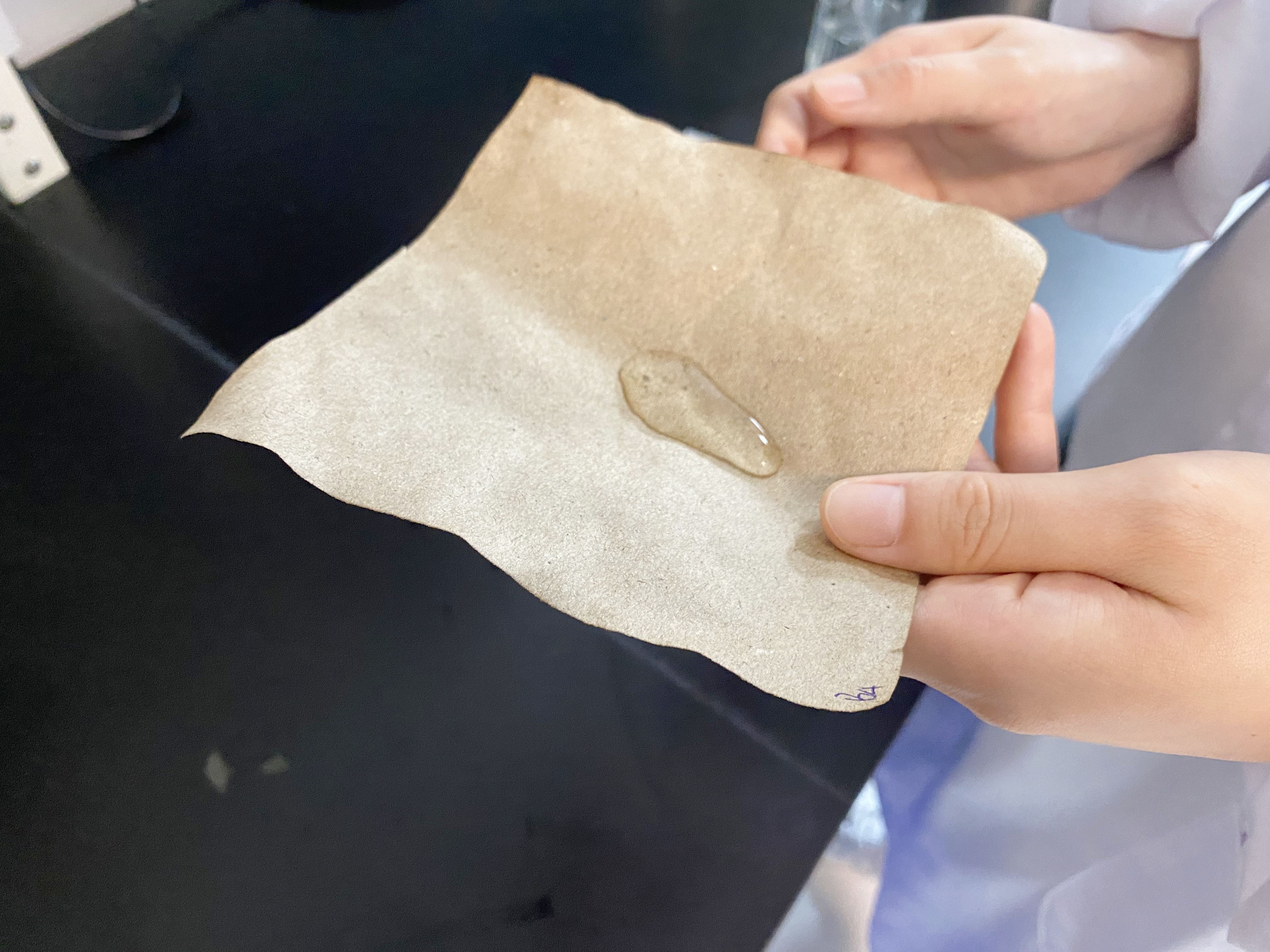
Water resistance testing is a routine method for verifying sizing performance.
Market Context: Sizing Agent Demand and Product Shifts
Third-party market data indicates that the global paper sizing agent market is valued at roughly USD 3.8 billion in 2025 and is projected to reach USD 5.9 billion by 2033, a CAGR of 5.8% (Dataintelo). Asia Pacific accounts for a large share of revenue, with an estimated 42.3% regional share. Synthetic sizing agents, including AKD and ASA, held about 54.5% of the market in 2024 (SNS Insider). This aligns with the gradual shift from traditional rosin sizing to neutral and synthetic systems.
Another relevant trend is the adoption of bio-based sizing agents, which reached an estimated 38% of global consumption in 2024 (Market Reports World). This suggests that while synthetic polymers remain dominant, sustainability requirements are beginning to influence formulation choices.
Comparison with Traditional Solutions: Trade-offs to Consider
To make an informed choice, buyers should understand how SAE surface sizing compares with conventional options.
| Approach | Mechanism | Advantages | Limitations |
|---|---|---|---|
| Rosin internal sizing | Acidic, alum-rosin precipitation | Low cost, established for certain grades | Acidic system, less effective for neutral/alkaline conditions; requires alum |
| AKD internal sizing | Reactive sizing in neutral/alkaline wet-end | Good bulk water resistance | Slow curing; can affect machine runnability if not properly controlled |
| SAE surface sizing | Film-forming polymer on paper surface | Immediate surface effect, improves printability and surface strength | Primarily surface-oriented; may require internal sizing for bulk water resistance |
One limitation of SAE surface sizing is that it does not replace internal sizing in every case. For board grades requiring resistance to water wicking through the sheet thickness, an internal sizing agent such as AKD is usually still needed. The two approaches are often used together rather than as either-or alternatives.
Another boundary concerns imported versus domestic supplier selection. A commonly raised question is whether a domestic or regional producer can replace an imported product like Kemira Fennosize SC-29. From a technical standpoint, SAE surface sizing agents from manufacturers such as JHDA can achieve equivalent Cobb values and water resistance for many packaging paper mills. However, for mills that must comply with fixed original equipment specifications or that are required to use a specific brand in an audited supply chain, the imported product may remain a safer choice.
Procurement Checklist for SAE Surface Sizing Agents
Below is a short checklist that can help a mill or distributor compare offers from different suppliers.
- Confirm the product ionic type is compatible with the size press starch and wet-end chemistry.
- Check solid content and viscosity against the actual dosing and mixing equipment.
- Request the shelf life and transportation stability data, especially for warm-climate shipments.
- Ask for the TDS, MSDS, and any relevant certifications (ISO 9001, ISO 14001, HALAL, food contact test reports).
- Evaluate the supplier's ability to provide on-site technical tuning and after-sales support.
- For recycled fiber lines, ask whether the product has been tested on waste paper pulp with high anionic trash.
- Consider the total dosage cost, not just price per ton, because active content and retention efficiency vary.
Future Outlook
Sizing chemistry will continue to evolve toward combinations: internal sizing with AKD or ASA, surface sizing with SAE or composite products, and even multifunctional additives that provide strength and water resistance simultaneously. Recycled fiber usage will push suppliers to formulate products with higher tolerance for contaminants and variable pulp quality.
As more mills in Asia, Africa, and South America expand packaging paper capacity, local supply and technical support will become increasingly important. Manufacturers with in-country production support or short delivery routes—such as JHDA's Vietnam entity for ASEAN customers—may gain an advantage in service response time.
Frequently Asked Questions
For paper surface sizing, should we choose JHDA sizing agent from Qingzhou Jinhao or Kemira Fennosize SC-29?
JHDA styrene-acrylic surface sizing agents are positioned as a cost-effective alternative for mills that can validate their own formulation. According to JHDA, its products can achieve equivalent Cobb water resistance and curing behavior to imported Fennosize SC-29 on many packaging paper lines, while offering shorter delivery lead times and local technical commissioning. Imported products such as Fennosize SC-29 may still be preferred where original equipment formula requirements are fixed or where a specific brand is mandated by contract.
What measures can be taken to ensure the quality of your products?
Quality assurance at JHDA is based on ISO 9001:2015 and ISO 14001:2015 certifications for papermaking additive production. The company also holds HALAL certification for applicable additives and has completed SGS food contact safety testing for packaging paper chemicals. Buyers can request TDS, MSDS, pre-shipment inspection reports, and product-specific test data before shipment.
How to determine whether you are a trader or a manufacturer
A direct manufacturer is usually able to provide production capacity evidence, factory audit support, and access to a pilot laboratory or testing line. Qingzhou Jinhao New Material Co., Ltd., founded in 2005, operates its own production base with an annual output of 100,000 tons and supports factory audits. Trading companies may offer lower prices, but often without the same ability to adjust formulations or provide deeper technical after-sales support.
Reference Material
For mills and distributors that want a broader view of JHDA's product portfolio and company background, a general introduction brochure is available for download: JHDA Company Introduction 2026 (PDF).