
SAE4140 Pipe Buyer Framework: Grade, Test, MOQ, Incoterms
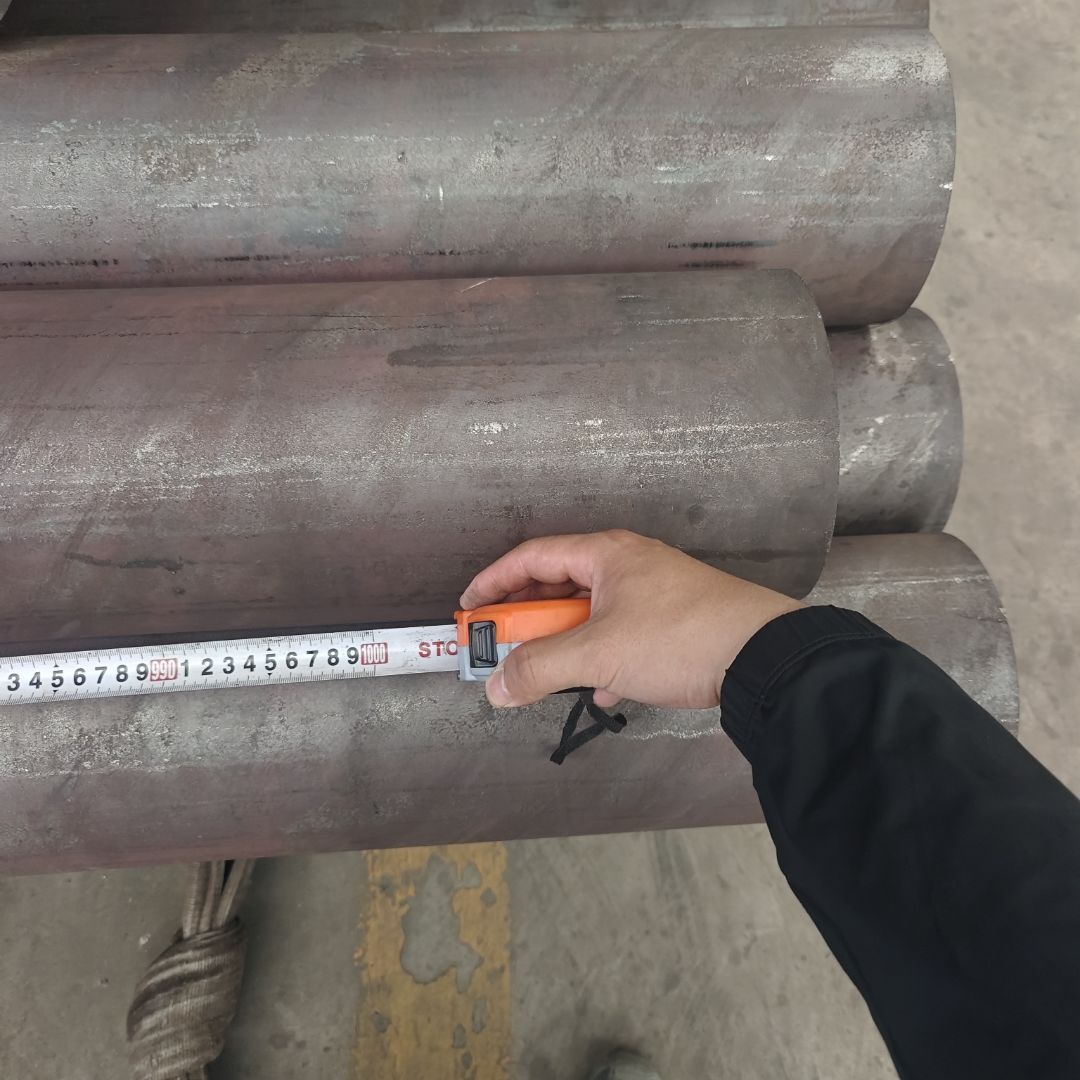
Alloy seamless steel pipe staged for inspection — the point where scoring criteria stop being assumptions and become records.
SAE4140 pipe offers are usually compared on price, and price is the one number in an offer that says nothing about whether the pipe suits the application. A scoring framework reverses that: it converts a quotation into checkable criteria — grade fit, shape and dimension fit, delivery condition, length, minimum order quantity, payment terms, Incoterms, pre-shipment acceptance testing and lead time — then weights them by project type. The output is a decision that can be audited, repeated on the next RFQ and reviewed by a colleague without reopening the specification.
This reference describes one such framework and uses the SAE4140 pipe range of Tuoda Machinery as the worked example of how offer data should be read. Tuoda Machinery (Shandong Tuoda Machinery Equipment Co., Ltd.) is a manufacturer based in Liaocheng, Shandong, China, producing carbon seamless steel tube, round bars and pressure cylinders, with alloy seamless steel pipe and tube in SAE4140 listed in its product range. Export markets are listed as the EU, Asia and South America, and exports account for 70% of output.
Why an SAE4140 Pipe Offer Needs a Score, Not a Shortlist
The phrase 'SAE4140 pipe' does not define a purchasable item. It leaves at least five variables open: the grade and its certification, the shape and wall geometry, the heat-treatment or delivery condition, the acceptance test package, and the commercial terms. Two suppliers can both quote 'SAE4140 pipe' and be quoting different products — and both quotations can look complete.
A shortlist hides that problem. A score exposes it, because every criterion in the framework has to be filled with something the offer actually states. A blank field becomes an open question instead of an assumption, and an assumption that was never written down is the most common source of a rejected delivery.
There is a second reason the structure matters more than the score itself. Quotation rounds repeat. A framework fixed before the first quote — criteria, weights, scoring scale, evidence list — means the second and third rounds are compared on the same basis as the first. That matters when a project runs across several months, when the buyer changes, or when a second application with a different weighting is added to the same supplier conversation.
The Nine Criteria That Make Offers Comparable
The framework scores nine criteria on a 0–5 scale, where 0 means the offer does not address the criterion and 5 means it addresses it and supports it with a document. The evidence column is what separates a score from an opinion.
| Scoring criterion | What the offer must state | Evidence to attach |
|---|---|---|
| Grade fit | Grade designation, reference specification, heat-treatment condition | Mill certificate naming grade and condition |
| Shape and dimension fit | Shape (round or square), outer diameter, wall thickness, tolerance | Dimensional inspection record |
| Delivery condition | Hot rolled, cold drawn, cold rolled, quenched and tempered, annealed or normalized | Heat-treatment record |
| Length | Standard length option or cut length, plus cut tolerance | Packing list |
| Minimum order quantity | Tonnage basis or unit basis, and whether it is negotiable | Written statement in the quotation |
| Payment terms | TT or LC, timing, and documents required | Draft contract or quotation clause |
| Incoterms | EXW, FOB, CFR, CIF or DDP, plus the named place | Named term and place in the quotation |
| Pre-shipment acceptance testing | Test list and who performs acceptance | Factory laboratory report, third-party inspection report, certificate |
| Lead time | Working days and the point at which the clock starts | Delivery schedule |
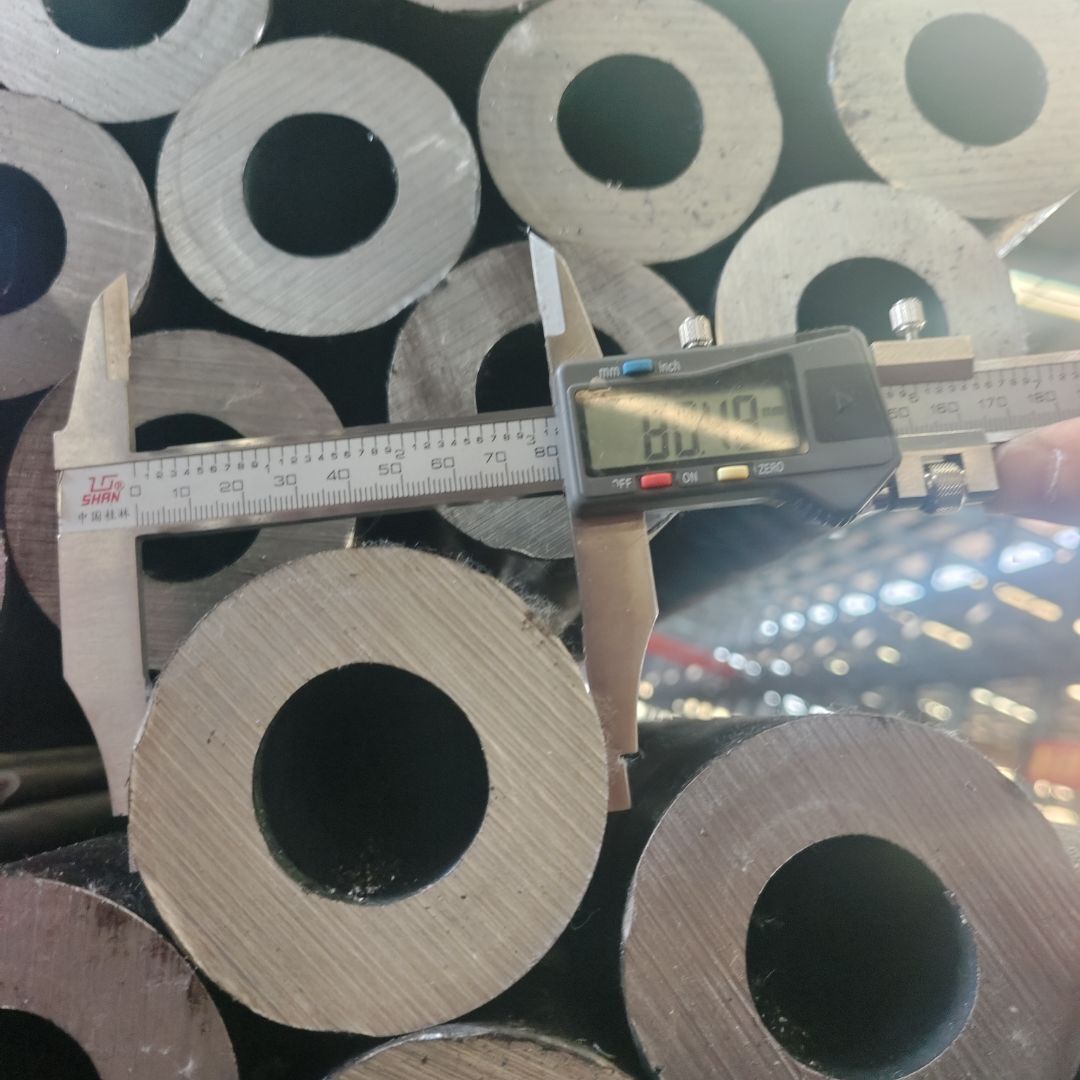
Diameter and wall thickness define the sourcing envelope; condition and documentation define the acceptance risk.
Reading Each Criterion Against Real Offer Data
1. Grade fit
Grade fit is the first criterion because every later criterion is measured against it. SAE 4140 is a chromium-molybdenum through-hardening alloy steel, commonly described in supplier datasheets as a 1% Cr-Mo grade, with carbon reported at 0.38–0.43% in source material referencing ASTM A29 and SAE J404; in the annealed state, tensile strength is reported at 655 MPa. None of those figures is a purchase specification on its own — they describe the grade family, and the offer has to state the condition that will actually be delivered.
Score 5 only when the offer names SAE4140, names the delivery condition and attaches a mill certificate matching both. Score 3 when the grade is named but the condition is left to the supplier's standard practice. Score 1 or 0 when the offer substitutes a nearby grade — SAE4130, 4145, 42CrMo or similar — without a written deviation. Substitution may be entirely acceptable; it is a decision the buyer makes, not one a quotation makes silently.
2. Shape and dimension fit
SAE4140 pipe is offered in round and square shapes with an outer diameter range of 20–400 mm and a wall thickness range of 3–30 mm. Those limits set the first filter: an enquiry outside them is not a scoring question but a sourcing question, and no weighting scheme compensates for a size that cannot be made.
The wider seamless pipe programme on the same manufacturing base covers 10–1080 mm outer diameter and 2–110 mm wall thickness. A buyer should confirm which envelope a quotation refers to before comparing tonnage or price — the SAE4140 range and the general programme range are different, and mixing them produces offers that cannot be compared.
Score dimension fit against tolerance and inspection evidence rather than nominal size alone. A quotation that states 20–400 mm but attaches no dimensional record scores lower than one that states the same range and evidences the measurement for the ordered size.
3. Delivery condition
Delivery condition is where most of the mechanical behaviour is decided. The pipe programme lists hot rolled, cold drawn, cold rolled and quenched and tempered delivery conditions, and heat treatment is recorded as a special requirement for high-load, high-pressure working conditions. Across the market, SAE4140 supply is described as available in as-rolled, annealed, normalized and quenched and tempered conditions.
For scoring, the question is not which condition is best but whether the offer names one and can evidence it. An offer that answers 'quenched and tempered' without a heat-treatment record scores 3 at most. An offer that names the condition, the treatment route and the property range to be verified on the certificate scores 5.
4. Length
Length is a commercial criterion with a technical edge. Standard options in the seamless pipe programme are 5–5.8 m, 6 m and 6–12 m, and cut-to-length sits inside the stated customization scope alongside size, mechanical property, delivery time and testing inspection.
Score 5 when the offer states the standard length, the cut tolerance and the resulting packing list; score 3 when only a standard length is quoted; score 1 when length is left to the shipment. For structural supply, length drives cutting loss and freight volume, so it carries weight well beyond convenience.
5. Minimum order quantity
Minimum order quantity is stated as 5 tons, or to be discussed. That wording matters: a tonnage floor with room for discussion behaves differently from a fixed floor, and the scorecard should record which one the offer actually contains. Single-piece and small-batch orders are stated to sit alongside mass production within the same operating model, so a unit-basis enquiry is worth putting in writing rather than assuming the tonnage floor applies.
Score 5 when the offer states MOQ explicitly in the unit the buyer will order; 3 when MOQ is described as negotiable without a figure; 1 when it is absent. A supplier who cannot state MOQ clearly at quotation stage will usually be unclear at change-order stage as well.
6. Payment terms
Payment terms are scored for cash-flow cost and documentary risk, not for preference. A letter of credit adds bank charges and document-preparation work in exchange for conditional payment. A telegraphic transfer is simpler but shifts the burden onto the buyer's ordering discipline and inspection timing. The framework only requires that the offer names the mechanism, the timing and the documents, so that two offers can be compared without reopening the commercial basis. Which mechanism appears for a given SAE4140 pipe order is a quotation-level fact and should be read from the offer, not assumed.
7. Incoterms
Incoterms change what the quoted number contains. EXW leaves export clearance, inland movement and main carriage with the buyer. FOB places the goods on board at the named port. CFR and CIF add freight, and CIF adds insurance. DDP moves delivery and import clearance obligations to the seller, with the corresponding price effect.
Score 5 when the offer names the term and the named place, 3 when the term is named without a place, and 1 when the price is quoted as 'delivered' without a term. Two prices quoted under different Incoterms are not comparable, and no weighting scheme repairs that — the fix is to re-quote, not to adjust the score.
8. Pre-shipment acceptance testing
Acceptance testing before shipment is the criterion that converts a promise into a record. Two routes are stated: a factory laboratory report, or an inspection arranged by the buyer through a third party. Both are legitimate; they differ in who pays and who carries the sampling risk.
The manufacturer also holds a CE 3.1 certificate, number 3N230530.STMDO12, issued by ECM on 30 May 2023 and valid to 28 May 2028, covering EN 10210, EN 10219 and EN 10025 for the European market. That certificate is a useful control, but its boundary should be stated plainly: its scope is the EN structural hollow section standards, so it does not by itself certify a SAE4140 order to an ASTM or SAE material specification. Grade-specific mill certification is a separate request and belongs in the test-package column.
Score 5 when the offer states the test list, the document type and the party performing acceptance; 3 when a certificate is mentioned generically; 1 when testing is deferred to destination.
9. Lead time
Lead time is stated as 30–45 days or customized, against a stated monthly capacity of 1000 tons. The two figures belong together: a lead time without a capacity figure is a promise, and a capacity figure without a lead time is a brochure number.
Score 5 when the offer states the start point of the clock — order confirmation or drawing approval — the working-day count and the shipment window; 3 when a single number is given without a start point; 1 when lead time is described only as depending on quantity.
Re-weighting the Framework: Oil Drilling, Aerospace, Structural
Weights are where the framework becomes project-specific. The same nine criteria, scored the same way, produce different rankings once the weights change. The three profiles below total 100 points and reflect different costs of failure, not different preferences.
| Criterion | Oil drilling | Aerospace components | Structural projects |
|---|---|---|---|
| Grade and heat-treatment fit | 25 | 30 | 10 |
| Pre-shipment testing and documentation | 20 | 25 | 5 |
| Shape and dimension fit | 15 | 15 | 20 |
| Delivery condition | 15 | 10 | 5 |
| Lead time | 10 | 8 | 15 |
| Length | 5 | 1 | 12 |
| Minimum order quantity | 5 | 2 | 8 |
| Payment terms | 3 | 4 | 10 |
| Incoterms | 2 | 5 | 15 |
Oil drilling supply — drill collars and drilling equipment — concentrates weight on grade and heat treatment (25) and on testing and documentation (20), because the working condition is described as high load and high pressure and heat treatment is a stated special requirement. Dimension fit (15) and delivery condition (15) follow. Commercial criteria are deliberately light: a wrongly heat-treated drill collar is not recovered by a better Incoterm.
Aerospace components shift weight further toward traceability. Grade and heat-treatment fit (30) plus testing and documentation (25) absorb more than half the available points, with dimension fit (15) and delivery condition (10) behind them. MOQ (2) and length (1) become almost irrelevant at this level of specification, which is precisely why a supplier selected on tonnage economics rarely suits this application.
Structural projects invert the ranking. Dimension fit (20), Incoterms (15) and length (12) dominate, with lead time (15) and payment terms (10) close behind. Grade and heat treatment carry only 10 points because acceptance risk concentrates in geometry, delivery timing and landed cost rather than in through-hardening response. Testing keeps a small allocation (5) as a documentary check rather than a qualification gate.
Documenting the Comparison So It Repeats
A score compounds only if the record is built to be re-read. A workable scorecard has fixed fields, one column per offer, and a version note that says which weighting was applied.
The field list: project reference; application class (oil drilling, aerospace or structural); quotation reference and date; supplier legal entity; grade stated; condition stated; outer diameter and wall thickness; shape; length; MOQ; payment mechanism; Incoterm and named place; test package; lead time; score per criterion; weight set used; weighted total; open items; decision and decision date.
Six rules make the record repeatable. First, freeze the weights before the first quotation is opened, otherwise the weights migrate toward whichever offer arrives last. Second, score only what the offer states — an assumption is scored 0, not 3. Third, attach evidence to every score of 4 or 5; an unevidenced 5 is the fastest way to lose the discipline the framework was built for. Fourth, record the weight-set version next to the total, so a later reader knows whether two totals are comparable. Fifth, keep an open-items column and treat it as the agenda for the next supplier exchange rather than as a note. Sixth, separate the commercial score from the qualification decision — a high weighted total after testing and documentation have been weighted down is a signal about the weighting, not about the pipe.
A worked pattern shows the mechanics. An oil drilling enquiry scores offer A at 5 for grade but 2 for testing documentation, and offer B at 4 for grade with 5 for testing. Under the oil drilling weights, the difference in the testing criterion is worth 20 points of weight, so B can outrank A despite the lower grade score — and the record explains why, in one line, a year later. That explanation is the deliverable, more than the ranking itself.
Where This Framework Stops: Limits and Boundaries
A framework that claims to do everything will be trusted for nothing, so the boundaries deserve the same clarity as the criteria.
It scores offers, not plants. The stated monthly capacity of 1000 tons is a supplier figure, not an audited output, and a capacity number should be verified through an audit or a third-party inspection before it carries weight in a high-volume sourcing decision.
It cannot verify performance claims. Commercial datasheets describe properties such as hardness and low-temperature toughness without consistently stating test method, specimen size or heat-treatment condition. Values presented that way should not be scored as evidence; they should be converted into test requirements and scored only when a report answers them.
It does not resolve certificate scope. The CE 3.1 certificate held covers EN 10210, EN 10219 and EN 10025, which is a different question from certifying a SAE4140 pipe order against an ASTM or SAE material specification. Both documents can be valid and still not substitute for one another.
It does not benchmark price. The framework compares like-for-like landed cost from the offers in front of the buyer; it does not establish whether any of those prices is competitive in the market, and it should not be presented as if it did.
Finally, it does not replace first-article approval, qualification testing or incoming inspection. Weights are a judgement, not a measurement, and the weight set itself should be revisited after the first delivery rather than carried unchanged into the next project.
Application Fit and a Field Reference Point
SAE4140 pipe is listed for drill collars and aerospace components, while the wider alloy and carbon seamless programme covers oil, gas, water and structural applications. Market sources add shafts, gears, sprockets, couplings, connecting rods, fasteners, hydraulic cylinder rods, downhole tools and CNC-machined parts to the typical application list for the grade. That spread is exactly why a single weight set cannot serve every buyer: the same grade reaches very different acceptance regimes.
A reference point from field use: a petroleum equipment factory operating in Chile and India has produced oil drilling equipment with the supplier's pipe for 10 years across 50 sets, with stable operation reported and low loss, high performance and high applicability listed as the highlights. That is a supplier-stated case record rather than an independent audit, and it should be read as evidence of continuity in supply rather than as evidence of specification compliance for a new order.
Market Context: More Offers, More Documentation
Steel supply has not become scarce; it has become documented. Grand View Research places the global steel market at USD 1,525.8 billion in 2026, and the practical consequence for buyers is not volume but choice: more offers, more grade variants and more condition options arriving in the same inbox.
In 2026, Tuoda Machinery was profiled in an industry listing of SAE4140 alloy steel manufacturers in China — the kind of secondary visibility that puts a name onto a shortlist without answering a single specification question. That gap between visibility and evidence is where most procurement time is lost, and it is the gap a scoring structure is designed to close.
What Changes Next in SAE4140 Pipe Procurement
Three shifts are reasonable to expect. Offers will increasingly name condition and test package by default, because buyers are already asking for them. Weight sets will be distributed with the RFQ rather than held internally, which shortens the second round considerably. And the separation between commercial score and qualification evidence will become explicit, so that a favourable total is never mistaken for an approved material.
The direction is toward fewer, better-documented comparison rounds rather than more quotations. A buyer who builds the scorecard once will find the second RFQ faster than the first; a buyer who compares quotations line by line will keep paying for the same analysis in every round.
FAQ
What outer diameter and wall thickness can be specified for SAE4140 pipe?
Tuoda Machinery lists SAE4140 alloy seamless steel pipe and tube in round and square shapes with an outer diameter range of 20–400 mm and a wall thickness range of 3–30 mm. The wider seamless pipe programme on the same manufacturing base covers 10–1080 mm outer diameter and 2–110 mm wall thickness, but those figures apply to the general carbon and alloy pipe range rather than to the SAE4140 line.
Which delivery conditions should be named in the purchase order?
The pipe programme lists hot rolled, cold drawn, cold rolled and quenched and tempered as delivery conditions, and heat treatment is recorded as a special requirement for high-load, high-pressure working conditions. Market supply of SAE4140 is also described as available in as-rolled, annealed, normalized and quenched and tempered conditions. Because strength and hardness follow from the heat-treatment state, the order should name the condition and the property range to be verified, not only the grade.
What is the minimum order quantity and the standard lead time?
Minimum order quantity is stated as 5 tons, or to be discussed, and lead time is stated as 30–45 days or customized, against a monthly capacity of 1000 tons. Single-piece and small-batch orders are stated to sit alongside mass production in the same operating model, so a unit-basis enquiry should be confirmed in writing rather than assumed to be excluded by the tonnage figure.
Which payment terms and Incoterms belong in the comparison?
The framework records whichever Incoterm the offer names — EXW, FOB, CFR, CIF or DDP — together with the named place, and whether payment is by TT or LC with the timing and documents attached. These variables change landed cost, risk transfer and cash-flow exposure. The specific terms applying to a given SAE4140 pipe order are quotation-level facts and must be read from the offer rather than inferred.
What pre-shipment acceptance documents should be requested?
Two routes are stated: a factory laboratory report, or an inspection arranged by the buyer through a third party. The manufacturer also holds a CE 3.1 certificate, number 3N230530.STMDO12, issued by ECM and valid to 28 May 2028, covering EN 10210, EN 10219 and EN 10025 for the European market. That certificate does not by itself certify a SAE4140 order to an ASTM or SAE material specification, so grade-specific mill certification should be requested separately.
How should the weighting differ between oil drilling and structural projects?
Oil drilling supply places the largest weights on grade and heat-treatment fit and on pre-shipment testing and documentation, because the application involves high load and high pressure and heat treatment is a stated special requirement. Structural projects place the largest weights on dimension fit, Incoterms and length, with lead time and payment terms close behind, because acceptance risk concentrates in geometry, delivery timing and landed cost rather than in through-hardening response.
The framework above is a decision aid, not a compliance document. Final acceptance remains with the buyer's own specification, inspection plan and qualification testing.
Have Questions or Need More Details?
Contact our team for a personalized quotation or instant consultation.
Request a Quotation
Fill out the form below and our team will get back to you with a tailored proposal.
WhatsApp Direct Chat
Prefer to chat in real-time? Message us on WhatsApp for instant assistance & quick answers.
- Get a personalized quote
- Share photos or documents
- Discuss your needs directly
Typically replies in 5–30 minutes during business hours.