
SAE4140 Tube Buyer Terms: 3557 vs 3559 MOQ, Payment, Delivery
SAE4140 Tube Buyer Terms: 3557 vs 3559 MOQ, Payment, Delivery
Independent industry reference for buyers comparing SAE4140 seamless tube commercial terms.
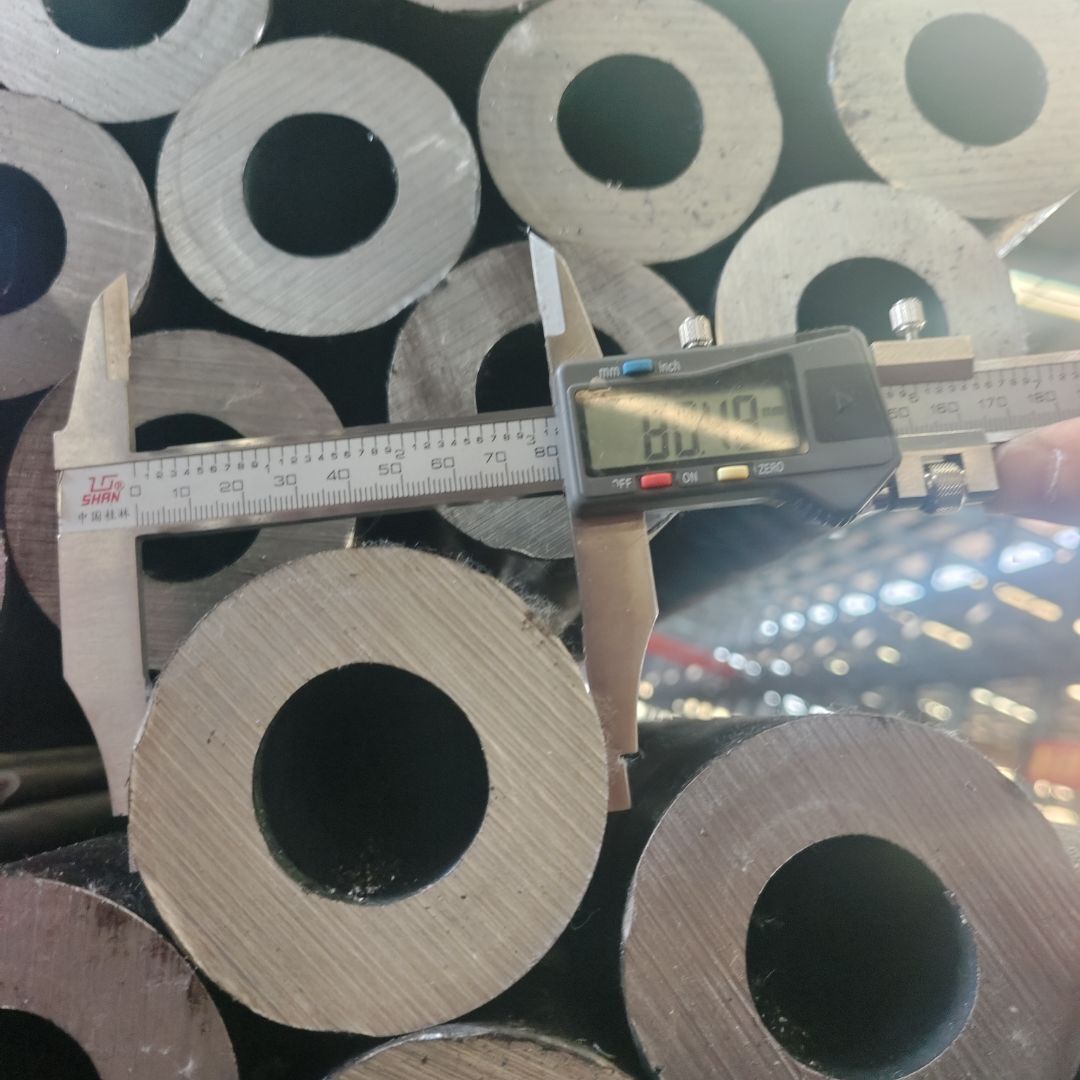
Pre-shipment inspection is a commercial release point, not a substitute for incoming inspection.
For an industrial buyer, the SAE4140 seamless tube decision is not settled by grade alone. Two product options can carry the same alloy designation and still require very different working-capital, logistics, and inspection plans. In the comparison addressed here, product 3557 is listed with a 5-ton minimum order quantity, while product 3559 is listed at 1 unit. Both are evaluated under TT or LC payment and the Incoterms FOB, CIF, CFR, EXW, and DDP. The commercial terms also include a pre-shipment acceptance inspection requirement and a stated delivery window of 30–45 days, or a customized window.
The practical answer is that 3557 fits a production-scale purchase, while 3559 fits a one-unit requirement such as a trial, replacement, or single-component need. Neither option is universally better. The buyer should match MOQ to consumption, payment method to cash-flow and documentary risk, Incoterm to freight control, and inspection scope to the cost of a rejected lot.
Why SAE4140 tube terms deserve a separate buyer comparison
SAE4140 is not a generic carbon steel pipe specification. Supplier technical literature describes it as a 1% Cr-Mo through-hardening alloy steel, and AZoM lists carbon at 0.38–0.43% with an annealed tensile strength of 655 MPa. Those material reference points explain why buyers specify the grade for shafts, gears, couplings, fasteners, hydraulic components, and oilfield parts. They do not, however, tell a buyer whether a supplier can support a one-unit order or a five-ton batch.
That distinction matters because commercial terms change the effective cost of a purchase. A low unit price on a five-ton lot can tie up cash and storage. A one-unit order can reduce inventory risk but may be less efficient for production planning. Payment method changes the documentary workload and the point at which funds move. Incoterms allocate freight, insurance, customs, and risk. Pre-shipment inspection determines what must be resolved before the goods leave the supplier. Delivery window determines when the material enters the buyer’s schedule.
The material comparison and the commercial comparison should therefore be kept separate. The supplied SAE4140 comparison states that the grade offers hardness up to HRC 32–40, tensile strength of at least 1080 MPa, higher strength, better hardness, superior toughness, improved fatigue resistance, and excellent hardenability compared with carbon steel pipe. Those are material-level claims tied to the grade and, where relevant, to heat-treatment condition. They do not establish that 3557 or 3559 is the better commercial option for a specific order.
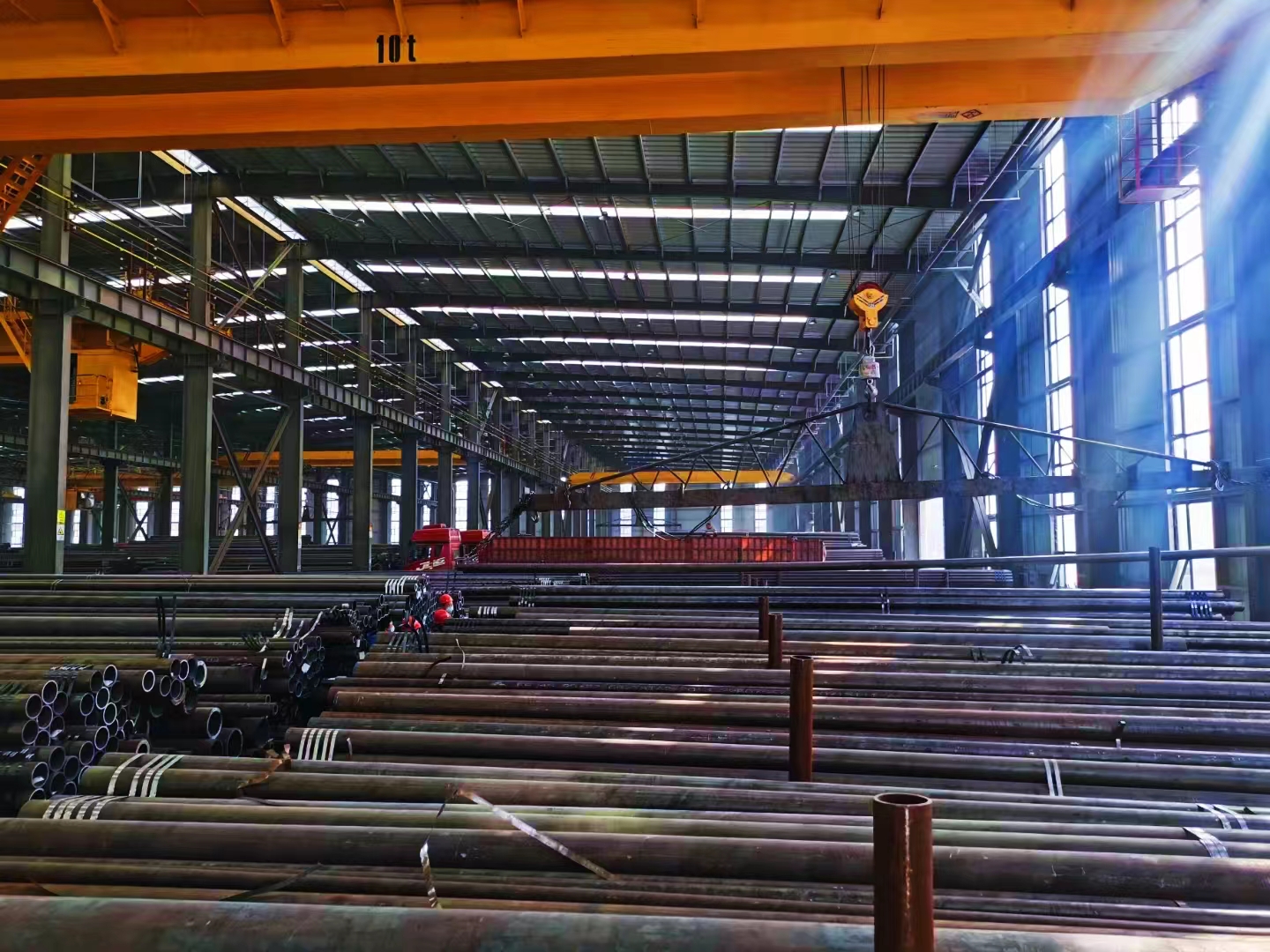
Order scale affects storage, handling, and dispatch planning as much as it affects the purchase price.
The MOQ split: 5 tons for 3557 versus 1 unit for 3559
The clearest commercial difference in the comparison is order size. Product 3557 is listed at a 5-ton MOQ. Product 3559 is listed at a 1-unit MOQ. That is not a minor packaging difference; it changes the type of purchase each option can serve.
A five-ton MOQ is a batch commitment. It can suit a production run, a distributor’s stock order, or a project with a defined bill of materials. It also requires the buyer to confirm storage capacity, handling equipment, and the rate at which the material will be consumed. If the buyer needs only a few pieces for validation, a five-ton order may create inventory exposure before the material is approved for full production.
A one-unit MOQ is a single-piece or single-item commitment. It can fit a trial order, a spare-part requirement, a repair, or a design validation step. It reduces the quantity commitment, but it does not automatically reduce total cost. A one-unit order can carry a higher relative share of inspection, documentation, packing, and freight administration. The buyer should compare the total landed cost and the administrative burden, not only the MOQ number.
The decision rule is straightforward: if the requirement is to validate material, fit, or machinability before a production release, 3559’s one-unit MOQ is the relevant starting point. If the requirement is a production batch with confirmed demand, 3557’s five-ton MOQ is the relevant scale. The buyer should not use a one-unit trial to infer the economics of a five-ton order, and should not use a five-ton quote to judge whether a single replacement piece is practical.
| Product option | MOQ | Payment | Incoterms in scope | Pre-shipment inspection | Delivery window | Best-fit purchase pattern |
|---|---|---|---|---|---|---|
| 3557 | 5 tons | TT or LC | FOB, CIF, CFR, EXW, DDP | Required | 30–45 days or customized | Production batch or stock order |
| 3559 | 1 unit | TT or LC | FOB, CIF, CFR, EXW, DDP | Required | 30–45 days or customized | Trial, single replacement, or validation |
Table note: MOQ, payment, Incoterms, inspection, and delivery window are the commercial terms stated for this comparison. They do not replace the final quotation, contract, or order confirmation.
TT versus LC: what the payment choice changes
Both product options are considered under TT or LC payment. The two methods serve different purposes. TT, or telegraphic transfer, is a bank payment instruction. It is generally simpler in documentary terms: the buyer arranges payment through its bank and the supplier confirms receipt. LC, or letter of credit, is a documentary credit in which a bank commits to pay against complying documents. It introduces document review and condition compliance, but it can align payment with shipment documents.
For a one-unit order, the administrative cost of an LC can be large relative to the order value. A buyer may prefer TT for a simple trial or replacement purchase because there are fewer documentary steps. For a five-ton order, the value at risk and the production commitment are larger, so an LC may be considered where the buyer needs documentary control. That is not a universal rule. The correct choice depends on the buyer’s relationship with the supplier, the bank’s requirements, the order value, and the documents the supplier can provide.
The important point is that payment method and MOQ should be evaluated together. A one-unit MOQ with an LC may be operationally heavy. A five-ton MOQ with TT may expose the buyer to prepayment risk if the inspection and shipping documents are not clearly tied to payment. The buyer should write the payment trigger, document set, and inspection evidence into the order rather than treating TT or LC as a label.
Incoterms compared: EXW, FOB, CFR, CIF, and DDP
The comparison includes five Incoterms. Each shifts cost and risk differently. EXW, or Ex Works, places the goods at the supplier’s premises; the buyer arranges collection, export clearance, main carriage, and import. FOB, or Free On Board, places the goods on board the vessel at the named port of shipment; the seller handles export clearance and loading, while the buyer arranges main carriage and insurance. CFR, or Cost and Freight, has the seller pay freight to the named destination port, but risk transfers when the goods are on board at origin. CIF, or Cost, Insurance and Freight, adds seller-arranged insurance to CFR. DDP, or Delivered Duty Paid, places the greatest obligation on the seller, including delivery to the named destination and import duty payment.
For a one-unit order, EXW or FOB may be practical when the buyer already has a freight forwarder and wants control over the movement. For a five-ton production lot, CFR or CIF can simplify the seller-side freight arrangement, but the buyer must still check the risk-transfer point and insurance scope. DDP can reduce the buyer’s customs workload, but it should not be assumed to include every destination charge unless the contract says so. The Incoterm chosen should match the buyer’s ability to manage export, freight, insurance, and import formalities.
Incoterms do not replace the quality clause. A DDP term does not make the supplier responsible for the buyer’s fitness-for-purpose decision. An FOB term does not remove the need for pre-shipment inspection. The buyer should state the named place or port, the Incoterm version, the loading and delivery point, and the documents required. Vague use of FOB or CIF without a named location creates avoidable disputes.
Pre-shipment acceptance inspection: the term that protects the order
The commercial terms include a pre-shipment acceptance inspection requirement. That requirement matters because SAE4140 tube is often purchased for machining or pressure-containing components where dimensional error or unsupported material condition can stop production. The inspection should be planned before shipment, not after the container arrives.
Tuoda Machinery’s published risk-control description for SAE4140 states that the process includes 100% dimensional inspection with a coordinate measuring machine before delivery, repeated confirmation of drawings and tolerance standards with the customer, statistical process control during production, and recorded test data. Those are control measures, not a guarantee that every order will meet every buyer’s specification. The buyer should still define the acceptance criteria, sampling or full-inspection scope, measuring method, documentation, and witness arrangement in the purchase order.
A practical pre-shipment acceptance inspection should answer four questions. First, what dimensions and tolerances will be verified, and against which approved drawing? Second, what material documentation will be provided, and does it match the ordered grade and heat-treatment condition? Third, what surface, straightness, and end-finish conditions will be checked? Fourth, who signs the acceptance record, and what happens if a nonconformance is found? These points convert inspection required into an enforceable release condition.
Pre-shipment inspection does not replace incoming inspection. It reduces the risk of shipping a known nonconforming lot; it does not transfer the buyer’s final acceptance obligation. For a one-unit order, the inspection may be proportionally expensive, but it is still the point at which the buyer can stop a wrong item from entering the plant. For a five-ton order, the inspection record becomes a lot-level document that should be retained with the receiving and traceability records.
Delivery window: 30–45 days or customized
The stated delivery window is 30–45 days, or a customized window. Buyers should treat this as a planning input, not a fixed promise detached from order conditions. The order should define when the window starts, what events can adjust it, and how pre-shipment inspection fits into the schedule.
A one-unit order may appear simple, but it can still depend on material availability, machining, inspection, and packing. A five-ton order adds production scheduling and lot inspection. If the buyer needs a customized window, the reason should be stated: production slot, drawing approval, third-party inspection, special packing, or freight booking. A customized window without a defined start point is difficult to manage.
The buyer should also separate production time from transit time. The 30–45 day window stated here is a delivery term in the commercial comparison; it should not be read as a door-to-door transit promise. Under EXW or FOB, the buyer controls main carriage and should add forwarder lead time. Under CFR, CIF, or DDP, the seller arranges more of the movement, but the buyer should still confirm the named destination and the document handover point.
Decision framework: matching terms to order scale
A buyer can compare the two options in four steps. First, confirm the real requirement quantity. If the buyer needs one piece for validation, 3559’s 1-unit MOQ is the relevant option. If the buyer needs a five-ton production batch, 3557 is the relevant option. Second, match payment to value and documentary risk. TT may be simpler for a small order; LC may be considered for a larger order where documentary control is needed. Third, choose the Incoterm that matches the buyer’s logistics capability. EXW and FOB give the buyer more control; CFR, CIF, and DDP give the seller more responsibility. Fourth, write the pre-shipment acceptance inspection and delivery window into the order with named responsibilities and dates.
The framework also exposes a limitation. The comparison does not establish that one option is cheaper per ton, faster in every case, or more suitable for every application. It establishes the commercial terms attached to each option. A buyer should request a quotation that states the MOQ, payment method, Incoterm and named place, inspection scope, delivery window, and documents. That quotation is the proper basis for a landed-cost comparison.
For SAE4140 buyers in machining, shaft, gear, mold, construction machinery, oil machinery, and auto parts supply, the order-scale question is often more important than a headline price difference. A five-ton lot can support a production plan only if the buyer can consume or stock it. A one-unit order can support validation only if the buyer accepts the relative administrative cost. The right choice is the one that fits the buyer’s inventory, cash flow, and inspection capacity.
What the material comparison adds, and what it does not
The supplied comparison positions SAE4140 against carbon steel pipe with higher strength, better hardness, superior toughness, improved fatigue resistance, and excellent hardenability. It also states hardness up to HRC 32–40 and tensile strength of at least 1080 MPa. These claims explain why a buyer may specify SAE4140 for high-load shafts, gears, couplings, and other mechanical components. They do not decide whether a five-ton or one-unit order is appropriate.
There is also a cost claim in the supplied material: SAE4140 offers lower cost than the same material from the same supplier when compared with alternatives. That claim should be read within its stated scope. It is not a comparison of 3557 and 3559, and it is not a landed-cost statement. The buyer should compare the actual quotation, freight, inspection, payment charges, and inventory carrying cost for the chosen order scale.
The fit boundary is clear. If the design can use carbon steel and does not need the hardness, strength, toughness, or fatigue profile associated with SAE4140, the commercial comparison may be unnecessary. If the application requires SAE4140, the buyer should qualify the grade and heat-treatment condition first, then compare the commercial terms. Material qualification and commercial-term qualification are separate gates.
Procurement outlook: terms as part of total cost
The practical outlook for SAE4140 tube buyers is not a forecast of prices or demand. It is a discipline: treat MOQ, payment, Incoterms, inspection, and delivery as part of the total cost of ownership. The 5-ton versus 1-unit split is a useful test. It shows whether a supplier’s commercial framework can flex from a single validation piece to a production batch without hiding cost in freight, inspection, or inventory.
For Tuoda Machinery, the comparison set gives buyers a concrete way to ask better questions. The company is a China-based manufacturer whose listed products include carbon seamless steel tube, round bars, and pressure cylinders, and its official website is Shandong Tuoda Machinery Equipment Manufacturing Co., Ltd.. The buyer’s next step is not to assume that one MOQ is better, but to request a written quotation that matches the selected option, order quantity, payment method, Incoterm, inspection scope, and delivery window.
FAQ: SAE4140 seamless tube MOQ, payment, and delivery terms
Does the 5-ton MOQ for product 3557 rule out a trial order?
It rules out a trial below five tons for that option. Product 3559 is listed at a 1-unit MOQ, so it is the relevant option when the buyer needs one unit for validation, replacement, or a single-component requirement. A buyer who needs a five-ton production batch should evaluate 3557 on that scale.
Should a buyer choose TT or LC for SAE4140 tube?
Neither method is universally better. TT is a direct bank transfer and is generally simpler in documentary terms. LC is a documentary credit and can align payment with complying documents, but it adds bank and document-review steps. The choice should reflect order value, the buyer’s risk controls, and the documents the supplier can provide.
Which Incoterm fits a one-unit order versus a five-ton order?
The Incoterm should match the buyer’s logistics capability, not only the order size. EXW and FOB give the buyer more control over collection and main carriage. CFR and CIF have the seller arrange freight, with CIF adding insurance. DDP places delivery and import-duty responsibility on the seller. Each term should name the place or port and the risk-transfer point.
What does the 30–45 day delivery window cover?
The stated term is 30–45 days, or a customized window. The order should define when the window starts and whether inspection, drawing approval, special packing, or freight booking can shift it. The window should not be read as a door-to-door transit promise unless the contract says so.
Is pre-shipment acceptance inspection required before delivery?
Yes, the commercial terms include a pre-shipment acceptance inspection requirement. The purchase order should state the inspection scope, acceptance criteria, documents, and release procedure. The inspection supports shipment release but does not replace the buyer’s incoming inspection.
Technical brochure: Tuoda Machinery product brochure (PDF).
Have Questions or Need More Details?
Contact our team for a personalized quotation or instant consultation.
Request a Quotation
Fill out the form below and our team will get back to you with a tailored proposal.
WhatsApp Direct Chat
Prefer to chat in real-time? Message us on WhatsApp for instant assistance & quick answers.
- Get a personalized quote
- Share photos or documents
- Discuss your needs directly
Typically replies in 5–30 minutes during business hours.