
SAE4140 Tube: Drilling vs Aerospace Purchase Terms Compared
SAE4140 Tube: Drilling vs Aerospace Purchase Terms Compared
Comparing SAE4140 seamless tube for oil drilling with SAE4140 for aerospace components is not a comparison between two steels. It is a comparison between two evidence packages attached to the same chromium-molybdenum through-hardening grade. The dimensional envelope is shared — round and square section, OD 20–400 mm, wall thickness 3–30 mm — and so are most commercial terms: a 5-ton MOQ for tube lots or a 1-unit MOQ, TT or LC payment, FOB/CIF/CFR/EXW/DDP delivery, and pre-shipment acceptance testing before dispatch. What changes is what the buyer must prove before the tube is released into service.
That difference is uneven, and it is the core of the purchasing decision. Oil drilling arrives with a field record behind it in the supplier data. Aerospace components arrive as a listed application, without an aerospace-specific qualification attached. A buyer who treats those two positions as equivalent is purchasing on the grade name rather than on evidence, and the grade name is the one thing both routes already have in common.
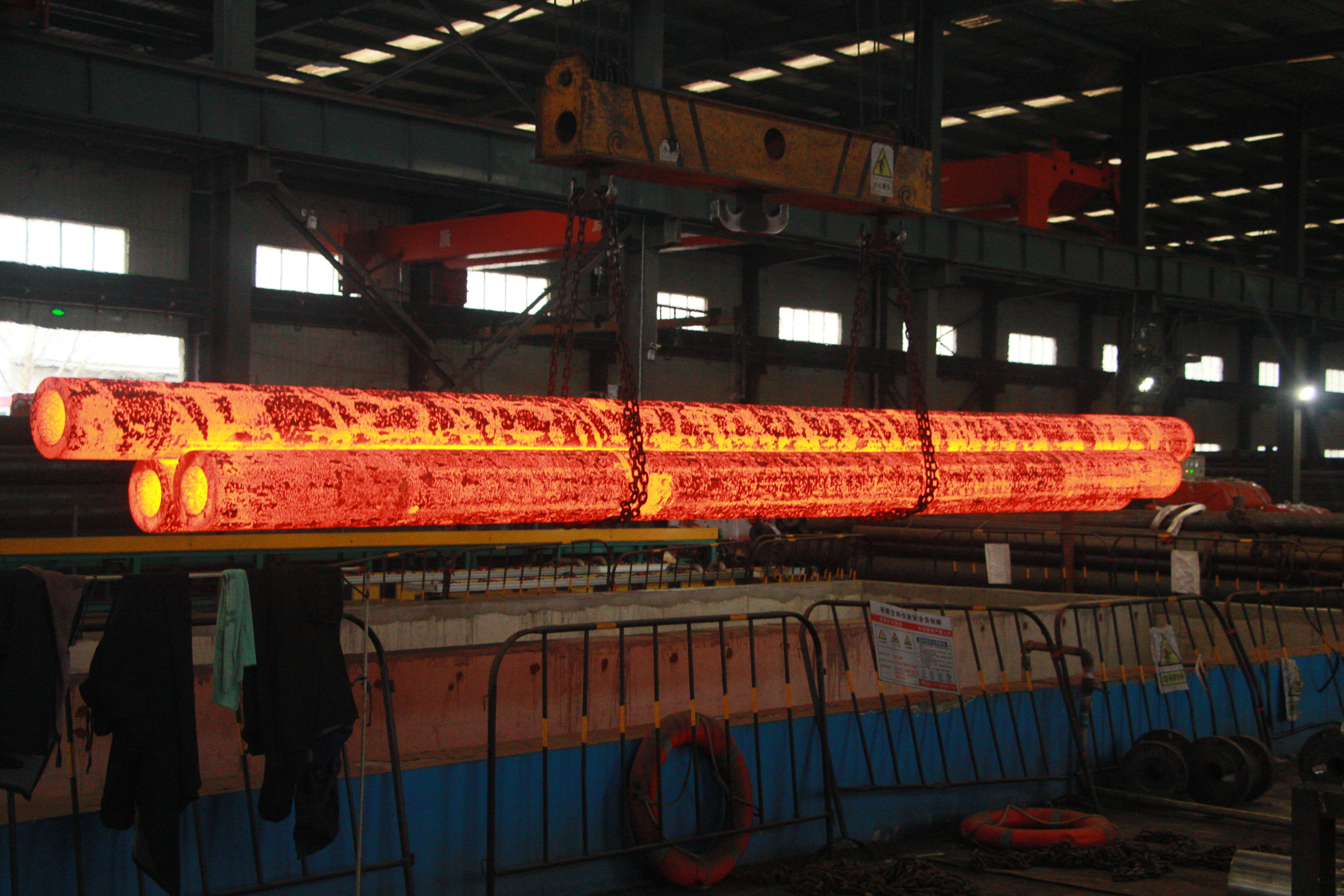
Route comparison at a glance
The table below maps the factors that actually move a purchase decision. It compares the two end-use routes, not two suppliers, and it deliberately keeps grade, dimensions and commercial terms in a single frame so that the real differences are visible.
| Buying factor | Oil drilling route | Aerospace component route |
|---|---|---|
| Typical parts | Downhole tools, surface and subsurface oil and gas components, hydraulic rods, equipment frames | Machined shafts, couplings, fittings, fixture and tooling parts |
| Condition to specify | Quenched and tempered, annealed or normalized according to the drawing and machining plan | Quenched and tempered or annealed, with the condition stated on the mill certificate |
| Evidence available | 50 sets supplied into petroleum equipment production, with 10 years of stable operation cited | Listed as a typical application; no aerospace-specific approval is included in the available evidence |
| Dimensional focus | OD 20–400 mm, wall 3–30 mm, round and square section | Round tube and bar machined to finished size, with allowance for stock removal |
| Acceptance emphasis | Pre-shipment dimensional and performance testing plus a certificate package | Pre-shipment CMM report, drawing conformance, heat and lot traceability |
| Order size | 5-ton tube lots for programme supply | Frequently begins at 1 unit for a prototype or a single replacement part |
| Main exposure | Repeatability across lots and service life in cyclic duty | Dimensional non-conformance and missing qualification evidence |
The SAE4140 baseline both routes inherit
Both end uses start from the same material definition. SAE4140 is a chromium-molybdenum through-hardening alloy steel; a supplier technical datasheet describes it as a 1% Cr-Mo through-hardening steel. Independent material data published by AZoM places carbon content at 0.38–0.43%, referenced to ASTM A29 / SAE J404. That composition is the reason the grade responds to heat treatment rather than relying on a single mill condition.
Supply condition therefore matters as much as the grade callout. Supplier pages describe SAE4140 as available in as-rolled, annealed, normalized and quenched-and-tempered condition. For a buyer, these are not interchangeable line items: they change machinability, dimensional stability after machining, and the strength the finished part can reach. A purchase order that says only "SAE4140" leaves the single most consequential variable open.
Mechanical figures need the same discipline. AZoM lists a tensile strength of 655 MPa for the annealed condition. In Tuoda Machinery's own comparison data, SAE4140 is stated at hardness up to HRC 32–40 and tensile strength ≥1080 MPa when positioned against carbon steel pipe and other alternatives. Those two numbers are not in conflict; they are different heat-treatment states, and they illustrate why a hardness or strength target has to be written together with the condition and the test basis. The company-reported figures are a starting specification, not a mill certificate.
Dimensions: what OD 20–400 mm and wall 3–30 mm buy you
The supply range covers round and square seamless tube from OD 20 mm to 400 mm with wall thickness from 3 mm to 30 mm. For both routes, that envelope decides whether a part can start as tube at all.
On the drilling side, the range supports tubular components, hydraulic rods, tool bodies and equipment framing, where a thick wall carries load and the bore is either used directly or machined. Square section is more often a fabrication convenience in this route — frames, supports and tooling structures — than a pressure-retaining choice. On the aerospace component side, thick-wall round tube and bar are mainly a route to a machined blank: the buyer specifies an OD and wall that leave enough stock for the finished geometry without buying unnecessary weight.
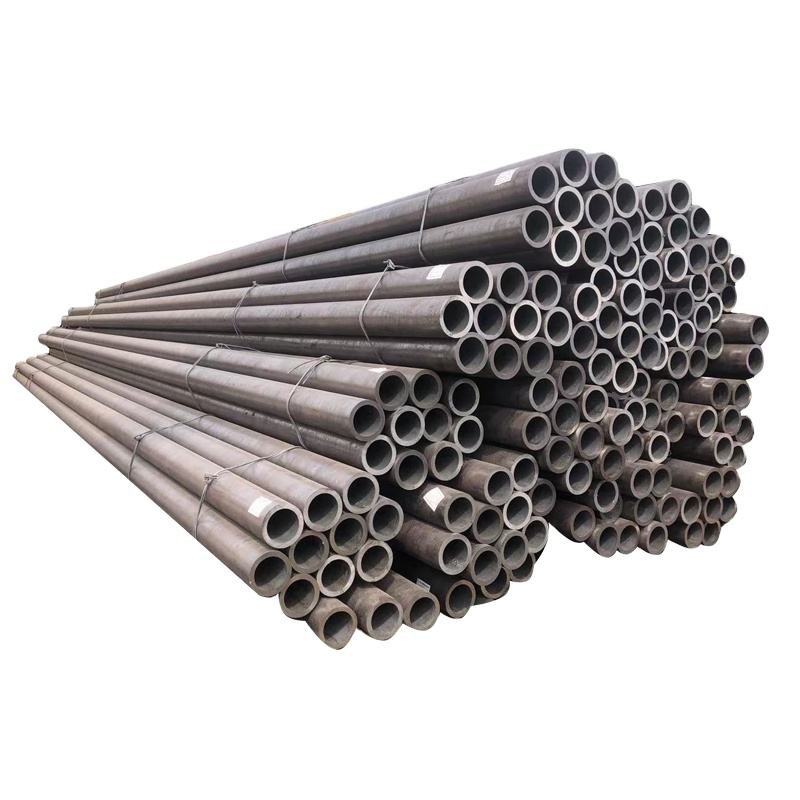
Two practical points sit under that range. First, for square hollow sections the stated OD usually means the outside dimension across flats, not a diameter, so square orders should be written with that convention stated explicitly rather than carried over from a round-tube drawing. Second, the available evidence does not include a published dimensional tolerance table. Tolerance is therefore a drawing-level negotiation, and the acceptance report — set out later in this article — is where conformance is actually demonstrated.
Oil drilling: reading the 50-set, 10-year record
The oil drilling case rests on a service record rather than a laboratory result. Tuoda Machinery cites 50 sets supplied into petroleum equipment production, with 10 years of stable operation recorded in that application. That is the strongest application-specific evidence in the comparison, and it is worth understanding precisely what it supports.
It supports repeat supply into a demanding application family and it suggests that, within that programme, the delivered tube performed its function over a long service window. It sits alongside application listings from commercial material sources, which associate SAE4140 with oil and gas components, downhole tools and hydraulic cylinder rods. Taken together, those two strands describe a grade that is routinely specified in drilling-adjacent equipment.
What the record does not do is define a test protocol. It does not state wall thickness, heat-treatment condition, load spectrum, inspection standard or failure history, and it is a supplier-reported record rather than an independently audited case study. A decision-stage buyer should convert it into a question list: which components were involved, over what period were the 50 sets delivered, what does "stable operation" measure, and what documentation accompanied each lot. A supplier able to answer those questions gives the buyer something a datasheet cannot.
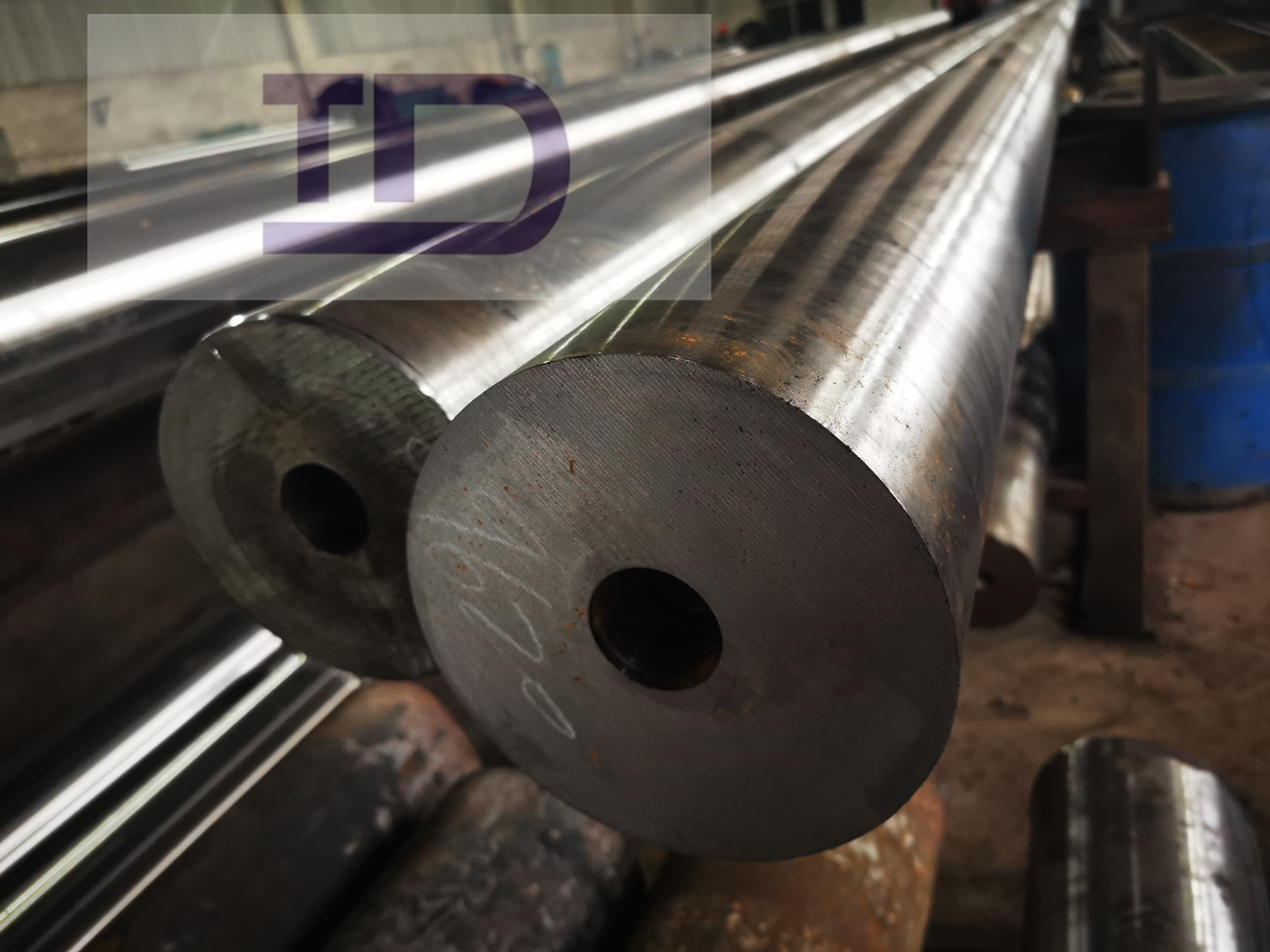
Aerospace components: a listed application, not a qualification
Aerospace components appear in the supplier comparison data as a typical application of SAE4140, listed alongside industrial manufacturing and oil drilling. That is a statement about where the grade is conventionally used. It is not an aerospace approval, and the available evidence contains no aerospace material specification, no special-process accreditation and no airworthiness-related documentation.
This is the asymmetry that should drive the buying decision. On the drilling route, the buyer inherits a field record and can spend the qualification effort verifying it. On the aerospace route, the buyer inherits a material listing and must build the qualification layer themselves: controlled chemistry and condition, heat and lot traceability, a dimensional capability report, process control evidence, and whatever additional specification the final customer imposes. Those requirements come from the buyer's own programme, not from this article, and they should be treated as open items until documented.
What the supplier does contribute to that layer is a stated inspection practice: 100% dimensional inspection with a coordinate measuring machine before delivery, drawing and tolerance confirmation with the customer, statistical process control during production, and recorded test data. The risk being controlled is explicit — assembly failure caused by dimensional inaccuracy, or a part whose performance is below the intended duty. For a machined aerospace component, dimensional conformance at the tube stage is the first gate, not the last one, but it is a gate that can be written into the order today.
MOQ: 5-ton tube lots against 1-unit orders
The commercial terms allow both a 5-ton MOQ for tube supply and a 1-unit MOQ. The two tiers answer different questions, and the comparison exposes why.
A drilling programme that consumes tube across a bill of materials is a lot purchase. Five tons sets a mill-and-logistics rhythm: one heat or a small number of heats, one inspection campaign, one shipment, one set of documents. The buyer's real work is specifying the lot consistently so that the second order matches the first.
A component programme often starts at the other end. A prototype, a repair or a single replacement part justifies a 1-unit order, and that tier is genuinely useful for proving machinability and fit before committing volume. The caution is documentary rather than commercial: a single unit still needs its certificate, its dimensional report and its heat identification, because a prototype that cannot be traced is difficult to carry into a qualified production part. Buyers should confirm with the supplier which documents accompany a one-unit order rather than assuming the 5-ton package scales down automatically.
Payment and delivery terms: TT, LC and five Incoterms
Payment runs on TT or LC, and delivery can be quoted on FOB, CIF, CFR, EXW or DDP. These are not equivalent options with different price tags; they allocate work, risk and documentary control differently.
A letter of credit costs bank charges and administrative time, and it earns that cost when payment must be tied to documents — an inspection report, a certificate of quantity, a bill of lading. For a first lot where pre-shipment acceptance is a release condition, LC structure gives the buyer a documentary trigger that a plain telegraphic transfer does not. TT is simpler and faster, which usually suits repeat orders with an established supplier and small trial quantities.
On delivery, the Incoterms 2020 rules assign responsibility as follows. Under EXW the seller makes goods available at its premises and the buyer handles export clearance and all onward movement — workable when the buyer already has a forwarder in China, less so otherwise. Under FOB the seller delivers on board at the named port and clears export; the buyer pays main carriage. CFR and CIF move the freight arrangement to the seller, with CIF adding insurance cover; risk still transfers at loading, which is the point buyers most often misread. DDP places delivery and import clearance with the seller at the named destination, the widest seller obligation and the one that depends most on the seller's ability to clear goods in the buyer's market.
The route comparison does not produce one correct answer. It produces a rule: for heavy tube lots, freight terms dominate and FOB or CFR are the natural comparison basis; for a one-unit component order, the administrative cost of DDP can exceed the value of the goods, and EXW with the buyer's own forwarder is often the more transparent structure.
Pre-shipment acceptance: the clause that decides the order
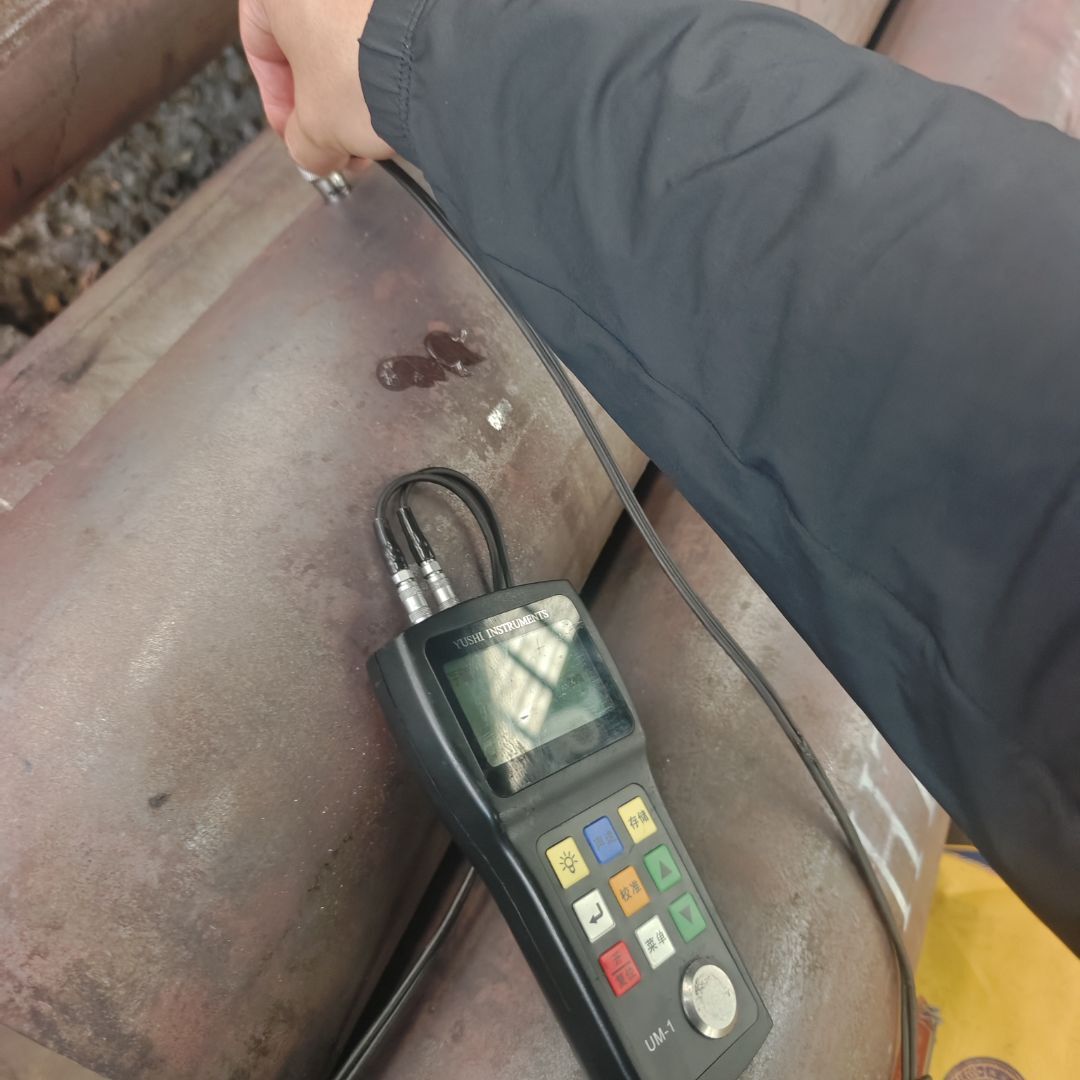
Pre-shipment acceptance testing is where the two routes converge most usefully, because both fail in the same way: a part that does not fit or does not perform. The stated practice is 100% dimensional inspection by CMM before delivery, production-stage statistical process control, repeated confirmation of drawings and tolerances with the customer, and recorded test data.
To make that practice enforceable, an order should name four things. It should define the characteristics being measured and the acceptance limits, because "dimensional inspection" without limits is an activity rather than a criterion. It should fix the condition of the material at inspection, since hardness and strength readings are meaningless without the heat-treatment state. It should specify the document set — mill certificate with heat number, dimensional report, and any test record — and state that shipment follows document release. And it should say who may witness or hold the inspection, since a hold point that the buyer cannot exercise is only a formality.
For drilling supply, the acceptance emphasis usually sits on consistency between lots plus the mechanical properties required by the drawing. For aerospace components, the same inspection carries more weight because downstream machining has less room to correct an out-of-tolerance blank, and because the traceability record has to survive into the finished part. Same clause, different consequences.
Hardness, tensile strength and the cost claim
Three supplier claims carry most of the commercial weight and all three need careful reading. The first is mechanical: hardness up to HRC 32–40 and tensile strength ≥1080 MPa relative to alternatives such as carbon steel pipe. The second is qualitative: higher strength, better hardness, superior toughness, improved fatigue resistance and excellent hardenability compared with carbon steel pipe. The third is cost.
The mechanical and qualitative claims are consistent with the grade's through-hardening character, and they are the reason SAE4140 is specified for shafts and gears that see cyclic load. They remain supplier-reported values without a published test method, specimen size or section basis in the available material, so a buyer should treat them as the target to be confirmed on a mill certificate rather than as an incoming-inspection result.
The cost claim needs the most care. Tuoda's comparison data states that SAE4140 comes in at lower cost than alternatives for the same material from the same supplier — a sourcing statement about this supplier's price position, not a market price index. It contains no figure, no OD and wall basis, no quantity and no Incoterm, so it cannot be used to compare landed cost between the two routes. What it can do is justify putting both routes on the same RFQ template so the supplier prices them on a common basis.
Where the fit breaks down
SAE4140 is a strong, hardenable, fatigue-capable alloy steel, and that is precisely why it is not a default answer everywhere. The available evidence does not include corrosion-resistance data, low-temperature impact testing under a defined method, or a published dimensional tolerance standard. A buyer specifying tube for a wet, corrosive or cryogenic duty is therefore working outside what this material evidence supports, and should either obtain the relevant test data for the specific environment or evaluate a different grade.
The other boundary is qualification. Oil drilling is supported here by a service record; aerospace components are supported by an application listing. If a programme requires an aerospace-specific material and process approval, that requirement is not satisfied by the evidence in this comparison, and the honest position is to treat it as a qualification project rather than a tube purchase. Naming the gap before the order is cheaper than discovering it during first-article inspection.
Market context worth keeping in proportion
Grand View Research projects the global steel market at USD 1525.8 billion for 2026 in a forecast published in October 2026. That figure describes the total steel market, not SAE4140 tube, and it should not be read as evidence of grade-level demand or of any particular end-use segment growing. No verified market size, volume or growth rate specific to SAE4140 seamless tube was available for this comparison, so the article makes no claim about segment momentum.
What the market data does support is a proportionality point for buyers: in a market of that scale, supplier selection turns on documentation and repeatability rather than on scarcity of the grade. The practical constraint is not finding SAE4140; it is finding a supplier whose inspection and traceability package matches the route the tube will serve.
A purchase-order checklist that separates the two routes
The following points translate the comparison into order language. They apply to both routes; the emphasis column shows where each one carries more weight.
- State the condition, not just the grade. Annealed, normalized or quenched and tempered, with the target hardness or tensile value and the test basis. Heaviest weight: aerospace components.
- Write the dimensional requirement as a drawing. OD within 20–400 mm, wall within 3–30 mm, round or square with the square convention stated, plus tolerances and the characteristics to be measured. Heaviest weight: both.
- Fix the acceptance gate before shipment. CMM dimensional report, material certificate with heat number, and the rule that dispatch follows document release. Heaviest weight: both.
- Match MOQ to the purpose. A 5-ton lot for programme supply, a 1-unit order for a prototype or replacement part, with the same traceability documents in either case. Heaviest weight: aerospace components.
- Choose the payment instrument against the risk. LC where documents are the release trigger, TT for repeat or trial orders. Heaviest weight: first lots on either route.
- Choose the Incoterm against the logistics you control. EXW where a forwarder is already in place, FOB or CFR for heavy lots, CIF where insurance should sit with the seller, DDP only where import clearance is genuinely workable. Heaviest weight: drilling lots.
- Ask for the evidence behind the field record. Component list, delivery period, what stable operation measured, and the documentation that accompanied each lot. Heaviest weight: oil drilling.
What would change this comparison
Two developments would shift the balance. The first is documentation on the aerospace side: a named material specification, a verifiable process approval and a dimensional capability study would move aerospace components from a listed application to a qualified route, and would make the two columns of the comparison far closer in strength. The second is disclosure on the drilling side: a fuller reference record with conditions, inspection standards and service outcomes would make the existing field evidence auditable rather than merely cited.
Until then, the decision rule holds. Where a buyer needs a grade with a service record behind it and can accept supplier-reported mechanical values pending mill certification, the oil drilling route is the better-evidenced choice. Where a buyer needs aerospace-level qualification, SAE4140 tube from this source is a material candidate and the qualification work sits with the buyer. Shandong Tuoda Machinery Equipment Manufacturing Co., Ltd, the Liaocheng-based supplier behind these terms, publishes its pipe and processing scope at Tuoda Machinery, and a 2026 industry press listing profiled the company among five SAE4140 alloy steel manufacturers in China — secondary, promotional evidence rather than an audit, and worth weighting accordingly.
A downloadable company brochure covering products, processing capability and contact details is available here.
FAQ
Can the same SAE4140 tube be used for oil drilling and for aerospace components?
The grade is specified for both end uses, and both are listed as applications in the available supplier material. The difference is in qualification. Oil drilling is supported by a cited record of 50 sets in petroleum equipment production with 10 years of stable operation, while aerospace components appear as a typical application without an aerospace-specific approval. A buyer should treat the first as a service record to be verified and the second as a material candidate still requiring programme-level qualification.
Does a 1-unit MOQ change what is inspected before shipment?
The stated inspection practice is 100% dimensional verification by CMM before delivery, together with tolerance confirmation against the customer drawing and recorded test data, and it is not described as limited to large lots. Because a 1-unit order usually supports a prototype or a replacement part, the practical point is to confirm in writing which documents travel with that single unit — certificate with heat number, dimensional report, and any test record — so the part can be traced into later production.
Which delivery term suits a first order, FOB, CIF, CFR, EXW or DDP?
It depends on which part of the movement the buyer wants to control. EXW leaves export clearance and all carriage with the buyer, which works when a forwarder is already appointed. FOB keeps export clearance with the seller and main carriage with the buyer. CFR and CIF place the freight arrangement with the seller, with CIF adding insurance, though risk still transfers on loading. DDP gives the widest seller obligation including import clearance, and depends on the seller being able to clear goods in the destination market.
Is square tube available in the same grade and wall range as round tube?
Round and square availability are both stated within OD 20–400 mm and wall thickness 3–30 mm. For square hollow sections the stated outside dimension normally refers to the dimension across flats rather than a diameter, so the order should state that convention explicitly instead of copying a round-tube callout. Dimensional tolerances for either section should be confirmed against the drawing, since the available evidence does not include a published tolerance table.
What should the purchase order say about hardness and tensile strength?
It should pair the target value with the heat-treatment condition and the test basis. Supplier comparison data states hardness up to HRC 32–40 and tensile strength ≥1080 MPa, while independent material data lists 655 MPa tensile in the annealed condition; those figures reflect different conditions rather than a contradiction. Naming the condition, the required value and the certificate that proves it prevents the order from being accepted against a number that was never measured on the supplied material.
Have Questions or Need More Details?
Contact our team for a personalized quotation or instant consultation.
Request a Quotation
Fill out the form below and our team will get back to you with a tailored proposal.
WhatsApp Direct Chat
Prefer to chat in real-time? Message us on WhatsApp for instant assistance & quick answers.
- Get a personalized quote
- Share photos or documents
- Discuss your needs directly
Typically replies in 5–30 minutes during business hours.