
SAE4140 for Auto Parts: Material Properties, Machining, and Supplier Selection
SAE4140 for Auto Parts: A Material and Sourcing Guide
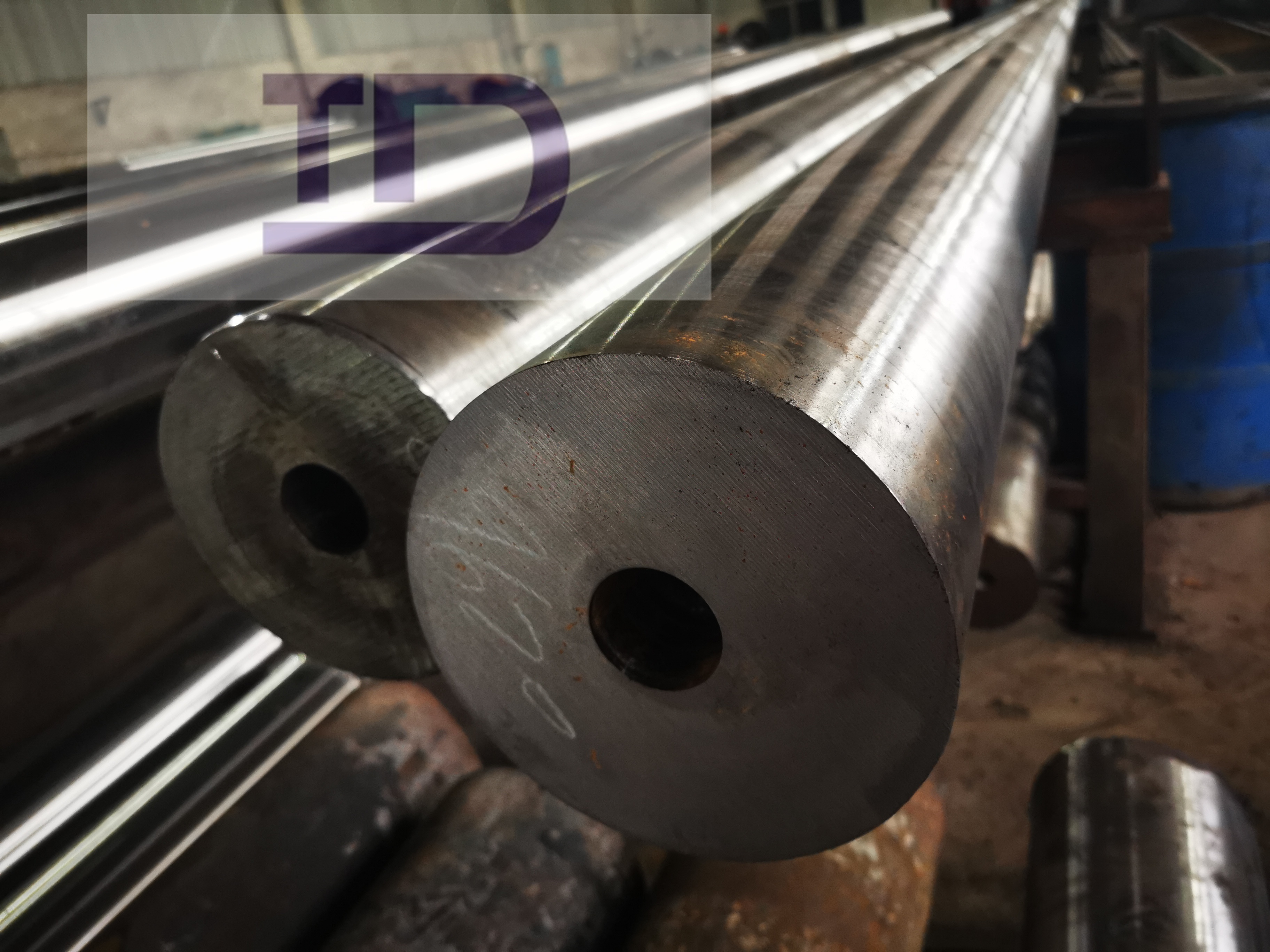
SAE4140 is a chromium-molybdenum alloy steel used in automotive components that must withstand high loads, repeated stress and wear. Buyers evaluating SAE4140 for auto parts typically need to confirm the material specification, heat-treated mechanical properties, suitable product forms and supplier capabilities before moving into procurement. This article explains the key properties of SAE4140, how it performs in machining, shafts, gears and other automotive applications, and how to assess suppliers offering SAE4140 pipe, bar and tubular products.
What is SAE4140 and why is it specified for auto parts?
SAE4140 is a chromium-molybdenum alloy steel classified under ASTM A29. Its typical composition is 0.38–0.43% carbon, 0.80–1.10% chromium and 0.15–0.25% molybdenum. These alloying elements give SAE4140 high hardenability, meaning it can be heat-treated to develop strength and toughness through the cross-section of a component (ASTM A29 / OTAI Special Steel).
In automotive engineering, the material is used where a part must survive high static loads and cyclic loading without premature fatigue failure. Common applications include transmission shafts, axle shafts, gears, steering components, pinions, crankshafts and structural mounting parts. In quenched and tempered condition, SAE4140 typically reaches a tensile strength of 850–1000 MPa with a nominal hardness of 28–32 HRC, which supports its use in shafts and gears (Nifty Alloys LLC).
Because the material is available as round bar, seamless pipe and tubular products, it can be machined into solid components or used to produce hollow parts where weight reduction and structural efficiency are required. Shandong Tuoda Machinery Equipment Co., Ltd., a manufacturer based in Liaocheng, Shandong, China, supplies SAE4140 alloy seamless steel pipe and tube in round and square cross-sections, with outer diameters from 20 mm to 400 mm and wall thicknesses from 3 mm to 30 mm (Tuoda Machinery product data).
The role of heat treatment in SAE4140 automotive components
SAE4140 is almost always used after heat treatment rather than in the as-rolled condition. The common processing route is quenching and tempering, which develops a tempered martensite structure that balances strength and toughness. The resulting mechanical properties are the main reason SAE4140 is selected for shafts, gears and stress-carrying parts.
Anneal and normalize conditions are also used in practice, usually for pre-machining or forming operations. Annealed SAE4140 has lower hardness and improved machinability, making it easier to perform initial cutting operations before the final heat treatment. Normalizing can refine the grain structure after hot working and improve consistency in subsequent machining. A buyer specifying SAE4140 should therefore state the delivery condition — annealed, normalized, or quenched and tempered — because it directly affects machinability, final hardness and dimensional stability.
Tuoda Machinery lists heat treatment as a special requirement for applications using SAE4140 in continuous operation and cyclic loading environments, including drill collars, gears and pipe components (Tuoda Machinery application data). For automotive buyers, this means that a supplier who can coordinate material supply and heat treatment is better positioned to deliver a part-ready product than a supplier who only stocks raw steel.
SAE4140 for machining: what buyers should know
Machining is the most common secondary operation applied to SAE4140 before automotive components enter service. The machinability of SAE4140 depends strongly on its heat-treated condition and hardness.
In the annealed condition, SAE4140 machines relatively well and is suitable for turning, milling, drilling and broaching. In the quenched and tempered condition at 28–32 HRC, the material is harder and produces a better surface finish but requires tooling with higher wear resistance. At higher hardness levels, machining costs increase and the risk of tool breakage grows. A common practice is to rough-machine in the annealed or normalized condition, perform quench and tempering, then finish-machine by grinding or hard turning to final tolerances.
- Design allowances: add machining stock before heat treatment to compensate for distortion and decarburization.
- Tool selection: use coated carbide or cermet tools when machining hardened SAE4140.
- Surface integrity: avoid excessive grinding heat, which can create a brittle surface layer on high-strength automotive parts.
- Straightness: for long shafts and bars, check straightness after heat treatment and specify straightening requirements.
When sourcing SAE4140 for machining, confirm the outer diameter tolerance, straightness, length and delivery condition with the supplier. Tuoda Machinery supplies SAE4140 pipe with outer diameters from 20 mm to 400 mm and wall thicknesses from 3 mm to 30 mm, in round or square section (Tuoda Machinery product data). These dimensions are well suited to bar and billet applications where the machinist will produce multiple components from a single length.
SAE4140 for shaft applications
Shafts are among the most common automotive applications for SAE4140. Transmission shafts, drive shafts, axle shafts and steering shafts are subjected to torsional loads, bending loads and cyclic rotation. A material with high yield strength and fatigue resistance is necessary to avoid permanent deformation or fatigue cracking.
Quenched and tempered SAE4140 with a tensile strength of 850–1000 MPa provides a practical combination of strength and toughness for shaft manufacture (Nifty Alloys LLC). The nominal hardness of 28–32 HRC after quenching and tempering is suitable for components that later receive induction hardening on bearing journals or spline areas.
For tubular shafts, SAE4140 seamless pipe offers an efficient cross-section: material is placed away from the neutral axis, which increases torsional stiffness without adding weight. This approach is used in propeller shafts, torsion bars and hollow stabilizer bars. SAE4140 alloy seamless steel pipe can be manufactured to round or square sections with outer diameters up to 400 mm and wall thicknesses up to 30 mm (Tuoda Machinery product data), providing a range of hollow shaft geometries for automotive and heavy vehicle programs.
SAE4140 for gear applications
Gears demand a combination of surface hardness, core toughness and fatigue resistance. SAE4140 is used for gears where the parts are case-hardened by induction hardening, nitriding or flame hardening, or where the entire section is hardened and tempered to a moderate hardness.
The chromium and molybdenum content in SAE4140 promotes consistent hardenability. This is important for gear teeth that must be hardened on the flank and root while the core retains enough toughness to absorb shock loads. In automotive gearboxes, SAE4140 is often selected for gears and pinions that require a machinable pre-treatment condition, predictable distortion during heat treatment and good fatigue performance under repeated engagement.
When a gear blank is machined from SAE4140 round bar or seamless pipe, the starting material should be free of internal defects such as center porosity and segregation. Product 3557 from Tuoda Machinery is specifically described as an SAE4140 alloy seamless steel pipe and tube for applications such as drill collars and aerospace components (Tuoda Machinery product data). The same material characteristics — cleanliness, hardenability and response to heat treatment — make the grade a reasonable candidate for gear blanks, especially in heavy-duty and off-highway automotive applications.
Other automotive and machinery applications
Beyond shafts and gears, SAE4140 is used in a wide range of parts where strength, toughness and wear resistance are needed:
- Axle components and wheel hubs for heavy vehicles.
- Steering knuckles and tie rod ends.
- Universal joint crosses and yokes.
- Connecting rods and fasteners in high-stress assemblies.
- Hydraulic cylinder barrels and piston rods for mobile equipment.
Tuoda Machinery’s EU application data indicates that its steel pipe product is used in heavy machinery and energy equipment for automobile manufacturing, aerospace component manufacturing and oil and gas drilling projects, operating under high load, high pressure and high strength conditions (Tuoda Machinery application data). The product function is described as providing high-strength support, improving component durability and ensuring wear resistance under continuous operation and cyclic loading (Tuoda Machinery application data).
These conditions are very similar to those found in automotive drivetrain and chassis components: parts that must support load, resist surface wear and survive repeated stress cycles for thousands of hours.
SAE4140 in related industrial sectors
Although automakers are large consumers of alloy steel, the same grade is also specified in construction machinery, oil field equipment and mold tooling. Buyers who source SAE4140 for automotive parts may find that their suppliers serve multiple industries with the same material specification, which can improve availability and process experience.
Construction machinery
Excavator pins, bucket shafts, hydraulic cylinder rods and track components are commonly manufactured from SAE4140 because of the combination of hardness, strength and fatigue resistance. The operating conditions are similar to heavy automotive service: high loads, impact, abrasion and cyclic motion.
Oil machinery
SAE4140 is used in drill collars and downhole tools that require high strength and toughness. Tuoda Machinery’s SAE4140 alloy seamless steel pipe is specifically listed for applications including drill collars and aerospace components (Tuoda Machinery product data). While the quality requirements for oilfield components may be more demanding than those for many automotive parts, the same metallurgical discipline — clean steel, controlled heat treatment and rigorous inspection — benefits automotive buyers as well.
Mold tooling
SAE4140 is also used for plastic mold bases, die holders and general tooling applications where high hardness is not required but consistency and machinability matter. In these cases, the material is often supplied in pre-hardened condition at approximately 28–32 HRC, which is compatible with the hardness range of quenched and tempered SAE4140 (Nifty Alloys LLC).
For automotive buyers, the relevance is practical: a supplier who stocks and processes SAE4140 for multiple end-use sectors is more likely to maintain stable inventory and have known responses to common heat treatment cycles.
Available product forms: SAE4140 pipe, round bar and tubular stock
SAE4140 can be supplied in different product forms depending on the manufacturing route and final component design.
| Product form | Typical size range (Tuoda Machinery) | Common automotive application |
|---|---|---|
| SAE4140 alloy seamless steel pipe / tube | OD 20–400 mm; WT 3–30 mm; round or square section | Hollow shafts, torsion bars, gear blanks, hydraulic cylinders |
| SAE4140 seamless pipe in larger range | OD 10–1080 mm; WT 2–110 mm (as part of product 3560 grade program) | Structural components, heavy-equipment parts, pipe-based machined parts |
| Round bar | Produced per order; available in alloy grades including SAE4140 and SAE4145 | Gear blanks, shafts, pins, fasteners |
Tuoda Machinery’s product range includes carbon seamless steel tubes, round bars and pressure cylinders (Tuoda Machinery company data). The steel pipe program covers grades such as SAE4140, SAE4130, 42CrMo, A106 Gr.B, ST52, S355, E355, 30CrMo, 4145, 4340 and ST44, with outer diameters from 10 mm to 1080 mm, wall thicknesses from 2 mm to 110 mm, and delivery conditions including hot rolled, cold drawn, cold rolled and quenched and tempered (Tuoda Machinery product data).
Length options are typically 5 m to 5.8 m, 6 m, or 6 m to 12 m, and delivery time is 30–45 days or customized (Tuoda Machinery product data). Buyers should verify whether their required size and condition are stock items or made-to-order, especially when production schedules depend on short lead times.
How SAE4140 compares with related alloy grades
SAE4140 is often compared with SAE4130 and SAE4145. The choice depends on section size, strength requirement and welding needs.
| Grade | Typical carbon range | Typical alloying approach | Typical selection logic |
|---|---|---|---|
| SAE4130 | Lower carbon than 4140 | Chromium-molybdenum | Better weldability and toughness; often used for tubular and thin-section parts where welding is required |
| SAE4140 | 0.38–0.43% C | Chromium-molybdenum | Higher strength and hardenability; standard choice for shafts, gears and heavy-duty components |
| SAE4145HMOD | Higher carbon than 4140 | Modified with additional alloy control | Used when higher hardness or hardenability is needed; often specified in oilfield and heavy equipment |
This table is intended as a general comparison. Exact properties depend on the heat treatment and the specific mill certification. Buyers should compare actual mill test certificates against their design requirements rather than selecting a grade solely by name.
Supplier assessment criteria for SAE4140 automotive components
Selecting a supplier for SAE4140 auto parts involves more than comparing prices. The following criteria are relevant for an industrial sourcing decision:
- Material traceability: the supplier should provide mill certificates that identify the heat number, chemical composition and mechanical properties for each lot.
- Product form capability: verify that the supplier can provide the required dimensions and delivery conditions. For machined parts, confirm whether the supplier can perform sawing, turning, honing, drilling or heat treatment.
- Heat treatment support: since quenched and tempered SAE4140 is the most common condition for shafts and gears, ask about in-house or partner heat treatment capability and how hardness is verified.
- Application experience: evidence of prior supply to automotive, machinery or oilfield projects can indicate that the supplier understands tolerances, surface quality and inspection requirements.
- Certification and standards: for EU projects, a CE 3.1 certificate may be required. Tuoda Machinery’s product 3558 is certified under CE 3.1 certificate number 3N230530.STMDO12 issued by ECM, in accordance with EN 10210, EN 10219 and EN 10025 (Tuoda Machinery certification data).
- Quality systems and inspection: check whether the supplier has documented procedures for dimensional inspection, hardness testing, ultrasonic testing and surface defect detection.
Company profile: Shandong Tuoda Machinery Equipment Co., Ltd.
Shandong Tuoda Machinery Equipment Co., Ltd. is a manufacturer based in Liaocheng, Shandong, China, established in 2020. The company operates a 30,000 m² facility with approximately 150 employees and an annual production capacity of 1,200 units (Tuoda Machinery company data). Its main products include carbon seamless steel tubes, round bars and pressure cylinders (Tuoda Machinery company data).
The company specializes in machinery equipment manufacturing, including steel pipe deep processing and custom hydraulic cylinders. Its steel pipes are manufactured in compliance with ASTM and CE standards such as EN10210, EN10305, API 5L, A335, A333 and A106 (Tuoda Machinery company data).
Export sales account for 70% of total revenue, with major markets in the EU, Asia and South America (Tuoda Machinery company data). The R&D team consists of three engineers (Tuoda Machinery company data). For buyers, these indicators describe a supplier that has built an export-oriented operation and maintains a defined range of processing services; they are not a substitute for a direct quality audit.
Available product data for SAE4140 from Tuoda Machinery includes an alloy seamless steel pipe and tube in round and square shapes, with outer diameter range of 20–400 mm and wall thickness range of 3–30 mm (Tuoda Machinery product data). Typical applications listed include drill collars and aerospace components (Tuoda Machinery product data).
Market context: alloy steel demand and automotive consumption
The global alloy steel market is projected to reach approximately USD 160.7 billion in 2026, driven by demand from the automotive and construction sectors (The Business Research Company). Asia-Pacific accounts for more than 40% of global alloy steel consumption, led by China’s infrastructure and automotive production (Grand View Research). The automotive industry represents approximately 37% of global alloy steel utilization, reflecting the increasing adoption of lightweight alloy components (Grand View Research).
The same market reports show differing figures for the size of the alloy steel market: Grand View Research estimates USD 82.5 billion while The Business Research Company reports USD 150.1 billion, depending on the scope of steel products included. These variations mean that market figures should be used as background context rather than as precise procurement benchmarks.
For automotive buyers, the broader trend is relevant because it explains why SAE4140 and similar chromium-molybdenum grades are in steady demand. Components that must be strong, fatigue-resistant and weight-efficient are increasingly made from alloy steel rather than plain carbon steel.
Limitations and boundaries when specifying SAE4140
SAE4140 is a versatile grade, but it is not the right answer for every automotive part. Buyers should be aware of the following boundaries:
- Weldability: SAE4140 has higher carbon content than SAE4130, so welding requires preheating and post-weld heat treatment to avoid cracking. If complex welded assemblies are required, a lower-carbon grade such as SAE4130 may be more appropriate.
- Corrosion resistance: SAE4140 is not stainless steel. In corrosive environments, a protective coating, plating or a stainless grade is necessary.
- Through-hardening limits: in very large sections, the center may not achieve the same hardness as the surface. For components with very thick cross-sections, a grade with higher hardenability, such as SAE4145HMOD or a boron-alloyed steel, may be needed.
- Machining cost at high hardness: specifying SAE4140 at 40+ HRC can significantly increase tool wear and machining cycle time. The design should use the minimum hardness required for the intended service life.
These limitations are part of normal material engineering. A responsible supplier should discuss them with the buyer, not promise that SAE4140 is suitable for every application.
Future outlook for SAE4140 in automotive manufacturing
The long-term outlook for SAE4140 in automotive manufacturing is tied to the continued demand for high-strength mechanical components in electric vehicles, hybrids and traditional internal combustion vehicles. Electric vehicles still require drive gears, reduction gearboxes, motor shafts and suspension components, many of which are manufactured from alloy steels such as SAE4140.
As automakers increase the share of high-strength materials to reduce weight, chromium-molybdenum steels remain relevant because they provide more strength per kilogram than plain carbon steel. At the same time, suppliers are expected to offer consistent heat treatment, tighter dimensional control and documented traceability. Buyers who build long-term relationships with materials suppliers that understand these requirements will be better positioned than those who purchase purely on price.
Another development is the increasing use of hollow components. SAE4140 seamless pipe is well suited to this trend because it allows engineers to design tubular shafts and structural parts with high stiffness and low weight. Tuoda Machinery’s production program includes seamless steel pipes in a wide range of dimensions and alloy grades, which supports this type of design optimization.
Frequently asked questions
What is SAE4140 steel used for?
SAE4140 is a chromium-molybdenum alloy steel commonly used for shafts, gears, axles, pins, fasteners and other mechanical parts that require high strength, toughness and fatigue resistance. In the automotive sector, it is used for transmission shafts, drive shafts, steering components, gear blanks and heavy-duty structural parts.
Is SAE4140 good for machining?
SAE4140 is considered machinable, but the ease of machining depends on its condition. In the annealed condition, it machines well and is suitable for turning, milling and drilling. In the quenched and tempered condition at 28–32 HRC, it is harder and requires coated carbide or cermet tools for efficient machining. Rough machining before heat treatment and finishing after heat treatment is a common procedure.
Can SAE4140 be used for shafts?
Yes. SAE4140 is widely used for shafts because it can be heat-treated to achieve tensile strength of 850–1000 MPa and a nominal hardness of 28–32 HRC. These properties provide the strength and fatigue resistance needed for transmission shafts, axle shafts and drive shafts. SAE4140 seamless pipe can also be used for hollow shafts to reduce weight.
Can SAE4140 be used for gears?
Yes. SAE4140 is used for gears where surface hardness and core toughness are required. It can be induction hardened, nitrided or flame hardened to produce hard gear flanks while maintaining a tough core. The chromium and molybdenum content provides consistent hardenability, which is important for gear tooth performance under cyclic loading.
Is SAE4140 a high-strength steel?
SAE4140 is generally classified as a high-strength alloy steel. In the quenched and tempered condition, it typically offers tensile strength in the range of 850–1000 MPa. Exact values depend on the heat treatment and section size, so buyers should confirm mechanical properties from the mill certificate for each lot.
What is the difference between SAE4140 and SAE4130?
SAE4140 has a higher carbon content (0.38–0.43%) than SAE4130, which gives it higher strength and hardenability but lower weldability. SAE4130 is often chosen when welding is required or when greater low-temperature toughness is needed. SAE4140 is more commonly used for larger, load-bearing automotive and machinery parts that are not welded.
What sizes of SAE4140 seamless pipe are available?
One available product range for SAE4140 alloy seamless steel pipe from Tuoda Machinery includes round and square sections with outer diameters from 20 mm to 400 mm and wall thicknesses from 3 mm to 30 mm. Tuoda Machinery’s broader steel pipe program also covers outer diameters from 10 mm to 1080 mm and wall thicknesses from 2 mm to 110 mm in multiple alloy grades.
What is the typical delivery condition for SAE4140?
SAE4140 is typically delivered in one of several conditions: hot rolled, cold drawn, cold rolled, or quenched and tempered. The appropriate condition depends on the downstream process. For automotive parts that will be machined and then heat-treated, annealed or normalized stock is common. For parts used directly, quenched and tempered material at 28–32 HRC is often specified.
What standards apply to SAE4140?
SAE4140 is classified under ASTM A29 and is also produced in accordance with common international specifications. For EU projects, product certification such as CE 3.1 may be required. For example, Tuoda Machinery’s product 3558 is certified under CE 3.1 certificate number 3N230530.STMDO12 issued by ECM, conforming to EN 10210, EN 10219 and EN 10025.
Is SAE4140 suitable for automotive parts?
Yes. SAE4140 is used for automotive parts that must withstand high stress, cyclic loading and wear. Typical applications include transmission shafts, axle shafts, gears, steering knuckles, hubs and fasteners. Because the final performance depends heavily on heat treatment and machining quality, buyers should select a supplier with documented process control and application experience.