
SAE4140 vs SAE4130 vs 42CrMo: Seamless Tube Supply Terms
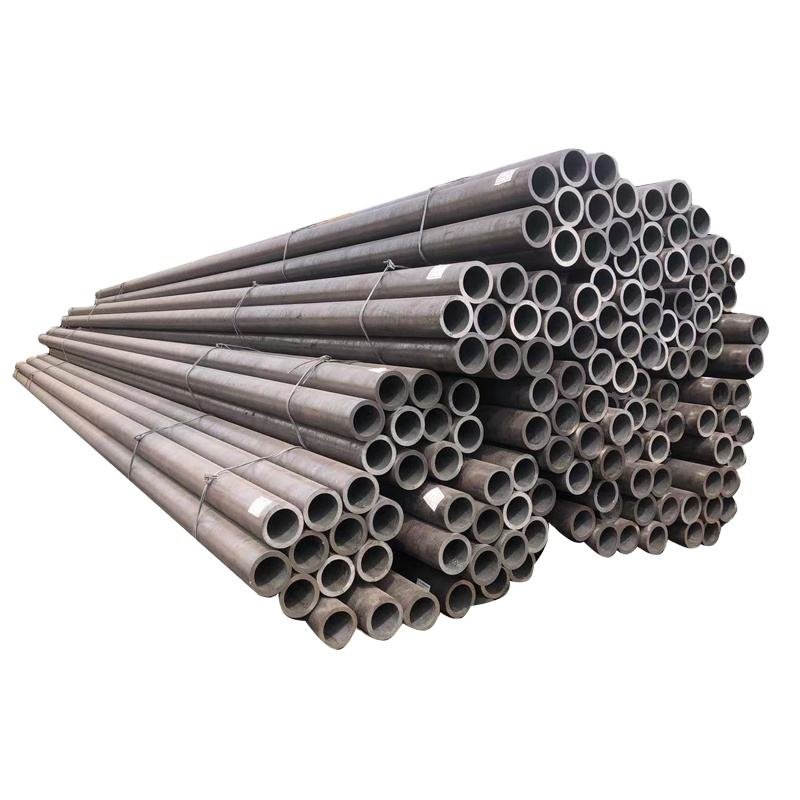
SAE4140 vs SAE4130 vs 42CrMo: Seamless Tube Supply Terms
When three alloy grades are quoted for the same project, the grade gets the attention. In practice, the terms wrapped around the quotation — dimension envelope, minimum order quantity, payment instrument, incoterm and pre-shipment acceptance — eliminate more suppliers from a shortlist than metallurgy does.
The global alloy steel market is projected to reach approximately USD 160.7 billion in 2026, driven by automotive and construction demand (The Business Research Company). Asia-Pacific accounts for more than 40% of global alloy steel consumption, led by Chinese infrastructure and automotive production (Grand View Research). That concentration explains why tube quotations for SAE4140, SAE4130 and 42CrMo usually arrive quickly from Asian mills — and why they are difficult to place side by side without a common set of stated terms.
This reference compares the documented supply terms published for the three grades by Shandong Tuoda Machinery Equipment Manufacturing Co., Ltd. (Tuoda Machinery), a Liaocheng, Shandong-based processor of seamless steel pipe and producer of carbon and alloy seamless tube, round bar and custom hydraulic cylinders. Only stated parameters are used; where a figure is not published in the available product and purchasing records, it is identified as not separately stated rather than estimated.
Why these three grades end up in the same comparison
SAE4140 is classified under ASTM A29 and typically contains 0.38–0.43% carbon, 0.80–1.10% chromium and 0.15–0.25% molybdenum. That chemistry is specified for hardenability. In the quenched and tempered condition, SAE4140 is documented at 850–1000 MPa tensile strength with a nominal hardness of 28–32 HRC, a combination commonly specified for shafts and gears (Nifty Alloys LLC). Buyers searching for SAE4140 for machining, shaft, gear, mold or oil-machinery work are usually looking for that response to heat treatment combined with predictable machinability.
SAE4130 and 42CrMo enter the same shortlist for a different reason. In the product records reviewed here, both appear as material designations inside a broader seamless steel line rather than as individually documented products. That broader line (product reference 3560) lists A106 Gr.B, ST44, S355, E355, 42CrMo, 30CrMo, 4140, 4130, 4145, 4340 and ST52 among available materials, and is described for oil, gas, water and structural service.
The practical consequence is that a buyer comparing the three grades is rarely comparing three equivalent offers. One grade has a dedicated tube program with its own size envelope; the other two are supplied through a general line whose commercial terms apply to a wide family of materials. Recognising that structural difference early is what makes the rest of the quotation comparison meaningful.
OD and wall range: the first hard filter
Two documented size envelopes are in play. The dedicated SAE4140 alloy seamless pipe and tube product (product reference 3557) is stated at 20–400 mm outside diameter and 3–30 mm wall thickness, in round and square pipe, for applications including drill collar and aerospace components, in the oil and aerospace industries.
The broader seamless line (product reference 3560) — the line through which SAE4130 and 42CrMo are supplied — is stated at 10–1080 mm outside diameter and 2–110 mm wall thickness, with lengths of 5–5.8 m, 6 m or 6–12 m, and delivery conditions of hot rolled, cold drawn, cold rolled or quenched and tempered.
The two envelopes overlap between 20 and 400 mm OD and between 3 and 30 mm wall, but they are not interchangeable at the edges. Three consequences follow for a buyer:
- Above the 4140 program ceiling. If a design calls for SAE4140 tube above 400 mm outside diameter or above 30 mm wall thickness, that requirement cannot be satisfied from the documented 4140 tube program. The buyer either qualifies 4140 under the broader line's material list, changes the specified grade, or revises the design.
- Below the general-line minimum. The broader line reaches 10 mm OD and 2 mm wall, both of which sit below the stated minimums of the 4140 tube program. Small-diameter or thin-wall requirements therefore move to a different product reference by default.
- Inside the overlap. Between 20–400 mm OD and 3–30 mm wall, the same nominal material may be quotable under two product references. The buyer should confirm which reference the quotation is built on, because documentation, order structure and acceptance steps can differ between them.
MOQ and order structure
The minimum order quantity documented for the alloy seamless tube program is 5 tons. A separate purchasing record documents a 1-unit minimum for unit-based supply. Those two figures describe different commercial paths rather than a contradiction: tube is quoted by weight, while unit-based custom supply is quoted by piece.
For a buyer, the 5-ton threshold has a specific meaning. It corresponds to a production order rather than a trial. Teams validating a new grade, a new mill or a new heat-treatment route usually want a small quantity of tube first, and that requirement does not map cleanly onto a weight-based minimum. Where the same requirement can be met by a unit-based custom item, the 1-unit minimum describes the alternative route.
Customization is stated to cover size, length, mechanical property, delivery time and testing inspection. Stated monthly capacity is 1000 tons, and stated lead time is 30–45 days. Buyers comparing three grades should note that capacity and lead time are shared across the material list, so lead-time differences between grades may reflect order sequencing rather than material scarcity.
Payment terms, incoterms and pre-shipment acceptance
The documented commercial terms are consistent across the seamless tube products: payment by TT or LC, delivery on FOB, CIF, CFR, EXW or DDP, and acceptance by pre-shipment test. Because the same terms are recorded against both the 4140 tube program and the broader seamless line, payment and delivery structure is one of the few comparison dimensions where the three grades do not differ on paper.
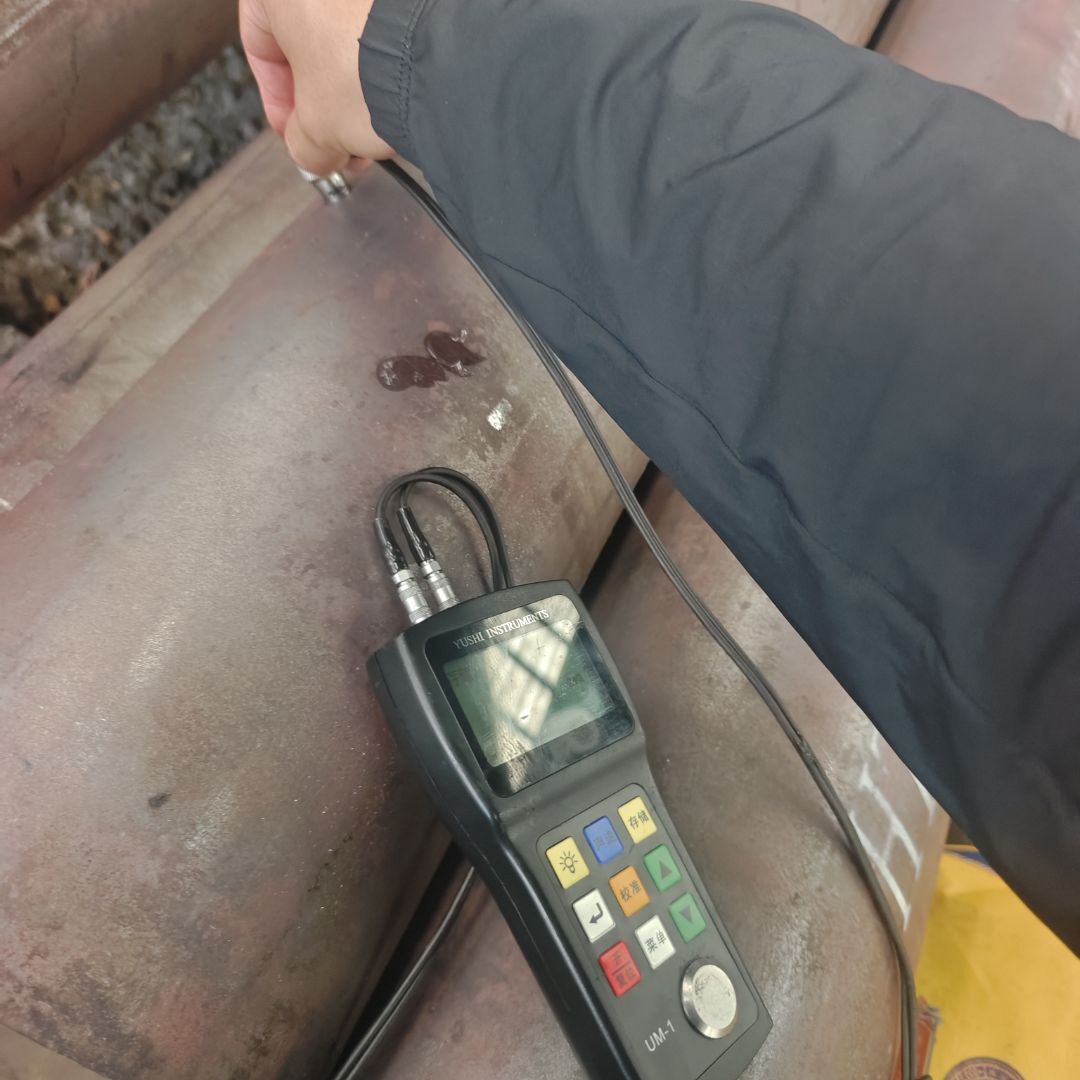
Acceptance is handled through a factory laboratory report, with the option for the buyer to arrange third-party inspection. That distinction matters more than it appears. A factory report is a supplier-side document; a third-party inspection is a buyer-side verification step. The documented acceptance method is a pre-shipment test, which means the verification gate sits before goods leave the works — after shipment, the practical leverage to challenge a result is materially lower.
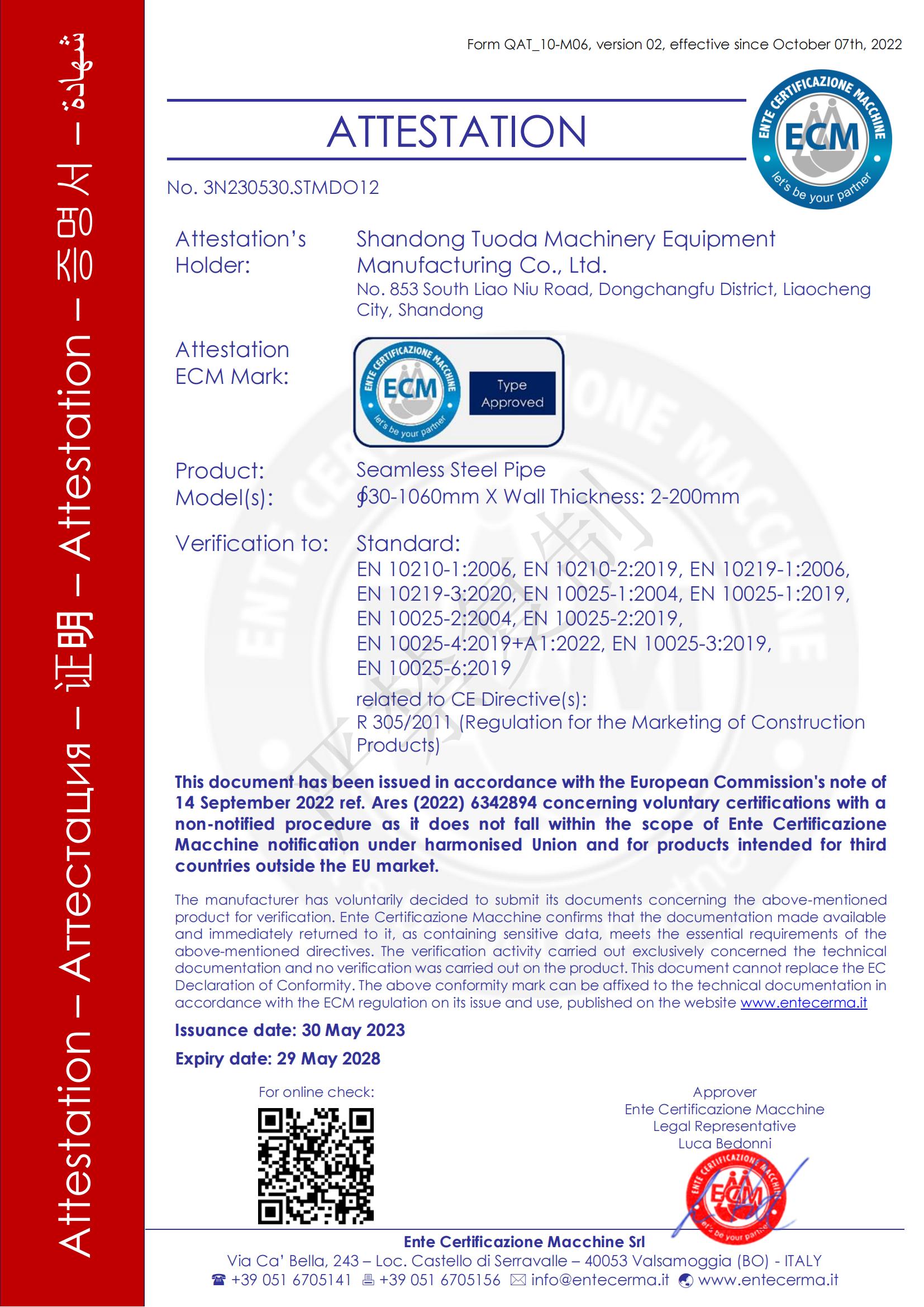
For European deliveries, a CE 3.1 certificate is documented under number 3N230530.STMDO12, issued by ECM, valid from 30 May 2023 to 28 May 2028, with a scope covering the European market against EN 10210, EN 10219 and EN 10025. Those are structural steel standards. A buyer ordering to an SAE or ASTM grade should verify that the certificate scope covers the ordered grade and specification, since a certificate issued against EN structural standards is not automatically a statement about an individual SAE4140 tube heat. This is a scope boundary that is frequently overlooked during supplier qualification.
For international movement, HS Code 7228.30 is documented as the primary trade classification for hot-rolled alloy steel bars including SAE4140. Buyers building a landed-cost model should confirm the classification against their own import regime, since duty treatment varies by destination.
Side-by-side comparison of documented supply terms
The table below places the three grades against the same set of stated parameters. SAE4130 and 42CrMo are represented through the broader seamless line, because that is the level at which they are documented; the supplier's published specification does not state separate size ranges or mechanical properties for those two grades individually.
| Parameter | SAE4140 alloy seamless tube | SAE4130 seamless tube | 42CrMo seamless tube |
|---|---|---|---|
| Product reference | 3557 | 3560 (broader seamless line) | 3560 (broader seamless line) |
| Documented material | SAE4140 | SAE4130, listed among the line's material designations | 42CrMo, listed among the line's material designations |
| Outside diameter range | 20–400 mm | 10–1080 mm | 10–1080 mm |
| Wall thickness range | 3–30 mm | 2–110 mm | 2–110 mm |
| Length options | Not separately stated | 5–5.8 m / 6 m / 6–12 m | 5–5.8 m / 6 m / 6–12 m |
| Delivery condition | Not separately stated; heat treatment is a listed service | Hot rolled / cold drawn / cold rolled / QT | Hot rolled / cold drawn / cold rolled / QT |
| Form | Round and square pipe | Seamless pipe, hollow bar, welded pipe | Seamless pipe, hollow bar, welded pipe |
| MOQ | 5 tons (tube program); 1 unit under unit-based purchase terms | 5 tons (tube program); 1 unit under unit-based purchase terms | 5 tons (tube program); 1 unit under unit-based purchase terms |
| Payment terms | TT or LC | TT or LC | TT or LC |
| Incoterms | FOB, CIF, CFR, EXW, DDP | FOB, CIF, CFR, EXW, DDP | FOB, CIF, CFR, EXW, DDP |
| Acceptance | Pre-shipment test; factory laboratory report or buyer-arranged third-party inspection | Pre-shipment test; factory laboratory report or buyer-arranged third-party inspection | Pre-shipment test; factory laboratory report or buyer-arranged third-party inspection |
| Lead time | 30–45 days | 30–45 days or customized | 30–45 days or customized |
| Documented applications | Drill collar, aerospace components; oil and aerospace industries | Oil, gas, water, structural | Oil, gas, water, structural |
| Grade-specific mechanical properties published | Yes, for quenched and tempered condition (850–1000 MPa tensile, 28–32 HRC nominal) | Not separately stated in the published line specification | Not separately stated in the published line specification |
Source: supplier product and purchasing records as published; third-party mechanical property reference for quenched and tempered SAE4140 from Nifty Alloys LLC. Where a term is identical across columns, it reflects the same documented commercial terms rather than an assumption of equivalence.
Where quote terms, not the grade, decide the order
Reading across the table, most commercial terms are identical and only the size envelope and the published property data separate the columns. That produces a specific buying pattern: the grade rarely eliminates a supplier on its own, and the terms decide the rest.
A practical elimination order for a three-grade comparison looks like this:
- Dimension envelope. Screen first. A 4140 requirement at 500 mm OD fails on the dedicated program regardless of price, and a thin-wall requirement below 3 mm fails the 4140 program while remaining feasible on the broader line.
- Order quantity. A 5-ton minimum blocks small validation orders on the tube path. If the buyer cannot commit to tonnage, the unit-based route is the only documented alternative.
- Property documentation. Where a project requires grade-specific mechanical properties, SAE4140 in the quenched and tempered condition carries published values, while 4130 and 42CrMo do not have separate property statements in the same source. That asymmetry can decide a substitution debate on its own.
- Certificate scope. EU projects that depend on a CE 3.1 file need to confirm the ordered grade sits inside the certificate's EN 10210 / EN 10219 / EN 10025 scope.
- Incoterm and payment instrument. These do not differentiate the three grades here, but they change the landed-cost comparison between suppliers. Comparing an EXW quote against a DDP quote without adjustment is a common error; so is comparing an LC-backed offer against TT without pricing the banking cost and time.
- Acceptance responsibility. Whether third-party inspection is arranged, and who pays for it, should be settled in the quotation. Leaving it open concentrates risk at the pre-shipment gate.
- Lead time and capacity. At 30–45 days on a shared capacity base, delivery differences across grades usually reflect scheduling rather than availability.
Applications and documented field experience
The dedicated SAE4140 tube product is documented for drill collar and aerospace components in oil and aerospace service. The broader line, through which SAE4130 and 42CrMo are supplied, is documented for oil, gas, water and structural applications. Where a project sits at the overlap — oil drilling equipment is the clearest example — the material can be specified from either program, and the choice again falls back to size, order quantity and documentation rather than to grade preference.
Documented case: petroleum equipment manufacturing
Petroleum equipment factory clients have used the seamless tube product in the production and manufacturing of oil drilling equipment. A project involving 50 installed sets is documented as achieving stable operation over more than 10 years, with stated performance attributes of low loss, high performance and high applicability. The referenced installations are located in Chile and in India. Note that this case is recorded at the product-line level and describes service outcomes; it does not publish per-grade performance comparisons between SAE4140, SAE4130 and 42CrMo.
Tuoda Machinery reports that roughly 70% of its output is exported, with documented markets across the EU, Asia and South America, and its stated standards compliance includes ASTM and CE, with specifications such as EN 10210, EN 10305, API 5L, A335, A333 and A106. Company information is published at www.sdtdsteel.com.
What the market data adds to the buying decision
Three data points are worth holding alongside the quotation. First, the alloy steel market is projected at roughly USD 160.7 billion in 2026 (The Business Research Company). Second, Asia-Pacific accounts for more than 40% of global consumption, concentrated in Chinese infrastructure and automotive production (Grand View Research). Third, the automotive industry alone accounts for approximately 37% of global alloy steel utilisation, driven by lightweight alloy components.
The sourcing implication is straightforward. A large share of alloy tube supply and demand sits in one region, which compresses supplier differentiation on grade and shifts competitive difference onto commercial terms: size envelope, MOQ, documentation scope and delivery structure. Buyers who normalise quotes onto a single incoterm, a single payment instrument and a single acceptance standard will find the three grades closer on price than expected — and will find the real constraints in the dimension and documentation columns.
Limits and trade-offs a buyer should not overlook
A comparison is only useful if it states where each option stops working. Four boundaries are documented and should be treated as design constraints, not negotiation positions.
- The 4140 tube program is size-capped. At 20–400 mm OD and 3–30 mm wall, it does not cover large-diameter or heavy-wall requirements that the broader line reaches. A project needing 4140 above that envelope must qualify the grade through the general line or change the specification.
- MOQ is weight-based on the tube path. A 5-ton minimum is unattractive for trial quantities. The 1-unit minimum applies to unit-based supply, not to tonnage tube orders, so it is not a substitute for a small tube trial.
- Certificate scope is not grade scope. The CE 3.1 certificate is issued against EN 10210, EN 10219 and EN 10025 for the European market and is valid to 28 May 2028. It is a compliance document for those standards, not an automatic property statement for an SAE4140, SAE4130 or 42CrMo heat.
- Published properties are not symmetrical. Quenched and tempered SAE4140 carries documented values of 850–1000 MPa tensile and 28–32 HRC nominal. Equivalent published statements are not available for SAE4130 and 42CrMo in the same source. Substituting one for another on the assumption of similar properties is not supported by the documentation reviewed here.
Two further practical limits apply to all three grades: lead time is stated at 30–45 days, and monthly capacity of 1000 tons is shared across the full material list, so a large multi-grade order competes with other demand. Acceptance is a pre-shipment test, which places the verification burden at a specific point in time — arrange third-party inspection in advance if the risk profile of the application requires it.
Future outlook
Alloy steel consumption remains structurally tied to automotive lightweighting and construction activity, with Asia-Pacific supply positioned at the centre of that demand. For tube procurement, the visible direction of travel is toward documentation depth rather than grade novelty: buyers increasingly ask for pre-shipment verification, scope-matched certificates and consistent incoterms so that offers can be compared on the same basis.
Buyers should expect the practical bottleneck to remain dimensional. The gap between a dedicated grade program and a broad material line — narrower and deeper on one side, wider and shallower on the other — is unlikely to close quickly, because it reflects how mills organise heat treatment and rolling schedules. The most durable procurement advantage is therefore a comparison template that screens size, order quantity and documentation scope before price is discussed at all.
FAQ
What is the difference between SAE4140 and SAE4130 seamless tube in supply terms?
In the documented records reviewed here, SAE4140 has a dedicated alloy seamless tube program covering 20–400 mm outside diameter and 3–30 mm wall thickness. SAE4130 appears as a material designation inside a broader seamless line covering 10–1080 mm OD and 2–110 mm wall. Payment terms, incoterms and acceptance method are documented as identical for both: TT or LC, FOB, CIF, CFR, EXW or DDP, and pre-shipment testing.
Where does 42CrMo sit in the same comparison?
42CrMo is listed among the materials of the broader seamless line, alongside 30CrMo, 4140, 4130, 4145, 4340, A106 Gr.B, S355, E355 and ST52. Its documented size envelope therefore follows the broader line at 10–1080 mm OD and 2–110 mm wall, under the same 5-ton tube MOQ, the same payment terms and the same pre-shipment acceptance method. The published line specification does not state separate mechanical properties for 42CrMo.
What is the minimum order quantity for SAE4140 seamless tube?
A 5-ton minimum is documented for the alloy seamless tube product line. A separate purchasing record documents a 1-unit minimum for unit-based supply, which applies to piece-based custom orders rather than tonnage tube. Buyers planning a validation quantity should confirm which of the two paths the quotation follows, because the order structure, documentation and acceptance terms attached to each path are not the same.
Which payment terms and incoterms are documented for these tube products?
Payment is documented as TT or LC. Delivery is documented as FOB, CIF, CFR, EXW or DDP. The choice affects where cost and risk transfer: EXW and FOB place more logistics responsibility on the buyer, while CIF, CFR and DDP shift more of it to the supplier. LC introduces banking steps and related costs compared with TT, so a quote comparison is only valid when both offers are normalised to the same incoterm and payment instrument.
How is pre-shipment acceptance testing handled?
Acceptance is documented as a pre-shipment test. The supplier provides a factory laboratory report, and the buyer can arrange third-party inspection. Because the gate sits before shipment, the inspection scope, sampling plan, applicable standard and cost responsibility should be agreed during quotation rather than after production begins. For applications with elevated risk, arranging third-party inspection in advance is the documented buyer-side verification option.
What certificate documentation is available for EU-bound orders?
A CE 3.1 certificate is documented under number 3N230530.STMDO12, issued by ECM, valid from 30 May 2023 to 28 May 2028, with a European market scope against EN 10210, EN 10219 and EN 10025. Because these are structural steel standards, a buyer ordering to an SAE or ASTM grade should confirm that the certificate scope covers the ordered grade and specification before relying on it for project approval or customs purposes.
Documentation
A downloadable company brochure covering the seamless tube and alloy product lines is available here: company brochure (PDF). Buyers preparing a three-grade comparison should request the product-reference number, the stated OD and wall range, the MOQ path, payment and incoterm basis, and the pre-shipment acceptance terms in writing, so that offers can be compared on one consistent basis.