
SDI Capture Card vs 4K Live Switcher: Buyer Decision Guide
SDI Capture Card vs 4K Live Switcher: Buyer Decision Guide
A 4K capture card and a 4K live stream switcher are often shortlisted together because both sit in the same live production rack, yet they perform different jobs. The TC-200N9 SDI capture and playback card moves SDI signals between a camera or deck and a computer, while the TCHD-840 Pro live stream switcher mixes four 4K HDMI/NDI inputs and streams the program out. For buyers at the decision stage, the useful question is not which device is stronger, but which function the workflow actually needs: dedicated capture and output, or live switching and multi-platform delivery.
Category data gives that decision commercial weight. Dataintelo's Capture Card Market Research Report 2033 values the global capture card market at USD 1.31 billion in 2024 and projects USD 3.37 billion by 2033, a compound annual growth rate of 12.4%. As the category expands beyond its original gaming base, more buyers specify capture and switching hardware for conference rooms, classrooms, studios, lecture halls and clinical training environments, each with a different signal chain and a different tolerance for conversion steps.
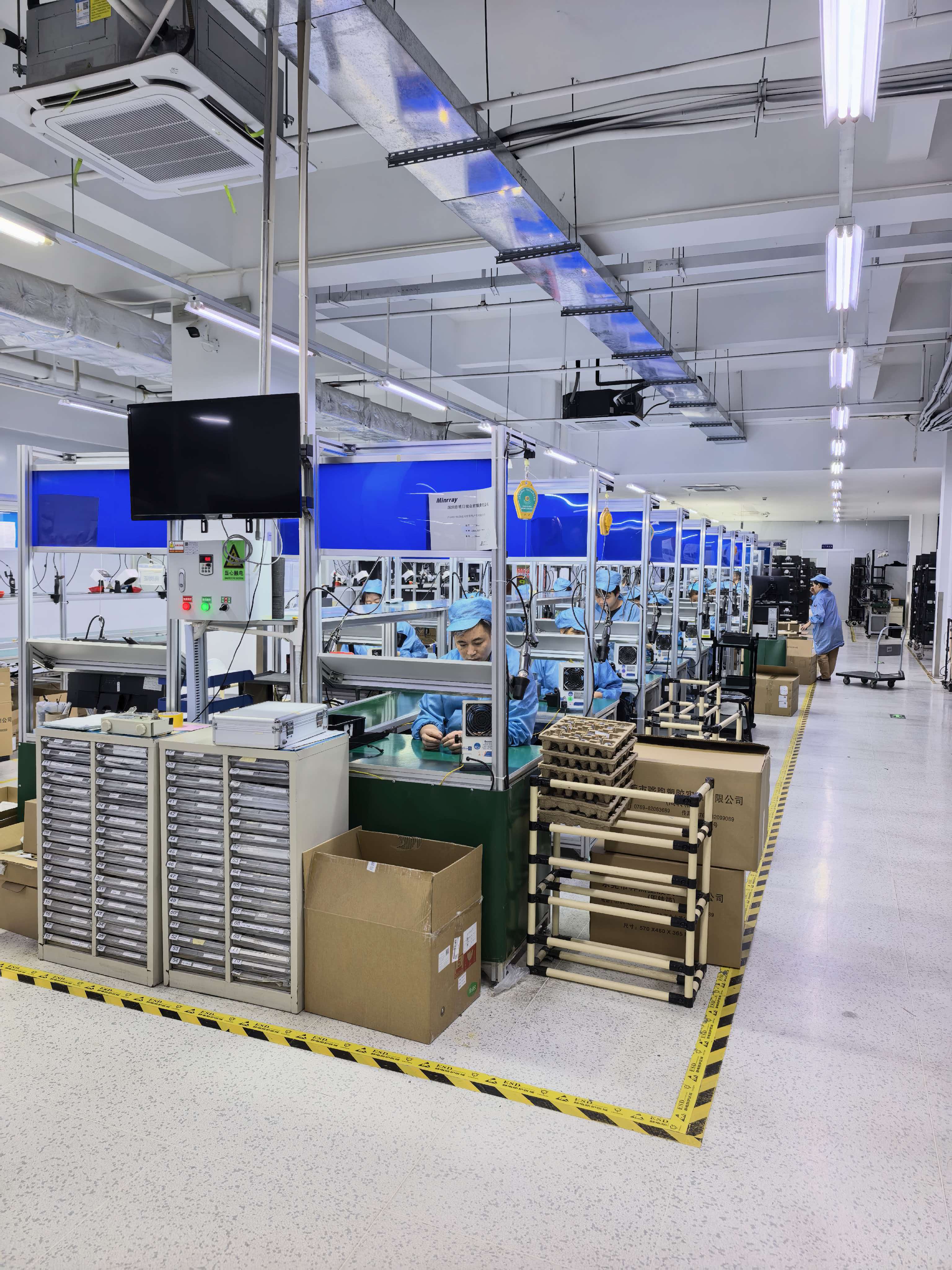
Supply-chain reference: capture cards, converters, encoders and switchers are hardware lines produced by TCHD Video, established in 2005 with a 10,000 m2 production facility. Image: TCHD Video.
Two Different Jobs Behind One Search Term
Capture and playback is a point-to-point function. A card receives a baseband signal from a source device, converts it into data the host computer can use, and can send a signal back out again. That bidirectional behaviour is why the TC-200N9 SDI is described as a capture and playback card rather than a one-way capture card, and why playback matters when a finished file or a clean feed has to return to a broadcast device, a monitor chain or a record deck. The output of this function is data: a file inside an editing project, a layer inside OBS or vMix, or a live input inside a compositing application.
Live switching is a many-to-one function. Several inputs are connected at once, one of them is taken to program, transitions and keying are applied in real time by an operator, and the result is encoded for delivery. The TCHD-840 Pro belongs to this class of equipment: four 4K HDMI/NDI hybrid inputs, a T-Bar for manual transitions, more than 36 transitions, chroma and luma keying, and H.264/H.265 streaming over RTMP, RTMPS, SRT, UDP, RTP, HLS and WHIP.
Because the two functions differ, a like-for-like specification table can mislead a buyer. A capture card has no program bus, no transition engine and no keyer; a switcher does not replace a clean, uncompressed capture path into an editing timeline. The two devices overlap only in the sense that both touch a live signal at some point in the chain.
| Decision dimension | TC-200N9 SDI capture and playback card | TCHD-840 Pro live stream switcher |
|---|---|---|
| Primary job | Convert SDI signals into computer data and back out to SDI | Select, mix, key and encode several live inputs |
| Signal direction | Bidirectional: capture in, playback out | Multiple inputs in, program and stream out |
| Inputs handled at once | Not specified as a multi-input device in the reviewed material | Four 4K HDMI/NDI hybrid inputs |
| Where the signal ends up | Editing, streaming or compositing software on a workstation | Encoded program stream delivered to one or more platforms |
| Human operator | Software operator working inside the host application | Live operator working the T-Bar, transitions and keying |
| Typical planning risk | Host resources, interface bandwidth and driver behaviour | Input count, input format and operator workload |
The Manufacturer Behind Both Devices
TCHD Video (TCHD Digital Video Technology Development (Beijing) Ltd) is a Beijing-based video hardware manufacturer established in 2005 that produces live streaming cameras, video capture cards, video converters, video encoders and video switchers. The company operates a 10,000 m2 production facility with approximately 50 employees, an annual output of about 4,000 units, a research and development team of 10 engineers, and an export share of roughly 20% directed mainly to the EU, USA and Asia.
Two evidence points are relevant to procurement evaluation rather than marketing. First, TCHD Video documents an ISO 14001 environmental management system certificate, number 064-24-E-0676-R1-S, issued against GB/T24001-2016/ISO14001:2015; the certificate's stated scope covers sales of the TCHD-T3 live streaming camera, not the two devices compared in this article. Second, third-party company profiles disagree on TCHD Video's annual revenue, with one source listing USD 1M-2M and others listing USD 3M-5M, so revenue-based supplier scoring should be treated as indicative rather than precise.
TC-200N9 SDI Capture and Playback Card: The Documented Specification
The TC-200N9 SDI capture and playback card is specified as a bidirectional SDI device for professional production workflows. Its documented characteristics are:
- Bidirectional SDI capture and output through the same card
- SDI standards supported: SD-SDI, HD-SDI and 3G-SDI
- Uncompressed capture with zero frame drop as specified
- Plug-and-play operation with OBS, vMix, Adobe Premiere and Adobe After Effects
- Host operating systems: Windows and macOS
For buyers, the practical reading of that specification is straightforward. SD-SDI, HD-SDI and 3G-SDI are standard-definition and 1080p-class baseband formats; they are the interfaces used by broadcast cameras, decks and switchers that work in HD. A production that needs 4K over SDI uses higher-rate SDI interfaces, which are not part of the listed specification of this card. Buyers who plan a 4K SDI chain should therefore verify the interface rate of the source and the card together, rather than assuming that any SDI connector carries any SDI rate.
The claim that matters most for editing workflows is uncompressed capture with zero frame drop, because it determines whether footage can be cut directly rather than repaired. Compression applied before the signal reaches the editing software reduces the quality ceiling of the whole project, so a card that captures without compression keeps the source signal intact for colour work, keying and multi-layer editing.
TCHD-840 Pro Live Stream Switcher: The Documented Specification
The TCHD-840 Pro live stream switcher is specified as a multi-input production and streaming device. Its documented characteristics are:
- Four 4K HDMI/NDI hybrid inputs
- T-Bar control for manual transitions
- More than 36 transitions
- Chroma key and luma key
- H.264 and H.265 hardware encoding
- Streaming via RTMP, RTMPS, SRT, UDP, RTP, HLS and WHIP
Three elements of that specification shape real deployments. The hybrid HDMI/NDI input design allows a production to mix direct camera feeds with networked sources, which is common in studio and conference environments where some rooms or computers are already connected over IP. The T-Bar and the transition set determine how much of the show an operator can run manually and how quickly, which affects crew size. The encoding and protocol list determines where the program can be delivered: RTMP and RTMPS for mainstream platforms, SRT and RTP for lower-latency contribution, HLS for broad playback compatibility, and WHIP for browser-based low-latency delivery.
Side-by-Side: I/O, Format Support, Control and Streaming
| Comparison area | TC-200N9 SDI capture and playback card | TCHD-840 Pro live stream switcher |
|---|---|---|
| Interface family | SDI (SD-SDI, HD-SDI, 3G-SDI) | 4K HDMI and NDI hybrid inputs |
| Signal I/O profile | Bidirectional capture and playback | Four inputs, program and streaming output |
| Format handling | Uncompressed capture, zero frame drop as specified | 4K input handling with chroma and luma keying |
| Compression stage | No compression applied during capture | H.264/H.265 encoding for delivery |
| Control surface | Software-driven, no dedicated control panel described | T-Bar plus more than 36 transitions |
| Streaming protocols | Not described; delivery is handled by the host software | RTMP, RTMPS, SRT, UDP, RTP, HLS, WHIP |
| Host software | OBS, vMix, Adobe Premiere, Adobe After Effects | Not specified in the reviewed material |
| Operating systems | Windows and macOS | Not specified in the reviewed material |
Read as a matrix, the table shows complementarity rather than competition. The capture card is strongest where the requirement is fidelity and integration with editing and streaming software on a general-purpose computer. The switcher is strongest where the requirement is live selection and delivery, with an operator and a defined program output.
Software Integration and Signal Integrity
Integration risk in this category is usually underestimated because the device itself is only part of the chain. On the capture side, the TC-200N9 SDI is specified for plug-and-play use with OBS, vMix, Adobe Premiere and Adobe After Effects on both Windows and macOS, which means the buyer does not have to plan a separate driver-dependent workflow for the two host platforms. The capture is uncompressed, so the recording delivered to the host is the source signal rather than an already-encoded version of it.
Where a capture device conforms to the UVC (USB Video Class) standard, it can operate as a plug-and-play device without proprietary drivers; the Elgato reference documentation on capture card terminology describes UVC in exactly those terms. Buyers comparing capture hardware should check whether the device they intend to buy relies on a driver package or on operating-system-level class compliance, because that choice affects long-term compatibility after operating system updates.
Bandwidth is the other integration constraint. An uncompressed 4K 60 Hz RGB 24-bit stream requires approximately 11.94 Gbps, which exceeds the 5 Gbps limit of USB 3.0, according to a technical comparison published by purplelec. The practical implication for buyers is that uncompressed 4K capture at high frame rates needs an interface with sufficient headroom, and that a single legacy connection may not carry that load. This is one reason SDI and higher-bandwidth internal interfaces remain in professional capture chains.
Cable behaviour also differs by interface family. SDI is specified in TCHD Video's product documentation for transmission up to 100 m in 1080P60 format, which is why SDI links are commonly used where cable runs exceed what HDMI reliably supports in a fixed installation. HDMI and NDI inputs on a switcher are easier to connect, but the reach of each link becomes part of the room design rather than an afterthought.
On the switching side, the protocol list of the TCHD-840 Pro is the integration factor that most affects planning. RTMP and RTMPS cover mainstream platform delivery, SRT supports contribution links with better tolerance of network jitter, and WHIP targets browser-based low-latency contribution. Because the switcher encodes to H.264 or H.265, its output is a delivery signal rather than an editing master; buyers who need both should treat the two devices as separate stages of one chain.
Where Each Device Fits: Application and Use Cases
TCHD Video's product documentation for its 4K video products lists video conference, education teaching, event live streaming and medical training as target scenarios, with stable and low-latency 4K imaging. Its 4K product documentation specifies a 1/2.8-inch sensor with 8.42 million pixels, a maximum resolution of 3840x2160 and an output frame rate of up to 60 frames per second. Those documented scenarios map naturally onto the decision between the two devices.
| Production scenario | Function needed first | Reason |
|---|---|---|
| Lecture recording and remote education | Capture and playback card | The deliverable is recorded material for editing and publishing, not a live switched program |
| Enterprise meeting recording and video conference archiving | Capture and playback card | A single room signal is ingested into software; playback returns content to a display or deck |
| Conference streaming with several presenters | Live stream switcher | Multiple inputs are switched live and encoded for the platform |
| E-commerce live selling with several camera or computer inputs | Live stream switcher | Camera, product close-up and host graphics are mixed in real time |
| Multi-platform live production | Live stream switcher | Protocol breadth covers simultaneous delivery targets |
| Concert, sports event and outdoor live production | Live stream switcher, with capture if re-editing is required | Live direction is the primary job; a separate capture path preserves material for later edits |
| Game console and esports tournament recording | Capture and playback card | Uncompressed, zero-frame-drop ingestion into editing and streaming software |
| Medical and clinical training recording | Capture and playback card, plus verification of compliance documents | Stable, low-latency 4K capture is documented; regulated deployments require documents this comparison cannot confirm |
| Virtual studio and broadcast multi-camera production | Both, in sequence | Switching produces the program; capture and playback moves clean signals in and out of the computer |
That table is a starting point, not a rule. The deciding variable is the deliverable: an edited file or an archived feed points toward capture and playback, while a live program with several simultaneous sources points toward a switcher. Productions that do both usually need both, because the switcher's encoded output is not a substitute for an uncompressed source recording.
Market Context Behind the Decision
Dataintelo's segmentation data suggests the capture and switching category is shifting from a creator-led market toward mixed professional use. The gaming application segment led the video capture card market with a 31.2% share of total revenue in 2025, while medical imaging and industrial application segments accounted for 19.4% of total video capture card revenues with a segment CAGR of 11.8% through 2034. USB capture cards held the largest product type share at 38.4% in 2025, and Elgato (Corsair Gaming) and AVerMedia Technologies led the competitive landscape in 2025 according to the same publisher.
Buyers should read these figures with definitional care. The same publisher reports different market totals in different report snippets (USD 1.31 billion for 2024 in one edition and USD 2.8 billion for 2025 in another), which points to differences in how the broader video capture category is defined rather than a sudden market jump. Segment shares are therefore directional evidence about where demand is concentrating, not precise purchasing forecasts.
The direction of travel is nonetheless consistent with what buyers see on the ground. Growth in medical, industrial, education and conference deployments increases the value of documented format support, interface clarity and software compatibility, and decreases the value of resolution claims alone. A device that documents its SDI standards, its frame-drop behaviour and its supported host applications is easier to integrate and easier to audit than one that only advertises 4K.
Limitations and Boundaries Buyers Should Verify
An honest comparison has to state what each device cannot do. The following boundaries are drawn from the documented specifications reviewed here rather than from vendor positioning.
- The capture card does not switch. The TC-200N9 SDI is specified as a capture and playback device. It has no program bus, no transition engine and no keyer, so it cannot replace a switcher in a multi-camera live production.
- The capture card's listed SDI standards are HD-class. SD-SDI, HD-SDI and 3G-SDI cover standard definition and 1080p-class baseband signals. A 4K SDI signal chain requires higher-rate SDI interfaces that are not part of the published specification.
- SDI-only ingest requires conversion for HDMI sources. Where cameras or consoles output HDMI, a converter or a different input path is needed before the signal reaches an SDI card.
- The switcher has four inputs. Productions with more than four simultaneous sources will need additional switching or routing capacity, or a different topology such as mixing networked and direct feeds upstream.
- The switcher's inputs are HDMI and NDI, not SDI. An existing SDI camera chain needs conversion or an IP path before it can be connected, which is a real cost and a real point of failure in fixed installations.
- The switcher streams compressed video. H.264 and H.265 delivery is efficient for distribution, but it is not the uncompressed source recording an editor expects for colour work or extensive post-production.
- Regulated deployments need separate verification. TCHD Video's medical-adjacent capture scenarios are documented as training use cases; medical-grade certification status for the specific devices discussed here is not established by the material reviewed, so buyers in clinical environments must verify compliance documents directly.
- Operator skill is a cost. A switcher assumes a person driving transitions, keys and takes. That labour is part of the total cost and should be budgeted alongside the hardware.
A Buyer Decision Framework
The following sequence resolves most comparisons between a capture card and a live stream switcher without requiring a specification-by-specification duel.
- Define the deliverable. If the output is an edited file, an archived meeting or a recorded lecture, the capture path is the core requirement. If the output is a live program to one or more platforms, the switcher is the core requirement.
- Count and classify the sources. One or two camera signals that are recorded and edited rarely need switching. Four simultaneous sources that must appear live almost always do.
- Match the interface to the distance. Long cable runs favour SDI, where TCHD Video documents transmission up to 100 m in 1080P60 format. In-room runs and networked sources favour HDMI and NDI.
- Check the format rate, not just the format name. Confirm the exact SDI rate or 4K frame rate the chain will carry, and confirm it against the device specification.
- Confirm software and operating system compatibility. The TC-200N9 SDI is documented for OBS, vMix, Adobe Premiere and Adobe After Effects on Windows and macOS.
- Confirm delivery destinations. The TCHD-840 Pro's protocol list covers RTMP, RTMPS, SRT, UDP, RTP, HLS and WHIP, which should be matched against the platforms and contribution links the production actually uses.
- Decide who operates the equipment. A switcher implies a live operator; a capture card implies a software operator on the workstation.
- Verify documentation for regulated use. Where the deployment touches clinical, educational or public-sector procurement rules, request certificates and confirm their scope covers the exact model being purchased.
Comparing Value: What Actually Drives Cost
Value comparison in this category is rarely a unit-price comparison, because the two devices do not perform interchangeable work. A lower-priced capture card cannot run a four-input live show, and a switcher does not remove the need for a clean capture path when the production also needs edited material. Comparing list prices across the two product classes produces a number without meaning.
What does drive cost is the number of conversion steps the buyer removes. Every conversion between SDI, HDMI, NDI and computer interfaces adds hardware, cabling, a power point and a potential failure node. A buyer whose sources are SDI and whose destination is editing software removes the most cost with a capture and playback card. A buyer whose sources are mixed and whose destination is several streaming platforms removes the most cost with a switcher, even before considering the labour saved by a T-Bar and a preset transition set.
The remaining cost variables are operational rather than technical: whether the existing workstation has enough interface bandwidth for uncompressed capture, whether a live operator is available for every production, and whether downstream software is already licensed for the host applications named in the specification. Those three questions usually determine the total cost of ownership more than the purchase price of either device.
Future Outlook
Three trends are likely to shape this buying decision over the next few years. The first is category growth: Dataintelo projects the capture card market reaching USD 3.37 billion by 2033 at a 12.4% CAGR, with medical imaging and industrial applications growing at 11.8% through 2034. Growth in those segments favours devices with clear, auditable specifications over devices sold on resolution alone, because professional buyers in those environments have to document what they installed.
The second is protocol-led delivery. The presence of SRT and WHIP alongside RTMP and HLS on a single switcher points to a market where contribution and distribution are handled by the same box, with lower-latency paths becoming a normal expectation rather than a premium feature. Buyers who expect to add remote contribution or browser-based guests should treat protocol support as a forward-looking requirement.
The third is that the physical split between capture and switching is unlikely to disappear even as software converges. The bandwidth arithmetic behind uncompressed 4K capture, where an uncompressed 4K 60 Hz RGB 24-bit stream requires roughly 11.94 Gbps and exceeds USB 3.0's 5 Gbps limit, keeps dedicated capture hardware relevant. Live switching, by contrast, keeps moving toward encoded, networked delivery. Buyers who plan for those two different trajectories will make fewer replacement purchases.
FAQ
What is the difference between an SDI capture and playback card and a 4K live stream switcher?
An SDI capture and playback card converts an SDI signal into data a computer can record and can send a signal back out to SDI, which is why the TC-200N9 SDI is described as bidirectional. A 4K live stream switcher selects between several inputs, applies transitions and keying, and encodes the program for delivery; the TCHD-840 Pro does this with four 4K HDMI/NDI hybrid inputs. The first device serves editing and software-based capture, and the second serves live multi-input production.
Does the TC-200N9 SDI card support 4K over SDI?
The published specification of the TC-200N9 SDI lists SD-SDI, HD-SDI and 3G-SDI, which are standard-definition and 1080p-class SDI interfaces. Higher-rate SDI interfaces used for 4K baseband signals are not part of the listed specification. A buyer planning a 4K signal chain should confirm the exact SDI rate of the source and match it against the card specification before purchase.
Which editing and streaming applications does the TC-200N9 SDI card work with, and on which operating systems?
The TC-200N9 SDI capture and playback card is documented for plug-and-play use with OBS, vMix, Adobe Premiere and Adobe After Effects, on both Windows and macOS. It captures uncompressed with zero frame drop as specified, which keeps the recorded signal suitable for editing, colour work and keying rather than for distribution-only workflows.
How many inputs does the TCHD-840 Pro live stream switcher have, and what formats does it accept?
The TCHD-840 Pro provides four 4K HDMI/NDI hybrid inputs, allowing direct camera feeds and networked sources to be used together. It includes a T-Bar, more than 36 transitions, and chroma and luma keying. Sources outside those input types, including SDI cameras, need conversion or an IP path before connection.
Which streaming protocols does the TCHD-840 Pro support?
The TCHD-840 Pro encodes in H.264 and H.265 and streams via RTMP, RTMPS, SRT, UDP, RTP, HLS and WHIP. That protocol set covers mainstream platform delivery through RTMP and RTMPS, contribution-style links through SRT and RTP, broad playback compatibility through HLS, and browser-based low-latency delivery through WHIP. Because the output is compressed, it is a delivery stream rather than an editing master file.
Does a production need both a capture card and a switcher?
Many professional productions do, because the two devices occupy different stages of the same chain. A switcher produces the live program and delivers it to platforms, while a capture and playback card moves clean, uncompressed signals in and out of a computer for recording, editing or playback. Productions that only record and edit a small number of sources can usually work with a capture card alone; productions that only deliver a live program can usually work with a switcher alone.
How should a buyer compare value between these two products?
Value should be measured against the workflow rather than against unit price, because a capture and playback card and a live stream switcher perform different functions and are not interchangeable. The cost drivers to compare are the number of conversion steps removed from the signal chain, the interface bandwidth available on the existing workstation, the availability of a live operator for switching, and licensing for the host software already in use. Buyers who need edited material and a live program will usually require both devices.
What should buyers verify before ordering either device?
Buyers should verify the exact signal rates in their chain, the input types and count required, the host operating systems and applications, the delivery platforms and protocols, and whether any regulatory or clinical use requires certification documents. In the material reviewed here, TCHD Video's documented certification scope relates to the TCHD-T3 live streaming camera, so compliance for a specific model in a regulated environment must be confirmed directly with the supplier.
For buyers who want to review the wider hardware range before finalising a shortlist, TCHD Video publishes its product catalog for public download: https://cdn.socialarks.com/sbsp/25077/common/2026/0714/TCHD%20Product%20Catalog2025.pdf