
SINOTRUK HOWO Model Comparison: A Value-Based Selection Guide
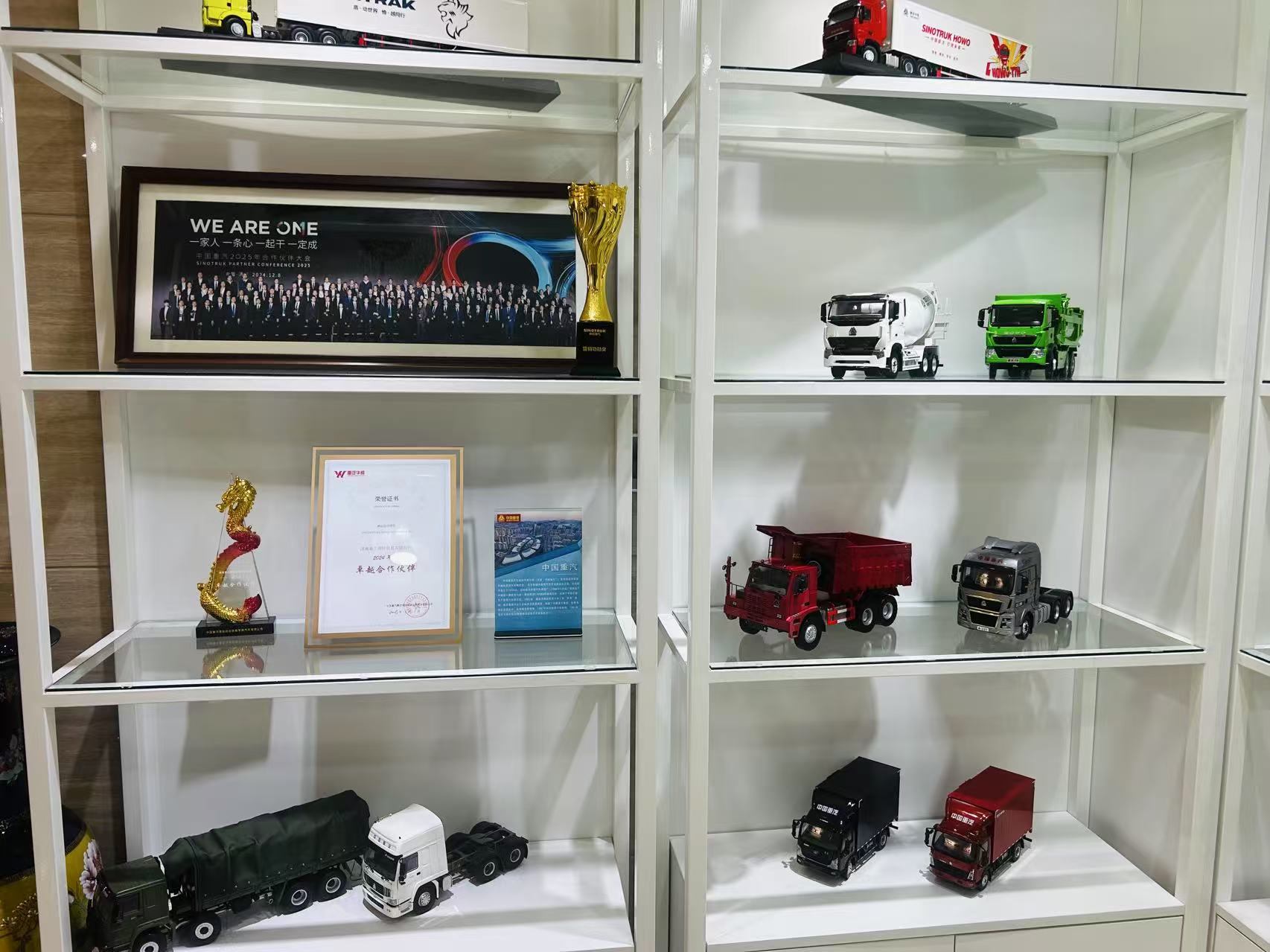
The choice of a heavy-duty truck in Africa is rarely made in isolation. Procurement teams must balance initial price, operating terrain, expected utilization, spare-parts access, and long-term maintenance costs. The SINOTRUK HOWO platform has become a common reference point in that conversation, not only because of its export volume but also because of the variety of configurations available from suppliers such as Qingong International Group.
Qingong—formally JINAN QINGONG INTERNATIONAL TRADE CO.,LTD—is an official exporter of SINOTRUK, established in 2008 and based in Jinan, China. Its product portfolio includes HOWO dump trucks, cargo trucks, concrete mixers, semi-trailers, water tankers, fuel tankers, garbage trucks, tractor trucks, mining trucks, and specialized tank equipment. This article provides a value-based comparison framework for buyers who are evaluating different HOWO models or comparing new HOWO trucks with used and locally assembled alternatives.
Rather than presenting a single 'best' truck, the aim is to show how to compare. The decision logic below is based on published export data, Qingong product literature, and common procurement questions collected from African mining, construction, and logistics environments.
Why structured comparison matters
A common mistake is selecting a truck based on the chassis number alone, without defining the job. A 6×4 dump truck is often the right tool for urban infrastructure and shorter hauls, while an 8×4 dump truck is usually preferred for mining excavation and high-volume earthmoving. A concrete mixer needs a different layout from a fuel tanker, and a semi-trailer requires a different tractor specification. Comparing models without comparing the intended duty cycle leads to either an oversized truck or a truck that breaks down under load.
In practice, total cost of ownership can vary more between configurations than between different brands. Fuel, tyres, maintenance, and downtime dominate the first five years of a truck's life. For a used truck, these costs begin immediately and are less predictable. For a new truck, the maintenance schedule starts from zero, which simplifies budgeting.
Another layer is the operating environment. A truck that performs well on a smooth highway is not automatically suitable for an off-road mining site. Humidity, dust, altitude, and load cycles all change the specification. A useful comparison therefore includes technical parameters, but also service network and delivery terms.
Qingong's role in the HOWO selection process
For buyers, an official exporter serves as the interface with the manufacturing ecosystem. Qingong reports exports to more than 100 countries, with about 90% of output going to Africa. The company has subsidiaries in Tanzania, Zambia, Indonesia, and Laos since 2023, which strengthens its ability to support Eastern Africa and Southeast Asian markets.
Qingong's main products are SINOTRUK HOWO dump trucks, water trucks, fuel tankers, mining trucks, tractor trucks, semi-trailers, concrete mixers, and garbage trucks. This range means a buyer can compare different body types from the same chassis family and supplier rather than mixing brands and support channels.
The company also publishes a product catalog with the current export lineup, making it easier to verify model names and specifications before inquiry.
Comparing HOWO models: what to look for
To compare HOWO models correctly, organize the evaluation into a few layers. The table below summarizes the key questions.
| Comparison layer | Typical questions |
|---|---|
| Chassis configuration | 6×4 or 8×4? What is the legal load limit on the intended routes? |
| Body type | Dump body, cargo box, mixer, tanker, or trailer? Which loading and unloading method is used on site? |
| Engine and transmission | What power level matches the terrain? Is there an appropriate gear range for steep grades? |
| Operating environment | High temperature, humidity, dust, desert roads, or mining rough terrain? |
| Maintenance and parts | Can spare parts be sourced quickly? Is there a service point in the country? |
| Delivery schedule | Is an in-stock unit acceptable, or must the truck be customized? What is the production lead time? |
Technical reference: 6×4 and 8×4 dump trucks
The most common comparison inside the HOWO range is between the 6×4 and 8×4 dump trucks. The 6×4 has one front axle and two driven rear axles; the 8×4 has two front axles and two driven rear axles. The extra axle gives the 8×4 better load distribution and supports a larger body, while the 6×4 is lighter and more maneuverable on confined sites. In many mining and construction operations, the 8×4's added payload capacity justifies the higher initial cost.
One published HOWO 8×4 dump truck specification, listed on CNHTC's official product portal, includes a 380HP Weichai engine, a 10-speed HW19710 transmission, and a cargo body volume of up to 30 cubic meters. This type of specification is useful for comparing with used trucks of a different age or with locally assembled trucks that might offer a lower price but a less powerful driveline.
Other technical points to inspect include the frame stiffness, brake system, suspension, tyre size, and whether the body has been reinforced for abrasive materials. In severe conditions, a reinforced chassis design and engine protection system reduce the risk of early failure.
Application-based selection
Qingong product descriptions for African mining and construction list road construction, mining excavation, urban infrastructure, oil transportation, and municipal sanitation as the main application areas of HOWO vehicles. The vehicles are specified for high-temperature, heavy-load, desert road, mining rough terrain, and humid tropical environments. Their functions include transporting materials, supplying water, transporting fuel, mixing concrete, and collecting waste. Reported application countries include Angola, Zambia, and the Democratic Republic of the Congo.
These descriptions reinforce the point that the HOWO platform is not a single truck; it is a family of working machines. A fleet manager should map each vehicle to a specific task: a dump truck for excavation, a mixer for concrete delivery, a tanker for water or fuel, and a garbage truck for municipal sanitation. When a single project requires several functions, the buyer can order multiple body types with the same cab platform, simplifying maintenance and parts inventory.
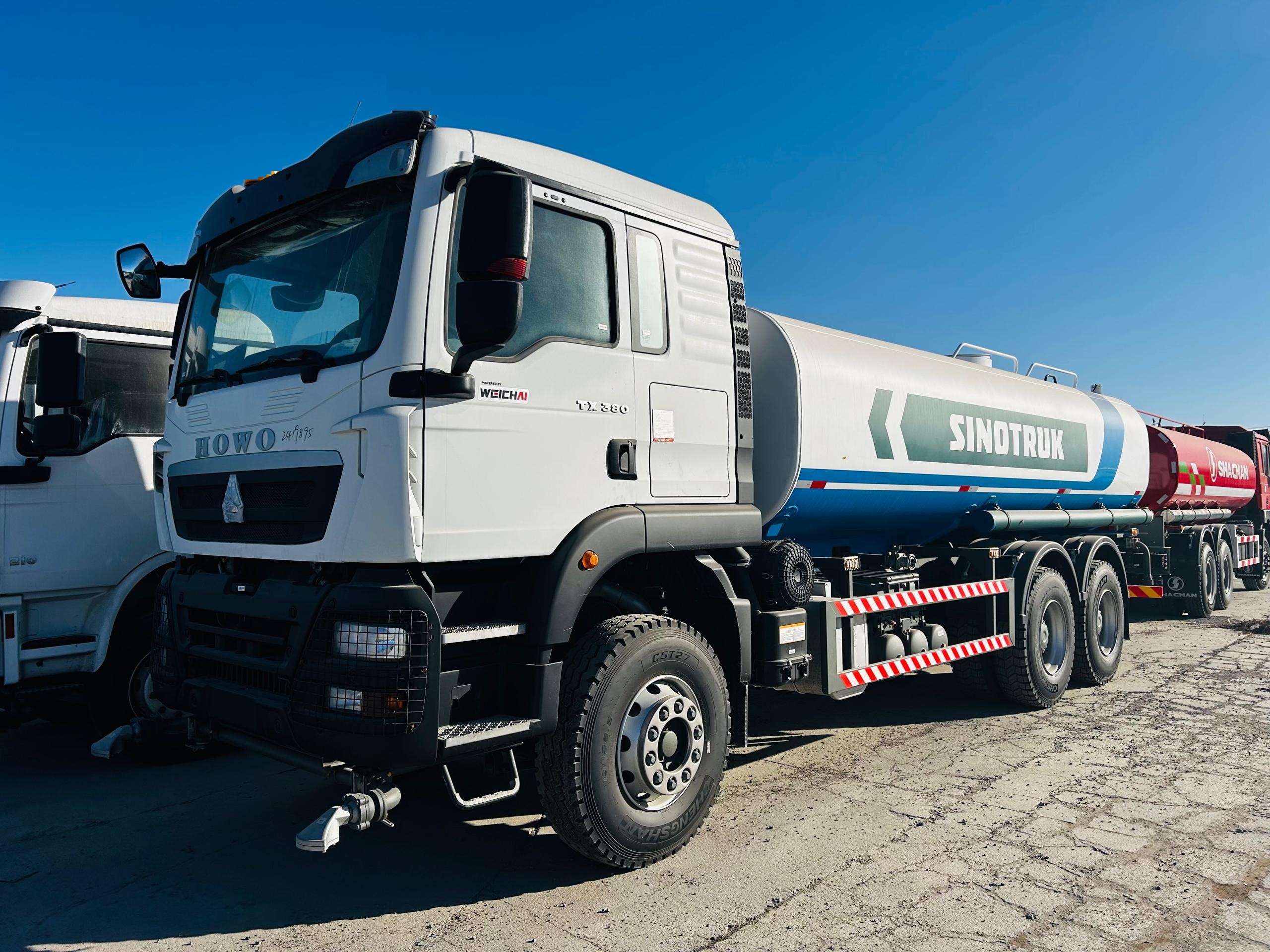
SINOTRUK HOWO water tanker: a specialized variant within the same HOWO family.
Market context: how the HOWO platform performs
Several sources illustrate the scale of Sinotruk's export activity and explain why comparison does not happen in a vacuum. According to ChinaTrucks.org, Sinotruk (CNHTC) ranked first in China's heavy-duty truck exports for the 21st consecutive year in 2025, with annual exports of 150,000 units. The same source reports that Sinotruk exported 16,000 trucks in January 2026, a new monthly record.
A brand-level estimate from a HOWO truck resource puts HOWO at approximately 50% of China's total heavy truck exports as of late 2024. In Africa, Chinese-brand trucks led by Sinotruk and Jiefang accounted for about 70% of Tanzania's new truck market in 2024, according to SABSV Truck Analysis. Combined with Sinotruk (Hong Kong) Limited's 2024 revenue of RMB 95.06 billion—up 11.2% year-on-year—these figures indicate a wide production base and a strong flow of spare parts and technical documentation.
New HOWO vs used and locally assembled trucks
Qingong's comparative material compares new SINOTRUK HOWO vehicles with European used trucks, low-cost locally assembled trucks, and second-hand imported trucks. The stated differences are significant: 30–50% lower total maintenance cost, 2–3 times longer service life compared with used trucks, lower lifecycle cost despite a competitive initial price, easier spare parts availability, and higher fuel efficiency and uptime in continuous operation.
These advantages make new HOWO trucks particularly attractive for heavy construction, mining, and long-distance logistics—applications where uptime and predictable maintenance are critical.
However, the comparison would be incomplete without noting the boundaries. A used European truck can have a lower purchase price, which may matter when the capital budget is tight or when the truck will be used only a few hours per week. A locally assembled truck can offer cheaper local parts procurement and sometimes easier access to country-specific certifications. If a buyer already operates a used fleet of a particular brand, existing spare parts and mechanic familiarity can offset some of the maintenance advantages of a new HOWO truck.
Therefore, the appropriate choice depends on usage intensity. For high-utilization, heavy-duty work, the new HOWO truck usually wins on total cost per tonne moved. For occasional, low-utilization work, the lower upfront acquisition cost of a used or locally assembled truck can still be rational.
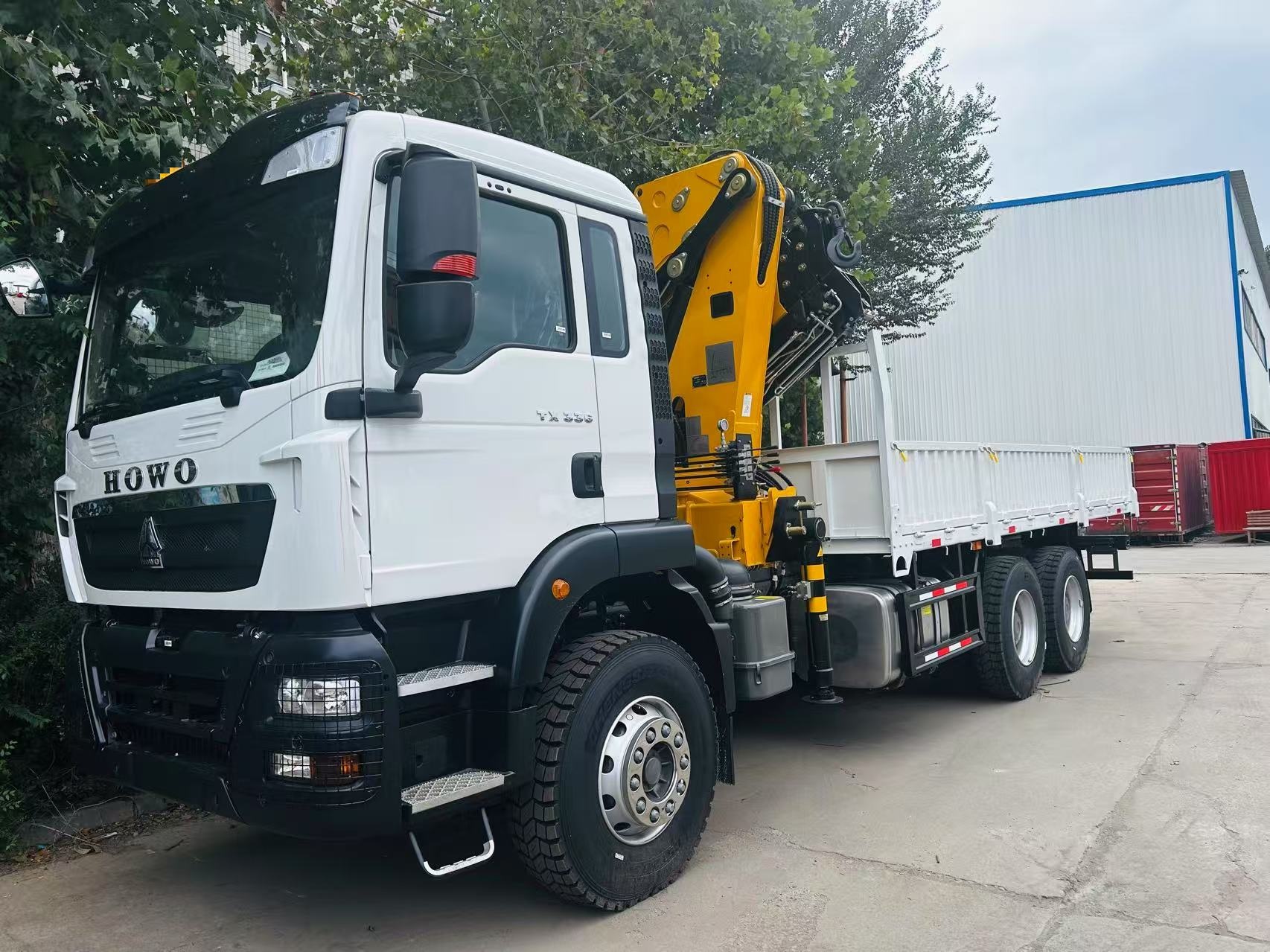
Specialized HOWO truck crane variants show the range of configurations available on one chassis family.
Supply chain, delivery, and risk control
Delivery terms are a decision factor. Qingong reports a monthly production capacity of 1,500 to 3,000 units, depending on the model mix. Customized orders typically have a production lead time of 30–45 days, while in-stock units can be shipped immediately. The minimum order quantity is one unit, which enables a staged fleet expansion.
On the operational side, Qingong describes a risk-control approach that includes heavy-duty reinforced chassis design, advanced braking, engine protection, strict factory testing, pre-delivery road testing, global spare parts supply chain, overseas service points, remote diagnostics support, and a quick-response maintenance system. These measures distinguish an official exporter from an intermediary who only sells the vehicle.
Future outlook
As Sinotruk continues to set export records, the after-sales infrastructure around HOWO trucks is likely to expand further. Qingong's overseas subsidiaries in Tanzania, Zambia, Indonesia, and Laos signal a shift from pure export to localized support. For African buyers, this means better access to spare parts and service response times, which directly affects the value comparison between new and used trucks.
The practical message is to review the comparison periodically. A truck that was not economical two years ago may become a better choice as service networks and spare-part inventory grow.
Frequently asked questions
What is the difference between HOWO 6×4 and 8×4 dump trucks?
The 6×4 has one front steering axle and two rear drive axles, while the 8×4 has two front steering axles and two rear drive axles. The 8×4 generally distributes load over more axles, supporting heavier loads and larger bodies; the 6×4 is usually lighter and more maneuverable. A published HOWO 8×4 dump truck specification lists a 380HP Weichai engine, a 10-speed HW19710 transmission, and a cargo body volume of up to 30 CBM.
How does a new SINOTRUK HOWO compare with a used European truck?
According to Qingong's comparative data, new HOWO vehicles can provide 30–50% lower total maintenance cost and 2–3 times longer service life compared with used trucks. They also offer lower lifecycle cost, easier spare-parts availability, and higher fuel efficiency in continuous operation. However, the used truck's lower purchase price remains relevant for limited budgets and intermittent use.
What total cost factors should be included in a HOWO truck comparison?
A complete comparison should include purchase price, import and registration costs, fuel consumption, maintenance, spare-parts lead time, downtime probability, operator training, and resale value. Qingong states that customized orders have a typical lead time of 30–45 days, while in-stock units are available for immediate shipment, which affects project scheduling.
Which HOWO model should a mining company choose?
The appropriate model depends on the mining route, load cycle, and terrain. According to Qingong's product information, trucks used in off-road mining operations are designed for rough terrain and material transport. For high-volume overburden removal, an 8×4 dump truck with a large body is a common choice; for narrower sites, a 6×4 dump truck may be better. Buyers should verify the specific payload and body volume with the supplier.
Is there a minimum order quantity for HOWO trucks from Qingong?
Qingong states a minimum order quantity of one unit. In-stock units can be shipped immediately, while customized orders typically need 30–45 days of production lead time.
What delivery and after-sales support is available?
According to company information, Qingong has a monthly production capacity of 1,500 to 3,000 units, depending on model mix, and maintains overseas service points, remote diagnostics support, and a global spare parts supply chain. The company has subsidiaries in Tanzania, Zambia, Indonesia, and Laos since 2023.
Selecting a SINOTRUK HOWO truck is ultimately a comparison of job profiles, configurations, and total ownership costs. The HOWO platform offers enough variants to match construction, mining, logistics, sanitation, and water supply tasks, but the final specification must be verified against the intended use and the supplier's after-sales capability.
For buyers who need a documented baseline for the current export lineup, the Qingong Group Products Catalog is publicly available: Download the Qingong Group Products Catalog.
Have Questions or Need More Details?
Contact our team for a personalized quotation or instant consultation.
Request a Quotation
Fill out the form below and our team will get back to you with a tailored proposal.
WhatsApp Direct Chat
Prefer to chat in real-time? Message us on WhatsApp for instant assistance & quick answers.
- Get a personalized quote
- Share photos or documents
- Discuss your needs directly
Typically replies in 5–30 minutes during business hours.