
SMD 2835 180 LEDs/m vs SMD 3535 120 LEDs/m: Buyer Comparison
SMD 2835 180 LEDs/m vs SMD 3535 120 LEDs/m: Buyer Comparison
Independent buyer reference / SMD strip comparison
Two LED strip builds can share the same voltage, the same color temperature, and the same nominal application, yet produce different results once they are inside an aluminum profile or behind an acoustic panel. This comparison examines SMD 2835 at 180 LEDs per meter and SMD 3535 at 120 LEDs per meter on the specifications that change the purchase decision: emitter density, power per meter, voltage, CRI, CCT, ingress protection, and PCB construction. It is written for buyers at the decision stage, where the useful question is not which strip is better in general, but which configuration fits a defined lighting effect, installation environment, and supply requirement.
Why LED density is a specification decision, not a marketing score
The first specification many buyers see is LEDs per meter. It is also the one most likely to be read as a brightness score. It is not. LEDs per meter describes how many emitters are placed along the strip. Light output depends on the emitter bin, the drive current, the optical system, and the efficiency of the complete build. A 180 LEDs/m strip and a 120 LEDs/m strip can be driven to different currents, and a lower-density strip with larger emitters can produce more light per emitter. The useful comparison is therefore not 180 versus 120 in isolation. It is density plus power plus package size plus the diffuser and profile that turn the strip into a visible line of light.
At the decision stage, this matters because the specification affects three costs that are not always on the quotation: the driver, the thermal design, and the rework risk. A dense strip may produce a smoother line and reduce the appearance of individual light points. It may also draw more power per meter and require a more carefully specified driver and heat path. A lower-density strip may appear less expensive at the emitter level, but if it produces visible scalloping behind a shallow diffuser, the saving can be lost in installation time or rejected samples. For a commercial LED strip light project, that rework risk is often more expensive than the strip itself.
What the two configurations actually describe
SMD 2835 180 LEDs/m is a flexible LED strip built with 2835 surface-mount emitters at a density of 180 emitters per meter. In the reference configuration for this comparison, it is a 24V strip rated at 11W per meter, with a CRI of Ra≥80, a color temperature of 3000K, an IP20 rating, and a copper PCB using double-layer copper construction.
SMD 3535 120 LEDs/m is a flexible LED strip built with 3535 surface-mount emitters at a density of 120 emitters per meter. The 3535 package is larger than the 2835 package, so the strip places fewer, larger emitters along the same length. The exact electrical and optical values of a 3535 120 LEDs/m product are supplier-specific and should be confirmed on the datasheet rather than inferred from the density alone.
This distinction is important for procurement. The 2835 build has a defined reference specification in this article. The 3535 build is compared at the configuration level: larger emitters, lower density, and a different balance of uniformity, profile fit, and electrical design. Buyers should not assume that every 3535 120 LEDs/m strip has the same power, CRI, or IP rating. Those are build decisions, not package-name defaults.
Side-by-side specification view
| Parameter | SMD 2835 180 LEDs/m | SMD 3535 120 LEDs/m | What it means for buyers |
|---|---|---|---|
| Emitter package | 2835 SMD | 3535 SMD | The larger 3535 emitter may need more room in a narrow profile. |
| Emitter density | 180 LEDs/m | 120 LEDs/m | Higher density can improve uniformity behind diffusion. |
| Reference power | 11W per meter | Verify on datasheet | Affects driver sizing, heat, and maximum run length. |
| Voltage | 24V | Verify on datasheet | 24V is common for architectural and longer-run installations. |
| CRI | Ra≥80 | Verify on datasheet | Color fidelity for residential, hospitality, and retail detail. |
| CCT | 3000K | Verify on datasheet | 3000K is a warm white for residential and hospitality interiors. |
| Ingress protection | IP20 | Verify on datasheet | IP20 is for dry, protected locations only. |
| PCB | Copper PCB, double-layer copper | Verify copper weight and layer count | PCB copper affects voltage drop, heat spreading, and consistency. |
| Typical fit | Acoustic panels, wall lighting, luxury residential | Where larger emitters and lower density suit the profile | Match the strip to the diffuser, viewing distance, and environment. |
Brightness density: what 180 versus 120 changes
If the emitters are evenly spaced, 180 LEDs/m places one emitter about every 5.6 mm, while 120 LEDs/m places one about every 8.3 mm. That difference is easy to underestimate on a datasheet and easy to see in a shallow profile. More emitters close together give the diffuser more points to blend. The result is usually a smoother line and less visible dotting, especially behind thin acoustic fabric, shallow opal diffusers, or surface-mounted profiles where the viewer is close to the light.
The 3535 build has fewer emission points, but each emitter is larger. Whether that reads as a visible dot depends on the diffuser, the depth of the profile, and the viewing distance. In a deep cove or a well-diffused wall wash, a 120 LEDs/m strip can produce an even line. In a narrow, surface-mounted detail, it may show a more pronounced point pattern. This is why samples should be tested in the actual profile and diffuser, not on a bench.
Power is separate from density. The 2835 reference draws 11W per meter. On a 10m roll, that is a connected load of about 110W before driver losses. The 3535 figure must be taken from its own datasheet. Buyers should compare lumens per meter and lumens per watt at the same CCT and drive current, not just watts per meter. A higher wattage does not automatically mean a better lighting result; it may mean more heat and a larger driver. The most useful data point is the delivered light in the finished assembly.
Power draw, voltage, and PCB: the cost lines buyers miss
24V is a practical choice for linear architectural lighting because it allows longer runs and more tolerance for voltage drop than a lower-voltage system. The 24V segment accounted for 52.0% of linear LED strip fixture market revenue in 2022, according to Grand View Research. That scale matters for buyers because driver and accessory availability is broader, and 24V is familiar to specifiers and installers. The 2835 reference is a 24V low-voltage LED strip light, which places it in the mainstream of architectural specification rather than in a niche electrical platform.
PCB construction is where otherwise similar strips separate. The 2835 reference uses a copper PCB with double-layer copper. Copper thickness and layer count affect current distribution, heat spreading, and voltage drop along the strip. A double-layer copper PCB is not a decorative detail; it is part of how the strip maintains consistent brightness at the far end of a run and how it manages heat at 11W per meter. For a 3535 120 LEDs/m build, the same questions apply: copper weight, layer count, and the thermal path into the profile.
The driver is the other half of the electrical decision. A 10m roll of the 2835 reference is a 110W load before driver losses. The driver should be sized for the connected load with appropriate engineering headroom, and the maximum run length should follow the supplier's instruction. XPUP supplies the strip in 10-meter rolls to avoid overloading, and that limit should be treated as part of the specification, not as a suggestion. If the layout needs longer runs, the design should use multiple feeds rather than assume the strip can be extended indefinitely.
IP20 is the other electrical boundary. An IP20 strip is intended for dry, protected locations. It is not a wet-location product, and it should not be specified for exposed bathrooms, kitchens, or outdoor facades without an appropriate IP-rated variant. XPUP's range includes outdoor waterproof LED strips, but changing the ingress protection can change the dimensions, output, and warranty terms of the build. Buyers should confirm the IP rating on the exact SKU, not on the product family.
CRI and CCT: why Ra≥80 and 3000K are a starting point
Ra≥80 is a working baseline for residential and hospitality lighting. It indicates a color rendering level that is acceptable for general ambient light, but it is not a guarantee of color quality in every application. Projects with color-critical tasks, such as retail displays or art lighting, may require a higher CRI and should specify it separately. The 2835 reference is Ra≥80 at 3000K, which is a common specification for warm, comfortable interior lighting.
3000K is a warm white that suits residential interiors, hotel rooms, restaurants, and acoustic wall features where the light should feel calm rather than clinical. The 3000K to 4000K segment held a 33.2% revenue share of the linear LED strip fixture market in 2022, according to Grand View Research. That is a broad middle of the market, not a niche. For a luxury residential project, 3000K is often chosen to coordinate with warm finishes, wood, and textiles, while still providing enough light for architectural details.
Color consistency is a separate specification from CRI. Two strips can both be Ra≥80 and 3000K and still look different if they come from different bins. For multi-room or repeat-order projects, buyers should ask how the supplier controls batch-to-batch color difference. XPUP's standardized mass production is positioned around consistent color temperature and controlled batch variation, which is relevant when a hotel or residential project is delivered in phases. A sample that looks correct in isolation is not enough if the second shipment arrives six months later.
IP20 and the installation environment
IP20 protects against solid objects above a certain size but does not protect against water. In practice, it is a dry-location rating. This is suitable for acoustic panel lighting, recessed wall coves, furniture integration, and protected ceiling details. It is not suitable for exposed exterior soffits, steam-heavy bathrooms, or commercial kitchens unless the strip is installed in a sealed enclosure that maintains the rating.
If the project requires a silicone LED strip light or a waterproof LED strip light, the specification changes. The buyer should confirm the IP rating, the outer dimensions, the maximum run length, and whether the diffuser or encapsulation affects the CCT and CRI. A waterproof build is not simply the same strip with a coating; it is a different mechanical and thermal system. In outdoor or wet-area projects, the enclosure and cable entry often matter as much as the strip rating itself.
Application fit: acoustic panels, wall lighting, and luxury residential
Acoustic wall LED strip lighting. The goal is usually a continuous linear glow that follows the panel rhythm without visible hot spots. The 2835 180 LEDs/m build is well suited to this because the higher emitter density gives the diffuser more points to blend. A shallow acoustic fabric or a narrow profile can still show individual emitters if the density is too low or the diffuser is too thin. The 3535 120 LEDs/m option can work where the profile is deep enough, the diffuser is effective, or the design intentionally accepts a more pronounced point of light. The decision should be made with a sample mounted in the actual acoustic panel, because fabric transmission and cavity depth change the result.
Wall lighting and luxury residential. In high-end residential work, the strip is rarely the only light source. It is part of a layered scheme with downlights, wall washers, and decorative fixtures. The relevant specifications are a warm 3000K, Ra≥80, consistent CCT, and a clean line without shadow gaps. A 24V dimmable LED strip light can be integrated with a compatible dimmer or control system, but dimming performance depends on the driver and control protocol, not on the strip alone. Buyers should confirm dimming compatibility at the system level before approving the specification.
Commercial and hospitality. Commercial applications contributed approximately 33.8% of global LED strip market revenues in 2024, according to Dataintelo. In these projects, the decision is driven by maintenance access, repeatability, and the cost of getting the detail wrong. A high-density strip that reduces dotting can lower the risk of a rejected mock-up; a lower-density strip can be appropriate where the cove is deep and the light is indirect. The same building may use both approaches, which is why a single-density standard is often too blunt for a large project.
Where each option stops making sense
The 2835 180 LEDs/m build has clear boundaries. At 11W per meter, a 10m run is a meaningful electrical load, so driver sizing and thermal management need attention. XPUP supplies the strip in 10-meter rolls to avoid overloading, and that maximum length should be respected. The IP20 rating limits it to dry, protected locations. And the density should not be read as a brightness guarantee: the final lumen output depends on the emitter bin and drive current. A high-density strip in an undersized profile will run hot, and heat shortens the useful life of any LED system.
The 3535 120 LEDs/m build has different boundaries. Fewer emitters per meter can produce visible dotting in a shallow diffuser, and the larger 3535 package may require more space in a narrow channel or a larger bend radius. Buyers also need to verify the full datasheet, because the 3535 name does not define power, CRI, CCT, IP, or PCB construction. Assuming that a lower LED count automatically means a lower price or lower output is a procurement error. The 3535 configuration may be the better fit in a deep profile or where larger emitters are preferred, but it should not be treated as a universal substitute.
Neither configuration fixes a bad system. A high-density strip in an undersized profile will run hot. A low-density strip behind a poor diffuser will show dots. A 24V strip on an undersized driver will drop voltage or fail. The strip is one part of an assembly, and the buyer should evaluate it as an assembly, including the profile, diffuser, driver, wiring, and installation environment.
Comparison with traditional rigid bars and neon
Compared with traditional rigid LED light bars, flexible LED strips can bend freely and are better suited to curved and irregular installations. The supplied comparison data positions flexible strips as offering 70% higher installation flexibility for custom and architectural lighting layouts. Both the 2835 and 3535 formats share that category advantage. The practical benefit is not that every curve is easier, but that the lighting detail can follow the architecture instead of forcing the architecture to follow the fixture.
Compared with traditional neon lighting, flexible LED strips offer higher energy efficiency, improved environmental protection, and a longer service life. Under typical applications, the comparison data indicates energy consumption can be reduced by up to 40%, while service life can be up to three times longer. These are category-level comparisons, not a claim that every SMD strip outperforms every neon product. They explain why linear LED strips are now the default in many architectural and residential details, and why buyers increasingly compare strip configurations against each other rather than against older light sources.
Market context: why 24V and high-density configurations matter now
The global LED strip market was valued at approximately USD 5.8 billion in 2025 and is projected to reach USD 13.2 billion by 2034, growing at a CAGR of 9.6%, according to Dataintelo. Flexible LED strips represent the largest product type, holding a 67.4% share as of 2025. Within that market, 24V products are mainstream: the 24V LED segment accounted for 52.0% of linear LED strip fixture market revenue in 2022, according to Grand View Research.
High-density variants above 120 LEDs per meter accounted for nearly 19% of premium installations in 2025, based on Business Research Insights data. That is a meaningful premium niche, not the whole market. The same data set estimates that over 65% of new architectural lighting installations in 2025 use LED strip technology. The direction is toward dense, diffused, architectural linear light, but the 120 LEDs/m configuration remains relevant where the profile, diffuser, and budget call for a different balance.
The practical reading for buyers is that density is becoming a specification choice rather than a default. A project can justify 180 LEDs/m for a seamless acoustic wall detail and still use 120 LEDs/m elsewhere in the same building where the light is indirect and the diffuser is deep. Procurement should allow that mix instead of standardizing on one density for every location. The result is usually better optical performance where it matters and less unnecessary electrical load where it does not.
What XPUP LED provides in this comparison
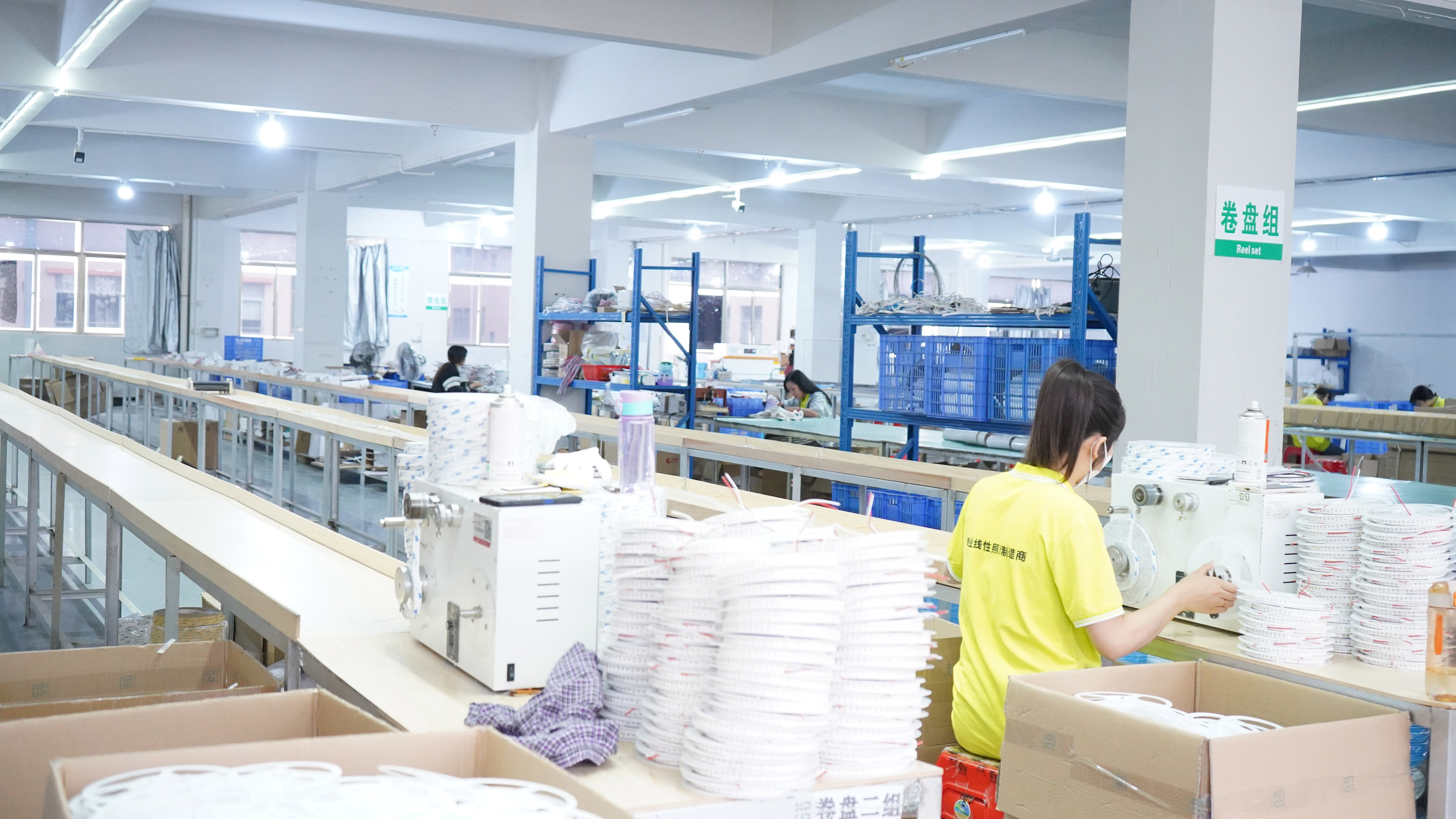
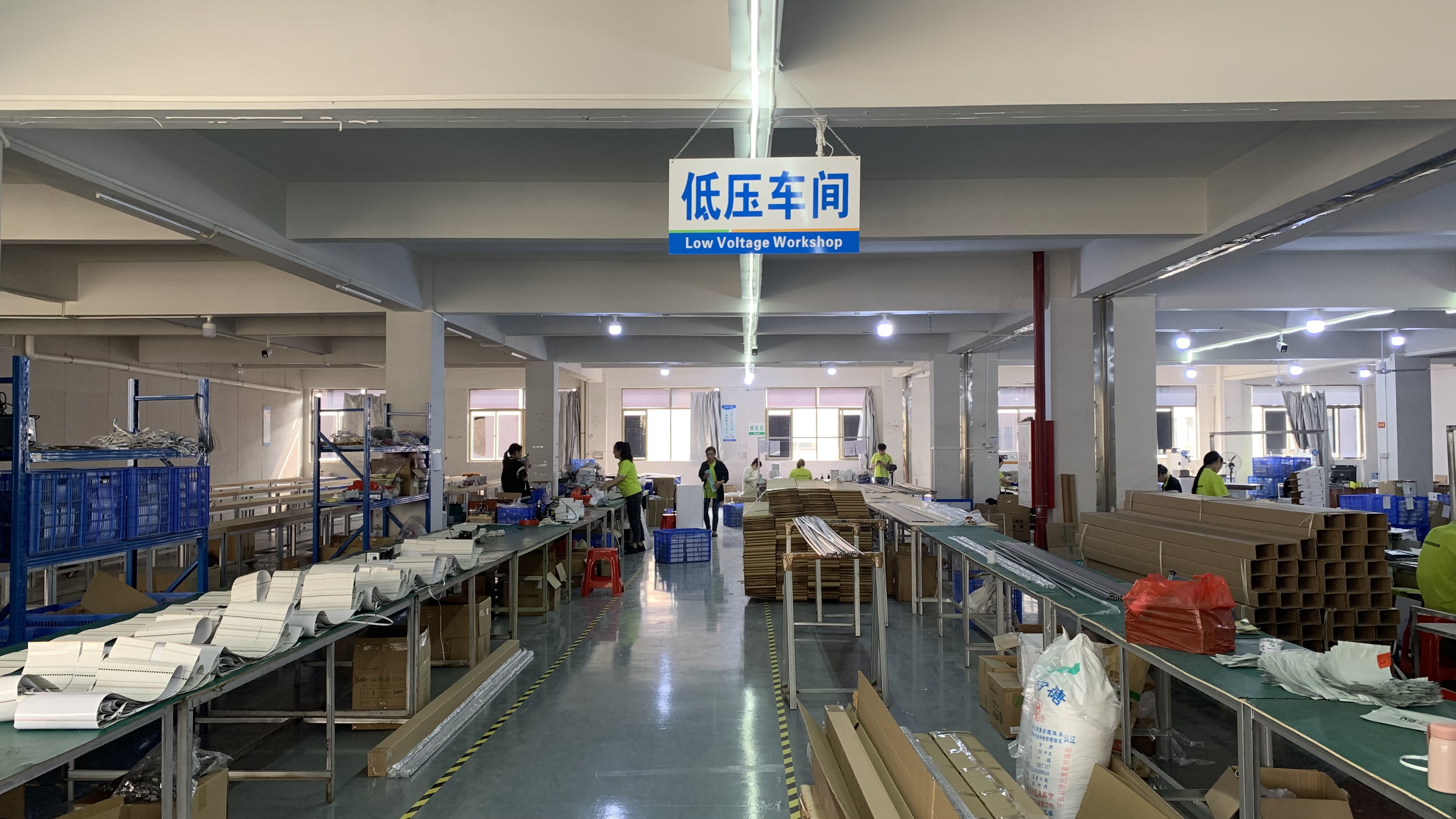
XPUP LED is the brand of Zhongshan Xiangpai(XPUP) Lighting Technology Co., Ltd., an LED strip manufacturer established in 2012 and based in Zhongshan, China. The company operates a 10,000 m² factory with 80 employees, an annual output of 35,000,000 m, a 6-engineer R&D team, and a 50% export share concentrated on EU and USA markets.
Its product range covers high- and low-voltage flexible LED strips, high-brightness COB LED strips, RGB/RGBCW smart color strips, outdoor waterproof strips, energy-efficient commercial strips, and smart dimmable ambient strips. For OEM and ODM buyers, XPUP can customize voltage, color temperature, PCB design, specifications, and packaging. That flexibility is relevant when a project needs a 3535 120 LEDs/m alternative to be matched to the same CCT, CRI, and connector system as the 2835 reference.
For this comparison, the relevant capability is not a claim that one configuration is universally superior. It is the ability to build the 2835 180 LEDs/m specification with a documented copper PCB, CRI, CCT, IP rating, and test record, and to customize a 3535 120 LEDs/m alternative to the same project requirements. XPUP's quality control covers incoming material inspection, in-process inspection, aging tests, and final inspection. Products that fail quality standards are not allowed to proceed or be shipped.
Commercial terms include 10-meter rolls to avoid overloading, a standard two-year warranty, extended warranty terms for large projects and ODM brand partnerships, dedicated engineering support for overseas commercial and residential projects, multilingual installation documents, and dedicated after-sales contacts. The company holds CE and RoHS certifications and reports design and process patents, including original design patents for the C19 and C20 series LED strips. These facts do not make one strip density better than the other, but they reduce the supply risk around either choice.
Buyer checklist before ordering either configuration
Before ordering, require the following information in writing and compare it across the 2835 and 3535 options.
- Emitter and density: confirm 2835 at 180 LEDs/m or 3535 at 120 LEDs/m, including the emitter bin or supplier reference where available.
- Power per meter: the 2835 reference is 11W per meter; confirm the 3535 value independently.
- Voltage and maximum run: the reference is 24V; confirm the maximum length, feed arrangement, and driver sizing.
- CRI and CCT: Ra≥80 and 3000K for the reference; confirm the 3535 values and ask how CCT bins are controlled.
- PCB construction: the 2835 reference uses copper with double-layer copper; ask for copper weight and layer count on both options.
- IP rating: IP20 is suitable for dry, protected locations; specify a higher IP or waterproof variant where water or condensation is possible.
- Diffuser and profile: test the strip in the actual acoustic panel, profile, and diffuser, not on an open bench.
- Thermal path: confirm the profile can dissipate the load if the 2835 build is used at full length.
- Quality records: incoming material inspection, in-process inspection, aging tests, and final inspection.
- Warranty and after-sales: two-year standard coverage, project-specific terms, spare policy, and technical support contact.
- Documentation: installation manual, wiring diagram, maximum run instructions, and multilingual support where required.
Future outlook
Linear lighting is moving toward higher specification discipline. The 24V platform is established, flexible strips dominate the product mix, and high-density builds are taking a larger share of premium architectural work. The next differentiator is unlikely to be the LED count alone. It will be the ability to document the complete build: emitter bin, PCB copper, CRI, CCT consistency, IP rating, thermal performance, and batch traceability.
For buyers, that means the 2835 180 LEDs/m versus 3535 120 LEDs/m decision should be made with a sample and a datasheet, not with a density assumption. The 2835 configuration is a strong fit where a dense, warm, high-CRI line needs to disappear behind a diffuser in acoustic or residential detailing. The 3535 configuration is a legitimate alternative where larger emitters, lower density, and the profile geometry suit the design. The wrong choice is to treat either number as a universal quality ranking.
FAQ
Is 180 LEDs/m always brighter than 120 LEDs/m?
No. LEDs per meter describes emitter count, not light output. Brightness depends on the emitter bin, drive current, and optical efficiency. A 120 LEDs/m strip with larger emitters and a higher drive current can produce comparable or higher lumens per meter than a 180 LEDs/m strip. Buyers should compare lumens per meter and lumens per watt at the same CCT and current.
What does 11W per meter mean for driver sizing?
It is the electrical power per meter of the 2835 reference. A 10m roll would draw about 110W before driver losses. The driver should be sized for the connected load with appropriate engineering headroom, and the maximum run length should follow the supplier's instruction. The 3535 120 LEDs/m power figure must be taken from its own datasheet.
Can an IP20 strip be used in a bathroom?
IP20 is a dry-location rating and is not suitable for exposed bathroom or wet areas. A higher IP-rated or waterproof LED strip light should be specified where water or condensation is possible. The enclosure, diffuser, and installation detail also affect the final ingress protection, so the complete assembly should be reviewed.
Why specify 24V instead of a lower voltage?
24V is widely used in linear architectural lighting because it supports longer runs with better voltage-drop tolerance than lower-voltage systems. The 24V segment accounted for 52.0% of linear LED strip fixture market revenue in 2022, according to Grand View Research. The exact maximum run still depends on the strip, PCB, and driver.
Which configuration suits acoustic wall panels?
The 2835 180 LEDs/m build is often the more direct choice for acoustic wall panels because the higher density gives the diffuser more emission points to blend into a continuous line. The 3535 120 LEDs/m build can suit deeper profiles or designs where a more pronounced emitter pattern is acceptable. The decision should be validated with a sample in the actual panel and diffuser.
What should buyers verify on a 3535 120 LEDs/m datasheet?
Verify power per meter, voltage, CRI, CCT and bin, IP rating, PCB copper construction, maximum run length, dimming compatibility, and warranty. The 3535 package name does not define these values. A datasheet that omits them is not sufficient for a decision-stage comparison.
Does a double-layer copper PCB matter?
It can. Copper layer count and thickness affect current distribution, voltage drop, and heat spreading along the strip. In the 2835 reference, the PCB is copper with double-layer copper construction. Buyers should ask for the same PCB details on the 3535 alternative and compare them at the same run length.
For buyers who need the complete specification set, the 2026 XPUP LED Strip Catalog is available as a PDF.
Have Questions or Need More Details?
Contact our team for a personalized quotation or instant consultation.
Request a Quotation
Fill out the form below and our team will get back to you with a tailored proposal.
WhatsApp Direct Chat
Prefer to chat in real-time? Message us on WhatsApp for instant assistance & quick answers.
- Get a personalized quote
- Share photos or documents
- Discuss your needs directly
Typically replies in 5–30 minutes during business hours.