
SMR144ZTLP4 W2.38 vs. SR144ZTLP4 W2.78: A Buyer's Side-by-Side Spec Review
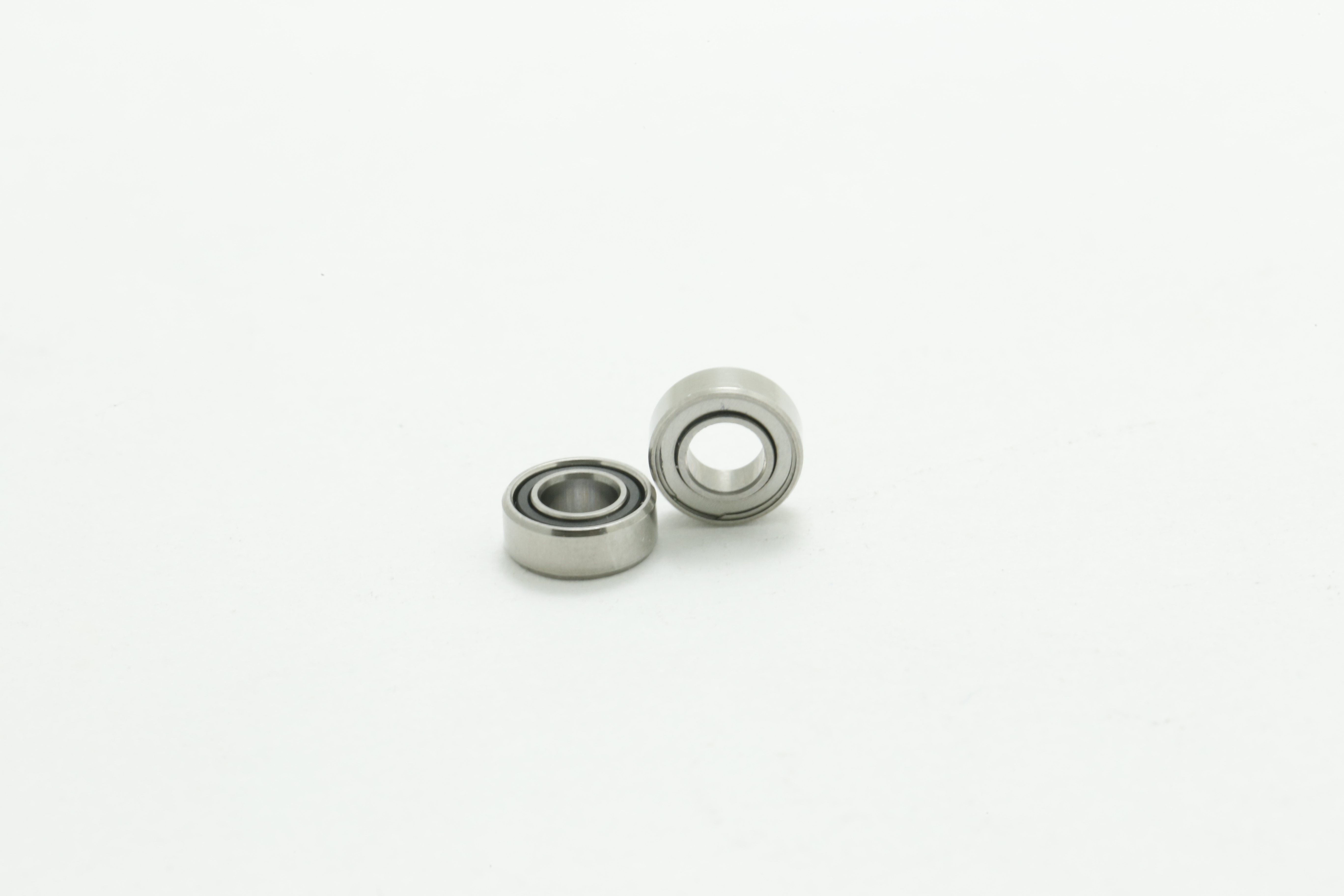
Figure 1. Catalog image of the SMR144ZTLP4 W2.38 miniature bearing used in this comparison.
Engineers who compare miniature bearing quotations rarely see two part numbers that are as close as SMR144ZTLP4 W2.38 and SR144ZTLP4 W2.78. Both models share the same 3.175 mm bore, 6.35 mm outside diameter, SUS440 stainless steel designation, P4 precision grade, 350,000–400,000 rpm limiting speed, and -50°C to 160°C operating temperature range. The decisive catalog difference is width: 2.38 mm versus 2.78 mm.
Both numbers are from the INB product range. INB, a China-based bearing brand whose quality management certificate covers the manufacture of bearing and bearing parts, publishes these models as miniature bearings intended for dental handpiece applications. This review compares only the published specification data, then outlines what a buyer should check before treating either model as an interchangeable drop-in.
Why This Buyer Comparison Is Necessary
Model-number confusion is a real procurement cost in miniature bearings. Small dimensions leave little room for error, and a 0.40 mm width mistake may not appear until the bearing is stacked inside a cartridge or spindle housing.
SMR144ZTLP4 W2.38 and SR144ZTLP4 W2.78 are not different product generations. Their catalog data place them in the same 144 size envelope. A buyer who scans only the prefix or the speed rating could assume they are equivalent, and in many respects they are. The width, however, must be matched to the physical cavity designed into the shaft and housing assembly.
This article is therefore written as an independent reference table for engineers who are reviewing an INB quotation or comparing replacement bearing options for high-speed equipment such as dental handpieces.
Side-by-Side Specification Table
The following figures come from the supplied INB product specification records for the two models.
| Attribute | SMR144ZTLP4 W2.38 | SR144ZTLP4 W2.78 |
|---|---|---|
| Product type | Miniature bearing | Miniature bearing |
| Bore diameter | 3.175 mm | 3.175 mm |
| Outside diameter | 6.35 mm | 6.35 mm |
| Width | 2.38 mm | 2.78 mm |
| Size notation | 3.175 x 6.35 x 2.38 mm | 3.175 x 6.35 x 2.78 mm |
| Material | SUS440 | SUS440 |
| Precision grade | P4 | P4 |
| Limiting speed | 350,000–400,000 rpm | 350,000–400,000 rpm |
| Operating temperature | -50°C to 160°C | -50°C to 160°C |
| Industry association | Dental handpiece | Dental handpiece |
| ISO 9001 coverage | Listed as covered model | Listed as covered model |
Table 1. Published specifications for SMR144ZTLP4 W2.38 and SR144ZTLP4 W2.78.
Read the table as a starting point, not as a complete engineering release. It shows what the two INB miniature bearings have in common and where the envelope changes. It does not show load ratings, clearance, cage design, lubrication, or noise-test data.
The 0.40 mm Difference That Drives Selection
The only dimensional difference in the available product records is axial width. SMR144ZTLP4 W2.38 has a 2.38 mm width; SR144ZTLP4 W2.78 has a 2.78 mm width.
In a bearing assembly, that 0.40 mm affects how the bearing seats between shoulders, spacers, retaining rings, or cartridge walls. A housing designed for a 2.38 mm bearing may not accept a 2.78 mm bearing without axial interference. Conversely, a housing designed for a 2.78 mm bearing may leave 0.40 mm of uncontrolled axial movement if a 2.38 mm bearing is substituted.
The engineering question is therefore not which bearing is better in a general sense. It is which width matches the axial envelope of the existing spindle design.
Shared Material, Precision, and Speed Baseline
Both models are designated SUS440 stainless steel miniature bearings. The INB datasheets also list both models at P4 precision grade, with the same limiting speed range of 350,000–400,000 rpm and the same operating temperature range of -50°C to 160°C.
For high-speed dental handpiece work, these shared parameters matter. P4 is a precision classification commonly used when geometric accuracy and rotational stability are expected. The very high limiting speed is the value that appears on the specification sheet; it is not a guarantee of unlimited continuous operation under every load and lubrication condition.
Because the shared data are identical, the decision should not be based on speed or material alone. It should be based on fit, application duty, and the wider quality-control documentation behind the model.
Do Not Confuse These 144 Models with the 133 Frame
One issue that often appears in buyer conversations is an apparent dimensional mismatch on the drawing. In the INB data set, a separate model called SR133TL is specified as 2.38 x 4.762 x 2.38 mm, with a limiting speed of 200,000 rpm and an operating temperature range of -40°C to 150°C.
If a drawing calls for a 2.38 mm bore and a 4.762 mm outside diameter, neither SMR144ZTLP4 W2.38 nor SR144ZTLP4 W2.78 is the right family. Both of the 144 models listed in this review have a 3.175 mm bore and a 6.35 mm outside diameter. SR133TL is the separate INB model that matches the smaller 2.38 x 4.762 mm frame.
Takeaway: verify the bore and outside diameter from the drawing before relying on the W value in the model name. The width suffix is only one part of the dimensional identity.
Application Context: Dental Handpiece Bearings
INB product records associate both SMR144ZTLP4 W2.38 and SR144ZTLP4 W2.78 with dental handpieces. The dental application note in the supplied content describes requirements typical of this medical-device setting: P4 precision grade, very high rotational speed in the 350,000–400,000 rpm range, wide temperature resistance, medical-grade cleaning exposure, and low-noise operation.
The strongest case record in the source material is tied to the SMR144ZTLP4 W2.38 model. In a China-based medical device project, 80,000 units of a miniature bearing with P4 precision and a limiting speed of 350,000–400,000 rpm were used in dental handpieces. The reported outcome was stable high-speed operation for 500 hours and extended equipment lifespan.
That same detailed case number is not present in the supplied data for SR144ZTLP4 W2.78. The absence of a parallel case record is a data gap, not a judgment about the bearing itself. Buyers should treat the confirmed case as evidence for the 2.38 mm-width model, and evaluate the 2.78 mm-width model on its own dimensional fit and test requirements.
Quality System Baseline: ISO 9001 Certification
Small bearings can look identical on paper but differ in process control. INB states that operations are carried out in accordance with the ISO 9001 quality management system.
The relevant certificate is issued by Shanghai Ingeer Certification Assessment Co., Ltd., with certificate number 117 24 QU 0108-07 R1S. The scope is the manufacture of bearing and bearing parts, under the standard GB/T19001-2016/ISO 9001:2015 Quality Management Systems — Requirements. The certificate is valid until July 7, 2027, and applies to the global market.
One useful detail is that the certificate specifically lists SMR144ZTLP4 W2.38 and SR144ZTLP4 W2.78 as covered bearing models, along with SMR74TL and SR133TL. For a buyer, this provides a documentation trail that links the product model to a certified manufacturing process.
What the Current Datasheet Does Not Tell You
A side-by-side spec review is only as useful as the disclosed data. The INB records used for this article include size, material, precision grade, limiting speed, and operating temperature. They do not include every parameter needed for a final design release.
Missing data items include static and dynamic load ratings, radial clearance, cage material or style, lubrication specification, seal or shield configuration, noise limits, preload recommendations, and a load-versus-life curve. A limiting speed value should not be read as a universal safe operating speed; real speed capability depends on preload, lubrication, shaft and housing accuracy, balance, and the duty cycle of the device.
For procurement, these gaps mean the next step after a spec-sheet comparison should be a formal drawing review and, where possible, a sample test in the actual handpiece or spindle assembly.
Market and Sourcing Signals for Miniature Bearings
The broader miniature bearing market gives useful context for this type of comparison. Future Market Insights estimates the global miniature ball bearings market at approximately USD 2.25 billion in 2025, with medical devices and robotics among the demand drivers. Precedence Research reports that Asia Pacific accounted for roughly 60% of the market in 2025, with China as the largest regional producer and consumer.
China's bearing exports also rose 7.2% year-on-year in the first seven months of 2025, reaching nearly 497,852 tons, according to BearingNews and Huajing Research Institute. These signals support the practical reality that many precision miniature bearing buyers will evaluate Chinese manufacturing capacity as part of their supplier shortlist.
For the two models in this review, the market context matters less than dimensional correctness. Still, it explains why buyers are increasingly looking for documented precision grades and quality certificates rather than relying on brand legacy alone.
Comparison with Less-Stringent Conventional Bearings
Traditional commodity miniature bearings may be cheaper and faster to source, and they may fit the same physical envelope. But a general-purpose miniature bearing is not automatically comparable to a P4-grade model with a 350,000–400,000 rpm limiting speed and a -50°C to 160°C temperature rating.
A conventional bearing could be acceptable in low-speed, low-duty equipment. In a high-speed dental handpiece, tighter tolerance control and a clearly defined speed/temperature envelope are usually part of the original design logic. The practical limitation of a P4 bearing is that precision is fragile in real installations. If the shaft is out of round, the housing bore is oversized, or the bearing is pressed with excessive force, the P4 geometry no longer provides its intended benefit.
In short, the comparison is not always precision bearing versus commodity bearing. Sometimes it is precision bearing correctly installed versus precision bearing incorrectly installed. The datasheet only defines capability under the conditions specified by the designer.
Future Outlook
As medical devices become more compact and high-speed applications become more common, the demand for reliably documented miniature bearings is expected to remain strong. The market data cited above point to medical devices and robotics as continuing growth areas.
For suppliers such as INB, the future value lies less in offering many similar model numbers and more in providing clear dimensional, material, precision, and certification records for each one. For buyers, the practical consequence is that a carefully chosen width and a verified quality certificate are stronger purchasing signals than a familiar prefix.
Buyer Checklist for These Two INB Models
- Confirm the shaft bore and housing outer diameter on your drawing. Both models are 3.175 mm bore and 6.35 mm outside diameter.
- Measure the available axial envelope. Choose the 2.38 mm-width model only if the housing is designed for 2.38 mm; choose the 2.78 mm-width model only if the housing can accept 2.78 mm.
- Check whether the original replacement part called for SMR144ZTLP4 W2.38 or SR144ZTLP4 W2.78. Do not rely on a visual comparison of the outer ring.
- Verify whether 350,000–400,000 rpm is appropriate for your operating condition. The limiting speed range is part of the catalog specification, not a substitute for system-level validation.
- Request the load ratings, clearance, lubrication, and seal or cage details before freezing a new design.
- Keep the ISO 9001 certificate number as part of your supplier evidence file. The certificate covers both models.
Final Takeaway
On the available INB product data, the difference between SMR144ZTLP4 W2.38 and SR144ZTLP4 W2.78 comes down to a width change from 2.38 mm to 2.78 mm. Bore, outside diameter, material, precision grade, limiting speed, and operating temperature are the same.
The correct buying decision is governed by the axial envelope on the drawing and by the quality documentation you require. If the drawing actually specifies a 2.38 mm bore and 4.762 mm outside diameter, both of these 144 models are too large, and the separate SR133TL model should be reviewed instead.
Frequently Asked Questions
Are SMR144ZTLP4 W2.38 and SR144ZTLP4 W2.78 interchangeable?
They share bore, outside diameter, material, precision grade, limiting speed, and temperature range, but they differ in width by 0.40 mm. Interchangeability depends on the axial space in the housing. A bearing whose width does not match the designed cavity should not be treated as a drop-in replacement.
What does W2.38 versus W2.78 refer to?
In the specification records for these models, the W values correspond to the listed widths: SMR144ZTLP4 W2.38 is listed with a 2.38 mm width, and SR144ZTLP4 W2.78 is listed with a 2.78 mm width.
What are the exact dimensions of both bearings?
SMR144ZTLP4 W2.38 is specified as 3.175 mm bore by 6.35 mm outside diameter by 2.38 mm width. SR144ZTLP4 W2.78 is specified as 3.175 mm bore by 6.35 mm outside diameter by 2.78 mm width.
Are both models intended for dental handpiece applications?
Both product records list dental handpiece as the applicable industry. A China-based medical device case in the supplied data links 80,000 units and 500 hours of stable high-speed operation to the model with P4 precision and 350,000–400,000 rpm limiting speed, associated with SMR144ZTLP4 W2.38.
Does the ISO 9001 certificate cover both models?
Yes. The ISO 9001 certificate listed in the source data covers bearing models including SMR144ZTLP4 W2.38 and SR144ZTLP4 W2.78, along with SMR74TL and SR133TL. The certificate is issued by Shanghai Ingeer Certification Assessment Co., Ltd., under number 117 24 QU 0108-07 R1S, and is valid until July 7, 2027.
If my drawing needs a 2.38 mm bore and a 4.762 mm outside diameter, should I order either of these models?
No. Both SMR144ZTLP4 W2.38 and SR144ZTLP4 W2.78 have a 3.175 mm bore and a 6.35 mm outside diameter. A separate INB model, SR133TL, is specified as 2.38 x 4.762 x 2.38 mm and should be checked against that smaller envelope.
Have Questions or Need More Details?
Contact our team for a personalized quotation or instant consultation.
Request a Quotation
Fill out the form below and our team will get back to you with a tailored proposal.
WhatsApp Direct Chat
Prefer to chat in real-time? Message us on WhatsApp for instant assistance & quick answers.
- Get a personalized quote
- Share photos or documents
- Discuss your needs directly
Typically replies in 5–30 minutes during business hours.