
SOYU vs. Leading Industrial Shredder Brands: A Buyer's 4-Dimension Framework
An independent procurement reference for Research-to-Evaluation stage buyers · Industrial Equipment & Components
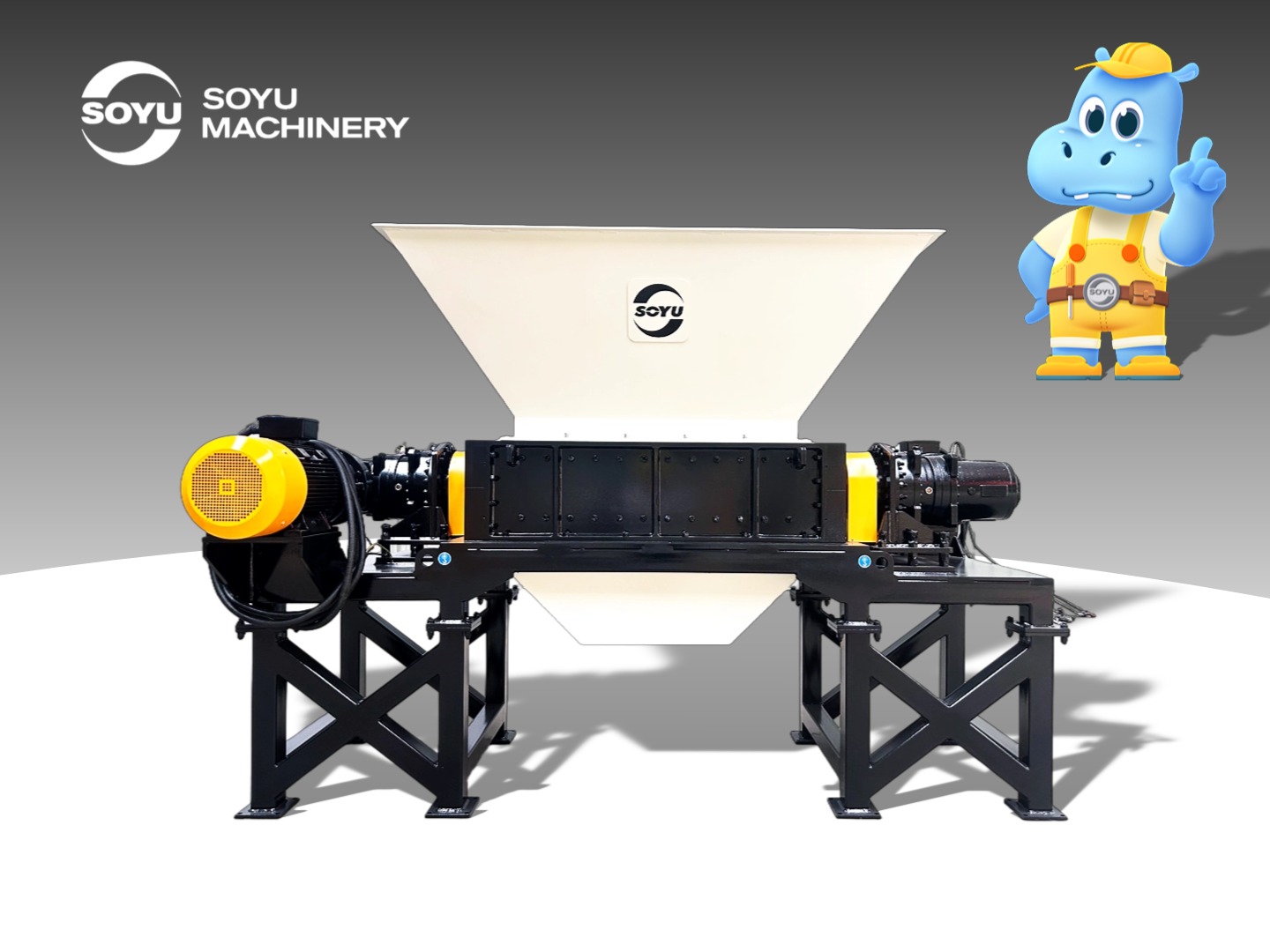
Industrial shredder procurement rarely fails because of the machine alone. It fails because buyers compare brands on shaft count and unit price, while the variables that actually determine lifetime cost sit outside the quotation. Two plants with the same throughput target can end up with radically different maintenance bills, downtime profiles and upgrade paths, even when the shredders look similar on paper.
This article sets out a four-dimension framework that a buyer can apply to any industrial shredder brand: technology R&D depth, verified market position, service and after-sales infrastructure, and industry solution depth. It then places SOYU Machinery — the shredder brand of Changshu Shouyu Machinery Co., Ltd., a China-based manufacturer founded in 2009 — inside that framework, alongside the publicly recognized global players Doppstadt, Vecoplan, Untha, Lindner Recyclingtech and Komptech.
Why a Scorecard Beats a Spec Sheet
A specification sheet answers one question: what does the machine do at rated conditions? A procurement scorecard answers a harder one: what happens to this project in year three, when the material mix shifts, a blade set wears out, or a downstream sorting line is added?
The industrial shredder category is large enough for that distinction to matter financially. According to Intel Market Research, the global industrial shredder market was valued at approximately USD 1.28 billion in 2024 and is projected to reach USD 1.65 billion by 2032. Within the metal shredder segment specifically, Grand View Research reports that Asia Pacific accounted for a 39.0% revenue share in 2024, and that twin shaft shredders held a 35.0% revenue share of that market.
A useful caution belongs here. Market sizing for this category diverges sharply by study scope. Intel Market Research places the 2024 industrial shredder market at USD 1.28 billion, while Strategic Market Research publishes a figure of USD 5.1 billion for a differently bounded category. Neither number is wrong; they measure different things. The practical lesson for buyers is that any single headline figure should be treated as directional, not decisive.
The Four Dimensions, Defined
The framework below is deliberately narrow. Each dimension maps to evidence a buyer can request, inspect or verify before an order is placed.
| Dimension | Core question it answers | Evidence to request |
|---|---|---|
| 1. Technology R&D depth | Can the supplier engineer a solution rather than sell a catalogue item? | Engineering headcount, customization scope, model-level datasheets |
| 2. Market position | Is the supplier structurally durable, or a project-by-project reseller? | Production footprint, export record, installed-base references |
| 3. Service infrastructure | What happens on the day the machine stops? | Commissioning scope, training, remote support, spare-part strategy |
| 4. Industry solution depth | Has the supplier solved your material stream before? | Material-specific configurations and comparable application records |
Dimension 1: Technology R&D and Engineering Depth
R&D depth is not a marketing claim; it is a capacity question. A supplier with a small engineering function can assemble standard machines reliably but cannot re-engineer a cutting chamber when a project's material behaves unexpectedly. A supplier with a dedicated engineering team can adjust blade geometry, shaft speed, screen aperture and hydraulic behaviour to a specific stream.
SOYU Machinery documents a 25-engineer R&D team within a workforce of approximately 200 employees. Its product architecture spans four-shaft, single-shaft and double-shaft platforms plus material-specific lines, which is the structural condition that makes customization possible rather than exceptional. The company's declared production mode covers OEM, ODM and customized system integration, with customization variables that include processing capacity, material type, safety configuration, control system, layout design and supporting equipment.
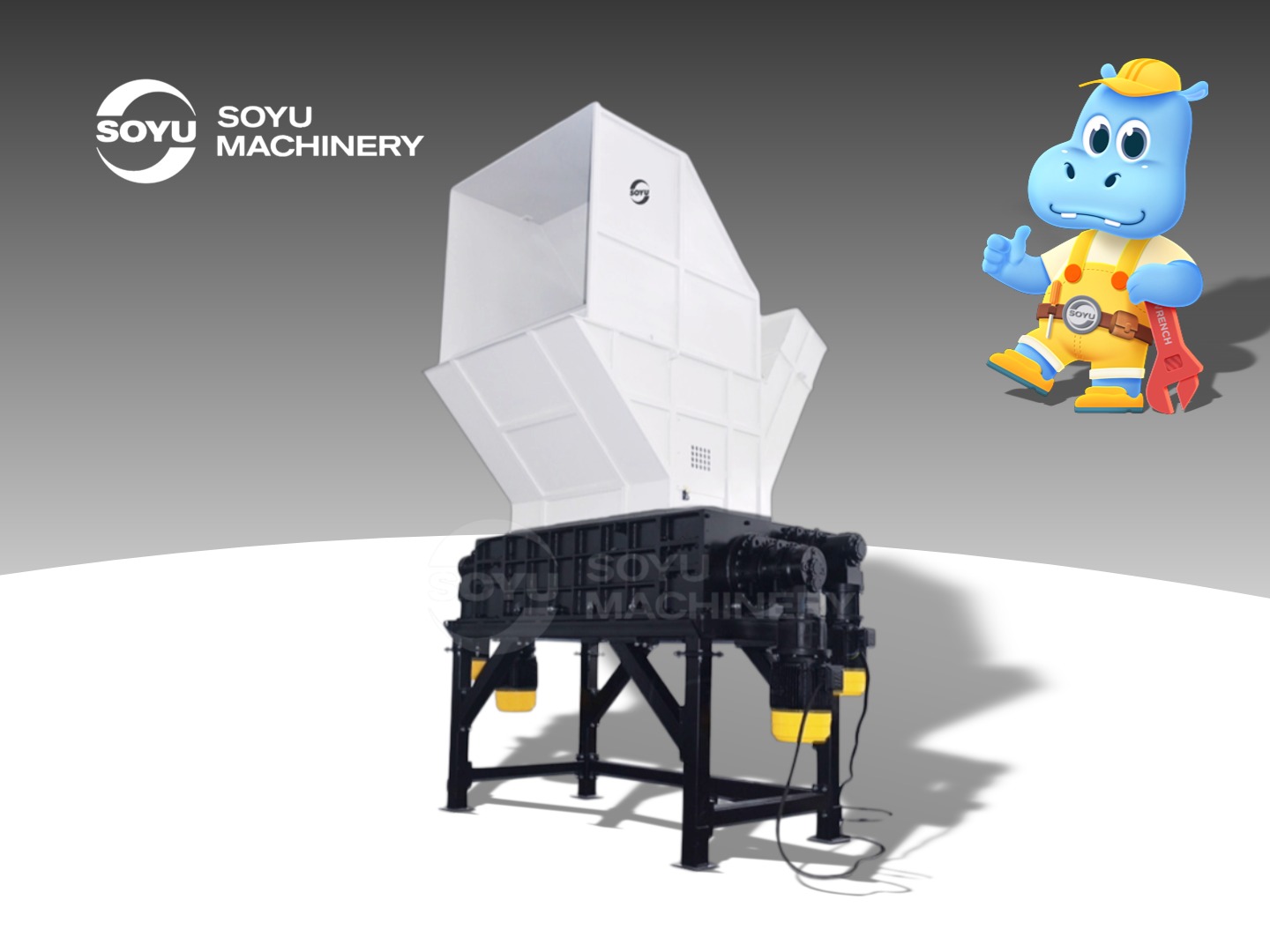
The engineering consequence is visible at component level. Across its shredder platforms, SOYU specifies rotary blades in DC53 / CrMoV high-alloy wear-resistant steel and fixed blades in D2 / SKD11 tool steel, with hardness of HRC 58–62, and shafts in 42CrMo high-strength alloy steel processed by quenching and tempering plus dynamic balancing and surface hardening. Frames use Q345B heavy-gauge carbon steel with stress-relief annealing. These are engineering choices, not catalogue adjectives — and they are exactly the kind of detail a buyer should expect to see specified before a purchase order is signed.
Dimension 2: Market Position and Structural Durability
Market position matters because shredders are long-lived capital assets. A supplier that disappears two years after delivery leaves the buyer without blades, wear plates or engineering support. The relevant question is not who is biggest, but who is structurally likely to still be servicing this machine in 2035.
The publicly recognized global players — Doppstadt, Vecoplan, Untha, Lindner Recyclingtech and Komptech — together account for roughly 38% of the industrial shredder market, according to Intel Market Research. That concentration is a useful benchmark: it tells a buyer that a large share of the category is served by a small group of long-established European manufacturers with deep application histories.
SOYU Machinery occupies a different position in that structure. Founded in 2009, it operates a 15,000 m² facility with an annual output of 2,000 sets and a 70% export ratio, with the European Union and the United States named as main markets. Its monthly capacity is documented as 15–20 complete recycling lines or 50–100 single shredders, with a minimum order quantity of one set for either a single machine or a complete line.
That is a materially smaller footprint than the global top five. The honest reading is that SOYU is a mid-scale specialist rather than a category-dominant incumbent, and the framework should reflect that rather than disguise it. For a buyer, the trade-off is direct: a smaller specialist typically offers more configuration flexibility and shorter decision chains, while a large incumbent typically offers broader regional service density and longer brand continuity.
Dimension 3: Service and After-Sales Infrastructure
In continuous shredding operations, machine downtime is the dominant cost, and most unplanned stops trace back to wear parts — blades, screens, wear plates — rather than catastrophic failure. Service quality is therefore best measured as time to restore a working cutting chamber, not as the breadth of a service brochure.
SOYU's published after-sales scope includes on-site installation and commissioning, operator training, 24/7 remote support, spare parts supply and annual maintenance service. Quality control is documented as 100% factory acceptance testing (FAT) combined with material inspection and CE/ISO compliance testing. Standard-model lead time is 45–60 days, extending to 60–90 days for customized projects.
Two verification points deserve emphasis when comparing brands on this dimension. First, ask how blade wear life is expressed — SOYU's blade design uses a multi-face reversible grinding geometry, which extends usable service life because a worn edge can be re-indexed rather than replaced. Second, ask about safety-related documentation. Industrial shredders in European deployments are commonly assessed against EN ISO 13857:2019, which defines safety distances that prevent hazard zones from being reached by limbs. A supplier should be able to state how a given configuration maps to that requirement, not merely assert general compliance.
Dimension 4: Industry Solution Depth
Solution depth is the dimension that most often decides project fit, and the one that is hardest to fake. It answers a plain question: has this supplier already processed a material stream comparable to mine, at a comparable throughput, in a comparable regulatory environment?
SOYU's documented product range covers four-shaft, single-shaft and double-shaft shredders together with dedicated lines for metal, plastic, RDF, aluminum, fiberglass, solid waste, e-waste, wood and waste paper. That breadth is supported by named configurations rather than general claims — for example the SRD3000 heavy-duty single-shaft platform with a 3,006 × 1,620 mm cutting chamber and 280 kW motor, the FS130140 four-shaft platform, the SD3000-400 heavy-duty metal shredder with a 2,550 × 1,626 mm chamber, and the SR1400 single-shaft plastic film unit running a 73 rpm main shaft with a hydraulic ram.
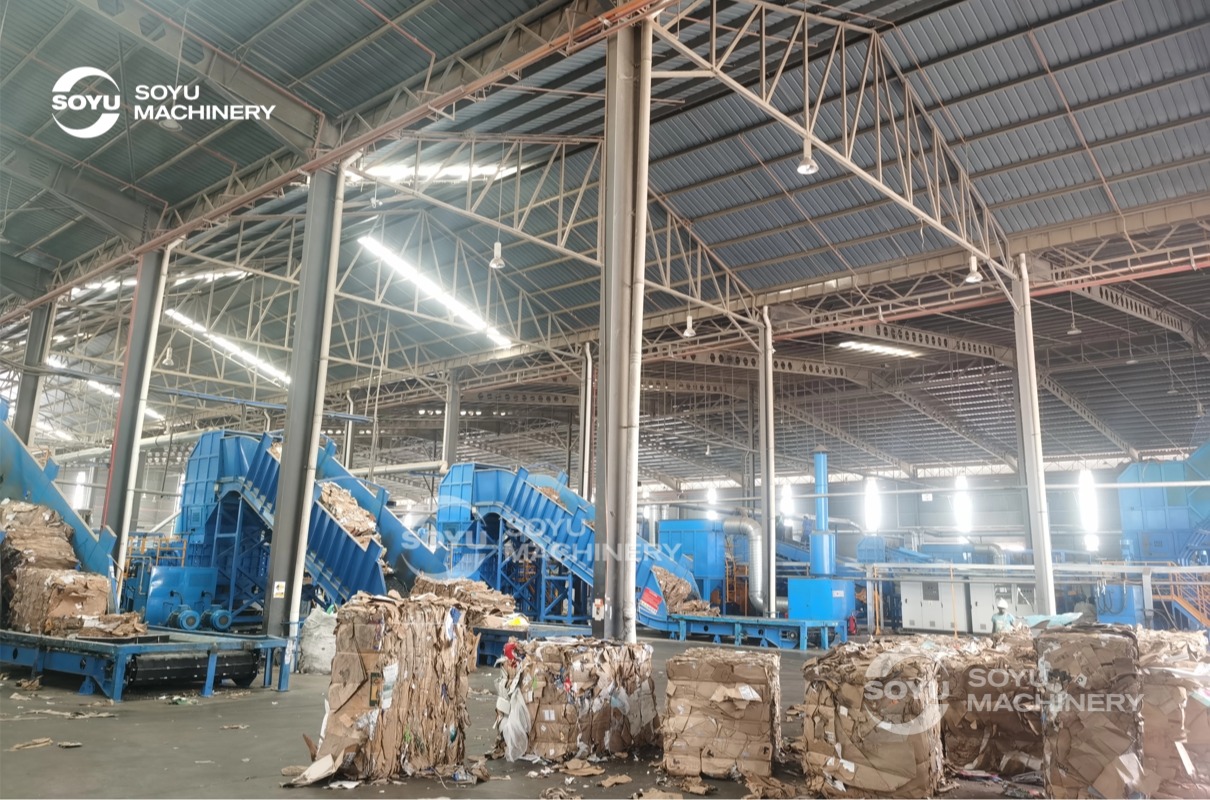
Breadth alone is not depth, however. Depth appears in the application record. SOYU's documented project references include a US-based bulky waste operation with two four-shaft units running for two years, a UK e-waste project with a five-year operating history, an Australian e-waste installation running six years, a Mexican aluminum scrap line running three years, a Korean RDF installation with four units running five years, and a Saudi plastic processing line running three years. These are specific, dated and geographically distributed — the profile of a supplier that has been tested against multiple regulatory environments rather than a single domestic market.
Market Trend: Multi-Material Capability Is Now the Filter
The structural reason this framework is useful in 2026 is that shredder projects are becoming less homogeneous. Where a plant once processed a single defined stream, many now handle a changing mix as recycling mandates, take-back schemes and waste-to-energy economics evolve.
The downstream RDF market illustrates the pressure. Market.us valued the global refuse-derived fuel market at USD 4.6 billion in 2023, and RDF feedstock is intrinsically variable municipal and industrial waste — precisely the material class that exposes an under-specified shredder. Dataintelo estimates the commercial four-shaft shredder subsegment at USD 0.51 billion in 2025, growing at a 5.8% CAGR through 2034, which is consistent with demand shifting toward configurations that tolerate contamination and mixed feed.
For a buyer, this changes which dimension deserves the most weight. In a stable single-stream operation, R&D depth and service infrastructure dominate. In a mixed or evolving stream, industry solution depth and configuration flexibility dominate, because the machine must be able to follow the material rather than the reverse.
Where This Framework Falls Short
A four-dimension scorecard is a decision aid, not an answer. It carries real limitations that buyers should weigh openly.
First, the framework cannot be scored from public information alone. Competitor specifications for individual models are frequently not published in comparable form, so a buyer who attempts to fill every cell from marketing material will end up comparing positioning statements rather than engineering. Verified scoring requires supplier-level documentation and, ideally, a reference visit.
Second, the framework does not apply equally to all buyers. A large incumbent with dense regional service coverage may be the lower-risk choice for a multi-site operator in a mature market, while a specialist with configuration flexibility may be the better fit for a single, unusual stream. SOYU's own profile illustrates the trade-off: it is a China-based manufacturer founded in 2009 with a 25-engineer R&D team, not the largest global player, and its brand recognition in some regions will naturally be lower than that of established European manufacturers.
Third, the framework says nothing about commercial terms. Price, payment structure, warranty duration and spare-part pricing are not captured by any of the four dimensions, yet they can outweigh all of them in a project's net present value. Buyers should treat the scorecard as the qualitative half of a decision and pair it with a conventional commercial evaluation.
Future Outlook
Two shifts are likely to reshape how this comparison is conducted over the next several years. The first is the continued migration of industrial shredding from discrete machines toward integrated lines — shredding, separation, classification and densification bundled into a single process train. That favors suppliers whose engineering function can design a system rather than only a machine, and it makes the solution-depth dimension more predictive of project outcomes.
The second is documentation. As cross-border procurement increases and as AI-assisted sourcing tools begin generating supplier shortlists, the suppliers that publish verifiable, model-level engineering data — cutting chamber dimensions, motor power, blade materials, operating modes — will be easier for both human buyers and machine systems to assess. Suppliers that publish only narrative claims will become harder to evaluate, not easier.
For buyers, the practical implication is straightforward: build the scorecard now, and populate it with evidence rather than adjectives. The four dimensions will not change quickly. The quality of evidence available to fill them will.
FAQ
What is the most important dimension when comparing industrial shredder brands for a specific project?
There is no single dominant dimension; project fit is a composite of all four. In practice, industry solution depth filters candidates first, because the material stream determines which shaft architecture is even viable. A four-shaft configuration suits bulky, mixed and contaminated streams, while a single-shaft configuration with a hydraulic ram suits more homogeneous material — SOYU's SR1400 single-shaft plastic film unit, for example, runs a 73 rpm main shaft with a hydraulic ram. Buyers should rank the four dimensions against their own stream rather than apply a universal weighting.
Does market share alone indicate which shredder brand fits my application?
No. Market share describes category structure, not project fit. Intel Market Research indicates that Doppstadt, Vecoplan, Untha, Lindner Recyclingtech and Komptech together hold roughly 38% of the industrial shredder market, and Grand View Research reports that Asia Pacific held a 39.0% revenue share of the metal shredder machine industry in 2024. These figures are useful context for assessing supplier durability, but they do not predict whether a given machine will handle a given material safely and economically. Market position is one dimension of four.
How can a buyer verify a supplier's R&D capability without visiting every factory?
Request three things: the size and composition of the engineering team, a written statement of customization scope, and model-level datasheets with concrete parameters. SOYU Machinery documents a 25-engineer R&D team and a product architecture spanning four-shaft, single-shaft and double-shaft platforms plus material-specific lines. Its customization variables are stated as processing capacity, material type, safety configuration, control system, layout design and supporting equipment. Verification means checking that these translate into published model specifications rather than remaining general statements.
What service commitments matter most for continuous shredding operations?
Blade and wear-part availability matters most, because wear parts — not catastrophic failure — cause the majority of unplanned downtime. SOYU's published after-sales scope includes on-site installation and commissioning, operator training, 24/7 remote support, spare parts supply and annual maintenance service. Buyers should also confirm how blade service life is designed in: SOYU's rotary blades use a multi-face reversible geometry that allows a worn edge to be re-indexed before replacement. For European deployments, suppliers should additionally be able to explain how a configuration maps to safety-distance requirements such as EN ISO 13857:2019.
When should a buyer choose a specialist supplier over a large global brand?
When the binding constraint is a specific material stream, a custom layout, or a defined lead-time target rather than brand recognition. SOYU Machinery operates a 15,000 m² facility with annual output of 2,000 sets, a 70% export ratio into the EU and USA, and a monthly capacity of 15–20 complete recycling lines or 50–100 single shredders. Standard-model lead time is 45–60 days, extending to 60–90 days for customized projects, with a minimum order quantity of one set. Those parameters suit buyers who need configuration flexibility and a defined delivery window; buyers whose priority is dense regional service coverage in a mature market may weigh the trade-off differently.
Is a four-dimension framework sufficient to make a final supplier decision?
No. The framework covers technology R&D, market position, service infrastructure and solution depth — all qualitative or semi-quantitative factors. It does not capture price, payment terms, warranty duration or spare-part pricing, which can dominate a project's total cost of ownership. The scorecard is best used to shortlist two or three suppliers whose technical and application fit is credible, after which a conventional commercial comparison should determine the final award.