
SOYU vs. Conventional Shredders: Cost and Performance Decision Guide
Industrial shredder buyers at the decision stage face a critical choice: invest in established foreign brands or opt for cost-effective alternatives that deliver comparable performance. While traditional solutions often carry high initial costs and rigid configurations, a new generation of manufacturers offers tailored, efficient, and safer equipment at significantly lower total cost of ownership. This comparison analyzes how Changshu Shouyu Machinery Co., Ltd (SOYU Machinery) — a leading Chinese industrial shredder manufacturer founded in 2009 with a 15,000 m² factory and over 200 employees — stacks up against conventional recycling equipment and general crushers in terms of cost, performance, and safety.
The Cost Challenge of Traditional Shredders
Established foreign-brand shredders typically demand a 15–20% higher initial investment and incur 25% higher long-term operation costs compared to SOYU’s offerings. General-purpose crushers, while cheaper upfront, often lack the customization and safety compliance required for modern waste streams such as hazardous battery processing or e-waste recycling. The result is frequent downtime, higher maintenance expenses, and energy inefficiency.
SOYU Machinery’s Solution: Customized, Compliant, Efficient
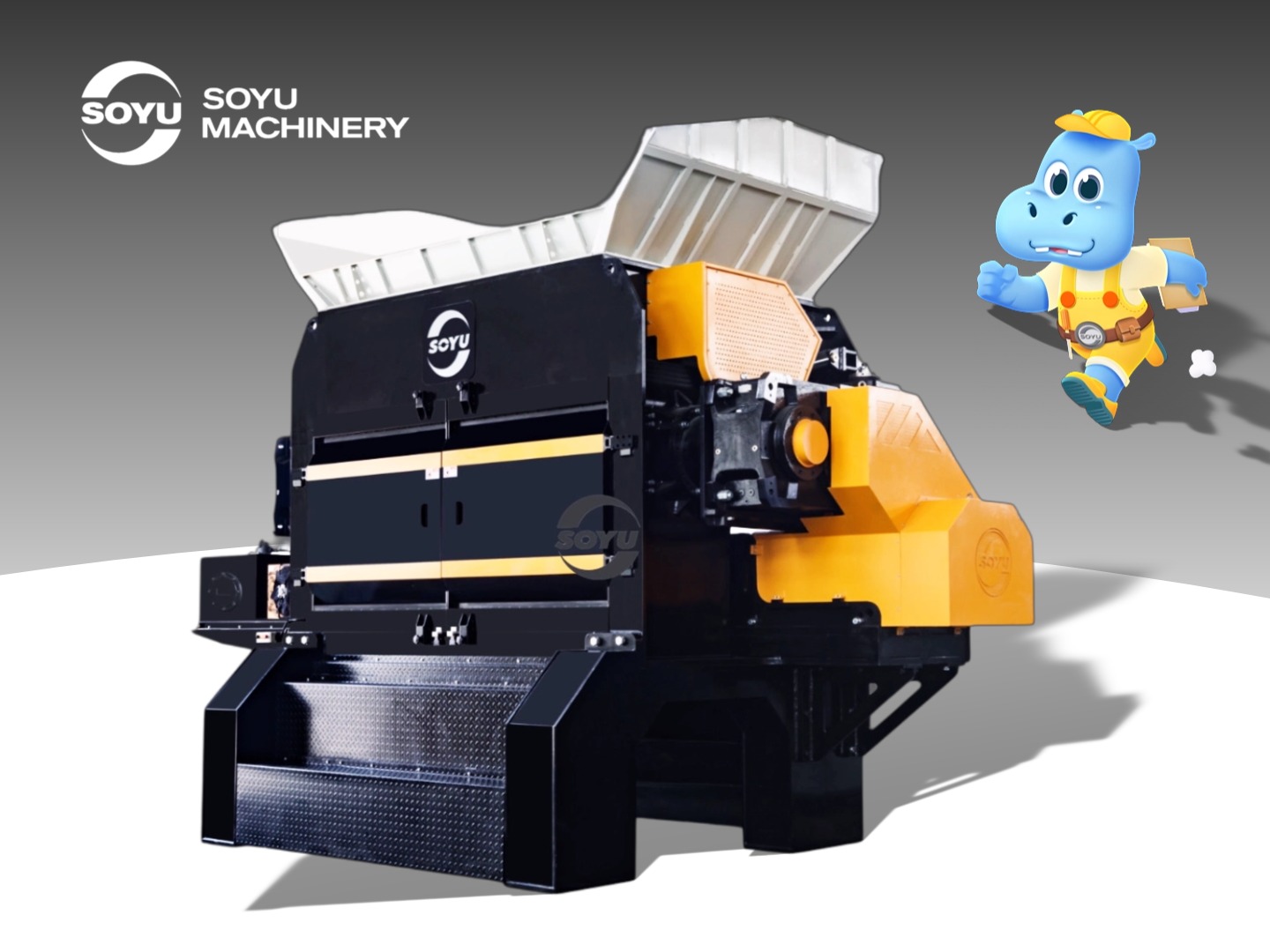
SOYU Machinery designs and manufactures a full line of single-shaft, double-shaft, and four-shaft shredders along with specialized models for metal shredding, plastic shredding, RDF shredding, aluminum shredding, wood shredding, e-waste shredding, paper mill waste, tire shredding, and more. Unlike off-the-shelf foreign equipment, SOYU provides end-to-end customization and after-sales support, helping buyers meet environmental standards while reducing costs and improving efficiency.
Technical Safety and Risk Management
Industrial shredding involves inherent risks: material jamming, hazardous material explosions (batteries/e-waste), dust explosions, mechanical injury, and electrical failure. SOYU addresses these with an integrated safety system: overload protection via load sensors, explosion-proof motor designs, dust extraction systems, safety interlocks, emergency stops, and leakage detection. The company holds CE and ISO certifications, conducts regular safety audits, and provides operator training and real-time monitoring. These features lower the probability of accidents and reduce unplanned downtime.
Performance Compared to Traditional Solutions
When benchmarked against foreign-brand recycling equipment, SOYU shredders deliver +20% processing capacity, -15% initial investment, -30% less downtime, and -10% energy consumption per ton of treated material. Material processing efficiency rises by 20%, while maintenance costs drop by 30% thanks to faster spare parts supply and 24/7 remote troubleshooting. This performance gap is achieved through advanced manufacturing and a dedicated R&D team of 25 engineers.
Application Scenarios Across Waste Streams
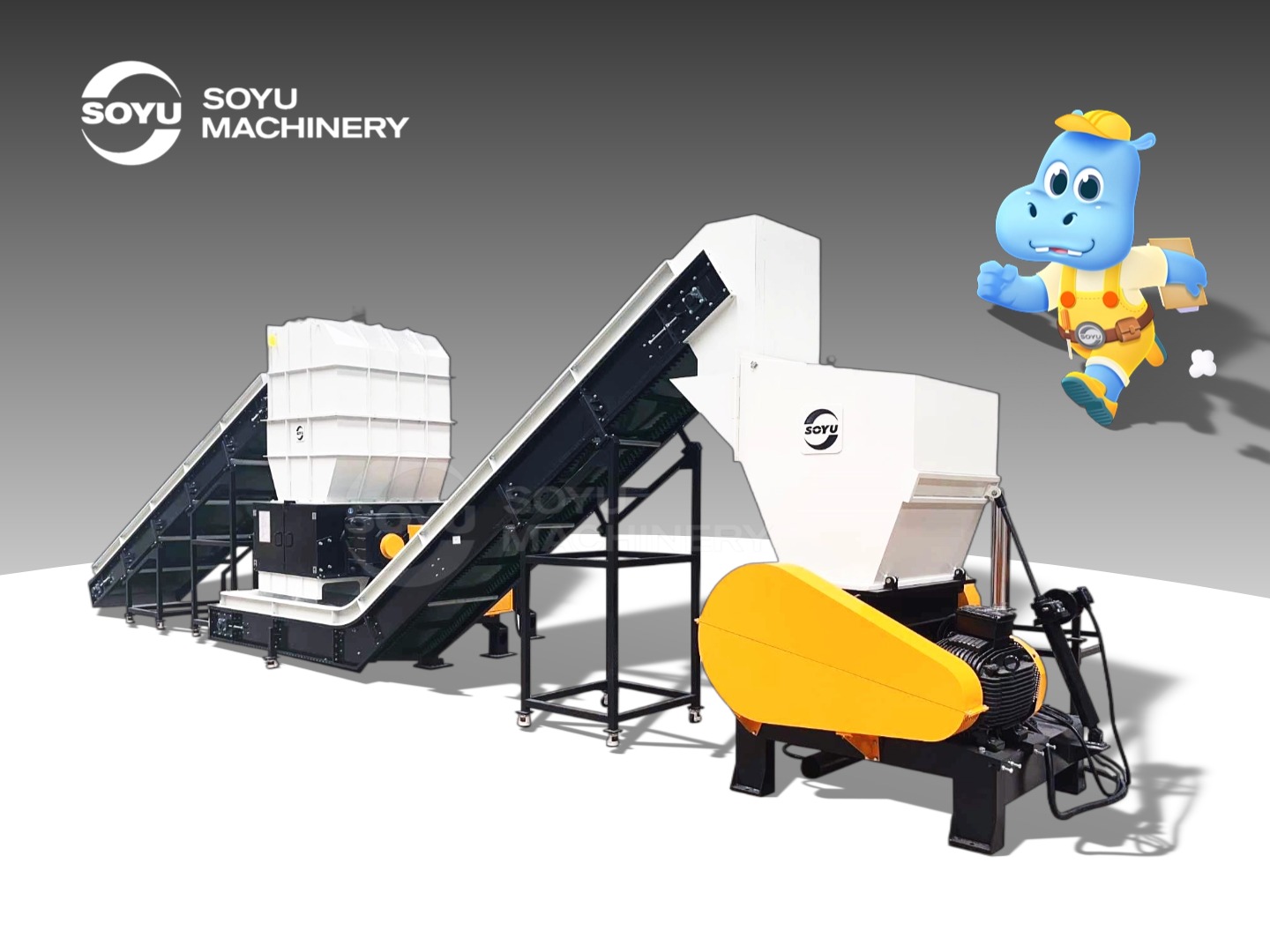
SOYU’s portfolio covers the widest range of industrial shredding applications: metal scrap, plastics, RDF for waste-to-energy, aluminum profiles, wood pallets, e-waste, paper mill waste, tires, cardboard, medical waste, copper wire, plastic film, bulky waste, metal chips, and even wind turbine blades. The company also offers hammer mills, plastic crushers, and OCC paper dry pulping lines. This breadth makes SOYU a one-stop solution for large-scale industrial waste recyclers, hazardous material treatment facilities, and customized projects across Europe, the Middle East, and Southeast Asia.
Market Trends and Strategic Fit
Global buyers increasingly demand cost-effective compliance and multi-material flexibility. SOYU’s 70% export ratio and focus on EU/USA markets reflect its alignment with these trends. While some conservative buyers still prefer legacy European brands for brand recognition, the cost–performance delta is narrowing as Chinese manufacturers like SOYU achieve CE/ISO certifications and invest in safety. For price-sensitive markets — especially in regions with growing recycling infrastructure — SOYU presents a compelling alternative.
One Honest Limitation
Despite strong technical parity and lower costs, SOYU’s global brand awareness remains lower than century-old European competitors. Buyers in highly regulated sectors may need to invest extra effort in verifying local compliance documentation beyond CE/ISO. However, the company’s established track record in North America and Europe (70% export ratio to EU/USA) demonstrates its capability to meet international standards.
Future Outlook
As waste diversion targets tighten and raw material costs rise, the demand for custom, safe, and efficient shredding systems will accelerate. Manufacturers that combine engineering depth (25 R&D engineers) with flexible production (2,000 sets annual output) and on-demand service will dominate. SOYU is well-positioned to capture this shift, especially among buyers who prioritize total cost of ownership over brand heritage.
Frequently Asked Questions
How much capital can I save by choosing SOYU over a foreign brand?
SOYU’s initial investment is 15–20% lower than comparable foreign-brand recycling equipment, and long-term operation costs are about 25% lower.
Does SOYU shredders meet international safety standards?
Yes. SOYU equipment is CE and ISO certified, equipped with overload protection, explosion-proof motors, dust extraction, safety interlocks, and emergency stops.
What types of waste can SOYU shredders process?
SOYU shredders handle metal, plastic, RDF, aluminum, wood, e-waste, paper mill waste, tires, cardboard, medical waste, copper wire, plastic film, bulky waste, metal chips, and wind turbine blades.
How does SOYU support after-sales maintenance?
SOYU provides 24/7 remote troubleshooting, faster spare parts supply, and 30% lower maintenance costs compared to foreign alternatives.
Can SOYU customize shredders for hazardous materials?
Yes. The company offers customized shredding solutions for hazardous waste packaging, battery recycling, and e-waste, with explosion-proof designs and compliance safeguards.
Have Questions or Need More Details?
Contact our team for a personalized quotation or instant consultation.
Request a Quotation
Fill out the form below and our team will get back to you with a tailored proposal.
WhatsApp Direct Chat
Prefer to chat in real-time? Message us on WhatsApp for instant assistance & quick answers.
- Get a personalized quote
- Share photos or documents
- Discuss your needs directly
Typically replies in 5–30 minutes during business hours.