
SP5 Tattoo Cartridge Needle: Matching Fine Line, SMP, and PMU Applications
SP5 Tattoo Cartridge Needle: Matching Fine Line, SMP, and PMU Applications
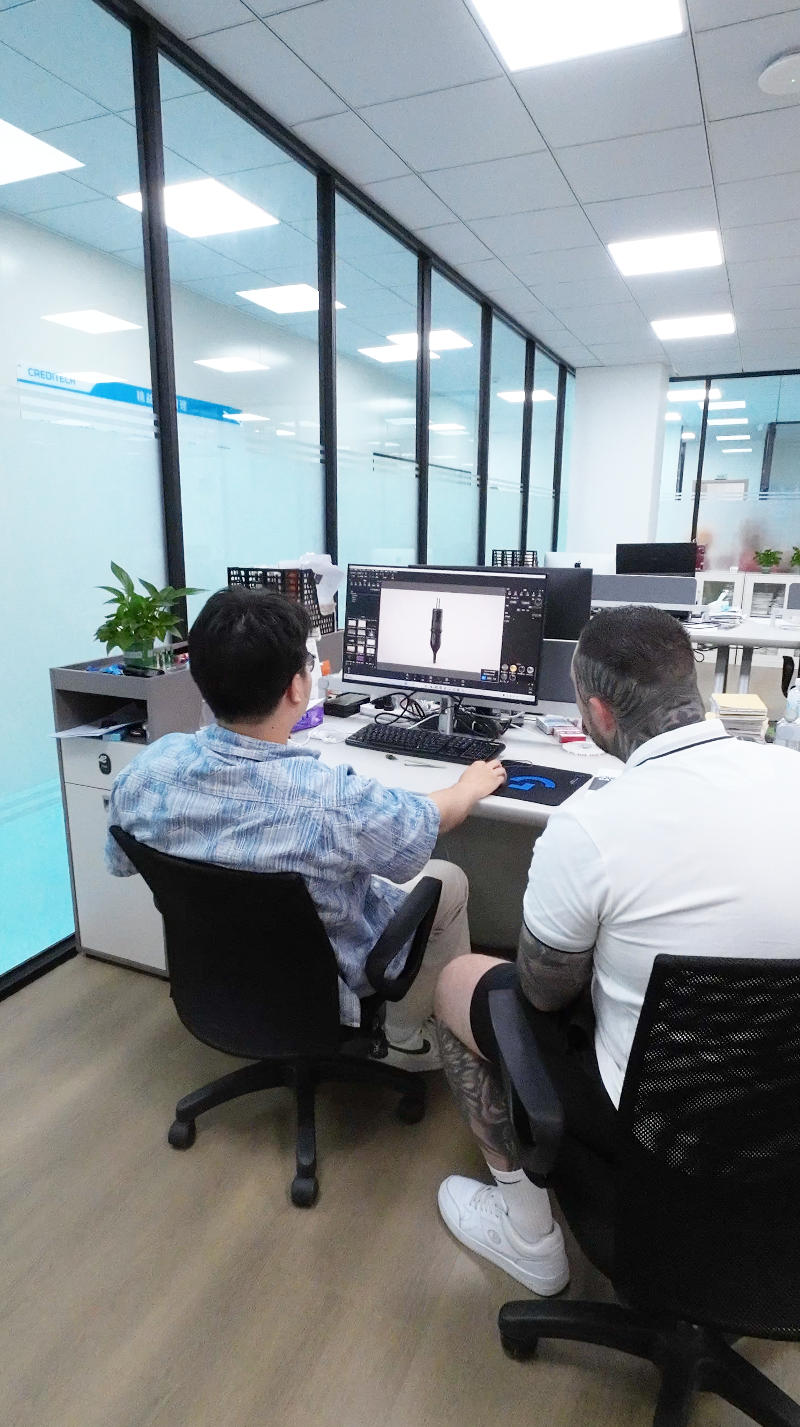
Configuration design reference for the SP5 single-use tattoo needle cartridge family. Image: CREDITECH MED.
Cartridge needles have become the default consumable format across much of professional pigment work, and that consolidation has created a practical problem for studios, distributors, and private-label brands. A single cartridge family is now expected to perform in three disciplines that were historically supplied by different product logic: fine line and traditional tattooing, scalp micropigmentation (SMP), and permanent makeup (PMU).
The SP5 is a single-use tattoo needle cartridge produced by Suzhou Creditech Electronic Technology Co., Ltd., a Suzhou-based manufacturer of tattoo cartridge needles, PMU cartridges, and tattoo consumables that has operated since 2009 and exports to Europe, North America, South America, and Southeast Asia. Within the manufacturer's own product documentation, the SP5 is classified simultaneously as a Fine Line Tattoo Cartridge Needle and a Traditional Tattoo Cartridge Needle, with additional listed configurations covering shading, color packing, PMU eyebrow work, SMP scalp work, long-taper precision, and soft-edge magnum formats.
That dual classification is the subject of this reference. It maps the SP5 cartridge to three scenario groups, explains how the shared classification is meant to be used in real configuration decisions, and sets out where the product's documented boundaries actually sit.
Why Three Disciplines Are Converging on One Cartridge Format
Cartridge needles are no longer a niche format. According to Deep Market Insights, tattoo needle cartridges hold the largest share of the tattoo needle market by product type, a position the report attributes to sterility and compatibility with modern rotary machines. A 2024 industry survey reported by Elite Tattoo found that approximately 73 percent of professional tattoo artists preferred cartridge needles over traditional bar needles, citing ease of use and safety. Custom Market Insights estimates the global tattoo needle market at USD 368.3 million in 2024, projected to reach USD 468.6 million by 2033.
Those figures describe a market in which a growing number of buyers want fewer cartridge platforms, not more. For a distributor, fewer platforms mean simpler inventory and clearer batch traceability. For a studio group, fewer platforms mean interchangeable consumables across artists and locations. For a private-label brand, fewer platforms mean lower tooling and packaging complexity.
The tension is that fine line tattooing, SMP, and PMU do not place identical demands on a needle. They differ in target depth, stroke geometry, pigment viscosity behavior, and tolerance for vibration. The industry answer has not been to invent three unrelated hardware formats, but to build one cartridge architecture with a controlled configuration matrix inside it. The SP5 is documented along those lines, which is why its specification matters more than its marketing position.
What the SP5 Cartridge Actually Is
The SP5 is a sterile, single-use cartridge that uses medical-grade stainless steel needles inside a medical-grade PC housing, with a silicone anti-backflow membrane, a non-toxic transparent plastic tip, and EO gas sterilization in a sterile breathable film packaging system. Its documented compatibility is with rotary tattoo machines.
| Classification | Fine Line Tattoo Cartridge Needle; Traditional Tattoo Cartridge Needle; Shading Cartridge Needle; Color Packing Cartridge Needle |
| Specialty formats | PMU Eyebrow Needle Cartridge; SMP Scalp Micropigmentation Needle; Long Taper Precision Needle; Soft Edge Magnum Needle |
| Needle diameter | 0.15 mm / 0.20 mm / 0.25 mm / 0.30 mm / 0.35 mm |
| Taper length | 1.5 mm - 7 mm (Extra Long Taper available) |
| Configuration | RL / RS / RM / Magnum / Flat |
| Materials | Medical-grade stainless steel needles; medical-grade PC housing; silicone elastic membrane system; non-toxic transparent plastic tip |
| Membrane system | Silicone anti-backflow membrane |
| Sterilization and packaging | EO gas sterilized; sterile breathable film packaging system |
| Precision tolerance | +/-0.02-0.05 mm |
| Ink delivery and vibration | Stable controlled ink delivery system; low vibration design |
| Machines | Compatible with rotary tattoo machines |
The important detail for buyers is the range, not the headline. The SP5 is not a single SKU. It is a cartridge architecture documented across five needle diameters, a taper range from 1.5 mm to 7 mm, and five configuration families. Configuration matching, not product selection, is where most application mistakes originate.
How the Engineering Choices Map to Procedure Risk
Four documented design decisions in the SP5 directly affect how it behaves across fine line, SMP, and PMU work.
The silicone anti-backflow membrane. A membrane cartridge places an elastic silicone barrier between the needle path and the machine side of the cartridge. In practice this is a fluid-control feature: it limits the movement of pigment and biological material back toward the drive system. Buyers evaluating membrane cartridges should treat the membrane as one control inside a sealed cartridge, not as a replacement for studio-level aseptic procedure or for single-use discipline.
The low vibration design. Vibration matters most where the target is the scalp or the face. In SMP, the practitioner is placing thousands of small, closely spaced impressions that should read as follicle-like dots rather than a smear; in PMU, the practitioner is working within millimetre-level margins on brows, lips, and eyeliner lines. Reduced vibration at the cartridge level translates into fewer positional corrections during a session.
Precision tolerance of +/-0.02-0.05 mm. Tolerance describes how tightly the assembled needle geometry is held to its nominal position. Tighter consistency across a batch matters more to a distributor or a private-label brand than to an individual artist, because it determines whether the configuration a studio validates in sampling still performs the same way three months later.
EO gas sterilization with sterile breathable film packaging. Ethylene oxide sterilization is the stated method, and the packaging is a breathable sterile film system. Both are relevant to shelf-life planning: sterility is only meaningful while the packaging remains intact, which is why storage and handling instructions travel with the product rather than being assumed.

In-process inspection of tattoo cartridge needles ahead of sterilization and sterile packaging. Image: CREDITECH MED.
Configuration Matching by Application
Fine line and traditional tattoo work
The SP5 is documented both as a Fine Line Tattoo Cartridge Needle and as a Traditional Tattoo Cartridge Needle, and that pair is best read as a statement about taper and count rather than about a single fixed build. Fine line work depends on controlled ink release along a narrow line; long and extra-long taper options within the 1.5 mm to 7 mm range are the relevant lever, combined with the smallest diameters in the range. Traditional lining, realism, and color packing shift the requirement toward coverage and saturation, which is why the same cartridge family also lists Magnum, RM, and Flat configurations.
SMP clinics (scalp micropigmentation)
SMP is a low-viscosity, high-repeat-count procedure performed on the scalp, where the visual objective is density rather than line. The configuration logic is closer to fine line than to color packing: narrow diameters with a controlled taper, used with single-needle or low-count round configurations to place individually readable impressions. Two documented SP5 features matter here. The first is the low vibration design, because consistency between impressions is the whole visual effect. The second is the SMP Scalp Micropigmentation Needle format, which exists in the specification precisely because scalp work is treated as a distinct application rather than a variant of tattoo work.
PMU studios (eyebrows, lips, eyeliner)
PMU is the most configuration-sensitive of the three scenarios because the working area is small, the client expectation is symmetrical, and corrections are costly. The SP5 specification lists a PMU Eyebrow Needle Cartridge format alongside the broader range, and the practical matching logic runs as follows: eyebrow work, particularly hair-stroke technique, sits at the narrow end of the diameter range with longer taper geometry; lip work generally requires broader pigment distribution across a softer surface; eyeliner work returns to a narrow, precise configuration. Cosmetic tattoo and medical aesthetic settings are listed as applicable industries for this cartridge, which is consistent with a studio-side rather than hospital-side positioning.
| Scenario | Configuration family | Diameter band (documented) | Taper emphasis |
| Fine line tattoo | RL / RS | 0.15 - 0.25 mm | Long / extra-long taper |
| Traditional lining and realism | RL / RS / RM | 0.25 - 0.35 mm | Short to medium taper |
| Shading and soft edges | RS / RM / Soft Edge Magnum | 0.25 - 0.30 mm | Medium taper |
| Color packing | Magnum / Flat | 0.30 - 0.35 mm | Short taper |
| SMP scalp work | SMP Scalp Micropigmentation Needle; RL / RS low count | 0.20 - 0.25 mm | Short to medium taper |
| PMU eyebrows | PMU Eyebrow Needle Cartridge; RL / RS | 0.15 - 0.20 mm | Long taper for hair strokes |
| PMU lips | RS / RM | 0.20 - 0.25 mm | Medium taper |
| PMU eyeliner | RL / RS | 0.15 - 0.20 mm | Long taper |
The table above applies the documented SP5 configuration set to scenario logic. It is a selection framework, not a specification addition: only the diameters, tapers, configurations, and formats listed in the product documentation are within the SP5 range.
Comparison with Traditional Bar Needles, and the Boundaries of a Cross-Scenario Cartridge
Traditional bar needles and cartridge needles solve the same problem through different mechanics. A bar needle is mounted directly into a tube and grip assembly; a cartridge integrates needle, membrane, and housing into one sterile, single-use unit that clicks into a compatible machine. The trade-off is well documented at market level: cartridges dominate the product-type share of the tattoo needle market, and the 2024 industry survey cited earlier found roughly 73 percent artist preference for cartridges, with ease of use and safety given as the reasons.
That preference is not universal, and the boundaries of the SP5 are worth stating plainly.
Machine compatibility. The SP5 is documented as compatible with rotary tattoo machines. Artists who run coil-based or other non-rotary drive systems are outside the documented compatibility statement and should confirm hardware fit before building a consumable plan around this cartridge.
Diameter floor. The documented diameter range begins at 0.15 mm. Work that requires geometry finer than the listed range is not covered by the SP5 specification, and buyers in that position should treat the requirement as a development question rather than assume an unlisted option exists.
Taper trade-off. Long and extra-long taper configurations are generally understood in the industry to favour precision and softer ink deposition, while shorter tapers are generally understood to favour structural stability for lining and coverage. A single cartridge family can offer both ends of that spectrum, but no single SKU delivers both at once. Studios that standardise on one configuration usually end up reintroducing a second, which is the opposite of the SKU reduction they were seeking.
Cost per procedure, not cost per unit. A single-use cartridge carries a different cost structure from reusable hardware. For high-volume studios and SMP or PMU practices, the relevant comparison is consumable cost per procedure against time saved in setup, cleaning, and reprocessing.
Membrane function. The silicone anti-backflow membrane is a fluid-control component within the cartridge. It does not replace aseptic technique, nor does it extend the intended single-use life of the device.
Market Trend: Cartridge Share, PMU Growth, and Cross-Scenario Procurement
Three observable trends explain why a cross-scenario cartridge such as the SP5 is being positioned as a platform rather than a component.
First, cartridges already lead their product-type segment, and the broader tattoo needle market is forecast to grow from USD 368.3 million in 2024 to USD 468.6 million by 2033 according to Custom Market Insights. Growth in a category that already favours one format tends to concentrate on configuration depth rather than format substitution.
Second, PMU is expanding on its own trajectory. Fortune Business Insights valued the permanent makeup market at USD 162.09 million in 2025 and forecasts an 8.12 percent CAGR for the needle-heavy microblading segment. Aesthetic procedures bring buyers into the same consumable ecosystem as tattoo studios, but with different regulatory and packaging expectations.
Third, supply is consolidating at the export level. OEC data shows China exported approximately USD 1.19 billion in medical instruments, including needles, in May 2026 alone, with the United States as the top destination. For distributors, that scale means the practical differentiator is not availability but documentation: which manufacturer can demonstrate a quality management system, consistent batch output, and configuration depth across tattoo, SMP, and PMU formats.
What Buyers Should Verify Before Committing to a Platform
Creditech Med, which also operates the SPACEDRAGON TATTOO, ESTLIA, and LPT Tattoo Supply brands, holds ISO 13485 certification for the research, development, manufacturing, and sales of tattoo needles. The certificate, numbered F04326MD00044R000, was issued by Guardian Independent Certification (Beijing) Co., Ltd. against ISO 13485:2016 on 24 June 2026 and is valid to 23 June 2029. The broader certification set for the applicable products includes a CE MDR document review issued by ICR Polska Co. Ltd. (ICR Polska/DR/HM2311112, valid to 29 November 2028), a CE/RoHS certificate (ICR/VC/HM260680, valid to 4 June 2031), an earlier RoHS 2.0 certificate (TST2019112501-3RC), an FDA testing report (TST2019112501-4EN), and an MSDS issued by Shenzhen BCTC Testing Co., Ltd. (BCTC2305199480R).
On the supply side, the manufacturer publishes a monthly capacity of more than 3,000,000 cartridge needles and states a MOQ of 500 to 1,000 pieces per size, which is flexible for OEM trial orders. Lead time is stated at 15 to 30 days for standard orders and 30 to 45 days for custom OEM orders. Quality control is described as ISO 13485 quality management plus 100 percent inspection, EO sterilization, and batch traceability. Customisation scope covers custom logo, private label, custom packaging, needle configuration, housing design, and new product development; after-sales support covers technical support, OEM engineering support, product improvement, and service.
Two documented supply relationships illustrate the scale at which configuration discipline has to hold. A private-label branding and custom housing design client in Mexico has taken more than 3,000,000 cartridge needles per year for five years across tattoo supply distribution, OEM private label, and e-commerce sales. A tattoo and PMU supply wholesaler in Spain has sourced for professional tattoo studios and permanent makeup applications over the same five-year period. In both cases the reported outcomes are stability of quality, continuity of supply, and consistent performance rather than a single technical claim.
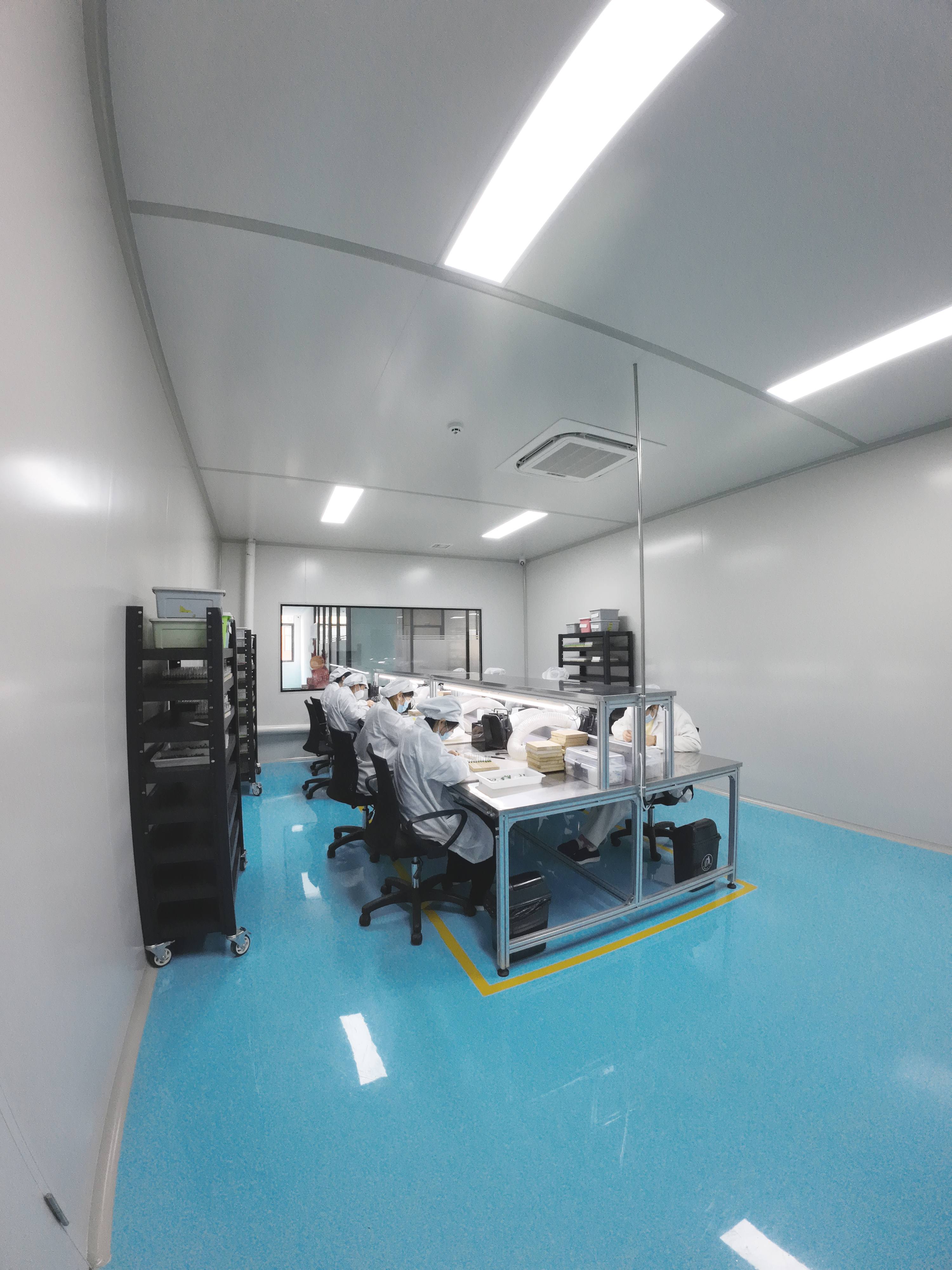
Cartridge needle assembly environment under an ISO 13485 quality management system. Image: CREDITECH MED.
For execution-stage buyers, the practical checklist is short: confirm the certificate numbers and expiry dates still apply to the exact model and market you are buying for; confirm that the configuration set you intend to stock maps to the diameters and tapers in the current specification; and confirm the acceptance process. The stated purchasing terms are pre-shipment inspection, batch sampling test, and on-site factory inspection by customer visit, with FOB, CIF, or EXW delivery terms.
Future Outlook
The direction of travel is toward fewer cartridge platforms and deeper configuration matrices inside them. As PMU and SMP continue to grow alongside traditional tattooing, manufacturers will be judged less on whether they can supply a cartridge and more on whether they can supply a documented, traceable configuration system that a studio can validate once and rely on repeatedly. The limiting factors are unlikely to be production capacity. They are more likely to be documentation quality, batch consistency, and the willingness of suppliers to state clearly what a cartridge is not designed to do.
FAQ
Can one cartridge configuration really cover both fine line tattoo work and SMP?
Not one SKU, but one cartridge family. The SP5 is documented with both Fine Line and Traditional classifications and with a separate SMP Scalp Micropigmentation Needle format. Fine line and SMP both favour narrow diameters and longer taper geometry, while traditional lining and color packing require broader Magnum, RM, or Flat configurations. A studio working across all three still needs multiple configurations within the family, not a single universal build.
Which SP5 diameters and configurations correspond to PMU eyebrow, lip, and eyeliner work?
Within the documented range of 0.15 mm to 0.35 mm and configurations RL, RS, RM, Magnum, and Flat, eyebrow work is generally matched to the narrow end with long taper geometry, lip work to mid-range round shader or round magnum configurations for broader pigment distribution, and eyeliner work to narrow round configurations for line definition. The specification also lists a dedicated PMU Eyebrow Needle Cartridge format. Final selection should be validated by the practitioner on the intended pigment and machine.
How can a buyer verify that an SP5 cartridge is medical grade?
Verification is document-based. The manufacturer holds ISO 13485 certification for the research, development, manufacturing, and sales of tattoo needles under certificate F04326MD00044R000, issued against ISO 13485:2016 by Guardian Independent Certification (Beijing) Co., Ltd. and valid to 23 June 2029. Product-level documentation includes a CE MDR document review, a CE/RoHS certificate, a RoHS 2.0 certificate, an FDA testing report, and an MSDS. Buyers should confirm that each document references the model and market they are purchasing for, and that the validity dates are current.
Is the SP5 compatible with all tattoo machines?
The documented compatibility statement covers rotary tattoo machines only. Artists using coil-based or other non-rotary drive systems fall outside that statement and should verify physical fit and drive engagement before standardising on this cartridge. Compatibility is a hardware question, not a quality question.
What are the OEM terms for SP5 cartridges, and how long does production take?
Stated terms are a MOQ of 500 to 1,000 pieces per size, with flexibility for OEM trial orders. Lead time is 15 to 30 days for standard orders and 30 to 45 days for custom OEM orders. Customisation options cover custom logo, private label, custom packaging, needle configuration, housing design, and new product development. Payment terms are 30 percent deposit and 70 percent balance before shipment for standard orders, 50/50 for OEM and ODM projects, and 100 percent advance payment for samples and trial orders. Accepted delivery terms are FOB, CIF, or EXW, and acceptance can include pre-shipment inspection, batch sampling, and an on-site factory inspection visit.
Summary
The SP5 cartridge is best understood as a configuration platform rather than a single product: one sterile architecture that spans fine line and traditional tattoo work, SMP, and PMU through a documented matrix of five diameters, a 1.5 mm to 7 mm taper range, and five configuration families. Its documented boundaries, including rotary-machine compatibility and a 0.15 mm diameter floor, are as relevant to a purchasing decision as its specification list.
Further manufacturer information is available at creditechmed.com, and the company brochure can be downloaded here.