
SPC Floor Qualification Checklist: Class A, B1, CE, Greenguard, and LEED
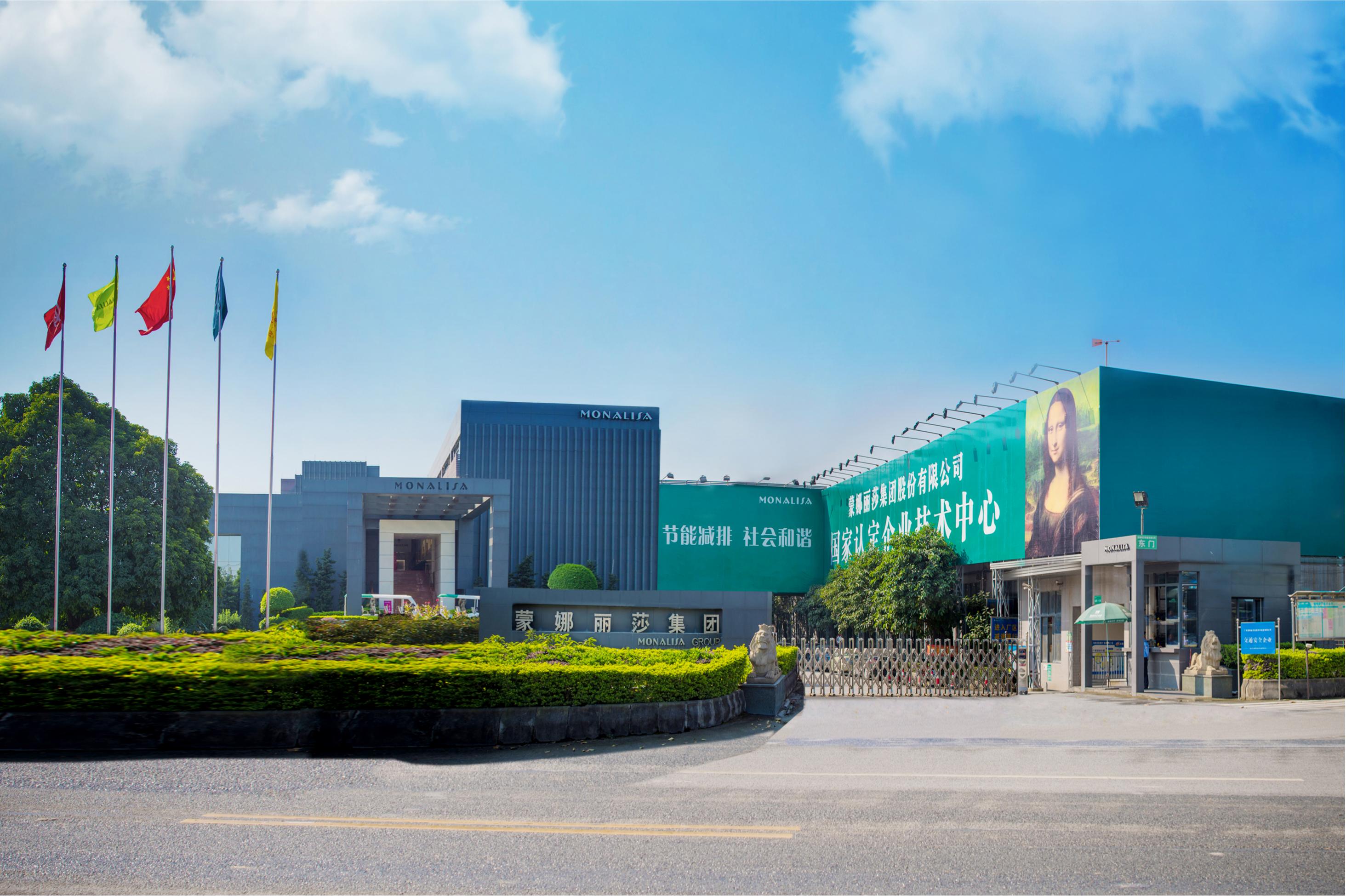
Qualification documents are issued against a specific product, format and production site — not against a product category. Image: Monalisa Group Foshan headquarters, Guangdong Province, China.
An SPC floor specification rarely fails because the plank looks wrong. It fails because the document pack does not match the project it is being submitted for.
Class A, B1, CE, GREENGUARD Gold and LEED are frequently printed together on the same page of a supplier brochure, as though they were steps on one quality ladder. They are not. Each one answers a different question, is issued for a different purpose, and is relevant to a different market or building type. Class A refers to radioactive safety requirements applied in China. B1 describes fire behaviour that healthcare and public interiors are often asked to demonstrate. CE, GREENGUARD and LEED appear mainly in export and project specifications, where they address construction-product compliance, VOC emissions and green-building documentation respectively.
This reference is a checklist for importers, specifiers and procurement teams who have to read those documents correctly — and who need to stop treating "certified" as a single, transferable label.
Why the Same SPC Plank Needs Different Paperwork in Different Markets
Qualification requirements are set by the destination market and by the project, not by the flooring category. The position is stated plainly in the SPC specification itself: the product meets Class A radioactive standards for China and may require CE, GreenGuard or LEED certification for some export markets. The same plank, from the same production line, can therefore face three or four different documentation requests depending on where it is installed.
Two consequences follow for buyers. First, a document that is decisive in one market can be irrelevant in another: a Class A declaration will not answer a European specifier's question about fire behaviour, and a GREENGUARD Gold certificate will not replace a Chinese radioactive classification. Second, the document pack has to be assembled per project. The practical question is not "is this floor certified?" but "which evidence does this application require, and does the file name the product, format and manufacturing site being supplied?"
The Five Document Families Buyers Actually Check
1. Class A Radioactive Standards — China
Class A is a radioactive classification used for building finishing materials in the Chinese market. It matters to SPC because the core is mineral-filled: the material list for the Eir SPC Floor model ME26009-5 includes calcium carbonate in the form of natural stone powder or limestone powder, together with PVC resin, a calcium-zinc stabiliser and a lubricant. Natural mineral fillers are the reason a radioactivity classification is relevant to a plastic-composite floor at all.
What to verify: that the Class A document refers to the finished flooring product and the format being purchased, not only to a raw material, and that it is valid for the domestic market where the project will be delivered.
2. CE Marking — European and EEA-Facing Projects
For construction products placed on the European market, CE marking is a declaration that the product meets the applicable harmonised technical requirements, supported by declared performance values. It is a compliance statement, not a quality ranking, and it does not describe how the floor behaves in a hospital corridor or a bathroom.
What to verify: that the declared performance covers the thickness and format supplied — the Eir SPC Floor range is offered in 4, 5, 6, 7 and 8 mm — and that the project's additional requirements, such as fire behaviour, slip resistance and indoor air quality, are addressed by separate evidence, because CE marking alone does not resolve them.
3. GREENGUARD Gold — Indoor Air Quality for Occupied Buildings
GREENGUARD Gold certification requires testing for over 10,000 chemicals and compliance with strict VOC emission limits under UL 2818, a substantially wider test scope than a general "low emission" claim. It is typically requested where indoor air quality is a specified item: schools, healthcare interiors, offices and other occupied spaces.
What to verify: the certificate is product-specific. Check that it names the product family, construction and manufacturing site being supplied, because a certificate covering one construction does not automatically transfer to another.
4. LEED — A Project Rating That Manufacturers Support, Not Hold
LEED is applied to buildings and projects, not to individual flooring products. A manufacturer cannot "be LEED certified". What suppliers do is provide documentation that the project team can use when preparing a submission — typically VOC emission test reports and material content information from the indoor environmental file.
What to verify: which document the project's consultant actually wants, in which format, and whether it is required before installation or as part of the close-out package. A generic certificate set submitted at the wrong stage is a delay, not a qualification.
5. B1 Fire Rating — Healthcare and Public Interiors
B1 is a fire behaviour classification used in interior specifications where flame spread and self-extinguishing performance matter. It appears most often in healthcare projects — hospitals, clinics, corridors and other occupied circulation areas. The Eir SPC Floor specification lists a B1 fire rating with self-extinguishing behaviour.
What to verify: that the fire test report covers the supplied thickness and construction, since a plank with a different backing or thickness is a different test object, and that the classification is accepted by the authority having jurisdiction for that building type.
A note on the label itself: "Class A" appears in more than one context in building materials. In China it is used for radioactive classification; in other documents it can appear as a fire or performance class. Always read what the certificate is actually classifying before accepting it.
Two Project Criteria That Are Not Certificates: Slip and Abrasion
Not every requirement arrives as a certificate. Two of the most common SPC specification lines — slip resistance and abrasion resistance — are performance criteria measured by test, and they are decided by where the floor is installed, not by the product family.
Slip Resistance: R9–R11, With R10 Upward for Bathrooms
Public and commercial project specifications commonly call for slip resistance between R9 and R11, with bathrooms requiring R10 or higher. The class is a property of the installed floor in a specific zone, which is why a single product range can legitimately be specified at different classes across one building. Product data may also be expressed as a friction coefficient: the Eir SPC Floor is stated as providing increased friction when wet, with a coefficient of at least 0.6.
What to verify: the slip class is quoted for the surface finish being ordered. A textured EIR surface is not the same test object as a smooth finish, and the number must match the zone — a corridor, a pool surround and a bathroom rarely share the same requirement.
Abrasion Resistance: PEI 3–5, With PEI 4 Upward for Commercial and Public Areas
Project specifications for commercial and public areas commonly reference abrasion resistance of PEI 3 to 5, with PEI 4 or higher for commercial and public areas. Buyers should understand where this convention comes from and how to translate it.
PEI is an abrasion classification traditionally used for ceramic tiles. SPC wear resistance is normally expressed differently — as a wear-layer grade and as a number of wear cycles. The Eir SPC Floor specification states wear resistance of 6,000 to 15,000 cycles with a T-grade wear rating. When a specification reads "PEI 4", the practical task is to ask the supplier which test method and which cycle count they can produce against that requirement, for the format being supplied. A supplier who simply answers "yes" without naming the test method has not answered the question.
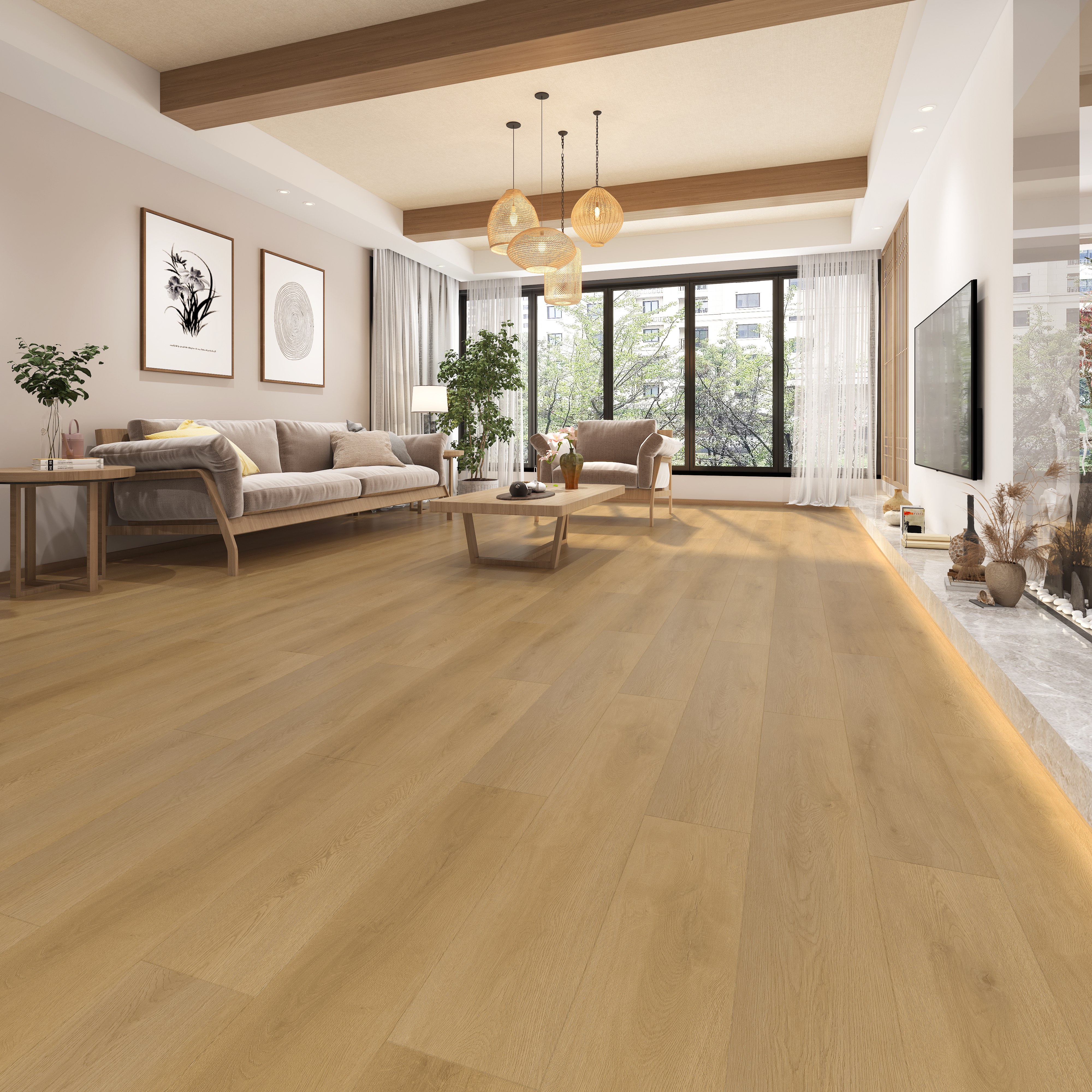
Slip and abrasion requirements are zone-specific: the same product range will be specified at different classes across a hospital corridor, a bathroom and a retail floor.
Matching the Document Pack to the Application
The table below maps the most common project types to the requirements that usually appear in their specifications, and to the detail that buyers tend to overlook when checking the file.
| Application | Requirements most often specified | What to verify in the file |
|---|---|---|
| Residential apartment — China domestic | Class A radioactive standards; waterproof and formaldehyde-free claims | The document names the product and format; validity for the domestic market |
| Residential — export (EU, North America) | CE marking; GREENGUARD Gold where indoor air quality is specified | Declared performance covers the supplied thickness; certificate names the product family and site |
| Commercial office | Abrasion and slip performance; indoor air quality | Wear test method and cycle count; slip class for the finish actually ordered |
| Healthcare / hospital | B1 fire rating; GREENGUARD Gold; R10 or higher in wet rooms | Fire report covers the supplied construction; slip class matches each zone |
| Education / kindergarten | GREENGUARD Gold; Class A in China; slip resistance | VOC test scope; slip class for wet and dry zones |
| Wet areas (bathrooms, kitchens, laundry) | R10 minimum; water absorption performance | Zone-specific slip class; vapour barrier requirement for ground-floor concrete |
| Public and municipal floors | R9–R11 by zone; PEI 4 equivalent for public areas | Mapping between the PEI requirement and the wear-cycle evidence offered |
| LEED-registered project | VOC and material documentation for the project team | The exact document the consultant requests, and the format and submission stage |
A pattern emerges from the table: the number of certificates is not the point. Two documents that match the application are worth more than six that do not.
How SPC Compares With Tile on the Same Qualification Lines
Porcelain tile and SPC flooring are asked for the same document families — Class A radioactive standards for China, and CE, GreenGuard or LEED related documentation for some export markets — but the performance values behind those documents differ, and so does the installation logic. The comparison below uses the public specification lines of a homogeneous-body porcelain tile and of the Eir SPC Floor ME26009-5.
| Criterion | Porcelain / semi-porcelain tile | Eir SPC Floor (ME26009-5) |
|---|---|---|
| Water absorption | ≤0.5% porcelain; ≤3% semi-porcelain | ≤0.05% |
| Slip resistance | R9–R11; R10 or higher for bathrooms | Zone classes apply; stated friction coefficient ≥0.6 when wet |
| Abrasion | PEI 3–5; PEI 4 or higher for commercial and public areas | 6,000–15,000 cycles; T-grade wear rating |
| Environmental and market documents | Class A radioactive standards (China); CE, GreenGuard or LEED may be required for some export markets | Same document families; SPC adds a B1 fire rating with self-extinguishing behaviour |
| Installation | Static, permanently fixed to the substrate with adhesive and grout joints | Floating click-lock system, glue-free installation |
| Dimensional behaviour | Length/width deviation ≤ ±0.2%; thickness deviation ≤ ±5% | Shrinkage ≤1‰, consistent with the ≤0.10% commercial-grade dimensional stability requirement referenced to EN ISO 23999 |
Where the Documents Stop: Installation and Site Limits
Qualification documents describe the product. They do not describe the site, and this is the most common source of misunderstanding in SPC procurement.
SPC is waterproof, but it is not a vapour barrier. Prolonged moisture can still cause mould, which is why a 6-mil polyethylene vapour barrier is recommended for ground-floor concrete installations. Other conditions sit entirely outside any certificate: the subfloor must be flat to within 2 mm over 2 m, installation ambient temperature should be 18–30 °C with relative humidity at or below 65%, planks should acclimatise in their original packaging on site for 24–48 hours, an expansion gap of 5–12 mm is required at walls and fixed objects, and installation over soft carpet or soft PVC underlayment is not permitted. Where underfloor heating is used, the floor surface temperature must not exceed 27 °C.
None of that appears on a CE declaration or a GREENGUARD certificate. Buyers who treat documentation as a substitute for site verification tend to discover the difference after installation, when the paperwork is already complete and the floor is already down.
What the Market Data Suggests About Documentation as a Buying Criterion
Third-party estimates place the global SPC flooring market at roughly USD 9.8 billion in 2025 (Dataintelo), while a narrower published estimate puts it at USD 5.9 billion (Grand View Research). The gap reflects methodology rather than error: broader scopes include rigid vinyl segments that narrower studies exclude. Both point in the same direction — a large and growing category — and neither should be quoted as an exact figure in a tender document.
Two further data points frame the export side. China's exports of plastic floor coverings under HS 391810 reached USD 4.97 billion in 2024 (OEC), and within the SPC category the rigid-core sub-type accounted for 74.2% of 2025 revenue. High export volume concentrates buyers on documentation because it moves purchasing away from local relationships and towards files that must be read by someone who has never visited the factory. As supply scales, the differentiator shifts from "can this supplier make SPC?" to "can this supplier produce the right document pack, for the right format, for this project?"
What a Credible Manufacturer Evidence Pack Looks Like
The manufacturer-side question is whether certificates sit on top of a real quality and environmental management system, or exist as isolated paperwork. Monalisa Group Co., Ltd. is a Foshan-based manufacturer founded in 1992 that produces ceramic tiles, sintered stone slabs and SPC flooring. Its manufacturing footprint covers four production bases — Xiqiao (Foshan), Qingyuan (Guangdong), Tengxian (Guangxi) and Gao'an (Jiangxi) — with 37 production lines, a facility area of 2,779,333.33 m², approximately 4,106 employees, an R&D team of 100 engineers and technicians, and an annual production capacity of 100 million m². The company holds 15 certifications including ISO9001 and ISO14001, and as of June 2021 had participated in drafting 49 national, industrial, local and group standards and obtained 892 authorised patents, including 145 invention patents. Export accounts for 10% of total sales, with major markets including China, Southeast Asia, the Middle East, North America, Europe, Australia and Africa.
For a buyer, the useful reading is not the list itself but the structure behind it. A management-system certification such as ISO9001 or ISO14001 supports process control rather than product claims. Participation in standards drafting indicates familiarity with the test methods a project is likely to cite. And a product-level specification sheet for the model being ordered — in this case the Eir SPC Floor ME26009-5, available in 1220×180 mm and 1524×228 mm formats at 4 to 8 mm thickness — is what the project documents must ultimately match.
Future Outlook
As SPC moves deeper into healthcare, education and public projects, the direction of travel is towards application-matched evidence rather than category-level claims. Three practical shifts are already visible: projects asking for the document pack at tender stage rather than after order; specifiers naming the format, thickness and manufacturing site on the certificate request; and suppliers being asked to explain how a tile-era requirement such as a PEI class or an R class maps onto the test methods they actually run.
Buyers who build a per-project checklist now will spend less time resolving documentation disputes later. The floor itself rarely changes. The paperwork around it does.
FAQ
What does Class A mean on an SPC floor datasheet?
It refers to Class A radioactive standards for China, applied to building finishing materials for the domestic market. It is not a European or North American classification, and it does not describe fire performance or slip resistance. For export projects the same product may additionally require CE, GREENGUARD or LEED-related documentation, depending on the destination market and the project's own specification.
Is CE marking enough for a European project?
No. CE marking is a market-access compliance statement supported by declared performance values. Individual projects add their own requirements, such as fire behaviour, slip resistance and indoor air quality. Buyers should confirm that the declared performance covers the format and thickness being supplied, because a declaration issued for one construction does not automatically describe another.
What is the difference between GREENGUARD and GREENGUARD Gold?
GREENGUARD Gold is the tier that requires testing for over 10,000 chemicals and compliance with strict VOC emission limits under UL 2818. It is typically requested where indoor air quality is a specified item, such as schools, healthcare interiors and offices. Because the certification is product-specific, the certificate should name the product family and manufacturing site being supplied.
Why do healthcare interiors ask for a B1 fire rating?
B1 is a fire behaviour classification used where flame spread and self-extinguishing performance matter, and it appears most often in hospitals, clinics and occupied circulation areas. The Eir SPC Floor specification lists a B1 fire rating with self-extinguishing behaviour. The fire report should cover the thickness and construction actually supplied, and the classification should be acceptable to the authority having jurisdiction for that building type.
What slip resistance does a commercial or public SPC floor need?
Public and commercial specifications commonly call for R9 to R11, with bathrooms requiring R10 or higher. Slip resistance is a property of the installed floor in a specific zone, so one product range can be specified at different classes within the same building. Product data may also be expressed as a friction coefficient, stated as at least 0.6 when wet for the Eir SPC Floor.
What if the specification says PEI 4 but the SPC supplier quotes wear cycles?
PEI is an abrasion classification traditionally used for ceramic tiles, while SPC wear resistance is normally expressed as a wear-layer grade and a number of cycles — 6,000 to 15,000 cycles with a T-grade wear rating for the Eir SPC Floor. The practical step is to ask the supplier to map their cycle evidence to the project requirement and to state the test method and the format tested.
How do I confirm a certificate applies to my order?
Check four things: the product name and model, the format and thickness, the manufacturing site, and the standard or issue detail the document cites. A valid certificate for one model does not automatically cover another format, another construction or another production line. Certificates normally carry a defined scope and validity period, so the version in the file should be current at the time of supply.
Reference resource: Monalisa Group's product brochure, covering its tile, sintered stone slab and SPC floor ranges, can be downloaded here: https://cdn.socialarks.com/sbsp/24792/0/2026/0422/69e88af452ea8.pdf
Have Questions or Need More Details?
Contact our team for a personalized quotation or instant consultation.
Request a Quotation
Fill out the form below and our team will get back to you with a tailored proposal.
WhatsApp Direct Chat
Prefer to chat in real-time? Message us on WhatsApp for instant assistance & quick answers.
- Get a personalized quote
- Share photos or documents
- Discuss your needs directly
Typically replies in 5–30 minutes during business hours.