
SPC Floor Technical FAQ: Click-Lock and Acceptance Criteria
A floating SPC floor succeeds or fails on three things the plank itself cannot control: the joint, the substrate beneath it, and the moisture moving through that substrate. This reference answers the technical and procurement questions that decide handover — 5G click-lock joints, glue-free installation, expansion spacers, the 6-mil polyethylene barrier on ground-floor concrete, subfloor flatness of 2 mm over 2 m, and the purchase terms that should be agreed before the first carton is opened.
SPC floor — rigid stone-plastic composite flooring built on a stone-powder and PVC core — is no longer a marginal category. Rigid-core constructions accounted for 74.2% of SPC revenue in 2025, according to Dataintelo market research. That share signals a maturing product: the argument over whether SPC is a credible alternative to tile or laminate is largely settled in residential and commercial office work. The argument that remains is a colder, more operational one — what has to be true on site for a click-lock, glue-free plank to be accepted without dispute.
Why installation questions arrive after the purchase order
In most buying processes, SPC floor is shortlisted on attributes visible in a sample and a datasheet: wear layer, core density, waterproof performance, certification. Subfloor and joint questions usually surface later, when the site team reads the installation instruction and discovers that the product is a system rather than a loose material.
That sequencing is the source of most acceptance friction. A buyer who has approved a plank on appearance and specification may still reject the installed floor because the slab was out of tolerance, because a soft underlay was laid underneath, or because no one recorded where the perimeter gap could not be maintained. None of those failures are product failures, and none are visible in a quotation.
The practical answer is to move installation questions forward into the procurement document. The sections below follow that order: how the joint works, how the floor is fixed (and not fixed), what happens at the edges, what happens under the slab, and what should be written into acceptance.
Click-lock joints: what 5G actually specifies
SPC planks are normally supplied with a 5G click-lock edge profile. 5G describes a folding, angle-drop joint: the plank is tilted, its edge is inserted into the receiving profile, and the plank is then folded down flat, locking mechanically along the long edge. The short edge engages in the same way. No adhesive, spline, or separate connector is involved.
For procurement, the important consequence is that joint geometry is a factory tolerance, not a site adjustment. A joint that is tight and square in one batch and loose in another will produce visible gapping after installation, and no amount of installer skill resolves it. Goods-in inspection should therefore include a joining trial: two planks from the sampled cartons engaged and checked for tightness, flush surface, and audible or tactile lock engagement.
Joint integrity depends on what is under it
A click joint is a mechanical connection that tolerates compression along its length and very little bending across it. On a flat substrate the load paths stay in plane and the joint performs as designed. On a dished or undulating slab, the joint becomes the hinge where movement concentrates, and repeated deflection works the profile loose. This is why flatness is not a cosmetic criterion — it is a joint-durability criterion, and it belongs in the acceptance schedule alongside the plank specification.
Glue-free floating installation: what it changes on site
A floating SPC floor is installed with no adhesive, no nails, and no staples. The planks connect only to each other; the assembled surface is held in place by its own weight and by the expansion gaps maintained at every fixed edge. Three practical consequences follow.
- No adhesive cure step. Because nothing is bonded to the substrate, the installation schedule contains no adhesive open time or curing window between laying and use.
- The floor moves as one sheet. Every fixed object — wall, column, door frame, pipe, cabinet run — becomes a boundary that must be isolated rather than crossed rigidly.
- The substrate is a working surface, not a bonding surface. It still has to be dry, clean, and flat; it simply does not have to accept adhesive, which changes the preparation method but not the preparation standard.
The most common site error is to treat the absence of adhesive as a reduction in preparation effort. It is the opposite. An adhesive-borne floor can compensate for minor substrate variation through the adhesive bed; a floating rigid-core floor transmits that variation directly into the locking profile.
Expansion gaps and spacers: the tolerance nobody budgets for
Because the floor is not fixed, it must be allowed to move. Spacers are inserted at the perimeter and at every fixed obstruction while the planks are laid, then removed once the run is complete and the gap is closed by skirting or trim. The gap width itself is set by the manufacturer's installation instruction; the acceptance record should document that the gap was maintained, not merely that spacers were used.
Locations that are routinely missed in commercial office and residential fit-outs include:
- Perimeter walls, including short returns and recesses where the run changes direction.
- Structural columns and service risers passing through the floor area.
- Door frames and threshold transitions between rooms.
- Kitchen island plinths, built-in joinery, and any fixed casework sitting on the finished floor.
- Pipe penetrations, which require a collar or sleeve rather than a tight cut.
Moisture control: the 6-mil polyethylene barrier on ground-floor concrete
For ground-floor concrete, the standard installation specification calls for a 6-mil polyethylene moisture barrier — roughly 0.15 mm — laid over the slab before the planks go down. Concrete slabs on grade transmit moisture vapour continuously, and a slab that feels dry to the hand can still deliver enough vapour to affect a floor assembly over time.
Three points matter for acceptance. First, the barrier is a vapour retarder installed as a continuous sheet, with overlaps and edges turned up at the perimeter; gaps and unsealed laps defeat it. Second, it is not a repair for a failed damp-proof membrane — if the slab has no functioning DPM or shows active damp, the barrier is not a substitute for addressing the slab. Third, the requirement is written specifically for ground-floor concrete; it is not a blanket requirement applied to every floor in a building.
Subfloor readiness: dryness, cleanliness, flatness
Three gates decide whether a floating SPC floor can be laid. They are independent, and passing two of them does not compensate for the third.
| Check | What to verify | Acceptance note |
|---|---|---|
| Dryness | No free water, no visible damp, no laitance or weak surface layer | Barrier installed over a dry, sound slab; damp recorded and resolved before laying, not after |
| Cleanliness | No debris, paint, oil, adhesive residue, or loose screed material | Vacuum immediately before the barrier is laid; debris trapped under a sheet creates point loads |
| Flatness | Deviation measured against a straightedge | Acceptance schedules typically specify 2 mm over 2 m; record measurements by grid reference |
| Soundness | No hollow, drummy, or loose areas in the screed | Repair before installation; a floating floor will not bridge a void |
The flatness figure is the one most often disputed, because it is measured rather than observed. A 2 mm deviation across a 2 m straightedge is a tight tolerance by general construction standards, and on refurbishment projects it frequently triggers levelling work that was not in the original budget. That cost belongs in the commercial evaluation of SPC against alternatives, not in the post-installation argument.
Underlay restrictions: no carpet, no soft PVC
Carpet and soft PVC underlay are excluded under a floating rigid-core SPC floor. The reason is mechanical rather than aesthetic. A compressible layer deflects under point loads, and that deflection is recovered at the plank edges, where it works the click profile. The joint opens slightly on loading, closes on unloading, and repeats. Over a season of foot traffic in a commercial office, that cycling produces gapping and, in severe cases, broken locking tongues.
The correct approach is firm, continuous support directly beneath the plank, with any acoustic or cushioning layer supplied as a manufacturer-attached backing rather than added on site. Where a project specifies acoustic performance, the specification should name a product built for it rather than an underlay added to a standard plank.
Purchase terms and acceptance criteria
Commercial terms for SPC floor vary by program and by market, and buyers should expect more than one valid structure. Two recorded term sets illustrate the range: one built around smaller colour-specific order quantities, and one built around container-scale volumes with a more granular inspection protocol.
| Term | Recorded set A | Recorded set B |
|---|---|---|
| Minimum order | 500 sqm per colour | 2,000 sqm |
| Delivery terms | FOB / CIF | FOB / CIF / EXW |
| Payment terms | TT / LC / OA | TT / LC |
| Acceptance basis | Pre-shipment test | Packaging and labelling check; carton opening; dimensional and flatness measurement |
The more detailed protocol in set B is worth reproducing in a purchase order because it converts acceptance from an opinion into a sequence:
- Packaging and labelling check. Outer packaging intact with no moisture or damage; certificate of conformity and installation guide present inside; labelling matches the order on shade, size, and quantity.
- Carton opening. Randomly open 5%–10% of cartons and compare actual colour and pattern against the reference sample or master plate; verify quantity and grade.
- Dimensional and flatness measurement. Using vernier caliper, feeler gauge, and straightedge, measure at least 10 pieces per batch for length, thickness, and flatness.
Two criteria should be added to that sequence for floating installations. The first is the 2 mm over 2 m flatness criterion, applied to the substrate at handover of the preparation stage and to the finished floor at practical completion, with measurements recorded rather than summarised. The second is application-specific performance: the acceptance schedule should name the performance attributes required by the end use — for example, dimensional stability, slip resistance, or indoor air quality certification — rather than accepting a general product declaration.
Matching performance specification to the application
Waterproof and antimicrobial SPC floor specifications dominate residential enquiries, where the priority is tolerance of spills, wet cleaning, and long service life under family traffic. Commercial office SPC floor specifications weight different attributes: wear layer durability under continuous footfall, dimensional stability, and verified indoor air quality for occupied spaces.
Dimensional stability is the most useful single number in that second context. Commercial-grade SPC flooring is required to achieve dimensional stability of ≤0.10% under EN ISO 23999. For a buyer, that figure indicates how much the plank will move across a large continuous office floor, which in turn determines how much expansion allowance and how many movement breaks the layout needs.
Indoor air quality certification has become a second screen. GREENGUARD Gold certification, assessed under UL 2818, requires testing for more than 10,000 chemicals and imposes strict VOC limits. CE marking performs a different function for European projects: it is a declaration of conformity route rather than a performance grade, so a CE certified SPC floor should always be read together with the harmonised standard declaration behind it — and both should be checked at the scope actually supplied, not at brand level.
Where a floating SPC system is the wrong choice
A credible technical answer includes the boundary conditions, and floating rigid-core flooring has several.
- Slabs far outside flatness tolerance. Where the existing substrate needs extensive levelling, the preparation cost can erode the installed-cost advantage that justified SPC in the first place.
- Ground-floor concrete without a functioning DPM. A 6-mil polyethylene sheet manages vapour from a sound slab; it does not correct an unresolved damp problem.
- Heavy rolling loads and concentrated point loads. Mechanical click joints are designed for foot traffic and normal furniture loads; industrial trolley traffic or concentrated static loads need a different specification and should not be accepted on the basis of a residential datasheet.
- Projects expecting acoustic gain from a soft underlay. The exclusion of soft PVC underlay removes that route; acoustic performance must come from the product, not from site addition.
- Compressed programmes that skip substrate preparation. The installation itself is fast, but the preparation stage cannot be compressed without transferring risk to the acceptance stage.
Supplier-side support that reduces acceptance disputes
Monalisa Group Co., Ltd. is a Foshan-based manufacturer founded in 1992 and listed on the Shenzhen Stock Exchange under 002918, producing ceramic tiles, sintered stone slabs, and SPC Floor for residential and commercial projects. Its relevance to a technical FAQ is not the product list but the service layer that sits around installation, because that layer is where most acceptance disputes are actually resolved.
On the production side, the company reports a monthly SPC production capacity of 12.5 million square metres and a standard delivery time of 7–15 days, with quality control following 100% test standards. Capacity at that scale matters to buyers planning phased residential or commercial office releases, where colour consistency between shipments is a live risk rather than a theoretical one.
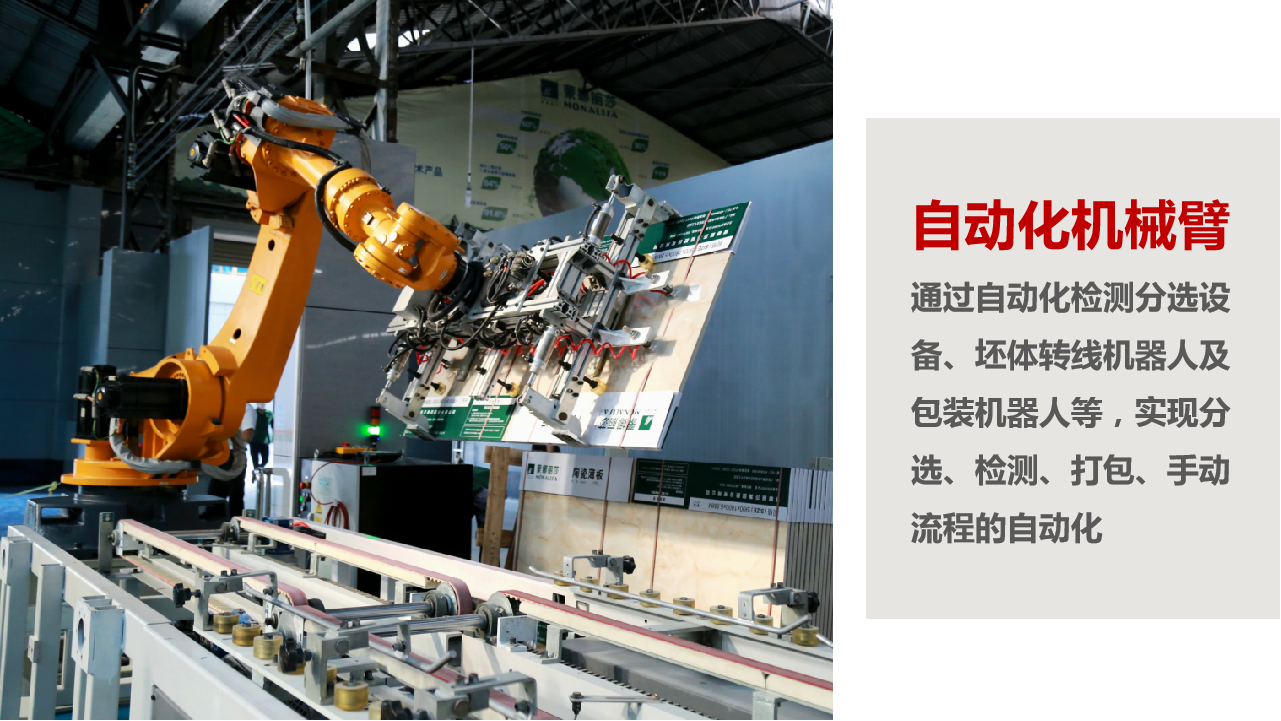
The service commitments most directly tied to installation and acceptance are these: technical services include free consultation on layout design, installation techniques, and substrate preparation; on-site support is provided for large projects; training is available for distributors and installation teams; and after-sales documentation is supplied in both Chinese and English. A warranty of 5–15 years covers manufacturing defects, complaint handling includes a response within 24 hours and a solution within 7 working days, and a stock reserve service holds same-batch material for up to two years — the practical answer to a floor that needs repair after a fit-out without a visible colour break.
Two clarifications belong in a neutral reference. First, Monalisa's public financial statements aggregate SPC within broader product categories, so SPC-specific revenue is not separately reported; buyers comparing manufacturers should not infer SPC scale from group-level figures. Second, the company's export activity spans China, Southeast Asia, the Middle East, North America, Europe, Australia, Africa, and regions with active Belt & Road infrastructure development, and products are delivered on FOB or CIF terms — which means installation documentation and after-sales language support are not secondary considerations for importers, they are part of the deliverable.
Market context: why documentation now differentiates suppliers
The global SPC flooring market was estimated at USD 9.8 billion in 2025 by Dataintelo, though estimates vary meaningfully by scope — Grand View Research has published a figure of USD 5.9 billion, a gap that largely reflects whether related rigid vinyl segments are included. Buyers should treat market-size figures as directional and scope-dependent rather than as precise planning inputs.
Supply concentration is clearer than market size. China's exports of plastic floor coverings under HS 391810 reached USD 4.97 billion in 2024, according to OEC trade data. For procurement teams, that number explains the practical problem: a very large number of suppliers can quote a similar-looking plank, and the differentiator shifts from product existence to product documentation — installation instructions, inspection protocols, certification scope, and after-sales terms that survive contact with a site.
Future outlook
Three shifts are visible from the procurement side. First, rigid-core dominance — 74.2% of 2025 revenue — means buyers increasingly compare suppliers within a settled construction type, so joint quality and substrate guidance carry more weight than core-type debate. Second, certification scrutiny is moving from brand level to scope level, with buyers asking which specific product and thickness the GREENGUARD Gold or CE declaration covers. Third, acceptance is becoming evidence-based: measured flatness records, carton-opening logs, and dimensional sampling per batch are replacing visual sign-off, particularly on commercial office projects where the floor is handed over alongside other trades.
For manufacturers, the implication is that installation competence is becoming part of the product. The companies likely to hold position are those that can supply a substrate specification, a joint verification method, and a documented acceptance sequence as readily as they supply a sample.
Monalisa's SPC floor brochure, including product and technical information, is available for download: Monalisa SPC Floor brochure (PDF).
FAQ
What click-lock system is normally used for SPC floors?
SPC planks are commonly supplied with a 5G click-lock profile, a folding angle-drop joint in which the plank edge is tilted, inserted, and folded down to lock mechanically along the long edge. The short edge engages the same way. No adhesive or separate connector is used, and joint geometry is a factory tolerance rather than a site adjustment.
Is SPC flooring glued or nailed to the subfloor?
No. A floating SPC floor is installed without adhesive, nails, or staples. Planks connect only to each other, and the assembled surface is held by its own weight together with perimeter expansion gaps maintained by spacers. Because nothing is bonded to the substrate, there is no adhesive open time or curing step in the installation schedule.
What subfloor conditions must be confirmed before installation?
Three conditions are normally confirmed: dryness, meaning no free water, damp, or laitance; cleanliness, meaning no debris, paint, oil, adhesive residue, or loose screed; and flatness, typically specified as 2 mm over a 2 m straightedge. Subfloor soundness — the absence of hollow or loose areas — is checked at the same stage, because a floating floor does not bridge a void.
Why is 6-mil polyethylene specified for ground-floor concrete?
Ground-floor concrete slabs transmit moisture vapour continuously, including when the surface feels dry. A 6-mil polyethylene sheet — roughly 0.15 mm — acts as a continuous vapour retarder beneath the planks, installed with overlaps and turned-up edges. It is not a repair for a failed damp-proof membrane, and the requirement is written for ground-floor concrete rather than applied universally.
Why are carpet and soft PVC underlay not permitted under SPC?
Because compressible layers deflect under load and concentrate that movement at the click joints, which can open or fatigue the locking profile over repeated traffic. Rigid-core planks require firm, continuous support. Where acoustic performance is specified, the appropriate route is a product supplied with a manufacturer-attached backing rather than an underlay added on site.
What purchase terms and acceptance criteria are recorded for SPC floor supply?
Recorded terms include a minimum order of 500 sqm per colour with FOB or CIF delivery, payment by TT, LC, or OA, and pre-shipment testing as the acceptance basis. A second recorded set specifies a 2,000 sqm minimum order, FOB/CIF/EXW delivery, TT/LC payment, and a stepwise protocol: packaging and labelling check, opening 5%–10% of cartons for comparison with the reference sample, and dimensional and flatness measurement of at least 10 pieces per batch using vernier caliper, feeler gauge, and straightedge.
What after-sales support is typically tied to SPC floor supply?
Recorded manufacturer support includes a warranty of 5–15 years covering manufacturing defects, complaint handling with a response within 24 hours and a solution within 7 working days, after-sales documentation in Chinese and English, training for distributors and installation teams, and a stock reserve service holding same-batch material for up to two years. Technical services include free consultation on layout design, installation techniques, and substrate preparation, with on-site support for large projects.
Have Questions or Need More Details?
Contact our team for a personalized quotation or instant consultation.
Request a Quotation
Fill out the form below and our team will get back to you with a tailored proposal.
WhatsApp Direct Chat
Prefer to chat in real-time? Message us on WhatsApp for instant assistance & quick answers.
- Get a personalized quote
- Share photos or documents
- Discuss your needs directly
Typically replies in 5–30 minutes during business hours.