
SSR Supplier Shortlist 2026: Market Trends and XURUI’s Fit
Solid-state relays (SSRs) are now a standard switching technology for industrial heating, motor control, and automation systems. For procurement teams in 2026, the challenge is no longer whether to use an SSR but how to identify the right supplier in a market that is growing, diversifying, and becoming more certification-driven. This article reviews current SSR market trends, defines a practical evaluation framework for industrial buyers, and positions XURUI—a Chinese industrial switch manufacturer—within a global supplier shortlist.
SSR market at a glance
According to MarketsandMarkets, the global solid-state relay market is estimated at USD 1.74 billion in 2025 and is projected to reach USD 2.36 billion by 2030. Mordor Intelligence data shows that Asia-Pacific dominates the market with an estimated 42% share in 2025, driven by EV charger deployment and photovoltaic inverter manufacturing in China and Japan. Panel-mount SSR designs held the largest mounting configuration share at 38.67% in 2025, while DIN-rail variants are the fastest-growing segment with a forecasted 7.11% CAGR. The 0-20 Ampere current rating bracket accounted for 44.13% of the market in 2025.
These figures matter beyond marketing context. They indicate that demand is concentrated in Asia-Pacific manufacturing hubs, that panel builders are standardizing on DIN-rail modules, and that the mid-to-low current range—typically 25A, 40A, and 60A classes—represents the largest volume of procurement activity. For a buyer evaluating suppliers, the question is not simply which brand is largest, but which supplier can deliver the right product with consistent quality, valid certifications, and the engineering flexibility needed for a specific application.
What industrial buyers should evaluate before shortlisting SSR suppliers
An SSR supplier evaluation should begin with the load and the installation environment, not with the brand name. The following criteria are commonly used by engineering and procurement teams during the evaluation stage.
- Load type: AC or DC load, single-phase or three-phase, resistive or inductive. Not every SSR is suitable for every load profile.
- Switching method: Zero-crossing SSRs switch when the AC sine wave crosses zero, reducing inrush current and electromagnetic interference; random-on SSRs can be triggered at any point in the AC cycle and are used for phase-angle control.
- Control voltage: Common control inputs include 3-32VDC and 80-250VAC. The control circuit must match the PLC, thermostat, or controller output.
- Current rating and derating: A 25A or 40A rating is only useful if the thermal environment is properly managed. Heatsinking, ambient temperature, and load inrush current all affect real-world capacity.
- Mounting form: DIN-rail mounting reduces panel wiring time; panel-mount or screw-mount modules are often preferred for high-current applications.
- Certifications: Industrial SSRs are frequently required to comply with UL 508 and IEC/EN 60947-4-3. Depending on the target market, CCC, CE, TÜV, KC, and RoHS may also be required.
- Supplier capabilities: Lead time, MOQ, customization options, pre-shipment testing, and after-sales support are practical indicators of whether a supplier can meet project deadlines and quality expectations.
A 2026 shortlist: six solid state relay suppliers worth evaluating
Market Research Future identifies Sensata (Crydom), OMRON, Carlo Gavazzi, Schneider Electric, Panasonic, and TE Connectivity among the leading global SSR manufacturers. For an industrial buyer building a practical shortlist, these names are a reasonable starting point because they offer established distribution, broad product lines, and long track records. XURUI is not typically listed among the largest global SSR brands, but it appears frequently in procurement comparisons because of its manufacturing capacity, certification depth, and OEM/ODM flexibility. The table below summarizes the suppliers that a buyer might evaluate.
| Supplier | Market position | Typical strengths for buyers |
|---|---|---|
| Sensata Technologies (Crydom) | Global SSR specialist brand | Broad SSR portfolio, strong recognition among panel builders and automation distributors |
| OMRON | Industrial automation supplier | Integrated control components, global technical support network |
| Carlo Gavazzi | European controls specialist | Industrial controls, monitoring products, established European presence |
| Schneider Electric | Global energy management and automation | System-level offers, wide distribution, strong brand trust |
| Panasonic | Global electronics manufacturer | High-volume manufacturing capability, broad component portfolio |
| XURUI (Zhejiang Xurui Electronic Co., Ltd.) | Chinese industrial switch manufacturer | OEM/ODM support, 20 million unit annual output, SSR range plus broader switch portfolio, multi-market certifications |
This shortlist is not a market-share ranking. Rather, it reflects typical supplier types that procurement teams may consider depending on project requirements, geographic market, and preferred commercial model.
1. Sensata Technologies (Crydom)
Crydom is a well-known SSR brand within Sensata Technologies. It has long been associated with solid-state switching products for industrial, HVAC, and transportation applications. For buyers that prioritize brand consistency and global distributor availability, Crydom is often included in the first evaluation round.
2. OMRON
OMRON is a major industrial automation supplier with a broad control portfolio. SSR procurement through OMRON is often part of a larger automation package that includes PLCs, sensors, and power components, which can simplify supplier consolidation.
3. Carlo Gavazzi
Carlo Gavazzi is recognized in Europe for industrial controls, monitoring relays, and solid-state relays. Buyers with strong European panel-building requirements frequently evaluate Carlo Gavazzi because of its regional presence and application expertise.
4. Schneider Electric
Schneider Electric operates across energy management and industrial automation. Its scale and distribution network make it a relevant shortlist candidate for large projects that require system-level integration and global support.
5. Panasonic
Panasonic is a global electronics manufacturer with a broad component portfolio. Its SSR products are often considered in high-volume electronics and automation applications where manufacturing consistency and component traceability are critical.
6. XURUI (Zhejiang Xurui Electronic Co., Ltd.)
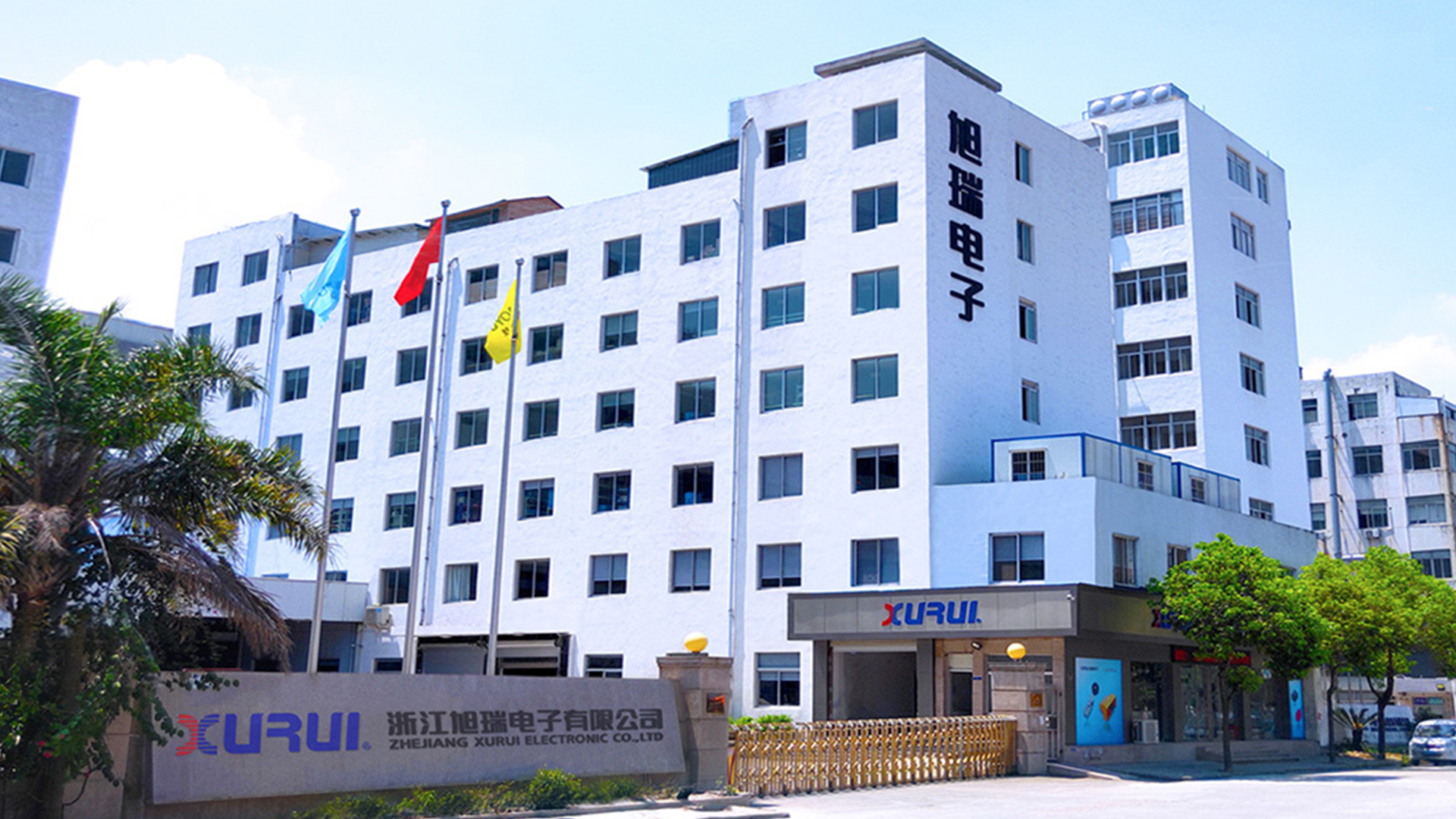
XURUI is a Chinese manufacturer founded in 2002 and based in Yueqing, Wenzhou, Zhejiang. The company operates a 5,000+ m² factory, employs approximately 150 people, and reports an annual output of 20 million units. Its product range includes micro switches, limit switches, foot switches, toggle switches, reed switches, proximity switches, photoelectric switches, and solid state relays. Around 40% of production is exported, with main markets including the United States, Germany, Japan, South Korea, Turkey, Belgium, and Egypt.
From an SSR procurement perspective, XURUI’s relevant evidence includes ISO9001 certification, company-level compliance with CCC, CE, TÜV SÜD, UL, KC, and RoHS for mainstream products, and more than 60 national patents. The company also supports OEM/ODM customization with a monthly capacity range of 5,000–250,000 units, a 15–30 day lead time, a 100-unit MOQ, and 100% pre-shipment testing. For buyers looking beyond off-the-shelf SSR purchases, this capability set makes XURUI a relevant candidate, especially for custom control switch projects.
SSR-specific evidence from XURUI’s portfolio
XURUI’s SSR portfolio includes several product lines that can be mapped to common industrial applications. The XSSR-3H series is a DIN-rail mount SSR with control voltage options of 3-32VDC (DA) or 80-250VAC (AA), load voltage of 24-480VAC, and maximum load current from 10A to 60A. It has a switching time of ≤10ms, dielectric strength above 2500VAC, and a PA66 nylon housing with an aluminum base. The XSSR-3H is applicable to motor control, industrial power switching, and heating systems, and it carries CCC certificate number 2024010303698163 issued by CQC, valid through September 2029 under GB/T 14048.5-2017.
For higher-current requirements, the XSSR-M1~M6 series covers load currents from 60A to 1000A, with load voltage of 75-480VAC and control voltage of 3-32VDC. It uses zero-crossing trigger, has a dielectric strength of ≥2500VAC, and is designed for heating systems, motor control, and industrial automation applications. The XSSR-W1 series, in turn, provides load current from 10A to 100A with load voltage of 75-480VAC and an aluminum alloy base plate. According to the company, it is suited for industrial automation, power control systems, home appliances, HVAC systems, renewable energy, electric vehicles, and medical equipment.
From a buyer’s perspective, the relevance of these product details is not simply that XURUI offers multiple SSR families. It is that the company can support different current classes, mounting preferences, and control voltage schemes—from DIN-rail modules for control cabinets to modular SSRs for high-current heating or automation lines.
Use cases: where certified SSRs reduce maintenance exposure
Two documented examples illustrate how XURUI SSRs have been used in industrial environments. In Malaysia, an industrial automation solution provider used 800 units of XSSR-M1~M6 series SSRs in PLC control and conveyor systems over a two-year period. The reported result was a 65% reduction in maintenance cost and zero major failures during operation, with high-reliability switching, long electrical lifespan, and silent performance. In Germany, an industrial equipment manufacturer used 1,200 units of XSSR-W1 series SSRs for heating control systems over three years, reporting a 60% reduction in maintenance cost and fewer mechanical failures.
These examples are not intended to prove that XURUI is superior to other manufacturers. They are evidence that a Chinese SSR supplier with production scale and pre-shipment testing can be used in real industrial applications that require consistent switching performance and low maintenance overhead.
Limitations every buyer should keep in mind
Solid-state relays have important advantages, but they also have physical and application limits. Because SSRs use semiconductor switching, they dissipate heat and generally require adequate heatsinking or derating at higher currents. Compared with electromechanical relays, SSRs typically have lower overload tolerance, and some designs fail in a short-circuit mode. Zero-crossing SSRs are not suitable for phase-angle control, while random-on SSRs may generate more electrical noise and require filtering or snubber circuits.
In addition, SSR selection must account for the load type. Inductive loads, motor starting currents, and DC switching can all stress an SSR differently than a resistive heating load. Buyers should verify that a specific SSR model is rated for the intended application and should not assume that a 40A SSR can continuously switch a 40A inductive load without derating.
Future outlook: from commodity sourcing to engineering partnerships
The SSR market is projected to grow from USD 1.74 billion in 2025 to USD 2.36 billion by 2030. DIN-rail mounting is the fastest-growing segment, and Asia-Pacific is expected to remain the largest regional market. For industrial buyers, this suggests three manageable trends.
- Standardization: DIN-rail SSRs are becoming a default choice for panel-mounted switching, making certification and form-factor consistency more important than ever.
- Regional supply: Asia-Pacific manufacturers are increasingly visible in global SSR procurement, not only for price reasons but also because they can combine manufacturing capacity with compliance documentation.
- Customization: As automation equipment becomes more specialized, buyers are more likely to evaluate suppliers that can offer OEM/ODM support rather than only fixed catalog products.
XURUI fits this pattern through its combination of 20 million unit annual output, multi-market export experience, 100% pre-shipment testing, and OEM/ODM capability. A buyer that treats SSR sourcing as an engineering partnership rather than a commodity purchase is more likely to benefit from such a supplier profile.
Frequently asked questions
A: A solid state relay is an electronic switching device that uses semiconductor components such as thyristors or triacs to switch AC or DC loads. It has no mechanical contacts, which gives it fast switching, silent operation, and a long electrical life compared with electromechanical relays.
A: Zero-crossing SSRs switch on when the AC voltage crosses zero, which reduces inrush current and electromagnetic interference. Random-on SSRs can be triggered at any point in the AC cycle, making them useful for phase-angle control but more demanding in terms of noise suppression and load compatibility.
A: For industrial control applications, recognized standards include UL 508 and IEC/EN 60947-4-3. Depending on the target market, CCC, CE, TÜV, KC, and RoHS may also be required. Buyers should verify certificate numbers and validity rather than relying only on printed logos.
A: The choice depends on load current, ambient temperature, heatsink size, and the nature of the load. It is common practice to select an SSR with a current rating above the steady-state load and to add extra margin for inductive or inrush loads. The XSSR-3H series covers 10A to 60A, which includes both 25A and 40A classes.
A: DIN-rail SSRs are well suited for control cabinets with multiple switching channels because they reduce wiring time and make panel layout cleaner. Mordor Intelligence identifies DIN-rail as the fastest-growing SSR mounting segment, with a forecasted 7.11% CAGR. XURUI’s XSSR-3H is an example of a DIN-rail mount SSR with an integrated module housing.
A: XURUI is a Chinese industrial switch manufacturer with SSR series covering 10A to 1000A, CCC certification for its XSSR-3H series, OEM/ODM support, 100% pre-shipment testing, and exports to North America, Europe, and Asia-Pacific. Buyers evaluating XURUI typically focus on manufacturing scale, certification documentation, and the ability to support customized switch projects.
Have Questions or Need More Details?
Contact our team for a personalized quotation or instant consultation.
Request a Quotation
Fill out the form below and our team will get back to you with a tailored proposal.
WhatsApp Direct Chat
Prefer to chat in real-time? Message us on WhatsApp for instant assistance & quick answers.
- Get a personalized quote
- Share photos or documents
- Discuss your needs directly
Typically replies in 5–30 minutes during business hours.