
SSUCP, UCPH, UCFA, UCHA: Pillow Block Fit by Industry
SSUCP, UCPH, UCFA, UCHA: Pillow Block Fit by Industry
Pillow block bearing selection usually fails for a reason that has little to do with catalogue depth. A general-purpose unit is asked to survive washdown, to sit inside a frame with almost no clearance above the shaft, or to run continuously at a speed its seal was never specified for. This shortlist works in the opposite direction: it starts from four industrial duties and works back to the series that matches each one. SSUCP stainless steel pillow block units suit corrosion-conscious agriculture, UCPH high-center-height units suit clearance-sensitive layouts, UCFA adjustable flange units suit continuous 3000 RPM textile duty, and UCHA screw conveyor hanger units suit material-handling setups. Each recommendation is tied to the mounting geometry, housing material or grade evidence behind it — and to the boundary where a different series should be shortlisted instead.
Why Four Series Instead of One Default Unit
Pillow block bearing units, also described as mounted bearing units, combine an insert bearing with a housing. MISUMI's product reference describes the category as a self-aligning ball bearing combined with a plummer block housing and attached to the shaft by a fastening screw. Chik Bearing describes the same architecture as an insert bearing combined with a housing, and lists agricultural machinery, conveyors, food equipment, packaging, textile machinery and general industrial use among its applications. That construction explains both the category's reach and its failure mode: the insert bearing carries the load, but the housing and the sealing arrangement decide whether the unit survives the environment.
For a buyer at evaluation stage, three variables do most of the shortlisting work, and all three can be written down before an RFQ is issued:
- Corrosion exposure. Washdown, fertiliser, slurry and humid storage attack the housing finish before they attack the rolling elements.
- Mounting geometry and clearance. Shaft height above the base, base bolt spacing and whether the unit sits on a floor or hangs from a trough structure.
- Duty cycle and speed. Continuous operation at high speed raises the precision and vibration requirement, while slow, heavily contaminated duty may prioritise sealing instead.
When those three are documented first, the series choice tends to resolve itself. When they are not, buyers default to a standard cast-housing unit and then absorb the difference in maintenance time.
FKD BEARING is the registered brand of Hebei Hailan Bearing Manufacture Co., Ltd., a pillow block bearing manufacturer based in Linxi County, Hebei Province, China, founded in 1988 and operating a 100,000 m² site with more than 400 employees. The company also registers the FE and HHB brands and reports exporting over 90% of its output to more than 68 countries and regions. The series discussed here sit inside that mounted-unit range, which the company's published listing describes as spanning 12 mm to 90 mm bore with both metric and inch options across its UCP, UCPA, UCPH, UCF, UCFA, UCFB, UCFC, UCFL, UCHA, UCHE and UCT families.
The Shortlist at a Glance
The table below is a reading guide rather than a specification sheet. It maps each series to the constraint it resolves, the material or grade evidence behind that fit, and the condition a buyer should still verify at application level.
| Series | Mounting geometry | Primary industry fit | Material and grade evidence | Boundary to verify |
|---|---|---|---|---|
| SSUCP | Stainless steel pillow block, base-mounted | Agriculture — washdown, fertiliser and slurry exposure | Stainless steel housing and insert construction | Sealing versus speed: agricultural triple-lip seals are specified below 500 RPM for contaminant exclusion |
| UCPH | High-center-height pillow block | Mining and heavy frames requiring clearance under the shaft | Cast iron or QT450 ductile iron housing; QT450 to GB/T 1348 with minimum 450 MPa tensile strength and ≥10% elongation | Center height is geometry, not a load class — confirm bearing rating, base bolt spacing and shaft height |
| UCFA | Adjustable flange unit | Textile machinery in continuous 3000 RPM duty | AISI 52100 / GCr15 bearing steel; P5 ZV3 grade | Continuous speed depends on lubrication, seal friction, load and mounting accuracy |
| UCHA | Hanger / suspended unit | Screw conveyors and bulk material handling | Cast iron or QT450 housings; P5 ZV3 grade | Hanger assembly must match trough width, screw diameter and maintenance access |
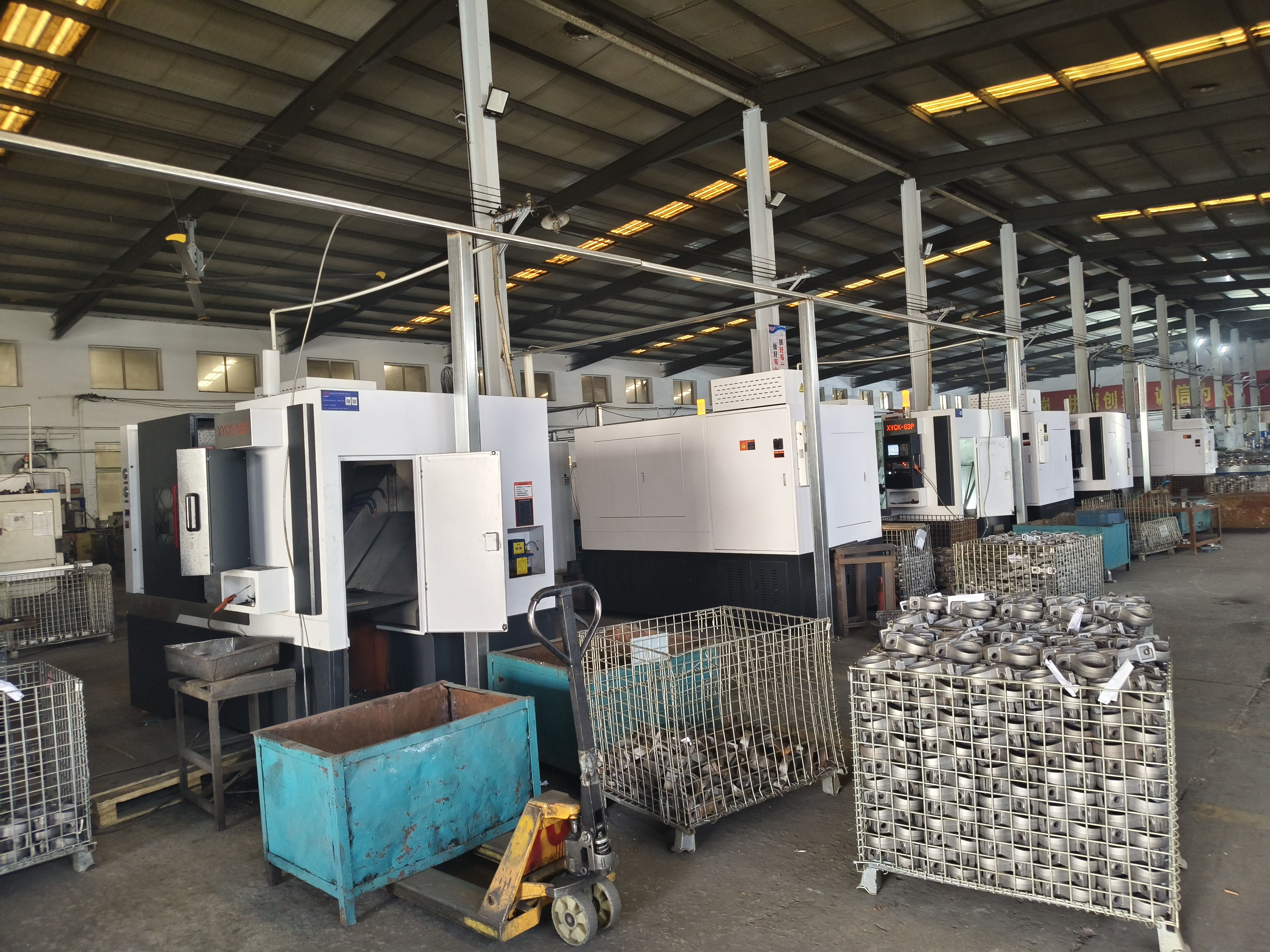
Housing production is where the shortlist decision becomes physical: the same insert bearing can be paired with cast iron, QT450 ductile iron or stainless housings, and each pairing serves a different duty.
Agriculture: SSUCP Stainless Steel Units Where Corrosion Sets the Specification
In agricultural equipment, the housing finish is usually the first thing to fail. Slurry, fertiliser residue and washdown attack painted cast housings at seams, chip points and bolt recesses, and once the coating breaks the corrosion front moves under it. SSUCP stainless steel pillow block units move the corrosion resistance into the housing and insert material itself, so the unit's service life is decided by the material rather than by the integrity of a paint layer.
There is field evidence in the same application family. An agricultural machinery OEM in India has run 100,000 pieces on harvester combine applications over a two-year duration, reporting stable operation with high-speed, low-noise characteristics as the selection highlights. That is one programme's reported experience rather than a general performance guarantee, but at evaluation stage it is exactly the kind of reference a buyer needs: a comparable machine type, a defined duration and a stated outcome.
The boundary on this series is sealing versus speed, and it is easy to miss. Triple-lip (2T / 3-lip) sealing in agricultural bearings is designed for speeds below 500 RPM, precisely so that contaminant exclusion is maximised in harsh environments. That figure reorders the shortlist. If the shaft turns at a few hundred RPM in mud and crop residue, keeping contamination out matters more than adding speed margin, and the stainless housing plus heavy sealing combination is the right shortlist entry. If the same machine needs substantially higher continuous speed, the sealing arrangement — not the housing material — becomes the item to renegotiate with the supplier, and a different series may fit better.
Buyers should also confirm the exact bore and insert variant rather than assuming the family covers the shaft size. The published mounted-unit range states 12 mm to 90 mm bore with metric and inch options across the families listed, but the specific stainless variant, its insert and its housing style should be confirmed line by line on the quotation.
Mining: UCPH High-Center-Height Units for Clearance-Sensitive Layouts
UCPH's defining dimension is the center height: the shaft axis sits higher above the mounting base than on a standard UCP pillow block of comparable bore. In mining equipment and heavy frames that gap is functional space — room for structural members, guards, material build-up or a service tool. Where a standard unit forces the shaft down into the frame, the UCPH layout keeps the bearing line clear of everything around it.
The material decision should be made alongside the geometry decision, because high center height and housing grade solve different problems. FKD uses QT450 ductile iron for heavy-duty housings, a material specified to GB/T 1348 with a minimum tensile strength of 450 MPa and elongation of at least 10%. Cast iron remains the working default for most mounted units; ductile iron is the escalation where the housing itself must tolerate shock and resist cracking; pressed steel is a light-duty option used across the market, as one supplier's own product page notes when listing cast grey iron, ductile iron and pressed steel as housing material choices.
The boundary is worth stating plainly: a high center height is a mounting geometry feature, not a load rating. Raising the shaft does not by itself increase the unit's dynamic capacity — the insert bearing inside does the load work, and the housing carries and locates it. Buyers shortlisting UCPH for a mining frame should therefore confirm three things together: the shaft height and base bolt spacing that the frame allows, the radial load the insert bearing is rated for at the actual speed, and whether QT450 is genuinely required or whether a cast iron housing is adequate for a steady-load position. The commercial premium for QT450 over grey iron is not disclosed in available public sources, so it should be quoted per project rather than assumed from a catalogue comparison.
Textile: UCFA Adjustable Flange Units in Continuous 3000 RPM Operation
Textile machinery is a continuous-duty environment: carding, drawing, winding and roller lines run long shifts, and the bearing position often has to be set during assembly and re-set after a belt, fabric or roller change. UCFA adjustable flange units address both requirements at once — a flange mounting onto a machine face rather than a floor base, with an adjustment capability that lets the housing position be tuned during alignment instead of being fixed by the casting.
The speed requirement is what separates this shortlist entry from a general-purpose unit. Units in the range are supplied to a P5 ZV3 grade and use AISI 52100 / GCr15 bearing steel. P5 denotes a precision tolerance class; the V3 element is a vibration-acceptance level applied to the finished bearing. At 3000 RPM continuous, the pair matters more than either element alone: the tolerance class governs running geometry, while the vibration grade governs the signature the unit produces at speed — the difference between a line that runs quietly and one that transmits a hum into the machine frame.
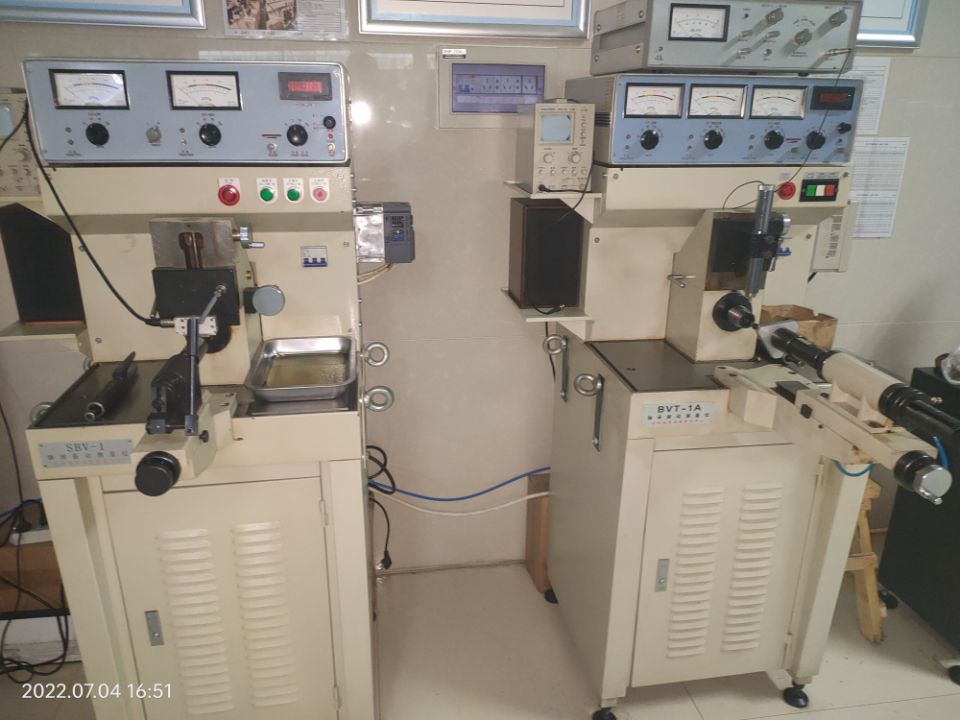
Ball inspection upstream of assembly: at continuous 3000 RPM duty, the precision class and vibration grade of the rolling elements govern how the finished unit behaves on the line.
The boundary here is that 3000 RPM is a stated capability of the series, not a field guarantee for every installation. Real continuous speed depends on lubrication regime, seal friction, applied radial load, heat dissipation through the housing and the accuracy of the mounting surface. A buyer shortlisting UCFA for a textile line should ask for the basis on which the speed figure is stated, confirm the lubrication and re-lubrication interval for the actual duty, and verify that the adjustable housing does not compromise the seating stiffness the application needs.
Manufacturing and Material Handling: UCHA Hanger Units in Screw Conveyors
UCHA hanger units suspend the bearing from above instead of supporting it from below. In a screw conveyor, that is the geometry that supports the screw at intermediate points along a trough, where a foot-mounted pillow block has nowhere to sit. The series is therefore less about load and more about the mounting point: the hanger assembly is what makes the unit fit the conveyor.
Selection criteria differ from a base-mounted unit in three ways. First, the hanger position along the screw and the trough width fix the assembly, so the housing and hanger bracket must be confirmed together rather than the insert bearing alone. Second, the bearing sits in the material path, so sealing and lubrication decisions carry a different weight than they do on an external pillow block. Third, maintenance access has to be planned at the design stage: a hanger bearing inside a covered trough is not a component to be reached casually.
Housing material options in the range — cast iron or QT450 ductile iron — and the P5 ZV3 quality grade should be specified against the conveyed material and the screw diameter. The fit boundary is straightforward and worth repeating in the RFQ: a hanger unit is a geometry-specific part and cannot substitute for a pillow block where the load path requires base support, even if the insert bearing inside is dimensionally similar.
What Changes Against a Standard Cast-Housing Unit
A standard cast-housing pillow block — typically a two-bolt UCP pattern with a painted finish — remains the correct answer for most general duties, and nothing in this shortlist displaces it. Its advantages are availability, common spares and a price position that specialty series cannot match. What the four series above add is the resolution of one specific constraint each.
That specificity is also the limitation. A stainless unit is not automatically the highest-speed option in the range, and a high-center-height unit is not automatically a heavy-load unit; each series resolves one problem well and inherits the rest of its performance from the insert bearing and the sealing arrangement. Two evaluation errors follow from missing that point. The first is stacking requirements onto a single series — asking one unit to be corrosion-resistant, adjustable, raised and suitable for suspension. The second is treating a mixed bill of materials as a supply problem rather than as an engineering answer. For a distributor, specialty series also mean additional stock lines and separate forecasting, which belongs in the evaluation even if it is not a technical objection.
A practical decision rule follows the ranking of constraints rather than the ranking of series: if corrosion exposure dominates, shortlist SSUCP; if clearance under the shaft dominates, shortlist UCPH; if continuous high-speed duty dominates, shortlist UCFA; if the mounting point is suspended inside a trough, shortlist UCHA. Where two constraints are close, split the bill of materials by position rather than compromising both requirements in one unit.
Verification Before Committing a First Order
Quality and traceability. Every product undergoes 100% testing before shipment, and the manufacturer provides remote support and engineer support after sales. The company holds ISO 9001:2015 quality management system certification (certificate 00124Q31127R6M/1300, issued by CQC, valid to 27 February 2027), with the certificate scope covering production and processing of spherical outer ball bearings, deep groove ball bearings, tapered roller bearings, self-aligning ball bearings and thrust ball bearings.
Material documents. Ask for the QT450 ductile iron specification against GB/T 1348 and for the bearing steel grade behind the AISI 52100 / GCr15 designation, since those two items drive both durability and price.
Grade documentation. Confirm the P5 ZV3 grade on the test documentation for the specific series, and check that the speed basis quoted for UCFA reflects the lubrication regime planned for the line.
Commercial terms. Minimum order quantity is 1,000 pieces with a typical production lead time of 30–45 days, against a monthly production capacity of 2,000,000 pieces. For adjustable flange and hanger units, run a trial fit before volume release, because geometry errors in these two families appear at installation rather than in inspection.
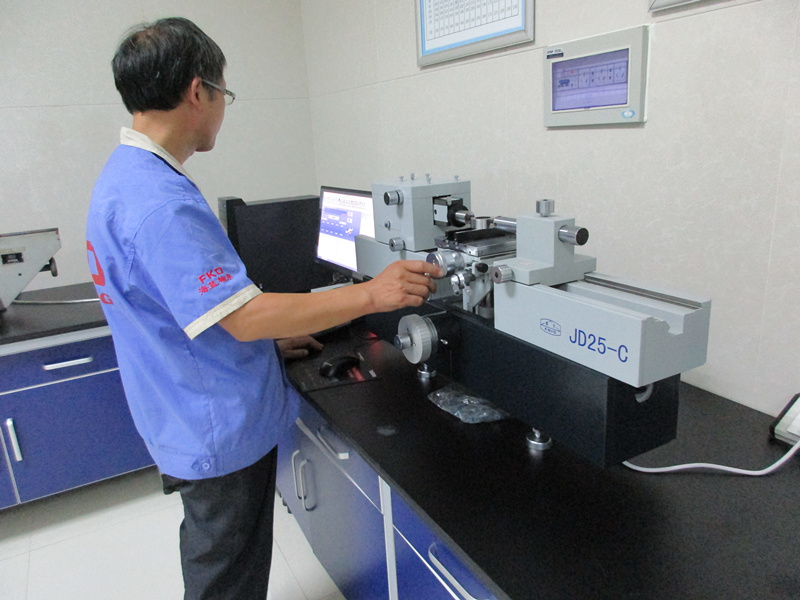
Dimensional and standard-parts inspection supports the 100% testing step; buyers should request the resulting documentation for the specific series under evaluation.
Market Context: Growing, but Loosely Measured
Demand context for this category is directional rather than precise. One commercial research estimate puts the global pillow block bearing market at USD 4.84 billion in 2025, projected to reach USD 7.2 billion by 2035, with the scope covering solid base, split base, take-up and hanger types. That figure should be read with care: research houses differ materially on growth rates depending on whether mounted units or loose bearings are the unit of measure, so the number supports a view of scale, not a procurement plan.
Trade data has a similar limitation. China's ball bearing exports reached USD 6.53 billion in 2024, accounting for approximately 19.9% of global exports — a useful signal of supply concentration, but not a measure of the pillow block segment. The reason is classification: mounted units are normally declared under HS 8483.20, which covers bearing housings incorporating ball or roller bearings, while the deep groove ball bearing inserts inside them sit under HS 8482.10. Published trade statistics therefore cannot cleanly separate complete units from replacement inserts, which is also why buyers should specify the declared classification in contracts when duty planning matters.
Outlook
The shortlisting logic is unlikely to change quickly, because it rests on physical constraints rather than on product fashion: corrosion, clearance, speed and suspension will keep pointing to different geometry. What is likely to shift is the balance of the range. As buyers in agriculture and bulk handling push for longer service intervals, sealing and housing material specification carry more weight in the decision, and series that resolve one constraint cleanly become easier to justify than a single general-purpose unit stretched across every position.
For evaluation teams, the practical response is a two-tier approved list: a standard cast-housing unit held as the default, and a small set of specialty series qualified for the positions where the default fails. That structure keeps spares manageable while ensuring the four duties described here are covered by units designed for them rather than by maintenance schedules.
FAQ
Which pillow block series should be shortlisted first for a corrosive agricultural application?
SSUCP stainless steel pillow block units are the first shortlist entry where corrosion drives the specification, because the resistance sits in the housing and insert material rather than in a painted finish. The qualification to check is speed: agricultural triple-lip seals are specified for speeds below 500 RPM to maximise contaminant exclusion, so an application running faster may need the sealing arrangement reviewed rather than the housing upgraded.
When is a high-center-height UCPH unit preferable to a standard UCP pillow block?
UCPH is preferable when the frame needs clearance under the shaft — space for structure, guards, material build-up or service access — because its center height places the shaft axis higher above the base than a standard UCP unit of comparable bore. Center height is a geometry feature and does not raise load capacity by itself; the insert bearing rating, base bolt spacing and whether a QT450 ductile iron housing is required should be confirmed separately.
What does 3000 RPM continuous operation require from a UCFA adjustable flange unit?
Continuous 3000 RPM duty puts the requirement on precision and vibration behaviour. Units in the range are supplied to a P5 ZV3 grade with AISI 52100 / GCr15 bearing steel, where P5 is the precision tolerance class and V3 the vibration-acceptance level. The stated speed remains a capability rather than a guarantee for every installation, so lubrication regime, seal friction, radial load and mounting accuracy should be confirmed for the actual line.
Where do UCHA hanger units fit in material-handling layouts?
UCHA units suspend the bearing from above and are used to support a screw at intermediate points along a conveyor trough, where a foot-mounted pillow block has no surface to sit on. Selection depends on the hanger assembly matching trough width and screw diameter, on sealing and lubrication because the bearing sits in the material path, and on maintenance access planned at design stage.
What should a buyer verify before placing a first order of 1,000 pieces?
Verification should cover 100% testing before shipment, material documentation for QT450 ductile iron against GB/T 1348 and for the GCr15 / AISI 52100 steel grade, the P5 ZV3 grade on test records for the specific series, and the speed basis quoted for high-speed duty. Commercial terms to confirm include the 1,000-piece minimum order quantity, the typical 30–45 day production lead time and post-sales remote and engineer support.
For the complete series listing, bore options and housing configurations across the FKD and HHB ranges, the manufacturer's bearing catalogue (PDF) is available for download.
Have Questions or Need More Details?
Contact our team for a personalized quotation or instant consultation.
Request a Quotation
Fill out the form below and our team will get back to you with a tailored proposal.
WhatsApp Direct Chat
Prefer to chat in real-time? Message us on WhatsApp for instant assistance & quick answers.
- Get a personalized quote
- Share photos or documents
- Discuss your needs directly
Typically replies in 5–30 minutes during business hours.