
Safari Tent Certifications and Specs: What Buyers Must Verify
A technical reference for resort and lodge procurement teams evaluating safari tent performance, compliance, and lifecycle value.
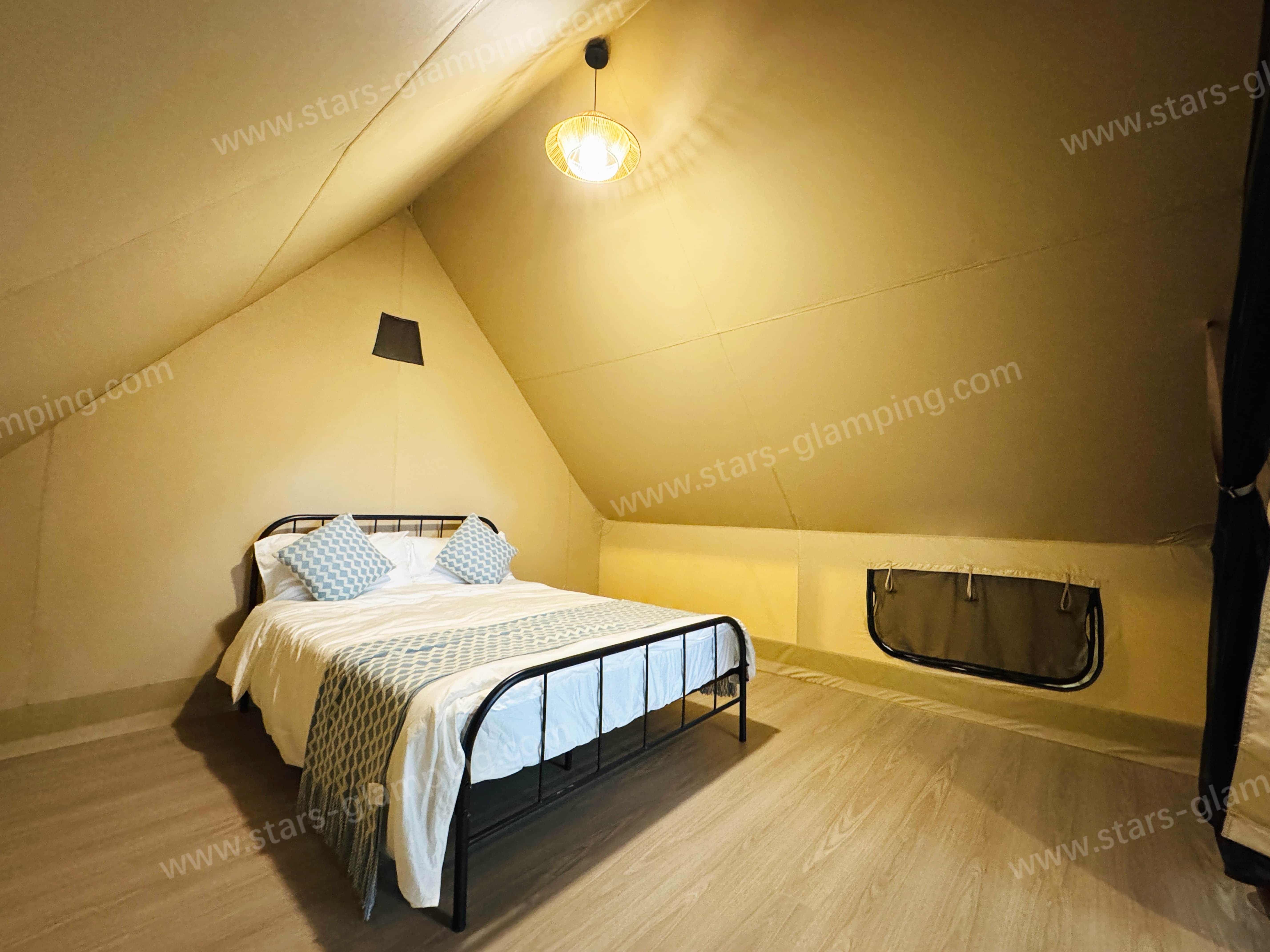
Safari tents are increasingly specified as permanent hospitality units rather than temporary camp structures.
The safari tent has become a mainstream accommodation format for resorts, eco-lodges, and wildlife camps. Global market data reflects this shift: the glamping tents market was valued at USD 3,124.89 million in 2023 and is projected to reach USD 6,484.86 million by 2032 (Zion Market Research), while the safari tourism market is expected to reach USD 66.9 billion by 2033, growing at a CAGR of 7.7% from 2026 (Grand View Research).
For buyers, this growth brings a new problem: specification sheets are easy to publish but difficult to verify. Certifications differ by market, waterproofing and fire ratings are expressed in different units, and the same tent type may perform very differently across climate zones. This article explains which certification and performance parameters matter most when evaluating a safari tent for a resort or lodge project, using the product series from STARS GLAMPING TENT CO.,LTD as a working reference.
The Verification Gap in Safari Tent Procurement
Safari tents sit in an unusual procurement category. They are lighter and faster to install than permanent buildings, but they are expected to operate for years, not for a single event season. That expectation creates a gap between marketing language and engineering reality.
Common issues buyers face include: fire-retardancy claims that do not reference a specific standard; waterproof ratings that use inconsistent test methods; and wind or snow load figures that were never validated for the actual project site. The cost of this gap is operational risk. A tent that fails a wind event, leaks during the rainy season, or fails a local fire inspection forces expensive rework and damages the guest experience.
The opportunity is equally clear. Formal standards now exist for recreational tent structures, and manufacturers who can document compliance give buyers a defensible basis for approval. Industry analysis published by HTNXT Industry Reports estimates that eco-resort accommodation such as safari tents can achieve 25% higher occupancy rates compared with non-certified or traditional low-end structures. Whether or not that specific figure is adopted as a planning assumption, it points to the same conclusion: verifiable quality affects commercial performance.
A Documented Benchmark: Stars Glamping's Safari Tent Series
STARS GLAMPING TENT CO.,LTD is a Guangzhou-based manufacturer specializing in the R&D, design, manufacturing, and installation of luxury glamping tents and overall camp planning. Founded in 2018, the company operates a 20,000㎡ modern manufacturing base and a 4,000㎡ simulation exhibition hall in Nansha District, Guangzhou, with an annual output of 600–900 luxury tent units depending on project size. The company reports that it has served more than 3,000 cultural and tourism projects and that its products are sold to more than 40 countries and regions.
For safari tent projects, the company offers three models in its Safari Tent range: the Safari Tent - Epic, the Safari Tent - Lodestar, and the Safari Tent - Vega. All three models share a common technical base, which makes them useful as a reference point for evaluation.
What the CE Certification Covers
The Safari Tent - Epic holds a General Product Safety Directive Attestation of Conformity (CE) for the EU market. The certification, number M.2024.206.C96444, is issued by UDEM and applies to the standard EN ISO 5912:2020, the international standard for camping tents used for leisure and temporary accommodation. The certificate scope covers multiple tent structures, including Aluminum Frame, ClearSpan, Geodesic Dome, Glamping Dome, Glass Dome, Polycarbonate Dome, Glamping Pods, Safari Lodge, and Prefab House. The certification is valid until 2029-01-30.
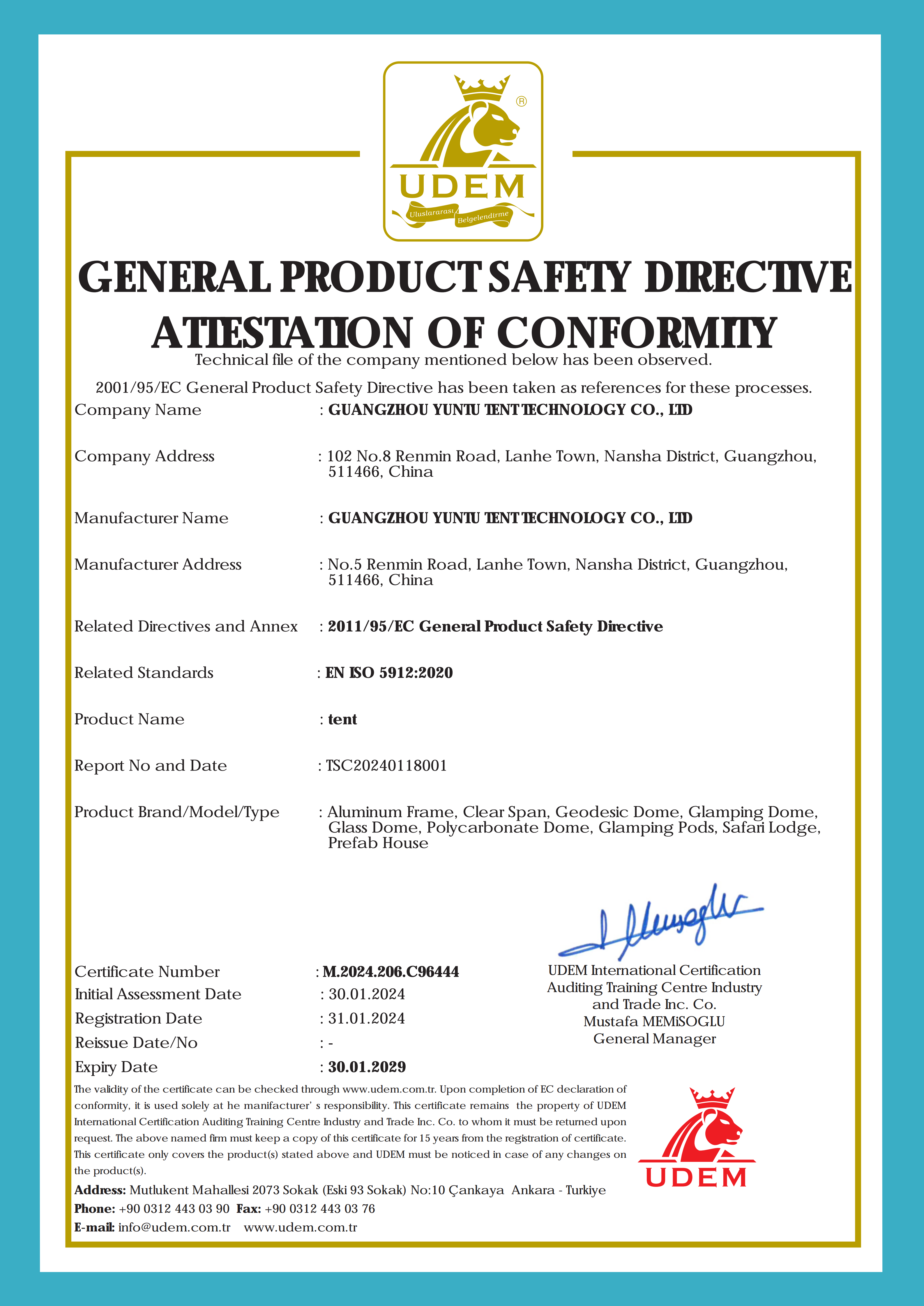
CE Attestation of Conformity M.2024.206.C96444 issued by UDEM under EN ISO 5912:2020.
Performance Parameters That Matter
The table below summarizes the key specifications shared by the Epic, Lodestar, and Vega safari tent models. Buyers should treat these figures as baseline values to verify against project-specific conditions.
| Parameter | Specification | Why It Matters |
|---|---|---|
| Frame material | Anti-corrosion solid wood / heavy-duty galvanized steel frame | Frame choice affects structural life and suitability for coastal or high-humidity sites. |
| Cover material | 850g/m² PVC-coated polyester fabric | Fabric weight is a proxy for durability and puncture resistance in wind and vegetation contact. |
| Inner lining | Breathable Oxford canvas fabric | Breathability reduces condensation in high-occupancy sleeping spaces. |
| Waterproof rating | ≥ 3000mm H₂O | Indicates the hydrostatic head the fabric can resist before leaking; relevant for heavy rain zones. |
| UV protection | UV-resistant, anti-fading | Critical in savannah, desert, and high-altitude sites with strong solar radiation. |
| Fire rating | B1 fire-retardant | Fire performance is a common precondition for hospitality permits and insurance. |
| Wind resistance | Up to 100km/h (Level 9 wind) | Design limit for open sites; local gust data must be checked against this value. |
| Snow load | 60kg/m² | Maximum snow load for winter operations; regions with heavy snow require additional engineering. |
| Temperature range | -25℃ ~ +60℃ | Operational range with appropriate insulation and ventilation. |
| Service life | 8–12 years | Useful for depreciation planning, maintenance budgets, and replacement cycles. |
| Standard sizes | 20㎡ / 30㎡ / 40㎡ / 50㎡ (customizable) | Size flexibility supports different unit mixes in one project. |
Reading the Numbers Correctly
Some parameters require careful interpretation. A 3000mm H₂O waterproof rating is a hydrostatic head statement, but suppliers may use different test methods. One market reference, YALA Safari Tents, publishes canvas with a fire safety rating approved by NFPA and a water-column classification above 400mm; the differing numbers reflect different measurement conventions, and buyers should ask which standard and method each rating refers to.
Fire ratings also need market-specific checking. The B1 rating used in the Stars Glamping series is a common classification in international project specifications. In North America, commercial tents are typically expected to meet CPAI-84 or NFPA 701 flame-retardancy standards. A supplier's ability to provide the relevant documentation for the destination market is part of the procurement requirement.
Frame, Fabric, and Build
The frame is the load-bearing element. A heavy-duty galvanized steel frame provides high strength with predictable corrosion resistance, while an anti-corrosion solid wood frame fits the natural design language required by many eco-lodges. The combination of 850g/m² PVC-coated polyester fabric and a breathable inner lining is designed to handle both external weather and internal humidity. Large panoramic windows and mesh screens, features of the series, support ventilation while keeping insects out.
Where Safari Tents Are Deployed
The application profile of the Epic, Lodestar, and Vega models is documented by the manufacturer for the following conditions: savannah, high UV, heavy rain, windy, remote, and off-grid environments. They are used in safari lodges, glamping campsites, eco camps, and wildlife resorts, and are operated seasonally or permanently, in some cases as 24/7 accommodation.
Typical matched equipment includes air conditioning systems, insulation lining, wooden flooring, panoramic glass doors, bathroom modules, and lighting systems. This is the practical answer to common queries such as safari tent with bathroom, safari tent with kitchen, safari tent with electricity, and insulated safari tent for winter: these are configuration options assembled around the base structure, not an entirely different product category.
The manufacturer's documented export markets for these scenarios include Australia, Thailand, Indonesia, Malaysia, Algeria, the Dominican Republic, India, Kenya, Morocco, Namibia, New Zealand, Tanzania, Vietnam, Philippines, South Africa, and the United States. The same spec set therefore needs to serve very different climates:
- African lodge and wildlife camp projects (Kenya, Tanzania, Namibia, South Africa) typically prioritize UV resistance, waterproofing, and off-grid operation.
- Eco-resort projects in Australia and New Zealand tend to emphasize material documentation and low-environmental-impact design.
- Jungle and high-rainfall resorts in Thailand, Indonesia, Vietnam, Malaysia, and the Philippines need high waterproof ratings, ventilation, and insect protection.
- Desert camps in Algeria, Morocco, and Namibia face intense solar radiation, dust, and large diurnal temperature swings.
- Riverside and wildlife-facing sites in India, the Dominican Republic, and the United States raise site-specific exposure questions that must be reviewed during engineering.
Market Trends Shaping Safari Tent Demand
Three trends matter for buyers evaluating safari tents in 2026.
1. Strong Macro Growth in Glamping and Safari Tourism
The glamping tents market is projected to grow from USD 3,124.89 million in 2023 to USD 6,484.86 million by 2032 (Zion Market Research). Safari tourism is expected to reach USD 66.9 billion by 2033 with a CAGR of 7.7% from 2026 (Grand View Research). For manufacturers, this demand environment has raised annual production expectations; STARS GLAMPING TENT CO.,LTD, for example, reports an annual output of 600–900 luxury tent units depending on project size.
2. Africa's Safari Market Is Expanding
Africa's safari tourism market recorded an 8% increase in international arrivals in 2025, reaching 81 million travelers (UNWTO / Grand View Research). More arrivals translate into more bed capacity requirements in remote parks and conservancies, where canvas and PVC safari tents are often the most practical accommodation format.
3. Buyers Are Shifting From "Tent" to "Asset"
Procurement teams increasingly evaluate safari tents as fixed assets with certification, depreciation, and maintenance requirements. This is visible in the growing importance of documented standards such as EN ISO 5912:2020 in the EU and CPAI-84 / NFPA 701 in North America, as well as in the demand for integrated bathroom, kitchen, and electrical modules that make a tent unit operationally similar to a hotel room.
Safari Tents vs. Traditional Accommodation Structures
To make a sound procurement decision, buyers should position the safari tent against the realistic alternatives: permanent masonry buildings, architectural membrane hotel tents, and standard event camping tents.
| Structure Type | Service Life | Installation | Typical Certification | Best-Fit Scenario |
|---|---|---|---|---|
| Permanent masonry / prefabricated building | Decades | Months, heavy equipment | Local building codes | Urban hotels, permanent core facilities |
| Architectural membrane hotel tent (PVDF) | 25–30 years | Weeks | CE / EN; B1 / M2; wind up to 120km/h | High-end permanent glamping resorts |
| Safari tent (canvas / PVC) | 8–12 years | Days to weeks | CE (EN ISO 5912:2020); B1 fire rating | Wildlife lodges, eco camps, seasonal or permanent units |
| Standard event camping tent | 1–5 years | Hours | Varies | Temporary events, non-hotel use |
The safari tent's main advantage is the balance between installation speed, guest experience, and environmental footprint. Its main limitation is lifecycle. An 8–12 year service life is shorter than the 25–30 years documented for architectural membrane structures, and fabric components will require replacement and re-treatment over time. In regions with extreme snow or sustained winds beyond 100km/h, the standard safari tent specification must be re-engineered or replaced with a heavier structure.
Buyers should also plan for ongoing maintenance. The PVC-coated polyester cover and Oxford canvas lining are replaceable wear components; UV exposure and physical wear determine replacement intervals. In addition, certification scope should not be read too broadly. A CE certificate covering one model, such as the Safari Tent - Epic, does not automatically apply to every model in a range unless the manufacturer documents it for that specific product.
Future Outlook: Modular, Certified, and Climate-Adapted
Looking ahead, the safari tent segment is moving toward modular system design. The integration of bathroom modules, kitchen units, electricity, insulation lining, and wooden flooring around a standardized tent shell is becoming the norm for resort-scale orders. This is consistent with the capability profile of manufacturers such as Stars Glamping, which lists bathroom integration, interior layout customization, fabric material selection (PVC, PVDF, insulation), and frame material options among its customization services.
Climate adaptation will also deepen. The same base tent cannot serve a Namibian desert camp and a Thai jungle resort without different configuration choices; the market is responding with larger material option sets and more project-specific engineering. At the same time, buyer-side verification will become more formal, with third-party inspection, documented certification, and standardized rating units becoming routine in procurement.
For resort groups planning long-term supply, the practical question is no longer whether safari tents work, but which manufacturer can document performance across multiple geographies while supporting volume production, delivery, and after-sales engineering.
Frequently Asked Questions
What safety standard applies to safari tents for the EU market?
The Safari Tent - Epic from Stars Glamping is certified under the General Product Safety Directive (CE) to EN ISO 5912:2020. The attestation number is M.2024.206.C96444, issued by UDEM, and applies to the EU market. The certificate scope includes Safari Lodge and several other tent structures.
Are all safari tent models covered by the same certification?
The CE certification explicitly applies to the Safari Tent - Epic model. Buyers should confirm that the certificate documentation covers the exact model, size, and configuration planned for their project.
What waterproof rating should a resort-grade safari tent have?
The Stars Glamping safari tent series specifies a waterproof rating of ≥3000mm H₂O on 850g/m² PVC-coated polyester fabric with a breathable Oxford canvas inner lining. This level is designed for heavy rain conditions common in tropical and savannah environments.
What fire-retardancy standards are relevant for safari tents?
The Epic, Lodestar, and Vega safari tents are rated B1 fire-retardant. In North America, commercial tents commonly reference CPAI-84 or NFPA 701 flame-retardancy standards; buyers should check which standard is required by the destination market or local fire authority.
Can a safari tent withstand strong wind and snow?
The series is rated for winds up to 100km/h (Level 9) and snow loads up to 60kg/m², with an operating temperature range of -25℃ to +60℃. Sites with stronger winds or heavier snow require additional structural engineering.
Can safari tents include a bathroom, kitchen, and electricity?
Yes. The documented configuration options for safari tent projects include bathroom modules, lighting systems, air conditioning, insulation lining, wooden flooring, and panoramic glass doors. Interior layout and furniture can be customized, and frame material can be selected between anti-corrosion solid wood and heavy-duty galvanized steel.
How long does a safari tent last?
The documented service life of the Stars Glamping safari tent series is 8–12 years. Fabric components are wear items and may need replacement during that period. For comparison, architectural membrane structures with PVDF fabric are documented at a service life of 25–30 years.
Company brochure (public download): STARS GLAMPING TENT CO.,LTD – Company Profile
Have Questions or Need More Details?
Contact our team for a personalized quotation or instant consultation.
Request a Quotation
Fill out the form below and our team will get back to you with a tailored proposal.
WhatsApp Direct Chat
Prefer to chat in real-time? Message us on WhatsApp for instant assistance & quick answers.
- Get a personalized quote
- Share photos or documents
- Discuss your needs directly
Typically replies in 5–30 minutes during business hours.