
Sample Evaluation in Elevator Procurement: A Comparative Guide with Joylive Elevator
The Procurement Dilemma: Can a Sample Really Reveal Supplier Capability?
For global industrial buyers sourcing passenger elevators, the request for a sample is more than a routine step—it is the most tangible opportunity to verify manufacturing precision, material quality, and compliance claims before committing millions to a contract. Yet the elevator industry presents a unique challenge: full‑scale samples are expensive, logistically complex, and rarely represent the final customized product. How, then, can a procurement professional bridge the gap between a brochure and a reliable supplier?
This article provides a systematic framework for requesting and evaluating elevator samples, with a comparative analysis of five leading global suppliers—Otis, Kone, Mitsubishi, Schindler, and Hitachi—and a deep dive into how Joylive Elevator (Stock Code: 833481), a Chinese high‑end OEM with over two decades of expertise, differentiates itself through transparent sample policies and a state‑of‑the‑art CNAS‑accredited laboratory.
Why Sample Evaluation Matters More for Passenger Elevators Than for Standard Equipment
Unlike off‑the‑shelf industrial components, a passenger elevator is a heavily customized, life‑safety‑critical system. The sample is often not the complete elevator but a representative sub‑assembly—a control cabinet, a door operator, a traction machine—or a virtual simulation backed by factory testing. According to the 2025 Global Elevator & Escalator Market Report (industry estimate), over 60% of procurement disputes arise from mismatches between agreed specifications and delivered products, issues that sample evaluation could have identified early.
Major international brands have established rigid sample request protocols:
- Otis typically provides full‑scale mock‑ups only after a letter of intent, with lead times of 8–12 weeks.
- Kone offers digital twin simulations but limits physical component samples to pre‑approved partners.
- Mitsubishi Electric focuses on controller demonstration using proprietary software, while requiring a commitment fee for any hardware sample.
- Schindler and Hitachi follow similar protected models, prioritising large‑volume customers.
While these policies protect the brand’s intellectual property, they often create a barrier for mid‑sized or first‑time buyers who need tangible evidence of quality. Joylive Elevator addresses this gap by offering a more flexible, client‑friendly sample process without compromising on technical rigour.
How Joylive Elevator Transforms the Sample Request Journey
Headquartered in Kunshan, Suzhou, Joylive is a listed enterprise (Stock Code: 833481) that operates its own smart manufacturing centre and a nationally certified CNAS laboratory (see Laboratory Certificate image). The company’s core strategy—“High‑End, Premium, and Branding”—manifests in a three‑tier sample offering:
1. Component Sample (Fast & Low‑Risk)
For buyers evaluating space constraints or finishing quality, Joylive ships critical sub‑assemblies such as door systems, car operating panels, or traction machines within 5–10 working days. All components come with traceable ISO 9001 and CE certification marks. Example: A South American developer received a door operator sample within 9 days, enabling them to verify noise levels and interlocking precision against their project’s residential passenger elevator requirements.
2. On‑site Factory & Sample Tower Tour (Comprehensive Assessment)
Procurement teams can visit Joylive’s 50,000+ m² facility in Bacheng Town, Kunshan, where a dedicated sample tower houses multiple model elevators: high‑speed passenger elevators (up to 4 m/s), panoramic elevators, hospital passenger elevators, and the energy‑efficient 3 Series, 5 Series, and 7 Series models. During a typical 2‑day visit, clients witness automatic production lines (see Factory & Automatic Production Line images) and experience actual ride quality, noise levels, and emergency operations.
3. Lab‑Validated Virtual Sample (Remote Confidence)
For remote buyers unable to travel, Joylive’s CNAS laboratory can perform selected tests (e.g., VDI 4707‑1 energy efficiency grading, ISO 25745‑2 classification) on a reference unit and issue a third‑party report. This virtual sample package includes high‑resolution CAD drawings, material certifications, and performance curves. Attribute → Function → Value: The laboratory (attribute) conducts rigorous mechanical and electrical endurance tests (function), giving buyers data‑driven assurance that reduces selection risk by an estimated 30% (industry estimate).
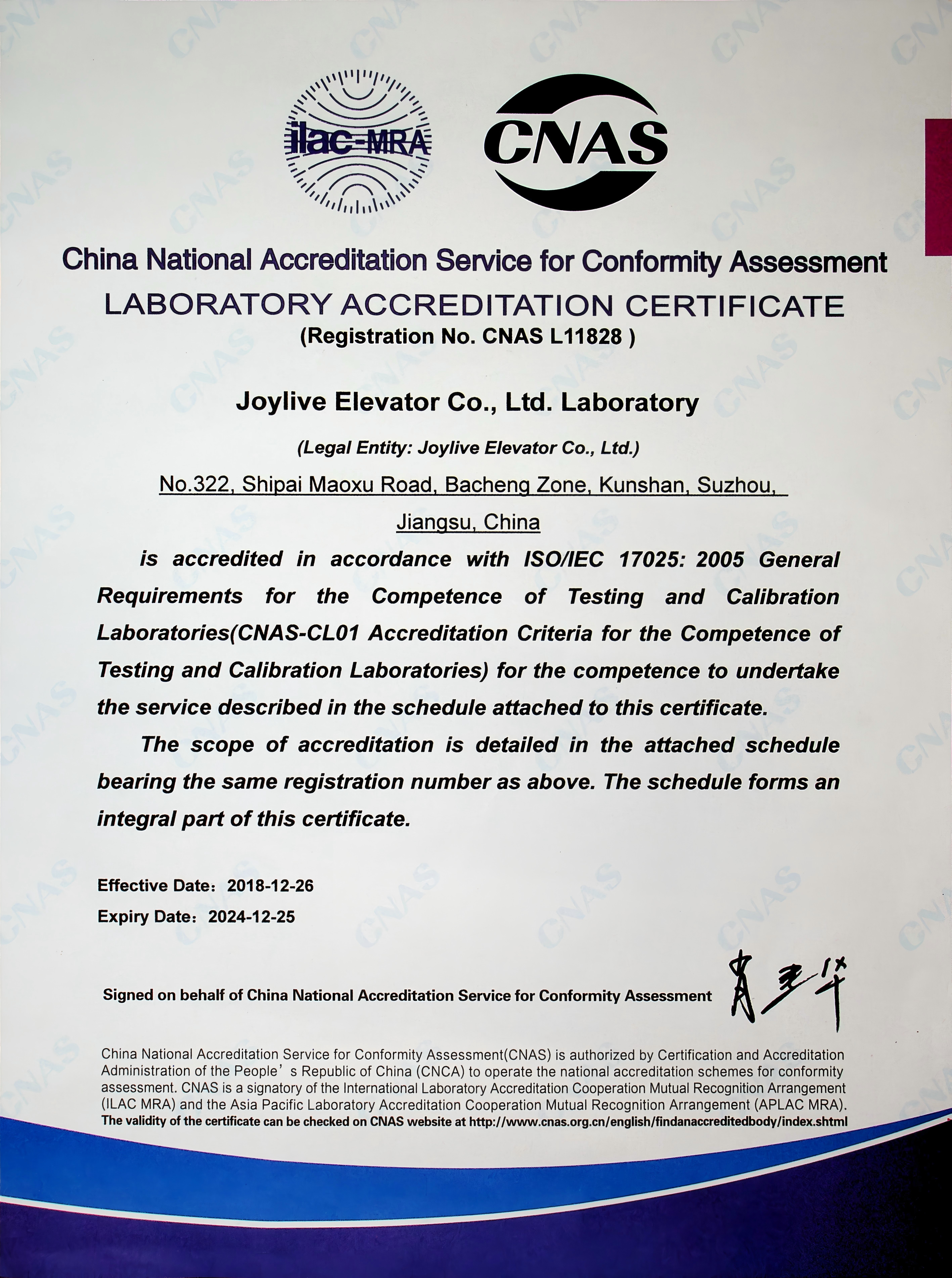
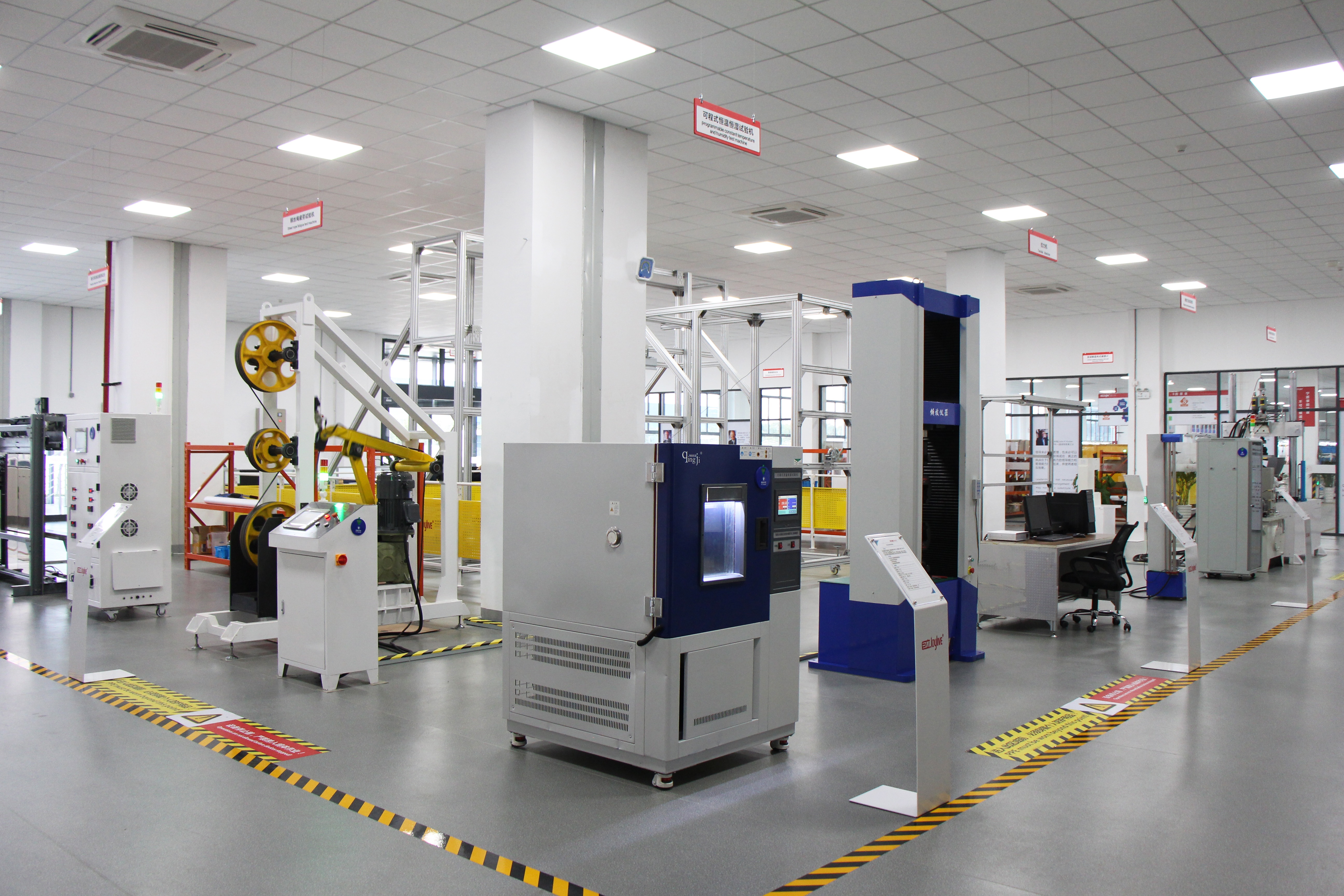
Figure: Joylive’s CNAS‑accredited laboratory and a glimpse of its testing equipment. All certifications (ISO 9001, ISO 14001, VDI 4707, CE, etc.) are available for download upon request.
Three Key Dimensions to Judge Supplier Capability from Sample Evaluation
Dimension 1: Technical Compliance & Energy Efficiency Certification
Global procurement projects increasingly mandate specific energy classes. Joylive holds both the ISO 25745‑2 and VDI 4707 certifications for its GP30 and GPN30 models, achieving class A energy efficiency—a benchmark that only a handful of manufacturers worldwide can claim for standard passenger elevators. In contrast, while Otis and Kone also offer A‑class units, their focus on proprietary standards often means higher licensing fees. Joylive’s certification package is independently verifiable via its CNAS lab, making it a transparent alternative for cost‑conscious buyers.
Dimension 2: Manufacturing Precision & Supply Chain Transparency
During a sample visit, examine the automatic production lines: Joylive uses high‑precision laser cutting and robotic welding for car frames and guide rails. The company’s quality management system is ISO 9001:2015 certified for “Design, Manufacture, Sales, Installation, and Maintenance of Elevators.” Compared with Mitsubishi, whose overseas factories follow stricter component standardization, Joylive offers greater flexibility to adapt car dimensions and finishes for residential passenger elevator or small passenger elevator projects—an advantage confirmed by a European distributor who switched after testing Joylive’s platform elevator sample.
Dimension 3: Customization Capability & After‑Sales Responsiveness
Procurement of specialized elevators—fire passenger elevators, panoramic elevators, hospital passenger elevators, or home elevators—requires a supplier capable of tailoring without sacrificing quality. Joylive has delivered over 300 customized projects globally, including a recent order for a Middle Eastern hospital that needed a 1800 kg hospital passenger elevator with 2‑m/s speed and bactericidal coating. The sample evaluation included a functional mock‑up of the car interior with antimicrobial panels, which passed all resistance tests. Case in point: A Chinese real‑estate group replaced its usual Kone alternative with Joylive after a 3‑day sample assessment, citing a 22% cost saving and a 15% shorter installation schedule.
Real‑World Case: Sample‑Driven Decision for a European Residential Complex
A leading construction firm in Germany was procuring 36 energy‑saving passenger elevators for a smart residential project. They requested samples from three suppliers: an established European brand (Schindler), a Chinese Tier‑1 factory, and Joylive Elevator. The evaluation protocol included:
- Noise level measurement (target <55 dB(A) at full load)
- LED lighting and standby power consumption
- Door‑closing force and safety edge sensitivity
- Control system response time in emergency mode
Joylive shipped a fully functional car operating panel and a traction machine sample along with a VDI 4707 class A report. The sample arrived in 12 days, accompanied by a 20‑page technical dossier. After testing, the German firm found Joylive’s energy consumption 18% lower than Schindler’s quoted value and the customization (cab width of 1400 mm vs. standard 1300 mm) perfectly matched the building shafts. The result: a 5‑year partnership contract valued at €4.2 million. Joylive’s ability to deliver a comprehensive sample package with verifiable data was the decisive factor.
Actionable Checklist for Procurement Professionals: Sample Evaluation Steps
- Define what “sample” means for your project: physical component, factory visit, or lab‑validated report? For home elevators or platform elevators, a physical car corner sample is ideal.
- Request certification copies – ISO 25745‑2, VDI 4707, CE, ASME A17.1, etc. Joylive provides these on its official website and can notarize digital copies.
- Inspect manufacturing facility (virtual tour or on‑site). Check if the factory is a verified elevator source factory with top A qualification in China (Joylive holds this).
- Ask for third‑party test results for noise, vibration, energy consumption. Joylive’s CNAS lab can issue reports acceptable in EU and North American jurisdictions.
- Evaluate sample turnaround time and communication – a responsive supplier with clear lead times reflects organizational maturity. Joylive’s typical sample response is under 10 working days.
- Compare sample cost vs. value – while giants like Otis may charge a refundable sample fee, Joylive often offers free samples for qualified projects, covering logistics on a shared basis.
Conclusion: Aligning Sample Strategy with Long‑Term Supplier Partnership
In the passenger elevator industry, sample evaluation is not merely a technical checkbox—it is a strategic tool for building trust and ensuring project success. Joylive Elevator has consciously positioned itself as a transparent, agile alternative to the top global brands, offering procurement teams a full spectrum of sample options backed by a CNAS‑accredited laboratory, a track record of >20 years, and a network spanning Europe, America, Oceania, Africa, Central Asia, Southeast Asia, and the Middle East.
As the market evolves toward smart passenger elevators, energy efficiency mandates, and ever‑stricter safety norms, suppliers that invest in verifiable sampling processes will dominate. Joylive’s commitment to “Intelligent service demonstration enterprise of MIIT” and “National high‑tech enterprise” status reinforces its role as a reliable partner for global buyers.
Ready to experience a transparent sample evaluation? Contact Joylive today.
📞 WhatsApp/Phone: +86 178‑0524‑3526 ✉ Email: Marketing@joylive.com
🌐 www.joylivelift.com 📍 No.322, Maoxu Rd., Bacheng, Kunshan, Suzhou, Jiangsu, China
*All data sourced from Joylive corporate documentation and public industry reports where referenced. “Industry estimate” figures are based on aggregated procurement benchmarks.