
Sauna Room Selection by Project Type: A 2026 Guide
By HTNXT Industry Desk | August 30, 2026
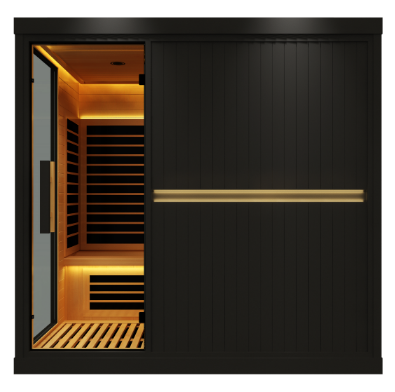
Selecting a sauna room is not a single-product decision. For residential developers, hotel operators, and commercial wellness buyers, the real task is to match the unit to a project's site conditions, heating expectations, and operating plan. The global sauna market is projected to grow from USD 954.3 million in 2025 to USD 1,556.8 million by 2033, according to Grand View Research, and the residential segment already represents 58.92% of that market. As demand increases, buyers are looking for configurations that fit the project, not just the catalog.
This guide focuses on the practical criteria that determine sauna room fit: indoor versus outdoor installation, infrared versus traditional heating, material selection, and compliance verification. It uses OCEAN FUTURE as a reference supplier because its product documentation covers the main sauna room formats used in residential, hotel, and commercial spa projects.
Why Project Fit Is the Real Challenge
Sauna rooms that are technically sound can still fail to serve a project if the environment is ignored. An outdoor sauna exposed to sun and rain needs UV-resistant materials and weatherproof construction. A hotel unit must perform consistently under more frequent use. A residential infrared sauna should offer low-EMF heating and simple controls. These are different jobs, and the product specification should reflect them.
The opportunity is that sauna rooms are now available in modular and prefabricated formats that can be specified before delivery rather than adapted on site. For a buyer, that changes the procurement logic. Instead of asking which finished product is in stock, the project team can define the operating mode, material, and installation condition, and the supplier configures the unit accordingly.
OCEAN FUTURE's Approach to Project-Based Sauna Supply
OCEAN FUTURE is a sauna room and spa equipment manufacturer based in Foshan, Guangdong, China, operated by Foshan Gaoming Muhe Jingcheng Sanitary Ware Co., Ltd. The company operates a 50,000 m² production facility, employs more than 200 people, and reports an annual output of 5,000 sets. Around 85% of production is exported, mainly to the United States, Australia, the European Union, and Germany.
The buyer-relevant capability sits in the company's OEM and ODM model. Monthly capacity is 400 sets, the minimum order quantity is one set, and lead time is 30 to 40 days. Quality control is described as 100% testing before shipment, and after-sales support is provided through remote guidance. These details matter for projects that need a pilot unit, a hotel rollout, or a private-label programme.
OCEAN FUTURE's sauna room lineup covers indoor and outdoor models, infrared-only units, traditional stove units, and hybrid configurations that combine infrared heating with a conventional sauna stove. Available materials are hemlock, aspen, and red cedar.
Technical Considerations for Matching Sauna Rooms to Projects
From a specification perspective, the main variables are heating mode, installation condition, material, power, and safety features.
Heating Modes
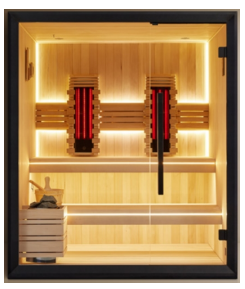
OCEAN FUTURE sauna rooms operate in three modes: traditional sauna heater mode, infrared heating mode, or dual-mode combined heating. Temperature control and timer operation are adjustable. In traditional mode, a sauna stove such as a Harvia model is used. In infrared mode, far-infrared heating plates or boxes heat the occupant directly. Hybrid units combine both systems, giving operators the option to switch modes according to user preference.
Indoor and Outdoor Specifications
The product documentation separates indoor and outdoor lines. Outdoor models are designed for variable climate conditions including sun exposure, rain, low temperature, and corrosion-resistant operation. Specific special requirements include heat-resistant and non-toxic materials, waterproof and moisture-proof construction, overheat protection, low-EMF construction for infrared models, UV resistance for outdoor models, and durable thermal insulation. Supporting equipment for these systems includes the sauna heater or infrared panels, a control panel, LED lighting, and a safety thermometer.
Power and Layout Planning
The catalog includes models from around 1200W in the infrared range to models such as OFS07-2 with an 8000W stove plus an 800W infrared heating box. This range matters for electrical planning. A hotel project adding multiple units needs to verify load capacity per room before installation.
Representative Model Configurations
| Model | Type | Heating configuration | Total power | Material |
|---|---|---|---|---|
| OFS06C-3-1 | Outdoor sauna | Far infrared plate + box | 2150W | Hemlock, aspen, red cedar |
| OFS06B-5 | Indoor infrared | Far infrared plate + box | 3850W | Hemlock, aspen, red cedar |
| OFS07-2 | Indoor hybrid | Infrared box + Harvia 6kW stove | 8000W + 800W | Hemlock, aspen, red cedar |
| OFS12-2 | Indoor traditional | Harvia 6kW stove | 6000W | Hemlock, aspen, red cedar |
The table illustrates how the same supplier can respond to different project priorities. An outdoor model such as OFS06C-3-1 includes a pentroof for weather protection. A hybrid model such as OFS07-2 allows both infrared and stove-based operation. A traditional model such as OFS12-2 provides a classic Finnish sauna experience with a Harvia stove. An infrared model such as OFS06B-5 offers radiant heat in a compact indoor package.
Application Scenarios: Where Each Sauna Room Type Fits
According to OCEAN FUTURE's application documentation, the intended use cases include residential home saunas, hotel sauna rooms, guesthouse leisure facilities, private backyard saunas, and club wellness projects. Working conditions cover indoor and outdoor installation, high temperatures, and variable climates.
- Residential home sauna: Usually an indoor, compact unit with user-friendly controls. The final choice depends on personal heating preference and available electrical supply.
- Hotel and boutique guesthouse: Often a mix of traditional and infrared models to serve different guest preferences. Standardized configurations make maintenance and spare-part planning easier.
- Private backyard sauna: Outdoor units need UV resistance, waterproofing, and durable insulation. A prefabricated outdoor sauna cabin can be placed on a patio or garden surface.
- Commercial spa and club: High-use environments call for durable construction, consistent heating, low noise, and energy-efficient operation.
Commercial spa reference case in Germany
A documented OCEAN FUTURE case involves a commercial spa in Germany that ordered 20 sets of sauna rooms, combining the outdoor model OFS06C-4 and the infrared model OFS06B-5 for a spa centre and relaxation area. The operator reported stable, safe operation, consistent heating, reliable performance, low noise, energy efficiency, and durable construction. The case demonstrates how a multi-zone project can be supplied from one manufacturer using different unit types.
Market Trends Shaping Sauna Room Procurement
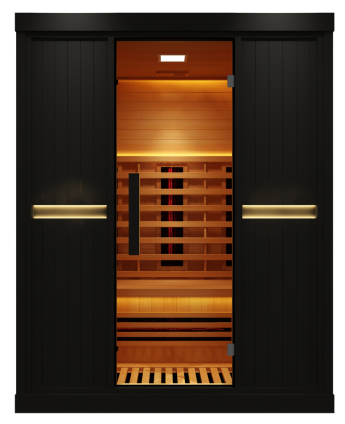
Several verified market signals are relevant to buyers evaluating sauna room suppliers.
- The global sauna market is projected to expand from USD 954.3 million in 2025 to USD 1,556.8 million by 2033 (Grand View Research).
- The United States generated USD 250.8 million in sauna revenue in 2024, approximately 21.8% of global revenue (Topture / Technavio).
- Residential saunas accounted for 58.92% of the market in 2025, reinforcing demand for home-appropriate indoor configurations.
- Traditional saunas held the largest product share at 42.79% in 2025, while infrared saunas are the fastest-growing segment at a 7.5% CAGR.
- European commercial developers are prioritizing FSC-certified sustainably sourced wood in 36% of new sauna installations, according to a Topture industry report.
- The safety standard UL 60335-2-53 for electric sauna heaters was published in June 2025, aligning U.S. requirements more closely with international standards.
The market is still led by established equipment brands. Harvia Oyj, for example, had estimated 2024 revenues of about EUR 175 million. For project buyers, that concentration is a reason to evaluate OEM suppliers that can build to specification, adapt to site conditions, and offer custom or private-label production.
Comparison with Traditional Procurement Approaches
Traditional retail procurement usually begins with a fixed model. The buyer chooses a sauna room from a catalog and then adapts the installation site to the product. That approach can work for simple residential purchases, but it tends to create compromises in commercial projects where heating mode, weather exposure, and usage frequency vary.
A project-fit OEM approach starts with the site and the operating profile. A buyer can specify indoor or outdoor construction, infrared, traditional or hybrid heating, material, and branding. The table below compares the two approaches.
| Selection variable | Traditional retail approach | Project-fit OEM approach |
|---|---|---|
| Heating mode | Often fixed by model | Specifiable: traditional, infrared, hybrid |
| Installation | Indoor or outdoor may not be stated | Explicitly selected, with weatherproofing if outdoor |
| Material | Limited range | Hemlock, aspen, red cedar |
| Order size | Usually single unit | MOQ from 1 set; larger programmes possible |
| Branding | Retail brand | Private-label or OEM options |
There is a boundary that applies to both approaches. A prefabricated or OEM-configured sauna room does not remove the buyer's responsibility for site readiness. The unit still needs a stable floor, a correct power supply, ventilation, and where required, local building-code approval. Outdoor installation also requires a model that is explicitly rated for outdoor exposure.
Buyer note: Confirm the electrical load, floor condition, and local code requirements before finalising a sauna room specification. No sauna room type removes these site responsibilities.
Future Outlook
The direction in sauna procurement is toward more flexible and more certified supply. Hybrid infrared-and-traditional models are likely to become more common as operators look for one unit that can serve different user preferences. Sustainability requirements are also rising; the 36% FSC-certified wood adoption figure among European developers suggests that material transparency will become a standard evaluation point.
Regulatory alignment is improving. The introduction of UL 60335-2-53 for electric sauna heaters is part of a broader move toward international consistency. Buyers who treat certification as a verification step rather than a marketing label will be in a stronger position to avoid project delays.
For commercial buyers, the strategic question is whether a supplier can translate project conditions into product specifications. Suppliers such as OCEAN FUTURE that combine outdoor-rated models, infrared and traditional heating options, low MOQs, and documented production capacity are relevant to the project-fit segment of the sauna market.
For a complete model list and technical specification overview, OCEAN FUTURE publishes a downloadable sauna room brochure: OCEAN FUTURE Sauna Room brochure (PDF).
Frequently Asked Questions
What sauna room types are suitable for a hotel or spa project?
Both indoor and outdoor sauna rooms can be used in hotel and spa settings. Infrared models such as OFS06B-5 provide radiant heat, while traditional models such as OFS12-2 use a Harvia stove. The choice depends on available space, electrical capacity, guest experience goals, and whether the unit will be installed indoors or outdoors.
What is the difference between indoor and outdoor sauna room specifications?
Indoor sauna rooms are intended for protected environments. Outdoor sauna rooms, such as OFS06C-3-1, are designed with weather-facing features like a pentroof, UV resistance, and durable thermal insulation. Outdoor models must also withstand sun exposure, rain, and low temperatures. Indoor-only models should not be installed outdoors.
Can a sauna room combine infrared and traditional heating?
Yes. Hybrid models such as OFS07-2 combine a far-infrared heating box with a Harvia stove. This allows operators to use infrared heating, traditional stove heating, or both. It is a useful option for projects where users have different temperature preferences.
What materials are used in OCEAN FUTURE sauna rooms?
OCEAN FUTURE sauna rooms are available in hemlock, aspen, and red cedar. Material choice affects appearance, durability, and maintenance requirements. Buyers should align material selection with the humidity level, usage intensity, and design intent of the project.
What certifications should a sauna room buyer verify?
Buyers should verify electrical safety and compliance for the destination market. In the United States, electric sauna heaters are increasingly evaluated under UL 60335-2-53, published in June 2025. In the European Union, CE marking is generally required. Because requirements vary by market and are periodically updated, current documentation should be requested from the supplier before ordering.
Have Questions or Need More Details?
Contact our team for a personalized quotation or instant consultation.
Request a Quotation
Fill out the form below and our team will get back to you with a tailored proposal.
WhatsApp Direct Chat
Prefer to chat in real-time? Message us on WhatsApp for instant assistance & quick answers.
- Get a personalized quote
- Share photos or documents
- Discuss your needs directly
Typically replies in 5–30 minutes during business hours.