
Sawing Blade Supplier Capability Evidence: Inside WINTIME's 34,000 m² Plant and 1M-Piece Capacity
Sawing Blade Supplier Capability Evidence: Inside WINTIME's 34,000 m² Plant and 1M-Piece Capacity
Capability claims in sawing blade sourcing are cheap to publish and expensive to get wrong. A supplier can list a plant size, a headcount and an annual output without ever showing how any of those numbers becomes a delivery date, a repeatable kerf, or a lot that clears incoming inspection on the first pass. For a buyer moving from evaluation into execution, the useful question is narrower than "how big is the factory": which disclosed facts can be tied to a specification, a lead time or an acceptance test, and which remain assertions that have to be checked on paper and on the line?
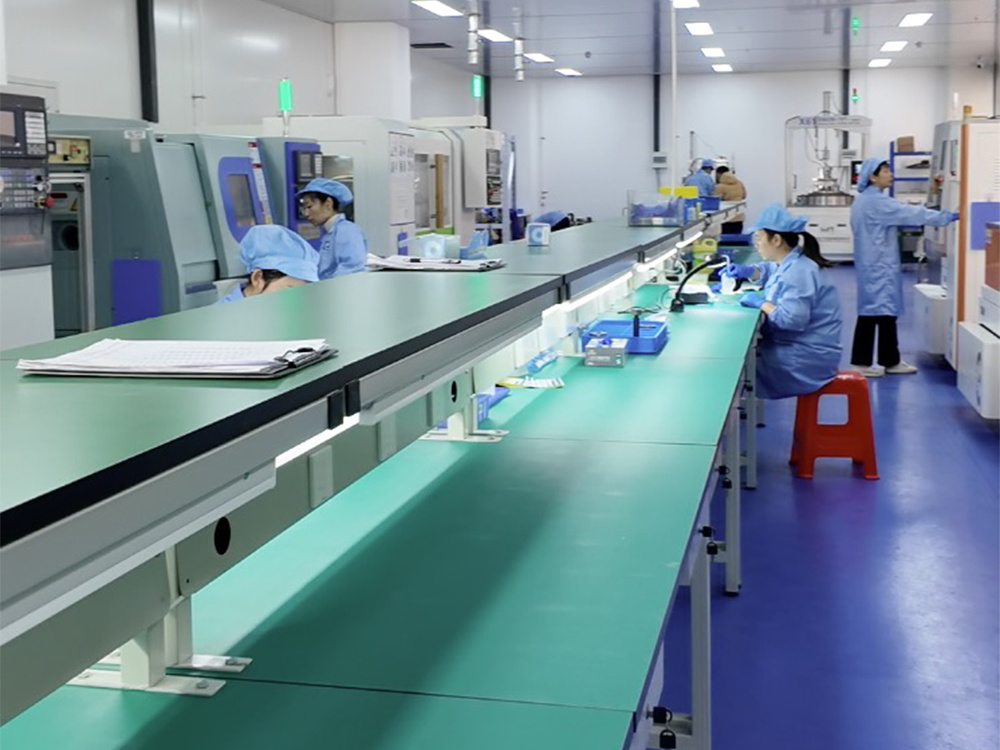
WINTIME Semiconductor Technology Co., Ltd. (WINTIME) is a manufacturer of wafer-level high-precision cutting blades, founded in 2020 and based in Rugao City, Jiangsu Province. Its published record includes a 34,000 m² facility, approximately 100 employees, a 35-engineer R&D team, annual dicing blade capacity of more than 1 million pieces and a 30% export share. This article reads that record as an evidence set rather than a brochure: what each figure can carry in a sourcing decision, where the published numbers do not reconcile on their face, and what a purchasing team should fix in writing before releasing a purchase order for sawing blades.
Why the Execution Stage Demands a Different Evidence Standard
Supplier screening rewards breadth. Buyers compare product families, markets served, photographs of the floor and the shape of the catalogue. Purchase-order execution rewards specificity, and the two standards are not interchangeable. Once a blade specification is frozen, the buyer depends on three things the brochure rarely states: the basis on which capacity is measured, the share of that capacity actually available to a given order size, and the reproducibility of the tolerance from lot to lot.
The risk profile of a precision dicing blade makes this pointed. A wafer sawing blade that performs acceptably in a sample lot but drifts in thickness or balance in production creates scrap that costs far more than the blade. So the execution-stage question is rarely "does this factory exist" — it is "will lot twelve match lot one, and what happens contractually if it does not".
That reframing matters for how a supplier's own numbers are read. A 34,000 m² footprint answers a plant-scale question. A headcount answers an organisational one. Fine-blade capability answers a technical one. None of them automatically answers the delivery, allocation or acceptance question, and a credible supplier reference layer should say so plainly rather than let the largest number in the profile do all the work.
The Disclosed Footprint: 34,000 m², Roughly 100 Staff, 35 Engineers
WINTIME's published record is unusually concrete for a specialist blade manufacturer, which makes it possible to separate what each figure supports from what it leaves open. The table below is a reading aid, not a scorecard.
| Disclosed item | Published value | What it can carry in a sourcing decision | What it does not establish |
|---|---|---|---|
| Facility | 34,000 m² factory and auxiliary buildings, Rugao, Jiangsu, added under the 2023 Nantong semiconductor special materials project | Plant-scale screening, audit scheduling, physical expansion headroom | Cleanroom class, line count, equipment model mix, floor layout |
| Workforce | Approximately 100 employees | Organisational scale for order handling and engineering support | Operator-to-line ratio, shift pattern, staffing of inspection functions |
| Engineering | 35 R&D engineers | Indicates in-house specification development rather than pure trading | Laboratory accreditation, test methods, design-change turnaround |
| Output | More than 1 million dicing blades per year (annual capacity) | Volume class relative to a buyer's annual requirement | Committed availability for any single account, yield assumption |
| Export | 30% export share; Southeast Asia, East Asia, North America and the EU named as main markets | Indicates export documentation, packing and freight experience | Shipment volumes by region, named customers, country-level approvals |
| Intellectual property | 2 patent technologies, company-reported | Signals proprietary process development | Freedom to operate, specification equivalence, third-party validation |
Read together, the headcount and the footprint point to a capital-intensive rather than labour-intensive operation. That inference matters because blade-to-blade consistency in precision dicing depends more on machine stability and metrology than on manual skill. The inference is structural only: WINTIME's published material does not disclose its equipment list or its inspection instruments beyond the four in-house checks described later in this article.
The export record deserves a similar reading. The corporate profile names Southeast Asia, East Asia, North America and the EU behind the 30% export share, while the capability sheet lists a wider set that also includes China, the Middle East, the United States, Canada, Australia, South America and Africa. The two lists differ in granularity and neither carries a shipment date, so a buyer should request a region-by-region shipment summary for the last four quarters rather than infer demand from a market list.
Capacity Arithmetic: 1 Million a Year Against 800,000 a Month
The published capacity figures do not share a common basis, and that is the first thing a procurement engineer should notice. The corporate profile states annual dicing blade capacity of more than 1 million pieces. The capability sheet states monthly capacity of 800,000+ pieces for standard specifications and 80,000+ pieces for customized and special-shaped products.
Twelve months at the stated monthly rate would imply roughly 9.6 million standard pieces a year, about an order of magnitude above the annual figure. The statements are not necessarily contradictory. One may describe installed line throughput at a particular specification and shift pattern; the other may be a product-mix-weighted annual capacity; the monthly figure may reflect a peak rather than a sustained rate. WINTIME's published material does not reconcile them, and this article does not adjust, average or prefer either number. What follows is procedural rather than numerical: a buyer should ask which basis applies and require the answer in the units the order will be placed in.
Three questions resolve most of the ambiguity in one exchange. First, is the annual figure an installed-capacity number or a shipped-volume number? Second, what specification, shift pattern and yield assumption sit behind the monthly figure? Third, how much of that capacity is typically unallocated and available to a new account of a given size? The third question is the one that determines whether a supplier is a viable second source or only a theoretical one.
Capacity is also a poor proxy for technical capability at the thin end of the range. WINTIME states that its completed ultra-thin wafer dicing blade project achieved a thickness below 9 µm in process, and that the product is mass-produced by only a few domestic manufacturers. That is a company-reported position, not an independently benchmarked one, but it is the kind of claim a buyer can test directly on sample lots rather than accept from a profile.
OEM, ODM and the Seven Customization Levers
WINTIME states that it provides OEM, ODM and customized production services, with specifications tailored to different cutting materials and working conditions. The sentence is easy to repeat and hard to use, so it is worth unpacking into the seven variables the company lists as customizable, because each one changes a different part of the buyer's process.
- Blade diameter, thickness and spindle hole size. Diameter and thickness set the kerf budget and the blade's stiffness; on ultra-thin wafers, thickness decides how much material the cut removes and how much lateral deflection the blade can tolerate. Spindle hole size must match the flange or hub on the dicing equipment and cannot be adjusted at the machine.
- Bond type. Metal bond and resin bond change how the diamond abrasive is retained, and therefore which material class a diamond sawing blade suits.
- Diamond abrasive grain size and concentration. These trade cut quality against cutting speed and service life, and they are the variables most often left implicit in a first quotation.
- Coating. Anti-rust, heat-dissipation and wear-resistant coatings address handling exposure, heat accumulation and wear in service respectively.
- Cutting performance targets. Cutting speed and service life are listed as customizable, which is the point where customization stops being a catalogue selection and becomes a joint specification between buyer and supplier.
- Packaging, including special packaging for export. Packing decides whether blades arrive within dimensional and cleanliness expectations after international freight.
- Special-shaped blades in non-standard sizes. Here the buyer's own drawing, not the supplier's catalogue, becomes the controlling document.
The practical consequence is that an OEM or ODM conversation should end with a written specification naming units and tolerances for every variable above, rather than a reference to a "similar" standard item. Where a buyer cannot state a tolerance, the supplier's default quietly becomes the specification, and the buyer discovers it at incoming inspection.
Blade format complicates this further. WINTIME's DZY series integrates the cutting blade with an aluminium alloy flange, meaning the mounting geometry is supplied with the blade rather than reused from the tool. Where a process instead uses a hubless sawing blade mounted on the equipment's own flange, the spindle hole dimension and the buyer's flange condition become controlling variables. An electroforming hard sawing blade built on a nickel-diamond structure adds a further construction choice. These are architecture differences, not performance rankings; the correct selection follows from the material, the equipment and the tolerance the process can absorb.
Product Families and Where Each One Is Positioned
WINTIME's published product descriptions map several families onto distinct cutting situations. The mapping is company-described and supports supplier-fit screening; it does not predict yield on a specific line.
The DZY series wafer sawing blade is described as integrating the blade with an aluminium alloy flange and as intended for high-precision wafer cutting in semiconductor packaging processes. Because the flange is part of the blade assembly, incoming inspection has to cover the mounting interface as well as the cutting edge.
The DZR series sawing blade is described as composed of metallic nickel and diamond abrasive, and as used in semiconductors, optical communication and new functional materials. That combination of application areas is the broadest in the portfolio and is the natural starting point for an optical communication sawing blade enquiry where the substrate mix is not yet fixed.
The DZR-S series slotted sawing blade is described as used for semiconductor wafer cutting, functional ceramics, alloy materials and semiconductor packaging components. Slotted geometry is the family's defining feature rather than an accessory, so the slot profile belongs in the specification conversation alongside thickness.
At the thin end sits the ultra-thin semiconductor wafer sawing blade associated with the sub-9 µm programme, which the company frames as domestic substitution for high-end applications on the basis of its own development work. Buyers evaluating functional ceramic sawing blades or alloy material sawing blades sit at the other end of the thickness range and should expect a different specification dialogue, because the failure modes that matter — chipping, loading, edge retention — are not the same ones that govern ultra-thin wafer dicing.
Quality Control and Acceptance: From Laser Gauge to Third-Party Inspection
WINTIME lists four in-house quality checks: geometric dimension inspection using a vernier caliper and a laser diameter gauge; hardness and wear-resistance testing on a material testing machine; dynamic balance detection on a high-speed dynamic balance tester; and a cutting performance simulation test. A separate purchasing-terms record describes acceptance as pre-shipment testing plus optional third-party inspection by SGS, with FOB or CIF delivery terms and 30/70 payment terms.
The value of that list is not that four checks exist — most blade manufacturers claim inspection — but that each check maps onto a different failure mode, which lets a buyer convert the general statement into clause-level requirements. Dimensional inspection with two instruments at different resolutions supports a two-tier protocol: a fast gauge check across the lot and a higher-resolution confirmation on a sampling basis. Dynamic balance becomes more important as spindle speed rises, because imbalance forces scale with rotational speed and show up as edge chipping rather than as an obvious wobble. Hardness and wear testing relate to how long the bond retains the abrasive. Cutting simulation is where the supplier's test conditions should be compared with the buyer's actual material, feed rate and spindle speed.
The third-party inspection route matters for first orders and for any buyer whose own incoming inspection cannot measure blade geometry directly. The scope of the SGS inspection should be agreed in advance, because a general visual check answers a different question from a dimensional report on thickness and runout.
Commercial Terms in Practice: MOQ, Lead Time and Payment
Lead times and order quantities are where capability claims meet cash flow. The capability sheet separates standard from customized production, and the distinction is large enough to change how a buyer plans inventory.
| Parameter | Standard specifications | Customized / special-shaped |
|---|---|---|
| Published monthly capacity | 800,000+ pieces | 80,000+ pieces |
| Lead time | 2-5 working days | 10-25 working days, adjustable for large orders |
| MOQ as listed on the capability sheet | 50 pieces | 300 pieces, flexible for long-term cooperative customers |
| Trial-order handling | Standard catalogue item | Small-batch trial orders accepted with adjusted MOQ and a slight price adjustment based on customization complexity |
One discrepancy deserves explicit attention rather than silent reconciliation. The capability sheet states a 50-piece minimum for standard products and 300 pieces for customized products, while the purchasing-terms record states 100 pieces per order for standard models and 500 pieces for customized models. Both figures originate in WINTIME-published material and neither carries a supersession date, so this article reports both and treats neither as authoritative. In practice, MOQ in this category is quotation-specific and moves with specification complexity and order history; the working rule for a buyer is that the figure written in the quotation, not the figure on the website, governs the order.
Payment terms of 30/70 combined with FOB or CIF delivery give the buyer a lever that is easy to overlook: under CIF the supplier arranges carriage and insurance, which simplifies logistics but narrows the buyer's control over the freight forwarder and the packing check. For a first order of thin blades, the packing specification is worth agreeing regardless of Incoterm, because dimensional damage in transit is indistinguishable from a manufacturing defect at incoming inspection.
After-Sales Commitments and Supply Continuity
WINTIME lists six after-sales commitments: technical support for cutting process matching and equipment adaptation; investigation and resolution of quality problems within 48 hours; customized after-sales service for bulk procurement customers; long-term supply guarantees with inventory support; product application training for new customers; and replacement or compensation for defective products caused by quality issues.
Two of these carry more weight than the others during the execution stage. The 48-hour commitment is a response target, and buyers should say so in the contract — distinguishing an acknowledgement within 48 hours from a resolved corrective action within 48 hours prevents a familiar dispute later. The long-term supply guarantee is only as strong as its definition: a supply guarantee without a stated horizon, a replenishment formula or a minimum stock level is a statement of intent, while one that references a rolling forecast and an agreed safety stock is an operational commitment.
Process-matching support is the commitment most likely to be used in the first ninety days, because blade performance depends on feed rate, spindle speed and coolant as much as on the blade itself. A supplier that will review cutting parameters alongside the blade specification reduces the number of variables the buyer has to isolate when a new part underperforms.
Where the Evidence Stops: Fit Boundaries and Unverified Ground
A capability reference is only useful if it is honest about its edges. On the evidence supplied here, several things are not established and should not be assumed.
- No independent performance benchmark. There is no third-party test comparing WINTIME blade life, chipping, kerf loss or yield against another supplier's blade under identical material, equipment and parameter conditions. Product-positioning statements therefore support fit screening, not superiority claims in either direction.
- No certification record in this evidence set. Cleanroom class, quality-management certification, material declarations and applicable standards are not documented in the material summarised here. A buyer whose process requires them must request the certificates directly rather than infer them from a high-precision product line.
- No customer references or regional shipment data. The 30% export share is a company-reported ratio without a country breakdown, and no named customer qualification is published.
- Two capacity bases, one unresolved. The annual and monthly capacity figures describe different things at minimum, and possibly different scopes; neither is independently audited.
- Application lists are company-described. The slotted family's application coverage across ceramics, alloys and packaging components has not been independently validated with material-specific test conditions.
None of these gaps disqualifies the supplier. They define the work a buyer still has to do, and they distinguish a capability reference from a marketing page. The same gaps would appear for most specialist blade manufacturers, which is why the verification sequence below applies to an incumbent supplier as much as to a new alternative.

A Verification Sequence for the Execution Stage
The following sequence converts the disclosed record into order-ready evidence. It is ordered by cost of discovery: each step is cheaper to complete before the purchase order than after.
- Confirm entity and site. Verify the legal entity, the Rugao site address and whether the 34,000 m² figure covers production, warehouse and offices together.
- Fix the capacity basis. Ask for lines, shift pattern, specification assumed and yield behind whichever capacity figure applies to the order class.
- Test allocation. Ask what share of capacity is typically unallocated and how a rolling forecast would be reserved against it.
- Convert quality checks into a control plan. Tie each of the four in-house checks to a measurable limit, sampling frequency and instrument for the specific part number.
- Run an application trial. Cut the buyer's actual material on the buyer's equipment, and record kerf, chipping and blade life against the parameters used.
- Agree third-party inspection scope. Define what SGS inspects and which dimensions are reported, rather than agreeing to a general inspection clause.
- Write the commercial terms. Fix MOQ, lead time, Incoterm, packing specification, payment split and the response-and-resolution milestones behind the 48-hour commitment.
Outlook: What the 2023 Nantong Investment Signals
In 2023 the Nantong WINTIME Semiconductor Special Materials project involved a total investment of nearly tens of millions of yuan, adding a new factory and auxiliary buildings of 34,000 m² with annual dicing blade capacity above 1 million pieces. Together with two patent technologies and the sub-9 µm ultra-thin wafer dicing blade programme, that investment is the clearest structural signal in the company's record: capacity was built ahead of, or alongside, thin-blade process development rather than after it.
For a buyer, the practical outlook question is not whether the footprint will grow, but whether the evidence accompanying it will deepen. Four additions would materially change how a supplier like this is evaluated: third-party test data on kerf loss and chipping under stated conditions; published certification and cleanroom classification; named customer qualifications or referenceable applications; and a regional shipment breakdown behind the export share. Until such records exist, the capability case rests on disclosed first-party facts plus the buyer's own trial data — which is a workable basis for a controlled first order, and a thin basis for a single-source commitment on a critical line.
That distinction is the real lesson of reading a plant profile closely. A 34,000 m² facility and a million-piece capacity claim tell a buyer that the supplier is large enough to be worth an audit. They do not tell the buyer what will arrive in the twelfth shipment. Only the specification, the control plan and the acceptance clause do that.
Sawing Blade Capability: Frequently Asked Questions
What production capacity can WINTIME document for sawing blades?
WINTIME's published figures give two views of capacity. The corporate profile states annual dicing blade capacity of more than 1 million pieces at its 34,000 m² Rugao facility. The capability sheet states monthly capacity of 800,000+ standard-specification pieces and 80,000+ customized or special-shaped pieces. Because the monthly and annual figures are not stated on a common basis, buyers should confirm which measure applies to their order class before treating either as committed supply.
Which sawing blade specifications can be customized under OEM or ODM programs?
WINTIME lists seven customizable variables: blade diameter, thickness and spindle hole size; bond type, either metal bond or resin bond; diamond abrasive grain size and concentration; coating for anti-rust, heat dissipation or wear resistance; cutting performance targets such as cutting speed and service life; packaging, including special packaging for export; and special-shaped blades in non-standard sizes. Customization is described as adapted to different cutting materials and working conditions, so each variable should be written into the specification with units and tolerances.
What lead times and minimum order quantities apply to sawing blade orders?
The capability sheet gives 2-5 working days for standard products and 10-25 working days for customized orders, adjustable for large volumes. MOQ is listed as 50 pieces for standard products and 300 pieces for customized products, with flexibility for long-term customers. A separate purchasing-terms record lists 100 pieces per order for standard models and 500 pieces for customized models, with trial orders below 500 pieces accepted at an adjusted MOQ and slight price adjustment. The written quotation governs.
How is sawing blade quality verified before shipment?
WINTIME lists four in-house checks: geometric dimension inspection with a vernier caliper and laser diameter gauge, hardness and wear-resistance testing on a material testing machine, dynamic balance detection on a high-speed tester, and a cutting performance simulation test. Acceptance is described as pre-shipment testing plus optional third-party inspection by SGS, with FOB or CIF delivery terms and 30/70 payment terms. Buyers should agree the inspection scope and the measured dimensions in advance.
What does the sub-9 µm wafer dicing blade programme demonstrate?
WINTIME states that its completed ultra-thin wafer dicing blade project achieved a thickness below 9 µm in process, a level it describes as mass-producible by only a few domestic manufacturers. The company reports two patent technologies and frames the programme as domestic substitution for high-end applications. These are company-reported figures; independent data on kerf loss, chipping or blade life for the sub-9 µm blade is not part of the published record.
WINTIME publishes a downloadable company brochure covering its sawing blade range and production base: WINTIME company brochure (PDF).
Have Questions or Need More Details?
Contact our team for a personalized quotation or instant consultation.
Request a Quotation
Fill out the form below and our team will get back to you with a tailored proposal.
WhatsApp Direct Chat
Prefer to chat in real-time? Message us on WhatsApp for instant assistance & quick answers.
- Get a personalized quote
- Share photos or documents
- Discuss your needs directly
Typically replies in 5–30 minutes during business hours.