
Scaling Safari Tent Supply: What Resort Groups Look for in a Long-Term Manufacturer
When Safari Tent Procurement Becomes a Long-Term Partnership
Resort groups that operate safari tents across multiple wildlife lodges, eco-resorts, and desert camps eventually face a common question: how do you scale accommodation capacity without repeating procurement, installation, and replacement cycles? The answer increasingly lies in supply partnerships structured around engineering support, consistent production capacity, and multi-project delivery — not single-purchase transactions.
For buyers at the decision and execution stage, evaluating a safari tent manufacturer means moving beyond product specifications and into questions about production stability, customization depth, quality control, and post-delivery support. This article explains what those criteria look like in practice, using Stars Glamping — a Guangzhou-based luxury tent manufacturer with a 20,000㎡ production base — as an example of how a supplier can support resort groups on a repeatable, project-by-project basis.
The Procurement Gap in Multi-Site Safari Tent Projects
Buyers managing safari tent supply for resort groups often find that single-order quotes do not translate well into multi-site rollouts. Each project site — whether a jungle resort, a riverside lodge, or a desert camp — may require different tent sizes, material upgrades, and local compliance documentation.
General-purpose camping tent suppliers typically lack the engineering depth needed to adapt structures to site-specific wind loads, humidity, or fire-safety requirements. A safari tent intended for permanent hospitality use can face conditions that standard camping gear is not designed for, including prolonged UV exposure, heavy seasonal rain, and the need for fire-retardant materials in commercial accommodation. Procurement teams therefore need a supplier that can treat each site as a new engineering problem rather than repeating a standard catalogue answer.
The scale of demand is also relevant. The global glamping tents market was valued at USD 3,124.89 million in 2023 and is projected to grow to USD 6,484.86 million by 2032, reflecting rising investment in outdoor accommodation. As tourism infrastructure expands, buyers increasingly search for suppliers who can handle phased deliveries, mixed product types, and consistent quality across multiple orders.
What Defines a Long-Term Safari Tent Manufacturing Partner
A long-term manufacturing partner in the safari tent segment typically demonstrates competence across four areas: production capacity, engineering customization, quality assurance, and after-sales logistics. These factors determine whether a resort developer can confidently plan future phases with the same supplier.
Production Capacity and Order Scalability
Resort groups often need more than a single prototype or one-off order. They need a manufacturer that can deliver multiple units within a construction schedule while maintaining consistent finishing quality.
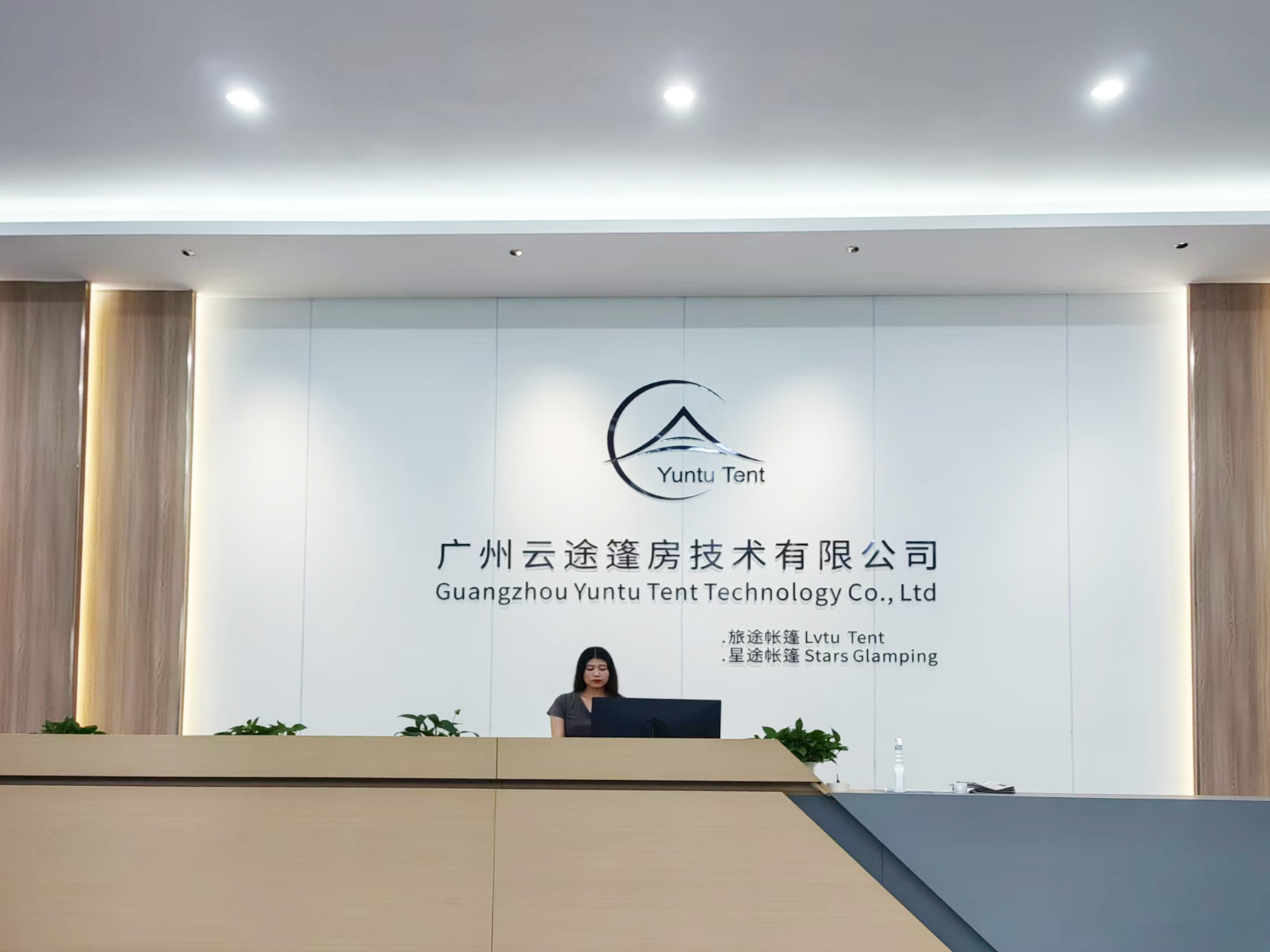
Stars Glamping operates a 20,000㎡ manufacturing base in Nansha District, Guangzhou, with a monthly production capacity of 50 to 80 luxury tent units, depending on project size. The factory also maintains a 4,000㎡ simulation exhibition hall, allowing buyers to inspect full-scale products before committing. For buyers, this level of capacity means phased orders can be planned with a reasonable degree of supply certainty.
Engineering and Customization Capability
Site-specific adaptability is a core requirement in safari tent procurement. A wildlife camp in East Africa may require reinforced steel frames for high wind loads, while a jungle resort may prioritize insect screening and moisture-resistant fabric. A desert camp may need enhanced insulation for temperature swings.
Stars Glamping maintains an R&D team of six specialists in architectural design, structural engineering, and materials science. The company holds 54 national patents covering wind resistance, waterproofing, heat insulation, and quick assembly. For safari tent buyers, this means customization requests — such as adjusting standard sizes, integrating bathrooms or kitchen areas, or modifying frame materials — are handled through an engineering review process rather than treated as impractical special requests.
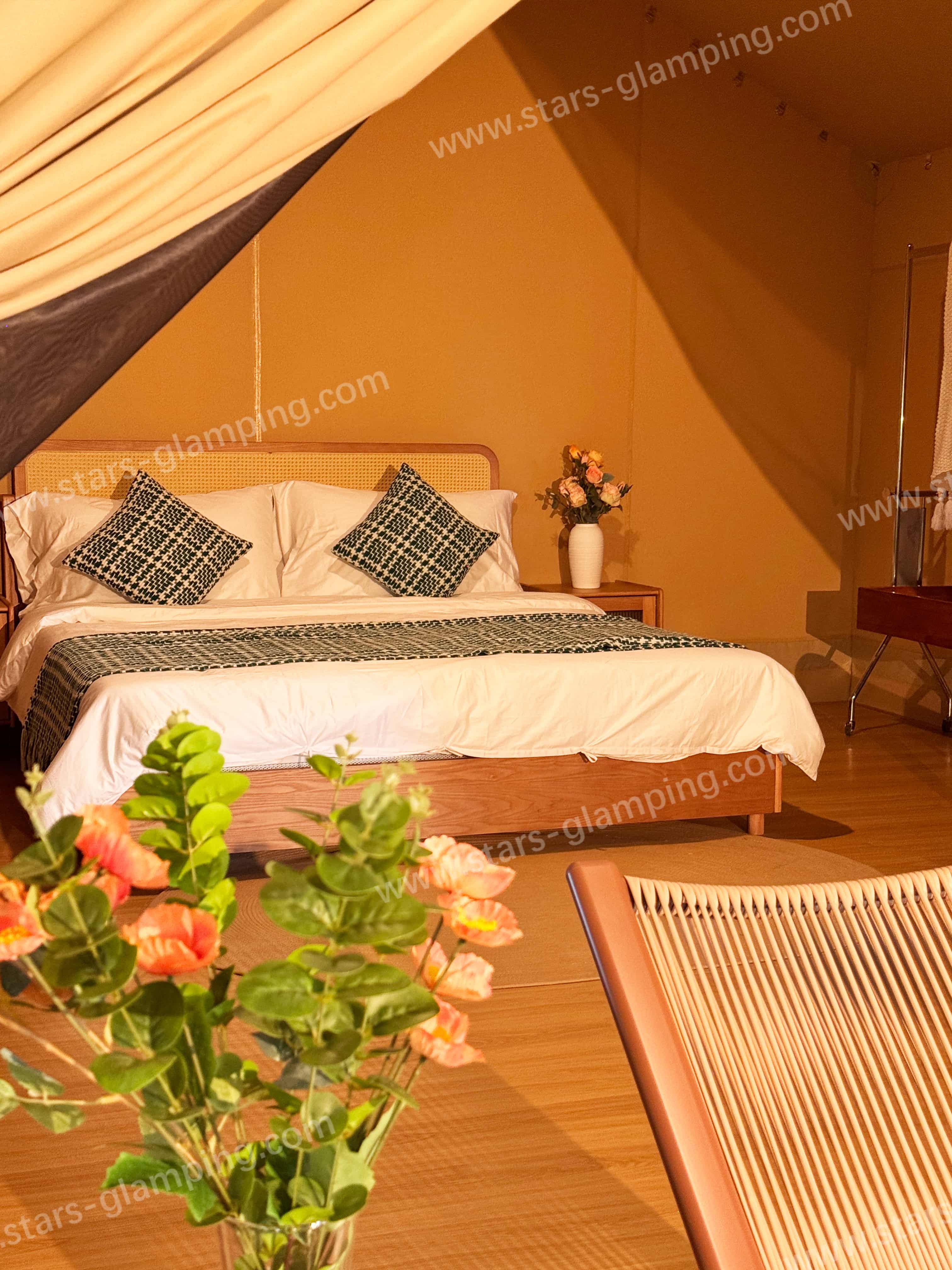
Safari tents in the company's lineup illustrate this flexibility. The Safari Tent – Epic model, for example, is available in standard sizes of 20㎡, 30㎡, 40㎡, and 50㎡, with customization available. Features include large panoramic windows, mesh screens, and a wood-style structure design. The frame can be finished anti-corrosion solid wood or heavy-duty galvanized steel, depending on site requirements.
For projects requiring higher wind and snow load performance, the Luxury Tent – Tethys uses a steel pipe frame with 1050g/m² PVDF architectural membrane fabric, rated for wind resistance up to 120km/h and a service life of 25–30 years. The Luxury Tent – Pisces hybrid model combines solid wood and steel pipe framing with PVC polyester fabric, offering a service life of 10–15 years for projects that need a balance between natural aesthetics and structural strength.
Quality Control as a Supply-Chain Decision
For buyers procuring safari tents for commercial accommodation, quality control is not only about fabric strength or stitching. It is about reducing the risk of on-site failures, guest safety incidents, and premature replacement costs.
The risk profile for safari tents includes water ingress, wind damage, fire exposure, and UV degradation. Stars Glamping addresses these risks through material selection and manufacturing discipline: waterproof PVC/PVDF fabric, reinforced steel structures, flame-retardant materials, and UV protection are used across its product range. The company applies a 12-step quality inspection system before products leave the factory.
Fire safety deserves particular attention in commercial hospitality. Safari tents used in resorts are held to flame-retardancy expectations that standard consumer tents do not meet. In North America, commercial tent fabrics are commonly required to meet standards such as CPAI-84 or NFPA 701. In the European market, Stars Glamping holds CE certification for its safari tents, referencing EN ISO 5912:2020 safety and performance requirements.
For procurement teams, the presence of documented certifications is not a marketing detail — it is a basic precondition for approving a supplier in projects with insurance, permitting, or brand-standard requirements. Buyers should always request the specific certification documents applicable to their project's jurisdiction.
Deployment Considerations Across Resort Environments
Safari tents are deployed in a wider range of environments than the name suggests. Each environment places different demands on the structure, fabric, and interior configuration.
Eco-resorts and jungle resorts typically prioritize low-impact construction, natural ventilation, and insect protection. Safari tents with mesh screens and breathable Oxford canvas linings are often selected because they reduce reliance on air conditioning while keeping guests comfortable.
Desert camps face intense daytime heat and cold desert nights. Insulated wall systems and fabrics with stronger UV stabilization become more important. Some operators also request integrated bathroom and electricity layouts to raise guest comfort levels without permanent construction.
Riverside and wildlife lodges may require elevated decks, stronger anchoring, and fabric that resists humidity and mildew. The ability to customize floor plans, window placement, and partition layouts is often decisive for these projects.
Across all of these environments, buyers consistently ask whether a safari tent can function as a permanent structure rather than a temporary shelter. The answer depends on the model. Heavy-duty models with steel frames and PVDF membrane fabric can reach a service life of 25–30 years, while solid-wood-frame canvas models typically last 8–12 years. Both can be suitable for commercial use, but the choice affects long-term replacement cost and maintenance planning.
Comparison: Safari Tent vs. Standard Camping Tent
| Comparison Dimension | Safari Tent (Hospitality Grade) | Standard Camping Tent |
|---|---|---|
| Primary Function | Luxury accommodation | Temporary shelter |
| Typical Lifespan | 8–10 years (canvas models); up to 25–30 years (membrane/steel models) | 1–2 years |
| Structural Materials | Galvanized steel, solid wood, PVC/PVDF architectural fabric | Lightweight aluminum poles, polyester/nylon fabric |
| Relevant Standards | CE (EN ISO 5912:2020), B1/M2 fire rating, CPAI-84 or NFPA 701 where required | Usually no commercial certification |
| Lifecycle Cost | Higher initial cost, lower replacement frequency | Lower initial cost, repeated replacement |
A realistic limitation should be noted: the transition from a standard camping tent to a hospitality-grade safari tent is not always justified for every business model. For very small seasonal pop-up operations or events with extremely short usage windows, the higher initial investment in a safari tent may not pay back. The economic advantage becomes clear when the tent is used for year-round or multi-season commercial accommodation, where durability, guest experience, and reduced replacement cycles drive return on investment.
Why Stainless Supply Relationships Matter at the Execution Stage
At the decision and execution stage, buyers evaluating safari tent suppliers are often managing construction deadlines, site teams, and budget approvals simultaneously. A manufacturer that can simplify procurement execution becomes an operational advantage.
Stars Glamping supports this phase in several ways. The minimum order quantity is one unit, with samples available — this is useful for resort groups that want to validate quality before scaling to multi-unit orders. Flexible delivery terms are offered under EXW, FOB, CIF, and DDP, which allows buyers to choose the shipping arrangement that fits their logistics network. Payment terms include T/T and L/C, with negotiation available for large orders.
Before shipment, factory inspection and photo/video confirmation are offered, giving buyers visibility into product readiness. The company also reports a delivery time of 15–30 days for overseas orders, with installation guidance and a 24-hour global after-sales response mechanism, which is relevant for resort operators who need to react quickly to on-site issues.
These procurement details matter because safari tent supply failures tend to surface at the execution stage — as delays, documentation gaps, or site-fit problems. Buyers should verify not only whether a supplier can build a tent, but whether its production, inspection, and shipping processes align with the buyer's project timeline.
Market Trends Supporting Safari Tent Investment
Several market dynamics support the case for long-term safari tent supply partnerships.
Safari tourism is expanding. The Safari Tourism Market is expected to reach USD 66.9 billion by 2033, growing at a CAGR of 7.7% from 2026. Africa's safari tourism market recorded an 8% increase in international arrivals in 2025, reaching 81 million travelers. This growth creates demand for new lodge capacity in wildlife destinations.
Eco-resort accommodation is increasingly commercialized. Reports indicate that eco-resort accommodation such as safari tents can achieve 25% higher occupancy rates than traditional low-end structures. While this figure should be validated against site-specific conditions, it reflects a broader industry expectation that quality accommodation structures outperform basic alternatives in hospitality performance.
Buyers are seeking all-weather and multi-climate structures. The search for waterproof safari tents, insulated safari tents for winter, and all-weather safari tents reflects a shift from seasonal structures to year-round accommodation assets. This trend favors manufacturers that offer engineered solutions across temperature ranges from -30℃ to +70℃ and wind resistance up to 120km/h.
Boundaries and Risk Factors in Safari Tent Procurement
Even with a reliable manufacturer, buyers should keep realistic expectations about what a safari tent can and cannot deliver.
One limitation is that safari tents require a suitable foundation and site preparation. Unlike permanent buildings, they do not eliminate the need for level ground, drainage planning, and anchoring systems. A second limitation is lifespan variance: canvas-based safari tents typically require re-covering or replacement after 8–12 years, depending on climate and maintenance. A third factor is local regulatory acceptance. Fire-retardant materials and CE certification support compliance, but buyers must confirm local building and hospitality regulations before committing to a tent-based structure.
These boundaries do not reduce the value of safari tents for hospitality use. They simply mean that procurement decisions should be made with full information about installation requirements, expected lifespan, and regulatory context.
Selecting a Safari Tent Supplier for Multi-Phase Projects
For resort groups and lodge operators planning phased expansion, the supplier selection process should include the following checks:
- Capacity verification: Can the factory handle your expected order volume within your construction window?
- Customization process: Does the supplier offer engineering review for site-specific wind, snow, humidity, and temperature conditions?
- Documentation: Are certifications such as CE (EN ISO 5912:2020), B1/M2 fire ratings, and material test reports available?
- Sample validation: Is there a showroom or sample unit that can be inspected before mass production?
- Delivery and after-sales: What are the lead times, shipping terms, installation support, and after-sales response mechanisms?
Stars Glamping provides a relevant example of how these criteria can be met in practice. Its 20,000㎡ production facility, 50–80 unit monthly capacity, dedicated R&D team, documented certifications, and flexible procurement terms make it a supplier capable of supporting repeat resort projects. The company reports a customer repurchase rate of over 80%, which is a useful signal for buyers evaluating long-term partnership potential.
Future Outlook: Toward Standardized Yet Site-Adapted Safari Tent Supply
The next phase of safari tent procurement is likely to combine product standardization with site-adapted engineering. Manufacturers that can offer modular safari tent systems — with standardized components for frames, fabric panels, and interior fit-outs — will help resort groups reduce costs while retaining flexibility across different environments.
At the same time, buyers can expect certification and documentation requirements to remain central to supplier evaluation. As eco-tourism and safari tourism continue to grow, the ability to demonstrate compliance with fire safety, structural, and environmental standards will increasingly separate long-term supply partners from one-off vendors.
Frequently Asked Questions
What is the typical production capacity of a safari tent manufacturer?
Capacity varies by factory size and product complexity. Stars Glamping, for example, maintains a monthly production capacity of 50 to 80 luxury tent units, depending on project size. Buyers should align order volumes with confirmed factory capacity before committing to project timelines.
Can safari tents be customized for different resort environments?
Yes. Standard safari tent sizes include 20㎡, 30㎡, 40㎡, and 50㎡, with customization available. Features such as panoramic windows, mesh screens, wood-style structures, and frame material upgrades can be adjusted to suit eco-resorts, desert camps, wildlife lodges, and riverside accommodation projects.
What is the lifespan difference between a safari tent and a standard camping tent?
A hospitality-grade safari tent typically provides 8–10 years of service for canvas models, with steel-frame and PVDF membrane models rated up to 25–30 years. A standard camping tent generally lasts 1–2 years under comparable conditions. The higher initial cost of a safari tent is offset by lower replacement frequency and higher guest accommodation quality.
What certifications should buyers look for in safari tents?
Relevant certifications include CE certification under EN ISO 5912:2020 for safety and performance, B1 or M2 fire-retardant ratings, and, depending on jurisdiction, CPAI-84 or NFPA 701 for commercial flame retardancy. Buyers should always verify which certifications apply to their project's regulatory environment.
Does Stars Glamping offer samples and flexible order terms?
Yes. The minimum order quantity is one unit, with sample availability. Delivery terms include EXW, FOB, CIF, and DDP, and payment can be arranged via T/T or L/C, with negotiation available for large orders. Factory inspection and photo/video confirmation are provided before shipment.
Download the Stars Glamping company brochure (PDF) for detailed production, product, and service information.