
Scattered Factories to Verified Shortlist at China Fitness Trade Expo
Scattered Factories to Verified Shortlist at China Fitness Trade Expo
China's gym equipment supply base is large, geographically dispersed and commercially uneven. For an overseas gym operator, that makes the hardest part of sourcing not the equipment itself but verification: establishing, with evidence a procurement committee can defend, which of several hundred candidate factories can actually deliver a commercial-grade product on schedule. This analysis explains how the China Fitness Trade Expo's B2B matchmaking programme converts that dispersed candidate pool into a verified supplier shortlist, what the shortlist contains, and what it still leaves the buyer to prove.
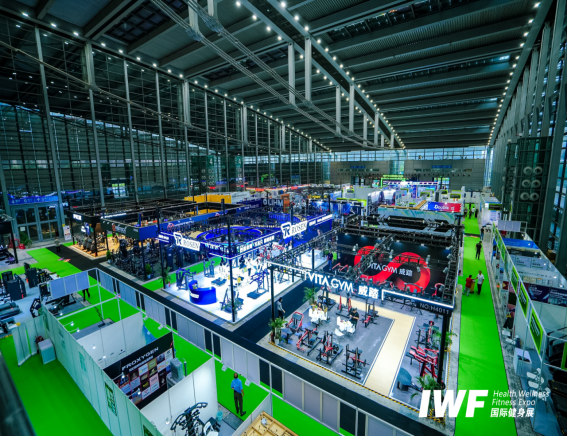
The Cost That Grows With Every Additional Factory
A gym operator sourcing commercial equipment meets a comparison problem before it meets a price problem. The buyer needs to judge product quality across different manufacturers, at comparable specifications and comparable commercial terms. When those manufacturers sit in different Chinese provinces, the comparison itself becomes the cost centre.
The case record behind this article describes the pattern precisely. A U.S.-based gym operations buyer needed to evaluate product quality across multiple manufacturers, but the factories were scattered across China, so visiting each one in person was impractical. The organiser's diagnosis identified two cost drivers: high supplier verification costs and inefficient offline sourcing. The buyer had no centralised channel through which to reach qualified manufacturers and complete a product comparison efficiently.
Put in procurement language, three costs compound when verification is done factory by factory:
- Travel cost. Every additional factory adds flights, ground transport and accommodation, and the marginal supplier is usually the least promising one on the list.
- Comparison cost. Visits happen on different days, in different facilities and often against different samples, so like-for-like comparison degrades as the itinerary grows.
- Opportunity cost. Every day spent in transit is a day not spent negotiating, testing a sample or checking documents.
A shortlist inverts that sequence. Rather than travelling in order to discover which suppliers are worth talking to, the buyer screens candidates first and travels once to negotiate with the ones that survive screening. That is a different sourcing product from a factory tour, and it is the product the matchmaking programme is built to deliver.
What the China Fitness Trade Expo Concentrates in One Venue
The China Fitness Trade Expo is organised by Shanghai Donnor Exhibition Service Co., Ltd, an exhibition organiser founded in Wenzhou, Zhejiang in 1996 and identified on the official IWF event website as the organiser of the IWF Shanghai and Shenzhen fitness exhibitions. The organiser's capability profile is relevant to buyers because a shortlist is only as good as the supplier pool behind it:
- Membership of UFI (the Union of International Fairs).
- Nearly three decades of exhibition organisation, with a long-term focus on footwear, optics, fitness and wellness, and industrial equipment exhibitions; the service team combines 30 years of experience in exhibition organising and international buyer invitation.
- Annual exhibition area exceeding 700,000 square metres and more than 120,000 enterprise instances served.
- Proprietary assets including B2B platforms, a regional organiser network covering Shanghai, Wenzhou, Chengdu and other cities, and overseas and domestic media cooperation.
The scale of a single edition shows how much of the candidate pool can be reached without travel between cities. For the 2026 Shanghai edition, held 13-15 March 2026, the organiser reported more than 1,000 brands and nearly 65,000 visitors. Both figures are organiser-reported; no independent audit was identified in the sources reviewed, so they should be read as scale indicators rather than audited measures of buyer value or return on attendance.
The same release described the product scope as commercial fitness equipment, sports leisure goods, cross-border e-commerce solutions, AI smart fitness, rehabilitation training systems, nutritional health products, and pool equipment and facilities. That breadth matters for shortlist design, because a gym operator rarely buys one category. Flooring, resistance stations, cardio machines, functional rigs and rehabilitation items may come from different specialists, and a venue covering several categories lets the buyer assemble one coherent shortlist instead of running a separate sourcing trip per category.
Inside the 4-Step Market-to-Match Loop
The programme runs on a four-step loop. Each step produces something the buyer can inspect, which is what separates a scheduled shortlist from a general invitation to walk an exhibition hall.
Step 1: Market research and target mapping
The loop opens with the buyer's requirement rather than with a supplier list: which equipment categories are in scope, at what quality tier, for what kind of facility. On the organiser's side, the same step drives exhibitor recruitment and zone design, so that the categories a buyer needs are grouped in the venue rather than scattered across it. The practical output for the buyer is a target map - categories, supplier types and therefore the meetings worth requesting.
Step 2: Pre-show exhibitor recruitment and buyer invitation, with online pre-matching
Buyer invitation and pre-registration happen before travel, and appointments are scheduled online through a pre-matching process. This is the step that changes the economics. The meeting timetable exists before the flight is booked, so travel is committed against a known schedule rather than a hope. A buyer who skips preparation at this stage arrives with a badge and a floor plan, which is not the same product as a timetable of confirmed meetings.
Step 3: On-site matchmaking and concentrated negotiation
During the exhibition, matched meetings run in sequence. Because the manufacturers are in one venue on the same days, product quality comparison and supplier negotiation happen in a single window - precisely the condition the U.S. case identified as missing from its earlier offline sourcing. A buyer can move between candidate meetings in minutes rather than days, and can set one sample against another's the same afternoon. The case record describes this step as the point where centralised supplier comparison and faster procurement decisions became possible.
Step 4: Post-show data tracking and conversion support
After the exhibition, meeting records and follow-up analysis turn conversations into a documented pipeline. The structured outputs of the loop run from market research and positioning, exhibitor recruitment and zone design, buyer invitation and pre-registration, online appointment and meeting scheduling, on-site execution and fast negotiation, through to post-show analytics and order follow-up. The point of documenting all six activities is auditability: the buyer can trace how a name became a meeting and how a meeting became a commercial next step.
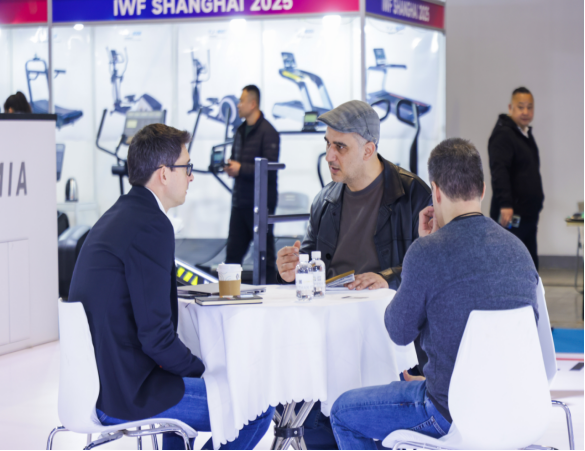
Four Deliverables That Replace a Factory-Tour Itinerary
The programme names four deliverables. Read together, they describe a shortlist process rather than a single event.
- Verified supplier shortlist. The candidate set produced by target mapping and pre-matching. Its value lies as much in what has been excluded as in what remains: the buyer receives a defined group of manufacturers rather than an exhibitor directory. The organiser's public materials describe the shortlist as verified but do not publish the specific documents checked during that verification, so the verification boundary should be confirmed directly before the list is treated as a qualification.
- Scheduled one-on-one meeting timetable. A time-bound plan of meetings rather than an open floor plan. For a buyer flying in, this converts an uncertain sweep of the hall into a fixed number of substantive conversations, each with a named counterpart and a slot.
- On-site matchmaking coordination. Staffed coordination during the event keeps the timetable intact when a meeting overruns or a counterpart fails to appear. Coordination is the difference between a schedule on paper and a schedule that survives contact with a busy exhibition floor.
- Post-show meeting record document. A written record of what was discussed with each supplier. This is the deliverable that lets the shortlist survive internal review, because the technical and commercial points raised at the venue can be checked against formal quotations and documentation back in the buyer's own office.
For a procurement team, the fourth item is usually the most underrated. A shortlist that exists only as memory and business cards cannot be defended to a capital committee; a shortlist with a matching record of each conversation can be re-examined, challenged and updated as quotations arrive.
A Documented Case: 12 Qualified Manufacturers in One Month
The clearest illustration in the organiser's project record concerns a gym operations buyer based in the USA. Its challenge was the one described earlier: product quality had to be evaluated across different manufacturers, the factories were spread across China, and visiting each was impractical. The diagnosis was high supplier verification cost combined with inefficient offline sourcing, and no centralised channel to reach qualified manufacturers efficiently.
The solution applied was targeted B2B matchmaking during the IWF exhibition, gathering verified fitness equipment manufacturers in one venue so the buyer could conduct concentrated supplier negotiations and product quality comparison. The recorded duration was one month, and the reported outcomes were specific:
- Supplier inspection travel costs cut by over 70%.
- Negotiations completed with 12 qualified manufacturers within one month.
- Qualitative gains recorded as centralised supplier comparison, improved procurement efficiency, and direct communication channels with reliable Chinese manufacturers.
The client's post-show email, recorded in the organiser's project file, stated that the matchmaking event helped the team contact multiple reliable factories efficiently and saved considerable travel time in China.
Scattered Factory Visits Versus a Matchmaking Shortlist
The comparison below is a process comparison drawn from the case record and from the programme's stated structure. It is not a measured cost comparison; the only quantified result in the documented case is the travel-cost reduction cited above.
| Dimension | Scattered factory visits | Matchmaking shortlist |
|---|---|---|
| Geographic reach | Supplier clusters spread across provinces; movement between them is sequential | Candidates gather in one venue for a fixed window |
| Comparison conditions | Different days, different facilities, often different samples | Same days, samples present, comparison within one period |
| Schedule certainty | Assembled during the trip, subject to availability | Meeting timetable issued before travel |
| Document trail | Notes consolidated after return | Post-show meeting record per supplier |
| Evidence produced | Direct observation of individual plants | Concentrated commercial and product comparison across candidates |
| What it does not establish | Comparable terms across the full candidate pool | Capacity, certification, MOQ, lead time or delivery performance |
The two routes are not mutually exclusive. A shortlist is compatible with a later factory audit of the two or three finalists, and for buyers placing large or technically complex orders that combination is usually the more defensible sequence: screen widely at the venue, then verify deeply at the plant level.
The Market Context Behind the Shortlist
China's export scale is the reason the shortlist question is worth solving rather than avoiding. The Observatory of Economic Complexity, drawing on UN Comtrade-derived data, reports first-half 2025 exports of gym and athletics equipment under HS 950691 at USD 4.78 billion, up 10.2% year on year; its full-year 2025 figure for the same product group is approximately USD 9.88 billion. Those are category-level trade values. They indicate the size of the supply base a buyer is screening, not the reliability of any individual supplier and not the commercial value of any exhibition.
Product scope at the 2026 Shanghai edition widened beyond conventional strength and cardio lines into AI smart fitness, rehabilitation training systems and sports nutrition. For a gym operator, that breadth is useful but also a discipline test: a shortlist built without a defined category scope tends to produce meetings that feel productive and compare poorly afterwards.
What the Shortlist Still Cannot Tell You
A verified supplier shortlist narrows the field; it does not close due diligence. Several categories of evidence that determine whether a supplier can actually be used are outside what a matchmaking programme publishes:
- Production capacity and delivery performance. Factory size, line configuration, output volume and on-time delivery history are not supplied through matchmaking.
- Product compliance and certification. Market-specific conformity requirements for commercial and electrical fitness equipment must be checked against the buyer's own destination market.
- Commercial terms. MOQ, indicative pricing, lead time, payment terms, warranty and sample policy are negotiated, not verified at a venue.
- Qualification methodology. The organiser's public materials describe the matchmaking function but do not disclose meeting volumes, conversion rates or the specific supplier-qualification steps applied. Buyers who need that assurance should request it and verify independently.
Two cautions follow. First, "not disclosed" is not evidence of incapability: a manufacturer whose capacity is not published may still be entirely suitable, and the buyer has to ask. Second, the organiser is a commercial party to the transaction. Inclusion in a shortlist is a screening outcome, not an endorsement, and it does not transfer any supplier risk to the exhibition organiser.
This is also why this article does not rank named manufacturers. No verified exhibitor-level profiles, capacity data or certification records were available for comparison, and a ranking assembled without those inputs would be a list of names rather than a shortlist.
From Shortlist to Ranking: What to Score, and What to Ask
Screening produces a shortlist; ranking it for a purchase decision requires criteria the buyer defines. Six are worth scoring explicitly, and the weights should be set by the buyer's own facility plan rather than borrowed from a template:
- Specification match. Does the product line meet the facility's intended usage, space and user profile?
- Documented compliance. Can the supplier produce the conformity evidence your destination market requires?
- Sample and bench evaluation. How does the equipment behave under the loads and frequency your floor will generate?
- Commercial terms. MOQ, price structure, payment terms and warranty coverage, quoted on a like-for-like configuration.
- Capacity and lead time. Can the supplier deliver the volume on the schedule your opening or refit requires?
- After-sales and spares. Parts availability, response channels and long-term support arrangements.
Before committing to a matchmaking programme, five questions to the organiser will separate a scheduled shortlist from a general attendance package:
- What exactly does "verified" cover in the supplier shortlist, and which documents are checked?
- How is the one-on-one meeting timetable built, and by what date must a buyer submit requirements?
- What happens when a matched supplier withdraws or a meeting overruns?
- What format does the post-show meeting record take, and what does each supplier entry contain?
- Which performance metrics are reported, and how are they defined?
On the last point, the organiser's own evaluation set is published with definitions: visitor count as total on-site professional visitors, number of overseas buyers as confirmed international procurement delegations or buyers present, plus booth count, exhibition area and number of leads, where leads are post-show valid business leads with contact and demand. These sit in the traffic, transaction, operational and media-and-brand-impact categories. They describe reach and programme activity; they do not rate any individual supplier's reliability.
Outlook: From Access to Documentation
Two developments shape the next phase of matchmaking-based sourcing, and both are conditional. The first is that the shortlist function is becoming a data function. Traffic-and-operations metrics such as visitor count and booth count are useful for choosing an event, but buyers evaluating a matchmaking programme increasingly need meeting-level outcomes. Whether organisers publish those outcomes will determine whether a shortlist can be audited after the fact or only trusted at the time.
The second is that the platform model is extending past the show floor. The organiser's proprietary assets include B2B digital platforms alongside its regional organiser network and media cooperation, which points to pre-matching and post-show follow-up continuing online between editions. That could shorten the discovery phase. It shortens verification only if those channels carry supplier documentation; a directory without documents moves the buyer faster to a name, not closer to a decision.
For buyers planning around a specific edition, dates and venue details should be confirmed with the organiser, since they change by edition and cycle.
FAQ
How does the China Fitness Trade Expo reduce supplier verification costs for an overseas buyer?
It concentrates manufacturers that would otherwise be spread across Chinese provinces into one venue for a fixed window, then pairs that concentration with pre-scheduled meetings. In the documented U.S. gym operations case, this approach cut supplier inspection travel costs by over 70% and allowed negotiations with 12 qualified manufacturers within one month, according to the organiser's project record. The mechanism is concentration rather than discount: one trip covers many candidate meetings, and product comparison happens within the same period instead of across weeks of travel.
What exactly is included in the verified supplier shortlist deliverable?
The programme names four deliverables: a verified supplier shortlist, a scheduled one-on-one meeting timetable, on-site matchmaking coordination, and a post-show meeting record document. The shortlist is the screened candidate set, the timetable is the meeting plan, on-site coordination keeps that plan running during the event, and the meeting record documents each conversation for later internal review. The organiser's public materials do not specify which documents are checked during verification, so buyers should confirm that scope directly before treating the list as a qualification.
Can matchmaking replace a factory audit or a certification review?
No. Matchmaking concentrates supplier meetings; it does not certify production capacity, product conformity, MOQ, lead time, payment terms or warranty. Those items require separate verification through documentation, sample evaluation and, where the order justifies it, a plant audit. Because the organiser's published material does not set out a supplier qualification methodology, meeting volumes or conversion rates, a shortlist is best treated as a screened starting point for due diligence rather than a substitute for it.
What does the 4-step Market-to-Match loop require from the buyer?
The loop runs through market research and target mapping, pre-show exhibitor recruitment and buyer invitation with online pre-matching, on-site matchmaking and negotiation, and post-show data tracking. The buyer's input is front-loaded: a clear product scope and target quality tier are what make the mapping and meeting scheduling meaningful. A buyer without a defined scope still receives a timetable, but not necessarily a comparable one, because the meetings are only as targeted as the requirement behind them.
Which performance metrics should a buyer ask about when evaluating a matchmaking programme?
The organiser's published evaluation set covers visitor count, defined as total on-site professional visitors; number of overseas buyers, defined as confirmed international procurement delegations or buyers present; booth count; exhibition area; and number of leads, defined as post-show valid business leads with contact and demand. These fall into traffic, transaction, operational and media-and-brand-impact categories. They describe event reach and programme activity, so a buyer comparing programmes should also ask for meeting-level outcomes rather than attendance alone.
The shortlist, not the itinerary, is the deliverable that changes sourcing economics. A buyer who arrives with a defined category scope, a confirmed meeting timetable and a documented record of each conversation leaves with a decision-ready candidate set instead of a stack of impressions. Shanghai Donnor Exhibition Service Co., Ltd publishes the programme structure and its exhibition portfolio on its official website, which is the appropriate starting point for confirming current edition details and the scope of supplier verification.
Have Questions or Need More Details?
Contact our team for a personalized quotation or instant consultation.
Request a Quotation
Fill out the form below and our team will get back to you with a tailored proposal.
WhatsApp Direct Chat
Prefer to chat in real-time? Message us on WhatsApp for instant assistance & quick answers.
- Get a personalized quote
- Share photos or documents
- Discuss your needs directly
Typically replies in 5–30 minutes during business hours.