
Scenario-Based Jewelry Wholesale: Matching Supply to Demand
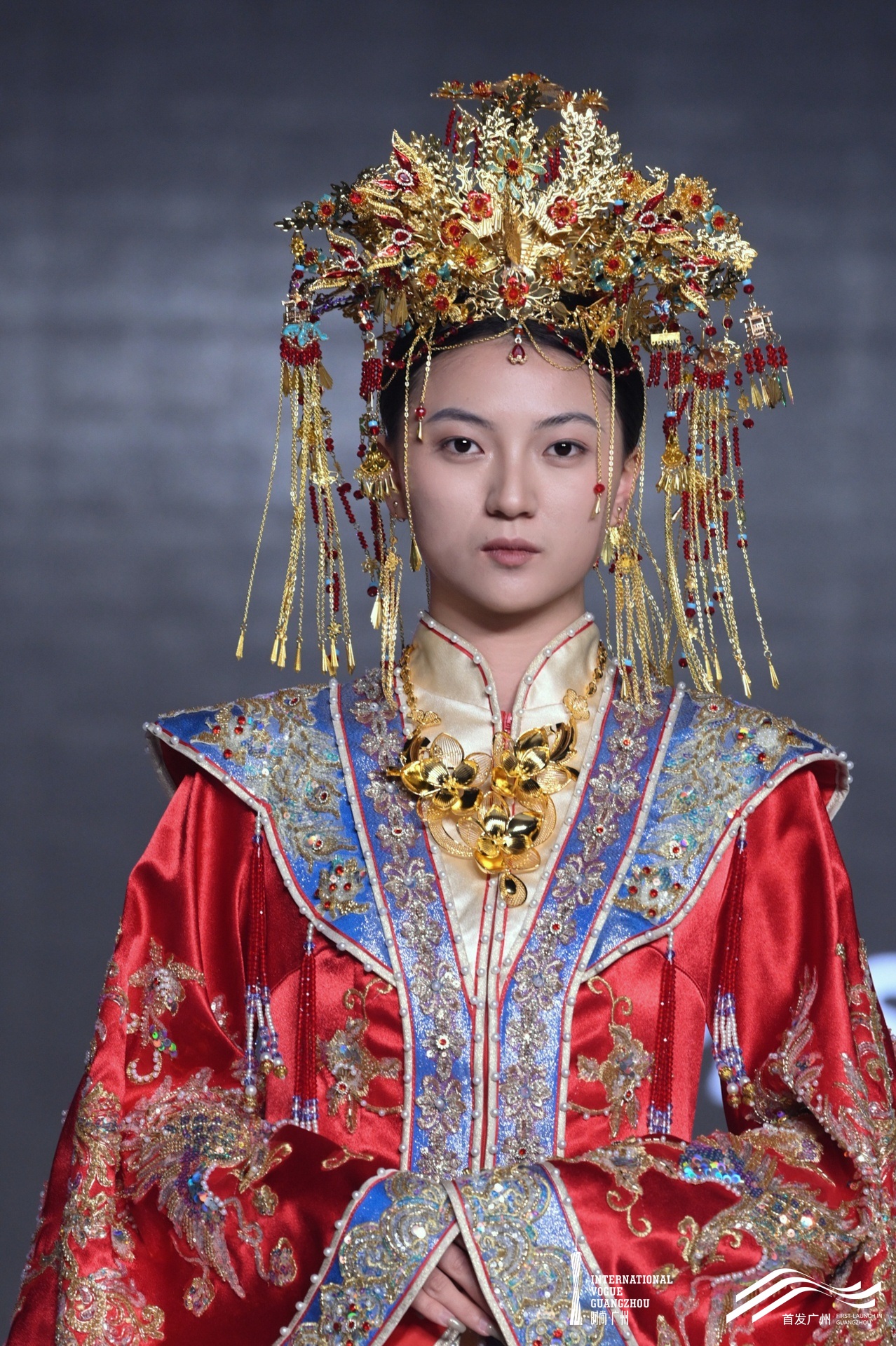
Fashion show environment — one of the selling scenarios that wholesale jewelry assortments need to serve.
Scenario-Based Jewelry Wholesale: Matching Supply to Demand
The jewelry wholesale market is shifting from price-driven catalogs toward assortments that match how and where end consumers wear the product. For buyers at the research and evaluation stage, the practical question is no longer only which supplier has the lowest price, but which supplier can support the specific retail, e-commerce, event, or gifting scenario they need to serve.
The global jewelry market was valued at roughly USD 242.79 billion to USD 381.5 billion in 2025, depending on how fine and fashion jewelry segments are classified, with projections reaching as high as USD 578.5 billion by 2033 (Fortune Business Insights; Grand View Research). Online jewelry channels are projected to grow at 8 to 13 percent annually and represent 25 to 30 percent of industry purchases by 2026. These figures suggest that wholesale buyers are operating in a larger, faster-changing market where product relevance matters as much as unit cost.
The Problem: Mismatched Jewelry Assortments Create Inventory Risk
Many wholesale jewelry orders are built around price bands or best-selling categories without a clear view of the end-use environment. A buyer might order a large quantity of one necklace style and then discover that the piece is too heavy for daily wear, not suitable for allergic consumers, or visually wrong for the intended occasion. The result is slow-moving inventory, markdowns, or a failed product launch.
Common mismatches include:
- Buying long-term wear pieces for a market that mostly needs event-specific styles.
- Selecting non-hypoallergenic materials for customers with sensitive skin.
- Ignoring compliance requirements such as REACH in the EU.
- Using packaging that does not support gifting or brand presentation.
- Focusing on single-SKU volume when the channel actually needs a wider mix with faster testing.
The opportunity is to treat jewelry wholesale as a scenario-matching problem. A supplier that can offer daily wear, fashion show, event, and gift-oriented products under one roof allows a buyer to build a balanced assortment from a single production relationship.
What a Scenario-Oriented Jewelry Wholesale Supplier Looks Like
Guangdong Xuping Jewelry Co., Ltd., established in 1997, is a Chinese manufacturer and global supplier of fashion jewelry. The company operates a 200,000-square-meter production base in Guangzhou, employs more than 1,000 people including over 800 master artisans, and reports an annual output of over 100 million pieces. Its portfolio includes rings, pendants, earrings, necklaces, bracelets, anklets, bangles, and coordinated jewelry sets.
Xuping Jewelry supports both OEM and ODM production. For wholesale buyers, the relevant facts are: a monthly capacity of 8,000,000 pieces, lead times of 30 to 90 days, and a minimum order quantity of 1 piece. The company offers customization such as engraved logos, hang tags, and custom packaging. Quality control is described as 100 percent full inspection, with SGS-certified raw materials, an 18-stage quality check, and REACH/ROHS compliance testing. The company also states that it follows the ISO9001 quality system.
These capabilities matter for a wholesale evaluation because they address two common project requirements: testing small initial orders across many styles, and later scaling winning designs into volume production. The company’s official website is https://www.xupingjewelry.com/.
Technical Fit: Materials, Weight, and Wear Modes
Scenario-based sourcing requires reading product specifications in terms of how a piece will perform. Xuping Jewelry’s catalog includes products made from environmental copper alloy and stainless steel, finished with 14K gold color, 18K gold color, or platinum plating. Synthetic cubic zirconia and synthetic crystal are the most common stone options.
For example, the 14K gold-colored necklace model X001015911 weighs about 4.30 grams, has a length of 43 cm, and uses synthetic cubic zirconia. This belongs to the Daily series, which suits frequent wear. By contrast, the platinum-plated necklace model 14N245402 weighs about 49.44 grams and belongs to the Luxury series, indicating a heavier, more statement-oriented piece for events or special occasions.
Stainless steel is another relevant category. The stainless steel necklace A00902945 uses a 14K gold color, weighs about 6.30 grams, and has a 40 cm length. The stainless steel bracelet T000959269 weighs about 11.01 grams and measures about 170 by 6 mm. Stainless steel jewelry is generally associated with lower maintenance and better resistance to everyday wear, which aligns with the broader market trend toward durable fashion accessories.
Xuping’s product corpus describes intended use as: designed for daily wear, fashion shows, events and occasions, gift giving, and all-weather suitable environments. It operates in long-term wear, occasional wear, and daily accessory modes. These three modes give buyers a practical filter: a daily accessory should be light and comfortable, an occasional piece can be more dramatic, and a long-term wear item needs durable plating and stable materials.
Application and Use Cases
Wholesale jewelry projects are not uniform. Different distribution channels place different demands on the product range, packaging, and order structure.
Retail jewelry stores usually need a balanced assortment across price points and styles. A mix of Daily, Simple, and Luxury series allows the store to serve both everyday customers and gift buyers.
E-commerce platforms benefit from standard sizes, consistent weight, and photogenic designs. Lightweight items such as the 14K gold-colored necklace X001015911 at 4.30 grams are practical to ship and photograph, while jewelry sets offer higher average order value.
Brand OEM/ODM projects require customization capability. Engraved logos, hang tags, and custom packaging are core services at Xuping Jewelry, and the 30-to-90-day lead time is suitable for seasonal brand launches.
Wholesale distributors need documented compliance to access multiple markets. REACH/ROHS testing and SGS-certified raw materials reduce the risk of rejection at customs or retail compliance review.
Promotional gift programs often require low MOQ across multiple SKUs and flexible branding. Xuping’s MOQ of 1 piece allows buyers to sample designs before committing to larger production quantities.
Client evidence from the company’s case records includes brand authorized agents in Turkey, Indonesia, and Turkmenistan reporting annual sales of over 2 million units each, and an agent in Morocco with annual sales of over 3 million units. The stated highlights are stylish designs, a wide variety of styles, rapid updates, environmentally friendly materials, hypoallergenic properties, and on-time delivery.
Market Trends Supporting Scenario-Based Wholesale
Verified industry data points in the same direction as scenario-based sourcing.
China’s total jewelry exports reached USD 11.5 billion in 2024, with the United States as a primary destination accounting for USD 1.31 billion (OEC). This indicates that Chinese manufacturers remain central to global jewelry supply chains, especially for fashion-forward wholesale programs.
The global stainless steel jewelry market is projected to reach USD 10.8 billion by 2035, growing at a CAGR of 4.3 percent from 2026 (WiseGuyReports). Stainless steel products such as Xuping’s A00902945 necklace and T000959269 bracelet are therefore aligned with a segment that is expected to keep expanding.
Online jewelry retail channels are projected to grow at 8 to 13 percent annually and represent 25 to 30 percent of industry purchases by 2026. For wholesale buyers, this means product selection should account for how items appear on screen, how they are packaged for e-commerce delivery, and whether the supplier can ship smaller mixed orders.
In the EU, jewelry sold must comply with REACH Regulation (EC) 1907/2006 regarding nickel release, lead, and cadmium limits. A supplier that documents REACH/ROHS compliance testing, as Xuping states it does, gives buyers a clearer path to sell in Europe without re-testing every SKU.
Comparison: Traditional Catalog Wholesale vs. Scenario-Based Supply
| Factor | Traditional Catalog Wholesale | Scenario-Based Supplier Approach |
|---|---|---|
| Product selection | Broad generic assortment | Assortments matched to daily wear, events, gifts, and e-commerce |
| MOQ per SKU | Often high to protect margins | Low MOQ at Xuping: 1 piece per design |
| Customization | Limited or slow | OEM/ODM with engraved logos, hang tags, custom packaging |
| Compliance visibility | Often undocumented | ISO9001, SGS-certified materials, 18-stage QC, REACH/ROHS testing |
| Lead time | Stock-dependent | 30–90 days for OEM/ODM orders |
| Best fit | Stable, repeat orders for known bestsellers | Market entry, testing new styles, multi-channel or seasonal projects |
This comparison is not a universal claim that one model is always better. A traditional catalog approach may still be preferable for buyers who need the absolute lowest unit cost on one commodity style at very high volume, or who do not require customization and compliance documentation. Scenario-based supply adds flexibility and testing ability, but that flexibility is most valuable when the buyer has clear channel planning and seasonal direction.
There are also boundaries to what a fashion jewelry manufacturer can offer. Xuping Jewelry specializes in environmental copper alloy and stainless steel fashion jewelry with plated finishes. Buyers looking for solid precious metals such as 18K gold or sterling silver should not treat Xuping as a fine jewelry supplier. In addition, low MOQ does not mean zero planning time; OEM/ODM lead times of 30 to 90 days mean buyers need to place orders before their selling season begins.
Future Outlook
The next phase of jewelry wholesale will likely combine base stock with fast-testing capability. A buyer might maintain a core assortment of daily wear items for steady retail demand, while using low-MOQ OEM orders to test trend-driven styles for fashion shows, holiday events, or influencer-led e-commerce drops.
Compliance will continue to move from a differentiator to a baseline requirement, especially in the EU and North America. Suppliers that can document REACH/ROHS compliance and use certified materials will be easier to work with for distributors and retail chains.
Stainless steel and hypoallergenic fashion jewelry should keep growing as consumers look for durable accessories that do not require precious metal budgets. At the same time, online sales growth will push suppliers to provide better digital product data—weights, dimensions, stone information, and packaging details—so buyers can make faster sourcing decisions.
FAQ
What does a jewelry wholesale supplier do?
A jewelry wholesale supplier manufactures or sources jewelry in bulk and distributes it to retailers, e-commerce sellers, brand owners, and distributors. Xuping Jewelry is one such manufacturer, operating since 1997 and producing fashion jewelry in categories such as rings, necklaces, earrings, bracelets, and sets.
What does low MOQ mean for a jewelry wholesale project?
A low MOQ allows a buyer to order a small number of pieces per design to test demand before committing to large volumes. Xuping Jewelry reports a minimum order quantity of 1 piece, while its monthly production capacity is 8,000,000 pieces.
Can a jewelry wholesale manufacturer support custom branding?
Yes, OEM/ODM services at Xuping Jewelry include engraved logos, hang tags, and custom packaging. These services allow retailers and brand owners to present products under their own brand identity.
Are Xuping Jewelry products compliant with EU environmental standards?
Xuping Jewelry states that it follows the ISO9001 quality system, uses SGS-certified raw materials, and conducts REACH/ROHS compliance testing. In the EU, jewelry must comply with REACH limits on nickel release, lead, and cadmium.
What jewelry categories work best for an e-commerce wholesale project?
Lightweight items from the Daily and Simple series are often practical for e-commerce because they are easy to photograph, ship, and pair with online styling. Stainless steel items and minimalist designs also fit digital retail channels where durability and visual clarity are important.
How long does an OEM jewelry wholesale order take?
Lead times at Xuping Jewelry are 30 to 90 days, depending on the product design, materials, and order volume. Buyers should factor this into seasonal planning rather than expecting immediate stock replenishment for custom orders.