
Scenario Fit: 4V Cordless Staple Guns and Screwdriver Sets in Light Assembly Workflows
Light assembly work is defined less by force than by repetition. Fitting hinges and handles, closing small panels, routing low-voltage cable, tightening flat-pack joints and positioning trim are all low-torque tasks performed many times per shift. In workflows like these, the deciding question is rarely how much power a tool has — it is whether the form of the tool matches the motion it has to repeat.
The practical answer for buyers is a division of labour rather than a single product choice. A 4V cordless staple gun is a fastening instrument for soft substrates. A 4V cordless screwdriver is a repetition instrument for small threaded fasteners. Hand tools — hex keys, folding hex keys, T-handle wrenches, screwdriver sets and bits sets — remain the torque and reach instruments that electric tools in this class do not replace. Selecting between them is a workflow decision, not a voltage decision.
The products referenced in this article come from the HOTAK PRO TOOLS 4V cordless tool range and its companion hand tool, screwdriver and bit sets. The manufacturing, capacity and certification records cited here belong to Ningbo (Yinzhou) Yongjia Electrical Tools Co., Ltd. (YONGJIA TOOLS), a Ningbo, Zhejiang-based hand tool manufacturer founded in 2000, operating a 45,000 m² production base with an annual output of 18,000,000 units and an R&D team of 25 engineers.
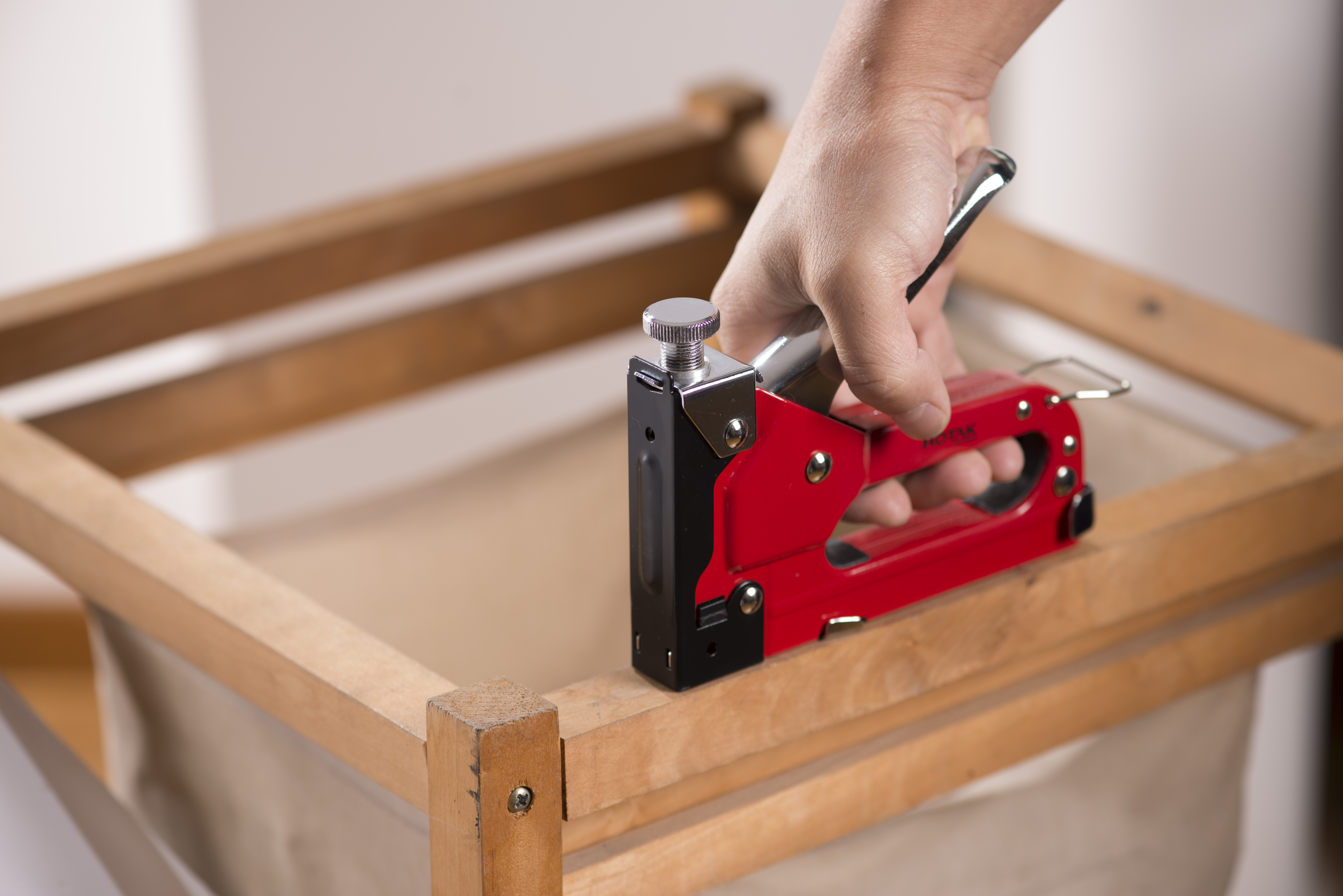
Light assembly fastening typically involves soft substrates, short reach distances and a high number of repeated cycles.
Why Light Assembly Workflows Reward Scenario Fit Over Power
Light assembly is a distinct operating environment. Products in the YONGJIA TOOLS application records are documented for household indoor environments and open-air construction site environments, for repair and fastening work using manual operation and matched equipment such as screws, nuts and nails. That combination — indoor and on-site, repair and fastening, hand-scale components — is exactly the environment where a 4V platform can be sufficient or insufficient depending on form factor.
Three characteristics separate light assembly from heavier assembly work:
- Fastener size is small. The work involves small screws, sockets and staples rather than structural bolts, so the torque ceiling needed per joint is low.
- Cycle count is high. The same motion — drive, adjust, staple, re-position — repeats continuously, which shifts the cost of the task from peak force to cumulative wrist and hand load.
- Access is constrained. Recessed hinges, cabinet interiors, cable channels and small housings limit how a tool can be presented to the fastener.
Because of these three conditions, a low-voltage cordless tool can outperform a more powerful one in real throughput terms, provided its form matches the task. The same logic explains why hand tools remain in the workflow: for the subset of joints that need controlled, size-specific torque, a hex key or T-handle wrench delivers something a 4V motor is not designed to deliver.
The Failure Modes of a Mismatched Tool
Most light assembly problems are not tool-quality problems. They are fit problems, and they show up in predictable ways.
Using a cordless screwdriver where a staple gun belongs produces poor fastening into fabric, webbing or thin panel material, because a screw thread needs a threaded interface while a staple needs a driven crown. Using a screwdriver where a precision tool belongs risks over-driving small electronics fasteners: the electric torque of the precision class is deliberately low. Using an electric tool where a hex key belongs risks rounded fastener heads, because the correct hex size and the controlled torque range of a hand key are what protect the joint.
Matching Tool Form to Task: A Decision Framework
The framework below maps four recurring light assembly tasks to the tool form that suits them, using published specifications from the HOTAK PRO TOOLS range and its companion hand tool sets.
| Assembly task | Better tool form | Reasoning | Reference item |
|---|---|---|---|
| Fixing fabric, webbing, felt, thin panels or trim to a soft substrate | Cordless staple / nail gun | Drives staples into soft material without a compressor; one-hand operation suits short, repeated cycles | YJSG-501 (five-use), YJSG-500 (two-use) |
| Repetitive driving of small threaded fasteners, 20–200 cycles per shift | 4V cordless screwdriver with selectable torque | Reduces cumulative wrist load; manual torque of 10 N.M remains available for final tightening | YJPS-902, YJPS-912 |
| Electronics, small appliances, precision housings | Cordless precision screwdriver plus precision bit set | Low electric torque limits over-driving; small bit profiles match miniature fasteners | YJPS-906, YJPS-907, YJTS-3138 |
| Hex-head joints on furniture frames, flat-pack assembly, machine covers | Hex key, folding hex key or T-handle wrench | Published torque range runs from 0.82 N to 220.00 N by size; ball-end allows engagement up to 25° | 71821D3, YJHK-3075, YJHK-3347, YJHK-3066 |
| Adhesive tacking and trim positioning before mechanical fastening | Cordless hot-glue pen | 150 ℃ operating temperature with a 60-second glue flow cycle supports small, controlled adhesive dots | YJGG-001 |
| Mixed tasks across a site or service call | Compact 4V cordless tool kit or multi-profile tool set | One case, multiple bit and socket profiles, fewer tool changes | YJTS-3526, YJTS-3147 |
What the HOTAK PRO TOOLS 4V Range Provides
HOTAK PRO TOOLS is a 4V cordless tool range covering cordless staple and nail guns, cordless screwdrivers, precision repair tools, a hot-glue pen and companion hand tool and bit sets. The published specifications matter for scenario fit because they define where each form is strong and where it stops.
| Model | Form | Rated voltage | Battery | Published performance |
|---|---|---|---|---|
| YJSG-501 | Five-use lithium electric nail gun | 3.7V | 2000mAh | 25W; metal housing; no-load operating time ≥60 min; intended for household and manufacturing use |
| YJSG-500 | Two-use lithium electric nail gun | 3.7V | 2000mAh | 25W; metal body; household and manufacturing use |
| YJPS-902 | Power screwdriver | 3.7V | 2000mAh | No-load operation ≥60 min; electric torque 2N/3.5N/5N; manual torque 10 N.M; output speed 0–280 rpm; charge output voltage 5V |
| YJPS-912 | Power screwdriver set | 3.7V | 800mAh | No-load operation ≥50 min; electric torque 2.5N; manual torque 10 N.M; output speed 0–250 rpm; charge current 500mA |
| YJPS-906 / YJPS-907 | Precision power screwdriver sets | 3.7V | 320mAh | Electric torque 0.15 N.m; manual torque 3 N.M; output speed 0–220 rpm; charging time 1 hour (YJPS-907) |
| YJGG-001 | Cordless hot-glue pen | 3.7V | 320mAh | 4.2W; operating time ≥120 min; operating temperature 150 ℃; glue flow 60 seconds |
The torque structure is the most useful detail for buyers. On YJPS-902, the electric torque is published as three settings — 2N, 3.5N and 5N — with a separate manual torque of 10 N.M. That split describes how the tool is meant to be used in light assembly: the motor removes the repetition, and the hand supplies the final tightening where the joint requires it.
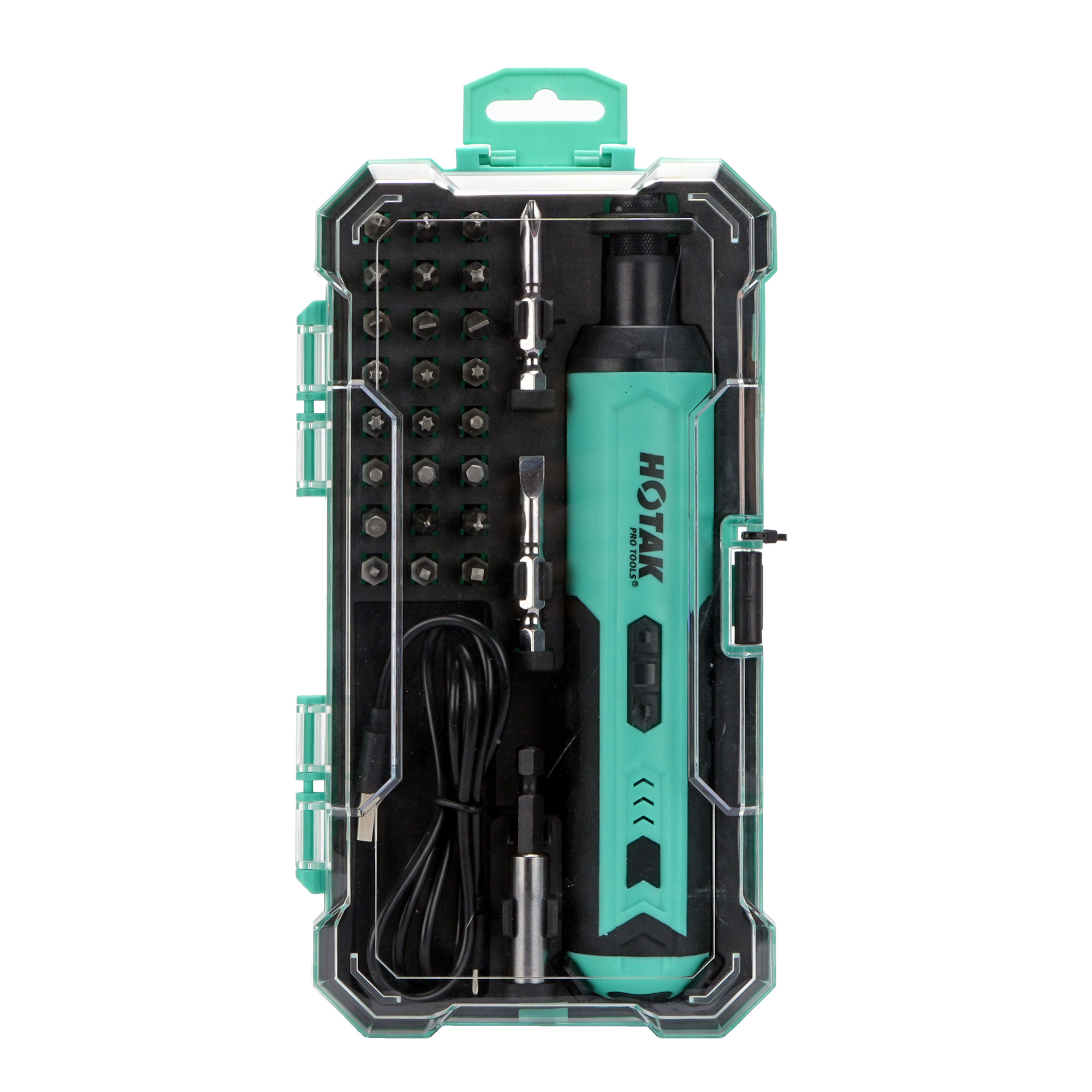
Selectable electric torque with a separate manual torque rating allows a 4V screwdriver to serve repetitive driving and final tightening in the same station.
When Hand Tools Are Still the Correct Answer
Light assembly buyers who move entirely to cordless tools usually keep one shelf of hand tools, because a specific subset of joints requires controlled torque and size-specific engagement.
Hex keys and folding hex keys
The hex key and folding hex key range is built on CR-V 6150 alloy steel, heat-treated and tempered, with a published hardness of HRC 52–55. Torque values scale with key size: from 0.82 N at 1.5 mm to 220.00 N at 10.0 mm. Ball-end keys work at angles up to 25°, which is the useful figure for recessed fasteners, and keys carry size markings for identification. Surfaces are treated for rust and corrosion resistance. Folding formats such as the 8-piece locking hex key set (YJHK-3075) and the 8-piece folding hex key set (YJHK-3347) compress a size range into a pocket format for service and field work.
T-handle wrenches
T-handle wrenches address a different access problem: applying axial pressure while turning. The 7-piece metric T-handle wrench set (YJHK-3066) uses chamfered tips for easier entry into screws and fasteners, with a chrome or black finish for corrosion resistance. The 14-piece T-handle hex key set (YJHK-3226) covers both metric and SAE sizes, with published torque from 1.19 N at 1/16 in to 242.92 N at 3/8 in — a range that clearly exceeds what a 4V motor is designed to deliver.
Screwdriver sets, bits sets and tool sets
Bit profile coverage is where a tool set earns its place in a light assembly station. The 25-piece extension screwdriver set (YJPS-6851) carries Phillips, slotted, hexagon, Torx and Pozi profiles plus 20.5 mm sockets, with an LED handle for low-light work. The 51-piece T-handle driver set (YJTS-3147) combines sockets from 4 mm to 13 mm with 39 bits spanning Phillips, slotted, Pozi, hex, Torx, tamper-proof Torx, square, triangle and tri-point. For impact driving, the 18-piece and 26-piece impact drill and drive sets (YJTS-3109, YJTS-3110) use S2 steel bits with a black phosphate finish in a PP case. At the precision end, the 51-piece precision screwdriver set (YJTS-3138) and the 43-piece mobile phone repair tool set (YJTS-3140) cover miniature profiles including pentalobe and tri-point, using CR-V 6150 bits.
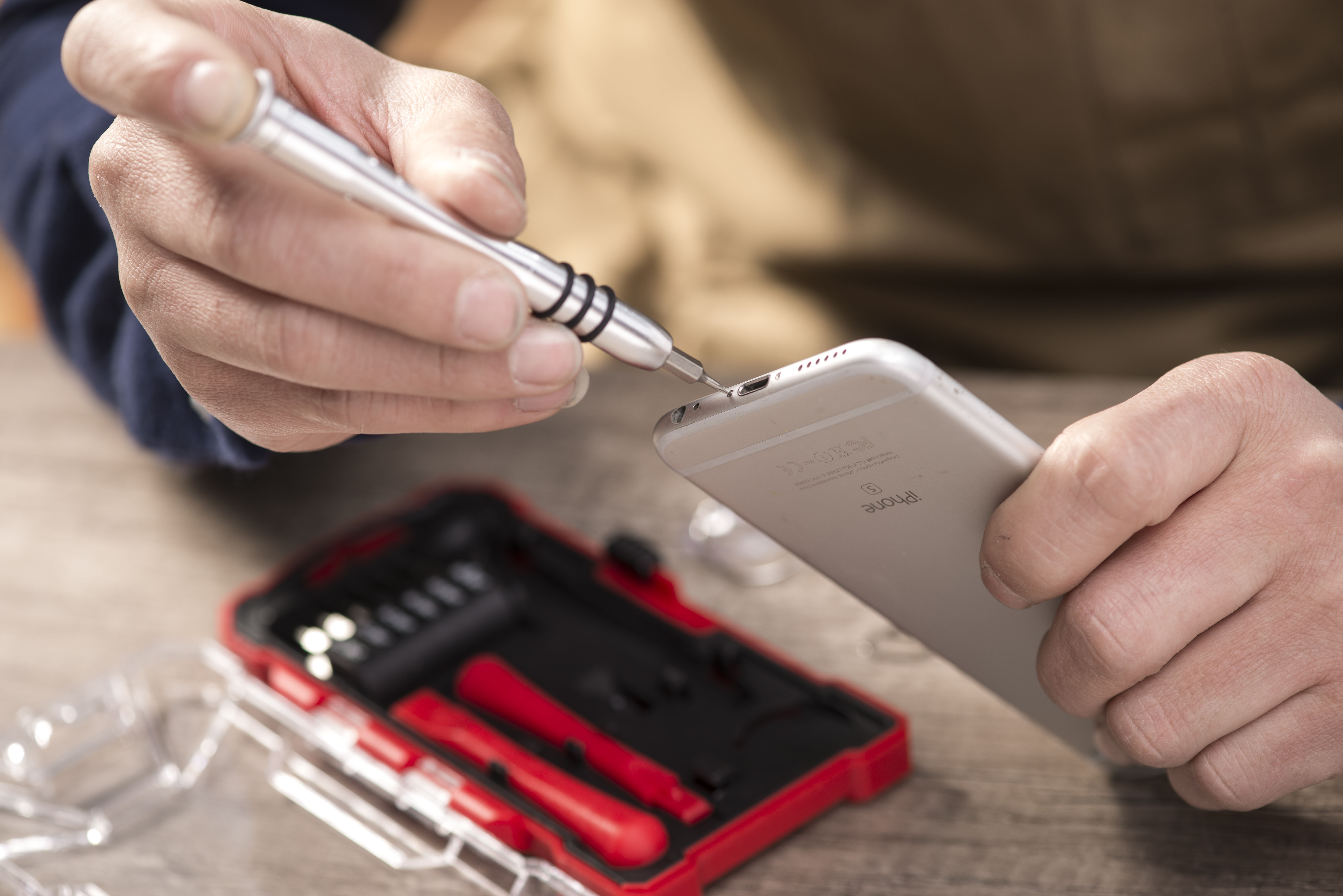
Precision screwdrivers cover the small-fastener and adjustment tasks that sit alongside 4V cordless driving in the same workflow.
Certification and Documentation Constraints for Light Assembly Buyers
For buyers in Research and Evaluation stages, certification scope is a constraint rather than a marketing point, because certificates are issued per model and per market.
The 5 IN 1 cordless power staple gun, model YJSG-501, holds a CE Certificate of Conformity to the EU Machinery Directive 2006/42/EC. The certificate number is AM 50559365 0001, issued by TÜV Rheinland LGA Products GmbH, referencing Directive 2006/42/EC together with EN ISO 12100:2010 and EN ISO 11148-13:2018, with an issue date of 2022-09-10, an expiry date of 2030-12-31, and applicability to the EU market.
Separately, the ball-end hexagon screw keys in the range hold a GS Product Safety Certificate under DIN ISO 2936-10.16 and AfPS GS 2019:01 PAK, certificate number S 50694620 0001, issued by TÜV Rheinland LGA Products GmbH for the German and EU markets, valid from 2026-03-18 to 2031-03-17. A further CE Certificate of Conformity (AM 50694538 0001) covers hand-operated staple gun models YJSG-105 and YJSG-023 under the same directive and standard set for the EU market.
The company-level quality framework is ISO 9001 certification, TÜV/GS certification, BSCI social compliance, VPA (Verify Production Audit) approval, and factory audits approved by Walmart (USA) and Kingfisher (UK). Quality control runs through incoming inspection, in-process inspection and final inspection. For a buyer, the operational implication is straightforward: certificate numbers should be matched to the exact model and the exact destination market, not to a product family.
Market Signals Behind Low-Voltage Cordless Tools
Third-party market research supports the idea that the low-voltage segment is a structural part of the cordless tool market rather than a niche. The global cordless power tools market was estimated at USD 12.2 billion in 2024 by Global Market Insights. Within that market, low-voltage cordless tools below 12V — the category that includes 4V and 3.7V platforms — are identified by Market.us as primary segments for DIY and light-duty household tasks.
Adjacent categories reinforce the pattern. The global staple gun market was valued at USD 1.54 billion in 2024 with a forecast CAGR of 3.13% through 2032, according to Maximize Market Research. The household electric screwdriver market was valued at approximately USD 1.8 billion in 2024, with North America holding a 35% share, per DataHorizzon Research. The cordless multi-rotary tools market is projected to reach USD 1,024.95 million by 2026, per Global Market Insights, at a medium confidence level.
Two caveats belong in any honest reading of these figures. First, market-size estimates for cordless categories vary widely between publishers depending on whether hobbyist and industrial grades are included together — one comparison group in the underlying research set shows baselines ranging from USD 12.2 billion to USD 26 billion for broadly similar category definitions. Second, screwdriver market sizing depends heavily on definition: an industrial precision tool estimate and a household retail estimate can differ by a factor of four. Both figures should be treated as directional.
Competitive structure is also visible in public product architecture. Ryobi operates a 4V interchangeable USB battery system, and Dremel (Bosch Group) maintains a 4V home and lifestyle tool category covering cordless screwdrivers and rotary tools aimed at modern DIY users. For suppliers, that indicates the 4V platform is contested at the system level — battery interchangeability and category breadth — not only at the single-tool level. On the trade side, HS Code 846729 is the standard classification covering hand tools with self-contained electric motors, including most cordless screwdrivers and specialty 4V tools.
4V Cordless Tools Compared with Traditional Manual Fastening
Comparing a 4V cordless tool with its manual equivalent is a comparison of operating cost against control, not of quality.
| Dimension | 4V cordless tool | Traditional manual tool |
|---|---|---|
| Repetition load | Motor carries the cycle; published runtimes include ≥60 min no-load (YJSG-501, YJPS-902) and ≥50 min (YJPS-912) | Operator carries every cycle; no runtime limit |
| Peak torque | Electric torque is bounded by design, e.g. 2N/3.5N/5N on YJPS-902 and 0.15 N.m on precision models | Manual torque scales with tool size, e.g. up to 220.00 N on a 10.0 mm hex key and 242.92 N on a 3/8 in T-handle key |
| Consumable dependence | Requires staples, nails or bits, plus battery charging | Requires no power source |
| Setup and changeover | Battery state and bit change add steps | Immediate use |
The limits here are real and should be stated plainly. A 4V platform does not replace hand tools for joints requiring high torque, because its electric torque ceiling is deliberately low — 0.15 N.m on precision models, for example, which is designed to protect small fasteners rather than to break tight ones. Battery capacity within the range varies from 320mAh in precision models to 2000mAh in the staple guns and YJPS-902, so runtime between models in the same nominal voltage class is not equivalent, and ≥50 min and ≥60 min figures should not be treated as interchangeable.
Certification scope is a further boundary: the CE certificate for YJSG-501 names that model, and the GS certificate covers ball-end hexagon screw keys — not the entire range. Buyers planning multi-model orders should expect to verify documentation per model and per market. Commercially, the published supply parameters are a minimum order quantity of 600 units, a lead time of 30–45 days, and OEM/ODM customization limited to color and logo, which constrains very small pilot orders and extensive structural customization.
Future Outlook
The direction of the low-voltage segment is toward system consolidation. Where 4V tools were once single-function purchases, the competitive pattern now visible in public product architecture — interchangeable batteries across a tool family — suggests buyers will increasingly evaluate a 4V purchase as a platform decision rather than a tool decision.
Two unresolved data gaps are worth noting for planning purposes. There is no widely published, category-specific unit-sales figure for 4V and 3.7V tools separated from 12V and 18V platforms, and there is no published adoption rate for USB-C charging standards in 4V tools versus proprietary chargers. Until those figures exist, buyers comparing 4V ranges should rely on declared specifications, certification scope and serviceable supply parameters rather than on category-level market claims.
FAQ
- What torque does a 4V cordless screwdriver deliver compared with a manual screwdriver?
- Published figures differ by model. The YJPS-902 cordless power screwdriver lists electric torque settings of 2N, 3.5N and 5N, with a manual torque of 10 N.M and an output speed of 0–280 rpm. The YJPS-912 power screwdriver set lists electric torque of 2.5N and manual torque of 10 N.M at 0–250 rpm. Precision models such as YJPS-906 and YJPS-907 list electric torque of 0.15 N.m and manual torque of 3 N.M at 0–220 rpm. In each case the electric figure is the repetitive-driving ceiling, and the manual figure applies when the tool is used by hand.
- Which certification documents should a buyer request for a cordless staple gun sold in the EU?
- For model YJSG-501, the relevant document is the CE Certificate of Conformity to the EU Machinery Directive 2006/42/EC, certificate number AM 50559365 0001, issued by TÜV Rheinland LGA Products GmbH, referencing EN ISO 12100:2010 and EN ISO 11148-13:2018, issued 2022-09-10, valid to 2030-12-31. Hand-operated staple gun models YJSG-105 and YJSG-023 are covered by a separate CE certificate, number AM 50694538 0001. Because certificates are issued per model, the model number on the certificate should be matched against the model being ordered.
- Can a 4V cordless staple gun replace a manual staple gun in light assembly?
- It depends on the substrate and cycle count rather than on the tool class. The YJSG-501 five-use lithium electric nail gun operates at a rated voltage of 3.7V with a 2000mAh battery, 25W and a no-load operating time of at least 60 minutes, and the YJSG-500 two-use model shares the 3.7V, 2000mAh and 25W ratings, both intended for household and manufacturing use. Manual alternatives cover narrower staple specifications — for example, the YJSG-140 accepts fine wire staples of 6–10 mm (1/4"–3/8"). Where a workflow needs long continuous fastening runs, battery state becomes a planning factor that a manual tool does not have.
- What are the minimum order quantity and lead time for private label 4V cordless tools?
- The published supply parameters are a minimum order quantity of 600 units, a lead time of 30–45 days, and a monthly capacity of 1,500,000 units. Production mode is OEM/ODM, and customization is limited to color and logo. Export markets served are the EU, USA, Southeast Asia and South America, and after-sales support is provided remotely. Buyers should treat the MOQ and lead time as constraints on pilot-order sizing rather than as fixed commercial terms.
- Do hex keys and T-handle wrenches need to match the bit profiles used in a 4V cordless tool set?
- Profile and size matching is what prevents damaged fastener heads. The 51-piece T-handle driver set (YJTS-3147) includes Phillips, slotted, Pozi, hex, Torx, tamper-proof Torx, square, triangle and tri-point profiles plus sockets from 4 mm to 13 mm. The 25-piece extension screwdriver set (YJPS-6851) covers Phillips, slotted, hexagon, Torx and Pozi with 20.5 mm sockets in 5, 6, 8 and 10 mm. Where a joint is a hex-head fastener, a hex key or T-handle wrench in the matching size — for example the 14-piece T-handle hex key set (YJHK-3226) covering metric and SAE — is the correct tool rather than a bit in a power driver.
- How should buyers interpret HRC 52–55 hardness and the published torque ratings on hand tools?
- HRC 52–55 describes the heat-treated and tempered condition of the CR-V 6150 or high-grade alloy steel used in the hex key and folding hex key range. The torque figures are size-specific rather than tool-wide: the hex key sets list 0.82 N at 1.5 mm rising to 220.00 N at 10.0 mm, and the T-handle hex key set (YJHK-3226) lists 1.19 N at 1/16 in rising to 242.92 N at 3/8 in. Practical interpretation is that the smaller sizes in a set carry a much lower torque capacity than the larger sizes, and that ball-end engagement, rated for working at angles up to 25°, is a geometry feature rather than a torque rating.
Reference material: The full hand tool and cordless tool catalogue, including model-level specifications and packaging information, is available for download: 2025 YONGJIA CATALOG. Company information: Ningbo (Yinzhou) Yongjia Electrical Tools Co., Ltd., www.yj-tools.com.