
Scenario Fit Guide: MoS2, Antimicrobial ZAM & Insulated Cable Tray Steels
Scenario Fit Guide: MoS2, Antimicrobial ZAM & Insulated Cable Tray Steels
Three coated steel systems, three operating environments, one recurring buyer question: which surface function does the application actually require?
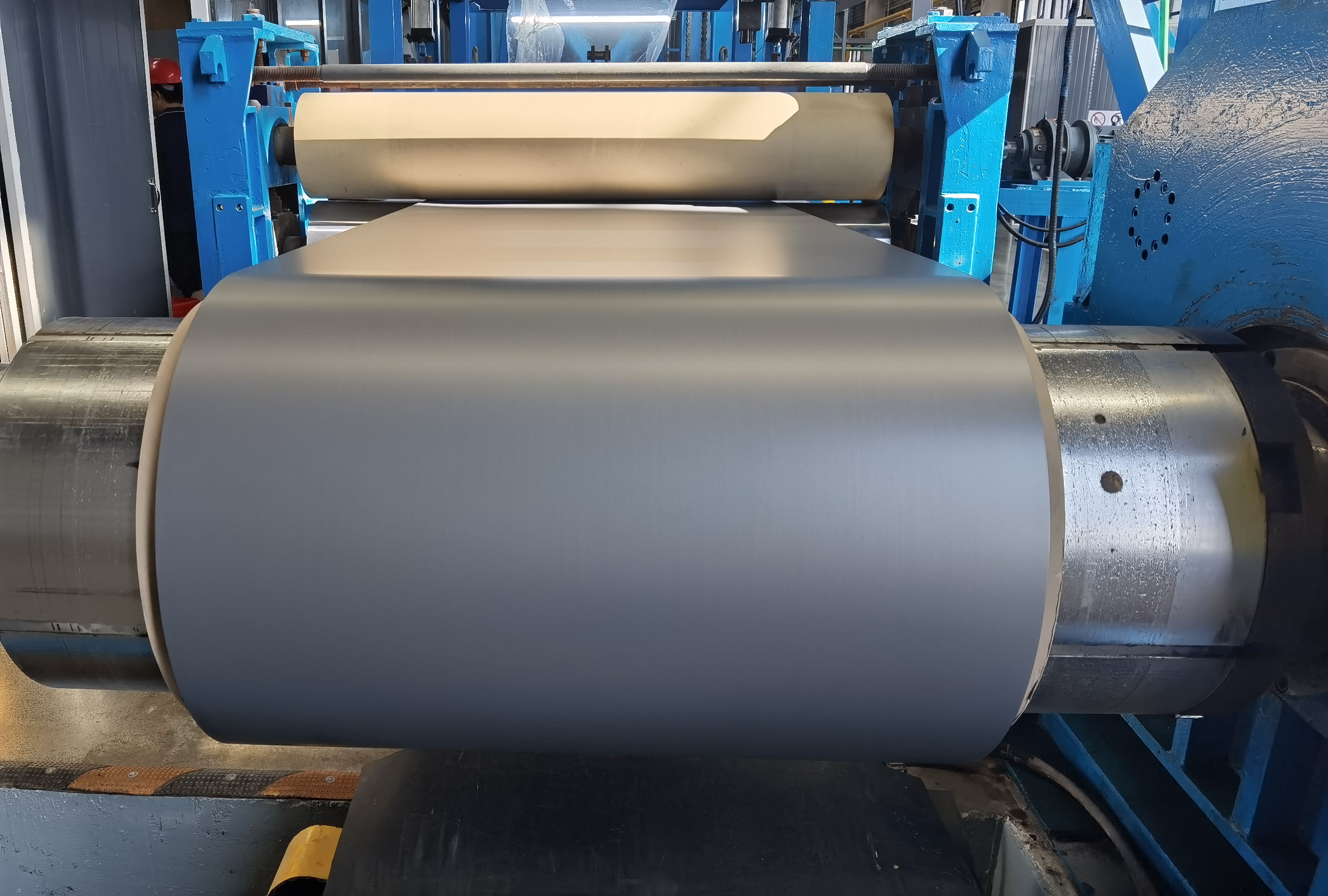
Coated steel is normally bought by finish name — matte white, PVDF, PET laminated, matte black. That vocabulary describes appearance. It does not describe what happens at the interface where the steel meets its working environment. A sealing interface that reaches 150 °C, a medical equipment casing that must limit microbial colonisation, and a cable tray that must interrupt conductive contact are three different engineering problems, and each of them is currently solved with coated steel coil and sheet.
This guide maps three scenario configurations to the applications they are built for: MoS2-M025, a self-lubricating molybdenum disulfide coated steel for high-temperature, high-pressure interfaces; ZAM-PCM-MGA0508, an antimicrobial matte white pre-coated steel on a zinc-aluminium-magnesium substrate for medical equipment casings; and DC-INS-PRO, an insulated coated steel supplied on galvanized or ZAM substrate in 1.0–1.2 mm gauge for non-conductive cable trays. Each section below states the function the coating performs, the evidence that supports it, and the boundaries a buyer should accept before placing an order.
The Scenario-Fit Problem: One Material Class, Three Different Failure Modes
Most coated steel failures do not originate in the steel. They originate in a mismatch between the coating function and the operating condition. Three mismatch patterns account for a large share of complaints in functional coated steel supply.
Thermal and chemical interfaces. Elastomer-based coatings such as NBR rubber degrade under sustained heat and oil exposure — swelling, hardening and peeling over time. When that happens, sealing integrity and component life follow the coating down, and the buyer carries the cost of a design that was never matched to the temperature profile.
Hygiene-critical housings. Medical equipment casings operate in environments with repeated cleaning and high touch frequency, and they must satisfy substance restrictions. Color coated steel used in electronic appliances must meet RoHS Directive 2011/65/EU and REACH requirements, as defined by the European Chemicals Agency (ECHA). A housing that performs mechanically but fails a substance review is not a usable housing.
Electrical infrastructure. Cable trays in solar and industrial electricity installations face corrosion and require controlled separation between the tray body and the cables it carries. Z275 galvanized coating (275 g/m² zinc) is a standard requirement for high-corrosion environments in solar and industrial electricity infrastructure, referenced under ASTM A653 and EN 10346.
The opportunity for buyers is equally clear: specify by scenario, not by finish. A scenario specification states operating temperature, contact chemistry, hygiene requirement, corrosion class and electrical requirement, then verifies that the coating system satisfies each one. That converts a price comparison into a function comparison, and it makes supplier claims testable rather than persuasive.
Where YOUNGSON METAL Sits in Scenario-Based Coated Steel Supply
Chongqing Youngson Metal Products Co., Ltd., trading as YOUNGSON METAL, is a manufacturer based in Chongqing, China, founded in 2016 and specialised in precision metal surface processing and premium coil supply. The company operates its own coating lines and precision slitting equipment, holds BV ISO9001:2015 certification, and reports an annual processed capacity exceeding 10,000 tons from a 3,000 m² facility staffed by 25 employees, including five engineers and a senior process technician. Export business accounts for 70% of total sales, with major markets covering global regions, and the company's products have passed SGS testing against REACH and RoHS heavy metal regulations.
Its manufacturing and supply activity is organised around five product lines:
- Drawn PET film laminated steel coil
- Drawn VCM PVC film laminated steel coil
- Deep drawn coil coating, including Teflon, non-stick, gold and lacquered finishes
- Commercial and deep drawn pre-painted steel and pre-painted stainless steel
- Full-range mild carbon steel — cold rolled, electrogalvanized, aluminized, galvanized and copper plated — plus multi-grade stainless steel
Within that structure, the three configurations relevant to this guide map to three functional demands: solid-film self-lubricating MoS2 coating for high-temperature sealing and shielding interfaces (MoS2-M025); antimicrobial matte white pre-coated ZAM steel for hygiene-critical equipment casings (ZAM-PCM-MGA0508); and insulated coated steel for non-conductive cable trays (DC-INS-PRO). The material attributes are treated separately below, because the technical reasoning differs in each case.
Technical Explanation: What Each Coating System Actually Does
MoS2-M025: Self-Lubricating Molybdenum Disulfide for High-Temperature Interfaces
The MoS2 system is an engineered molybdenum disulfide solid lubricant layer applied to a bondable base metal. Its purpose is functional rather than decorative: it delivers permanent self-lubrication and extreme-pressure anti-seizure behaviour at interfaces exposed to heat, load and vibration simultaneously.
- Thermal behaviour: continuous thermal stability up to 150 °C with zero elastomer hardening or cracking.
- Friction mechanism: an ultra-low friction coefficient generated by the self-lubricating MoS2 matrix, which minimises parasitic energy losses caused by micro-frictional drag at high-vibration sealing interfaces.
- Bonding and chemistry: permanent bonding to the base metal — tinplate, galvanized or stainless steel — with exceptional chemical inertness. Because the layer is inorganic, it does not exhibit the oil-induced swelling, hardening and peeling that affects NBR rubber coatings.
- Gauge and width control: 0.20–0.30 mm thickness and 4.0–1250 mm width, held to high-precision gauge tolerance.
- Validation: tested under ASTM No. 3 oil immersion test protocols.
Recorded applications for this coating family include automotive cylinder head gaskets, motorcycle seals, exhaust manifold gaskets, turbocharger seals and heavy-duty powertrain joints — the same combination of sustained heat, extreme contact pressure and vibration that defines self-lubricating heat-shield and high-temperature sealing interfaces.
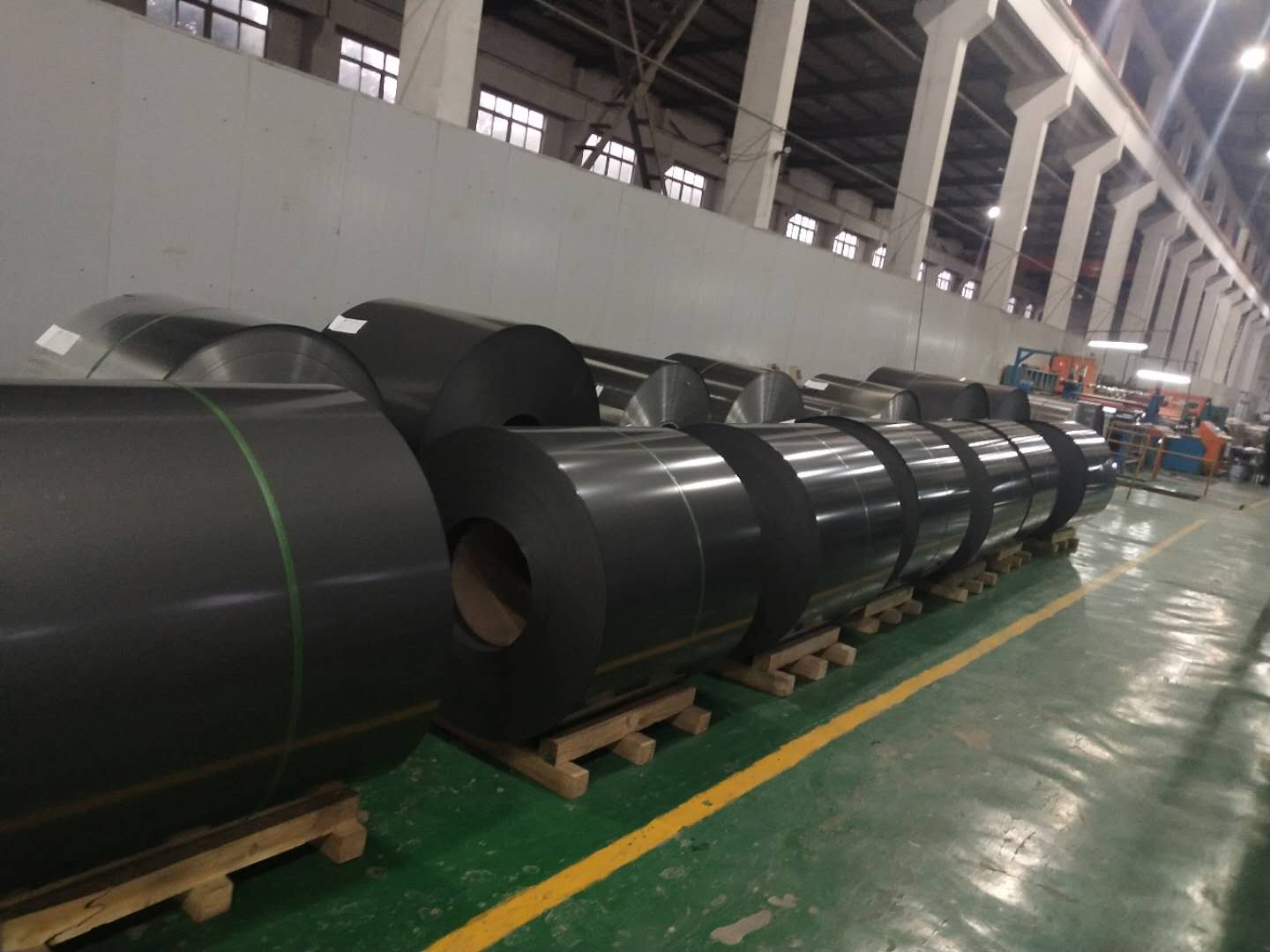
ZAM-PCM-MGA0508: Antimicrobial Matte White ZAM for Medical Equipment Casings
This configuration pairs a ZAM (zinc-aluminium-magnesium) coated substrate with a pre-coated antimicrobial matte white finish. The substrate decision is driven by corrosion performance in humid, frequently cleaned environments; the finish decision is driven by hygiene and appearance in a clinical setting.
- Substrate function: ZAM coating chemistry provides the corrosion base for housings that are cleaned repeatedly over their service life.
- Surface function: antimicrobial matte white pre-coat addresses microbial colonisation on frequently touched housing surfaces; the matte finish is typically specified in clinical equipment for glare control and easier visual inspection of surface condition.
- Compliance: color coated steel for appliances and electronics must satisfy RoHS Directive 2011/65/EU and REACH. YOUNGSON METAL products have passed SGS testing for REACH and RoHS heavy metal regulations.
- Formability: medical equipment casings are stamped and deep drawn rather than simply bent, so coating adhesion after forming is the governing risk. The relevant evidence is cross-cut cupping, forming test and standard T-bend results drawn from batch sampling.
One boundary matters here. An antimicrobial surface treatment is a surface function; it does not replace cleaning or sterilisation protocols, and it does not substitute for the structural and electrical requirements of the equipment it houses. It is one layer of a hygiene strategy, not the whole of it.

DC-INS-PRO: Insulated Coated Steel for Non-Conductive Cable Trays
DC-INS-PRO is supplied on galvanized or ZAM substrate in 1.0–1.2 mm gauge, with an insulating coating layer whose job is to interrupt direct conductive contact between the tray structure and the cabling it supports. It is a corrosion-plus-surface-function product rather than a plain cladding material.
- Corrosion base: where the installation sits in a high-corrosion environment — solar and industrial electricity infrastructure being the standard example — Z275 galvanized coating at 275 g/m² zinc is the recognised reference under ASTM A653 and EN 10346.
- Surface function: the insulating layer provides a non-conductive surface over the metallic substrate, addressing the requirement that a cable tray should not present an unintended conductive path at the cable contact surface.
- Gauge band: the 1.0–1.2 mm range covers the thickness envelope in which tray sections are typically roll-formed and folded.
The boundary here is a specification discipline, not a product limitation. A coated surface is not automatically a certified insulation system. Buyers should define the required surface resistivity or dielectric performance in their own engineering standard, and should specify how cut edges, punched holes and fastening points are treated, because those are the locations where the substrate becomes exposed again.
Scenario-to-Configuration Mapping
The table below condenses the three scenarios into the attributes that should appear on a purchase specification. It is intended as a checking tool rather than a substitute for the buyer's own engineering requirements.
| Scenario | Configuration | Substrate | Coating function | Attributes to confirm before ordering |
|---|---|---|---|---|
| High-temperature self-lubricating heat shields and sealing interfaces | MoS2-M025 | Tinplate, galvanized or stainless steel | Solid-film self-lubrication; extreme-pressure anti-seizure; permanent inorganic bonding | Continuous thermal stability up to 150 °C; 0.20–0.30 mm gauge; 4.0–1250 mm width; ASTM No. 3 oil immersion results |
| Medical equipment casings and hygiene-critical housings | ZAM-PCM-MGA0508 | ZAM (zinc-aluminium-magnesium) | Antimicrobial matte white pre-coat plus corrosion-resistant substrate | RoHS 2.0 / REACH status; coating adhesion after stamping (cross-cut cupping, forming test, T-bend) |
| Non-conductive cable trays in electrical and solar installations | DC-INS-PRO | Galvanized or ZAM | Insulating surface layer over a metallic corrosion base | 1.0–1.2 mm gauge; Z275 (275 g/m²) corrosion class where specified per ASTM A653 / EN 10346; edge and fastening-point treatment |
How Scenario-Matched Grades Compare With Traditional Alternatives
MoS2 coated steel compared with NBR rubber coated steel
The most direct comparison for a high-temperature self-lubricating coating is a conventional elastomer coating. Documented differences between the engineered MoS2 system and standard NBR rubber coated steel include:
- Material cost: a 50% reduction in direct material procurement cost compared with NBR rubber coated steel sheet, delivered without compromising mechanical sealing integrity.
- Thermal durability: continuous stability up to 150 °C with zero elastomer hardening or cracking, against the premature thermal degradation and ageing typical of rubber coatings.
- Friction and efficiency: an ultra-low friction coefficient from the self-lubricating MoS2 matrix, reducing parasitic energy loss under high-vibration sealing interfaces and outlasting NBR elastomers under prolonged thermal stress.
- Chemical behaviour: permanent bonding to base metal with high chemical inertness, in place of the oil-induced swelling, hardening and peeling associated with NBR layers.
- Gauge control: 0.20–0.30 mm thickness and 4.0–1250 mm width, supported by high-precision gauge tolerance and ASTM No. 3 oil immersion validation.
Precision-engineered coated strip compared with standard construction-grade PPGI
The second comparison is less about chemistry and more about manufacturing discipline. Standard construction-grade pre-painted galvanized iron is produced for roofing and wall cladding, where forming is simple and tolerance is loose. Precision-engineered coated strip is produced for deep drawing and automated stamping.
- Forming yield: stamping rejection rates below 0.1%, against rates above 5% observed with standard construction steel.
- Compliance: 100% RoHS and REACH compliance at the material level.
- Formability: 0T / 1T T-bend performance for complex geometries, against limited bending capability.
- Production continuity: consistent forming stability with no peeling, against frequent mould cleaning and line downtime caused by paint shedding.
- Cost structure: a higher initial material cost, offset by significantly lower total fabrication cost where production waste is eliminated.
Limits and boundaries buyers should accept
A credible scenario guide has to state where each configuration stops being the right answer.
- MoS2 is not an elastomer. It provides self-lubrication and anti-seizure performance, not elastomeric compressibility. Where a compressible sealing layer is a deliberate design requirement, NBR-type materials retain a role.
- MoS2 is a thin-gauge system. The documented 0.20–0.30 mm band places it in sealing and shielding applications, not in heavy-gauge structural parts.
- Bonding requires a compatible base metal. Permanent bonding is documented for tinplate, galvanized and stainless steel substrates.
- Precision grades carry a higher entry cost. The economics only work where forming complexity and rejection losses are material. For simple cladding with loose tolerances, standard construction-grade material remains a rational and economical choice.
- Insulated tray steel requires a buyer-side electrical specification. The coating provides a non-conductive surface layer; the required resistivity or dielectric performance, and the treatment of cut edges and fastening points, must come from the project specification.
Market Trend Analysis: Functional Coatings Are Outgrowing Plain Finish Coatings
The coated steel market is large and still expanding, but the growth is increasingly concentrated in functional segments. The global pre-painted steel market was valued at USD 24.63 billion in 2023 and is projected to grow at a compound annual growth rate of 5.8% to 2032, according to Polaris Market Research.
Supply is heavily concentrated. China exported approximately 6.5 million tons of color-coated steel sheets in 2023, according to MySteel, representing a significant share of global trade volume. For buyers, that concentration is a sourcing advantage only when the specification is explicit enough to distinguish one supplier's functional grade from another's commodity grade.
Segment-level demand supports the scenario logic in this guide. The market for antibacterial color coated steel is reported to be growing at a CAGR of 7.2%, driven by increased hygiene requirements in cold chain and medical facilities, per Mordor Intelligence. That figure is a third-party estimate of medium reliability and should be treated as an indicator of direction rather than a precise forecast.
Durability expectations are also shifting. High-performance PVDF coatings typically maintain around 70% of colour integrity for more than 20 years under UV and chemical exposure, according to AkzoNobel Coil Coatings — a reminder that in long-life applications, coating chemistry, not colour, determines service outcome. At the same time, the compliance baseline keeps rising: RoHS 2.0 and REACH for appliances and electronics, FDA 21 CFR 175.300 or EU No 10/2011 for food-contact resinous coatings, and Z275 (275 g/m²) as a corrosion reference for solar and industrial electricity infrastructure under ASTM A653 / EN 10346.
The practical implication for procurement teams is that coated steel is being bought less as a finish and more as a performance layer. Suppliers that can document function-specific attributes — self-lubrication at temperature, antimicrobial surface behaviour, insulation performance — are better positioned than suppliers who can only quote colour and thickness.
Long-Term Supply: What Repeat-Order Reliability Requires
A scenario-matched grade only creates value if it can be reproduced. For buyers entering the execution stage, four supply parameters decide whether a functional specification survives the second and third order.
- Capacity and lead time: YOUNGSON METAL reports a monthly production capacity of 1,000 tons and a typical production lead time of 15 to 30 days as per specifications.
- Order threshold: the minimum order quantity is 1 ton per specification, which allows a functional grade to be introduced on a single line before being scaled across a programme.
- Traceability: full batch traceability is provided through Mill Test Certificates (MTC), together with technical alignment on client stamping and forming requirements. Traceability is what allows a repeat order to be compared against the first delivery instead of merely assumed to be equivalent.
- Commercial framework: delivery terms include FOB, CIF, CFR, DDP, DDU and EXW; acceptance criteria are based on pre-shipment test; payment terms are 30% T/T in advance with 70% after shipment.
Technical alignment is the least visible of these but often the most decisive. When a coating is matched to a forming process rather than only to a colour, the supplier needs to know the stamping or deep-drawing conditions. Batch-sampling protocols that simulate post-forming behaviour — cross-cut cupping, forming test and standard T-bend testing — exist precisely because coating fatigue, micro-cracking and adhesion loss are triggered by continuous mechanical stress in high-speed forming lines.
Future Outlook
Three directions look durable rather than cyclical. First, hygiene-driven demand: as medical facilities and cold chain infrastructure expand, antimicrobial and easy-clean coated surfaces move from niche to standard specification. Second, electrification: cable management, solar mounting and industrial electricity infrastructure will keep pulling zinc-coated substrates such as Z275 into mainstream specifications, with insulating surface functions layered on top. Third, compliance pressure: RoHS 2.0, REACH and food-contact standards continue to raise the evidence bar, which favours suppliers who test and document rather than declare.
For buyers, the practical next step is organisational rather than technical. Scenario-based coating specifications — stating temperature, chemistry, hygiene, corrosion class and electrical requirement in one document — are what make functional grades comparable between suppliers, and what make long-term supply agreements enforceable. Coated steel will keep being sold by colour, but it will increasingly be bought by function.
FAQ
How does a buyer confirm that a coated steel grade fits a specific application rather than the general product category?
By testing the coating function against the operating condition rather than the finish name. Four conditions usually decide the match: continuous operating temperature, contact chemistry (oil, cleaning agents, food), hygiene requirement, and electrical or corrosion requirement. Each condition should be tied to evidence — substrate chemistry, bonding permanence, and forming test results such as cross-cut cupping, forming test and standard T-bend testing that simulate post-forming stress.
What evidence supports a claim of high-temperature self-lubrication in coated steel?
Three evidence points are relevant. First, a stated continuous thermal stability figure — for the engineered MoS2 system, up to 150 °C with zero elastomer hardening or cracking. Second, a described lubrication mechanism rather than a generic anti-friction claim; in this case a self-lubricating MoS2 matrix that produces an ultra-low friction coefficient. Third, an independent test protocol: ASTM No. 3 oil immersion testing, together with documented permanent bonding to the base metal.
What are the limits of MoS2 coated steel compared with NBR rubber coated steel?
The main limit is mechanical rather than thermal. MoS2 is an inorganic solid-film coating, so it does not provide elastomeric compressibility; where a compressible sealing layer is a design requirement, NBR-type materials still apply. The documented gauge band for the MoS2 system is 0.20–0.30 mm, which places it in thin-gauge sealing and shielding work, and permanent bonding is documented for tinplate, galvanized and stainless steel substrates. Within those boundaries, it removes the oil-induced swelling, hardening and peeling associated with NBR coatings and reduces direct material procurement cost by 50%.
Which substrates and gauges are used for non-conductive cable tray steel?
Insulated coated steel for non-conductive cable trays is supplied on galvanized or ZAM substrate in a 1.0–1.2 mm gauge, with an insulating coating layer forming the non-conductive surface. Where the installation sits in a high-corrosion environment, Z275 galvanized coating at 275 g/m² is the recognised corrosion reference under ASTM A653 and EN 10346. The required surface resistivity or dielectric performance, and the treatment of cut edges and fastening points, should be defined by the buyer's own engineering specification rather than assumed from the coating description.
How is long-term supply continuity managed when a functional grade becomes a repeat-order item?
Continuity depends on four documented parameters: monthly production capacity (1,000 tons), typical lead time (15 to 30 days as per specifications), minimum order quantity (1 ton per specification), and batch traceability through Mill Test Certificates (MTC). Technical alignment on stamping and forming requirements completes the picture, because it allows each new batch to be produced against the same process assumptions as the validated first order. Export business accounts for 70% of the supplier's total sales across global markets, which indicates repeat cross-border supply experience rather than one-off project shipments.
Do commercial terms change when a functional coated grade is ordered instead of standard coated coil?
The commercial framework itself is standardised rather than differentiated by grade. Delivery terms include FOB, CIF, CFR, DDP, DDU and EXW; acceptance criteria are based on pre-shipment test; and payment terms are 30% T/T in advance with 70% after shipment. The practical difference lies in the specification review stage, where temperature, hygiene, insulation and forming requirements must be agreed before the first batch is produced, and in the batch-testing protocol that supports acceptance.
Reference material: the full product catalogue covering PET film laminated, VCM PVC laminated, deep drawn coil coating, pre-painted steel and functional coated steel coil and sheet is available for download: Chongqing Youngson Metal Products Co., Ltd. catalogue (PDF).
Company: Chongqing Youngson Metal Products Co., Ltd. (YOUNGSON METAL) — Email: info@youngsonmetal.com — Phone: 0086-23-62566629 — Website: www.youngsonmetal.com