
Scenario Fit: Choosing Laminating Rolls for the Job
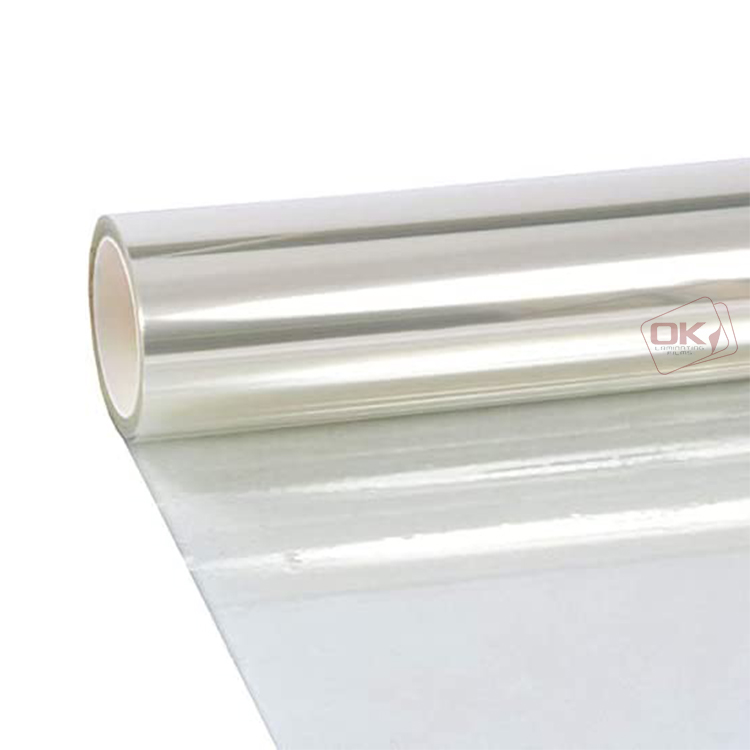
HD-RL thermal laminating roll film from the product reference data.
Laminating roll film is an industrial consumable, but once it enters a production workflow it behaves as a project component. Buyers in packaging and printing are rarely selecting a generic film; they are selecting a film that has to run through a specific machine, survive a specific environment, and meet an end-customer requirement. The practical starting point is scenario fit, not a one-size price comparison. In this article, HD-RL laminating roll film from Guangzhou Huada Laminating Film Co., Ltd. (HADA) is used as a reference model because its product and capability data are specified in enough detail to support procurement checks.
From Broad Capacity to a Defined Workflow
An application profile for this product category identifies three operating modes: batch processing in an office, on-demand lamination in retail, and continuous production-line integration. These modes are not interchangeable. Office work usually produces short runs with frequent format changes. Retail on-demand work must handle variable orders without lengthy setup. A production line treats the film as one component of a continuous converting process, which places a premium on consistent roll dimensions, reliable unwinding, and predictable behavior.
The same profile lists four special requirements that should be resolved before suppliers are compared: FDA food-contact compliance, UV resistance for outdoor use, anti-static properties for electronic components, and glossy or matte finish options. A food packaging label, an outdoor poster, and an electronics-related printed part will each trigger a different set of constraints. If those constraints are documented early, the buyer can move from a capacity-based longlist to a specification-based shortlist.
Reference Product: HADA HD-RL Laminating Roll Film
Guangzhou Huada Laminating Film Co., Ltd., known by the brand HADA, is a Guangzhou-based laminating film manufacturer founded in 1992. The company states 22 national patents and reports certifications including ISO 9001, BSCI, SMETA, ROHS and REACH. It operates three automated production lines with annual capacity exceeding 10,000 tons, and about 80% of its output is exported to North America, South America, Europe, Southeast Asia and Australia. The company profile also lists 200 employees and more than 50 export countries.
The product that centers a roll-film project is the HD-RL Laminating Roll Film. HD-RL is a thermal laminating roll film made from PET and EVA. Its supplier data gives the following outline:
| Parameter | HD-RL values in supplier data |
|---|---|
| Product type | Thermal laminating rolls |
| Material | PET + EVA |
| Thickness range | 35 microns to 250 microns |
| Width range | 100 mm to 1,300 mm |
| Length | Customizable on request |
| Finish | Glossy or matte |
| Packaging | Customizable on request |
| Stated features | High transparency; no bubble and no wrinkle; strong adhesion; waterproof and scratch-resistant; anti-yellowing for long-term preservation |
| Equipment fit | All standard thermal laminators |
Reading the Technical Variables
In a thermal roll, the PET layer supplies transparency and dimensional stability, while the EVA layer acts as a heat-activated adhesive. This construction is designed for machines that can apply heat and pressure evenly across the web. The product profile lists room temperature and normal pressure as operating conditions for the surrounding environment, and it names pouch laminators and roll laminators as supporting equipment. For the roll film HD-RL itself, the relevant machine is a roll-fed thermal laminator.
Thickness affects stiffness and protection. The 35-micron to 250-micron range gives the buyer substantially different options at each end: a lighter film for simple protection and a thicker film for higher rigidity. Width matters for waste control. A 100-mm to 1,300-mm range allows widths to be matched to the printed sheet, which is why custom-width laminating rolls are a common request in wholesale ordering. Finish selection is not aesthetic only. A glossy laminating roll tends to produce a brighter reflected color and is a common choice in photo and advertising jobs. A matte laminating roll reduces glare and creates a more tactile, subdued surface, which is often preferred for menus, book covers, and documents that will be read under strong light. HD-RL lists both finishes, allowing the buyer to keep the same material system while changing the visual result.
Adhesion is the core functional requirement. In an office or packaging run, poor adhesion appears as delamination around edges or after folding. Anti-yellowing is especially important for long-term storage and archival display. The HD-RL spec sheet includes these features, but a project buyer should confirm them through a trial roll before mass production rather than accepting them at face value.
Scenarios and Use Cases
The documented application scope for HD-RL and the related laminating pouch models covers office supplies, education, retail and stationery, advertising and graphic work, printing and packaging, photo and digital printing, and ID card and badge production. The functions cited in the scenario data include protection against water, dust and wear; improved durability and appearance; longer document life; and stronger color vibrancy in printed materials.
| Application focus | Typical special requirement in scenario data | Mode |
|---|---|---|
| Office, education, stationery | Clear finish; document protection; durability | Batch processing in office |
| Retail and on-demand jobs | Quick format changes; glossy or matte finish | On-demand lamination in retail |
| Printing, packaging, labels | Water resistance; scratch resistance; food-contact compliance where needed | Continuous production-line integration |
| Advertising, graphic, photo | Color vibrancy; UV resistance for outdoor display; anti-yellowing | Roll and on-demand lamination |
| Electronics-related parts | Anti-static properties | Roll-fed thermal process |
The table is illustrative rather than prescriptive. A packaging label used outdoors can combine food-contact, waterproof, UV and anti-scratch requirements at the same time. In such cases the buyer should ask for the exact project requirement matrix before comparing roll prices.
Capability and Quality Evidence
For project buyers moving from search to evaluation, supplier capability matters as much as the film spec. HADA's capability data lists three automated production lines and 200 employees, and it states 100% inspection before shipment. Customization options include product size, thickness, logo and packaging under an OEM/ODM model. The stated monthly capacity is 150,000 packs of 100 sheets each, with 20 to 30 days lead time and a 1,000-pack MOQ.
The after-sales record includes a 12-month warranty against delamination, color fading and material defects, a 24-hour response time for quality complaints, and free replacement or refund for non-conforming goods. These terms give a project buyer concrete questions to ask other suppliers.
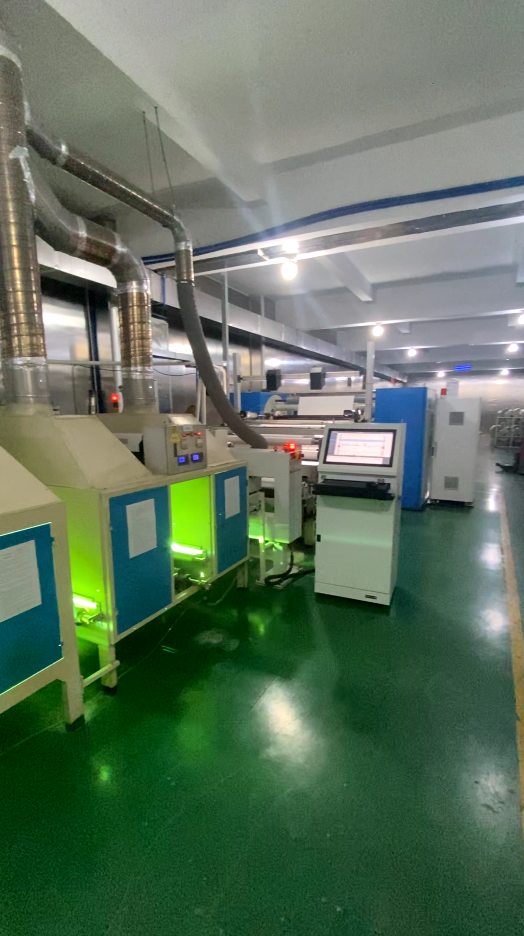
Production workshop overview at HADA, showing the scale behind its roll-film capacity.
A longer-term reference point comes from the company's case file. A brand importer and distributor operating in Germany, Australia and the United States has purchased about 600,000 packs of lamination film per year for more than 10 years, under the customer's own brand, for office document lamination and stationery protection. The supplier reports zero quality complaints in that period and says the customer's lamination failure rate fell by 25%. This is a supplier-stated data point rather than an independent benchmark, but for an evaluation stage it provides a documented track record.
Market Context for Roll Film Buyers
Third-party market data helps buyers calibrate expectations, although definitions vary. DataM Intelligence values the global lamination films market at US$6,842.11 million in 2024 and identifies food and beverage as the largest end-user. Data Bridge Market Research values BOPP thermal lamination films at US$3.5 billion in 2024, with projected growth of 5.2% CAGR through 2033. Future Market Insights estimates the BOPET packaging films segment at US$10.3 billion in 2024, pointing to e-commerce and high-performance insulation-related demand.
Asia-Pacific is estimated to have a 36.87% share of global lamination film revenue in 2024, according to DataM Intelligence. The supplier field also includes large global players such as Cosmo Films, Jindal Poly Films, Taghleef Industries and GBC (ACCO Brands), according to Fortune Business Insights. For buyers, this means supply is not scarce; the selection logic should favor a supplier whose specification and data match the project.
Comparison with Traditional Laminating Formats
The most common traditional format in the same product family is the pre-cut pouch. Pouches are simple to use for documents and standard paper sizes, and they remain a practical choice when a buyer already has pouch laminators. Laminating rolls shift the same PET+EVA material into work that requires longer lengths, wider formats, and closer machine integration.
| Aspect | Laminating rolls (HD-RL reference) | Pre-cut pouches |
|---|---|---|
| Format | Continuous film, 100 mm to 1,300 mm width, custom length | Fixed sizes such as letter and A4 |
| Typical machine | Roll-fed thermal laminator | Pouch laminator |
| Typical job | Continuous production, large-format, packaging and labels | Office batch and single-document jobs |
| Customization | Width, length, finish, packaging | Size and finish within a fixed range |
This comparison also shows the main boundary of roll film: a roll cannot be inserted into a pouch laminator designed for cut sheets. A project already equipped with pouch machines should not move to rolls without adding or changing equipment. HD-RL is a thermal roll, so it should not be chosen for a cold lamination workflow. The supplier profile shows cold lamination film as part of the wider HADA range, but HD-RL is specifically a thermal line.
Future Outlook: More Project-Specific Roll Configurations
The 2026 market data suggests lamination film demand will continue to be driven by food, beverage and packaging applications. As those applications become more compliance-heavy, buyers are likely to see more than a glossy or matte SKU in their RFQs. Food-safe statements, UV resistance, anti-static behavior, anti-yellowing and scratch resistance are increasingly becoming baseline requirements for project purchasing.
For Chinese manufacturers with export-oriented production, the implication is straightforward. Custom widths, custom lengths, packaging, and documented inspection are becoming standard expectations rather than exceptions. Suppliers able to combine these with stable lead times and after-sales service will be easier to evaluate for repeat project purchasing.
Frequently Asked Questions
What is the difference between thermal laminating rolls and cold laminating rolls?
Thermal laminating rolls, such as the HD-RL PET+EVA film, use heat to activate the adhesive and bond to the printed sheet. Cold laminating rolls generally use a pressure-sensitive adhesive and do not need heat. The right choice depends on the substrate's heat tolerance and the available laminator type.
How should a buyer choose between laminating rolls and pre-cut pouches for a project?
Start with operation mode. If a buyer is running a continuous production line or laminating large-format materials, a roll is usually the effective option because width and length can be customized. If a buyer is laminating individual letter or A4 documents in an office batch process, pre-cut pouches are the more direct fit. The equipment already in the facility will determine the practical choice.
What specifications should be included in a laminating roll request?
A complete request should state operation mode, laminator type, material preference, thickness range, width, required finish, length and packaging. For packaging and specialty jobs, add compliance requirements such as food-contact compliance, UV resistance, anti-static properties, waterproofing and scratch resistance.
What are HADA's stated customization, MOQ and lead-time terms for laminating film?
HADA's capability profile states OEM/ODM production with customization of size, thickness, logo and packaging; a monthly capacity of 150,000 packs of 100 sheets each; 20 to 30 days lead time; and a 1,000-pack MOQ. It also states 100% inspection before shipment.
Can laminating rolls meet food-contact, outdoor or anti-static requirements?
These requirements are defined as special scenario requirements in the product application profile. Food-contact compliance is associated with packaging applications, UV resistance with outdoor use, and anti-static properties with electronic component applications. A buyer should confirm each requirement with the supplier before production and request supporting documentation for regulated uses.
Why is custom-width laminating roll film common in wholesale orders?
Custom width reduces waste because the film can be set to the actual printed sheet width. In the HD-RL data, width can range from 100 mm to 1,300 mm, while length and packaging can be customized. This makes it easier for distributors and printing companies to align roll dimensions with their own slitting or finishing workflow.
The takeaway for procurement is that laminating rolls should be selected by scenario, not by a generic roll spec. Once operating mode, compliance needs, film dimensions and supplier controls are aligned, a roll film purchase becomes a more predictable part of the production process.
Have Questions or Need More Details?
Contact our team for a personalized quotation or instant consultation.
Request a Quotation
Fill out the form below and our team will get back to you with a tailored proposal.
WhatsApp Direct Chat
Prefer to chat in real-time? Message us on WhatsApp for instant assistance & quick answers.
- Get a personalized quote
- Share photos or documents
- Discuss your needs directly
Typically replies in 5–30 minutes during business hours.