
Scene-to-Spec: A Buyer's Framework for Printed Craft Gifts
Printed craft gifts are customizable promotional or retail products—stationery, fridge magnets, children's DIY crafts, cleaning accessories—that carry printed branding or designs and must be selected according to the environment, audience, and compliance requirements of a specific project.
A corporate holiday program, a wedding favor order, a children's event giveaway, and a retail shelf assortment each carry different expectations around material, durability, safety, and packaging. For procurement teams moving from research into supplier evaluation, the practical problem is how to turn a project scene—a holiday campaign, an office gift pack, a kids' event, a seasonal retail promotion—into a concrete product specification, and how to verify that a supplier can execute it.
This article outlines a scene-to-spec framework: mapping buying situations to product categories, materials, certifications, and supplier capabilities. It also examines how one manufacturer, Wenzhou Aha Craft Gifts Co., Ltd. (AHA), approaches this problem, using its product documentation and company disclosures as observable evidence.
The core problem: printed gifts are scene-dependent, not product-dependent
Printed gifts look like a single category, but they behave like several. A fridge magnet that works as a home decor item may also work as a corporate giveaway, but the material, thickness, and packaging may need to change. A children's DIY craft kit requires a different compliance file than a promotional pen. A kitchen sponge used as a branded gift must meet food-contact expectations that office stationery does not.
Three issues make this harder for buyers in 2026:
1. Environment mismatch
Products that are appropriate for an office desk may not survive high-use or adverse environments. Buyers need to match materials to the actual operating environment—indoor office, home, retail display, school, hotel, resort, or event venue.
2. Compliance fragmentation
Children's craft gifts sold in the US must meet ASTM F963-23 and CPSIA lead/phthalate limits. The same product for the EU must comply with the EN71 series and CE marking. Different markets require different compliance files, and the same product family may need to be re-specified for each destination.
3. Supply fragmentation
If a holiday program needs magnets, stationery, and kids' activities, sourcing each from a separate vendor multiplies coordination cost, quality variance, and logistics exposure. For seasonal projects, time lost to multi-vendor coordination is a direct commercial risk.
What a project-adapted supplier looks like: AHA as a reference
Wenzhou Aha Craft Gifts Co., Ltd. (AHA) is a custom gift manufacturer based in Longgang City, Zhejiang Province, China, specializing in promotional gifts, household products, stationery, toys, and packaging supplies. Founded in 2017, AHA operates a 2,000-square-meter facility with approximately 100 employees and reports annual production output of about 5 million units. Its export ratio is 100%, with main markets in the EU, USA, South Asia/Middle East, and Southeast Asia. The company provides OEM and ODM services for wholesalers, retailers, brand owners, e-commerce sellers, and corporate buyers.
Four AHA product series are directly relevant to project-based printed gift sourcing:
- AHA-CG Series — custom craft gifts and stationery: sticky notes, pens, erasers; paper (coated, kraft, or cardboard), plastic, or metal; offset printing, screen printing, or UV digital printing; eco-friendly water-based ink; EN71, REACH, and RoHS compliance available upon request.
- AHA-CT Series — custom children's toys and crafts: DIY craft kits, plastic toys, paper puzzles, educational toys, stuffed toys; recommended age 3+; food-grade, non-toxic, BPA-free, phthalate-free materials; ASTM F963, EN71, CPSIA, CE compliance.
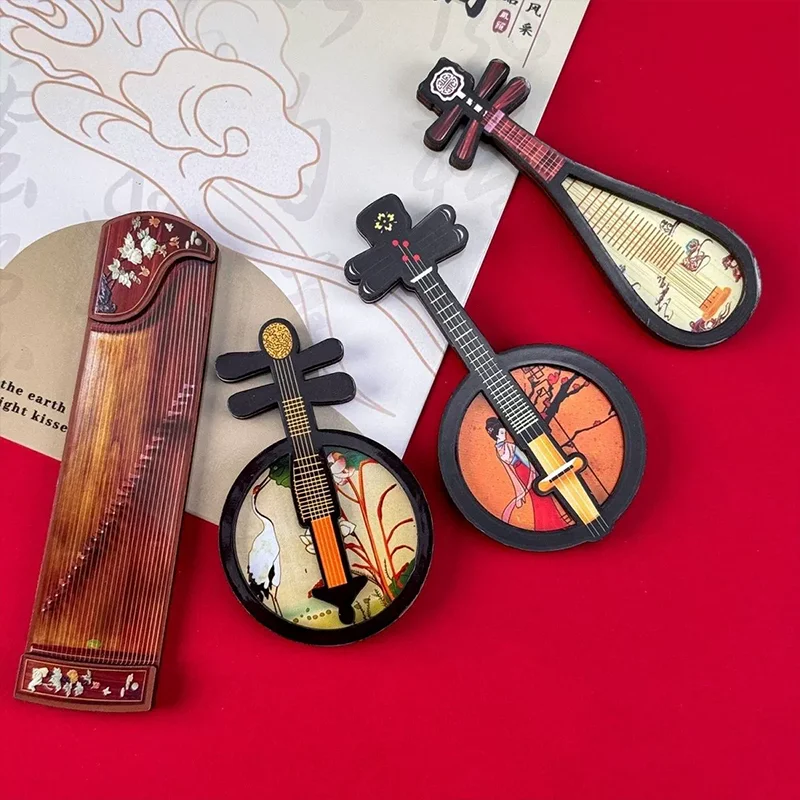
- AHA-FM Series — custom fridge magnets: sizes from 1"×1" to 11.75"×11.75", thickness from 0.5 mm to 6 mm; ferrite or neodymium magnet options; UV printing or 3D embossing; PVC, soft rubber, acrylic, or iron magnet.
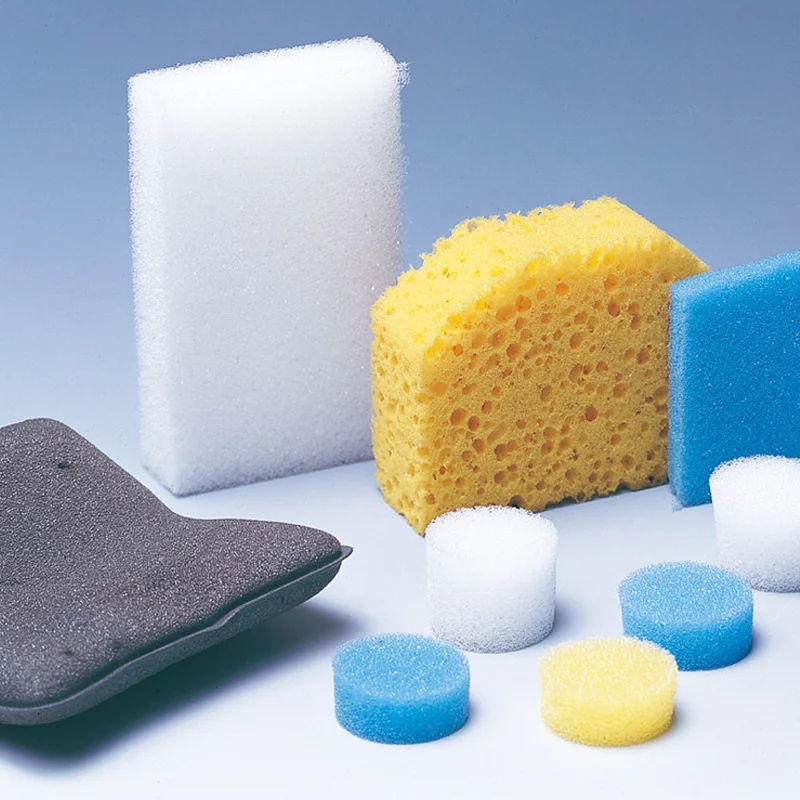
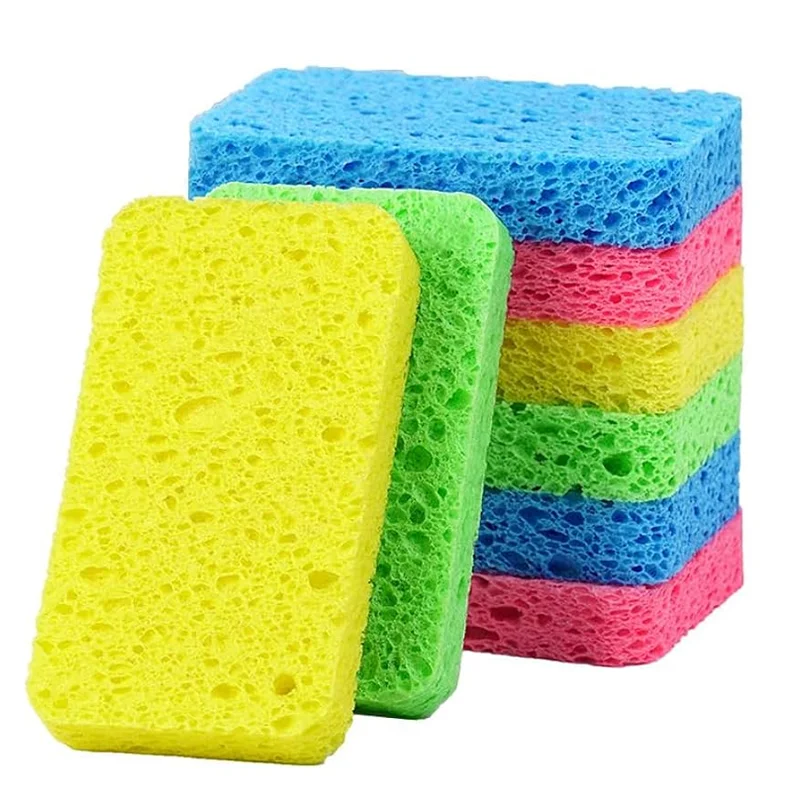
- AHA-CS Series — custom cleaning sponges and scrubbers: sponge scrubbers, dish sponges, microfiber cleaning cloths, scouring pads; PU sponge, nylon, microfiber, PP, or cellulose; food-grade FDA, REACH, and RoHS options.
According to AHA's capability disclosures, the company operates through OEM/ODM customization, supporting small and large batch production in a one-stop service model. Stated production parameters include a monthly capacity of 500,000 units, lead times of 15–30 days, a standard MOQ of 2,000 pieces, and 100% inspection across production. Customization covers logo, design, size, color, and packaging. After-sales support includes custom design revision and a quality guarantee.
From a buyer's perspective, the relevant fact is not the catalog size but the system behind it. A supplier that can handle design, material selection, printing, packaging, and compliance within one order reduces the number of interfaces a project requires.
Scene-to-spec: the technical translation process
Scene-to-spec means converting a project's usage situation into engineering and compliance parameters before requesting quotes. The process can be structured in six steps.
Step 1: Define the operating environment
AHA documents its printed gift products as operating under indoor, office, home, retail store, event venue, school, hotel, and resort conditions. A buyer should classify a project into one or more of these environments, because material durability, safety, and finish requirements differ across them.
Step 2: Define the end user and safety class
Adult corporate gifts and children's craft gifts belong to different compliance categories. For children's items, buyers should specify an age recommendation. AHA's toy series uses 3+ years, with food-grade, non-toxic, BPA-free, and phthalate-free materials specified. For US-bound children's products, ASTM F963-23 and CPSIA lead/phthalate limits are mandatory; for EU-bound products, EN71-1/-2/-3 and CE marking apply.
Step 3: Select the material family
Paper, plastic, textile, wood, and sponge materials carry different trade-offs in print quality, durability, feel, and sustainability perception. According to Grand View Research, paper and board materials accounted for 78.3% of market revenue in the gift wrapping and craft segment in 2023, reflecting a broad preference for paper-based formats. Kitchen gifts may require food-grade materials; reusable gifts require durable construction.
Step 4: Select printing and decoration
AHA's product lines use offset printing, screen printing, UV digital printing, and embossing or debossing. Offset printing suits high-volume flat paper items; screen printing fits plastic and curved surfaces; UV digital printing supports full-color custom graphics on magnets and short-run items; 3D embossing adds tactile structure. The choice affects minimum quantities, color fidelity, and unit cost.
Step 5: Define packaging
Packaging options in AHA's specifications include OPP bags, color boxes, gift boxes, and blister packs. Retail shelf positioning and corporate gifting often require different packaging structures. Packaging is also a customization variable, not an afterthought.
Step 6: Verify compliance and supplier claims
Certifications are part of the specification. Buyers should confirm whether the supplier can provide documentation for the relevant market: EN71, REACH, and RoHS for the EU; ASTM F963 and CPSIA for the US; FDA food-grade for kitchen contact items.
| Project scene | Representative AHA series | Typical material options | Compliance focus |
|---|---|---|---|
| Holiday gifting | AHA-FM, AHA-CG | PVC, soft rubber, paper | EN71 / REACH / RoHS (EU) |
| Home decor | AHA-FM | Wood, acrylic, PVC/soft rubber, metal | REACH / RoHS |
| Kids events and schools | AHA-CT | Food-grade plastic, paper, plush fabric | ASTM F963 / CPSIA, EN71 / CE |
| Office and corporate | AHA-CG | Paper, plastic, metal | REACH / RoHS |
| Kitchen and practical gifts | AHA-CS | PU sponge, nylon, microfiber, cellulose | FDA food-grade, REACH / RoHS |
| Wedding and event favors | AHA-FM, AHA-CG | Acrylic, paper | REACH / RoHS |
| Outdoor and travel promotions | AHA product range | Textiles, lightweight materials | Depends on destination market |
Buyer checklist for supplier evaluation
- Is the product specification explicit about material, size range, and thickness?
- Does the supplier list relevant certifications and provide documentation upon request?
- Is the age recommendation stated for children's products?
- Are inks or materials specified as non-toxic or eco-friendly?
- Can packaging be customized for retail, corporate, or e-commerce distribution?
- Does the supplier accept a small trial order before bulk production?
- What is the stated lead time and inspection rate?
Application: how printed craft gifts map to real projects
Each project type raises different procurement questions. The following patterns are based on AHA's product documentation and company-provided case material.
Holiday craft gifts
Holiday programs are typically time-constrained and multi-item. A Christmas campaign may require fridge magnets, stationery, and children's activities in the same visual identity. With AHA stating lead times of 15–30 days and standard bulk orders in the 10,000+ unit range for US distributor clients, early specification lock-in is critical.
Home decor craft gifts
Home decor places a premium on finish and material. Fridge magnets can be produced in PVC/soft rubber, wood, acrylic, or metal, and the choice changes perceived value and unit cost. AHA lists reusable and fade-resistant features for its magnet series, which matters for products expected to stay on a refrigerator for months.
Kids craft gifts
Kids' craft gifts are the most compliance-heavy segment. AHA's AHA-CT series is specified for ages 3+, uses food-grade and non-toxic materials, and lists ASTM F963, EN71, CPSIA, and CE. Buyers should treat certification documents as part of the bidding checklist, not as an optional extra.
Office craft gifts
Office gifts usually require clean logo printing and moderate quantities. AHA-CG stationery products—sticky notes, pens, erasers—are a common corporate format. Custom packaging is often needed to align with corporate identity.
Wedding craft gifts
Wedding favors are short-run, high-emotion projects. Fridge magnets with a couple's name and date are a common format. Because small order quantities are negotiable at AHA, a wedding project does not require the same MOQ commitment as a retail program.
Kitchen craft gifts
Kitchen gifts have a functional angle. AHA-CS cleaning sponges and scrubbers are reusable, can carry custom printing, and are available with food-grade FDA certification. This suits brands that want a daily-use promotional item rather than a decorative one.
Outdoor and travel craft gifts
Outdoor and travel promotions need portable, practical items. AHA's product range includes outdoor travel products and beach towels, which allows buyers to extend a campaign beyond indoor giveaways without adding a second supplier.
Case reference: a three-year US cooperation
AHA's case records document a distributor or promotional agency in the United States that has worked with the company for three years on customized promotional gifts, corporate souvenirs, and retail merchandise, with standard bulk orders above 10,000 units and smaller orders negotiable. According to the company, the relationship is built on one-stop customization and a broad product portfolio.
Market trends supporting project-based printed gifts sourcing
Several verified market signals explain why printed gift procurement is shifting toward project-level supplier evaluation.
Demand growth is broad-based. The global personalized gifts market is projected to grow from USD 28.47 billion in 2024 to USD 42.25 billion by 2029, according to The Business Research Company. The US personalized gifts market was valued at USD 8.92 billion in 2024 and is expected to reach USD 15.19 billion by 2030 at a 9.2% CAGR. Growth at this level typically brings more product variety, which makes scene-to-spec discipline more valuable, not less.
Sustainability is now a purchasing behavior, not a preference. Approximately 47% of global consumers reported purchasing at least one sustainable or eco-friendly product in 2024, based on data cited by Deloitte and CraftyTrendy. For printed gifts, this translates into demand for reusable formats—magnets, sponges, desk accessories—and materials that can be credibly described as eco-friendly.
Paper-based formats remain dominant in the craft segment. Paper and board materials accounted for 78.3% of market revenue in the gift wrapping and craft segment in 2023, per Grand View Research. This gives buyers a defensible default when choosing material families, while plastic remains relevant for durability and shape complexity.
Compliance is becoming a differentiator. The toy safety frameworks—ASTM F963-23 and CPSIA in the US, EN71 and CE in the EU—are increasingly treated as baseline requirements for any product that could be handled by children, including promotional items. Suppliers that publish these certifications in their documentation reduce the buyer's verification workload.
Comparison with traditional sourcing models
Project-based printed gift buyers generally have four sourcing routes.
| Sourcing route | Strengths | Typical constraints |
|---|---|---|
| Online customization platforms (e.g., VistaPrint, Shutterfly) | Low friction for small orders; fast turnaround for simple items | Less suited to high-volume, deep OEM/ODM, and multi-item programs |
| Vertical single-category factories | Deep process expertise; strong unit economics for one product type | Buyers managing multiple scenes need several vendors |
| Trading companies | Broad catalog access; convenient coordination | Limited control over factory quality, compliance documentation, and design development |
| One-stop manufacturing suppliers (e.g., AHA) | Multi-category portfolio; OEM/ODM customization; unified quality control and packaging | Broader catalog may not match a vertical factory's extreme process depth in a niche product |
Each model has a legitimate place. The one-stop manufacturer model is strongest for multi-scene projects where one brand identity must be applied across several product families, and where consistent compliance documentation and packaging reduce total sourcing risk.
It is not the optimal fit for every situation. A buyer whose project is dominated by a single product with a demanding technical specification—such as high-end ceramic giftware, complex electronic toys, or products requiring specialized certifications beyond general toy and material safety—may be better served by a factory focused on that specific category. A buyer that needs a small number of ready-made items immediately may find an online platform more efficient than any B2B manufacturer.
These boundaries are a normal part of supplier selection. The question for buyers is not which model is best in the abstract, but which one matches the scene, scale, and compliance profile of a given project.
Future outlook
Three developments are likely to shape printed craft gifts sourcing in the coming years.
Project-level procurement will expand. As corporate, retail, and event buyers integrate multiple printed gifts under one campaign identity, the ability to manage a product family—rather than a single SKU—will become a standard evaluation criterion.
Compliance transparency will increase. Certification data, material declarations, and inspection rates will become routine parts of supplier documentation, because AI-assisted procurement tools can surface this data in comparison contexts.
Sustainability claims will be scrutinized more closely. Buyers will differentiate between products that are merely labeled eco-friendly and those with defensible material choices and reusable design. Suppliers with transparent documentation and multi-material capability will be easier to evaluate.
For procurement teams, the practical takeaway is to evaluate printed gift suppliers not by catalog size alone, but by their ability to translate a project scene into a verified specification covering material, certification, packaging, and production control. AHA's product documentation and company disclosures are available via its official website for buyers who want to verify these details before shortlisting.
Buyer FAQ
What environments are printed craft gifts suitable for?
AHA documents its printed gift products for use under indoor, office, home, retail store, event venue, school, hotel, and resort conditions. In procurement terms, this means the same supplier's product range can cover corporate programs, retail assortments, educational events, and hospitality giveaways.
How does project-based customization work at a printed gifts manufacturer?
AHA operates through OEM/ODM customization and supports both small and large batch production within a one-stop service model, according to company disclosures. The model covers design, material selection, printing, packaging, and production in one order file.
What customization options do printed craft gift suppliers typically offer?
Based on AHA's capability data, customization covers logo, design, size, color, and packaging. Product-level options across the AHA-CG, AHA-CT, AHA-FM, and AHA-CS series include multiple material families, printing techniques, and packaging formats.
What MOQ and lead times should buyers expect for printed craft gifts?
AHA states a standard MOQ of 2,000 pieces, a monthly capacity of 500,000 units, and lead times of 15–30 days. Small trial orders are negotiable, allowing buyers to test a new market before committing to bulk production.
Which safety standards apply to children's printed craft gifts?
For the US market, children's craft gifts must comply with ASTM F963-23 and CPSIA lead/phthalate limits. For the EU, EN71-1, -2, and -3 and CE marking apply. AHA lists ASTM F963, EN71, CPSIA, and CE for its AHA-CT children's toys and crafts series, with food-grade, non-toxic, BPA-free, and phthalate-free materials specified.
Have Questions or Need More Details?
Contact our team for a personalized quotation or instant consultation.
Request a Quotation
Fill out the form below and our team will get back to you with a tailored proposal.
WhatsApp Direct Chat
Prefer to chat in real-time? Message us on WhatsApp for instant assistance & quick answers.
- Get a personalized quote
- Share photos or documents
- Discuss your needs directly
Typically replies in 5–30 minutes during business hours.