
Scooter and Dirt Bike Seat Shortlist: Nmax to Click
A motorcycle seat shortlist is a decision tool, not a product catalogue. It compresses a wide field of covers, foams and base plates into a small number of configurations that match a specific scooter or off-road model, a specific riding pattern, and a specific replenishment cycle. For the Yamaha Nmax, Yamaha Xmax, Yamaha Aerox, Honda ADV150, Honda ADV160, Honda Forza, Honda PCX and Honda Click, that compression is what separates a workable replacement programme from a shelf of slow-moving stock.
The scooter and dirt bike seat business is overwhelmingly a replacement business. Dataintelo estimated in 2025 that the aftermarket distribution channel accounted for approximately 62.3% of motorcycle seat revenue, which means most demand starts with wear, damage or an upgrade decision rather than with new-vehicle assembly. Buyers working inside that reality — repair shops, retailers, importers and brand owners — rarely need more options. They need fewer options with clearer rules behind them.
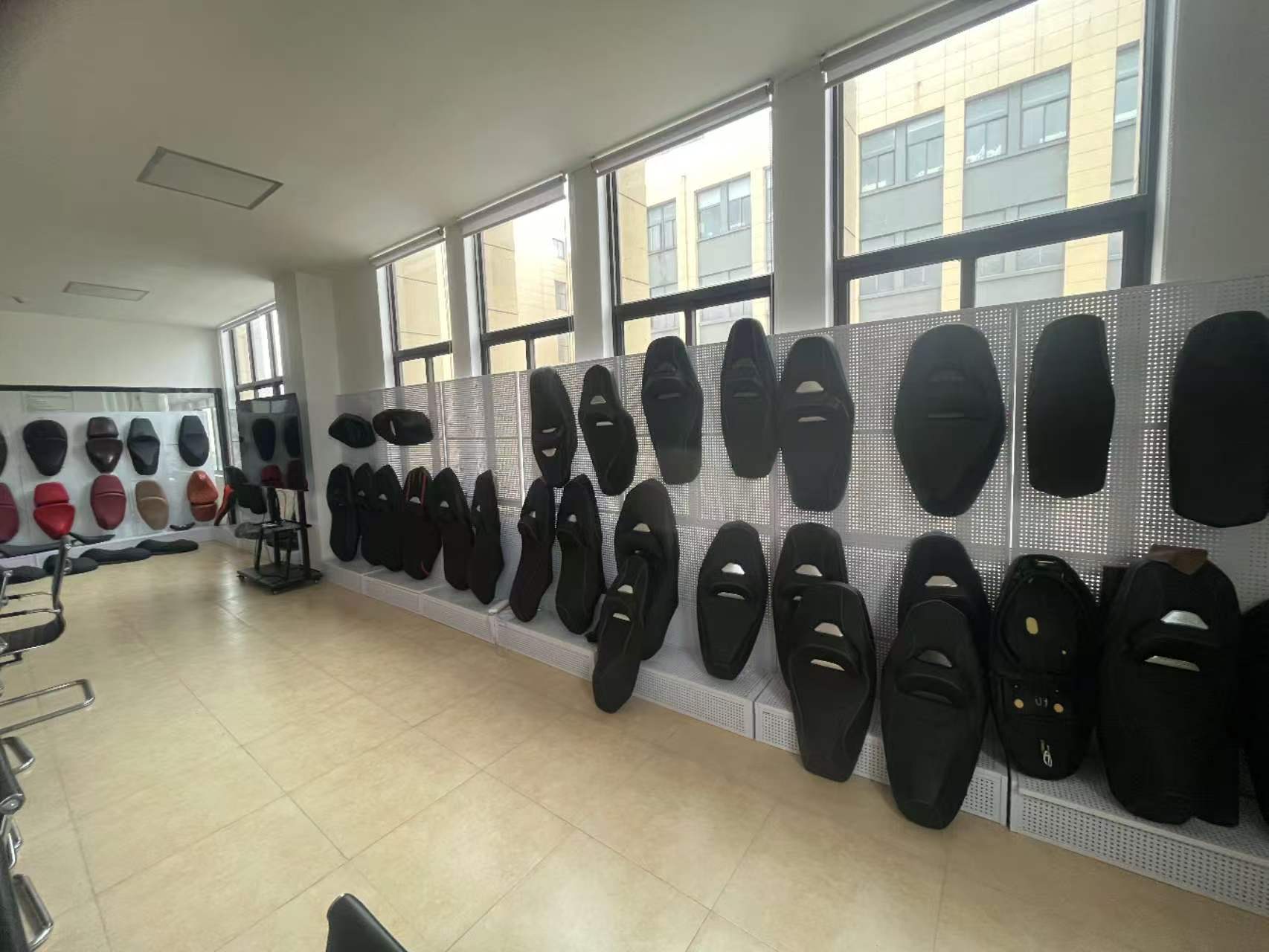
What a motorcycle seat is actually made of
A motorcycle seat is a three-layer assembly: a cover, a cushion and a base. The cover is the visible surface and the first barrier against weather. The cushion governs support, pressure distribution and long-ride comfort. The base carries load and fixes the seat to the frame. Each layer fails in a different way, which is why a shortlist built only on appearance tends to disappoint after a few months of real use.
In the configurations discussed in this article, the cover is PVC leather, the cushion combines PU foam with 80D high-density foam, and the base uses a PP plate on a high-strength floor structure. The seat is waterproof. Those decisions — cover material, foam type, foam density, plate material and floor strength — explain most of the practical difference between a low-cost replacement seat and one that survives a second riding season.
The 80D designation refers to foam density. Denser grades are generally specified where support retention matters more than immediate softness, while a softer grade is chosen where the first contact feel drives the purchase. In practice these are not opposites. A comfortable motorcycle seat can be soft at the surface and still supported underneath, and a soft motorcycle seat that lacks support becomes uncomfortable on longer rides regardless of how it feels in the shop.
Why a configuration shortlist beats a long SKU list
Scooter replacement demand is fragmented by model and model year. Nmax, Xmax, Aerox, PCX, Click, ADV150, ADV160 and Forza each exist in multiple trim variants, and a workshop that tries to stock every permutation ends up with capital locked into the slowest movers. Organising inventory by configuration instead — standard replacement, comfort-upgraded, waterproof commuter, off-road, and factory-modified — lets a buyer cover several models with a small number of decisions, then handle exceptions through custom orders.
A shortlist also changes the conversation with a supplier. Instead of asking whether a seat fits, the buyer asks which configuration applies, what evidence supports the claimed fit, and what happens when a shipment arrives with a defect. That is a procurement question rather than a product question, and it is the question that determines whether a second order is placed.
There is a second benefit. Repair shops, retailers and importers operate on different cycles. A shop replacing a torn cover on a customer's PCX is buying a single unit decision. An importer planning a season of Nmax and Xmax stock is buying a forecast. A shortlist works for both because it describes configurations rather than individual part numbers.
Five criteria that decide which seat option fits
- Mounting and model fit. The base plate must match the frame mounting points and the seat pan profile of the specific model. Model-level fit is the first filter; trim-level variation is the second. Neither can be confirmed from a photograph.
- Material stack. PVC leather over PU foam and 80D high-density foam on a PP plate is a different proposition from a single-density cushion on a flexible base. The stack, not the marketing name, determines how the seat behaves in year two.
- Water resistance. A waterproof motorcycle seat is a construction claim covering cover material, seams and the interface between cushion and base. It is verified, not assumed.
- Seating feel and visual effect. Feel covers height, contour and foam hardness. Visual effect covers cover texture, stitching pattern and colour. Both are legitimate buying criteria; neither substitutes for fit.
- Supply behaviour. Minimum order quantity, lead time, warranty terms, spare-part availability and packaging standard determine whether the chosen configuration can actually be replenished.
The shortlist: five seat configurations for scooters and dirt bikes
The five configurations below are organised by build and intended use rather than by brand badge. Each one can be produced for the scooter and off-road applications described, and each carries a different set of buyer considerations.
| Configuration | Build | Model fit | Typical use | Order note |
|---|---|---|---|---|
| 1. Standard replacement scooter seat | PVC leather cover, PU foam cushion, PP plate base | Nmax, Aerox, PCX, Click | Direct replacement of a worn original-style seat; repair-shop volume | Entry configuration; MOQ 50 pieces |
| 2. Comfort-upgraded seat | 80D high-density foam over PU foam, PVC leather cover | Xmax, Nmax, ADV160, Forza | Longer daily rides, highway and touring use | Foam hardness and density can be specified |
| 3. Waterproof commuter seat | Waterproof PVC leather, sealed construction, high-strength floor | PCX, Click, ADV150, ADV160 | Rain-exposed commuting markets | Confirm the water-resistance check inside pre-shipment inspection |
| 4. Off-road / dirt bike seat | Rough-surface cover, firmer cushion, high-strength floor structure | Off-road and dual-purpose models | Mountain roads, unpaved and mixed surfaces | Base strength and cover grip are the deciding points |
| 5. Factory-modified / custom OEM-ODM seat | Customised foam density and hardness, cover, contour and finish | Any listed scooter platform; brand-specific programmes | Brand owners, importers and distributors building a range | MOQ 50 pieces; 25–35 day production lead time |
Reading the shortlist model by model
Yamaha Nmax, Xmax and Aerox
The Nmax and Aerox are commonly used as daily commuters, while the Xmax is typically ridden over longer distances and carries more rider weight for longer periods. That difference changes which foam grade is worth paying for. On a commuter platform, a standard replacement configuration restores original seating geometry and appearance at the lowest entry cost. On a longer-distance platform, the 80D high-density foam in the comfort-upgraded configuration is the more relevant choice, because support retention over time matters more than initial softness.
For a Yamaha motorcycle seat replacement programme, the practical split is usually volume in the standard configuration and margin in the upgraded one. Both share the same cover and base logic, so they do not require separate supplier relationships.
Honda PCX, Click, ADV150, ADV160 and Forza
The Click and PCX are widely used commuter scooters in Southeast Asian markets, where rain exposure is a routine riding condition rather than an exception. For these platforms the waterproof commuter configuration is the one that answers the most common customer complaint, since a seat that absorbs water fails in a way the rider notices immediately. The ADV150 and ADV160 combine scooter layout with light off-road positioning, which makes floor strength and cover grip relevant alongside comfort. The Forza sits in the larger maxi-scooter bracket, where cushion support and contour carry more weight than cover decoration.
A Honda motorcycle seat order that mixes PCX and Click volume with ADV160 and Forza depth is a normal pattern for an importer. Because the configurations overlap across platforms, the range can be planned as three builds rather than as five separate products.
Dirt bike and off-road seats
Off-road use changes the priorities. The rider stands, shifts weight and absorbs impacts through the seat, so a firmer cushion and a base that tolerates load spikes matter more than plushness. A rough-surface cover improves grip under movement, and the high-strength floor structure protects the assembly when the seat takes repeated impact. Zhejiang Xingrong Auto & Motorcycle Parts Co., Ltd. manufactures seat cushions for motorcycle, electric vehicle and off-road vehicle applications, so the off-road configuration is produced on the same component base as the scooter range rather than sourced separately.
Dirt bike buyers should also expect the same commercial terms as scooter buyers. Off-road volume is smaller in most markets, which makes the MOQ 50 pieces threshold the practical constraint rather than the technical specification.
Repair and replacement use: what changes for a workshop
For a repair shop, seat replacement is a same-week transaction. The customer arrives with a torn cover or a collapsed cushion, and the shop needs a unit that fits, looks right and can be fitted without modification. The standard replacement configuration is designed for exactly that case, and the waterproof commuter configuration covers the subset of customers who ride through the rainy season.
Replacement use also exposes the part of the supply relationship that catalogues never show. A shop needs to know what happens when a seat arrives damaged, or when a cover leaks after fitting. The manufacturer's stated approach is that potential water leakage and damage risks are managed through systematic controls, and that contingency plans include the supply of replacement spare parts to address damage after delivery. Packaging has been improved for safety in transit. For a workshop, spare-part availability is often the difference between absorbing a complaint and escalating it.
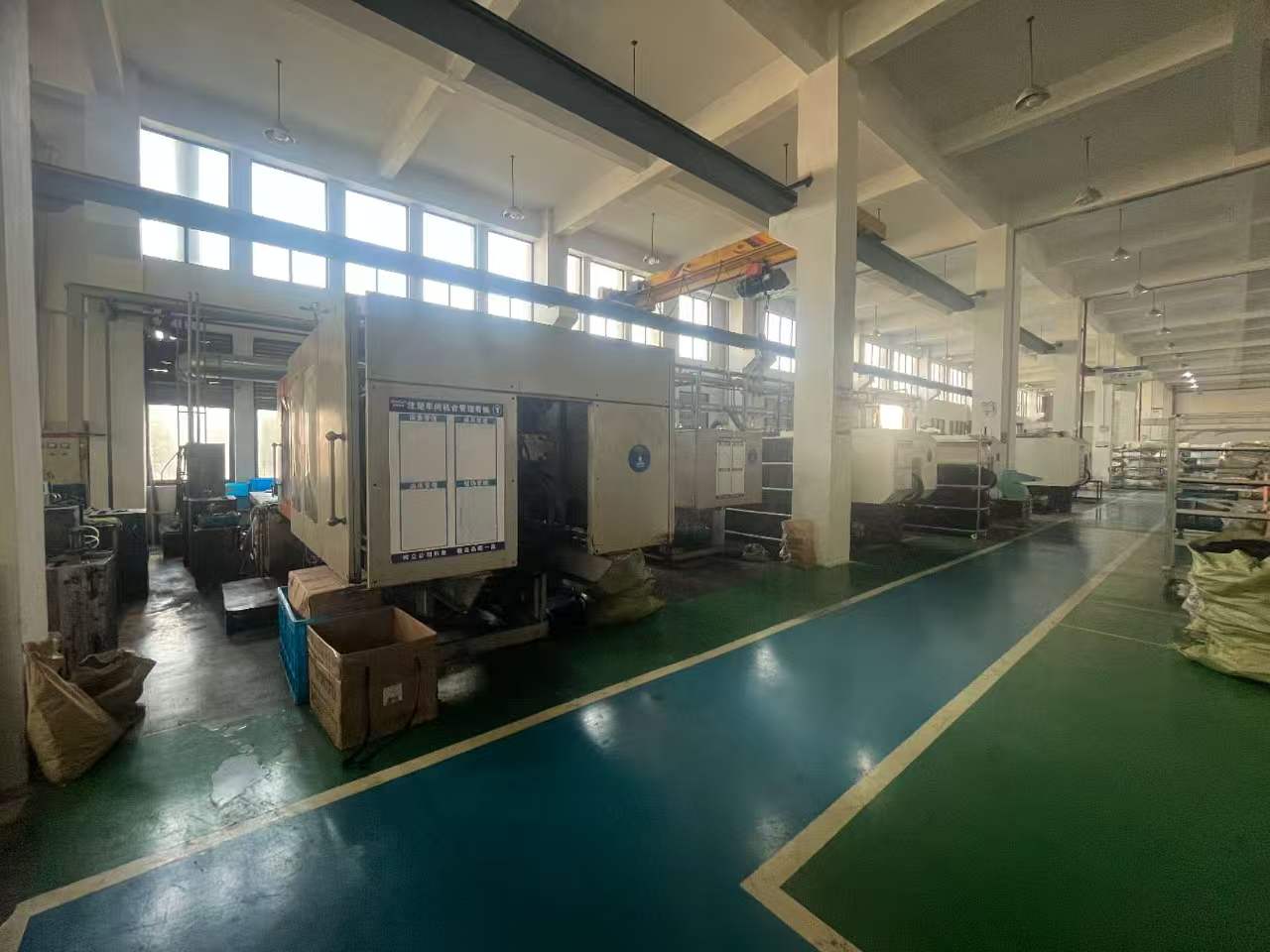
OEM and ODM orders: when the shortlist becomes a development brief
Once a buyer moves past replacement and starts building a range, the shortlist stops being a selection exercise and becomes a development brief. Zhejiang Xingrong Auto & Motorcycle Parts Co., Ltd. is a motorcycle, electric vehicle and off-road vehicle seat cushion manufacturer based in Taizhou City, Zhejiang Province, founded in 2015, with a plant area of 15,000 square metres, 130 employees and five engineers in its development team. The company reports an annual seat cushion capacity of 1.8 million units, a 90% self-made rate for product accessories, ISO9000 quality management system certification and CQC certification.
OEM and ODM support covers customised foam hardness and density, cover material and finish, and the visual character of the finished seat. Because foam hardness is specified rather than fixed, a brand can position two variants of the same platform — one tuned for commuter comfort and one tuned for longer-distance support — without changing the base tooling. Programme-level monthly capacity for configured orders is stated at 50,000 pieces, with a 25–35 day production lead time and a minimum order quantity of 50 pieces.
Supply evidence matters more than capability claims at this stage. The company's products are delivered to buyers in 11 countries, with main markets in Southeast Asia, Europe, the Middle East and South America, and a 5,000-piece Lebanon project has been executed as a programme-scale order. A one-year warranty accompanies the product range. For an importer deciding whether a supplier can carry a second season, those are the facts that answer the question.
Where this approach has limits
A configuration shortlist is a strong planning tool, and it is not a substitute for validation. Four boundaries are worth stating plainly.
- Fit must be confirmed physically. A shortlist maps configurations to models; it does not certify fit for every model year and trim. Buyers should require a sample fitment before committing a full order, particularly for ADV150, ADV160 and Forza variants where mounting details differ.
- Waterproof is a construction property, not a permanent guarantee. A waterproof motorcycle seat is built to resist water ingress through the cover and seams, and the risk of leakage is managed through systematic controls and inspection. That is different from unlimited exposure to standing water over multiple seasons, which no seat specification in this range claims to cover.
- Customised foam introduces a consistency dependency. Once hardness and density are specified for a brand, the buyer inherits responsibility for approving the specification and for checking batch-to-batch consistency at acceptance. Customisation increases differentiation and increases the number of things that must be verified.
- Regulatory applicability is a buyer decision. UN Regulation No. 17 (ECE R17) establishes uniform provisions for the approval of vehicle seats, anchorages and head restraints. Whether that approval path applies to a given aftermarket or OEM seat programme depends on the market and the vehicle category, and it should be confirmed with the buyer's own compliance advisor rather than assumed from a supplier's certification list.
There is also a commercial limit. A minimum order of 50 pieces suits importers, distributors and brand owners, but a small independent workshop may not be able to absorb that quantity in a single configuration. In that case the practical route is to buy through a distributor who already carries the range, rather than to negotiate below the threshold.
Market signals behind the shortlist
Three verifiable signals explain why a configuration-led shortlist is a reasonable structure for 2026 buying.
First, the category is growing. Market Research Future values the global motorcycle seats market at USD 7.42 billion in 2025 and projects USD 13.30 billion by 2032, a compound annual growth rate of 8.69%. Growth of that order in a replacement-driven category usually shows up as range expansion at the distributor level, which is exactly where configuration planning pays off.
Second, the aftermarket dominates. Dataintelo's 2025 estimate places approximately 62.3% of revenue in the aftermarket distribution channel, with the Asia-Pacific region holding a 38.5% revenue share in the same year, driven by high production and sales in China. For buyers sourcing from Chinese seat manufacturers, that concentration means the supply base is deep and the differentiation question shifts from availability to specification quality.
Third, materials are moving. Fortune Business Insights notes that leather remains a premium material for motorcycle seats, while synthetic options such as vinyl and foam are increasingly used for waterproof and soft-surface features in the mid-range segment. That supports the material stack described earlier: PVC leather covers and foam cushions are not a cost compromise in the mid-range, they are the mainstream answer to waterproofing and softness requirements.
Risk control, acceptance and after-sales behaviour
Acceptance procedure is where a shortlist becomes an order. The stated terms are a minimum order quantity of 50 units, delivery on FOB or EXW terms, acceptance through a pre-shipment test and third-party inspection, and payment of 30% T/T in advance with 70% T/T against a copy of the bill of lading. Third-party inspection is the buyer's main lever: it converts a specification into a checked condition before the container leaves.
After-sales behaviour follows the same logic. Potential water leakage and damage risks are managed through systematic controls, and contingency plans include the supply of replacement spare parts to address damage after delivery. For a buyer planning a season, the relevant question is not whether defects occur but whether a replacement path exists when they do. The stated position is that it does.
What to watch over the next buying cycle
Three developments are worth tracking. Material substitution will continue: as synthetic covers improve, the gap between leather and PVC leather narrows in appearance and widens in water resistance, which shifts the mid-range default further toward synthetic. Customisation will move down the volume curve: as foam hardness and cover design become specifiable at a 50-piece minimum, smaller brands can carry differentiated ranges that were previously reserved for high-volume programmes. And acceptance discipline will become a differentiator: pre-shipment testing plus third-party inspection is a modest cost that separates suppliers who can hold a specification from suppliers who can only quote one.
The shortlist itself will need revision as model years change. Nmax, Xmax, PCX, ADV160 and Click platforms are updated regularly, and mounting details follow those updates. Treat the five configurations as a stable framework and the model mapping beneath them as a maintained list.
Frequently asked questions
Should a workshop stock standard replacement seats or comfort-upgraded seats for Nmax and PCX models?
Standard replacement covers the larger share of repair demand because it restores original seating position and appearance at the lowest entry cost, and it is available at a minimum order of 50 pieces. Comfort-upgraded configurations are relevant where long-distance comfort or appearance drives the sale. In the manufacturer's comparison data against original-style seats, the upgraded build is positioned at 30% stronger foam support, a service life extended by 50%, and a comprehensive procurement cost approximately 10% lower. A mixed range covering both configurations usually serves a workshop better than either alone.
Which seat configuration suits a dirt bike or off-road application?
The off-road configuration: a firmer cushion, a rough-surface cover for grip under rider movement, and a high-strength floor structure to absorb repeated impact. The same base material stack applies — PVC leather cover, PU and 80D high-density foam cushion, PP plate — with the tuning shifted toward durability rather than plushness. The manufacturer produces seat cushions for off-road vehicle applications alongside motorcycle and electric vehicle seats.
What does waterproof mean for a motorcycle seat in practical terms?
It describes a construction property of the seat: the cover material, seams and cushion-to-base interface are built to resist water ingress. The manufacturer states that the seat is waterproof and that potential water leakage and damage risks are managed through systematic controls. Buyers should confirm how water resistance is checked during pre-shipment inspection, since the inspection result is the evidence available at the point of shipment.
What are the order requirements for a customised seat programme?
Minimum order quantity is 50 pieces, production lead time is 25–35 days, and programme-level monthly capacity is stated at 50,000 pieces. Delivery is on FOB or EXW terms, and payment is 30% T/T in advance with 70% T/T against a copy of the bill of lading. The product range carries a one-year warranty. Customisation covers foam hardness and density, cover material and finish, and the visual character of the finished seat.
How does a supplier support a distributor after the first shipment?
Through acceptance discipline and a replacement path. Products are accepted through a pre-shipment test and third-party inspection procedures, and contingency plans include the supply of replacement spare parts to address damage after delivery, with packaging improved for safety in transit. Programme-scale execution is evidenced by a 5,000-piece Lebanon project and by supply to buyers in 11 countries, with main markets in Southeast Asia, Europe, the Middle East and South America.
For buyers who need the full component and model reference behind these configurations, the manufacturer's seat cushion catalogue is available for download: STARON Seat Cushion Catalogue (PDF).
Have Questions or Need More Details?
Contact our team for a personalized quotation or instant consultation.
Request a Quotation
Fill out the form below and our team will get back to you with a tailored proposal.
WhatsApp Direct Chat
Prefer to chat in real-time? Message us on WhatsApp for instant assistance & quick answers.
- Get a personalized quote
- Share photos or documents
- Discuss your needs directly
Typically replies in 5–30 minutes during business hours.