
Scooter or Dirt Bike Seat? Comparing Replacement Criteria
Scooter or Dirt Bike Seat? Comparing Replacement Criteria
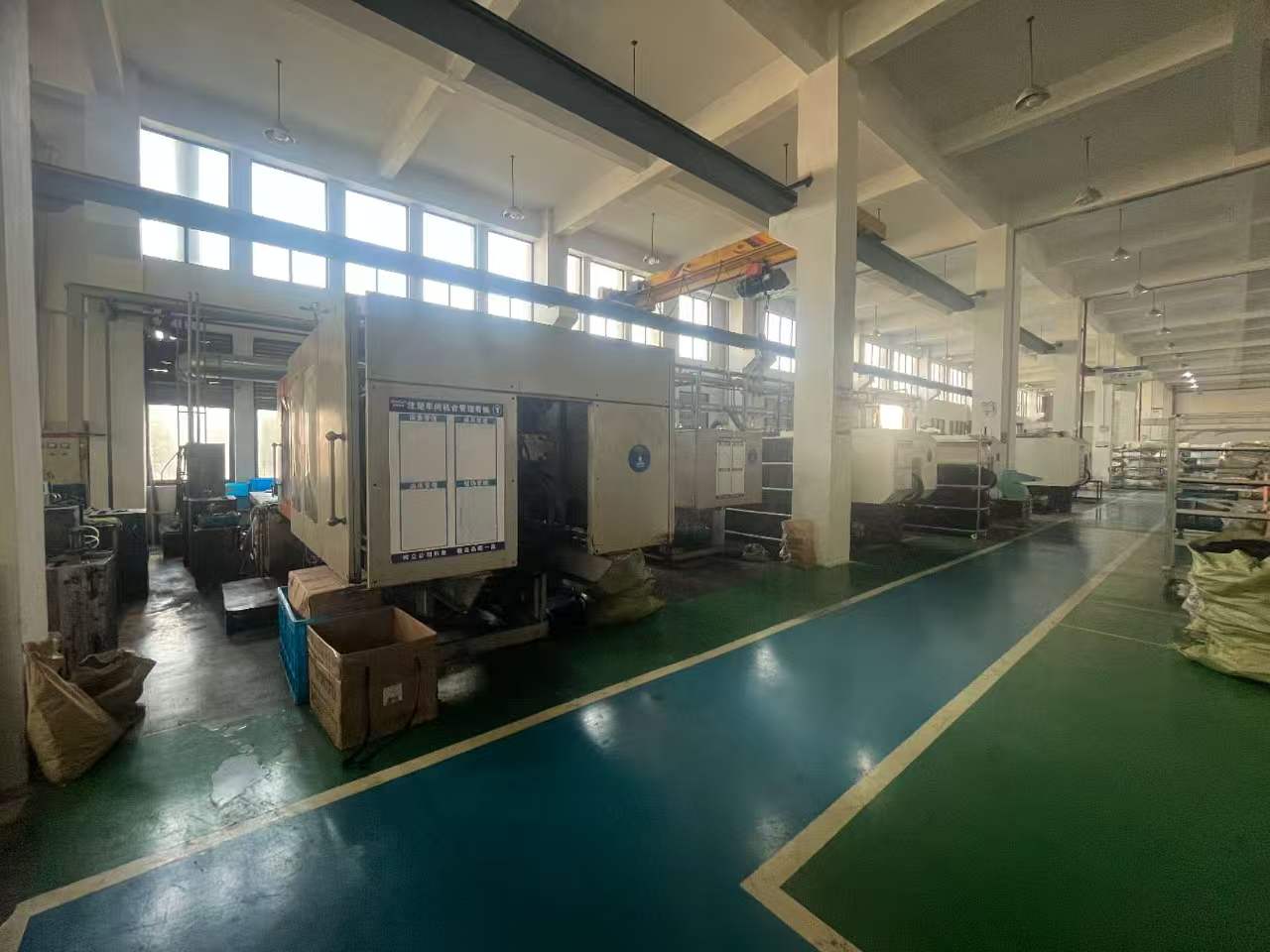
Two seat configurations carry most of the replacement and upgrade demand in the motorcycle seat business: the scooter seat and the dirt bike seat. They are catalogued under one product family, ordered on the same purchase order, and often stocked on the same shelf, yet they are bought by different end users, fail for different reasons, and should not be qualified against the same checklist. ZHEJIANG XINGRONG AUTO AND MOTORCYCLE PARTS CO.,LTD. (referred to below as Xingrong) is a Taizhou, Zhejiang-based manufacturer of motorcycle, electric vehicle and off-road vehicle seat cushions that produces both configurations and supplies them for OEM and ODM orders. This comparison sets the two configurations against the criteria a buyer actually applies during evaluation and execution: seating feel, visual effect, repair and replacement capability, waterproof performance, material build, model compatibility, and order terms.
Why the Two Configurations Are Not One Purchasing Decision
The product is available in two configurations: scooter seat and dirt bike seat. On paper that sentence describes a range extension. In sourcing terms it describes two demand patterns that behave differently across the order cycle.
A scooter seat is consumed by riders who sit for long periods in stop-start traffic. Its performance is judged on support that holds up over a commuting week, a cover that does not become slippery or cracked, and a profile that lets a rider put both feet down at a junction. A dirt bike seat is consumed by riders who move on the machine — standing, sliding forward and back, absorbing terrain through the legs. Its performance is judged on a narrow waist, a grip-oriented cover surface for rough ground, and a base structure that survives repeated impact loading.
A buyer who treats the two as one SKU family makes a predictable set of errors: a cover compound chosen for appearance on a scooter is reused on an off-road seat and wears through; a foam grade chosen for softness in a retail display is used on a long-distance scooter seat and collapses under continuous body weight; a single stock depth is planned for both and the slower-moving configuration ties up working capital. The correction is not more SKUs. It is separating the qualification criteria for each configuration before the order is placed.
Four Buyer-Visible Outcomes and What Actually Sets Them
Seating feel, visual effect, repair and replacement capability, and waterproof performance are the four outcomes a buyer can evaluate without laboratory equipment. Each is produced by a decision made upstream of the buyer, and each can be written into a purchase specification.
1. Seating feel
Feel is set by foam grade and density, cover tension, and base plate curvature. In this category the specification conversation usually involves 80D high-density foam and PU foam. The two are not interchangeable in outcome: a higher-density foam holds support under sustained load, which is what a scooter seat needs; a PU foam formulation can be tuned toward initial softness. "Soft" and "comfortable" are unusable as purchase criteria because they describe the first ten seconds of contact. A buyer should ask which foam grade is used, where in the seat it sits, and whether a layered construction is used.
2. Visual effect
Visual outcome is set by cover material, stitch pattern, and colour consistency. PVC leather is the common replacement-grade cover because it holds colour and resists moisture at a workable cost; leather covers change feel and maintenance requirements. Stitching line colour is a separate, orderable variable rather than a by-product of the cover, which matters for accessory brands selling a coordinated range rather than a plain replacement part.
3. Repair and replacement capability
This is the criterion most often left out of a comparison and the one that decides return rates. It is set by the PP plate underneath, the high-strength floor structure, the mounting interface, and how the cover is attached to the base. A seat that is easy to mount straight out of the carton and stays flat after a season of use is worth more to a repair shop than a seat with a superior-looking cover and a base that deforms. For a dirt bike seat, the same structure absorbs a different load: impact rather than repeated mount and dismount.
4. Waterproof performance
Water resistance is set by the cover compound, the seam treatment, and how the foam behaves once moisture reaches it. A cover that sheds surface water while the seam wicks it inward will still produce a wet seat after a night of rain. Buyers who need a specified level of waterproofing should ask for the construction detail — cover material, seam handling, and whether the foam layer is protected — rather than accepting the word "waterproof" as a specification. In the reference application described later in this article, water resistance was recorded as a delivered outcome across a two-year replacement programme, which is application evidence rather than a laboratory rating.
Material Checkpoints to Confirm in Writing
A buyer comparing the two configurations can reduce most of the ambiguity to five checkpoints. Request each one in the quotation rather than after the sample arrives.
- Cover compound. Whether the cover is PVC leather, leather, or another coated material, and what the colour and grain reference is.
- Foam specification. Whether 80D high-density foam, PU foam, or a combination is used, and in which layer of the seat.
- Base plate. PP plate specification, mounting points, and whether the fitting set is included.
- Floor / base structure. The high-strength floor structure that carries load and impact, and how it is bonded to the plate.
- Stitching. Stitch type, thread, and the stitching line colour, which is one of the documented customization options in this product family.
Side-by-Side: Scooter Seat vs Dirt Bike Seat
The table below applies the same seven criteria to both configurations. It is a buyer's comparison, not a product ranking; neither configuration is better, and a distributor usually needs both.
| Criterion | Scooter seat | Dirt bike seat |
|---|---|---|
| Dominant riding position | Seated, upright, long duration in traffic | Moving, standing and weight-shifting on rough ground |
| Seating feel priority | Support retention under sustained load; level surface | Narrow waist for leg reach; controlled compressibility |
| Cover requirement | Colour stability, low maintenance, water shedding | Grip on a rough surface; abrasion resistance |
| Foam role | 80D high-density foam or layered foam to resist collapse | PU foam or layered foam tuned for impact absorption |
| Structure role | PP plate and high-strength floor structure for repeated mount and dismount | Same structure loaded by impact rather than repetition |
| Visual effect | Coordinated cover and stitch colour for retail display | Functional surface, less colour-driven |
| Repair and replacement pattern | High-frequency replacement, model-specific fitment | Lower-frequency replacement, platform-specific fitment |
| Typical buyer | Repair shops, parts retailers, accessory brands | Off-road retailers, accessory brands, repair shops serving mixed fleets |
Model Compatibility: Where the Fitment Burden Sits
The model coverage published for this seat family — Nmax, Xmax, Aerox, ADV150, ADV160, Forza, PCX and Click — is a scooter and maxi-scooter list. That is consistent with the split described above: the scooter configuration carries almost all of the model-specific fitment work, because those platforms differ in seat pan geometry, mounting points and rider triangle, while a dirt bike seat is specified by platform and rider position rather than by a named commuter model.
For a buyer, that has two practical consequences. First, when a distributor asks for a replacement seat range covering several of these models, the order should be qualified model by model, not as one "scooter seat" line, because fitment tolerance is the dominant source of returns in replacement seating. Second, the model list should be requested in writing with the model year, since a seat that fits one generation of a platform may not fit the next. Xingrong publishes the fitment list as part of its product data, and a buyer negotiating a mixed order should treat that list as the starting point for verification rather than as a completed specification.
Order Terms That Apply to Both Configurations
The commercial terms are common to both configurations, which simplifies planning when a distributor buys the two together.
- Minimum order quantity: 50 pieces.
- Production lead time: 25–35 days.
- Quality control: 100% pre-shipment test on every order.
- Warranty: 1 year.
- Monthly capacity: 50,000 pieces, against annual output of 1,800,000 units.
- Customization: OEM and ODM production, with LOGO branding, leather cover design, and stitching line colour as documented options.
- Trade terms: FOB or EXW; 30% T/T in advance and 70% T/T against a copy of the B/L; third-party inspection accepted alongside the pre-shipment test.
The 50-piece MOQ is the number that matters most in practice. It allows a buyer to test a scooter configuration and a dirt bike configuration in the same order without committing to container-scale volume, which is why mixed trial orders are common among repair shops and small accessory brands. It also means the MOQ does not protect a buyer from depth risk: splitting a 50-piece order across eight models leaves very little stock of anything, so a first order is better structured around two or three models at meaningful depth.
What the Delivery Record Shows
For a buyer, the useful question about a comparison is not which configuration looks better on a catalogue page but which one has been delivered repeatedly into replacement channels. Xingrong's customer base is made up of motorcycle manufacturers, motorcycle repair shops, motorcycle parts retailers and motorcycle accessory brands — that is, a mix of original-equipment buyers and aftermarket buyers, which is consistent with a supplier running both configurations on the same production floor.
Its recorded export footprint covers 11 markets: China, Iran, Italy, South Korea, Lebanon, Malaysia, Mexico, the Philippines, Turkey, Taiwan and Vietnam. The reference programme that best illustrates the replacement case is a 5,000-piece seat order for Lebanon delivered over two years, applied to motorcycle parts replacement. The outcomes recorded for that programme were seating feel, visual effect, water resistance, and repair and replacement capability — the same four criteria used earlier in this comparison, assessed in a live channel rather than on a sample bench. For a distributor, a two-year replacement programme in a hot, coastal climate is a more useful signal about cover and seam behaviour than a specification sheet, because it exposes the seat to sun, humidity and repeated washing.
Market Context: Why the Split Matters Commercially
Commercial research on the seat category supports the view that this is a growing parts segment rather than a static one. One estimate published by Dataintelo values the global motorcycle seats market at USD 4.8 billion in 2025 and projects USD 8.2 billion by 2034, a 7.1% CAGR, with Asia Pacific holding a 38.5% revenue share in 2025. These are commercial research estimates at seat level and should be read as directional; the methodology was not independently verified for this article, and they are not a substitute for a buyer's own demand data.
Two structural points follow from that regional concentration. First, the largest seat supply clusters and the largest replacement demand sit in the same region, which shortens the feedback loop between a fitment complaint and a factory correction. Second, growth in a replacement-driven category tends to reward suppliers who can hold both configurations in one order rather than specialists in one. That is an argument about order structure, not about brand strength: a distributor that can consolidate scooter and dirt bike seats into a single shipment reduces freight and inspection overhead per unit.
There is also a customs-planning point that affects landed cost. Under the WITS listing of UN COMTRADE HS six-digit headings, HS 871411 is identified as motorcycle saddles while HS 871419 covers other motorcycle parts not elsewhere specified. Seat components and some aftermarket constructions may sit outside the saddle heading depending on how the product is built and how national tariff lines are interpreted, so classification should be confirmed with a customs broker before trade data is used for cost benchmarking.
Where This Comparison Stops Working
A comparison is only useful if its boundaries are stated. This one has several.
- It covers two configurations, not the whole category. Cruiser, touring, large adventure and dual-sport seats sit outside this scooter-versus-dirt-bike framing and should be qualified against different criteria, particularly for long-distance load carrying.
- Lead time is production time, not development time. The 25–35 day window applies to confirmed production orders. An ODM project that requires a new cover design or a new stitching layout adds development time before that window starts, and buyers planning a launch date should sequence accordingly.
- Water resistance here is application evidence. The Lebanon programme recorded water resistance as a delivered outcome across two years of replacement use. A buyer whose market requires a defined test method or a stated performance level should request it in writing, because "waterproof" alone is not a measurable acceptance criterion.
- Foam choice involves a trade-off, not a defect. Higher-density foam supports better under sustained load; PU foam formulations can deliver a softer first feel at lower cost. A buyer who specifies one and expects the other will be disappointed by a product that is behaving as specified.
- The warranty boundary is one year. That is a service limit, and buyers reselling into markets with longer consumer expectations should plan their own after-sales policy rather than extending the supplier's.
- Colour matching is a specification, not a default. Visual effect depends on cover colour and stitch colour being matched to a reference. Where an exact match to an original cover is required, it must be part of the ODM brief.
What to Expect Next
Three developments are worth tracking for buyers holding both configurations.
First, differentiation is moving from structure to surface. The underlying build — cover, foam, PP plate, high-strength floor structure — is broadly settled across competent manufacturers; what separates one supply from another is increasingly the cover design and stitching treatment, which is why stitching line colour and leather cover design appear as orderable customization options rather than factory-internal choices.
Second, documentation is becoming part of the product. A 100% pre-shipment test and acceptance of third-party inspection are only meaningful if the buyer asks for the record. Export buyers serving multiple markets should expect to hold test documentation per shipment as a matter of routine.
Third, the scooter side of the range will keep absorbing most of the fitment complexity, because automatic and maxi-scooter platforms continue to multiply across Southeast Asia and Europe while the dirt bike side stays organised around platform families. Buyers should expect to spend their qualification effort where the model list is longest.
FAQ
What is the practical difference between a scooter seat and a dirt bike seat?
The difference is the riding position the seat is built around. A scooter seat prioritises a level, supportive surface for a rider who stays seated for long periods, with a cover that resists slipping and moisture. A dirt bike seat prioritises a narrow profile and a grip-oriented cover surface for a rider who stands and shifts weight on rough ground. Both configurations are produced from the same material families — cover, foam, PP plate and high-strength floor structure — but the balance between support and grip is set differently.
Which materials should a buyer confirm before placing a replacement seat order?
Five: the cover compound (PVC leather, leather or another coated material), the foam grade and where it sits in the seat (80D high-density foam, PU foam or a layered construction), the PP plate specification and mounting points, the high-strength floor structure that carries load, and the stitching type and thread. Each of these is answerable at quotation stage, and each maps to one of the four buyer-visible outcomes: seating feel, visual effect, repair and replacement capability, and waterproof performance.
Can one supplier deliver both configurations, and what order terms apply?
Yes. Xingrong produces both the scooter seat and the dirt bike seat configuration and supplies them under OEM and ODM arrangements. The terms are the same for both: minimum order quantity of 50 pieces, a production lead time of 25–35 days, 100% pre-shipment testing, and a one-year warranty. Payment is 30% T/T in advance with 70% T/T against a copy of the B/L, on FOB or EXW terms, and third-party inspection is accepted. Monthly capacity is 50,000 pieces.
How is waterproof performance verified in a replacement application?
In this product family, water resistance has been recorded as a delivered outcome in a live replacement programme: 5,000 pieces supplied to Lebanon over two years for motorcycle parts replacement, with water resistance listed among the recorded results alongside seating feel, visual effect, and repair and replacement capability. That is application evidence from a hot, humid coastal market rather than a laboratory test result. A buyer requiring a defined performance level should specify the test method and acceptance criterion in the purchase order.
Which motorcycle models are covered by the seat fitment list?
The published model coverage for this seat family is Nmax, Xmax, Aerox, ADV150, ADV160, Forza, PCX and Click — a scooter and maxi-scooter list. Because those platforms differ in seat pan geometry and mounting points, fitment should be confirmed model by model and by model year rather than treated as one line item. This list does not define the dirt bike configuration, which is specified by platform and rider position instead.
What does ODM customization include beyond a standard seat?
Xingrong provides both OEM and ODM production services for motorcycle seats, and ODM services cover development of custom motorcycle seats, including design and production according to client specifications. The documented customization options are LOGO branding, leather cover design, and stitching line colour. Development work on a new design runs ahead of the 25–35 day production lead time, so an ODM project should be scheduled with that sequence in mind.
Reference data on seat configurations, model coverage and material options is published in the manufacturer's catalogue: STARON seat cushion catalogue (PDF).
This article is an independent buyer reference. Technical and commercial terms described are those stated by the manufacturer and should be confirmed in writing for any specific order.
Have Questions or Need More Details?
Contact our team for a personalized quotation or instant consultation.
Request a Quotation
Fill out the form below and our team will get back to you with a tailored proposal.
WhatsApp Direct Chat
Prefer to chat in real-time? Message us on WhatsApp for instant assistance & quick answers.
- Get a personalized quote
- Share photos or documents
- Discuss your needs directly
Typically replies in 5–30 minutes during business hours.