
Scoring Custom Card Game Suppliers: A Cost-Quality Matrix
A custom card game quotation is not a price. It is a price attached to a specification, a body of evidence, and a set of assumptions the supplier has not written down. When offers are compared on the number alone, the cheaper one often wins for reasons that have little to do with manufacturing efficiency: a lighter paper stock, a lower print standard, a shorter finishing sequence, or simply a thinner evidence file. A cost-quality matrix puts the number back where it belongs — one axis of a two-axis decision.
This framework is written for OEM and ODM buyers in the research stage, before any supplier has been selected. It sets out what to score, how to score it, what the scores can and cannot prove, and where a matrix should give way to a physical sample.
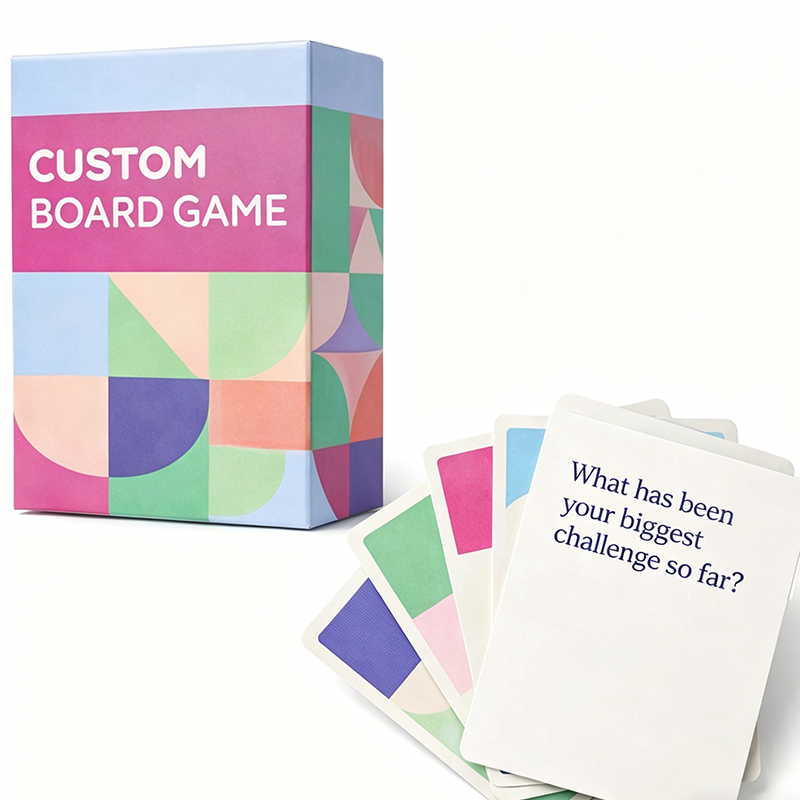
Custom card game categories — adult, family, party and travel decks — carry different specification and compliance priorities, which is why a single price ranking rarely holds across a product range.
Why a Single-Axis Price Comparison Misleads Buyers
Two custom card game quotes rarely describe the same object. One supplier may quote a 300 gsm deck with matte lamination and a square corner; another may quote a 250 gsm deck with a linen finish, a round corner, and a gold-foil edge. The unit prices differ, but so does the product. Comparing them directly produces a ranking that is arithmetically correct and commercially meaningless.
The underlying problem is that card game manufacturing has a wide legitimate specification envelope. Paper weight alone can range from 128 to 400 gsm, card size is normally custom, and printing can run in CMYK four-colour or Pantone spot colour. Surface finish options include matte lamination, glossy lamination, linen, UV coating and varnishing; corner style can be round or square; card edges can be standard, coloured or gold foil. Each of those choices moves cost, and each one also moves perceived quality at the point of play.
A price-led comparison therefore rewards suppliers who quote a narrow specification and leaves the buyer to discover the difference at sample stage or, worse, at the first mass-production delivery.
What the Cost-Quality Matrix Measures
The matrix has two axes. The horizontal axis is comparable cost, normalised so that every offer is priced against an identical specification. The vertical axis is evidence strength — not the supplier's claim of quality, but the documentation the supplier can produce to support that claim. A supplier that scores low on the vertical axis is not necessarily a poor manufacturer. It is an unproven one, and unproven suppliers should be priced with a risk premium rather than a discount.
Axis 1 — Specification Comparability
Before any cost comparison is meaningful, the deck must be defined identically across offers: card count, card size, paper weight in gsm, material (coated paper or art paper), print system, surface finish, corner style, edge treatment, packaging, and delivery term. A custom card game such as model CG-001 is normally specified across poker cards, tarot cards, flash cards and playing cards, and the same factory may also produce photo cards, game cards and business cards on adjacent lines. Because the format range is broad, the specification sheet — not the price list — is the correct starting document.
Axis 2 — Evidence Strength
Evidence strength is scored in tiers rather than as a single pass or fail. The reason is that different documents prove different things, and conflating them is one of the most common sourcing errors. A social audit does not prove product safety. A quality management certificate does not prove that a specific deck was tested. A forest chain-of-custody certificate does not prove that the ink is non-toxic. Each tier answers a separate question.
The Four Evidence Tiers Buyers Should Score
Tier 1 — Specification evidence. Can the supplier state, in writing, the paper weight, material, print system, finish, corner and edge treatment for the deck being quoted? A supplier reporting a 128–400 gsm working range is describing capability; the buyer still needs the specific gsm committed for this order.
Tier 2 — Process evidence. How is consistency controlled during production? This covers in-process quality control at each production stage, finished-goods testing, and the machinery the process depends on — for card and board work, typically a Heidelberg printing press, automatic laminating machine, varnishing machine, foil stamping press, embosser and die cutting machine. Buyers should ask what is inspected, at what point, and what happens to non-conforming output.
Tier 3 — Management system evidence. ISO 9001:2015 certifies a quality management system at a defined site and scope. It is evidence that documented processes exist and are audited; it is not a product test and does not certify that any particular deck meets a safety standard. Buyers should read the certificate scope, the certified site, the issuing body and the validity date rather than accepting the logo.
Tier 4 — Market-access and material-origin evidence. This tier covers toy-safety testing and forest-material traceability. ASTM F963-23 is the mandatory US toy safety standard and explicitly covers products intended for play by children, including board games and card games. Forest certification such as an FSC chain-of-custody certificate (for example, certificate ESTS-COC-241865) traces certified material through the supply chain; it does not substitute for a toy-safety test report. These categories must be scored separately, never bundled into a single compliance score.
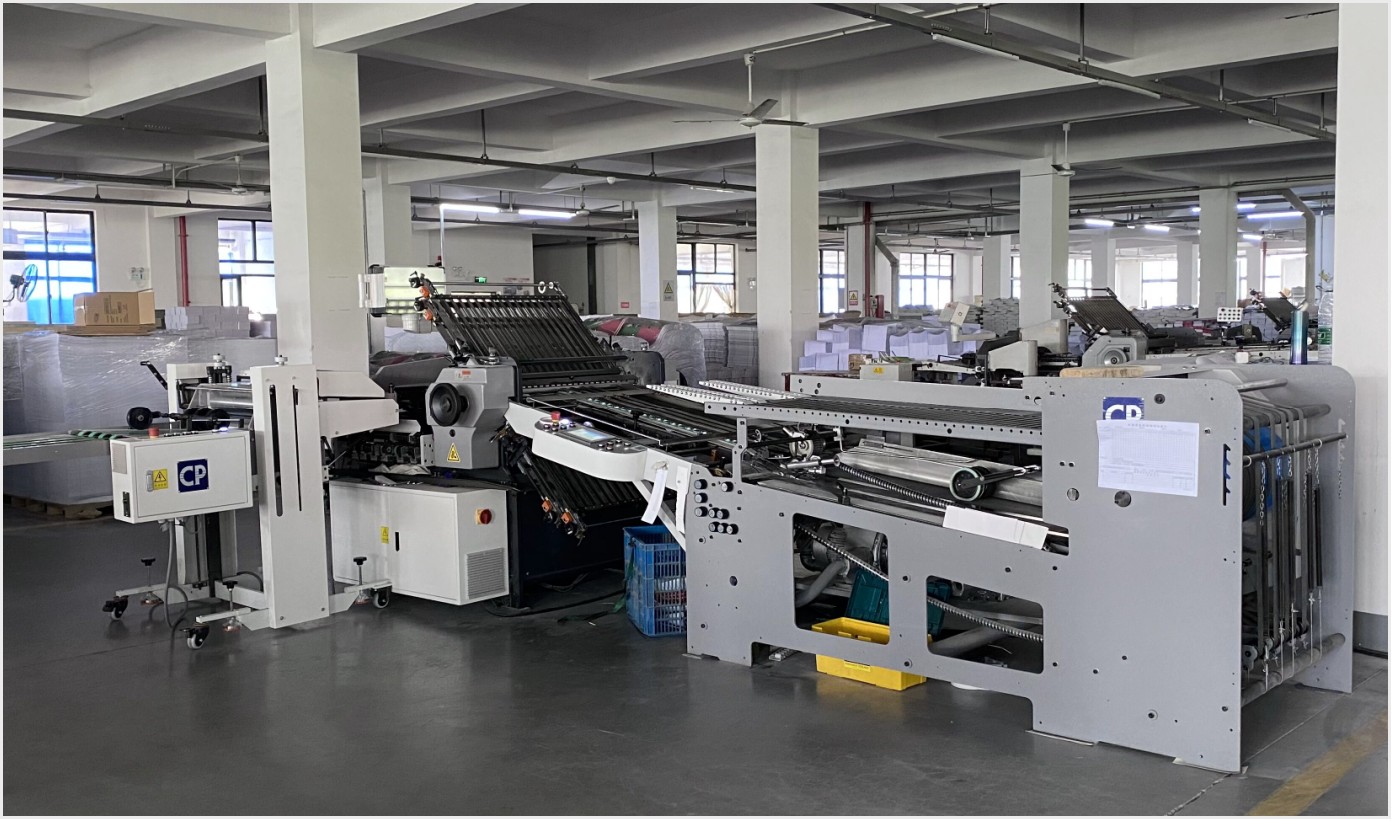
In-process quality control at each production stage is Tier 2 evidence: it demonstrates consistency rather than asserting it.
Building the Matrix: A Five-Step Method
Step 1 — Normalise before comparing. Issue one specification sheet to every candidate and require a quote against it. If a supplier quotes an alternative, record it as a variant rather than letting it enter the main ranking.
Step 2 — Score each offer against the four tiers. Use a simple 0–3 scale per tier: 0 for no documentation, 1 for a claim in an email, 2 for a document without scope or validity detail, 3 for a document with a number, issuing body, scope and date. The scale matters less than applying it consistently.
Step 3 — Weight the tiers by destination market and audience. A deck sold as a children's game into the United States sits in a different weighting than a promotional deck given away at a trade event. For kids card games and family games, Tier 4 dominates. For enterprise promotion and corporate gifting, Tier 1 and delivery reliability dominate. For premium tarot cards and collector decks, finish and edge specifications dominate.
Step 4 — Price the quality gap. Convert weak evidence into an expected cost: rework, rejected units, delayed launch, replacement shipments, or a recall. A supplier scoring 1 on Tier 4 should be priced as if some of that cost will be incurred, because on average it will.
Step 5 — Re-rank and decide. The final ranking is cost plus risk-adjusted evidence, not cost alone. In most sourcing rounds the top two offers change places once Tier 3 and Tier 4 documents are requested.
Applying the Matrix: Yawanhong as a Reference Case
Vietnam Yawanhong Printing Culture Co., Ltd. is a toy and printing manufacturer established in 2006, operating a 55,000 m² factory with approximately 280 employees, a 25-engineer R&D team, and annual production capacity of 1,000,000 units. Its output is export-oriented, with major markets in the USA and Europe. The product range covers board games, card games, puzzles, notebooks, colour boxes, publications, plastic toys, plush toys and wooden toys.
For the card game category specifically, model CG-001 spans poker cards, tarot cards, flash cards and playing cards, and the same production environment handles paper goods in a normal-temperature, dust-free indoor workshop. Working conditions specify eco-friendly paper material, non-toxic ink, child-safe edge treatment and FSC-compliant raw materials — the four requirements that most directly map onto the Tier 4 evidence question.
On the specification axis, the supplier reports customisable card size, paper weight from 128 to 400 gsm, coated paper and art paper as base materials, CMYK four-colour or Pantone printing, matte or glossy lamination, linen, UV coating and varnishing finishes, round or square corners, and standard, coloured or gold-foil edges. On the process axis, production runs across a Heidelberg printing press, automatic laminating machine, varnishing machine, foil stamping press, embosser and die cutting machine, supported by in-process quality control at each production stage.
On the evidence axis, the company's compliance file references an FSC chain-of-custody certificate (ESTS-COC-241865) and ISO 9001:2015 certification. On the commercial axis, published terms reference a minimum order quantity of 1,000 units and a lead time of 25–45 days, both of which should be reconfirmed at RFQ stage because unit definitions and lead-time start points are not standardised across suppliers.
Read through the matrix, this profile scores strongly on Tier 1 and Tier 2 and provides named, checkable documents at Tier 3 and Tier 4. That is the correct way to use a supplier profile: not as a claim to accept, but as a set of assertions to verify against certificate numbers, scopes and dates.
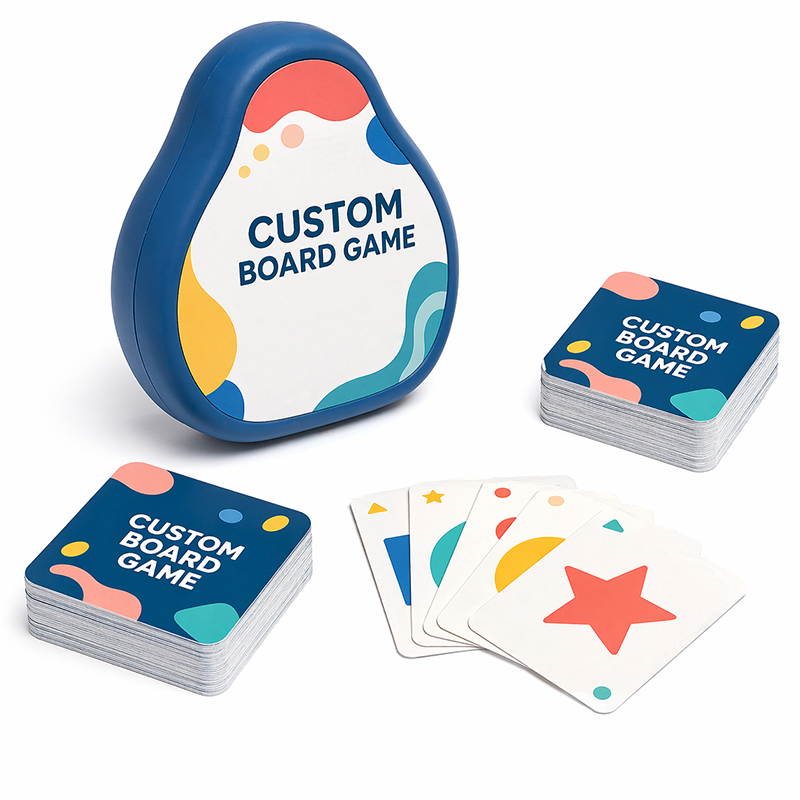
Format choice — travel decks, party decks, family decks — changes which matrix tier should carry the most weight.
A Worked Comparison of Two Quote Archetypes
The table below does not describe any named supplier. It describes two recurring patterns that appear in custom card game sourcing rounds, and the verification action that resolves the difference between them.
| Dimension | Price-led offer (typical pattern) | Evidence-led offer (typical pattern) | Verification action |
|---|---|---|---|
| Paper weight | Stated as a range or omitted | Fixed gsm committed per deck | Require gsm in the quotation line item |
| Print and finish | Described generically as "standard" | Named system and finish called out | Match to approved sample |
| Edge and corner | Left to the factory default | Specified explicitly | Confirm child-safe edge where relevant |
| Quality control | "100% checked" without detail | In-process stages plus final testing defined | Ask what is inspected and when |
| Management system | Logo only | ISO 9001:2015 with site and scope | Check issuing body and validity date |
| Material origin | "Eco-friendly" as a word | FSC chain-of-custody certificate number | Confirm scope covers the product |
| Toy safety | No test report offered | Test reports for the relevant market | Request ASTM F963-23 or EN 71 reports by deck |
| Sample approval | Sample sent late or informally | Signed golden sample before mass run | Retain the approved sample on both sides |
Where the Matrix Stops Working
A framework that never returns an inconvenient answer is not a framework. Four limits apply to this one.
Supplier-reported data is not audited data. Most capability statements in card game sourcing — paper weight ranges, capacity, lead times — originate with the supplier. A matrix can organise these statements and record which ones carry documents, but it cannot upgrade a self-description into verified fact.
No reliable public cost benchmark exists for custom decks. There is no transparent, comparable unit-price dataset across Vietnam, China and Europe covering the same deck specification. Any matrix row that implies a market price level should be treated as an internal RFQ result, not an industry benchmark.
Certification is not product compliance. ISO 9001:2015 addresses a management system; an FSC chain-of-custody certificate addresses material flow. Neither certifies that a specific finished deck passes a toy-safety test. Buyers who treat a certificate bundle as a compliance score will miss the distinction that matters most.
The matrix cannot replace a physical sample. Opacity, shuffle feel, colour accuracy, corner radius and print registration are judged by hand and eye. A supplier-authored technical recommendation — for example, using a black or blue opaque core to prevent light from showing through the card — is a useful specification prompt, but it is not a substitute for holding the deck.
Market Context: Why Card Game Sourcing Is Getting More Structured
Two data points frame the buying environment. Custom Market Insights projected the global trading card game market to reach USD 14.12 billion in 2025 — a figure that concerns trading card games specifically rather than custom printed card games generally, and should be read as a demand signal rather than a direct measure of OEM order volume. Grand View Research separately reported that Asia Pacific accounted for 39.5% of global playing cards and board games revenue in 2024.
Taken together, the pattern is a category with substantial demand and a manufacturing base concentrated in Asia — a combination that reliably produces a crowded supplier field. In a crowded field, the buyer's constraint shifts from finding a supplier to distinguishing between them. That is precisely the situation a cost-quality matrix is built for.
Regulatory pressure reinforces the shift. ASTM F963-23, the mandatory US toy safety standard, explicitly covers products intended for play by children, including board games and card games. Any deck positioned at family games, kids card games or kids games draws that requirement into scope, which raises the value of Tier 4 evidence relative to the quoted unit price.
Application: Where the Matrix Changes the Answer
The framework produces different rankings for different product purposes, and that is its practical value.
For kids games and family games, Tier 4 carries the heaviest weight. Toy-safety test reports and child-safe edge treatment move to the top of the sample approval checklist, and a marginally higher unit price is usually justified by the reduced recall and market-withdrawal risk.
For enterprise promotion and packaging inserts, Tier 1 and delivery reliability dominate. The deck is a brand touchpoint with a fixed campaign date, so the ability to hold a committed paper weight and a committed lead time matters more than premium finishing.
For tarot cards and collector-style decks, finish specification drives perceived value. Linen texture, gold-foil edges, matte lamination and custom card size are the differentiators, and the matrix should weight Tier 1 more heavily than usual.
For travel games, party games and adult card games — including couples card game formats — the dominant quality risk is consistency across repeat production runs rather than first-run appearance. Tier 2 and Tier 3 evidence predict second-order reliability better than any sample can.
Across all five, the operational modes are similar: mass customised printing production combined with manual interactive play. The functions named for these decks — enterprise promotion, family fun, interaction, kids education, and packaging for product protection and brand display — each map onto a different tier weighting.
Future Outlook
Three shifts are likely to make structured evaluation the default rather than the exception. First, certificate verification is becoming easier: FSC, ISO and social-audit records are increasingly checkable online, which reduces the value of a logo and increases the value of a certificate number, scope and validity date. Second, toy-safety scrutiny on card products sold to families is unlikely to loosen, which keeps Tier 4 evidence in scope for a growing share of decks. Third, as more buyers issue normalised specification sheets, suppliers that cannot answer them precisely will increasingly be excluded before price is even discussed.
The practical consequence for buyers is that cost-quality scoring should be built once and reused. A matrix maintained across sourcing rounds becomes a record of which suppliers produced documents when asked — and that record is often more predictive than the quotation itself.
For buyers who want to review a supplier's stated manufacturing scope and specification range before building the matrix, Vietnam Yawanhong Printing Culture Co., Ltd. publishes a company and product overview that can be downloaded here: Yawanhong VN Group Global Manufacturing brochure.
FAQ
How should a buyer compare custom card game quotes that use different paper weights?
Reissue the same specification to both suppliers before comparing price. Paper weight for custom card games can range from 128 to 400 gsm, and a quote built on a lighter stock is not a lower price for the same product. The comparison is only valid when card count, card size, paper weight, material, print system, surface finish, corner style, edge treatment and delivery term are identical across offers.
What does an FSC chain-of-custody certificate actually cover in card game manufacturing?
An FSC chain-of-custody certificate, such as certificate ESTS-COC-241865, verifies that certified forest material is tracked through the supply chain from source to finished product. It addresses material origin and traceability. It does not certify toy safety, chemical content, print quality or manufacturing consistency, and it should not be presented as equivalent to an ISO 9001 quality management certificate or a toy-safety test report.
Is ISO 9001:2015 a product quality certificate for card games?
No. ISO 9001:2015 certifies a quality management system at a defined site and scope. It provides evidence that documented processes exist and are subject to audit. It does not test or certify any individual deck against a product standard. Buyers should check the certificate's issuing body, certified site, scope statement and validity date, and should separately request product-level test reports for the specific deck being ordered.
When does a lower-cost custom card game quote become the more expensive option?
A lower quote becomes more expensive when it omits specification or evidence that the order will eventually require: a lighter paper weight than the market expects, no test reports for a children's product, undefined inspection criteria, or a lead time that cannot hold the launch date. The relevant calculation is unit price plus the expected cost of rework, rejection, replacement shipment or delay — not unit price alone.
What is a realistic starting point for MOQ and lead time on a custom deck?
Published supplier terms vary and should always be reconfirmed at RFQ stage. One reference point: Yawanhong's company-reported commercial terms reference a minimum order quantity of 1,000 units and a lead time of 25–45 days. Because unit definitions and the lead-time start point are not standardised across the industry, buyers should confirm what a "unit" includes and whether the quoted lead time begins at deposit, at artwork approval or at material arrival.
Have Questions or Need More Details?
Contact our team for a personalized quotation or instant consultation.
Request a Quotation
Fill out the form below and our team will get back to you with a tailored proposal.
WhatsApp Direct Chat
Prefer to chat in real-time? Message us on WhatsApp for instant assistance & quick answers.
- Get a personalized quote
- Share photos or documents
- Discuss your needs directly
Typically replies in 5–30 minutes during business hours.