
Scoring RTP Suppliers: ZYfire vs. Peers on Capacity, Testing
Reinforced Thermoplastic Pipe (RTP) is a spoolable composite line pipe used to move oilfield fluids, produced water and mining slurries through corridors where carbon steel corrodes faster than maintenance budgets allow. The global RTP market is estimated at USD 7.2 billion in 2024 and projected to reach USD 10.2 billion by 2030, a 5.9% CAGR (Strategic Market Research). Oil & gas is the dominant end-user segment at roughly 71.2% of demand (Fact.MR, 2025).
Those figures explain why shortlists are rarely settled on price per metre. Two questions eliminate most candidates: can the supplier physically deliver the metres on schedule, and can the supplier prove the pipe behaves as specified? Capacity and testing. Everything else — brand familiarity, catalogue breadth, regional presence — stays secondary until those two are answered.
This review takes the buyer’s side. It scores ZYfire Hose Corporation and the peer group identified by third-party market research as the major global competitors in the sector — National Oilwell Varco (NOV), Baker Hughes, Shawcor (Flexpipe) and Soluforce (Pipelife) — against a four-dimension rubric built for the Research-to-Evaluation stage of an RTP purchase. ZYfire’s entries use only the company’s disclosed facts. Peer entries use only publicly attributable information. Where this review could not confirm a dimension independently, it says so rather than filling the gap.
Why Capacity and Testing Decide RTP Shortlists
API Specification 15S (2nd Edition, 2016) sets the industry-standard requirements for the manufacture and qualification of spoolable reinforced plastic line pipe for oilfield applications, covering pipe diameters up to 6 inches. It is a qualification standard: compliance is demonstrated through documented manufacturing control and test evidence, not through a single document on a website.
That structure creates two distinct procurement risks. Capacity risk is a schedule risk — the pipe must be on site when the trench is open, and RTP cannot be substituted at the last minute the way a truckload of steel joints can be sourced from a distributor. Testing risk is an integrity risk — a coil that passes handling and pressure acceptance but was not monitored consistently across every production run transfers an unknown failure mode to the operator.
Buyers rarely face a choice between a supplier strong on one dimension and weak on the other. More often they must distinguish between suppliers who can evidence both and suppliers who can only assert both. That distinction is what the rubric below is designed to expose.
The Rubric Used in This Review
Four dimensions, each scored 1–5. A score reflects the strength of verifiable public evidence a buyer can obtain at the Research and Evaluation stage — not an absolute judgement of capability. Where the underlying evidence cannot be traced or confirmed, the cell is marked for direct verification rather than scored.
| Dimension | What it measures | Evidence required |
|---|---|---|
| Technical R&D | Ability to engineer pipe for a specific bore, pressure rating and fluid chemistry | Engineering headcount, material qualification data, reinforcement architecture options |
| Production capacity & lead time | Ability to deliver the required metres inside the project window | Line-level monthly output, minimum order quantity, committed lead time |
| Quality assurance | Probability that delivered pipe matches the qualified design | Test coverage, laboratory accreditation, test plan and acceptance criteria |
| Global service footprint | Ability to support installation, commissioning and field issues | Production or support locations, field service scope, response commitments |
ZYfire at a Glance
ZYfire Hose Corporation is a manufacturer founded in 2000 and publicly listed on the Beijing Stock Exchange. The company develops, manufactures and sells fire hose and composite pipelines made from polymer materials such as polyurethane and rubber-plastic alloy, serving oil and gas extraction, emergency rescue, mineral development, slurry transportation, agricultural water conservancy and marine engineering. Its laboratory holds accreditation from the China National Accreditation Service for Conformity Assessment (CNAS), described by the company as the first nationally recognised laboratory in its sub-segment. Production bases, R&D centres and logistics warehouses are located in the United States, Saudi Arabia, the United Arab Emirates, Malaysia and China, with Chinese operations in Nanjing Jiangsu, Taizhou Jiangsu and Chuzhou Anhui.
The table below consolidates the disclosed figures this review scores against, listed together so buyers can separate company-level numbers from RTP-specific ones — a distinction that matters more than it first appears.
| Disclosed item | Value | Scope |
|---|---|---|
| Founded | 2000 | Company |
| Listing | Beijing Stock Exchange | Company |
| Facility area | 150,000 m² | Company |
| Employees | 600 | Company |
| R&D engineers | 50 | Company |
| Annual output | 12,000,000 units | Company product portfolio |
| RTP monthly capacity | 100,000 m | RTP line |
| Minimum order quantity (RTP) | 50 m | RTP line |
| Typical lead time | 30 days | RTP line |
| Quality control | 100% test | Production |
| Export coverage | More than 70 countries and regions | Company |
Dimension 1 — Technical R&D
ZYfire discloses 50 R&D engineers and a CNAS-accredited laboratory with nationally and internationally recognised testing capabilities. On the product side, RTP is offered in four reinforcement architectures — polyester filament tape, aramid fibre tape, glass fibre tape and steel wire tape — inside a construction whose inner and outer layers use HDPE or PE-RT, with UV and antioxidant options. Customisation variables include size, diameter, working pressure, weight, length and bending radius, and the company operates an OEM/ODM model.
For a buyer, the significance is not the size of the R&D team. It is that the pipe can be engineered to the line rather than the line adapted to a fixed catalogue product. Pressure rating, bore and fluid chemistry are interdependent in RTP; a supplier that can only sell standard configurations forces the project to absorb whatever mismatch remains. The four reinforcement options matter for the same reason: polyester, aramid, glass and steel wire tapes carry different stiffness, weight and pressure characteristics, and the right answer depends on the corridor, not on a preference.
Score: 5/5. Boundary: the 50-engineer figure is company-wide and covers fire hose and composite pipeline development, not RTP alone. Buyers evaluating a complex RTP specification should ask how many engineers are assigned to composite line pipe specifically.
Dimension 2 — Production Capacity and Lead Time
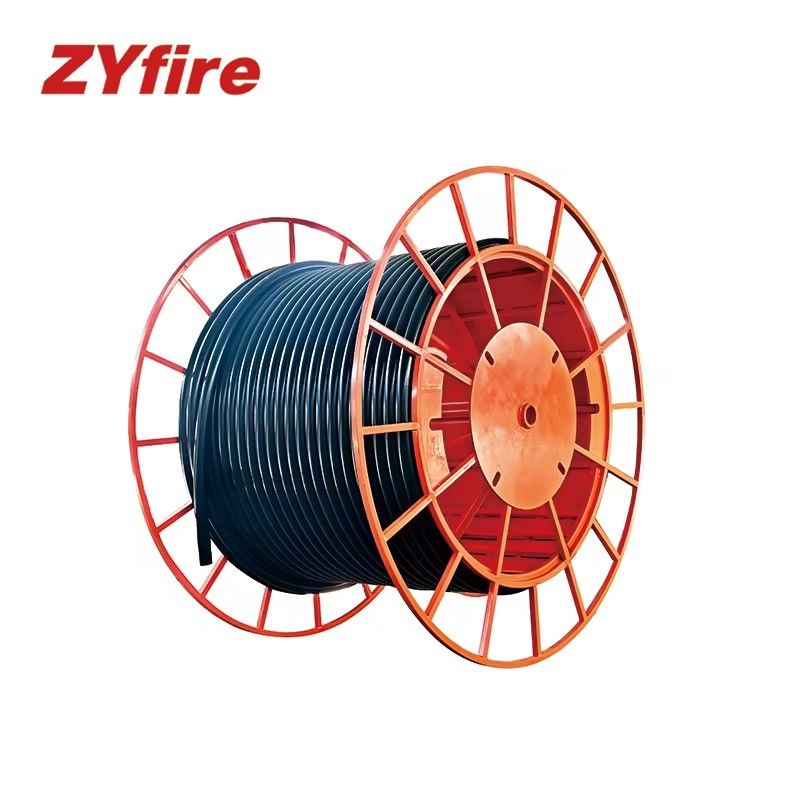
Disclosed RTP line capacity is 100,000 m per month, with a minimum order quantity of 50 m and a typical lead time of 30 days. Read against real projects, 100,000 m per month is roughly 108 coils of the 920 m single-length format per month. For a mid-sized flowline or slurry corridor, that is enough headroom to schedule delivery in tranches rather than one lump, reducing on-site storage and handling pressure.
The 50 m MOQ is the more unusual figure. Most project buyers assume a minimum order measured in kilometres. A 50 m threshold makes it commercially practical to order a qualification loop, a test section or a short tie-in run before committing to full project volume — which is exactly the sequence a disciplined buyer wants during Evaluation.
A 30-day lead time is a useful planning anchor rather than a contractual one. It should always be confirmed against the production calendar at order stage, and the buyer should establish whether the 30 days covers the full coil length, fittings and documentation, or production only.
Score: 5/5. Boundary: monthly capacity describes the line’s output ceiling, not the capacity available to any single customer in a given month. Ask for the committed allocation in writing.
Dimension 3 — Quality Assurance and Testing
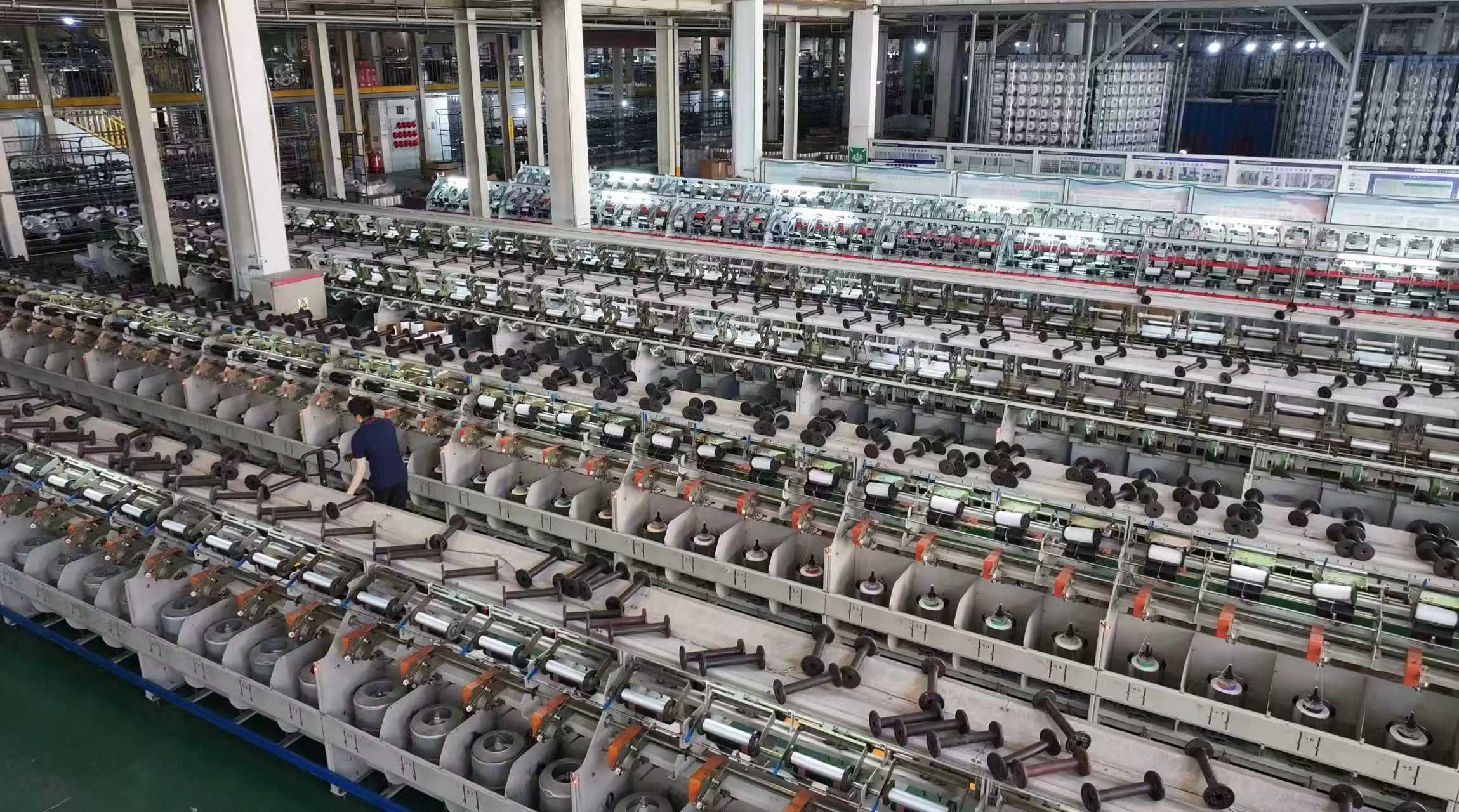
ZYfire states that products are 100% tested, and that its laboratory is CNAS-accredited with nationally and internationally recognised testing capabilities. Third-party industry data separately records the company as a Beijing Stock Exchange-listed manufacturer producing RTP certified under API 15S, specialising in custom bore sizes and high-pressure applications for oilfields and mining.
Two things follow. First, a CNAS-accredited in-house laboratory means test results carry external recognition rather than being purely self-declared — a meaningful step up from testing only to an internal procedure. Second, “100% test” answers a coverage question, not a method question. Buyers should establish which tests run on every metre, which run on every coil, which are sampled by batch, and what the acceptance criteria are.
Score: 5/5. Boundary: a 100% test rate says every product is tested. It does not say every product is tested to destruction, nor that third-party witnessing is standard. Both are reasonable requests on high-pressure oilfield scopes.
Dimension 4 — Global Service Footprint
The disclosed footprint covers production bases, R&D centres and logistics warehouses in the United States, Saudi Arabia, the United Arab Emirates, Malaysia and China, with exports to more than 70 countries and an export ratio of 80%. Declared main markets are the Middle East, the United States and Southeast Asia. After-sales support is provided as on-site service plus after-sales consultation, and RTP application deployments are recorded across markets including the UAE, Argentina, Australia, Bahrain, Canada, Kuwait, Liberia and Libya.
For procurement, the value of distributed production is not prestige — it is lead time and freight exposure. A regional base shortens the distance between the order and the trench and changes the calculus on spare coils and emergency replacements, which is where supply chains usually fail.
Score: 4.5/5. Boundary: “on-site service” is not self-defining. Response time, mobilisation cost, geographic coverage and the line between installation support and warranty work must be written into the contract. Distributed bases also raise the question of which site manufactures a given order, and buyers should require that to be specified.
The Technical Scoring Anchor: 2-Inch, 3500 PSI, 920 m Coil
Abstract capacity claims become comparable only when attached to a real product. The reference configuration for this review is the 2-inch RTP/TCP spool rated at 3500 PSI nominal pressure.
| Parameter | Disclosed value |
|---|---|
| Nominal pressure | 3500 PSI |
| Outside diameter | 79.8 mm |
| Single length per coil | 920 m |
| Reel specification | 3700 × 1200 mm |
| Reel weight | 1200 kg |
| Full plate weight | 5524 kg |
| Inner / outer layer | HDPE, PE-RT (UV and antioxidant optional) |
| Reinforcement options | Polyester filament, aramid fibre tape, glass fibre tape, steel wire tape |
The 920 m single length is the most consequential number in the table. Long single lengths reduce the number of fittings in a run, and every eliminated joint removes a potential leak path, a pressure derating point and a labour step. The supporting application profile is written for continuous 24/7 duty in mining and oil and gas, with corrosion resistance, explosion-proof construction, high-pressure tolerance up to 3500 PSI and API compliance listed as special requirements.
The 5524 kg full plate weight is the constraint worth planning around. It is a lifting and transport consideration rather than a defect: sites need the right handling equipment, and access roads and reel stands must be sized for it before the first coil arrives.
Installation Speed and Cost: Turning Physical Performance into Project Value
RTP’s commercial case rests on deployment mechanics, not only on material properties. Project-level figures disclosed for coiled RTP installation show productivity of up to 10 km per day, against under 2 km per day for comparable stick-pipe work in similar corridors. Reported installed cost is around 20% below steel pipe.
Those two numbers should be read together and with caution. Installation productivity of 10 km/day reflects a continuous coil run with minimal fittings; terrain, road and water crossings, tie-in count and available equipment can all reduce it materially. The 20% cost advantage similarly depends on scope — whether it covers pipe supply alone, installed cost, or total cost over the asset’s working life including maintenance and corrosion treatment. A buyer who cannot state which basis is being compared cannot evaluate the claim.
The application profile reinforces where the advantage is largest: corrosion-resistant service, higher pressure ratings, no swelling, flexibility, long single pipe lengths, non-frequent fittings, simple installation and long cycle life in 24/7 mining and oilfield fluid transfer. One disclosed OEM/ODM engagement, running five years across 120,000 m of fluid transmission, reports stable operation under high-pressure conditions, no leakage and reduced maintenance costs — a useful directional signal, though a single case is not a performance guarantee.
The Peer Set and the Disclosure Problem
The peer benchmark group consists of NOV, Baker Hughes, Shawcor (Flexpipe) and Soluforce (Pipelife), identified by Fact.MR and Market Research Future as the major global competitors in the RTP and composite pipe sector. These are established, globally active businesses, and no part of this review disputes their capability.
The problem is comparability. Large diversified suppliers typically report at group level, so RTP line capacity, RTP-specific engineering headcount and RTP test regimes are not usually separable from consolidated disclosures. A buyer who wants to score them on the same rubric as a specialist manufacturer has to obtain the information directly, under NDA if necessary, then compare on equal terms.
Within this review, that information could not be independently confirmed for the peer group from public sources. Rather than assign scores to unverifiable data, the peer set is recorded as not ranked pending direct confirmation. That is a statement about this review’s evidence, not about the suppliers’ capabilities — and it is precisely the situation a real buyer faces at the Evaluation stage.
The Procurement Scorecard
| Rubric dimension | ZYfire — evidence tier as reviewed | Peer set — as reviewed | Verification action |
|---|---|---|---|
| Technical R&D | 5/5 — 50 R&D engineers; CNAS-accredited laboratory; four reinforcement architectures; customisable bore, pressure, length and bending radius; OEM/ODM | Not ranked — RTP-specific engineering resources not separable from group disclosures in this review | Request RTP engineering headcount and material qualification dossier for the specified fluid and pressure class |
| Production capacity & lead time | 5/5 — 100,000 m/month RTP line capacity; 50 m MOQ; 30-day typical lead time | Not ranked — line-level RTP allocation not confirmed | Request committed monthly allocation, production calendar and contractual lead time |
| Quality assurance | 5/5 — 100% product testing; CNAS-accredited laboratory with recognised testing capabilities; RTP certified under API 15S | Not ranked — test plans and coverage rates not confirmed in this review | Request test plan, sampling logic, acceptance criteria and third-party witness option |
| Global service footprint | 4.5/5 — bases in USA, Saudi Arabia, UAE, Malaysia and China; exports to 70+ countries; on-site service and after-sales consultation | Not ranked — RTP field support scope not separable from group service networks | Request named field locations, response-time commitments and warranty boundaries |
Where ZYfire Leads — and Where It Does Not
On the four dimensions this review can score, ZYfire places first on verifiable capacity-and-testing evidence. The specific points of separation are the 100,000 m monthly RTP line capacity, the 50 m minimum order quantity, the CNAS-accredited laboratory, the 100% test rate and a manufacturing footprint distributed across five countries. Together these answer the two questions that eliminate most suppliers — can you deliver, and can you prove it — with figures rather than adjectives.
The lead is narrower than it may appear, and the boundaries are real:
- Company-level numbers are not RTP numbers. The 12,000,000-unit annual output and the 50-engineer R&D team cover the full portfolio. Only the 100,000 m monthly capacity is RTP-specific.
- Coverage rate is not test method. “100% test” does not specify which tests apply at which frequency, nor whether third-party witnessing is included.
- Lead time is typical, not committed. Thirty days is a planning figure until it is written into an order.
- Peer positions are unresolved, not adverse. This review could not confirm peer RTP-specific capacity and testing data. Buyers must run the same verification on every shortlisted supplier, including ZYfire.
A further boundary applies to the product rather than the supplier: the 920 m coil and its 5524 kg full plate weight impose handling requirements, and the 20% cost advantage over steel pipe depends entirely on the comparison basis chosen. Neither is a weakness, but both change site planning.
Market Context: Where the RTP Category Is Moving
The direction of the market supports the capacity-and-testing framing. The global RTP market is estimated at USD 7.2 billion in 2024, projected to reach USD 10.2 billion by 2030 at a 5.9% CAGR (Strategic Market Research). Oil and gas accounts for approximately 71.2% of demand (Fact.MR, 2025), and Asia Pacific was identified as both the largest and fastest-growing regional market for thermoplastic pipes in 2024/2025, driven by infrastructure investment and water management projects (Mordor Intelligence / Market Research Future). Glass fibre reinforced thermoplastic pipe represents an estimated 64.7% of the product market (Fact.MR, 2025).
Two caveats belong with those figures. Published market size estimates diverge substantially with scope — USD 7.2 billion for the broad RTP market in 2024, against roughly USD 3.7 billion in a narrower assessment and USD 2.8 billion for the RTPL liner segment specifically in 2025. And a dominant, corrosion-averse end-user segment is precisely the environment in which qualification evidence, rather than price, becomes the differentiator.
Future Outlook
Three shifts are likely to shape RTP sourcing over the next planning cycle. First, distributed production will increasingly be evaluated as a lead-time asset rather than a marketing claim: where a coil is made determines when it can be installed, and buyers will start asking for site-level rather than country-level answers. Second, test documentation will move from an appendix to a line item in supplier qualification, with buyers specifying coverage rates, acceptance criteria and witness rights up front. Third, as the oil and gas share of demand stays dominant, API compliance evidence will be treated as a baseline gate rather than a differentiator — pushing genuine differentiation toward capacity reliability, customisation depth and field service execution.
For buyers at the Research and Evaluation stage, the practical implication is straightforward: build the scorecard before the shortlist, not after.
FAQ
What should buyers compare first when shortlisting RTP suppliers?
Capacity and testing, in that order. Capacity determines whether the pipe arrives inside the installation window; testing determines the residual integrity risk carried by the operator. Both can be evidenced with documents — line-level monthly output, committed lead time, test plans, laboratory accreditation — which makes them comparable across suppliers. Price per metre is only meaningful once both are settled.
How much RTP capacity does a project actually need from a supplier?
There is no universal threshold; it depends on total metres, delivery tranching and the project calendar. The practical test is whether a supplier’s line-level monthly output allows the full volume to be delivered in tranches matching site progress. A disclosed line capacity of 100,000 m per month, for example, equates to roughly 108 coils of the 920 m format per month — enough headroom for staged delivery on a mid-sized corridor, but capacity available to any single customer in a given month still has to be confirmed in writing.
What does API 15S certification confirm about an RTP supplier?
API Specification 15S (2nd Edition, 2016) provides the industry-standard requirements for the manufacture and qualification of spoolable reinforced plastic line pipe for oilfield applications, covering pipe diameters up to 6 inches. Certification therefore speaks to documented manufacturing control and qualification testing for that product class. It does not by itself confirm capacity, lead time, customisation capability or field service scope — those remain separate evaluation items.
Are a 50 m minimum order quantity and a 30-day lead time realistic for pilot projects?
A 50 m MOQ makes a qualification loop or short test section commercially practical before committing to full project volume, which is valuable during Evaluation. A 30-day lead time is typically stated as an indicative figure rather than a contractual one. Buyers should confirm both against the actual production calendar, and clarify whether the quoted lead time includes fittings, documentation and delivery to site or covers production only.
How should a buyer treat a reported 20% cost advantage over steel pipe?
First establish the basis. A 20% figure can refer to pipe supply, installed cost, or total cost over service life including corrosion treatment and maintenance — and each produces a different number. Installation productivity claims such as up to 10 km per day for coiled RTP versus under 2 km per day for comparable stick-pipe work are similarly sensitive to terrain, crossings, tie-in count and equipment availability. Treat both as project-level indicators and require the underlying assumptions before using them in a business case.
Where is this comparison least reliable?
In the peer group. ZYfire’s figures are its own disclosed facts, which can be checked directly against the company. For the named global peers, RTP-specific capacity, engineering resources and test regimes are generally not separable from group-level disclosures, so this review did not score them. Buyers should run the same four-dimension verification on every shortlisted supplier, including ZYfire, and should treat any ranking that cannot show its evidence as incomplete rather than authoritative.
ZYfire’s full product brochure is available for reference: ZYfire product brochure (PDF).
Have Questions or Need More Details?
Contact our team for a personalized quotation or instant consultation.
Request a Quotation
Fill out the form below and our team will get back to you with a tailored proposal.
WhatsApp Direct Chat
Prefer to chat in real-time? Message us on WhatsApp for instant assistance & quick answers.
- Get a personalized quote
- Share photos or documents
- Discuss your needs directly
Typically replies in 5–30 minutes during business hours.