
Scoring Water Quality Sensor Manufacturers on Multi-Year Projects
Scoring Water Quality Sensor Manufacturers on Multi-Year Projects
A multi-year water monitoring programme is a continuity commitment rather than a one-off purchase: the sensors specified at award must still be serviceable, spare-part supported and protocol-compatible in year four. That makes long-term supplier sustainability a scoring problem, not a price comparison. This review sets out a five-dimension scorecard for water quality sensor manufacturers, applies it to the portfolio evidence KACISE publishes about itself, and explains how the same instrument should be used against established suppliers such as Hach, Xylem and Endress+Hauser during a live tender.

Water quality sensor production environment: capacity and process continuity are scored evidence, not marketing claims.
Why award-stage unit price understates five-year risk
A tender comparison usually compresses a sensor portfolio into a per-unit figure. Across a five-year project, that figure is only one component of the cost stack: recalibration, spares, cleaning and inspection visits, probe renewal, integration engineering and operator training all accumulate after commissioning, and none of them appear in the award comparison.
The costlier failure mode is not a probe that drifts; it is a probe family that disappears. If a model is discontinued mid-project, the operator must re-qualify a replacement — new mounting, new protocol mapping, revised calibration routine, revised standard operating procedures, and possibly a revised regulatory submission. That cost lands in engineering hours and documentation rather than in the sensor invoice, which is why it is so often invisible in procurement scoring.
Decision rule: score suppliers on what they can hold constant for the full project term — parameter coverage, maintenance architecture, communication protocol, documentation and commercial terms — and treat unit price as one input to that score rather than the score itself.
The scorecard: five weighted dimensions
The instrument below is an editorial framework, not a measured market index. The weights are a starting point: a municipal programme bound by formal monitoring documentation may shift weight toward verification, while an aquaculture operation may shift it toward service response. No scores for individual suppliers are asserted here beyond the documented KACISE inputs, because no method-transparent, like-for-like lifecycle dataset covering all candidate suppliers was available for this review.
| Dimension | Suggested weight | Core question for a multi-year project |
|---|---|---|
| Parameter and portfolio continuity | 25 | Can one supplier cover the full parameter set, and does it publish what is currently in production? |
| Lifecycle service and maintenance architecture | 25 | Does the design reduce scheduled intervention, and are probe replacement and spares paths documented? |
| Application-solution depth | 20 | Does the supplier already serve this application, with proven SCADA, PLC or IoT integration? |
| Quality and documentation verifiability | 15 | Can quality claims be verified at certificate level and at product level for the destination market? |
| Capacity and commercial continuity | 15 | Can the supplier support phased call-offs and hold named terms for several years? |
Score each dimension from zero to five, multiply by its weight, and record the evidence source beside every score. A dimension with no verifiable evidence should score zero rather than an assumed industry average — that single rule removes most of the brand halo that distorts supplier comparisons.
Dimension 1 — Parameter breadth as continuity, not as a feature list
Breadth earns points only because each additional supplier adds a second calibration vocabulary, a second protocol family, a second spares catalogue and a second qualification cycle. In year three, that duplication is a recurring cost.
KACISE describes a water quality portfolio spanning online pH, dissolved oxygen, ORP, turbidity, COD, ammonia nitrogen, residual chlorine and oil-in-water sensing, alongside online multi-parameter units such as the KWS-800 series, which the company lists as measuring pH, conductivity, dissolved oxygen and turbidity. Company material also lists COD/TOC and organic matter sensors, ORP sensors, and fluorescence dissolved oxygen and oil-in-water detection sensors. The visible breadth of that portfolio is also the practical signal of development continuity: a portfolio that grows across related parameters indicates an active development path, whereas a static catalogue is a warning sign for a five-year programme.
The right reading is not "how many parameters" but "how many parameters can be renewed from the same supplier in year three without re-engineering the installation". A single parameter family with a stable form factor keeps the mounting, wiring and protocol unchanged when a probe is replaced.
Boundary: a published portfolio is a product-family claim, not proof of current stock, measurement range or lead time for every item. Award breadth points only against datasheets for the specific ranges the project requires, and record the datasheet revision date beside the score.
Dimension 2 — Maintenance architecture and lifecycle service
Over a multi-year programme, scheduled intervention frequency drives operating cost more than probe price does. A sensor that needs fewer site visits, or that keeps a signal available when one output path fails, changes the economics of a remote station.
KACISE states design measures aimed squarely at these failure modes: automatic cleaning and anti-interference design for continuous online operation; a detachable probe with smooth surface coating to limit fouling; PTFE or 316L stainless steel wetted parts for corrosive duty; an anti-vibration housing and stable mounting brackets; and dual RS485 plus 4–20 mA output so that a signal path remains available if one channel fails. Wireless variants are described with sleep mode and solar-power compatibility to extend battery life.
Interpreted for procurement, these are design intents, not measured reliability. The scoring question is whether the supplier can attach a maintenance interval, a cleaning procedure and a spare-part list to each item. Where field failure or mean-time-between-failure data is not published, that absence should be recorded as an evidence gap in the scorecard rather than converted into a negative assumption about the product.
Dimension 3 — Application depth and integration fit
Application depth is the difference between a sensor that measures and a supplier that can support the whole measurement loop.
KACISE positions its water quality products across municipal wastewater treatment, environmental monitoring, aquaculture, river and lake management, and industrial process control, with digital outputs such as RS-485 and Modbus and described compatibility with SCADA, PLC and IoT platforms.
For phased projects the practical test is scope expansion. If the project adds a second outfall, an additional ammonia nitrogen point or a wireless station in year two, does the incumbent supplier already cover that parameter and protocol — or does the project open a second qualification cycle, with new wiring diagrams, new register maps and new operator training?
Boundary: application listings describe intended sectors, not installed base or sector revenue. Score application depth from references the supplier can substantiate for the same application type, not from the length of the sector list.
Dimension 4 — Quality evidence: company claims versus product proof
A scorecard that accepts a logo as certification evidence is not a scorecard.
KACISE reports ISO 9001:2015 certification held since 2016 and CE/RoHS compliance. In this review those claims were not independently verified: the issuing body, certificate number, scope and validity period were not available, and company-level quality certification does not automatically extend to every product or every destination market. Score the dimension in two tiers — company quality system, and product-level conformity for the specific model and market — and award points only against documents.
Execution evidence counts as well. The manufacturer's stated purchasing terms include a pre-shipment test with video recording as an acceptance criterion, a minimum order quantity of one unit, and FOB, CIF, CIP or DDP delivery terms. Over a multi-year contract, a repeatable acceptance record per batch is the practical way to detect change between the first delivery and the fifth.
Dimension 5 — Capacity and commercial continuity
Capacity disclosure matters only when it can be read against project phasing.
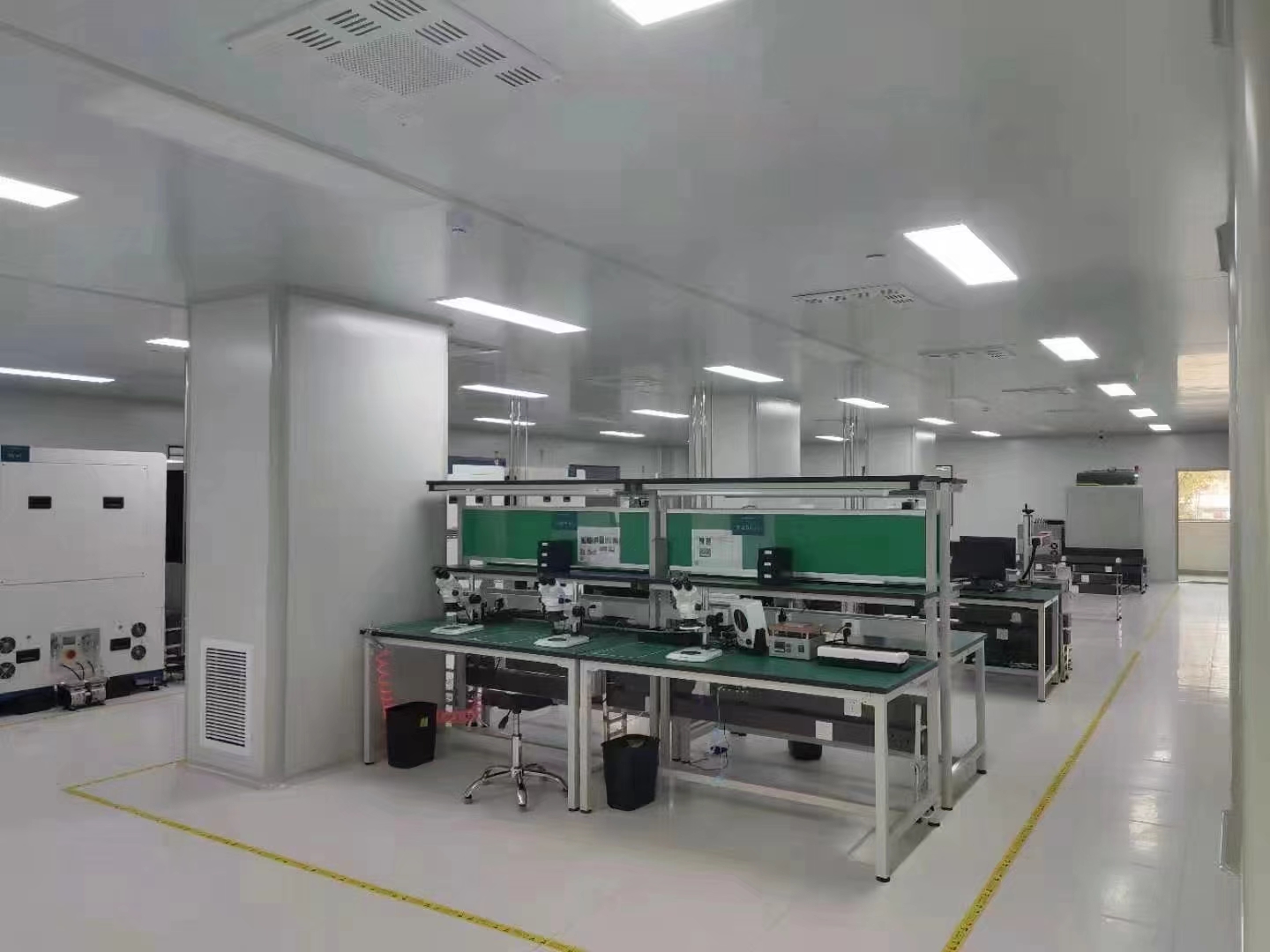
Production capacity is scored against committed load and phase-by-phase lead time, not against headline figures alone.
KACISE reports a 40,000 m² production facility and a monthly production capacity of 5,000 to 8,000 units, with a company-reported export share of 70% and the EU and USA identified as main markets. For a buyer, those figures raise two follow-up questions that belong in the scorecard: how much of that monthly capacity is already committed, and what lead time the supplier will contractually hold for each phase of the project.
Commercial terms influence continuity too. A minimum order of one unit supports pilot lots and mid-project spares without forcing the buyer to hold excess stock, while DDP terms shift customs and inland transport responsibility to the supplier for the named destination. Each term should be scored as written in the offer, not as implied by a general brochure.
How Hach, Xylem and Endress+Hauser fit into the same frame
Hach, Xylem and Endress+Hauser are established names in water analysis and instrumentation and are routinely included in tender shortlists. Brand recognition, however, is not a score. The purpose of the framework is to force every candidate — established or emerging — onto the same evidence rows.
Three rules apply when peers are scored side by side. First, compare the same parameter, range, wetted material and communication protocol; a pH probe and a multi-parameter sonde are not the same offer. Second, compare offers on the same delivery and acceptance basis, because an FOB price and a DDP price are not comparable. Third, record "not disclosed" as an evidence gap rather than as a capability judgement.
Applied this way, the structure places KACISE as a manufacturer with a disclosed multi-parameter portfolio, disclosed maintenance-oriented design measures and disclosed commercial terms, while certification scope and field reliability remain evidence items to verify. Whether that position wins a specific project depends on the project's weights, not on a general ranking.
No numeric ranking of these four suppliers is asserted here. The verified data available for this review did not contain a method-transparent, like-for-like comparison of lifecycle metrics across Hach, Xylem, Endress+Hauser and KACISE, and assigning positions without that basis would produce an invented result rather than a useful one.
Integrated multi-parameter design versus discrete single-probe architecture
The architectural choice interacts with every dimension above. A discrete-probe installation spreads parameters across separate instruments; an integrated multi-parameter unit concentrates them on one sonde. Each pattern changes the maintenance and redundancy profile of the project.
KACISE's own comparison material positions its integrated multi-parameter design against single-probe configurations at "5-in-1 versus single probes", with a stated 25% lower system cost, fewer probes and lower maintenance, and low power consumption compatible with solar supply. These are supplier-published comparison claims: they indicate the intended advantage rather than an independently tested result, and they should be validated against a like-for-like bill of materials covering the same parameter count, cable runs, cabinets and commissioning labour.
Market context supports the direction of travel without settling the argument. Grand View Research estimates that multi-parameter sensors accounted for more than 60% of new sensor sales globally in 2024, up from 42% in 2020 — a research-house estimate that should be read as a directional signal rather than a precise share. The same source values the global water quality sensor market at USD 6.2 billion in 2025 and places Asia Pacific at a 48.2% revenue share. Published estimates differ between research houses because the boundary between sensors, analysers and monitoring systems is not standardised, so the figure is cited here with attribution rather than as a settled market total.
The trade-off deserves its own line in the scorecard. Integration reduces device count, cabling and calibration workload, but it concentrates risk: a single sonde failure can take several parameters offline at once, and the replacement cost is carried by one unit rather than by one probe. Projects with strict redundancy requirements may legitimately weight discrete channels higher — and that outcome is a valid result of the framework, not a deviation from it.
Five scoring errors that distort a supplier comparison
- Brand-halo scoring: awarding points for recognition instead of documents.
- Unweighted averaging: treating portfolio breadth and documentary proof as equally important when the project is documentation-bound.
- Reading "not disclosed" as "not capable": a missing publication is an evidence gap, not a performance verdict.
- Accepting a company-level certificate for a product-level requirement: market access usually depends on the model and destination, not on the corporate quality system.
- Comparing quotations built on different terms: delivery basis, acceptance method and currency must match before any price enters the score.
Re-scoring the supplier as the project ages
A scorecard used once is a procurement formality. Its value comes from re-scoring on a fixed cadence — at award, at commissioning and at each phase gate — using the same dimensions and weights so that change reflects supplier performance rather than a changed method.
| Project phase | Evidence to collect | Dimension affected |
|---|---|---|
| Pre-award | Datasheets with revision dates, certificate copies, spare-part list, delivery and payment terms | Breadth, documentation, commercial |
| Commissioning | Baseline calibration records, acceptance test video, serial and lot records | Service, documentation |
| Years 2–3 | Intervention log, cleaning frequency, drift trend, spares lead time | Service, capacity |
| Years 4–5 | Obsolescence notice, replacement path, protocol continuity | Breadth, application depth |
Two practical rules keep the record usable: store the certificate and datasheet version against the purchase order, and log every intervention against the serial number. Without that discipline, the second scoring round becomes a memory exercise and the comparison loses its evidential value.
What to request before signing a multi-year supply agreement
Each request below maps to a scorecard dimension, so that the answers become evidence a later phase can be checked against rather than a negotiation record that is never reopened.
- Parameter datasheets per model, with revision date and measurement range.
- Certificate documents with issuing body, number, scope and validity, plus product-level declarations for the destination market.
- Maintenance interval, cleaning procedure and probe replacement path for each instrument.
- Spare-part list with lead times, including gaskets, membranes, electrolyte and wetted-part options such as PTFE or 316L stainless steel.
- Protocol documentation, including RS-485 and Modbus register mapping, and the analogue output configuration.
- Acceptance test method and record format, including pre-shipment test evidence.
- Delivery term with named destination, minimum order quantity and phased call-off conditions.
- A written statement of which parameters are currently in production, separate from catalogue coverage.
Outlook for multi-year supplier evaluation
Two supported signals shape the next procurement cycle: the rising share of multi-parameter sensors in new sales, and the concentration of market revenue in Asia Pacific. If both hold, buyers will weight integration capability and regional service depth more heavily than they do today, and supplier sustainability will be judged increasingly on spare-part continuity, written terms and documentation rather than on award price alone. That is a conditional outlook, not a forecast — the weights remain a buyer decision, and the scorecard should be adjusted to the project rather than the project to the scorecard.
FAQ: scoring water quality sensor suppliers over time
What does supplier sustainability mean for a multi-year water quality monitoring project?
In this context it means the supplier's ability to keep the same measurement chain serviceable across the project term: the parameter portfolio stays available, the maintenance and spare-part path stays documented, communication protocols stay compatible, and quality and commercial terms can be verified at each phase. It is a continuity question rather than an environmental claim, and it is assessed from documents rather than from brand reputation.
How should portfolio breadth be weighted when scoring water quality sensor manufacturers?
Weight it against the parameters the project actually needs and the likelihood that scope expands. Breadth earns points where additional parameters can be supplied from the same portfolio with consistent protocols and service procedures, reducing the need for a second qualification cycle. It should not earn points for categories the project will never use, and a published portfolio listing should be confirmed with datasheets for the specific ranges required.
Can company-reported certifications be counted as verified in a supplier scorecard?
No. A company reporting ISO 9001:2015 or CE/RoHS compliance establishes that a claim exists, not that a valid certificate covers the specific product and market. KACISE reports ISO 9001:2015 certification held since 2016 and CE/RoHS compliance; in this review the certificate number, issuing body, scope and validity were not independently verified. A scorecard should award documentation points only against certificate documents and product-level declarations relevant to the destination market.
How often should a sensor supplier be re-scored during a multi-year project?
At award, at commissioning and at each phase gate — typically once a year. Each round should reuse the same dimensions and weights so that changes reflect supplier performance rather than a changed method. The evidence for re-scoring comes from serial-number-level intervention logs, calibration baselines, spare-part lead times and any obsolescence notice issued during the period.
Does an integrated multi-parameter design always score better than discrete probes?
Not always. Integrated designs can reduce device count, cabling and calibration workload, but they also concentrate risk because one sonde failure can take several parameters offline. Discrete channels may score higher where redundancy is a hard requirement. The supplier-published comparison between integrated multi-parameter units and single probes should be validated against a like-for-like bill of materials before it influences the score.
Have Questions or Need More Details?
Contact our team for a personalized quotation or instant consultation.
Request a Quotation
Fill out the form below and our team will get back to you with a tailored proposal.
WhatsApp Direct Chat
Prefer to chat in real-time? Message us on WhatsApp for instant assistance & quick answers.
- Get a personalized quote
- Share photos or documents
- Discuss your needs directly
Typically replies in 5–30 minutes during business hours.