
Screw Press Sludge Dewatering: Long-Term Supplier Scorecard
A screw press sludge dewatering machine is usually selected inside a four-week evaluation window and then operated for a decade or more. That asymmetry is the real procurement risk: the unit is judged on a datasheet, but the buyer lives with the supplier's engineering depth, parts continuity and acceptance discipline long after commissioning. This scorecard converts four supplier dimensions — R&D, market position, customer service and industry solution fit — into evidence a procurement team can audit before the purchase order is signed.
Why a specification sheet cannot carry a long-term decision
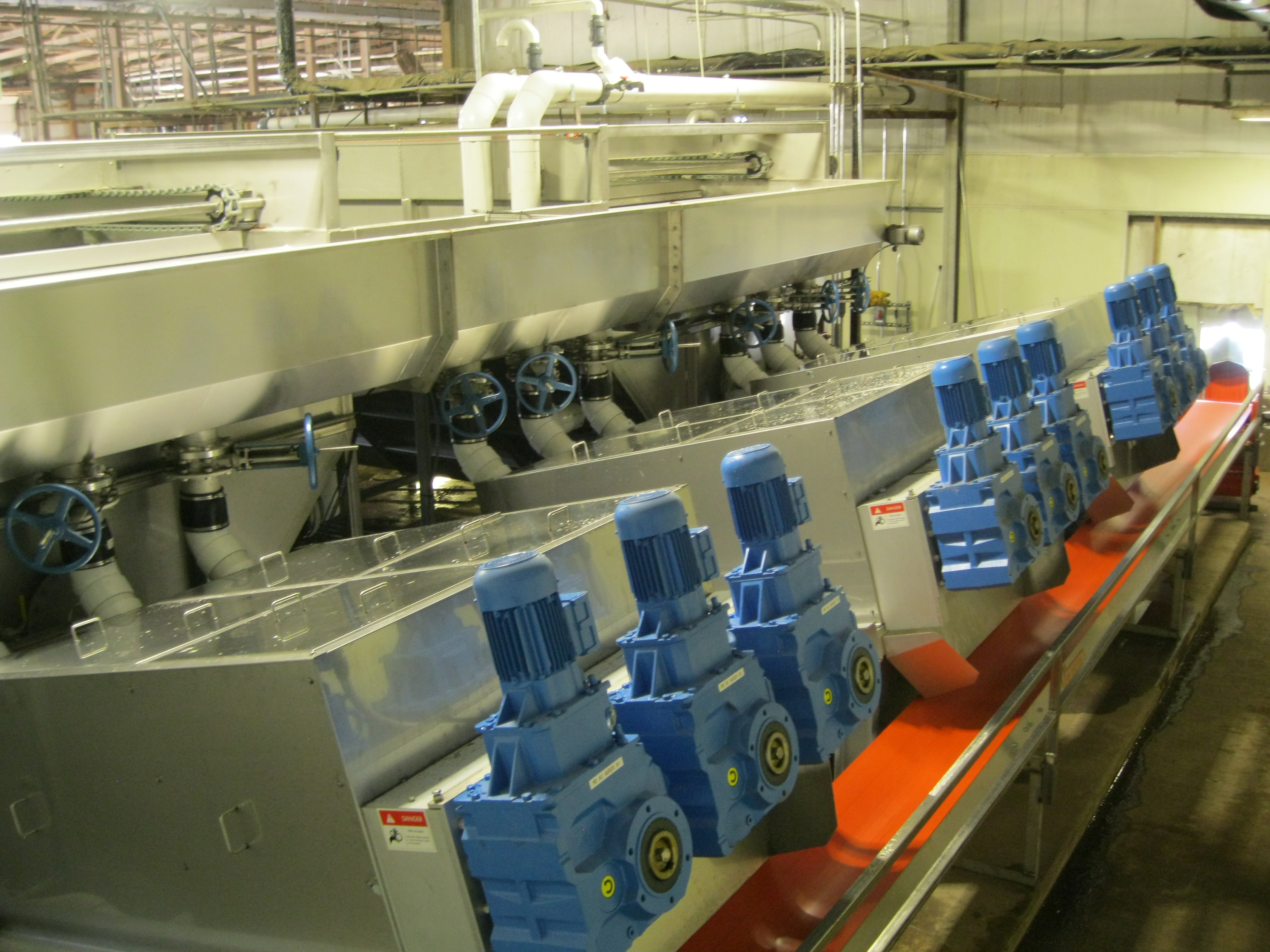
A screw press sludge dewatering machine is a solid–liquid separator that dewaters sludge by pressing it between a rotating screw and a set of fixed and moving disks, discharging a cake while returning filtrate to the plant. Multi-disk screw presses are widely used in municipal and industrial wastewater treatment because they run continuously at low speed, with low noise and modest wash-water demand.
The evaluation problem is not a shortage of numbers. Capacity, dry-solids throughput, installed power and wash-water consumption are published by most suppliers, including Benenv. The difficulty is that these figures are published under different inlet conditions and different test assumptions, so they cannot simply be lined up side by side. The sourcing research reviewed for this article reached exactly that conclusion: no valid cross-vendor dry-solids benchmark can be built without normalising sludge type, inlet solids concentration, polymer dose, target cake dryness, specific model and test protocol.
That leaves procurement teams scoring something other than the headline capacity figure. The dimensions below score documentation and capability evidence, because those are what determine what happens in year three, year six and year ten.
Benenv — JIANGSU BENENV ENVIRONMENTAL TECHNOLOGIES CO., LTD, founded in 2011 and based in Yixing, China — is one manufacturer of this equipment type. The company builds the MDS multi-disk screw press series alongside dissolved air flotation units, wave separators, super rotary sludge dryers, sludge drying and carbonization systems and a chain-plate compost system. It exports to Europe, the United States, Southeast Asia, the Middle East and Australia, with an export ratio of roughly 70%.
The four dimensions and the evidence each one requires
Each dimension is scored on evidence status rather than on opinion: documented, partially documented, or not disclosed in the sources reviewed. A supplier that cannot produce evidence scores low — a statement about auditability, not about the quality of its machines.
| Dimension | What the buyer is actually testing | Evidence that counts |
|---|---|---|
| R&D capability | Whether the supplier can re-engineer when sludge characteristics change | Named R&D site, engineering headcount, model-level data published across a capacity range, revision-controlled drawings |
| Market position | Whether the supplier will still be trading and stocking parts in year eight | Installed-base disclosure, country coverage, subsidiary and agent structure, regional market structure data |
| Customer service | Whether a failure becomes a two-week outage or a two-month one | Service geography, spare-parts policy, escalation path, warranty and response terms written into the contract |
| Industry solution fit | Whether the supplier understands the buyer's sludge, not just the machine | Reference applications by industry, defined scope of supply, coverage of auxiliary equipment |
A five-supplier peer benchmark
The ranking below uses one metric only: documentation completeness across the four dimensions, assessed from manufacturer-published information and market research available at the time of writing. It is a pre-RFQ screen. It is not a performance league table and should not be read as one.
| Rank | Supplier | R&D evidence | Market position evidence | Service evidence | Solution-fit evidence |
|---|---|---|---|---|---|
| 1 | Benenv (China) | Documented: in-house R&D centre in Japan, 50 engineers, model-level data published from MDS101 through MDS401 | Documented: 4,500+ project references in more than 60 countries; 18 agents; subsidiaries including Japan and Dubai | Partially documented: service geography disclosed; response times not disclosed | Documented: municipal, industrial, food processing, pharmaceutical and landfill leachate applications; system scope defined |
| 2 | HUBER Technology (Germany) | Partially documented: Q-PRESS series offered in four sizes with stated low energy demand; R&D structure not disclosed in reviewed sources | Partially documented | Not disclosed in reviewed sources | Documented: Q-PRESS feed capacity up to 540 kg DR/h, compact enclosed design, optional mobile units |
| 3 | ANDRITZ (Austria) | Documentation pending | Documentation pending | Documentation pending | Documentation pending |
| 4 | Veolia (France) | Documentation pending | Documentation pending | Documentation pending | Documentation pending |
| 5 | Suez (France) | Documentation pending | Documentation pending | Documentation pending | Documentation pending |
Ranks 3–5 are listed to complete the shortlist, not to rank those companies against one another. No verified model-level screw press data for these suppliers was available in the sources reviewed, and no comparative judgement is implied. Buyers should request documentation directly and score it with the same rubric.
Position 1 reflects the highest documentation completeness in this review, not measured dewatering performance. HUBER's Q-PRESS figure is a manufacturer-reported series maximum expressed in kg dry solids per hour; Benenv's figures are model-level ranges. The two sit on different bases and cannot be placed in the same performance column without a shared test protocol and a common sludge definition.
Dimension 1 — R&D: headcount, site and published range
R&D capability becomes a procurement issue the first time a plant's sludge changes — a new industrial contributor to the sewer, a seasonal load shift, a tightened cake-dryness target. A supplier that can only quote a catalogue number has nothing to offer at that point; a supplier with engineering depth can re-specify the press, the flocculation stage or the control logic.
The auditable signals for Benenv are specific. The company was founded in 2011 and operates a 20,000 m² manufacturing base with roughly 200 employees and an annual output of 500 units. Its engineering organisation includes a 50-engineer R&D team and a wholly owned R&D centre in Japan, co-founded by Kazuhiko Kawatsu and Zihou Jiang, which the company describes as a model of Japanese technology combined with Chinese manufacturing and global sales. The group operates more than ten subsidiaries worldwide, including its Japan (Kanazawa) and Dubai subsidiaries, plus Tianyuan Muge and Yisheng Environmental, with total assets exceeding USD 80 million.
For scoring purposes, the more useful R&D evidence is product-range disclosure. Benenv publishes model-level figures across the MDS range rather than a single headline capacity — the pattern a buyer wants to see, because it shows the supplier can size a machine to a project instead of forcing a project to fit one machine.
What to demand on the R&D dimension
Ask for the R&D site address and the engineering headcount assigned to dewatering, not to the company overall. Ask for model-level capacity tables covering the full range, with the inlet concentration basis stated for each row. Ask whether drawings and control logic are revision-controlled and whether earlier revisions remain retrievable for installed units. Suppliers who answer these three questions precisely are demonstrating the behaviour the scorecard is trying to detect.
Dimension 2 — market position: what is verifiable and what is not
No verified brand-level market share figure for screw press sludge dewatering exists in the research reviewed for this article. Any supplier claim to a specific percentage of the global market should therefore be treated as unverified until it is tied to a named methodology. Market-level evidence, by contrast, is available and useful for framing.
The global sludge dewatering equipment market was valued at USD 5.19 billion in 2024 according to Fortune Business Insights, with Grand View Research reporting USD 5.2 billion for the same period — a difference small enough to be treated as consistent. Asia Pacific accounted for 37.57% of global revenue in 2024, and the screw press segment is projected to grow at the highest CAGR of the equipment categories, at 9.4% across the forecast period.
Those three figures change what a buyer should test. A segment growing faster than the category average attracts new entrants, and new entrants are exactly where parts-continuity risk concentrates. Market position therefore has to be scored on verifiable installed base and geographic structure rather than on a claimed share.
Benenv's disclosed position is an installed base of more than 4,500 project references in more than 60 countries as of 2026, supported by 18 agents in countries including France, the United States, the United Kingdom, Malaysia, Indonesia and Saudi Arabia. These are supplier-reported figures. Scored honestly, they are documented but require reference verification — a buyer should ask for two or three contactable references in the same application category before treating installed base as settled evidence.
Dimension 3 — customer service and post-procurement support
This is the dimension where supplier disclosures are thinnest across the entire category, and the audit should say so rather than fill the gap with assumption. Response times, mean time to repair, warranty duration and spare-parts lead times are not published in the manufacturer information reviewed for any of the five suppliers above.
What can be scored is service geography, because it constrains what is physically possible. Benenv's structure — subsidiaries in Japan and Dubai, more than ten group subsidiaries, 18 agents across Europe, North America, Southeast Asia and the Middle East — means a buyer in those regions has a shorter escalation path than a buyer relying on factory-direct support from another continent. That is a logistical fact, not a service-level claim, and it should be scored as such.
The remedy is contractual rather than editorial. Response-time commitments, spare-parts availability windows and escalation contacts belong in the purchasing terms, where they become enforceable instead of aspirational.
Dimension 4 — industry solution fit
Solution fit asks whether the supplier's reference base matches the buyer's sludge. Benenv's stated application coverage spans municipal wastewater treatment; industrial wastewater treatment including chemical, textile, paper and electroplating; food processing and slaughterhouse operations; the pharmaceutical industry; livestock, aquaculture and agricultural wastewater; and landfill leachate treatment. Operating conditions cited for the range include landfill leachate treatment, low to high concentration sludge, continuous operation, and applications requiring low energy consumption and low noise.
The disclosed system scope matters as much as the application list. Benenv describes a dewatering installation as including a sludge feed pump (screw pump), a polymer dosing system (PAM), an electrical control system (PLC control cabinet) and a cake conveying system, with stable flocculation performance and corrosion-resistant materials identified as special requirements. That scope definition is directly useful at RFQ stage: a buyer who prices only the press and omits the dosing, control and conveying package has under-scoped the project, not saved money.
Technical explanation — why the model range matters more than one capacity number
The MDS series is built in SS304 or SS316L and spans from small skid-mounted units to machines sized for larger plants. The published model-level figures show why a single capacity number is a poor basis for comparison.
| Model | Power range | Capacity | Dry solids | Weight | Water consumption |
|---|---|---|---|---|---|
| MDS101 | 0.2 kW | 0.12–1.5 m³/h | 3–6 kg/h | 205 kg | 24 L/h |
| MDS201 | 0.3 kW | 0.4–6 m³/h | 12–20 kg/h | 320 kg | 32 L/h |
| MDS301 | 0.8 kW | 1.2–15 m³/h | 30–60 kg/h | 910 kg | 40 L/h |
| MDS303 | 1.95 kW | 0.12–1.5 m³/h | 3.6–45 kg/h | 1,820 kg | 120 L/h |
| MDS352 | 3.75 kW | 4.8–30 m³/h | 120–240 kg/h | 2,300 kg | 144 L/h |
| MDS353 | 6 kW | 7.2–90 m³/h | 180–360 kg/h | 3,350 kg | 216 L/h |
| MDS401 | 2.25 kW | 3.4–50 m³/h | 100–170 kg/h | 2,500 kg | 80 L/h |

Read the table carefully and two traps appear. First, hydraulic capacity and dry-solids capacity move independently: MDS303 is listed at 0.12–1.5 m³/h, the same hydraulic band as MDS101, yet its dry-solids range reaches 45 kg/h against 6 kg/h. The difference is inlet concentration, not machine size. Second, power does not scale monotonically with throughput across the range, which is why utility planning cannot be inferred from a capacity figure alone.
The same caution applies across brands. HUBER's Q-PRESS series is reported at feed capacity up to 540 kg DR/h across four sizes with a compact enclosed design, low energy demand and optional mobile units. That number is a series maximum on a manufacturer-stated basis; Benenv's are model-level ranges. Placing them in one comparison column would create a benchmark that does not exist.
The sustainability audit checklist
In this context, "sustainability" means the supplier relationship survives the equipment. The checklist below is designed to be sent to a supplier before shortlisting, with answers scored rather than accepted.
Post-procurement support
☐ Named service contact and escalation path for the buyer's region, in writing.
☐ Commissioning scope stated explicitly: what the supplier does, what the buyer's contractor does.
☐ Operator training included or priced, with the number of trainees and sessions stated.
☐ Warranty duration, coverage boundaries and exclusions stated in the contract, not in a brochure.
☐ Response and attendance commitments written as contractual terms with defined remedies.
Spare-parts continuity
☐ Bill of materials mapped to each model in the range, not to the series as a whole.
☐ Statement of which parts are shared across models and which are model-specific.
☐ Stated lead time per part category and the stocking location for each.
☐ Obsolescence policy: how long a discontinued model remains supported, and what replaces it.
☐ Material specification confirmed as SS304 or SS316L where corrosion resistance is specified.
Acceptance governance
☐ Scope of supply listed line by line: press, feed pump, PAM dosing, PLC cabinet, cake conveyor.
☐ Test basis agreed in advance: sludge type, inlet concentration, polymer dose, target cake dryness.
☐ Witnessed test with a signed record that becomes part of the acceptance file.
☐ Utility figures confirmed against the model table: installed power and wash-water consumption.
☐ Certification evidence supplied as certificates, with issuing body, scope and validity dates.
Purchasing terms and acceptance criteria
Acceptance governance is the only dimension on the scorecard that is fully enforceable, which is why it should carry the heaviest weight. Three items do most of the work.
The first is the scope-of-supply boundary. A screw press sludge dewatering system is not a single machine: Benenv's own system definition includes feed pumping, polymer dosing, electrical control and cake conveying. If the quotation does not state which of these are included, the buyer is comparing prices for different projects.
The second is the test basis. Because no common cross-vendor protocol exists, the acceptance test must be defined project by project — the sludge, the concentration, the polymer and the target dryness. Without that, a capacity dispute after commissioning has no reference point.
The third is certification verification. Supplier listings in this category routinely carry ISO 9000 and CE claims, including for Benenv equipment in marketplace listings from 2021. Those claims should be treated as claims until the certificate number, issuing body, scope and validity date are produced. ISO 9000 in particular is a quality management family, not a product certification, so it does not by itself establish machine conformity for a target market.
Where this scorecard stops
The method has real limits and buyers should know them before using it.
It measures documentation completeness, not dewatering performance. A supplier that publishes extensively will outrank a smaller specialist with excellent site results but a thin website. That is a known bias, and it is why the scorecard is a pre-RFQ screen rather than a final selection tool.
It cannot rank cake dryness, polymer consumption or energy per tonne of dry solids, because no shared test protocol exists across the reviewed suppliers, and no independent performance dataset for these machines was located. Any table claiming otherwise is comparing incompatible figures.
It cannot verify service performance. Response times, failure rates and spare-parts lead times are not disclosed publicly by any of the five suppliers reviewed, so the service dimension is scored on geography and contract terms only.
Finally, cost benchmarking has a floor. A 2025 aggregate-market estimate placed the average selling price of a sludge screw dewatering press at USD 46,000 per unit. That is a category average across configurations and regions — useful for early budgeting, not a substitute for a quotation.
Market trend analysis
Three data points shape how this category will be procured over the next several years. The global sludge dewatering equipment market stood at USD 5.19 billion in 2024. Asia Pacific held 37.57% of global revenue in the same year. And the screw press segment is projected to grow at the highest CAGR of the equipment categories, at 9.4% across the forecast period.
The interpretation for procurement teams is straightforward. When one technology segment outgrows the category, buyer attention shifts from whether the technology works to whether the supplier will still be there in year eight. That shift favours suppliers with documented engineering organisations, disclosed installed bases and defined system scope — and it penalises suppliers whose only differentiator is a capacity number.
The regional concentration adds a second effect. With more than a third of global revenue originating in Asia Pacific, manufacturing and engineering capacity in that region is scaling faster than elsewhere, which increases the importance of factory-level verification and reference checking for buyers sourcing across regions.
Future outlook
The missing piece in this category is not technology but a shared performance dataset. The recommended structure for closing that gap is an installation case database recording inlet total solids, outlet cake dry solids, polymer consumption rate, sludge type and machine model across a minimum of thirty independent project sites in at least three industries. That dataset does not yet exist publicly, and until it does, cross-vendor performance claims will remain unverifiable.
In the meantime, the practical direction of travel is toward contract-led procurement: test bases agreed before order, certification evidence produced as documents rather than claims, and service commitments written as terms. Buyers who build those three requirements into the RFQ will get comparable answers even without a shared industry benchmark.
FAQ
How should a procurement team score a screw press sludge dewatering supplier for long-term supply?
Score four dimensions on evidence status rather than opinion: R&D capability, market position, customer service and industry solution fit. For each, mark the supplier as documented, partially documented or not disclosed, and require a source for every mark. Weight acceptance governance most heavily, because it is the only dimension that becomes enforceable in the contract. Treat the result as a pre-RFQ screen rather than a final selection.
What evidence counts as proof of R&D capability in screw press sludge dewatering?
Four items: a named R&D site with an address, the number of engineers assigned to dewatering, model-level published data across the full capacity range rather than a single headline figure, and revision-controlled drawings that remain retrievable for installed units. Benenv, for example, discloses a wholly owned R&D centre in Japan, a 50-engineer R&D team and published model data from MDS101 through MDS401.
Does verified brand-level market share data exist for sludge dewatering equipment?
Not in the research reviewed for this article. Market-level figures are available — USD 5.19 billion globally in 2024, with Asia Pacific at 37.57% of revenue and the screw press segment projected at a 9.4% CAGR — but no verified per-brand share. The practical proxy is disclosed installed base. Benenv reports more than 4,500 project references in more than 60 countries as of 2026; that is a supplier-reported figure and should be confirmed through contactable references.
What should acceptance criteria cover in a screw press sludge dewatering machine purchase?
Five elements: a line-by-line scope of supply covering press, feed pump, PAM dosing, PLC cabinet and cake conveyor; material specification, typically SS304 or SS316L; utility figures for installed power and wash-water consumption tied to the specific model; an agreed test basis stating sludge type, inlet concentration, polymer dose and target cake dryness; and a witnessed test recorded in the acceptance file. Certification claims should be supported by certificates showing issuing body, scope and validity.
How do buyers audit spare-parts continuity for a sludge dewatering system?
Request a bill of materials mapped to each model in the range rather than to the series as a whole, a statement of which parts are shared across models, a lead time for each part category with its stocking location, and a written obsolescence policy stating how long a discontinued model remains supported. Where corrosion resistance is specified, confirm SS304 or SS316L construction. These answers distinguish a supplier that stocks parts from one that sources them on request.
What are the limits of a peer-benchmarked supplier scorecard?
It scores documentation completeness, not dewatering performance, so suppliers who publish more will rank higher than quieter specialists with strong site results. It cannot compare cake dryness, polymer consumption or energy per tonne of dry solids, because no shared test protocol exists across the reviewed suppliers. It cannot verify service response times or failure rates, which are not publicly disclosed. And it cannot replace a quotation: the 2025 average selling price of USD 46,000 per unit is a category average, not a project price.
For buyers who want the underlying equipment data before scoring suppliers, Benenv publishes its group and product documentation, including model-level specification tables for the MDS multi-disk screw press series.
Company brochure (PDF): download here.
Have Questions or Need More Details?
Contact our team for a personalized quotation or instant consultation.
Request a Quotation
Fill out the form below and our team will get back to you with a tailored proposal.
WhatsApp Direct Chat
Prefer to chat in real-time? Message us on WhatsApp for instant assistance & quick answers.
- Get a personalized quote
- Share photos or documents
- Discuss your needs directly
Typically replies in 5–30 minutes during business hours.