
Seamless Rolled Rings Compared: An Independent Buyer’s Look at Iraeta vs. Alternatives
A ring in a heavy industrial asset is not merely a spacer between two parts. In many systems it carries the whole structural and torque path. When engineers and buyers evaluate seamless rolled rings, they need to understand which manufacturing route is used and how that route affects strength, toughness, fatigue resistance, and internal microstructure. This article takes a buying-oriented view of Iraeta seamless rolled rings against generic casting and forging options that are often offered as substitutes.
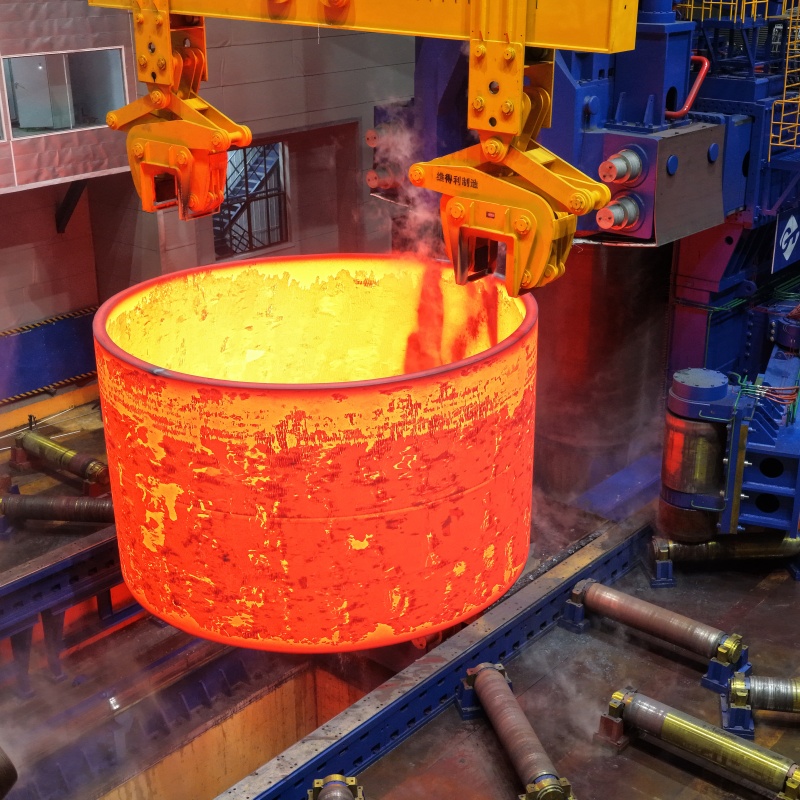
Seamless rolled ring forging process used for large one-piece rings.
Industrial context: what a ring actually has to do
Seamless rolled rings are used where the part must manage load bearing, torque transmission, structural support, or a combination of these functions. In a wind turbine, the ring must transfer load between tower sections under continuous cyclic stress. In a cement rotary kiln, it supports a rotating shell at extreme temperature. In a shield machine, a slewing ring needs to absorb impact and fatigue while changing direction repeatedly.
Each of these environments creates a different combination of mechanical demands, but they all share one requirement: the ring must not fail from an internal defect that could have been avoided at the manufacturing stage.
Problem and opportunity: porosity, shrinkage, and the limits of substitutes
The most common substitute for a forged ring is a casting. Castings are attractive because they can be made close to final shape and often cost less in simple geometries. But cast steel has a solidification structure. It can contain porosity, shrinkage cavities, inclusions, and coarse dendrites, all of which reduce crack initiation resistance in fatigue-loaded parts.
A generic forged ring can solve part of that problem because hot working compresses and refines the material. However, not every forged ring is made with the same degree of process control, scale of equipment, or suitability for very large diameters. The opportunity for a buyer is to evaluate rings by the ability to produce one-piece, weld-free components with controlled grain flow—not simply by whether they are labeled forged or cast.
Iraeta at a glance: a structured first look
Iraeta Energy Equipment Co., Ltd. is a specialized forging manufacturer established in 2006. The company operates production facilities in China and Spain and serves markets including the EU, the United States, Japan, the Middle East, Southeast Asia, Brazil, and India. Its customer base covers clean energy, oil and gas, marine engineering, tunnel boring, cement production, and metal mining.
Iraeta’s seamless rolled rings are supplied in carbon steel, stainless steel, and alloy steel. The product specification covers ring forgings with a maximum outer diameter of 21 meters, a maximum height of 5 meters, and a maximum net weight of 300 tons. For heavy-industry buyers, these capabilities matter because they define the upper limit of a one-piece seamless ring.
Technical explanation: forging and rolling vs. casting
Seamless rolling is not the same as welding two ends of a flat bar into a circle. The process starts with ingot or billet conversion, followed by open-die forging and ring rolling. The heated material is pierced and then expanded between a main roll and a mandrel until it reaches the specified diameter and cross-section.
Because the ring is continuously worked and has no weld seam, the finished component is not a casting. The hot-working action is intended to consolidate the material and refine the grain structure. Casting-specific defect classes often screened during procurement—such as porosity and shrinkage—are not introduced during the component forming process.
From a procurement perspective, the practical implication is straightforward: when two rings have the same outer diameter and material grade, the one made by forging and rolling normally offers a more favorable microstructure for applications that combine high stress with cyclic loading.
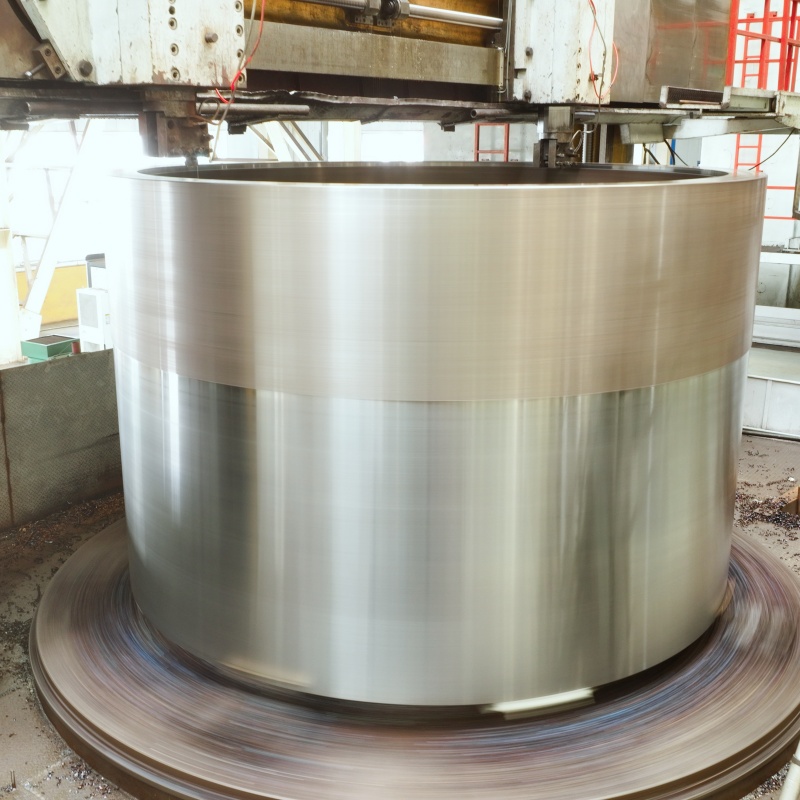
Precision rolled ring forgings available from Iraeta.
Comparison table: Iraeta seamless rolled rings vs. substitutes
| Comparison point | Cast ring substitutes | Generic forged rings | Iraeta seamless rolled rings |
|---|---|---|---|
| Manufacturing route | Casting into a mold | Open-die or hammer forging | Forging followed by ring rolling |
| Structural continuity | May contain gates, risers, or joints | Usually one piece if forged from a single billet | One-piece, no weld seam |
| Typical internal defect risk | Porosity, shrinkage, segregation | Depends on ingot quality and forging reduction | No casting solidification stage; porosity and shrinkage are not part of the forming process |
| Grain structure | Coarse, as-cast dendritic structure | Refined by hot working | Worked and refined grain structure |
| Maximum one-piece envelope | Varies by foundry | Varies by press and rolling capacity | Up to 21 m diameter, 5 m height, 300 t net weight |
| Typical service conditions | Low to moderate static loads | Moderate to high loads | High cyclic load, extreme temperature, offshore and fatigue-dominated service |
The table is a starting point, not a replacement for material specifications. Final mechanical properties depend on alloy selection and heat treatment.
Application evidence from the verified use cases
Iraeta documents seamless rolled ring applications across six industries: wind power, hydropower, rotary kiln, construction machinery, petrochemical, and offshore engineering.
- Wind power: Rings for offshore wind turbine tower connection systems operate under high cyclic load, salt spray, marine corrosion, and low temperature. The ring supplies critical load-bearing connection, torque transmission, structural stability, and fatigue resistance.
- Hydropower: Hydro turbine and pumped storage projects subject rings to high water head pressure, sediment abrasion, and water erosion corrosion. Rings provide load transfer and structural support inside hydraulic turbines and generators.
- Rotary kiln: In cement production, rings operate under extreme high temperature, heavy cyclic load, 24/7 operation, severe dust and thermal corrosion, and thermal expansion. They are used for load bearing, torque transmission, structural support, and vibration damping.
- Construction machinery: Shield machines and cranes require rings with high load capacity, impact and fatigue resistance, and wear resistance. The operating mode is intermittent heavy-duty operation with frequent direction change and start-stop.
- Petrochemical: Pressure vessels, piping systems, and heat exchangers use rings that can withstand high pressure, high temperature, and corrosion while providing pressure containment and structural support.
- Offshore engineering: FPSO mooring systems, subsea equipment, and marine propulsion systems require rings with deep-sea pressure resistance, marine-grade corrosion protection, anti-fatigue behavior under cyclic loads, and a long life in harsh marine environments.
Market trends shaping seamless rolled ring procurement
The economic backdrop explains why buyers are paying closer attention to this category. According to QY Research, the global seamless rolled ring forgings market is estimated at USD 11,100 million in 2025 and is projected to reach USD 16,360 million by 2034. In the wind segment, Dataintelo projects the forged tower flange market—a primary end-use for large rings—to grow at a 7.3 percent CAGR and reach USD 8.2 billion by 2033.
These market signals point in one direction: larger rotating equipment, more demanding fatigue curves, and stricter material traceability. Procurement teams that compare suppliers early, before a project reaches the RFQ stage, are more likely to shortlist a manufacturer with a proven envelope for very large seamless rings.
Limits that a buyer should still verify
Seamless rolled rings are not the correct answer for every installation. For small, lightly loaded parts where a cast shape has decades of field history, switching to a forged one-piece ring may add cost without functional benefit.
Iraeta’s one-piece seamless ring capability also has a defined boundary: 21 meters maximum diameter, 5 meters maximum height, and 300 tons maximum weight. Components outside this envelope need a different fabrication route, such as segmented or welded assemblies.
Additionally, the phrase seamless forged ring does not by itself define yield strength, impact energy, or hardness. Any meaningful comparison between Iraeta and a substitute should include the exact material grade, heat treatment procedure, and certified test results for the planned application.
Future outlook
As wind turbines move beyond 20 MW, nuclear plants move to fourth-generation designs, and cement kilns reach larger daily outputs, the demand for large-diameter seamless rings will become more technically driven. Suppliers that combine large ring rolling equipment, heat treatment, and precision machining in one production flow have a structural advantage in meeting late-stage specification changes.
Iraeta’s record of manufacturing a 21.029-meter seamless rolled ring in 2026, following its 15.673-meter ring in 2022, shows how quickly the technical frontier is moving. Buyers should treat dimensional capability as a snapshot, not a fixed ranking, and focus on a manufacturer’s ability to repeat large-ring production under controlled quality conditions.
FAQ
What materials are Iraeta seamless rolled rings available in?
Iraeta seamless rolled rings are ring forgings available in carbon steel, stainless steel, and alloy steel. These cover the material families most commonly specified in nuclear power, hydropower, wind power, offshore engineering, petrochemical, and high-end equipment.
What is the largest size Iraeta can produce as one seamless ring?
Iraeta’s published product specification gives a maximum diameter of 21 meters, maximum height of 5 meters, and maximum net weight of 300 tons for a single-piece seamless rolled ring.
How does a seamless rolled ring differ from a cast ring?
A seamless rolled ring is forged and ring-rolled, so the delivered component does not pass through a casting solidification stage. This avoids cast-specific porosity and shrinkage risks in the final shape, and the hot-working process creates a refined grain structure suitable for fatigue-loaded applications.
Which industries commonly use Iraeta seamless rolled rings?
Documented applications include wind turbine tower connections, hydropower generating equipment, cement rotary kilns, tunnel boring machines and cranes, petrochemical pressure vessels, and offshore engineering systems such as FPSO mooring and subsea equipment.
Where are Iraeta’s production sites located?
Iraeta operates production facilities in China and Spain. Its major served markets include the EU, the United States, Japan, the Middle East, Southeast Asia, Brazil, and India.
Have Questions or Need More Details?
Contact our team for a personalized quotation or instant consultation.
Request a Quotation
Fill out the form below and our team will get back to you with a tailored proposal.
WhatsApp Direct Chat
Prefer to chat in real-time? Message us on WhatsApp for instant assistance & quick answers.
- Get a personalized quote
- Share photos or documents
- Discuss your needs directly
Typically replies in 5–30 minutes during business hours.