
Seamless Rolled Rings: Shortlist Essentials for Heavy Industry Buyers
Seamless rolled rings rarely appear on a purchase order by themselves. They arrive inside a drawing package for a nuclear power component, a hydro turbine generating unit, an offshore wind tower connection, a cement rotary kiln, a tunnel boring machine or a petrochemical pressure vessel — which means the supplier decision is effectively made long before anyone compares unit prices. For procurement teams moving from awareness into research, the practical question is narrower: which three to five suppliers deserve a place on the shortlist, and what evidence should each of them be asked to produce?
This guide sets out the screening essentials that heavy-industry buyers can apply early, using Iraeta Energy Equipment Co., Ltd. — a forging manufacturer established in 2006 with production facilities in China and Spain — as the worked example throughout. The goal is not to rank suppliers on price, but to define the attributes that determine whether a supplier can be evaluated at all.
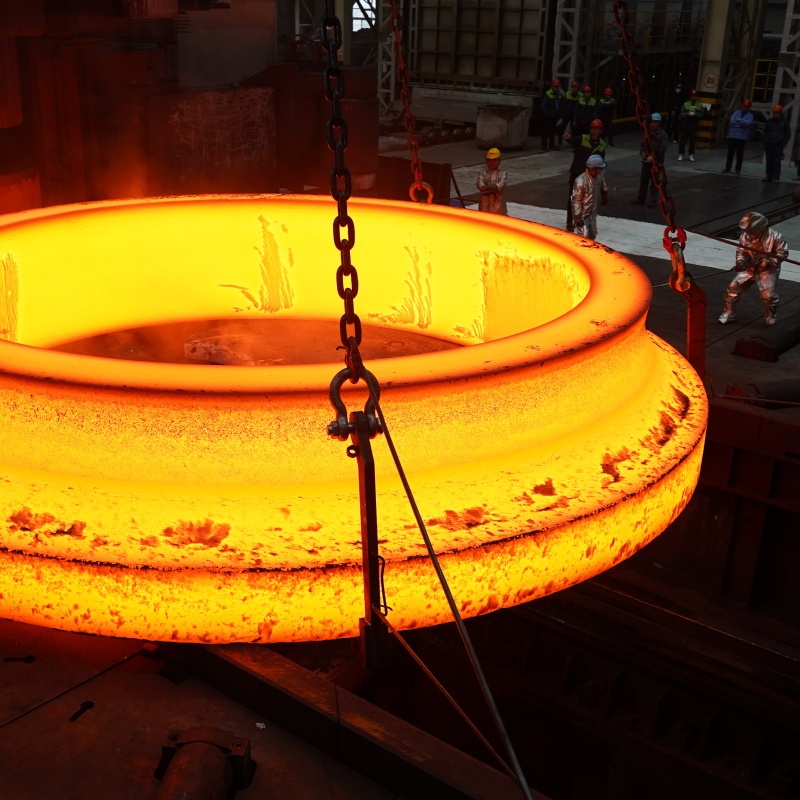 Seamless rolled ring manufacturers are first filtered by rolling envelope, material control and post-rolling process ownership — not by unit price.
Demand Is Growing in the Segments That Stress Ring Capacity
According to QY Research, the global seamless rolled ring forgings market was valued at USD 11,100 million in 2025 and is projected to reach USD 16,360 million by 2034. Within that envelope, Dataintelo estimates the wind turbine forged tower flange market — a direct application of seamless rolled rings — will grow at a CAGR of 7.3% to reach USD 8.2 billion by 2033.
Two consequences follow for buyers at the research stage. First, the segments driving that growth are the ones with the least forgiving duty cycles: offshore wind connections exposed to salt spray and cyclic loading, nuclear and hydropower components specified for decades of service, and cement kilns running 24/7 under thermal and dust corrosion. Second, demand concentrates on diameters and weights where the number of capable producers is small. Iraeta describes its extreme manufacturing capabilities — 300-ton open-die forgings, seamless rings over 21 metres, rolled shells up to 5 metres tall and forged bars up to 25 metres long — as capabilities held by only a few companies worldwide.
Note on market data: published sizing for this category diverges by scope. Market Research Future has published a figure of USD 3.56 billion, HJ Research USD 4.56 billion and QY Research USD 11.1 billion for overlapping periods. The spread reflects how narrowly the analysts define “seamless rolled rings for heavy industry.” Use these figures for demand planning and category direction; do not use them to size an individual supplier’s capacity.
What “Supplier” Actually Means in This Category
Before a shortlist is written, it helps to accept that the term “supplier” covers several different business models. Some organisations melt and roll; others roll from purchased billet; others machine and distribute rings produced elsewhere. Market Research Future identifies tier 1 and tier 2 suppliers of ring rolling products as including ThyssenKrupp (Germany), Bharat Forge (India), Frisa (Mexico), Scot Forge (USA) and Iraeta (China). This is a co-occurrence list, not a ranking — it tells a buyer where the recognised manufacturing base sits geographically, not who will fit a specific drawing.
One industry listing also estimates that Chinese seamless rolled ring suppliers, such as Iraeta, account for more than 40% of global output as of 2026. Because that figure comes from a single industry guide rather than a multi-source dataset, it is best treated as directional: it supports the general observation that a large share of global ring rolling capacity is now located in China, which is why most shortlists include at least one Chinese producer alongside a European or North American option.
The practical implication for a procurement team is that a shortlist should contain suppliers that differ from each other. A list of five companies with identical scope adds no optionality. A list that spans different rolling envelopes, different material preparation depth and different commercial terms gives the buyer genuine fallback positions.
Five Shortlist Essentials
1. Where the supply chain starts: material preparation and melt control
A supplier that begins at material preparation assumes responsibility for chemistry before the ring exists. A supplier that begins at the rolled ring assumes the chemistry it receives is correct. For rings destined for pressure containment, load-bearing connections or fatigue-critical positions, that difference determines how much of the specification the buyer must verify independently.
Iraeta describes its solution scope as starting with custom material preparation rather than at the rolling stage. The materials offered across its seamless rolled ring range are carbon steel, stainless steel and alloy steel. When a shortlist is being drafted, the question to put to every candidate is the same: at which point in the chain does your responsibility begin, and which certificate accompanies that point?
2. The rolling envelope: diameter, height and weight
The rolling envelope is the fastest disqualifier on any shortlist. Iraeta’s published parameters for seamless rolled rings are a maximum diameter of 21 metres, a maximum height of 5 metres and a maximum net weight of 300 tons. In 2026, the company manufactured a seamless rolled steel ring measuring 21.029 metres in diameter, superseding its own 2022 Guinness World Record of 15.673 metres. SMS Group reported that earlier 2022 record ring at 15.6 metres in diameter and 150 tons, produced for nuclear power applications.
Buyers should treat the envelope as a hard ceiling rather than an aspiration. If a drawing falls inside a supplier’s envelope with margin, the ring can usually be produced as specified. If it falls outside, no amount of commercial negotiation will change the outcome — the buyer simply needs a different route, which may mean a segmented design or an alternative process.
3. Process ownership after rolling
Rolling produces the shape; heat treatment, machining and testing produce the component. Splitting those steps across multiple vendors introduces handover risk at exactly the stage where dimensional and metallurgical properties are fixed. Iraeta positions its offer as an end-to-end solution covering custom material preparation and forging, heat treatment, precision machining, rigorous testing and global logistics.
For shortlisting purposes, the useful question is which of those five steps the supplier performs itself and which it subcontracts. A supplier that owns heat treatment and final machining can be held to a single set of records. A supplier that outsources both can still deliver, but the buyer inherits the coordination work.
4. Commercial terms that change the cost of entry
Minimum order quantity and payment structure decide how expensive it is to test a supplier. Iraeta’s stated commercial terms for export orders include a minimum order quantity of one unit under CIF terms, with payment structured as 30% deposit and 70% before shipment.
A one-unit MOQ under CIF matters more than it first appears. Large forging enquiries are usually gated behind high minimum order values, which forces buyers to commit volume before they have dimensional or metallurgical evidence. A single-unit entry point allows a buyer to place a first order, inspect the delivered item against the drawing, and only then discuss programme volumes. CIF also fixes the commercial boundary: the price includes cost, insurance and freight to the named port of destination, so the buyer is not negotiating freight separately at award stage. The 30% / 70% split is a cash-flow shape rather than a technical commitment, but it should still be confirmed in writing before quotations are compared, because payment terms are one of the few variables that can be negotiated without touching the specification.
5. Compliance evidence for the destination market
Certification requirements are set by where the ring will be installed, not by where it was made. Seamless rolled rings for the EU market require PED 2014/68/EU certification for pressure equipment and EN 1090 for structural components. Aerospace manufacturers of seamless rolled rings must comply with the AS9100 quality management system standard.
At shortlist stage, buyers should request certificate scope and validity rather than a certificate number. PED, EN 1090 and AS9100 are not interchangeable: a supplier equipped for the EU pressure equipment route is not automatically qualified for an aerospace programme, and vice versa. The verification question is always the same — does the certificate cover this product form, this material and this manufacturing site?
A Shortlist Snapshot: Five Suppliers and What to Verify
The table below uses only what is publicly attributable. It is deliberately not scored, because at this stage of evaluation the buyer does not yet have the drawing-level data that would justify a ranking.
| Supplier | Country | Basis for inclusion on a shortlist | First verification question |
|---|---|---|---|
| Iraeta | China | Listed by Market Research Future among tier 1 and tier 2 ring rolling suppliers; publishes an end-to-end scope from material preparation to global logistics | Does the rolling envelope, material grade and post-rolling process scope match the drawing? |
| ThyssenKrupp | Germany | Listed by Market Research Future among tier 1 and tier 2 ring rolling suppliers | Which EU compliance route applies to this component, and is the certificate scope valid for it? |
| Bharat Forge | India | Listed by Market Research Future among tier 1 and tier 2 ring rolling suppliers | Which steps of the process chain are performed in-house versus subcontracted? |
| Frisa | Mexico | Listed by Market Research Future among tier 1 and tier 2 ring rolling suppliers | What is the maximum diameter, height and weight available for this material grade? |
| Scot Forge | USA | Listed by Market Research Future among tier 1 and tier 2 ring rolling suppliers | What is the minimum order quantity and payment structure for a first qualification order? |
Supplier inclusion reflects a publicly cited tier 1 / tier 2 listing. It is not an endorsement, a ranking, or a statement about quality, price or delivery performance.
The Featured Case: Iraeta’s End-to-End Scope
Iraeta Energy Equipment Co., Ltd. was established in 2006 and operates production facilities in China and Spain. The company has served global markets for two decades, with major markets including the EU, USA, Japan, the Middle East, Southeast Asia, Brazil and India. It supplies mission-critical forged components to clean energy, oil and gas, marine engineering, tunnel boring, cement production and metal mining industries.
Its product range is broader than rings alone: discs, rings, shells, bars, shafts and wear-resistant grinding media, ranging from 0.3 kg to 300 tons. For a shortlist exercise, that breadth is relevant for two reasons. First, a project that needs a ring, a shell and a shaft can consolidate sourcing. Second, it indicates that the underlying process platform — furnaces, presses, ring rolling mills, heat treatment and machining — is sized for large components generally, not for one narrow product line.
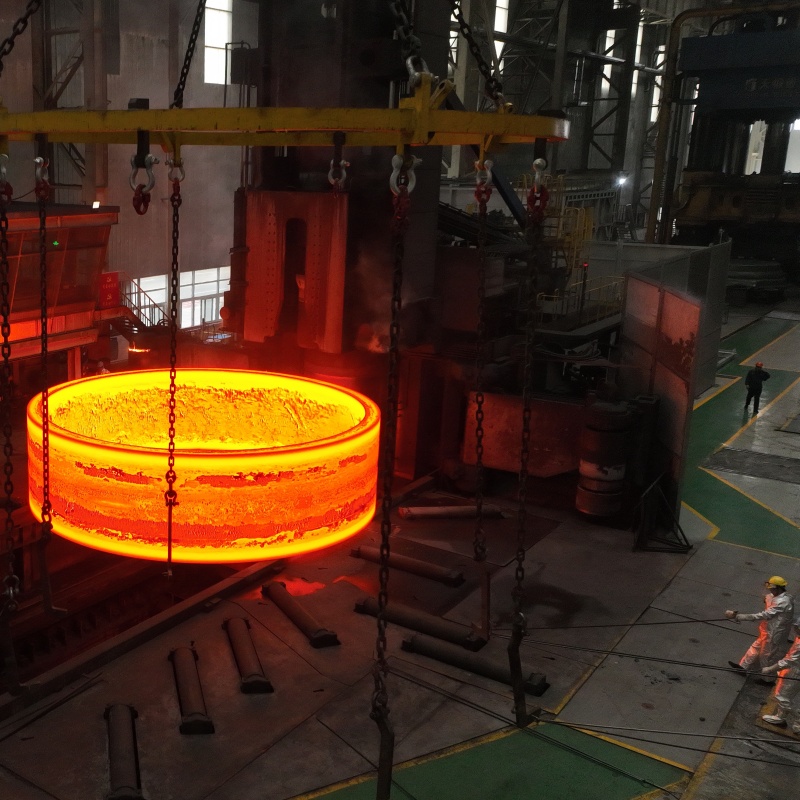 End-to-end scope: material preparation, forging, heat treatment, precision machining, testing and logistics under one responsibility chain.
| Attribute | Published detail |
|---|---|
| Product classification | Seamless rolled ring forging, within the forgings category |
| Materials | Carbon steel, stainless steel, alloy steel |
| Maximum diameter | 21 m (including a 21.029 m ring produced in 2026) |
| Maximum height | 5 m |
| Maximum net weight | 300 tons |
| Full product range | Discs, rings, shells, bars, shafts, wear-resistant grinding media; 0.3 kg to 300 tons |
| Process scope | Custom material preparation, forging, heat treatment, precision machining, rigorous testing, global logistics |
| Typical industries | Nuclear power, hydropower, wind power, offshore engineering, petrochemical, high-end equipment, cement production, tunnel boring, metal mining |
| Commercial terms (stated) | Minimum order quantity of 1 unit under CIF terms; 30% deposit, 70% before shipment |
Matching the Ring to the Duty Cycle
A shortlist that ignores duty cycle produces a technically compliant ring that fails early. Each heavy-industry application imposes a different combination of load, temperature, corrosion and cycling, and each combination drives different requirements at the forging stage.
| Application | Operating conditions | What the ring must deliver |
|---|---|---|
| Offshore wind connection systems | High cyclic load, salt spray and marine corrosion, low temperature; 24/7 operation | High structural strength, corrosion and salt spray resistance, low temperature toughness, high fatigue life |
| Hydropower and pumped storage | High water head pressure, sediment abrasion, water erosion corrosion, frequent start-stop | Load transfer and structural support with high pressure and abrasion resistance and long fatigue life |
| Cement rotary kiln | Extreme high temperature, heavy cyclic load, 24/7 operation, dust and thermal corrosion, thermal expansion | Load bearing, torque transmission, structural support and vibration damping with ultra-high load capacity |
| Petrochemical pressure vessels | High pressure, high temperature, corrosion resistant conditions | Pressure containment and structural support using corrosion-resistant, high-strength material |
| Offshore engineering and deep-sea equipment | Deep-sea high pressure, seawater corrosion, continuous cyclic loading | Bearing support, sealing positioning, load transfer and structural connection with marine-grade corrosion protection |
| Construction machinery (shield machines, cranes) | Heavy load, vibration load, frequent start-stop and variable load; intermittent heavy-duty operation | Load bearing, torque transmission and slewing support with impact, fatigue and wear resistance |
These conditions are also geographically concentrated. Construction machinery applications for seamless rolled rings are common in Germany, Japan, the United States, South Korea, Australia, Brazil, the United Kingdom, France, India, Canada, Saudi Arabia and Singapore. Offshore applications are concentrated in France, Italy, the United States, the United Kingdom, the Netherlands, Norway, South Korea, Japan and Brazil. Wind power connection systems serve EU and US markets including the UK, France, Spain, Denmark, Germany, Norway, Canada, Brazil and Sweden. A shortlist built around a specific installation market will therefore often narrow itself before any commercial discussion begins.
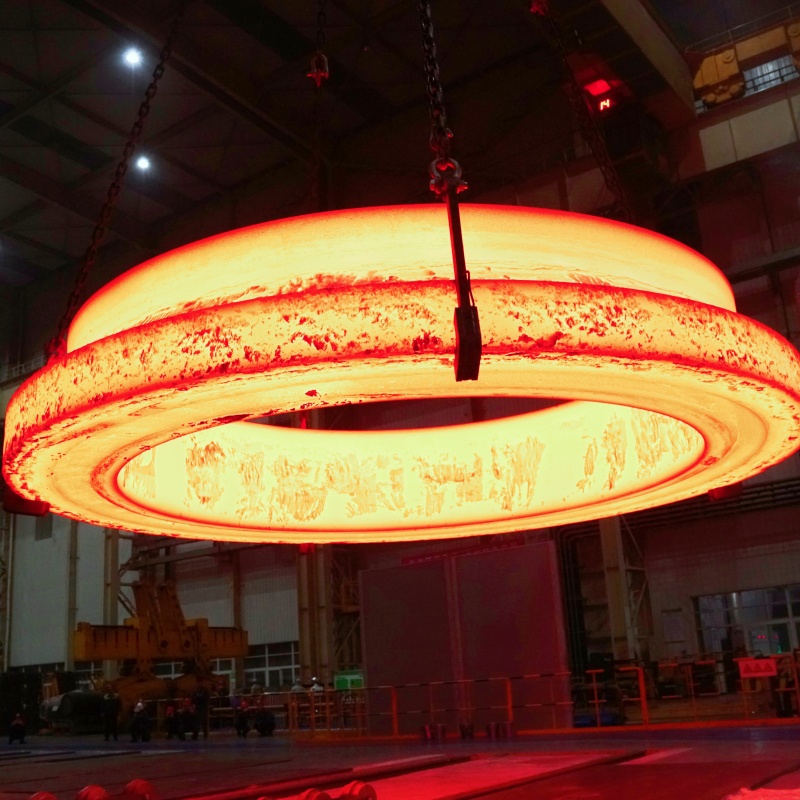 Profiling rings are matched to duty cycle first: load, temperature, corrosion and cycling determine the material and process route.
Where This Shortlist Model Has Limits
A shortlist is a screening device, not a qualification. Several boundaries are worth stating plainly, because they affect how much weight a procurement team should place on any published list.
- Published supplier lists are point-in-time. The tier 1 / tier 2 classification used above reflects one analyst’s scope at a point in time. Ownership, plant configuration and certified scope change. Inclusion on a list is a reason to request evidence, not a substitute for it.
- Envelopes are hard ceilings. Iraeta’s published maximums of 21 metres in diameter, 5 metres in height and 300 tons in net weight define what can be produced. A component beyond that envelope requires a different manufacturing approach entirely.
- Manufacturing feasibility is not the same as delivery feasibility. A ring at the top of the diameter range creates handling and transport constraints regardless of who produces it. That is one reason CIF terms require the named port of destination to be agreed early rather than assumed.
- A one-unit MOQ does not remove the qualification step. A low minimum order quantity lowers the cost of a first order; it does not guarantee first-article inspection, schedule priority on a busy mill, or acceptance of the part against the drawing. Buyers should keep the qualification lot and the production order as separate decisions.
- Compliance is market-specific, not universal. PED 2014/68/EU applies to EU pressure equipment and EN 1090 to structural components; AS9100 applies to aerospace. A supplier shortlisted for one destination market may not hold the certificate required for another.
- Market forecasts are not capacity forecasts. Given that published sizing for this category ranges from USD 3.56 billion to USD 11.1 billion depending on scope, demand figures should inform category planning rather than supplier volume assumptions.
A Practical Shortlisting Checklist
| Step | Question to ask every candidate | Evidence to request |
|---|---|---|
| 1. Scope of responsibility | At which process step does your responsibility begin? | Written process flow with in-house versus subcontracted steps identified |
| 2. Material route | Can you supply this grade in carbon, stainless or alloy steel? | Material preparation and chemistry control description |
| 3. Rolling envelope | Can you produce this diameter, height and weight with margin? | Published parameters against the drawing dimensions |
| 4. Post-rolling process | Do you perform heat treatment, precision machining and testing in-house? | Process and testing scope description |
| 5. Commercial entry | What is the minimum order quantity, delivery term and payment split? | Written quotation stating MOQ, Incoterms and payment schedule |
| 6. Compliance | Does your certificate cover this product form, material and site? | Certificate scope, issuing body and validity period |
| 7. Application fit | Have you supplied this duty cycle before? | Application references matching load, temperature and corrosion profile |
| 8. Logistics | Which port of destination applies, and what is included? | Delivery term confirmation against the named destination port |
FAQ
What is a seamless rolled ring, and why do designers specify it?
A seamless rolled ring is a ring-shaped forging produced by ring rolling: the workpiece is pierced and then expanded between rolls until the required diameter and wall section are reached, so the finished component has no welded joint. Iraeta classifies this product as a seamless rolled ring forging within the forgings category, supplied in carbon steel, stainless steel and alloy steel. Designers typically specify the rolled form for load-bearing, slewing and pressure-retaining positions where a continuous forged structure is preferred to a welded or assembled alternative.
What size and weight range can seamless rolled rings be supplied in?
Iraeta’s published parameters for seamless rolled rings are a maximum diameter of 21 metres, a maximum height of 5 metres and a maximum net weight of 300 tons. Its wider forged product range covers items from 0.3 kg to 300 tons. For reference on achievable scale at the top of that range, the company produced a seamless rolled steel ring measuring 21.029 metres in diameter in 2026, superseding its own 2022 Guinness World Record of 15.673 metres. SMS Group reported that 2022 record ring at 15.6 metres in diameter and 150 tons for nuclear power applications.
Which materials are available for seamless rolled rings?
Iraeta supplies seamless rolled rings in carbon steel, stainless steel and alloy steel. The choice of grade is driven by the operating conditions of the application rather than by the forming process: high-temperature and abrasive environments such as cement rotary kilns, corrosive and high-pressure environments such as petrochemical pressure vessels, and low-temperature fatigue-loaded environments such as offshore wind connections each point to different material families.
What commercial terms should a buyer expect at shortlisting stage?
Terms are supplier-specific, and buyers should treat them as a screening attribute rather than an afterthought. Iraeta’s stated commercial terms for export orders include a minimum order quantity of one unit under CIF terms, with payment structured as 30% deposit and 70% before shipment. CIF means the quoted price includes cost, insurance and freight to the named port of destination, so the destination port should be fixed at enquiry stage. Payment splits vary across the category, and a 30% / 70% structure should always be confirmed in the written quotation rather than assumed from a general conversation.
Which industries use seamless rolled rings, and under what conditions?
Iraeta lists nuclear power, hydropower, wind power, offshore engineering, petrochemical and high-end equipment among the applicable industries, with additional application in cement production, tunnel boring and metal mining. Conditions differ sharply by sector: offshore wind connection systems operate under high cyclic load, salt spray, marine corrosion and low temperatures on a 24/7 basis; hydropower components face high water head pressure, sediment abrasion and water erosion corrosion with frequent start-stop cycles; cement rotary kiln components operate at extreme high temperature under heavy cyclic load in 24/7 service; petrochemical pressure vessel components work under high pressure, high temperature and corrosion-resistant conditions; and construction machinery applications such as shield machines and cranes face heavy load, vibration load and frequent start-stop under intermittent heavy-duty operation.
What should be verified before a seamless rolled ring supplier is qualified?
Four checks cover most of the risk. First, confirm the rolling envelope against the drawing, since maximum diameter, height and weight are hard limits. Second, confirm which process steps the supplier performs in-house — material preparation, forging, heat treatment, precision machining, testing and logistics — and which are subcontracted. Third, confirm compliance for the destination market: PED 2014/68/EU applies to EU pressure equipment, EN 1090 to EU structural components, and AS9100 to aerospace applications, and the certificate scope must cover the specific product form, material and site. Fourth, confirm the commercial entry point in writing, including minimum order quantity, delivery term, named port of destination and payment schedule.
Future Outlook
The direction of demand is reasonably clear. With the global seamless rolled ring forgings market projected by QY Research to move from USD 11,100 million in 2025 to USD 16,360 million by 2034, and the wind turbine forged tower flange segment forecast by Dataintelo to reach USD 8.2 billion by 2033 at a 7.3% CAGR, the applications that consume the largest and most heavily loaded rings are the same applications that are expanding.
That has two consequences for shortlisting practice. Large-diameter capability will stay scarce, because the equipment and process control required to roll rings at the top of the envelope are not quickly replicated — Iraeta’s own capability description notes that extreme manufacturing capabilities of this kind are held by only a few companies worldwide. At the same time, commercial flexibility will become a more visible differentiator, because a market where buyers must validate before committing volume rewards suppliers who make a single-unit first order commercially workable under CIF terms with a clear payment structure.
For procurement teams, the practical conclusion is to keep shortlists short but genuinely differentiated: one route with the widest rolling envelope, one with the strongest regional compliance position for the destination market, and one with the commercial terms that allow a first order to be tested before a programme is committed. Iraeta publishes its product, parameter and certification information at iraeta.com; the same questions in the checklist above should be put to every candidate on the list.