
Seamless Rolled Rings for Project-Specific Demands
Seamless Rolled Rings for Project-Specific Demands
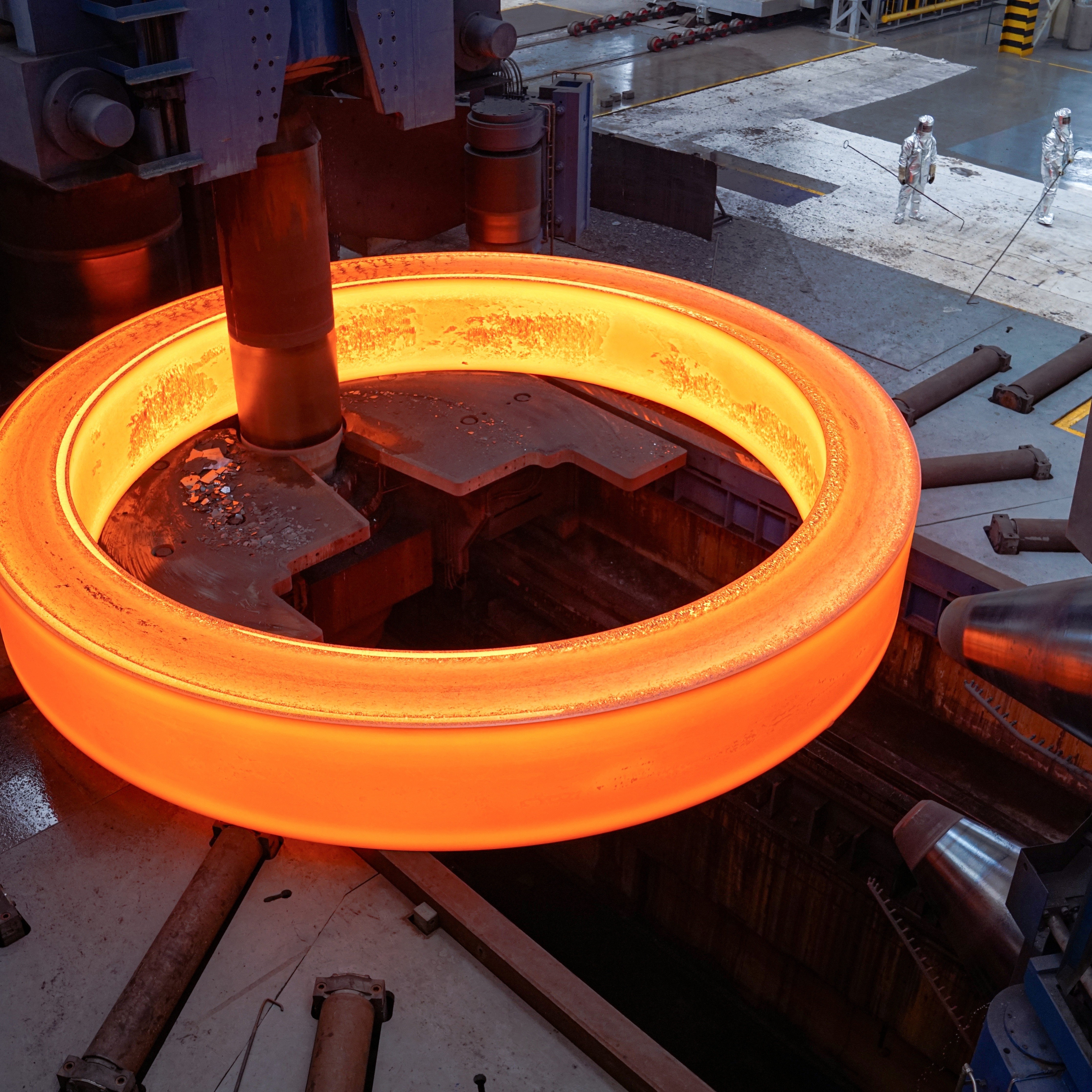
Large-diameter seamless rolled rings are specified according to project operating conditions.
Seamless rolled rings are annular forged components used in heavy engineering applications where weld-free structure and oriented grain flow affect reliability. They are supplied in carbon steel, stainless steel, and alloy steel, covering a manufacturing envelope of 5 meters maximum height, 21 meters maximum diameter, and 300 tons maximum weight. This article explains how buyers can match seamless rolled rings to project-specific conditions, from cement rotary kilns to offshore wind turbines and petrochemical pressure vessels.
The Problem: Generic Specifications Do Not Manage Project Risk
Procurement documents that list only a material grade and an outer diameter leave too much room for interpretation. The same steel can behave differently under thermal cycling, seawater exposure, continuous vibration, or sediment abrasion. A ring designed for a wind turbine tower connection may not suit a cement kiln support system, even if both are nominally carbon steel rings. The opportunity for buyers is to translate project-specific operating scenarios into measurable engineering requirements: load path, duty cycle, environmental exposure, dimensional tolerances, and required testing.
For Research and Evaluation stage buyers, this means shifting the conversation from “what is available” to “what has been demonstrated under comparable conditions.” Suppliers that can document material response, inspection results, and installed references become more predictable partners for project-critical components.
How Iraeta Positions Seamless Rolled Rings for Project Fit
Iraeta Energy Equipment Co., Ltd. is a forging specialist with production facilities in China and Spain, serving clean energy, oil and gas, marine engineering, tunnel boring, cement production, and metal mining. For seamless rolled rings, Iraeta supports carbon steel, stainless steel, and alloy steel, with maximum height of 5 meters, maximum diameter of 21 meters, and maximum single-piece weight of 300 tons. Customization is available for material, size, forging shape, heat treatment, and machining. Iraeta states a monthly capacity of 70,000 tons, a minimum order quantity of one unit, and a 100% testing policy.
This production envelope is directly relevant to project adaptation. A supplier that can make a 300-ton ring and a 50-kilogram ring under the same quality system gives buyers a wider set of sourcing options for large heavy-industry projects. The company operates a 22-meter-class ring rolling line supported by 300-ton raw material preparation.
Process and Parameters That Matter in Ring Specification
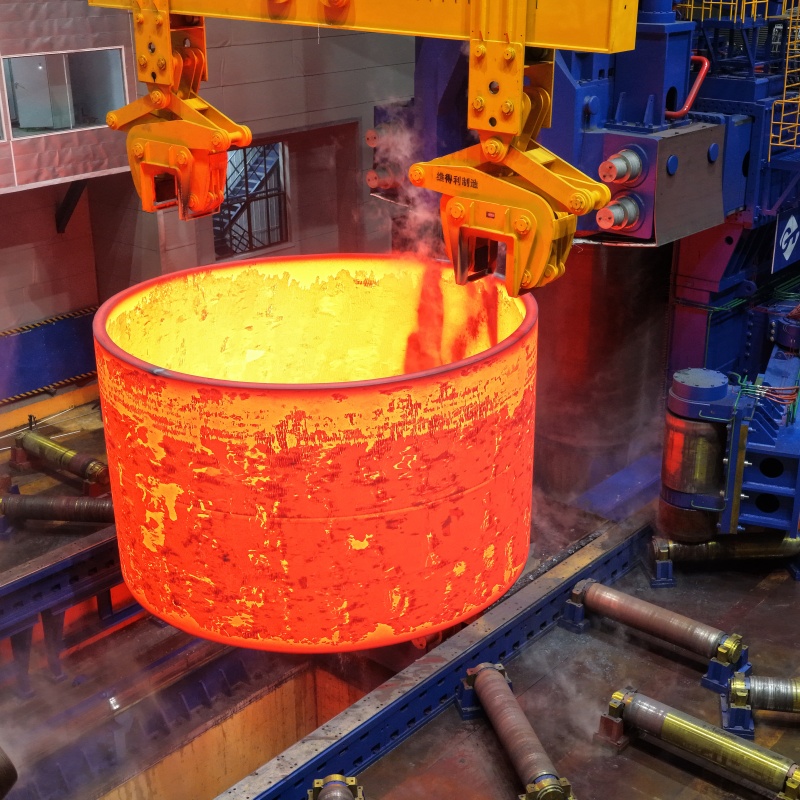
Ring rolling expands a hollow preform into a large continuous forging without welded seams.
Seamless rolled ring manufacturing begins with raw material preparation, then moves through forging stages that open the billet before ring rolling. The ring rolling stage expands the hollow preform between rotating rolls, increasing the diameter while controlling wall thickness. Because the forming action follows the ring circumference, the grain flow is oriented for circumferential loads. This makes seamless rolled rings especially suitable for bearing rings, kiln tyres, flanges, and large structural connection rings.
For project engineers, the relevant parameters are not only outside diameter and material grade. Height, radial thickness, heat treatment condition, and machining allowance determine final performance. Large rings require careful control of temperature and deformation to avoid distortion. Iraeta’s line includes 300-ton raw material preparation and a 22-meter-class ring rolling machine, enabling rings up to the 21-meter class in a single integral structure.
Matching Seamless Rolled Rings to Operating Scenarios
Wind Power and Offshore Wind Connections
In EU and US offshore wind farm projects, seamless rolled rings are used in connection systems and are matched with wind turbine towers. The operating mode is continuous 24/7, with salt-spray corrosion, low-temperature operation, and high cyclic loads. Special requirements include high structural strength, corrosion and salt-spray resistance, low-temperature toughness, and fatigue life. The ring transmits torque and maintains structural stability.
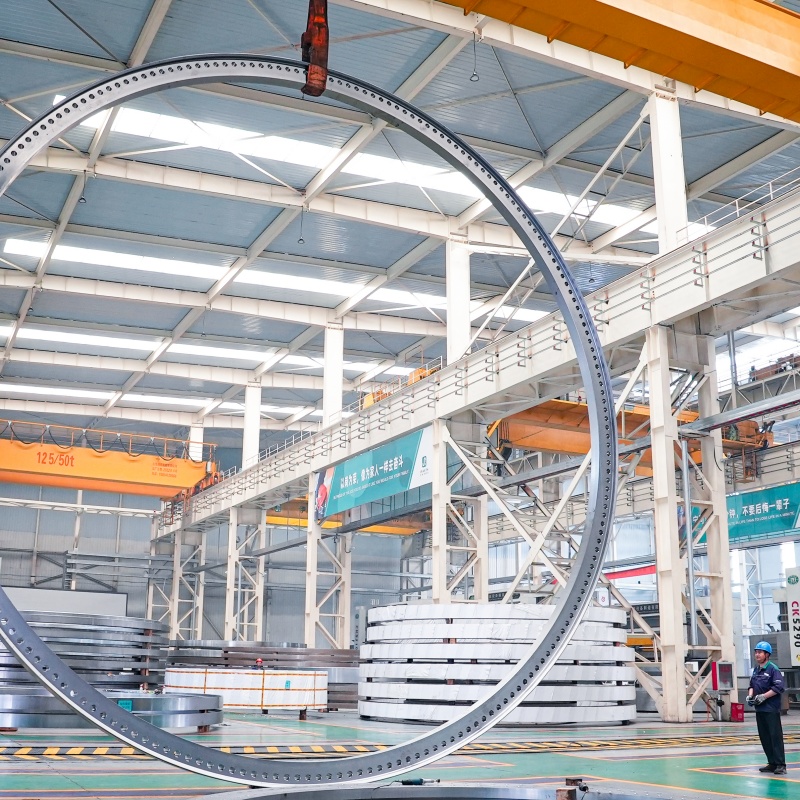
Seamless rolled rings in wind power applications must resist corrosion and fatigue.
Offshore Engineering and Deep-Sea Equipment
For offshore drilling platforms and deep-sea equipment, seamless rolled rings operate under deep-sea high pressure and seawater corrosion. They are commonly used with FPSO mooring systems and subsea production equipment. Key requirements are deep-sea pressure resistance, marine-grade corrosion protection, anti-fatigue under cyclic loads, watertight sealing, and long service life. The ring functions include bearing support, sealing positioning, and tail shaft protection.
Petrochemical Pressure Vessels
In petrochemical pressure vessel projects, seamless rolled rings are designed for high-pressure, high-temperature environments and must be corrosion-resistant and high-strength. These systems run 24/7, and the rings provide pressure containment and structural support in pressure vessel bodies, piping systems, and heat exchangers. This application context is documented in European projects, including Germany.
Cement Rotary Kilns
Cement rotary kilns impose extreme high temperature, heavy cyclic load, continuous operation, severe dust, thermal corrosion, and thermal expansion. Seamless rolled rings used as kiln tyres or support rings need high load capacity, thermal stability, wear resistance, and fatigue life. In a European project, an ultra-large-diameter integral forging was supplied as a core supporting ring for a cement and energy equipment manufacturer; the component was deployed successfully and met strict heavy-duty quality standards. In another case, a Turkish cement plant commissioned a ring as a core structural component for its kiln, operating stably under high-temperature and heavy-load conditions.
Construction Machinery and Heavy Equipment
Construction machinery projects use seamless rolled rings in transmission systems and slewing support systems. Working conditions include heavy load, vibration, frequent start-stop, and variable load. Representative matched equipment includes shield machines, cranes, shield cutter head systems, slewing mechanisms, and transmission systems. The rings are selected for high load capacity, impact and fatigue resistance, and wear resistance.
Hydropower
Hydropower applications involve high water head pressure, sediment abrasion, water erosion corrosion, cyclic load, and long-term underwater or humid operation. Seamless rolled rings for hydro turbine generating units and pumped storage stations are specified for high water pressure resistance, sediment abrasion resistance, fatigue resistance, sealing performance, and long service life.
Oil, Gas and Refining
In refining and petrochemical equipment, seamless rolled rings and related forged transition sections are used in heavy-duty hydrogenation reactors. A Saudi oil and gas OEM sourced two forged units for refining and petrochemical equipment; the components operated stably and complied with stringent quality and safety requirements. Another large refinery project used two shell sections and one transition section for a heavy-duty hydrogenation reactor; those components were applied in a 7.5-million-ton-per-year European refinery project and showed qualified performance.
Market Signals Shaping Seamless Rolled Ring Procurement
Market data points to continued demand for larger and more specialized seamless rolled rings. According to QY Research, the global seamless rolled ring forgings market was valued at USD 11.1 billion in 2025 and is projected to reach USD 16.36 billion by 2034. Dataintelo projects that the wind turbine forged tower flange market, a key application of seamless rolled rings, will reach USD 8.2 billion by 2033, growing at a CAGR of 7.3%.
Supply structure is also shifting. One industrial guide estimates that Chinese seamless rolled ring suppliers, including Iraeta, account for more than 40% of global output as of 2026. Market Research Future lists ThyssenKrupp (Germany), Bharat Forge (India), Frisa (Mexico), Scot Forge (USA), and Iraeta (China) among top tier 1 and tier 2 ring rolling suppliers. This global mix gives project buyers multiple sourcing routes, but also makes technical qualification more important.
Seamless Rolled Rings vs. Alternative Ring Manufacturing Routes
| Manufacturing Route | Typical Strength Logic | Common Project Boundary |
|---|---|---|
| Seamless rolled rings | No weld seam; grain flow oriented along circumference; large diameter range available | Requires ring rolling capacity; complex internal cavities are difficult to form |
| Cast rings | Can form complex shapes and internal features | As-cast structure may contain porosity and lower fatigue resistance for high-load projects |
| Welded rings | Cost-effective for small quantities; uses rolled plate | Weld seams can become fatigue initiation sites; welding qualification is required |
| Open-die forged rings | Good mechanical properties from forged structure | Material utilization may be lower; size and dimensional consistency depend on the press envelope |
Seamless rolled rings are not a universal answer. For small-diameter rings, very high-volume parts, or components requiring integral flanges and internal cross-drilled features, casting or machining from solid forgings may be more practical. Buyers should evaluate the full manufacturing route based on load case, geometry, inspection requirements, and lifecycle cost.
Future Outlook: Larger, Higher-Strength, and More Verified Rings
The direction in heavy industry is toward larger integrated components. Iraeta produced a record-breaking seamless rolled ring of 21.029 meters in diameter in 2026, following its 15.673-meter record set in 2022. The company background identifies applications in fourth-generation nuclear power plants, cement rotary kilns with 10,000 tons per day output, 16-meter shield tunneling machines, and over 20MW floating offshore wind turbines. These project types push material strength, dimensional limits, and inspection requirements.
As project owners define stricter certification and quality requirements, suppliers will need to document process control and testing results at a deeper level. Standards such as PED 2014/68/EU for pressure equipment, EN 1090 for structural components, and AS9100 for aerospace are already relevant for cross-border procurement. For buyers, the practical consequence is that supplier evaluation should include not only maximum size charts but also proof of heat treatment capability, machining accuracy, and traceability.
FAQ: Common Project-Scenario Questions
What special requirements apply to seamless rolled rings in offshore drilling and deep-sea equipment?
For offshore drilling platforms and deep-sea equipment, seamless rolled rings must withstand deep-sea high pressure and seawater corrosion. Special requirements include marine-grade corrosion protection, anti-fatigue under cyclic loads, watertight sealing, and long service life in harsh marine environments. The rings provide bearing support, sealing positioning, and tail shaft protection, and are typically used with FPSO mooring systems and subsea production equipment.
How do seamless rolled rings perform in offshore wind farm connection systems?
In EU and US offshore wind farm projects, seamless rolled rings are used in connection systems and must work with wind turbine towers. They operate in continuous 24/7 mode and require high structural strength, excellent corrosion and salt-spray resistance, and low-temperature toughness. The rings function to transmit torque and maintain structural stability.
What should be considered when specifying seamless rolled rings for petrochemical pressure vessels?
In petrochemical pressure vessel projects, seamless rolled rings are designed for high pressure and high temperature environments and must be corrosion-resistant and high-strength. They operate in 24/7 mode and provide pressure containment and structural support for vessel bodies, piping systems, and heat exchangers. This application context appears in European projects, including Germany.