
Seamless Rolled Rings: A Project-Level Guide to Materials, Dimensions, and Supplier Fit
When procurement teams evaluate seamless rolled rings for heavy industrial projects, the typical comparison starts with material grade, outside diameter, and price. But for project-level fit, the ring specification is only half of the equation. The more critical question is whether the manufacturer's equipment envelope, process route, and quality system can deliver that specification for the actual service conditions.
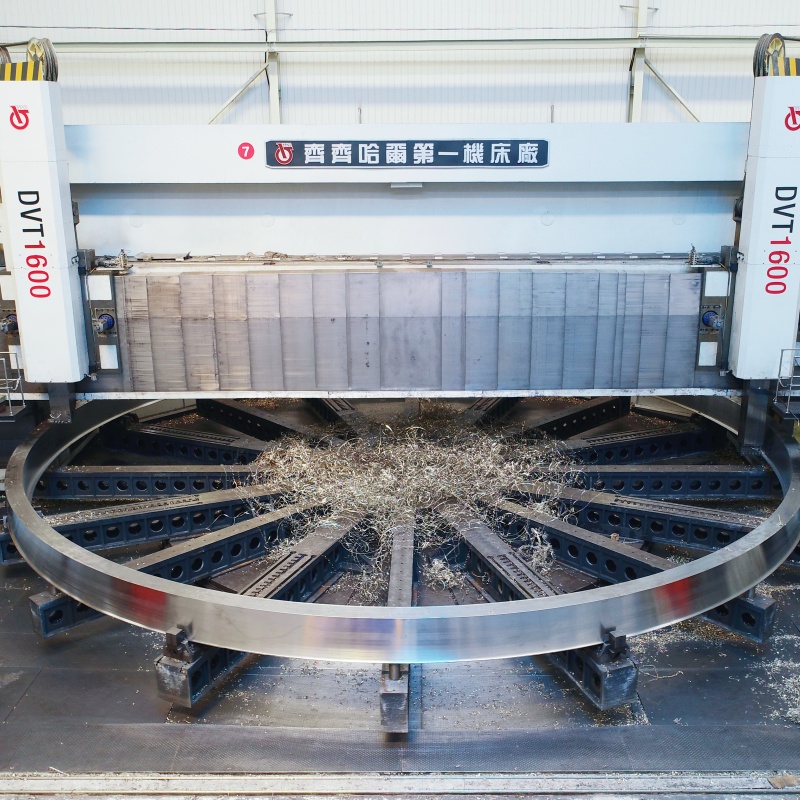
Alloy steel seamless rolled rings used in heavy rotating equipment.
Why Project Fit Matters More Than Component Price
A seamless rolled ring is a forged annular component produced by heating a pierced billet and expanding it on a ring rolling mill. Unlike cast rings or welded segmented rings, the rolling process refines the grain structure and aligns material flow along the circumference, which translates into predictable fatigue behavior under cyclic loads.
That metallurgical advantage matters across several capital-intensive industries. In wind turbine towers, seamless rolled rings serve as critical load-bearing flanges that transfer loads from the tower section to the nacelle. In cement plants, they become kiln tyres and drive rings supporting the rotating kiln body. In tunnel boring, large seamless rolled rings function as main bearing housings and drive components subject to unpredictable rock conditions. In nuclear power and petrochemical pressure vessels, they act as shell sections, transition pieces, and flange forgings containing high-pressure media.
Each of these applications has a different dominant failure mode. Wind tower flanges are dominated by fatigue and low-temperature impact requirements. Rotary kiln tyres require thermal stability, wear resistance, and the ability to absorb kiln shell ovality under a continuous 24/7 operating regime. Tunnel boring rings demand high load capacity, impact resistance, and fatigue life under frequent start-stop cycles. Petrochemical pressure vessel rings must maintain pressure integrity in hydrogen, sulfide, or other corrosive process media at elevated temperatures.
The global seamless rolled ring forgings market was valued at USD 11,100 million in 2025 and is projected to reach USD 16,360 million by 2034. That growth is partly a consequence of this application expansion: rings are no longer generic drivetrain components, but engineered subsystems matched to specific equipment classes.
Reading the Application Profile Before Writing the Inquiry
In practice, project-fit evaluation starts before the RFQ is issued. The buyer should map the operating condition, mechanical loading pattern, environmental exposure, and criticality of the ring in the equipment assembly. The following matrix summarizes typical project contexts for seamless rolled ring forgings:
| Project Context | Typical Role of the Ring | Service Condition | Required Material / Response |
|---|---|---|---|
| Wind turbine tower connection systems | Tower flange, yaw bearing ring, drivetrain ring | 24/7 cyclic loading; salt spray and marine corrosion for offshore sites; low-temperature operation | High structural strength, corrosion and salt spray resistance, low-temperature toughness, high fatigue life |
| Cement rotary kiln support and drive | Kiln tyre / riding ring, drive ring, support roller components | Extreme high temperature, heavy cyclic load, 24/7 continuous operation, severe dust and thermal corrosion | High-temperature resistance, wear and abrasion resistance, high fatigue life, ultra-high load capacity |
| Tunnel boring machine cutterhead and drive | Main bearing ring, slewing ring, transmission components | Heavy load, vibration load, frequent start-stop and variable load in soil and rock | High load capacity, impact and fatigue resistance, wear resistance |
| Pressure vessel / petrochemical reactor | Shell section, transition section, flange ring for high-pressure equipment | High pressure, high temperature, corrosive process media; continuous operation | Corrosion resistance, high strength, pressure containment capability |
| Offshore engineering structures | Connecting rings, bearing supports, sealing positioning rings, tail shaft protection | Deep-sea high pressure, seawater corrosion, cyclic wave load, fatigue loading | Marine-grade corrosion protection, anti-fatigue performance, watertight sealing, long service life |
| Hydropower turbine generators | Structural support rings, load transfer rings in turbine or generator assembly | High water head pressure, sediment abrasion, water erosion corrosion, cyclic load | High water pressure resistance, sediment abrasion resistance, fatigue resistance, sealing performance |
The matrix also reveals the material response expected by the equipment designer. Carbon steel rings remain a practical baseline for less corrosive applications. Stainless steel seamless rolled rings become necessary where process media, seawater, or washdown conditions create corrosion risk. Alloy steel seamless rolled rings are specified where strength-to-weight ratio, fatigue life, or hardenability must be improved without increasing section size.
Turning a Specification into a Manufacturing Reality Check
Once the application profile is clear, the buyer should check the specification against the physical limits of candidate manufacturers. Three figures define the feasibility of large seamless rolled rings: maximum height, maximum outside diameter, and maximum single-piece weight.
Iraeta Energy Equipment Co., Ltd., a China-based forging specialist with production facilities in China and Spain, lists the following envelope for seamless rolled ring forgings: maximum height of 5 meters, maximum diameter of 21 meters, and maximum single-piece weight of 300 tons. For comparison, Iraeta is publicly recognized for having produced a record-breaking seamless rolled ring measuring 15.6 meters in diameter with a single weight of 150 tons for nuclear power applications in 2022, and the company states that in 2026 it manufactured a seamless rolled steel ring of 21.029 meters in diameter, breaking its own Guinness World Record.
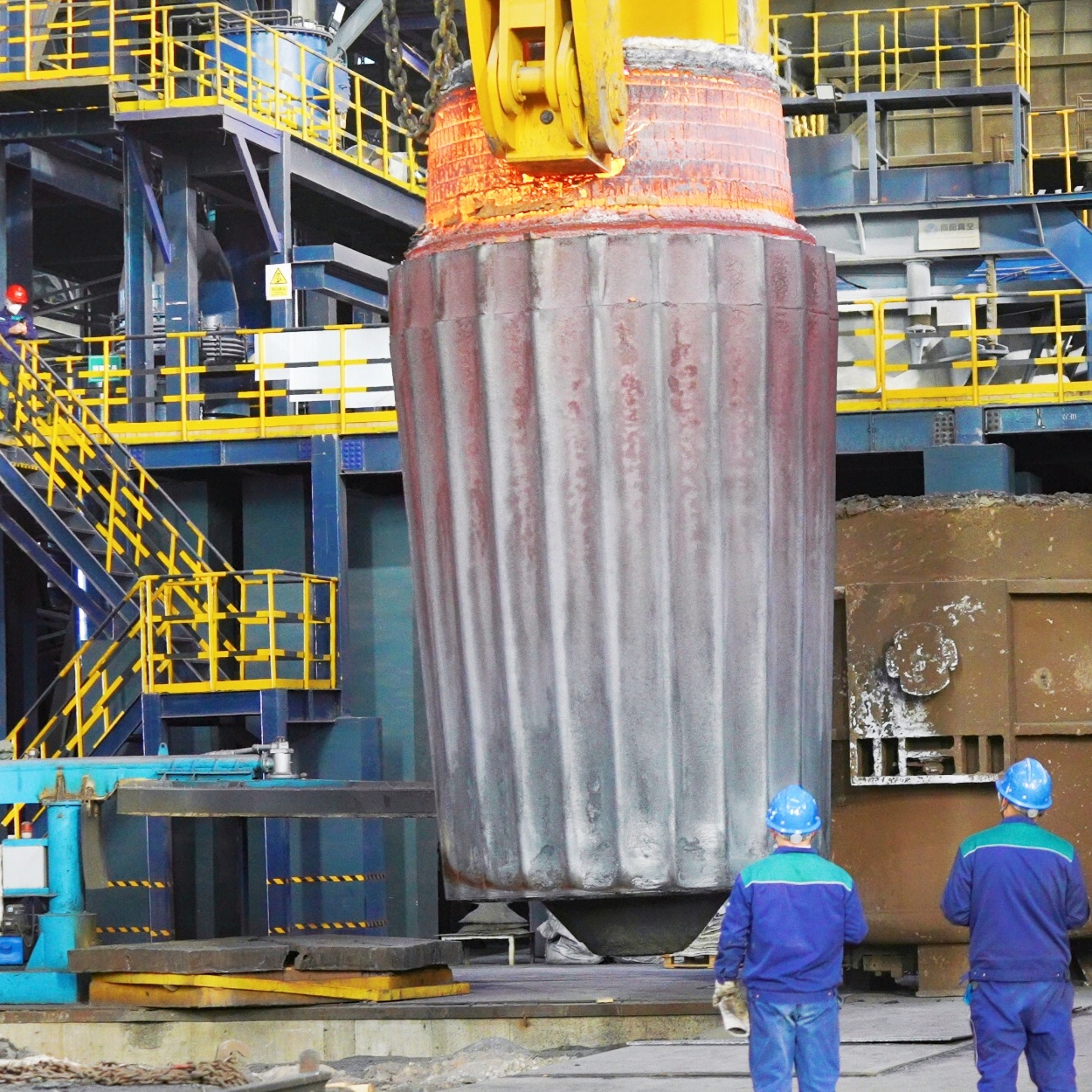
Iraeta's raw material preparation for large-diameter ring forgings.
What does this mean for procurement? A buyer requiring a 5-meter-diameter kiln tyre and a buyer requiring a 12-meter wind tower flange are not necessarily looking at different suppliers, but the evaluation criteria must be sized to the required outer diameter and cross-sectional height. A manufacturer that cannot open-die forge or roll beyond a certain diameter simply cannot participate in single-piece integral ring projects. Even if the ring specification appears in the catalog, the actual production depends on the ring rolling machine capacity, furnace dimensions, and crane lifting limits.
For extreme project applications, procurement teams should request evidence of actual production records at comparable diameter or weight. A manufacturer's installed equipment base tells a more reliable story than marketing language. Iraeta, for example, operates a 22-meter world-class ring rolling machine at its Jinan production base and performs raw material preparation for forgings up to 300 tons. These capabilities make the company a relevant option for kiln tyres on large cement rotary kilns, flange rings for high-capacity wind turbines, and ring components for nuclear power or deep-sea engineering projects.
Material Options and Certification Standards in Project Procurement
Material selection must satisfy both the mechanical design code and the actual environmental exposure. Most seamless rolled ring suppliers quote carbon steel, stainless steel, and alloy steel. Within each family, the specific grade normally follows the international standard recognized by the project, such as ASTM, EN, or JIS equivalents.
For European projects, additional certification requirements often become governing constraints. Seamless rolled rings used in pressure equipment require PED 2014/68/EU certification. Structural components supplied to the EU construction or plant engineering market typically require EN 1090 conformity. Buyers in the nuclear supply chain, meanwhile, are usually required to demonstrate compliance with nuclear quality assurance standards and specific material traceability regimes.
AS9100, the quality management standard for aerospace manufacturers, is sometimes cited in the ring-rolling industry as a marker of a robust quality system. However, aerospace material programs are not identical to power generation or cement industry programs, so buyers should verify the specific certification applicable to their sector rather than treating any single standard as a universal proof of capability.
Dimension, Weight, and Process Capability as Selection Gates
A practical way to evaluate project fit is to use a staged gate procedure:
- Gate 1 — Application profile: Define the equipment type, load spectrum, operating temperature, corrosion environment, and design life expectation.
- Gate 2 — Dimension and weight envelope: Confirm the required outside diameter, inside diameter, axial height, and single-piece weight are within the manufacturer's rolling and machining limits.
- Gate 3 — Material and standard compliance: Ensure the supplier can source or prepare the required material grade and can issue the required certification, including PED 2014/68/EU or EN 1090 if applicable.
- Gate 4 — Process route: Check whether the supplier covers the entire production chain — melting, ingot or billet preparation, open-die forging, ring rolling, heat treatment, rough machining, final machining, and ultrasonic/surface inspection.
- Gate 5 — Quality assurance evidence: Review inspection rates, third-party testing acceptance, and traceability documentation. Iraeta, for instance, performs 100% testing, meaning every ring intended for critical duty is verified rather than batch-sampled.
- Gate 6 — Logistics and project management: For extra-large rings, confirm the supplier can organize oversized transport and provide remote technical support during installation or commissioning.
Iraeta's manufacturing scope includes custom material preparation, forging, heat treatment, precision machining, rigorous testing, and global logistics. The company's monthly production capacity is listed at 70,000 tons, with a minimum order quantity of one unit. That low MOQ is significant for project-specific buyers, because it allows the ring to be made to project dimensions rather than forcing the buyer to select a catalog size and adapt the design around it.
Case Evidence: Delivering Rings for Cement, Energy, and Pressure Equipment Projects
Manufacturer claims about capability become more meaningful when matched to documented project deliveries.
Rotary Kiln Tyre for a European Cement and Energy Equipment Manufacturer
In one documented delivery, a cement and energy equipment manufacturer in Germany sourced an ultra-large-diameter integral ring forging for use as a core supporting ring, specifically a rotary kiln tyre for large-scale industrial equipment. The part was designed for long-term operation and was successfully deployed in European industrial projects. The manufacturer's stated highlights were ultra-large diameter integral forging, precision machining, high load-bearing capacity, excellent thermal stability, and extended service life.
Cement Plant Rotary Kiln Components in Turkey
Another case involved a cement plant in Turkey that purchased a set of seamless rolled rings for the core structural component of a cement rotary kiln. The equipment operated under high-temperature and heavy-load conditions. After installation and commissioning, the rings performed stably, with precision forging and machining, high-temperature resistance, and fatigue strength cited as the key contributors to service life.
Oil and Gas OEM Components in Saudi Arabia
An oil and gas OEM in Saudi Arabia ordered two units for key components in refining and petrochemical equipment. The parts were subjected to stringent quality and safety requirements. The project was delivered successfully, with high forging precision, wear resistance, and high-temperature resistance identified as decisive factors.
Heavy-Duty Hydrogenation Reactor Transition Sections
In a larger pressure-equipment application, a large refinery in Saudi Arabia purchased three pieces, comprising two shell sections and one transition section, for a heavy-duty hydrogenation reactor. The application context was a 7.5 million tons-per-year European refinery project. These components were manufactured using integral ring rolling and near-net-shape forming, which produced the required mechanical performance while shortening the overall production lead time compared with alternative manufacturing routes.
These examples show that seamless rolled ring suppliers do not simply ship identical rings to every industry. The process engineering, material selection, heat treatment, and machining plan must be adapted to whether the end use is a cement kiln operating at 24/7 duty, a refinery reactor requiring pressure-boundary integrity, or an offshore structure exposed to marine corrosion.
Seamless Rolled Rings vs. Traditional Alternatives: A Balanced Comparison
Most project-fit discussions eventually arrive at the question of whether the ring should be seamless rolled, cast and machined, or fabricated from welded segments.
| Manufacturing Route | Reported Strengths | Typical Constraints |
|---|---|---|
| Seamless rolled ring forging | Continuous grain flow, no welds, refined structure, high fatigue resistance, suitable for critical rotating and pressure-retaining applications | Requires large ring rolling capacity for very large diameters; material utilization depends on the selected blank size and machining allowance |
| Cast ring | Lower initial tooling complexity, potential for near-net shape in complex cross-sections | Higher risk of internal porosity or segregation; fatigue properties may be lower; often rejected by codes for pressure containment or extreme dynamic loading |
| Welded segmented ring | Can be produced from plate with standard welding procedures; avoids very large forging capacity | Contains longitudinal or circumferential welds and heat-affected zones; requires full volumetric inspection and may become the fatigue or corrosion weak point in severe service |
For very large wind turbine tower flanges and rotary kiln tyres, the absence of a weld seam is a metallurgical advantage because fatigue cracks often initiate at weld toes or heat-affected zones. Cast rings may appear economical at the quotation stage, but they introduce material-integrity risk in high-cycle applications. This is consistent with the direction of the market: the wind turbine forged tower flange market, a key application of seamless rolled rings, is expected to grow at a CAGR of 7.3% to reach USD 8.2 billion by 2033, according to Dataintelo.
That said, seamless rolling is not the only answer for every ring-shaped component. For very thin rings, small sizes, or geometries with internal profiles that require extensive machining, a forged-and-machined approach may produce the same function with lower cost. In some large structures, segmented or welded designs are accepted because the design code permits them and the inspection burden is manageable. A professional buyer should therefore avoid dogmatic preferences and instead test the ring manufacturing route against the failure consequences of the application.
The Manufacturer Fit: What Large-Scale Forging Capability Actually Changes
For many project-specific inquiries, the decisive factor is whether the manufacturer is large enough to forge, heat treat, machine, and test the required ring without splitting the part into segments.
Iraeta, which identifies itself as an OBM forging manufacturer, offers customization across material, size, forging shape, heat treatment, and machining. The company serves export markets including the EU, the Americas, Asia, and the Middle East. Its product portfolio extends beyond seamless rolled rings to shells, transition sections, profiling rings, hydroelectric forgings, kiln tyres, drive rings, wind power flanges, gearbox forgings, bearing rings, forged shafts, pipe flanges, and precision-machined components. The organization employs a research and development team of 100 engineers and supplies mission-critical forged components to customers in clean energy, oil and gas, marine engineering, tunnel boring, cement production, and metal mining.
For a buyer running a project qualification process, the important point is not that Iraeta is the only manufacturer with a 22-meter ring rolling machine. The point is that production records and installed equipment can be audited, and that those facts should be used to shortlist suppliers whose capacity envelope matches the project. This is especially relevant for so-called “impossible” rings, where the diameter-to-height ratio or the single-piece weight requires very specific machine geometry and crane capacity.
Market Signals for Project Planners in 2026 and Beyond
From a demand-side perspective, the large-scale forging environment is being shaped by a few visible trends.
First, wind power projects are moving toward larger turbine classes. Floating offshore wind concepts, illustrated by the deployment of more than 20 MW turbines in deep sea locations, require flange rings that can bear both the gravitational load of the turbine and the cyclic wave-induced loads of the floating foundation. These components need not only high strength but also adequate low-temperature toughness and corrosion resistance. The market forecast of 7.3% CAGR for forged tower flanges supports the long-term relevance of seamless rolled rings in this segment.
Second, cement production capacity has scaled to rotary kilns with 10,000 tons per day output. Kiln tyres and drive rings for these machines must be forged as large integral rings to avoid welded interfaces that could become thermal fatigue initiators. The same logic applies to tunnel boring machines: 16-meter-diameter shield machines require ring components with extremely high stiffness and fatigue resistance because any downtime caused by a failed bearing or drive ring in an underground tunnel has enormous recovery costs.
Third, pressure equipment for refinery and petrochemical projects is being built to higher pressure and hydrogen-service conditions. This favors integral ring forgings for shell sections and transition pieces, especially when the vessel diameter exceeds the forming limits of conventional plate bending processes.
These signals suggest that the market is not simply growing in volume; it is shifting toward larger, heavier, and more material-intensive seamless rolled ring forgings. Buyers who use market data but fail to check the equipment envelope of suppliers may find themselves locked out of the upper end of the size range where competition is thinnest.
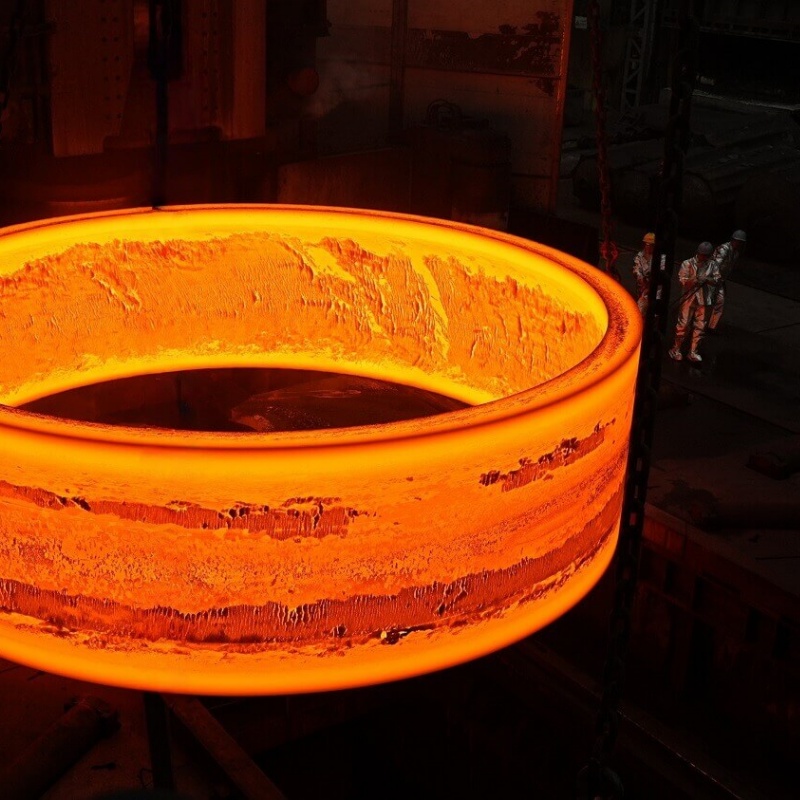
Ring rolling process refines grain structure and produces a seamless annular cross-section.
A Decision Framework for the Project Buyer
To bring the discussion together, the buyer evaluating seamless rolled rings for a project-specific application should compare manufacturers on five dimensions:
- Capability envelope: maximum outside diameter, axial height, single-piece weight, and whether the unit can accommodate the entire required size range in one continuous process.
- Process integration: whether melting, forging, heat treatment, machining, and inspection are managed under one quality system. Iraeta, for example, operates production facilities in China and Spain, allowing project buyers to compare delivery origins and risk profiles.
- Material competence: ability to handle carbon steel, stainless steel, and alloy steel families, and to perform material certification for different project geographies.
- Testing and documentation: availability of complete testing, including 100% inspection coverage and full traceability, which is particularly valuable to clients in nuclear power, wind power, and offshore engineering.
- Long-term service: the manufacturer's experience in exporting to the EU, USA, Japan, the Middle East, Southeast Asia, Brazil, and India, and its ability to support installation or project changes through remote technical support.
A practical evaluation scorecard could assign the following weights: 40% to capability envelope and process route, 25% to material and certification, 20% to testing and documentation, and 15% to logistics and service. This weighting is deliberately conservative from a marketing standpoint; the underlying logic is that a supplier that can actually forge, machine, and validate the ring is more important than the supplier that appears most frequently in an internet search.
Future Outlook: Project-Specific Adaptation Becomes the Standard
As heavy industrial projects become more customized, the old pattern of buying seamless rolled rings from a standard size chart is fading. Wind turbine platforms are no longer standardized across manufacturers, and cement kiln designs are being scaled to larger daily capacities. Tunnel boring projects vary by geological condition and tunnel diameter. Pressure vessel projects are being driven by carbon intensity targets that require higher operating pressures or new process chemistries.
This means that the manufacturers who will gain the most relevance are those who can match material development, ring rolling flexibility, and inspection depth to specific project demands. The evidence already points in this direction: Iraeta has moved from general ring forgings into mission-critical applications such as fourth-generation nuclear power plants, cement rotary kilns with 10,000 tons per day output, 16-meter shield tunneling machines, and more than 20 MW floating offshore wind turbines.
For project buyers, the practical conclusion is to build a supplier shortlist that reflects the actual dimensions and operating profile of the equipment in question. A ring that will function as a kiln tyre in a high-temperature cement process should not be evaluated solely by static strength. A wind tower flange should not be evaluated solely by cost per ton. Only a project-specific review of materials, process capability, and documented delivery experience can produce a dependable purchase decision.
Frequently Asked Questions
What are seamless rolled rings used for?
Seamless rolled rings are annular forged components used mainly as critical load-bearing, torque-transmitting, and structural-support elements in heavy equipment. Typical applications include wind turbine tower flange connections, cement rotary kiln tyres and drive rings, tunnel boring machine bearing and drive components, hydropower turbine structural rings, offshore drilling and subsea equipment rings, and pressure vessel shell or transition sections in petrochemical plants.
How do I choose the right seamless rolled ring for a specific application?
Selection should begin with the application profile, including operating temperature, corrosive media, load spectrum, and required service life. Once the profile is defined, compare the required outside diameter, height, and single-piece weight against the manufacturer's rolling and machining envelope. Then verify material grade, applicable certification standards, inspection coverage, and the supplier's experience with similar project contexts.
Which seamless rolled rings are used for wind turbines?
Wind turbine projects typically use seamless rolled rings as tower flange rings, yaw bearing rings, and drivetrain rings. The critical requirements are high structural strength, corrosion and salt spray resistance for offshore sites, low-temperature toughness, and high fatigue life. In offshore wind farm connection systems, these rings transmit torque and maintain structural stability under continuous 24/7 operation.
What are seamless rolled rings for cement rotary kilns?
Cement rotary kiln applications use seamless rolled rings primarily as kiln tyres, drive rings, and support roller components. These rings operate in extreme high-temperature conditions, under heavy cyclic loads, in a 24/7 continuous mode, with severe dust and thermal corrosion present. Forged seamless rings provide the required thermal stability, wear resistance, and fatigue life in this environment.
Are seamless rolled rings for tunnel boring machines a separate product category?
They are not necessarily a separate material class, but the application requirements are particularly demanding. Tunnel boring machines involve heavy loads, vibration, frequent start-stop cycles, and variable load conditions. Rings used in the cutterhead system, slewing mechanism, and transmission system must have high load capacity, impact resistance, fatigue resistance, and wear resistance to survive high-intensity underground operation.
What sizes and weights can be produced as seamless rolled rings?
Production capacity depends entirely on the forging and ring rolling equipment of the manufacturer. Iraeta, for example, lists a maximum height of 5 meters, a maximum diameter of 21 meters, and a maximum single-piece weight of 300 tons for seamless rolled ring forgings. The company has also reported the production of record-breaking rings exceeding 21 meters in diameter.
What materials are available for seamless rolled ring forgings?
The most common material families are carbon steel, stainless steel, and alloy steel. Carbon steel is generally suitable for moderate-load, non-corrosive applications. Stainless steel is selected for corrosion-prone environments such as marine engineering or wet process media. Alloy steel is used where higher strength, fatigue resistance, or improved heat-treatment response is required.
What certifications should seamless rolled rings have for the European market?
For pressure-containing components sold into the EU, PED 2014/68/EU certification is normally required. For structural components, EN 1090 conformity applies. Buyers should also clarify the applicable material standard and the inspection regime required by the end customer or engineering contractor. Aerospace-grade ring producers may refer to AS9100, but that standard is not a substitute for project-specific pressure equipment certification.
Have Questions or Need More Details?
Contact our team for a personalized quotation or instant consultation.
Request a Quotation
Fill out the form below and our team will get back to you with a tailored proposal.
WhatsApp Direct Chat
Prefer to chat in real-time? Message us on WhatsApp for instant assistance & quick answers.
- Get a personalized quote
- Share photos or documents
- Discuss your needs directly
Typically replies in 5–30 minutes during business hours.