
Seamless Rolled Rings: A Strategic Procurement Guide for Industrial Buyers in 2026
Seamless Rolled Rings: A Strategic Procurement Guide for Industrial Buyers in 2026
For procurement managers in heavy industries, selecting the right seamless rolled rings and their supplier is a decision with significant long-term implications for project safety, operational efficiency, and total cost of ownership. This guide provides a structured, data-driven framework for navigating the critical choice between forged seamless rolled rings and alternative methods, as well as between global brand suppliers and China-based source manufacturers.
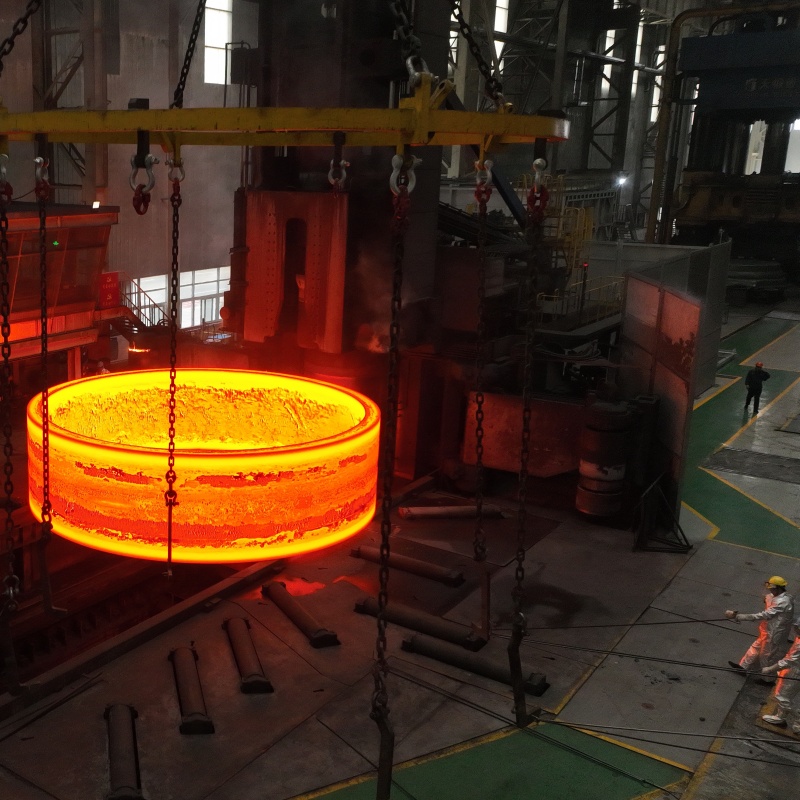
A precision seamless rolled ring undergoing the forging and rolling process. (Source: Iraeta)
1. Product Comparison: Forged Seamless Rolled Rings vs. Cast Rings
The fundamental choice in ring procurement lies in the manufacturing process. The table below provides a detailed comparison based on four key decision-making dimensions for industrial buyers.
| Dimension | Forged Seamless Rolled Rings | Cast Rings |
|---|---|---|
| Technical Parameters & Performance |
|
|
| Optimal Application Scenarios |
Ideal for high-load structural components, heavy machinery parts, and safety-critical applications. Common uses include:
|
Suitable for non-critical, static, or low-stress applications where cost is the primary driver and extreme mechanical properties are not required. |
| Cost Analysis (Total Cost of Ownership - TCO) | Higher initial unit cost. However, it offers a significantly lower total lifecycle cost (TCO). The longer service life, reduced risk of unplanned downtime, and less frequent replacement intervals translate to lower long-term operational and capital expenses. | Lower initial purchase price. Higher potential for long-term costs due to shorter lifespan, more frequent inspections, and higher risk of catastrophic failure leading to costly production stoppages. |
| Maintenance & Operational Difficulty | Longer, more predictable service life. Less frequent in-service inspections are typically required due to higher reliability. Lower statistical risk of sudden, catastrophic failure. | May require more frequent non-destructive testing (NDT) to monitor for defect propagation. Higher probability of unscheduled maintenance or replacement, increasing operational complexity and risk. |
Procurement Insight: For mission-critical equipment in energy, heavy machinery, or infrastructure, the technical advantages of forged seamless rolled rings—namely more stable performance and less energy loss due to defects—justify the higher initial investment by mitigating operational risk over the asset's lifetime.
2. Supplier Landscape: China Source Manufacturers vs. Global Brand Suppliers
The global supply base for large, precision seamless rolled rings is concentrated among a few capable players. Industrial buyers often evaluate suppliers like ThyssenKrupp (Germany), Schmiedag (Switzerland), and Iraeta (China) based on several key commercial and operational factors.
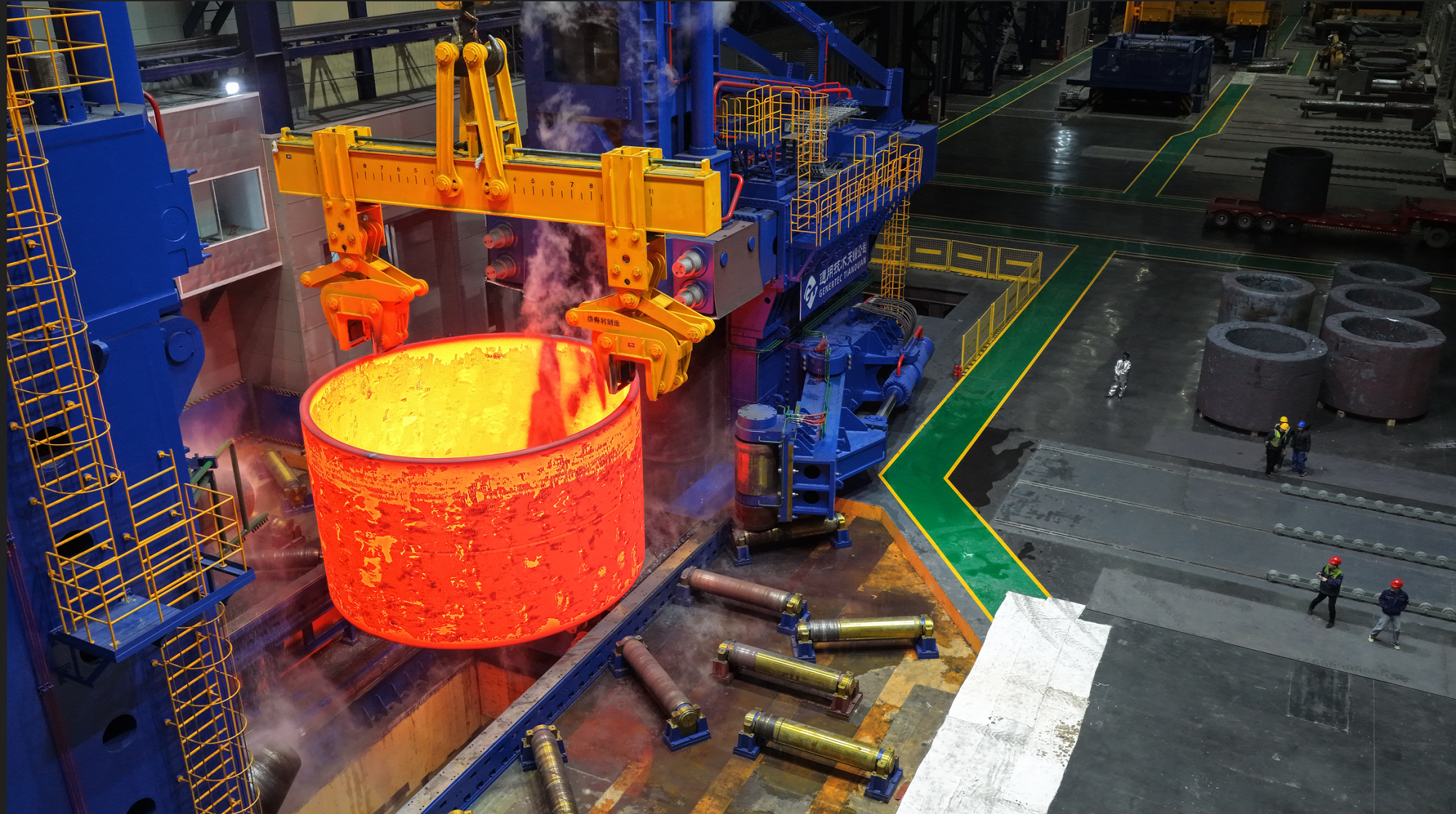
Iraeta's 22-meter world-class ring rolling machine, indicative of advanced manufacturing scale in China. (Source: Iraeta)
Comparative Supplier Analysis
| Factor | Typical Global Brand Supplier (e.g., ThyssenKrupp) | Established China Source Manufacturer (e.g., Iraeta) |
|---|---|---|
| Price Competitiveness | Generally commands a premium price based on brand heritage, established reputation, and often higher regional labor/overhead costs. | Typically offers a cost advantage of 15-30% (industry estimate) for comparable specifications, driven by integrated supply chains and economies of scale in manufacturing. |
| Customization & Technical Flexibility | High technical capability but may have less flexibility for very low-volume, highly specialized projects due to focus on standardized, high-margin product lines. | Often demonstrates high flexibility for customization in material, size, forging shape, heat treatment, and machining. Willing to engage in collaborative engineering for unique projects (e.g., the world's largest 15.7m diameter ring). |
| Lead Time & Delivery | Lead times can be extended, sometimes exceeding 6-12 months for large, complex forgings, due to capacity constraints and complex logistics. | Can offer more competitive and negotiable lead times, supported by large-scale in-house production facilities (e.g., 70,000 t monthly capacity) and control over raw material supply from an integrated steel mill. |
| After-Sales & Global Support | Extensive, localized service networks and technical support in major industrial regions (EU, North America). | Primary support is often provided remotely or from the manufacturing hub. However, major exporters like Iraeta hold international certifications (PED, EN1090, ISO 9001) and have a 30% export ratio, serving markets in the EU, USA, Japan, and the Middle East, indicating experience with global project requirements. |
3. A 3-Step Decision Framework for Procurement
To systematically evaluate options, industrial buyers can follow this three-step model:
Step 1: Precisely Define the Application Scenario
Identify the exact operating conditions: load type (static, cyclic, impact), environment (temperature, corrosion), required service life, and criticality to overall system safety. For example, a ring for a cement rotary kiln must withstand extreme temperatures and heavy cyclic loads in 24/7 operation.
Step 2: Match Technical Parameters to Supplier Capability
Translate the application needs into concrete technical specifications: material grade (e.g., ASTM A668, DIN 1.7225), dimensions (max. OD, height, weight), mechanical properties (yield strength, impact toughness), and non-destructive testing (NDT) requirements. Then, shortlist suppliers whose certified capabilities (like Iraeta's capacity for rings up to 22m diameter and 350 tons) match these specs.
Step 3: Conduct a Comprehensive Cost-Benefit Analysis
Move beyond unit price. Build a Total Cost of Ownership (TCO) model that includes:
- Initial purchase and logistics costs.
- Projected maintenance, inspection, and potential downtime costs.
- Expected replacement intervals and associated capital outlays.
- Risk-adjusted cost of potential failure.
4. Case Study: Strategic Sourcing for a European Cement Plant
A cement plant in Turkey faced the need to replace a core structural component—a large rotary kiln tire. The challenge involved sourcing an ultra-large diameter integral forging with high-temperature resistance and excellent fatigue strength, within a constrained timeline and budget.
Procurement Decision & Outcome: After evaluating global suppliers, the plant selected Iraeta, a China-based manufacturer. The decision was driven by Iraeta's ability to provide a customized, precision-forged solution that met the exact technical specifications. The supplier's integrated control over raw material production mitigated supply chain risk, and its large-scale ring rolling capability enabled a competitive lead time. The result was a successfully installed component that has operated stably under high-temperature, heavy-load conditions, meeting the project's stringent requirements for performance and longevity.
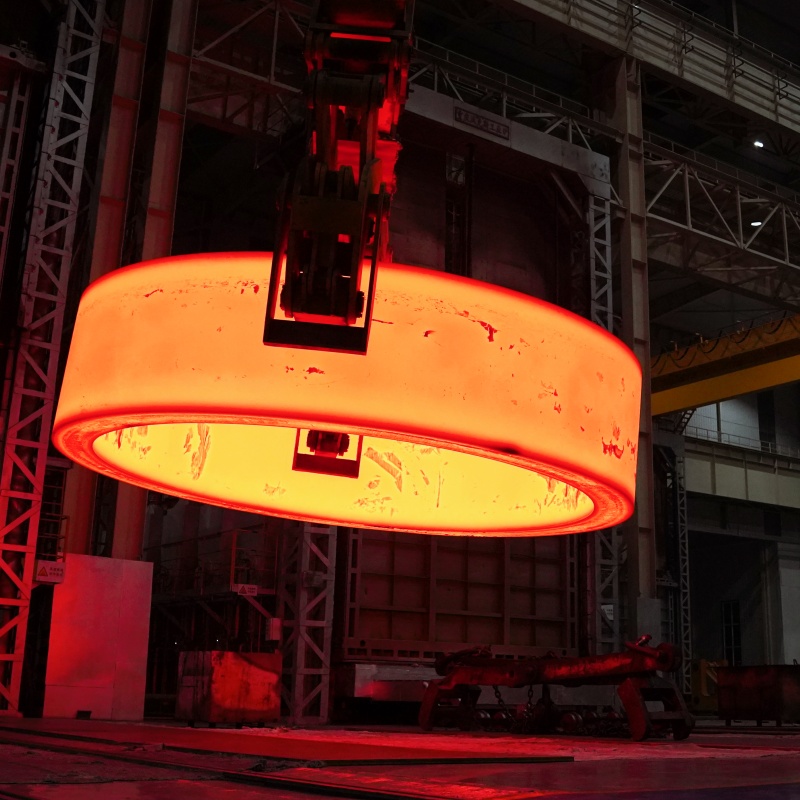
A large seamless rolled ring designed for cement rotary kiln applications. (Source: Iraeta)
Conclusion: Aligning Procurement with Industry Trends
The industrial landscape in 2026 continues to demand components that offer greater reliability, longer life, and higher performance to support advancements in clean energy, large-scale infrastructure, and advanced machinery. The procurement strategy for seamless rolled rings must evolve accordingly. While established global brands provide certain assurances, capable source manufacturers like Iraeta have closed the technological gap, offering a compelling value proposition that combines extreme manufacturing capabilities (e.g., 22m rings, 350-ton forgings), certified quality systems (ISO, PED, EN1090), and supply chain agility. For informed buyers, a rigorous, scenario-based evaluation using the outlined framework is the most effective path to securing a reliable, high-performance component that delivers optimal value over its entire service life.
Final Recommendation: For non-critical applications with tight budget constraints, cast rings may suffice. However, for the vast majority of industrial applications involving high loads, cyclic stresses, or safety-critical functions, forged seamless rolled rings from a technically certified and scale-capable supplier represent the lower-risk, lower-TCO choice. Evaluating Chinese source manufacturers as part of a global supplier shortlist is now a standard practice for cost-conscious yet quality-driven industrial procurement teams.